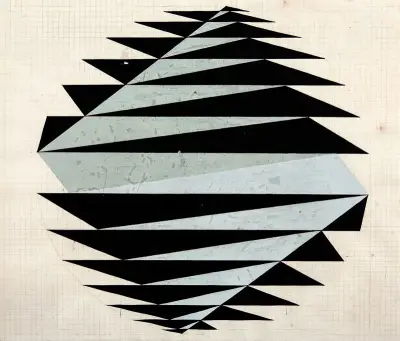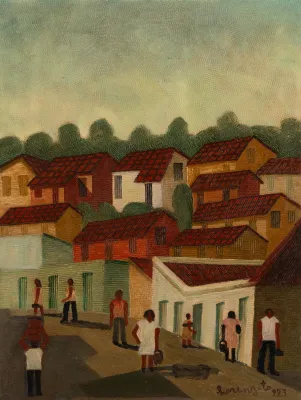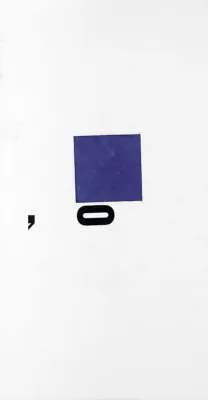
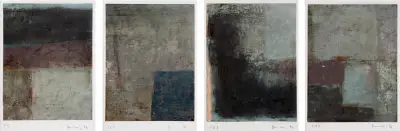



Mira Schendel (Zurich, Switzerland 1919 - São Paulo SP 1988)
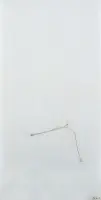
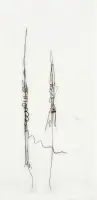
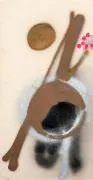
Mira Schendel was a draftswoman, painter and sculptor regarded as one of the most important artists in Brazilian contemporary art. Her production is recognized for its singular approach and its dialogue with philosophy, language and perception, elements that are central to all of Mira Schendel's work.
Mira Schendel was born in Europe, and her early life was marked by displacements and gaps in documentation. Between 1936 and the 1940s, she studied philosophy and art in Milan. During World War II, because of her Jewish origins, she had to interrupt her studies and seek refuge in different countries, passing through Sofia, in Bulgaria, and Sarajevo, in what was then Yugoslavia. In 1946, she settled in Rome and, in 1949, moved to Brazil, where she built her artistic career.
Mira Schendel's philosophical background played a decisive role in her production. The artist engaged in dialogue with thinkers such as Max Bense and Vilém Flusser, and also corresponded with Umberto Eco. These influences contributed to the development of a body of work devoted to investigating language, writing and visual communication.
Between 1949 and 1951, already settled in Porto Alegre, Mira Schendel began her artistic production in Brazil, with works in painting and ceramic sculpture. She also worked as a teacher and writer. Her participation in the São Paulo International Biennial in 1951 marked her entry into the Brazilian art scene.
From 1953 onward, in São Paulo, Mira Schendel developed the most important phases of her work. In this period, she created series such as the "Bordados" (Embroideries), made up of monotypes on rice paper exploring lines, letters and signs. These works are fundamental to understanding her investigation of language and visuality.
Mira Schendel's major works also include the "Droguinhas" (Little Nothings), made of twisted and interwoven rice paper, and the "Trenzinhos" (Little Trains), suspended structures that explore lightness and transparency. These works were shown internationally, including an exhibition at Signals Gallery in London, with the support of the critic Guy Brett.
Without aligning herself with specific movements, Mira Schendel explored different materials and techniques, such as acrylic, tempera, lithography and formica. She also produced some 150 notebooks, broadening her investigation of writing, space and materiality.
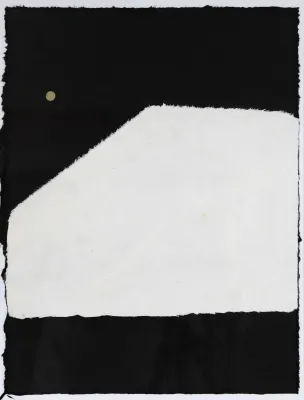
In 1973, Mira Schendel received the APCA Award for her body of work. In the following decades, she continued to develop series such as the white and black temperas and the "Sarrafos" (Battens), deepening her visual and conceptual research.
After her death in 1988, recognition of Mira Schendel grew significantly. In 1994, the São Paulo International Biennial devoted a special room to her and, in 1997, part of her collection was incorporated into the Museu de Arte Moderna de São Paulo.
Today, Mira Schendel is considered a fundamental artist for understanding Brazilian contemporary art. Her work is widely studied, valued on the art market and a reference for researchers, students, collectors and visual arts professionals.
Florilégio
Mira Schendel's artistic production is marked by intense experimentation and the creation of multiple series that vary in format, size, support and technique. Despite this diversity, her work shows remarkable conceptual coherence, centered on investigations of language, materiality and perception. This complexity makes it difficult to organize Mira Schendel's career into rigid chronological phases, revealing instead continuities and developments between series that consolidate a singular language in Brazilian contemporary art.
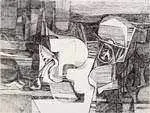
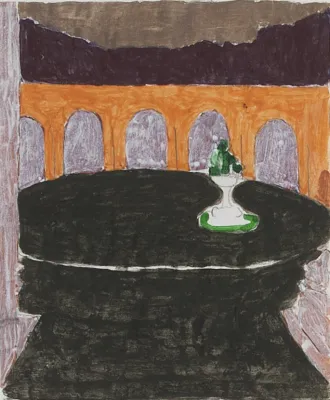
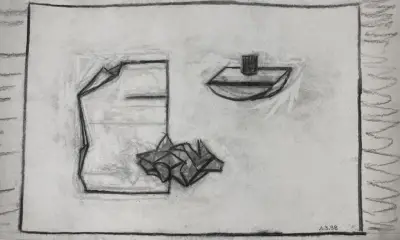
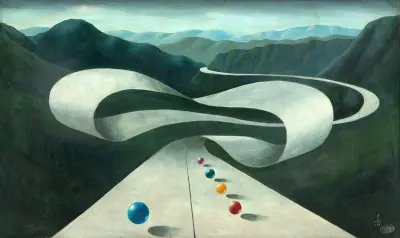
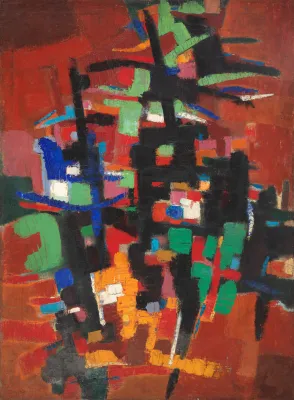
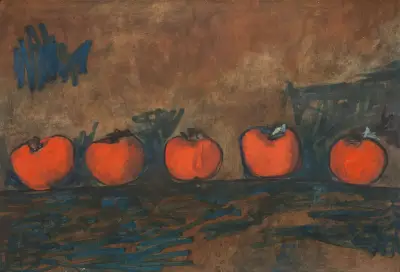
A recurring aspect of Mira Schendel's artistic practice is the absence of individual titles for her works, with series named as a way of grouping them. Between 1949 and 1953, when she lived in Porto Alegre, Mira Schendel produced portraits and still lifes in dark tones. In the 1950s, her painting went through a process of formal simplification, with an emphasis on the treatment of the surface. Between 1954 and 1956, the artist made works in tempera and oil on wood or canvas, using dense tones such as gray and ochre.
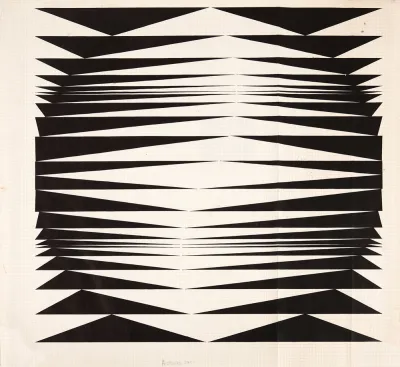
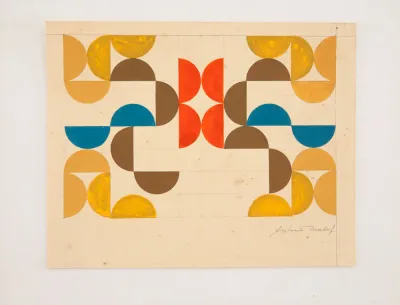
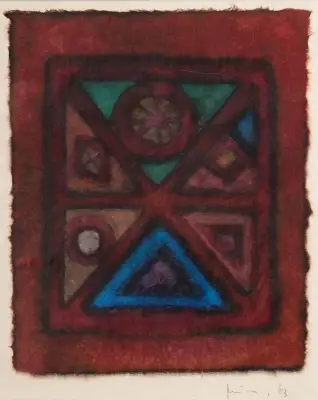
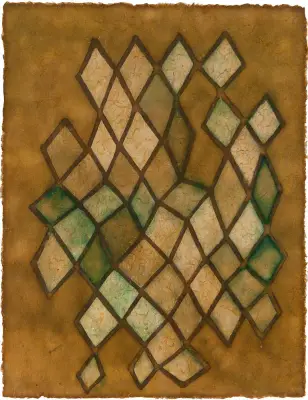
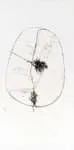
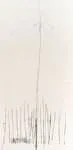
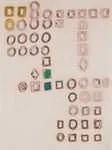
The 1960s were a central moment in Mira Schendel's career. In the early years of the decade, she explored painting with materials such as plaster, cement, sand and clay, highlighting the support as an active element of the work. Between 1962 and 1964, she developed the Bordados (Embroideries), works on Japanese paper with ecoline ink, characterized by lightness, transparency and geometric structures - an investigation she would return to at later moments in her production.
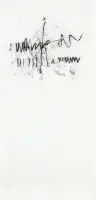
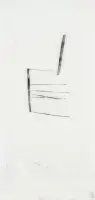
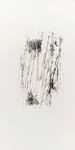
Between 1964 and 1966, Mira Schendel produced her celebrated Monotipias (Monotypes) on rice paper. In this process, the artist used an inked glass plate, placed the paper on it and drew on the back with her fingernails or pointed instruments. This indirect method reduced control over the result, incorporating irregularities and emphasizing the gesture. Mira Schendel's Monotypes include lines, letters, words and symbols, constituting an in-depth investigation of language, writing and visual communication.
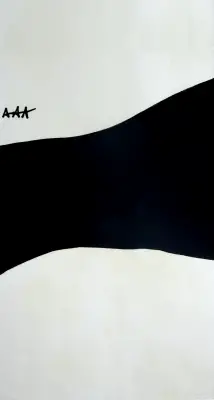
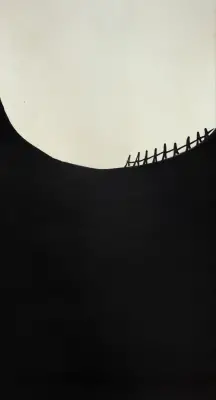
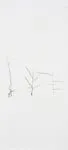
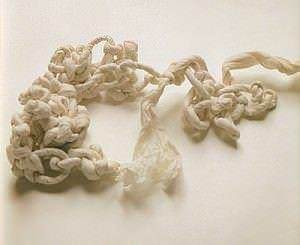
In 1965, Mira Schendel created the series known as Bombas (Bombs), characterized by large black masses of India ink on damp paper. The following year, she produced two of her most emblematic series: the Droguinhas (Little Nothings), three-dimensional structures made of twisted and braided rice paper, and the Trenzinhos (Little Trains), compositions of suspended sheets. According to the historian Maria Eduarda Marques, Mira Schendel's Droguinhas represent a critique of the idea of permanence and of the commodification of art.
From 1967 onward, Mira Schendel developed the Objetos Gráficos (Graphic Objects), made of sheets of rice paper pressed between acrylic plates, suspended and visible from both sides. In 1968, she created the Toquinhos (Little Stumps), small acrylic structures containing letters, signs and fragments of paper. In 1969, at the São Paulo International Biennial, Mira Schendel presented the installation Ondas Paradas de Probabilidade (Still Waves of Probability), made of suspended nylon threads, as well as works such as Discos (Discs) and Transformáveis (Transformables), broadening her investigation of transparency, light and space.
Between 1970 and 1971, Mira Schendel produced some 150 Cadernos (Notebooks), later shown at the Museum of Contemporary Art of the University of São Paulo. In the following years, she continued series such as the Toquinhos (1973-1974) and the Datiloscritos (Typescripts, 1974), returned to the Bordados and developed works influenced by Eastern philosophies, such as the Mandalas.
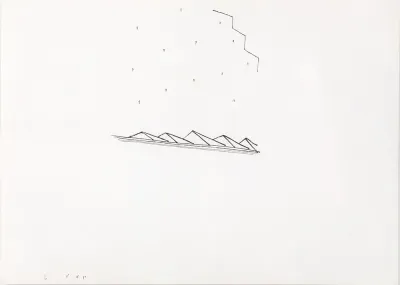
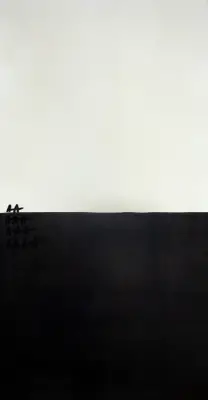
From 1975 onward, Mira Schendel created the Paisagens Noturnas (Night Landscapes), using Japanese paper, ecoline and gold leaf. Between 1978 and 1979, she developed the series Paisagens de Itatiaia (Itatiaia Landscapes), in black tempera, incorporating letters in an informal way. For the 16th São Paulo International Biennial, in 1981, Mira Schendel produced the series I Ching, reinforcing her relationship with symbolic, philosophical and conceptual systems.
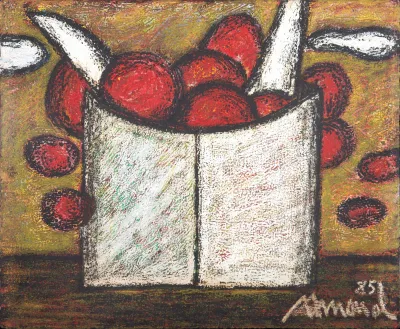
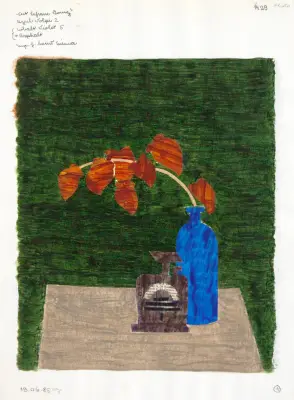
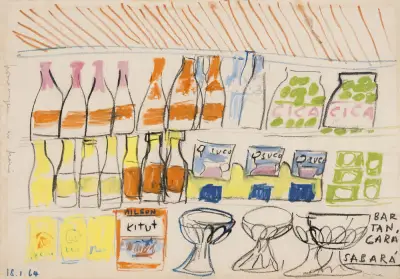
In the final years of her career, Mira Schendel returned to figurative elements with the series Mais ou Menos Frutas (More or Less Fruit, 1983), in which she explores the relationship between figuration and abstraction through synthetic compositions. According to the critic Alberto Tassinari, these works occupy an intermediate field between sign and representation, a recurring aspect of Mira Schendel's work.
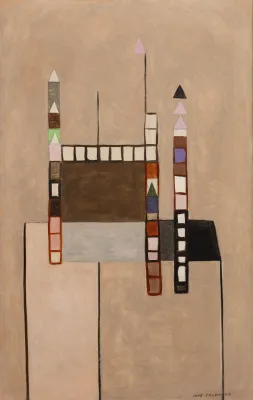
In 1987, Mira Schendel made the Sarrafos (Battens), works that bring together painting and sculpture through tempera and gesso on wood, exploring three-dimensionality. In that same period, she began works with brick dust on wood, of which only three were completed, closing a career marked by constant reinvention and artistic experimentation.
Mira Schendel's work remains one of the most complex, influential and studied in Brazilian contemporary art. Her legacy continues to be a reference for researchers, collectors, students and visual arts professionals, and holds a prominent place in the history of Brazilian art and in the national and international art market.
Notes
1 NAVES, Rodrigo. Pelas costas. In: SCHENDEL, Mira. No vazio do mundo. São Paulo: Editora Marca D'Água, 1996. p. 63. [Exhibition catalog, Sesi Art Gallery, São Paulo, curated by Sônia Salzstein].
2 For the artist José Resende (1945), works such as Droguinhas and Trenzinhos highlight concerns with the obsolescence of art, an issue also present in the Monotipias series, which exercises spontaneity of gesture.
See: RESENDE, José. In: SCHENDEL, Mira. No vazio do mundo. op. cit. p. 252.
3 The author develops this argument using an excerpt from a letter by Mira Schendel to the art critic Guy Brett. See: MARQUES, Maria Eduarda. Mira Schendel. São Paulo: Cosac & Naify, 2001. p. 35.
4 TASSINARI, Alberto. Mais ou menos frutas. In: SCHENDEL, Mira. No vazio do mundo. op. cit. p. 271.
5 BRITO, Ronaldo. Singular no plural. Experiência crítica. Organization: Sueli de Lima. São Paulo: Cosac e Naify, 2005. p. 294.
"Perhaps the opinion of others can help me better understand what I do, because to this day art, for me, is a great mystery".
Mira Schendel.
Critiques
"The artistic conception emanating from Mira’s works reminds us of an extremely sensitive seismograph, specialized in capturing all the imperceptible and slow processes of formations—those that suddenly surprise us when the forms are already established. Everything in Mira’s painting—composition and distribution, line and color, the dialogue between forms and matter—aims solely to reveal the slow processes and silent rhythms of formations in the making. The seriousness, acute sensitivity, and almost religious reverence with which these processes are apprehended and realized make Mira’s painting a rare and unique case, going far beyond manufactured geometrisms due to its richness and multiple meanings. The economical and sparse means of composition, restrained color, and delicate, minimal line speak to the full maturity that Mira’s work has achieved. From this arises the serenity of a composition that works only with the elements necessary for its organization. Brilliance, decorative excess, overuse of color, matter, or linear formations are entirely alien to this strict notion of composition, which seeks, with the contained and silent fervor of religious experience, to capture and reveal the essence of formative processes."
Theon Spanudis
MIRA. Introduction by Theon Spanudis. Campinas: Galeria Aremar, 1964.
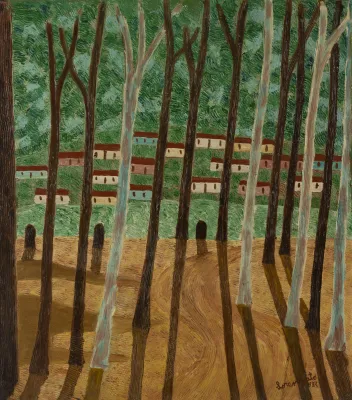
"Mira’s painting has undergone considerable transformations in the last two years, but only now can we perceive with greater clarity the depth and true meaning of its development. (...) During 1963, a sense of emptiness and spatiality developed in Mira’s work. The Romantic experience she had lived so intensely in her Lombard youth began to confront the worldview of the Far East, revealed to her through reproductions of Chi Pai Shi, the great master of contemporary Chinese painting. She gradually discovered nature—not the one perceived naively, but that which emerges from the passion for the absolute, when transcendence becomes immanence. After replacing the classical technique of oil or alternating layers of oil and tempera with plastic masses and plaster, she produced her finest squares, rectangles, and circles. She discovered the rich dynamic and dramatic possibilities of the irregular rhombus. Her geometric figures grew charged with tension. In 1954, Mira exhibited at the Museum of Modern Art some landscapes of an ontological tendency[8], admirable for their simplicity and melancholy. Her unpretentious, rustic houses, painted with a rudimentary technique, already contained the seeds of the superb achievements of today. Yet she lacked a sense of emptiness and mastery of texture. Ten years later, Mira would transubstantiate individual solitude and melancholy into the cosmic drama of her ontological landscapes. The houses ceased to be refuges for creatures without horizons; they now open to the unfathomable space."
Mario Schenberg
MIRA Schendel: oils and drawings. Introduction by Mário Schenberg.
São Paulo: Galeria Astréia, 1964.
"There is a consensus in understanding Mira Schendel’s work as a non-being, an entity that does not fix itself enough to be identified, that does not stabilize sufficiently to be isolated, nor define itself clearly enough to be conceptualized."
Even the essential materiality of things is subtracted. Close to a breath, flatus. Almost nothing, only the minimum necessary to exist, not to weigh, not to appear, not to disturb. The minimum to be, almost not-being. To exist solely as an essential presence. A little more than an indefinition. The more it potentiates its presentification, the more it affirms its absence. All emphatic modes appealing to the senses are denied.
(...) Color is a field of undefined frequency, a noise?... that settles on a surface, an emission field, faintly vibrating.
Hence Mira’s "technique." Or rather, her "non-technique." For technique is the way man imposes himself on the world, also in art. Yet technique frequently, if not always, privileges the subject, destroying, violating, failing to recognize. Mira’s "techniques" are "collaborative"; they induce, evoke, provoke—they call, let themselves be impregnated, transform. Matter is sensitized, activated at its molecular structure, I would say. As if the inert could reveal certain organized manifestations of life. Nothing can simply exist, remain inert. Thus, the constructive impulse possible in Mira seems modeled on a cellular, microscopic, imperceptible pulsation that is brought to the surface, even to the most visible layers. Far from passively accepting industrial projectuality, Mira simultaneously seeks a synthesis between a highly developed reason and the refined technical processes that art tends to manifest. In this sense, she updates Klee’s research.
In that subtle awakening induced by her work, it seems to concentrate, lightly, timidly, the entire cosmic and historical One. After all, isn’t the horizon of technique to reach the most profoundly true and unknown with a light hand movement over paper? And to make it exist. For only art, it seems, can reconcile and express the most primitive and most contemporary layers of human experience without mutilating any of them."
Paulo Venancio Filho
VENANCIO FILHO, Paulo. The Mysterious Transparency of Explanation.
In: SCHENDEL, Mira. Mira Schendel: the Volatile Form. Introduction by Helena Severo, Vanda Mangia Klabin; text by Sônia Salzstein, Paulo Venancio Filho, Célia Euvaldo.
Rio de Janeiro: Centro de Arte Hélio Oiticica, 1997. pp. 27-28.
"Part of Mira Schendel’s production clearly attests to the construction of a poetics structured as a synthesis of a highly sophisticated aesthetic knowledge, sensitive and amplifying certain concerns of international contemporary art, and an artistic attitude that cleverly takes advantage of the precariousness of expressive means to constitute itself as a work.
In her two-dimensional works from the 1960s, one can perceive the artist redefining the syntactic and semantic potentialities of signs and icons of our society (she was very concerned at the time with intersemiotic issues). With her Droguinhas, Schendel appears rearticulating the expressive potential of matter through its arrangement under the sign of precariousness. At the end of her trajectory, the artist ultimately synthesizes these fundamental concerns."
Tadeu Chiarelli
CHIARELLI, Tadeu. Brazilian International Art. São Paulo: Lemos, 1999.
"The 'Monotypes' were, without doubt, one of the most important series in Mira Schendel’s oeuvre, almost becoming her signature. Between 1964 and 1966, Mira produced around two thousand 'Monotypes', the most extensive series of her entire body of work. A selection of these pieces was exhibited at the VIII São Paulo Biennial in 1965. In their various forms, these works mark the beginning of a vast production devoted to drawing, which continued until 1979, when she returned to painting. Beyond the craft of painting, the experience of creating these drawings—especially the 'Monotypes'—reveals the question of gesturality in Mira’s work, where the spontaneity of the line was exercised to the utmost. The freedom and delicacy of the gesture were, notably, fundamental characteristics of her practice. Mira considered 'entirely mistaken the art that completely covers this texture, this movement of the hand. I place the greatest importance on it being manual, artisanal, lived, emerging from the gut. It must spring from the 'gut' and not merely from the hand'."
Maria Eduarda Marques
MARQUES, Maria Eduarda. As Virtualidades do Papel. In: ______. Mira Schendel. Presentation by Pedro Henrique Mariani. São Paulo: Cosac & Naify, 2001. 128 p., color illus. (Espaços da arte brasileira), p. 27
Testimonials
"Before the acrylic phase, during the period of thin paper, that pile of paper I received, there was another kind of object, with a different intention (the word intention is a very delicate one, but let’s use it). I wanted, in a sense, to materialize something different. It was, let’s say, the entire temporal issue of transience. It was a transient object, so much so that anyone could make that paper, make it as we did, and my daughter, who was about ten years old at the time, called it 'Droguinha' (...) and it was exhibited under that name. (...)
I never approached sculpture as sculpture, nor the object as object. (...) So much so that when I won—around 1975—the prize for the best object of the year, I was astounded. I thought I was making just anything, without really considering the notion of object. It arose within a framework of transparency, not as an object. It did not emerge as a sculpture, as a three-dimensional thing, but as transparency. (...) In 1966, Droguinha appeared, another type of experiment, within this line of ephemeral art, what they called ephemeral art. The other acrylic objects came later, but were already linked to that extremely thin transparent paper.
Therefore, it was the theme of transparency that led me to the object, that’s what I mean. In my specific case, this was truly the situation. Acrylic, not because I consider it beautiful or modern, but because it is the only material (...) that allows me to research in this field—the field of transparency. This, for me, was how the object emerged. I never truly set out to create the object (...).
The Notebooks, too, on one hand, continue the theme of letters, which is another story, an entire separate research field that later merged into what became known as the object. The Notebooks also have a transparent aspect (...): they are the Transparent Notebooks. The same overarching space-time theme runs through the Graphic Objects, the Little Pieces, the Discs, etc. etc. (...) But there are two themes. One is mainly temporal, the other space-time. That is what drove me. It was not the idea of sculpture, nor the idea of three-dimensionality (perhaps n-dimensionality) (...) Even the threads at the [1969 São Paulo] Biennial, (...) that nylon thread, (...) that too is an idea of transparency, of almost, or of passing through, something like that. Now, speaking with you, I realize it was an entire research project around this. Years, years, almost all the graphic work—though a portion took another direction—was linked to this."
Mira Schendel
In: SCHENDEL, Mira. No vazio do mundo. Curated by Sônia Salzstein; presentation by Carlos Eduardo Moreira Ferreira. São Paulo: Marca D'Água, 1996. p. 3.
Books
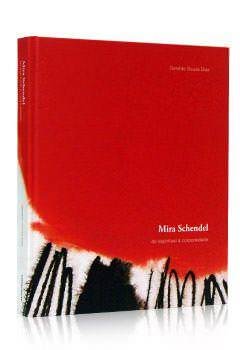
Author: Geraldo Souza Dias
Introduction: Andreas Haus
Sponsor: Oi
Language: Portuguese
The architect, painter, and art theorist Geraldo Souza Dias presents in this book the ideas and work of Mira Schendel, based on his exploration of her philosophical reflections found in diaries, notebooks, and letters. Alongside her trajectory in the history of Brazilian art, the author reveals a profound spiritual and intellectual inquiry in her work.
The book discusses Mira’s perspectives on art, theology, philosophy, and culture through the lens of phenomenology and communication theory, offering an approach that uncovers a range of insightful associations in her work, both from the standpoint of philosophy of art and psychology.
The artist’s connections with the I Ching, Jungian thought, her ties to the Dominicans, among other evidence, reveal to the reader a previously unknown side of Mira Schendel and allow for a renewed discussion on the relationship between abstract art and spirituality.
The edition includes testimonies from two theorists who knew the artist personally and significantly influenced her work: Vilém Flusser[9] and Hermann Schmitz[10]. The volume also features interviews with Guy Brett, curator of the largest exhibition of the artist during her lifetime at the historic Signal Gallery in London in 1966, and with semiotician Elizabeth Whalter[11], companion of the philosopher Max Bense[12], who also left his mark on the artist’s oeuvre.
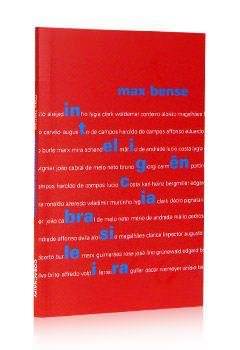
Author: Max Bense
Translation: Tercio Redondo
Afterword: Ana Luiza Nobre
Photographs: Goebel Weyne
Flap text: Alexandre Wollner
Language: Portuguese
Originally published in 1965, Inteligência brasileira now finally appears in Portuguese, as the fifteenth volume of the “Ensainhos” series.
In the book, the German thinker Max Bense, who visited Brazil during the 1960s, observes with appreciation one of the high points of Brazilian culture. Combining travel narrative with interpretation, he recounts his encounters with artists and intellectuals such as Guimarães Rosa, Clarice Lispector, Bruno Giorgi, Volpi, Lygia Clark, Lucio Costa, Afonso Reidy, Décio Pignatari, and Haroldo and Augusto de Campos.
His vision can be exemplified in the comparison he draws between the cities of Rio de Janeiro (the tropical spirit) and Brasília (the Cartesian spirit)—and Guimarães Rosa as the best expression of their fusion.
Graduating from the Ulm School[13], pivotal for twentieth-century design, Bense not only contributed to consolidating the Escola Superior de Design Industrial in Rio de Janeiro but also promoted Brazilian art in Germany through magazine publications and exhibitions. The outcome was overwhelmingly favorable to Brazilian culture, which, in Bense’s eyes, made original contributions to the contemporary world[14].
Mira Schendel – Do Espiritual à Corporeidade [From the Spiritual to Corporeality]
Author: Geraldo Souza Dias
Geraldo Souza Dias presents in this book the ideas and work of Mira Schendel, based on his exploration of her philosophical reflections found in diaries, notebooks, and letters. Alongside her trajectory in the history of Brazilian art, the author reveals a profound spiritual and intellectual inquiry in her work.
The book discusses Mira’s perspectives on art, theology, philosophy, and culture through the lens of phenomenology and communication theory, offering an approach that uncovers a range of insightful associations in her work, both from the standpoint of philosophy of art and psychology.
The artist’s connections with the I Ching, Jungian thought, her ties to the Dominicans, among other evidence, reveal a previously unknown side of Mira Schendel to the reader and allow a renewed discussion on the link between abstract art and spirituality.
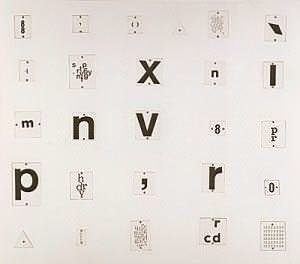
León Ferrari e Mira Schendel – O Alfabeto Enfurecido [Tangled Alphabets]
Author: Luiz Pérez-Oramas
“The first Brazilian co-edition with MoMA – The Museum of Modern Art, New York, Cosac Naify publishes the Portuguese version of the catalogue that accompanied the exhibition Tangled Alphabets, held at the renowned American museum in 2009, and now coming to Brazil at the Fundação Iberê Camargo in Porto Alegre, from April 9 to July 11. Curated and text by Luis Pérez-Oramas, the volume brings together works by the Swiss-Brazilian Mira Schendel (1919–1988) and the Argentine León Ferrari (1920), a parallel illustrated chronology of both artists, a selected bibliography, and essays by Argentine art critic and historian Andrea Giunta and Brazilian critic Rodrigo Naves.
Featuring around 200 works across various media—ceramics, paintings, sculptures, installations, and drawings—the exhibition is the first to compare the works of the two artists, interweaving their productions and prompting viewers to consider the connections between the works, which share a focus on the visual appearance of language.
Mira Schendel – Pintora [Painter]
Maria Eduarda Marques
The Instituto Moreira Salles publishes the catalogue Mira Schendel: Pintora, with text by curator Maria Eduarda Marques. The catalogue presents images of Mira Schendel’s paintings (1919–1988), produced between the 1950s and 1980s, from both private collections and institutional holdings. Throughout her career, Mira Schendel worked with a variety of materials and media, though her paper works—such as monotypes and graphic objects—are her best-known creations. Painting, however, consistently permeated her artistic trajectory.
Between the 1950s and 1960s, Mira Schendel produced still lifes and canvases that can be related to the work of the Italian painter Giorgio Morandi, as well as oils and temperas in which she introduced letters and words. During the same period, she created what are known as matéric paintings, featuring dense textures made of mass, cement, and sand. By the 1980s, Mira began producing monochromatic temperas with matte, velvety surfaces, upon which she applied geometric figures in gold leaf or traced nearly invisible forms with delicate lines and light incisions.
The exhibition also includes examples of the Sarrafos, works that blur the boundaries between painting, sculpture, and drawing. According to curator Maria Eduarda Marques, in Mira Schendel: Pintora, it becomes evident that many of the ideas the artist would later explore in other media (such as phenomenology) first emerged through her experiences in painting.
Additionally, the publication gathers a selection of historical texts on Mira Schendel’s painting by critics Mário Pedrosa, Mario Schenberg, Theon Spanudis, Rodrigo Naves, and Ronaldo Brito, along with previously unpublished statements from three contemporary painters—Marco Giannotti, Sérgio Sister, and Paulo Pasta—whose works engage in dialogue with aspects of Mira’s production.
Solo Exhibitions
1950 - Porto Alegre RS - Solo, at Correio do Povo
1952 - Porto Alegre RS - Solo, at Ibeu
1954 - São Paulo SP - Mira: Paintings, at MAM/SP
1960 - Rio de Janeiro RJ - Mira: Christmas Cards, at Adorno Decorações e Presentes
1962 - São Paulo SP - Solo, at Galeria Selearte
1963 - São Paulo SP - Mira Schendel: Paintings, at Galeria São Luís
1964 - Campinas SP - Mira: Paintings, at Galeria Aremar
1964 - São Paulo SP - Mira Schendel: Oils and Drawings, at Galeria Astréia
1965 - Rio de Janeiro RJ - Solo, at Petite Galerie
1966 - Lisbon (Portugal) - Solo, at Galeria Bucholz
1966 - London (England) - Solo, at Signals Gallery
1966 - Rio de Janeiro RJ - Solo, at MAM/RJ
1967 - Stuttgart (Germany) - Solo, at Technische Hochschule
1968 - London (United Kingdom) - Lisson 68, at Lisson Gallery
1968 - Oslo (Norway) - Solo, at Gramholt Galleri
1968 - Vienna (Austria) - Solo, at St. Stephan Gallerie
1969 - Graz (Austria) - Solo, at Gallerie bei Minoritensaal
1972 - São Paulo SP - Através, at Galeria Ralph Camargo
1973 - Washington (United States) - The Avant-Garde Works by Mira Schendel, at Art Gallery of The Brazilian-American Cultural Institute
1974 - Nuremberg (Germany) - Mira Schendel: Visuelle Konstruktinen und Transparente Texte, at Schmidtbank-Galerie, Institut für Moderne
1975 - Rio de Janeiro RJ - Solo, at Galeria Luiz Buarque de Holanda/Paulo Bittencourt
1975 - São Paulo SP - Mira Schendel: Drawings 1974/75: Typewritten, Mandalas, Landscapes, at Gabinete de Artes Gráficas
1975 - Stuttgart (Germany) - Mira Schendel: Visuelle Konstruktinen und Transparente Texte, at Studiengalerie, Uni Stuttgart
1978 - São Paulo SP - Mira Schendel: Drawings, at Gabinete de Artes Gráficas
1980 - São Paulo SP - Mira Schendel: Drawings, at Galeria Cosme Velho
1981 - São Paulo SP - Mira Schendel, at Galeria Luisa Strina
1982 - Rio de Janeiro RJ - Solo, at Galeria GB
1982 - São Paulo SP - Solo, at Paulo Figueiredo Galeria de Arte
1983 - Rio de Janeiro RJ - Mira Schendel: 65 Drawings, 2 Droguinhas, 1 Little Train, 1 Painting from 1964, and the Series Deus-Pai do Ocidente, at Galeria Thomas Cohn
1983 - São Paulo SP - Solo, at Galeria Luisa Strina
1984 - São Paulo SP - Solo, at Paulo Figueiredo Galeria de Arte
1985 - São Paulo SP - Mira Schendel: Theon Spanudis Collection, at MAC/USP
1985 - São Paulo SP - Mira Schendel: Recent Paintings, at Paulo Figueiredo Galeria de Arte
1986 - Niterói RJ - Mira Schendel: Recent Paintings, at Galeria de Arte da UFF
1986 - Porto Alegre RS - Mira Schendel: Recent Paintings, at Galeria Tina Zappoli
1987 - Rio de Janeiro RJ - Solo, at Galeria Thomas Cohn
1987 - São Paulo SP - Mira Schendel: Recent Works, at Paulo Figueiredo Galeria de Arte
1987 - São Paulo SP - Mira Schendel: Recent Works, at Gabinete de Arte Raquel Arnaud
1987 - Vitória ES - Solo, at Galeria Usina Arte
Group Exhibitions
1951 - Salvador BA - 1st University Salon of Fine Arts of Bahia - Gold Medal
1951 - São Paulo SP - 1st São Paulo International Biennial, at the Trianon Pavilion
1952 - Santa Maria RS - 1st Modern Art Exhibition - First Prize
1953 - Bento Gonçalves RS - 1st Art and Music Festival of Bento Gonçalves, at the City Hall's Main Hall - Honorable Mention
1955 - São Paulo SP - 3rd São Paulo International Biennial, at MAM/SP
1962 - São Paulo SP - 11th São Paulo Modern Art Salon
1962 - São Paulo SP - Selection of Brazilian Artworks from the Ernesto Wolf Collection, at MAM/SP
1963 - São Paulo SP - 7th São Paulo International Biennial, at the Bienal Foundation
1964 - Córdoba (Argentina) - 2nd American Biennial of Art
1965 - Lisbon (Portugal) - Drawing and Printmaking Exhibition, at the National Society of Fine Arts
1965 - London (England) - Soundings Two Exhibit, at Signals London Gallery
1965 - São Paulo SP - 8th São Paulo International Biennial, at the Bienal Foundation
1965 - São Paulo SP - Propostas 65, at FAAP
1965 - Windsor (England) - Selection from Soundings Two, at Eton College Art School
1966 - Madrid (Spain) - Tres Pintores Brasileños
1966 - São Paulo SP - Three Premises, at MAB/SP
1967 - Campinas SP - 3rd Contemporary Art Salon of Campinas
1967 - São Paulo SP - 9th São Paulo International Biennial, at the Bienal Foundation - Acquisition Prize
1968 - London (England) - Lisson 68, at Lisson Gallery
1968 - Punta del Este (Paraguay) - Three Brazilian Artists
1968 - Venice (Italy) - 34th Venice Biennale
1969 - São Paulo SP - 10th São Paulo International Biennial, at the Bienal Foundation - Honorable Mention
1969 - São Paulo SP - 1st Panorama of Contemporary Brazilian Art, at MAM/SP
1971 - New Delhi (India) - 2nd International Triennale of Modern Art of New Delhi, at Lalit Kala Akademi - Gold Medal
1971 - São Paulo SP - 3rd Panorama of Contemporary Brazilian Art, at MAM/SP
1971 - São Paulo SP - Amélia Amorim Toledo/Donato Ferrari/Mira Schendel, at MAC/USP
1974 - Bergen (Norway) - Gromholtz-Samling-Billedgalleri's Festpillutstilling
1974 - Campinas SP - 9th Contemporary Art Salon of Campinas - Brazilian Drawing 74, at MACC
1974 - São Paulo SP - 6th Panorama of Contemporary Brazilian Art, at MAM/SP
1974 - São Paulo SP - Visual Poetry, at Lasar Segall Museum
1975 - Rio de Janeiro RJ - Communication According to Visual Artists
1976 - Bologna (Italy) - Arte Fiera 76
1976 - Cali (Colombia) - 3rd American Biennial of Graphic Arts
1976 - Campinas SP - 10th Contemporary Art Salon of Campinas, at MACC
1976 - São Paulo SP - Brazilian Art: Figures and Movements, at Arte Global Gallery
1976 - Venice (Italy) - Tra Linguaggio e Immagine: il canale
1977 - São Paulo SP - 9th Panorama of Contemporary Brazilian Art, at MAM/SP
1977 - Washington (United States) - Recent Latin American Drawings 1969-1976: Lines of Vision, International Exhibition Foundation
1978 - Rio de Janeiro RJ - 3rd Arte Agora Latin America, Sensitive Geometry, at MAM/RJ
1978 - São Paulo SP - The Object in Art: Brazil 1960s, at MAB/FAAP
1978 - Venice (Italy) - 39th Venice Biennale
1979 - Rio de Janeiro RJ - Brazilian Art, at Banco Lar Brasileiro
1979 - São Paulo SP - 11th Panorama of Contemporary Brazilian Art, at MAM/SP
1979 - São Paulo SP - Theon Spanudis Collection, at MAC/USP
1979 - São Paulo SP - Drawings and Paintings by Mira Schendel, Tomoshige Kusuno, Marcelo Villares, at Nova Acrópole
1980 - Rio de Janeiro RJ - Homage to Mário Pedrosa, at Jean Boghici Gallery
1981 - Cali (Colombia) - 4th Biennial of Graphic Arts
1981 - Rio de Janeiro RJ - From Modern to Contemporary: Gilberto Chateaubriand Collection, at MAM/RJ
1981 - São Paulo SP - 16th São Paulo International Biennial, at the Bienal Foundation
1981 - São Paulo SP - Art Research, at MAC/USP
1981 - São Paulo SP - Transcendent Art, at MAM/SP
1982 - Guarujá SP - Group Exhibition, at Hotel Jequitimar
1982 - Lisbon (Portugal) - Brazil: 60 Years of Modern Art, Gilberto Chateaubriand Collection, at José de Azeredo Perdigão Modern Art Center
1982 - Lisbon (Portugal) - From Modern to Contemporary: Gilberto Chateaubriand Collection, at José de Azeredo Perdigão Modern Art Center
1982 - London (United Kingdom) - Brazil: 60 Years of Modern Art, Gilberto Chateaubriand Collection, at Barbican Art Gallery
1982 - New York (United States) - Women of the Americas: Emerging Perspectives, at Kouros Gallery/Center for Interamerican Relations
1983 - New York (United States) - Group Exhibition, at Mary-Anne Martin Fine Arts
1983 - Rio de Janeiro RJ - 13 Artists/13 Works, at Thomas Cohn Contemporary Art
1984 - London (England) - Portrait of Country: Brazilian Modern Art from the Gilberto Chateaubriand Collection, at Barbican Art Gallery
1984 - São Paulo SP - 15th Panorama of Contemporary Brazilian Art, at MAM/SP
1984 - São Paulo SP - Gilberto Chateaubriand Collection: Portrait and Self-Portrait of Brazilian Art, at MAM/SP
1984 - São Paulo SP - Geometry 84, at Paulo Figueiredo Art Gallery
1984 - São Paulo SP - Small Formats, at Paulo Figueiredo Art Gallery
1984 - São Paulo SP - Tradition and Rupture: Synthesis of Brazilian Art and Culture, at Bienal Foundation
1985 - Belo Horizonte MG - Geometry Today, at MAP
1985 - Penápolis SP - 6th Salon of Visual Arts of the Northwest, at Penápolis Educational Foundation, Faculty of Philosophy, Sciences, and Letters of Penápolis
1985 - Rio de Janeiro RJ - 8th National Salon of Visual Arts - Contemporary Attitudes: Art and Its Materials, at Sérgio Milliet Gallery/Funarte
1985 - Rio de Janeiro RJ - Calligraphies and Writings, at Sérgio Milliet Gallery/Funarte
1985 - São Paulo SP - Drawing in the 1960s, at State Pinacoteca
1985 - São Paulo SP - Highlights of Contemporary Brazilian Art, at MAM/SP
1985 - São Paulo SP - 2nd Pro-Tuca Art Auction Exhibition, at Hotel Maksoud Plaza
1985 - São Paulo SP - Trends in Artist Books in Brazil, at CCSP
1986 - Porto Alegre RS - Paths of Brazilian Drawing, at MARGS
1986 - Rio de Janeiro RJ - JK and the 1950s: A Vision of Culture and Daily Life, at Investiarte Gallery
1986 - São Paulo SP - The New Dimension of the Object, at MAC/USP
1987 - Mainz (Germany) - Aspekte Visueller Poesie und Visueller Musik, at Gutenberg Museum
1987 - Paris (France) - Modernity: Brazilian Art of the 20th Century, at Musée d'Art Moderne de la Ville de Paris
1987 - Rio de Janeiro RJ - Forum of Science and Culture, Art and Word, at UFRJ
1987 - Rio de Janeiro RJ - Some Women, at Ipanema Art Gallery
1987 - São Paulo SP - 18th Panorama of Contemporary Brazilian Art, at MAM/SP
1987 - São Paulo SP - The Craft of Art: Painting, at SESC
1987 - São Paulo SP - Imágica Word, at MAC/USP
Posthumous Exhibitions
1988 - Rio de Janeiro RJ - 2nd Geometric Abstraction, at Funarte
1988 - Rio de Janeiro RJ - Mira Schendel, at Galeria Sérgio Milliet/Funarte
1988 - São Paulo SP - 63/66 Figure and Object, at Galeria Millan
1988 - São Paulo SP - One Hundred Selected Drawings, at Paulo Figueiredo Art Gallery
1988 - São Paulo SP - MAC 25 Years: Highlights from the Initial Collection, at MAC/USP
1988 - São Paulo SP - Modernity: 20th Century Brazilian Art, at MAM/SP
1989 - Stockholm (Sweden) - Art in Latin America: The Modern Era 1820-1980, at Moderna Museet
1989 - Stockholm (Sweden) - Jord och Frieht Latinamerikansk Konst 1830-1970, at National Museum and Moderna Museet
1989 - London (UK) - Art in Latin America: The Modern Era 1820-1980, at Hayward Gallery
1989 - New York (United States) - The Image of Thinking in Visual Poetry, at Guggenheim Museum
1989 - Rio de Janeiro RJ - Geometry Without Manifesto, at Cleide Wanderley Art Cabinet
1989 - São Paulo SP - 20th São Paulo International Biennial - Biennial Effect, 1954-1963, at Fundação Bienal
1989 - São Paulo SP - Gesture and Structure, at Raquel Arnaud Art Cabinet
1989 - São Paulo SP - Solo Exhibition, at Livraria Letraviva
1989 - São Paulo SP - Solo Exhibition, at MAC/USP
1989 - São Paulo SP - Mira Schendel: Drawings and Objects / Notebooks, Prints and Xerox, at Paulo Figueiredo Art Gallery and Espaço Fogo Paulista
1990 - Chicago (United States) - Brazil: Crossroads of Modern Art, at Randolph Gallery
1990 - Chicago (United States) - Singular Expressions of Brazilian Art, at Chicago Cultural Center
1990 - Madrid (Spain) - Art in Latin America: The Modern Era 1820-1980, at Palacio Velázquez
1990 - São Paulo SP - Coherence - Transformation, at Raquel Arnaud Art Cabinet
1990 - São Paulo SP - Spirals, at Miriam Mamber Art Gallery
1990 - São Paulo SP - Mira Schendel, at MAC/USP
1991 - Belo Horizonte MG - Two Portraits of Art, at MAP
1991 - Brasília DF - Two Portraits of Art, at Itamaraty Palace
1991 - Curitiba PR - Two Portraits of Art, at Curitiba Cultural Foundation
1991 - Stockholm (Sweden) - Viva Brasil Viva, at Kulturhuset, Konstavdelningen and Liljevalchs Konsthall
1991 - Porto Alegre RS - Two Portraits of Art, at Margs
1991 - Recife PE - Two Portraits of Art, at Pernambuco State Museum
1991 - Rio de Janeiro RJ - Two Portraits of Art, at MAM/RJ
1991 - Rio de Janeiro RJ - Mário Pedrosa: Art, Revolution, Reflection, at CCBB
1991 - Salvador BA - Two Portraits of Art, at Bahia Museum of Art
1991 - São Paulo SP - Two Portraits of Art, at MAC/USP
1992 - Campinas SP - Award Winners in the Contemporary Art Salons of Campinas, at MACC
1992 - Paris (France) - Latin American Artists of the Twentieth Century, at Centre Georges Pompidou
1992 - Poços de Caldas MG - Brazilian Modern Art: Collection of the Museum of Contemporary Art, University of São Paulo, at Poços de Caldas Cultural Center
1992 - Porto Alegre RS - Mário Pedrosa: Art, Revolution, Reflection, at Municipal Culture Center
1992 - Rio de Janeiro RJ - 1st Towards Niterói: João Sattamini Collection, at Paço Imperial
1992 - Rio de Janeiro RJ - Nature: Four Centuries of Art in Brazil, at CCBB
1992 - São Paulo SP - Dominant White, at São Paulo Art Gallery
1992 - São Paulo SP - Mira Schendel, at Domani Gastronomia
1992 - São Paulo SP - Mira Schendel: Retrospective, at Dan Galeria
1992 - Seville (Spain) - Latin American Artists of the Twentieth Century, at Estación Plaza de Armas
1993 - Cologne (Germany) - Latin American Artists of the Twentieth Century, at Kunsthalle Cologne
1993 - New York (United States) - Latin American Artists of the Twentieth Century, at MoMA
1993 - Rio de Janeiro RJ - The Rarefaction of the Senses: João Sattamini Collection - 1970s, at EAV/Parque Lage
1993 - Rio de Janeiro RJ - Brazil, 100 Years of Modern Art, at MNBA
1993 - São Paulo SP - Brazilian Art in the World: A Trajectory: 24 Brazilian Artists, at Dan Galeria
1993 - São Paulo SP - Modern Drawing in Brazil: Gilberto Chateaubriand Collection, at Sesi Art Gallery
1993 - São Paulo SP - Works for Literary Supplement Illustration: 1956-1967, at MAM/SP
1993 - Venice, Milan, Florence, and Rome (Italy) - Brazil: Signs of Art, at Fondazione Scientifica Querini Stampalia, Biblioteca Nazionale Braidense, Biblioteca Nazionale, and Brazilian Studies Center
1993 - Washington D.C. (United States) - Ultramodern: The Art of Contemporary Brazil, at National Museum of Women in the Arts
1994 - Niterói RJ - Intertext, at UFF
1994 - Rio de Janeiro RJ - Book-Object: The Frontier of Voids, at CCBB
1994 - Rio de Janeiro RJ - Modern Drawing in Brazil: Gilberto Chateaubriand Collection, at MAM/RJ
1994 - Rio de Janeiro RJ - Black on White and/or…: Drawings, at EAV/Parque Lage
1994 - São Paulo SP - 22nd São Paulo International Biennial - Special Mira Schendel Room, at Fundação Bienal
1994 - São Paulo SP - Brazil 20th Century Biennial, at Fundação Bienal
1994 - São Paulo SP - More or Less Letters, at MAC/USP
1994 - São Paulo SP - Mira Schendel, at Galeria Camargo Vilaça
1995 - Curitiba PR - 11th Curitiba Print Exhibition, at Curitiba Cultural Foundation
1995 - Denver (United States) - Latin American Women Artists 1915-1995, at Denver Art Museum
1995 - Londrina PR - Brazilian Art: Confrontations and Contrasts, at Octávio Cesário Pereira Júnior International Pavilion/UEL
1995 - Milwaukee (United States) - Latin American Women Artists 1915-1995, at Milwaukee Art Museum
1995 - New York (United States) - Art from Brazil in New York, at Lelong Gallery/The Drawing Center
1995 - Phoenix (United States) - Latin American Women Artists 1915-1995, at Phoenix Art Museum
1995 - São Paulo SP - Between Drawing and Sculpture, at MAM/SP
1995 - São Paulo SP - Experiences on Paper, at MAC/USP
1995 - São Paulo SP - Book-Object: The Frontier of Voids, at MAM/SP
1995 - São Paulo SP - Drawing in São Paulo: 1956-1995, at Nara Roesler Gallery
1996 - Belo Horizonte MG - Poetic Influence: Ten Contemporary Draftsmen, Amilcar de Castro and Mira Schendel, at Palácio das Artes
1996 - Boston (United States) - Inside the Visible, at Institute of Contemporary Art
1996 - Kortrijk (Belgium) - Inside the Visible, at Kanaal Foundation
1996 - London (UK) - Inside the Visible, at Whitechapel Art Gallery
1996 - Miami (United States) - Latin American Women Artists 1915-1995, at Center for the Fine Arts, Miami Art Museum
1996 - Perth (Australia) - Inside the Visible, at Art Gallery of Western Australia
1996 - Rio de Janeiro RJ - Poetic Influence: Ten Contemporary Draftsmen, Amilcar de Castro and Mira Schendel, at Paço Imperial
1996 - São Paulo SP - The Line Constructing Form, at MAM/SP
1996 - São Paulo SP - Brazilian Art: 50 Years of History in the MAC/USP Collection: 1920-1970, at MAC/USP
1996 - São Paulo SP - Ex Libris/Home Page, at Paço das Artes
1996 - São Paulo SP - Women Artists in the MAC Collection, at MAC/USP
1996 - São Paulo SP - In the Emptiness of the World, at Sesi Art Gallery
1996 - São Paulo SP - The World of Mario Schenberg, at Casa das Rosas
1996 - Washington (United States) - Inside the Visible, at National Museum of Women in the Arts
1996 - Washington D.C. (United States) - Latin American Women Artists 1915-1995, at National Museum of Women in the Arts
1997 - Rio de Janeiro RJ - Mira Schendel: The Volatile Form, at Hélio Oiticica Arts Center
1997 - São Paulo SP - In the Emptiness of the World, at Sesi Art Gallery
1998 - Belo Horizonte MG - The Support of the Word, at Itaú Cultural
1998 - Niterói RJ - Biennial Mirror, at MAC/Niterói
1998 - Rio de Janeiro RJ - Brazilian Art in the São Paulo Museum of Modern Art Collection: Recent Donations 1996-1998, at CCBB
1998 - São Paulo SP - 24th São Paulo International Biennial, at Fundação Bienal
1998 - São Paulo SP - Constructive Art in Brazil: Adolpho Leirner Collection, at MAM/SP
1998 - São Paulo SP - O Colecionador [The Collector], at MAM/SP
1998 - São Paulo SP - The Modern and the Contemporary in Brazilian Art: Gilberto Chateaubriand Collection - MAM/RJ, at Masp
1998 - São Paulo SP - The Support of the Word, at MAM/SP
1998 - São Paulo SP - Theory of Values, at MAM/SP
1999 - Goiânia GO - 2nd Great Collective of Brazilian Art, at Marina Potrich Art Gallery
1999 - Los Angeles (United States) - The Experimental Exercise of Freedom: Lygia Clark, Gego, Mathias Goertiz, Hélio Oiticica, Mira Schendel, at Museum of Contemporary Art
1999 - Rio de Janeiro RJ - Constructive Art in Brazil: Adolpho Leiner Collection, at MAM/RJ
1999 - Santa Monica (United States) - Waltercio Caldas, Cildo Meireles, Mira Schendel, Tunga, at Christopher Grimes Gallery
2000 - Belo Horizonte MG - Investigations: Brazilian Printmaking: Are They Prints or Not?, at Itaú Cultural
2000 - Brasília DF - Investigations: Brazilian Printmaking: Are They Prints or Not?, at Itaú Cultural
2000 - Curitiba PR - 12th Curitiba Print Exhibition: Marks of the Body, Folds of the Soul
2000 - Curitiba PR - Publication of the Brazil 500 Years Collection, at Curitiba Cultural Foundation
2000 - Lisbon (Portugal) - 20th Century: Art from Brazil, at José de Azeredo Perdigão Center for Modern Art
2000 - Rio de Janeiro RJ - The Visible in Parentheses - Mira Schendel, Sérgio de Camargo, and Willys de Castro, at CCBB
2000 - Rio de Janeiro RJ - Situations: Brazilian Art in the 1970s, at Casa França-Brasil Foundation
2000 - São Paulo SP - Conceptual Art and Conceptualisms: 1970s in the MAC/USP Collection, at Sesi Art Gallery
2000 - São Paulo SP - Brazil + 500: Rediscovery Exhibition. Contemporary Art, at Fundação Bienal
2000 - São Paulo SP - The Role of Art, at Sesi Art Gallery
2001 - Oxford (UK) - Experiment Experience: Art in Brazil 1958-2000, at Museum of Modern Art
2001 - Paris (France) - Mira Schendel, at Galerie Nationale du Jeu de Paume
2001 - Porto Alegre RS - Liba and Rubem Knijnik Collection: Contemporary Brazilian Art, at Margs
2001 - Rio de Janeiro RJ - Brazilian Watercolor, at Centro Cultural Light
2001 - Rio de Janeiro RJ - Blind Mirror: Selections from a Contemporary Collection, at Paço Imperial
2001 - Rio de Janeiro RJ - The Spirit of Our Time, at MAM/RJ
2001 - São Paulo SP - The Permanence of Traditional Art Genres: Portrait, Landscape, Still Life, at MAM/SP
2001 - São Paulo SP - Blind Mirror: Selections from a Contemporary Collection, at MAM/SP
2001 - São Paulo SP - Mira Schendel and Franklin Cassaro, at MAM/SP
2001 - São Paulo SP - Museum of Brazilian Art: 40 Years, at MAB/Faap
2001 - São Paulo SP - The Spirit of Our Time, at MAM/SP
2001 - São Paulo SP - The Trajectory of Light in Brazilian Art, at Itaú Cultural
2002 - Fortaleza CE - Ceará Rediscovers Brazil, at Dragão do Mar Art and Culture Center
2002 - Londrina PR - Are They Prints or Not?, at Londrina Art Museum
2002 - Niterói RJ - Paper Collection, at MAC/RJ
2002 - Niterói RJ - Dialogue, Antagonism, and Replication in the Sattamini Collection, at MAC/Niterói
2002 - Rio de Janeiro RJ - Brazilian Art in the Fadel Collection: From Modern Restlessness to Language Autonomy, at CCBB
2002 - Rio de Janeiro RJ - Paths of the Contemporary 1952-2002, at Paço Imperial
2002 - Rio de Janeiro RJ - Mira Schendel, at Galeria Oscar Cruz
2002 - Rio de Janeiro RJ - Parallels: Brazilian Art from the Second Half of the 20th Century in Context, Cisneros Collection, at MAM/RJ
2002 - São Paulo SP - Brazilian Art in the Fadel Collection: From Modern Restlessness to Language Autonomy, at CCBB
2002 - São Paulo SP - Wild Mirror: Modern Art in Brazil from the First Half of the 20th Century, Nemirovsky Collection, at MAM/SP
2002 - São Paulo SP - Geometric and Kinetic, at Raquel Arnaud Art Cabinet
2002 - São Paulo SP - Map of the Now: Recent Brazilian Art from João Sattamini Collection at Niterói Museum of Contemporary Art, at Tomie Ohtake Institute
2002 - São Paulo SP - Mira Schendel, at André Millan Gallery
2002 - São Paulo SP - Art Genres: Still Life in Contemporary Art, at MAM/SP
2002 - São Paulo SP - Parallel, Warehouse located at Avenida Matarazzo, 530
2002 - São Paulo SP - Parallels: Brazilian Art from the Second Half of the 20th Century in Context, Cisneros Collection, at MAM/SP
2003 - Brasília DF - Brazilian Art in the Fadel Collection: From Modern Restlessness to Language Autonomy, at CCBB
2003 - Buenos Aires (Argentina) - Geo-Metries: Latin American Geometric Abstraction in the Cisneros Collection, at Malba
2003 - Madrid (Spain) - Arco/2003, at Juan Carlos I Fairgrounds
2003 - Rio de Janeiro RJ - Black and White Project, at Silvia Cintra Art Gallery
2003 - São Paulo SP - Printmaking is Fine, Thank You: Historical and Contemporary Brazilian Prints, at Espaço Virgílio
2003 - São Paulo SP - Arco 2003, at Raquel Arnaud Art Cabinet
2003 - São Paulo SP - Constructivism and the Form as Clothing, at MAM/SP
2003 - São Paulo SP - MAC USP 40 Years: Contemporary Interfaces, at MAC/USP
2003 - São Paulo SP - Still Life, at BM&F Cultural Space
2003 - São Paulo SP - Tomie Ohtake in the Spiritual Fabric of Brazilian Art, at Tomie Ohtake Institute
2003 - São Paulo SP - A Difficult Moment of Balance, at MAM/SP
2004 - Rio de Janeiro RJ - 30 Artists, at Mercedes Viegas Art Office
2004 - Rio de Janeiro RJ - Tomie Ohtake in the Spiritual Fabric of Brazilian Art, at MNBA
2004 - São Paulo SP - Contemporary Conversation, at Raquel Arnaud Art Cabinet
2004 - São Paulo SP - Gesture and Expression: Informal Abstraction in the JP Morgan Chase and MAM Collections, at MAM/SP
2004 - São Paulo SP - Brazilian Version, at Galeria Brito Cimino
2004 - São Paulo SP - The Biennials: A Look at Brazilian Production 1951-2002, at Galeria Bergamin
2005 - Belo Horizonte MG - 40/80: An Exhibition of Brazilian Art at Léo Bahia Contemporary Art
2005 - São Paulo SP - Through, or Corrupted Geometry, at Galeria Bergamin
2005 - São Paulo SP - Trajectory/Trajectories, at Raquel Arnaud Art Cabinet
2005 - São Paulo SP - Gallery Artists at Millan Antonio in the 5th Mercosur Biennial, at Galeria Millan Antonio
Bibliography
CHIARELLI, Tadeu. Brazilian International Art. São Paulo: Lemos, 1999.
GESTO e estrutura. Text by Ronaldo Brito. São Paulo: Gabinete de Arte Raquel Arnaud, [19--].
LEITE, José Roberto Teixeira. 500 Years of Brazilian Painting. Produced by Raul Luis Mendes Silva, Eduardo Mace. s.l.: Log On Informática, 1999. 1 Multimedia CD-ROM.
LOUZADA, Júlio. Visual Arts: Its Market, Its Auctions. São Paulo: J. Louzada, 1984.
MARQUES, Maria Eduarda; EUVALDO, Célia (coord.). Mira Schendel. Editorial coordination by Rodrigo Naves; graphic design by Fábio Miguez; foreword by Pedro Henrique Mariani. São Paulo: Cosac & Naify, 2001.
PONTUAL, Roberto. Between Two Centuries: 20th-Century Brazilian Art in the Gilberto Chateaubriand Collection. Preface by Gilberto Chateaubriand; foreword by M. F. do Nascimento Brito. Rio de Janeiro: JB, 1987.
SCHENBERG, Mario. Thinking Art. Photography by Rômulo Fialdini. São Paulo: Nova Stella, 1988.
SCHENDEL, Mira. Mira Schendel: The Volatile Form. Foreword by Helena Severo, Vanda Mangia Klabin; texts by Sônia Salzstein, Paulo Venancio Filho, Célia Euvaldo. Rio de Janeiro: Centro de Arte Hélio Oiticica, 1997.
SCHENDEL, Mira. Mira Schendel. São Paulo: Paulo Figueiredo Art Gallery, 1982.
SCHENDEL, Mira. Mira Schendel: Oils and Drawings. Foreword by Mário Schenberg. São Paulo: Galeria Astréia, 1964.
SCHENDEL, Mira. Mira Schendel: Recent Paintings. São Paulo: Paulo Figueiredo Art Gallery; Porto Alegre: Galeria Tina Presser, 1985.
SCHENDEL, Mira. Mira Schendel: Singular in the Plural. Foreword by Ronaldo Brito. Rio de Janeiro: Funarte/Galeria Sérgio Milliet, 1988.
SCHENDEL, Mira. Mira. Foreword by Theon Spanudis. Campinas: Galeria Aremar, 1964.
SCHENDEL, Mira. Mira. Mira Schendel. Foreword by Claudia Toni; texts by Gabriela Suzana Wilder, Agnaldo Farias. São Paulo: MAC/USP, 1990.
SCHENDEL, Mira. In the Emptiness of the World. Curated by Sônia Salzstein; foreword by Carlos Eduardo Moreira Ferreira. São Paulo: Marca D'Água, 1996.