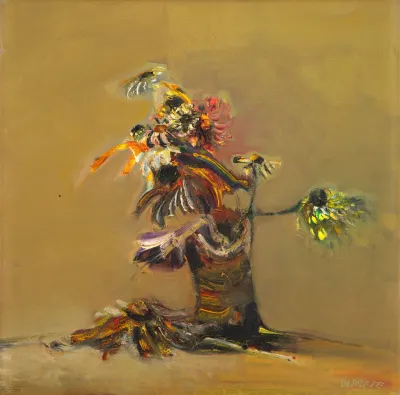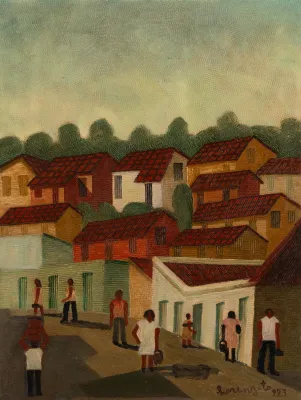
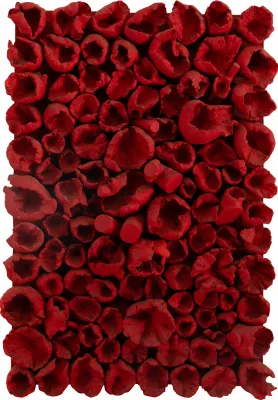
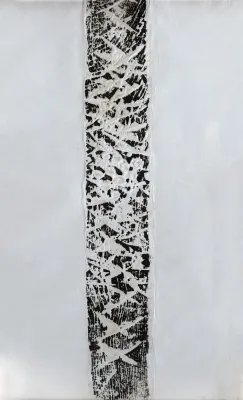
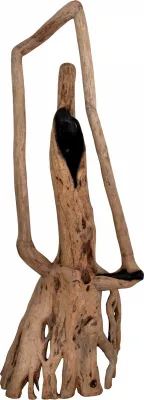

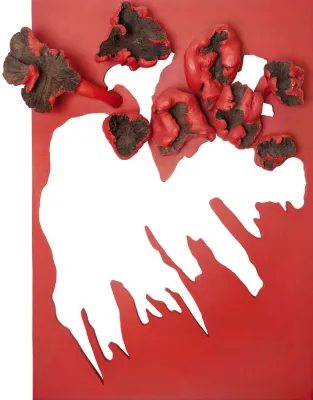
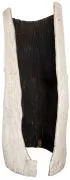
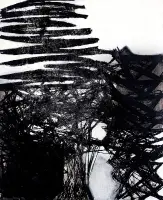
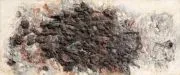
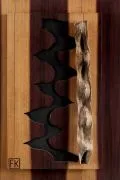

Frans Krajcberg (Kozienice, Poland 1921 - Rio de Janeiro RJ 2017)
Frans Krajcberg was a Brazilian painter, sculptor, printmaker and photographer of Polish origin, recognized as one of the leading names in 20th-century Brazilian art. His work stands out for its strong relationship with nature and for its environmental activism, central themes throughout his career.
Born in Kozienice, Poland, on April 12, 1921, he went through harrowing experiences during World War II, a period that deeply influenced his artistic production. During the conflict, he took refuge in the Soviet Union, where he studied engineering and art at Leningrad University. The loss of his family in Nazi concentration camps and his experience as a prisoner and as an engineer in the Red Army shaped his worldview, marked by denunciation and emotional expression.
After the war, he continued his training in Germany, studying at the Stuttgart Academy of Fine Arts under Willi Baumeister, an important stage in his artistic development.
Krajcberg arrived in Brazil in 1948 and took part in the 1st São Paulo International Biennial in 1951. His early production engaged with abstraction, but over the years he came to incorporate nature as a central element. In the 1950s, he lived between Paris, Ibiza and Rio de Janeiro, keeping in touch with artists such as Fernand Léger and Marc Chagall.
In this period, he had decisive experiences in Minas Gerais, where he produced sculptures and prints from stone in direct contact with the landscape, contributing to the construction of his artistic language.
In 1956, he settled permanently in Rio de Janeiro and began sharing a studio with Franz Weissmann. Naturalized Brazilian in 1957, he began creating sculptures from the wood of dead trees, broadening his research into natural materials.
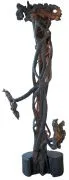
From 1964 onward, his trips to the Amazon and the Pantanal intensified his environmental commitment. Using burned trunks and roots, he transformed the remains of destruction into sculptures of strong visual and critical impact. This period consolidated his international standing and his position as a reference in ecological art.
In 1972, he founded Sítio Natura, in Nova Viçosa, Bahia, a space that served as his home, studio and environmental preservation center. The site holds thousands of seedlings of native species and a house designed by Zanine Caldas. It welcomed figures such as Chico Buarque, Oscar Niemeyer and Dorival Caymmi, becoming an important part of his legacy.
Frans Krajcberg's works express a deep connection with nature, especially the Amazon, through sculptures, reliefs and photographs that denounce environmental devastation. Throughout his career, he took part in exhibitions in many countries, published books and received important awards.
His honors include the APCA Grand Prize, in 2008, and the title of Knight of the Order of Ipiranga, in 2009. That same year, he donated his collection to the State of Bahia, ensuring its preservation.
Even after his death, in 2017, his work remains relevant. In 2021, the biography Frans Krajcberg – O Poeta da Árvore [The Poet of the Tree], by Athylla Borborema, was published, and recent exhibitions reaffirm his importance.
Today, Frans Krajcberg is recognized as one of the leading Brazilian artists associated with environmental art, a symbol of the union between art and ecological activism. His legacy continues to influence artists, researchers and environmentalists in Brazil and around the world.
Critical Commentary
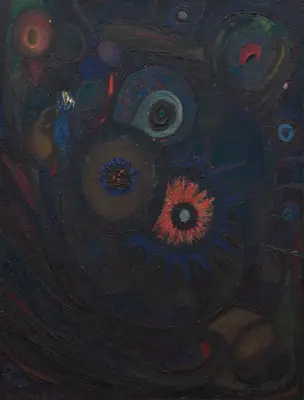
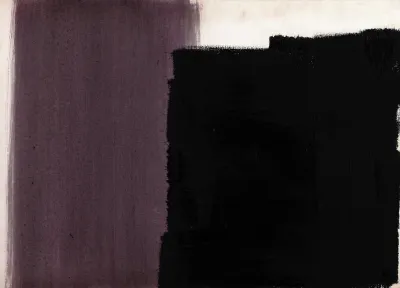
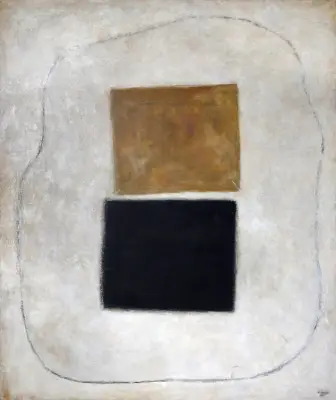
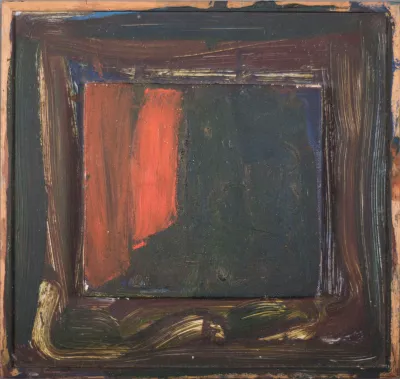
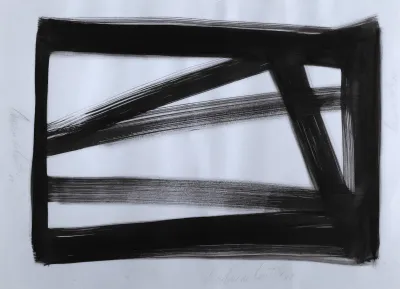
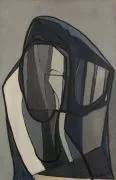
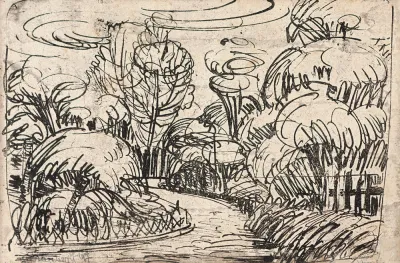
Frans Krajcberg was born in Poland and arrived in Brazil in 1948, seeking to rebuild his life after losing his family in a concentration camp during World War II. Trained in engineering and art at Leningrad University, he began his artistic career in Brazil with abstract paintings in ochres and grays that evoked the forest of Paraná, marked by vigorous, interlaced lines. After a period in Paraná, he moved to Rio de Janeiro, where he shared a studio with Franz Weissmann, consolidating his place in the Brazilian art scene.
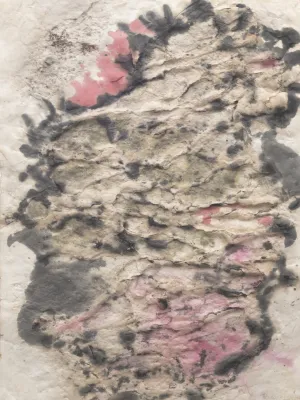
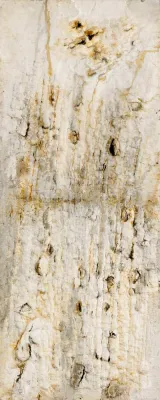
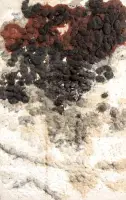
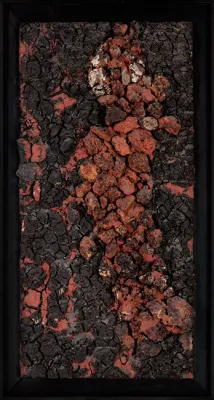
Between 1958 and 1964, Frans Krajcberg lived between Paris and Ibiza, in Spain, producing works on Japanese paper molded over stones and painted with oil or gouache, whose textures evoked volcanic or lunar landscapes. In Ibiza, he developed his well-known "terras craqueladas" (cracked earths), monochrome reliefs built with pigments extracted from soils and minerals. For the critic Frederico Morais, this period showed how nature was becoming the essential raw material of Frans Krajcberg's poetics.
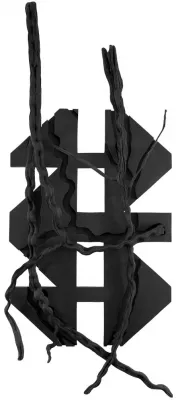
His return to Brazil in 1964 marked a significant expansion of his formal research. Based in Cata Branca, Minas Gerais, he intensified his relationship with color and three-dimensional space. This gave rise to the series of cut-out shadows, in which vines and roots engage with geometric wooden forms, creating visual contrasts and projected shadows that reveal his interest in integrating natural organicity into sculptural language.
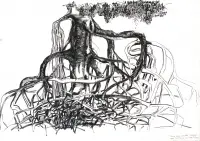
From 1972, Frans Krajcberg settled in Nova Viçosa, Bahia, deepening his sculptural investigation with trunks and roots as expressive elements. His forms seemed to sprout from the ground or reach upward, like gestures of resistance and freedom. Environmental activism became central from 1978: "With my work, I express the planet's outraged conscience." On expeditions through the Amazon and Mato Grosso, he recorded fires and deforestation, incorporating charred trunks into his sculptures and reinforcing the ecological and political dimension of his work.
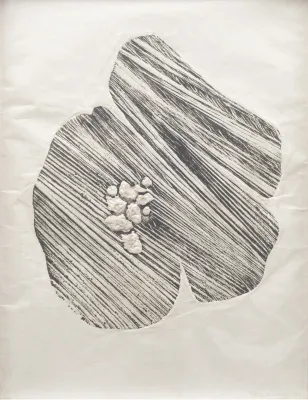
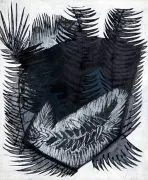
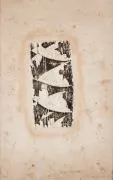
In the 1980s, Frans Krajcberg created a series of "prints" made from plaster molds of the leaves of embaúba and other century-old trees, transferred onto Japanese paper. He also developed the series Africana, bringing together roots, vines and palm stems with mineral pigments, showing his investigation of texture, matter and territoriality. At the same time, photography remained a constant in his production, recording his sculptures in dialogue with the sea and serving as an instrument of environmental denunciation.
Throughout his career, Frans Krajcberg upheld a conception of art inseparable from nature. The Brazilian landscape - especially the Amazon rainforest - and the defense of the environment became the structural axes of his career. His work sought to denounce environmental destruction and reaffirm the value of natural life, consolidating Frans Krajcberg as one of the main references in Brazilian art committed to ecological issues.
Critiques
Sheila Leirner
Nature as Aesthetic Language
"He uses natural elements the way a poet uses words. And, just as in poetry, he brings to light expressions that already existed but went unnoticed. He serves as the messenger of a coded language dictated to him by the sea on the sand, the wind in the trees, the trunks in the earth, revealing a nature previously only sensed within the aesthetic canons to which we are accustomed (...). Even if his sculptures and prints contain no allusion to art as a social phenomenon, strictly bound to the processes of civilization, they remain whole, unique and independent; they transcend any reflection one might wish to make on contemporary issues. Because they possess the 'permanent truth' we find in rare examples of universal art."
Source: LEIRNER, Sheila. Frans Krajcberg. In: MODERNIDADE: arte brasileira do século XX. São Paulo: Hamburg, 1988. p. 116.
Pierre Restany
Redemption through Art by Way of the Brazilian Forest
"Frans Krajcberg belongs to that rare breed of men who are self-marginalized and highly individualistic, but also very generous in their solitude. Life was harsh to him, and the ordeals of the last war marked him forever. The Brazilian forest was at once the medium, the stage and the agent of a true human renewal - Krajcberg's redemption through art."
Source: RESTANY, Pierre. Frans Krajcberg revolta. Rio de Janeiro: GB Arte, 2000. p. 48.
Frederico Morais
Art as Ethics and the Memory of Nature
"The work produced by Frans Krajcberg over half a century, based on an intimate relationship with nature, is more than an aesthetic project. It is an ethic. It is the invention of a destiny through the reinvention of nature. By making his work a kind of memory of nature, which he causes to erupt in the midst of culture, he seeks to cancel out another memory: his own past. He shaped his destiny according to the demands of a relationship with nature that takes on a messianic character. A titanic struggle he has been waging within nature itself, in the volcanic heart of natural matter, in the name of an individual revolt that had much to do with his solitude but which acquired, over time, a universal and planetary dimension, when viewed on the more ambitious level of an ecological politics and ethics."
Source: MORAIS, Frederico. Frans Krajcberg: a arte como revolta. In: FRANS Krajcberg revolta. Rio de Janeiro: GB Arte, 2000.
Testimonials
Frans Krajcberg
Memories of Childhood, Displacement and Reconnection with Nature
"As a child, I used to isolate myself in the forest. I was not yet aware of nature, nor was I moved by it. I don't know if I was dreaming or if I (...) It was the only place where I could question myself. As a child, I suffered greatly from the cruel racism caused by religion - fanatics who accepted nothing. I wondered why I had been born there, and not in another country where I would be hated less. Why was I born in that town where I did not have the same rights as others? My mother was an activist, constantly imprisoned. I took part in all of it; I truly adored my mother. At 13, I began to become politicized and to want to paint. We had no money for paper, and that marked me deeply. (...) I built my house in the forest. A wildcat adopted me.
I collected orchids. I certainly had the largest orchid collection in Brazil. But the sun was always red and the sky never blue. There was smoke day and night. One day I was invited to go to northern Paraná. The trees were like men burned by war. I couldn't bear it. I traded my house for a plane ticket to Rio. (...) In Paris, people talked above all about Tachisme. And I witnessed the death of Tachisme. Paris stimulated me, but I felt lost. I had stopped painting. In Rio, turpentine was already poisoning me. I ran away to work. I left for Ibiza. And for the first time I felt the need to feel matter, not paint. I made impressions of earth and stones. Soon after, I began gluing earth directly. It looked like a kind of Tachisme, but it wasn't. It is not paint thrown (flung or cast). There is no painterly gesture. They are impressions, reliefs. Pieces of nature. Soon I could no longer work in Paris. Where would I find my earths? Later, when I swapped Ibiza for Minas, I took wood from Brazil to Paris, until 1967. But I was always missing a piece. Then I began to find this process of taking wood from Minas to work on it in Paris false. (...)
I liked the insolence of the Nouveaux Réalistes and their freedom. They wanted to set aside the formal machinery of abstraction without falling back into figuration. They wanted to abandon the merely painterly gesture. They wanted to show the nature of cities.
Hains's torn posters, Tinguely's machines, Arman's industrial accumulations, César's compressions were the nature of cities. But in cities there are also lights and movements. That is why Op Art interested me. The artist must not only go out to meet nature, but take part in his time. (...) I wanted to capture nature in its suffering. I began photographing in order to see better, closer, beyond the eye. I discovered color, earths of pure pigment, colors that are matter. There are hundreds of them: ochre, gray, brown, green, an immense range of reds. Since 1964, all my colors have come from Minas Gerais, and I have a good reserve in Nova Viçosa. (...) I collected dead trunks in the fields of Minas, and with them I made my first sculptures, setting them in the earth. I wanted to give them new life. It was my naive and romantic phase. (...) Amazonian nature calls my sensibility as a modern man into question. It also calls into question the scale of traditionally recognized aesthetic values. (...) If Mondrian went from the tree to the square, he only used one of the tree's possibilities. Now we must break the square to rediscover the tree. Integral Nature can give new meaning to the individual values of sensibility and creativity."
Source: KRAJCBERG, Frans. Frans Krajcberg: imagens do fogo. Rio de Janeiro: MAM, 1992. p. 46-53.
Solo Exhibitions
1945 - Stuttgart (Germany) - Solo, at the Refugee Center
1951 - São Paulo SP - Solo, at Galeria Domus
1952 - São Paulo SP - Solo, at MAM/SP
1954 - Curitiba PR - Solo, at the Municipal Library
1955 - Monte Alegre PR - Solo, at Hotel Monte Alegre
1955 - Rio de Janeiro RJ - Solo, at Petite Galerie
1956 - Rio de Janeiro RJ - Solo, at Galeria GEA
1956 - São Paulo SP - Solo, at MAM/SP
1960 - Paris (France) - Solo, at Galerie du XX Siècle
1960 - Rio de Janeiro RJ - Solo, at Galeria Bonino
1962 - Milan (Italy) - Solo, at Galleria del Naviglio
1962 - Oslo (Norway) - Solo, at Galerie 27
1962 - Paris (France) - Solo, at Galerie du XX Siècle
1962 - Rio de Janeiro RJ - Solo, at Petite Galerie
1962 - São Paulo SP - Solo, at Galeria São Luís
1963 - Ibiza (Spain) - Solo, at Galeria Ivan Spence
1963 - Rome (Italy) - Solo, at Galleria Casa do Brasil
1963 - Rome (Italy) - Solo, at Galleria d'Arte della Casa do Brasil
1964 - Belo Horizonte MG - Solo, at Museu de Arte da Pampulha
1964 - Paris (France) - Solo, at Galerie La Hune
1964 - Rio de Janeiro RJ - Solo, at Petite Galerie
1964 - Rio de Janeiro RJ - Solo, at MAM/RJ
1966 - Paris (France) - Solo, at Galerie Debret
1966 - Paris (France) - Solo, at Galerie J
1966 - Rio de Janeiro RJ - Solo, at Galeria Relevo
1967 - Atlanta (United States) - Solo, at Illien Gallery
1967 - Salvador (Bahia) - Solo, at Galeria Querino
1968 - Paris (France) - Solo, at Galerie Maywald
1968 - Rio de Janeiro RJ - Solo, at Galeria Barcinski
1969 - Adenhauer (Netherlands) - Solo, at Philips Museum
1969 - Jerusalem (Israel) - Solo, at The Israel Museum of Art
1970 - Rio de Janeiro RJ - Solo, at Petite Galerie
1972 - Paris (France) - Solo, at Espace Pierre Cardin
1972 - São Paulo SP - Solo, at Galeria Múltipla de Arte - awarded Best Exhibition
1972 - São Paulo SP - Solo, at Galeria Ralph Camargo
1973 - Paris (France) - Solo, at Galerie du XX Siècle
1973 - Rio de Janeiro RJ - Solo, at Maison de France
1974 - Rio de Janeiro RJ - Solo, at MAM/RJ
1975 - Paris (France) - Solo, at Centre Georges Pompidou
1975 - Paris (France) - Solo, at Centre National d'Art Contemporain
1976 - Brasília DF - Solo, at Fundação Cultural do Distrito Federal
1976 - Caen (France) - Solo, at Musée National de Beaux-Arts
1976 - São Paulo SP - Solo, at Galeria Arte Global
1978 - Vitória ES - Solo, at Galeria Homero Massena
1979 - São Paulo SP - Solo, at Skultura Galeria de Arte
1980 - Rio de Janeiro RJ - Solo, at Galeria Gravura Brasileira
1980 - Rio de Janeiro RJ - Solo, at Petite Galerie
1981 - Curitiba PR - Solo, at Sala Miguel Bakun
1981 - Curitiba PR - Solo, at Solar do Rosário
1981 - Rio de Janeiro RJ - Solo, at Galeria Jean Boghici
1981 - São Paulo SP - Krajcberg, at Skultura Galeria de Arte
1983 - Stockholm (Sweden) - Solo, at Cupido Bildkonst
1984 - Rio de Janeiro RJ - Frans Krajcberg: Photographs, at MAM/RJ
1986 - Fortaleza CE - Solo, at Arte Galeria
1986 - Paris (France) - Solo, at Galerie Charles Sablon
1986 - Rio de Janeiro RJ - Krajcberg: Sculptures, at Galeria Thomas Cohn
1986 - Rio de Janeiro RJ - Krajcberg: Photographs, at Petite Galerie
1986 - Rio de Janeiro RJ - Krajcberg: Reliefs, at GB ARTe
1986 - São Paulo SP - Solo, at Galeria Arco
1988 - Boulogne-sur-Mer (France) - Solo, at Centre Cultural Boulogne Bittencourt
1988 - Vitória ES - Solo, at Galeria Usina
1989 - Crest (France) - Solo, at Fondation Stahly
1989 - Rio de Janeiro RJ - Solo, at Galeria Thomas Cohn
1990 - Rio de Janeiro RJ - Solo, at Funarte: Galeria Sérgio Milliet
1992 - Rio de Janeiro RJ - Imagens do Fogo, at MAM/RJ
1992 - Rio de Janeiro RJ - Solo, at Galeria Thomas Cohn
1992 - Salvador BA - Imagens do Fogo, at MAM/BA
1994 - Paris (France) - Solo, at Galerie Charles Sablon
1995 - Curitiba PR - A Revolta, at Jardim Botânico
1995 - Curitiba PR - A Revolta, at Museu Metropolitano de Arte
1995 - Rio de Janeiro RJ - Nas Trilhas da Grande Mãe: New Images of Life and Death, at Fundação Casa França-Brasil
1996 - Paris (France) - Moment d'Ailleurs: Photographs by Frans Krajcberg, at Grande Halle de la Villette
1998 - Belo Horizonte MG - Frans Krajcberg: Resonances, at Itaú Cultural
1998 - Seoul (South Korea) - Imagens da Revolta
2003 - São Paulo SP - Reemerging Landscapes, at CCBB
2008 - São Paulo SP - Frans Krajcberg: Natura, at MAM/SP
Group Exhibitions
1950 - São Paulo SP - Modern Brazilian Artists, at Theatro Municipal
1950 - São Paulo SP - O. D. A. Exhibition, at IAB/SP
1951 - São Paulo SP - 1st São Paulo International Biennial, at Pavilhão do Trianon
1951 - São Paulo SP - 1st São Paulo Salon of Modern Art, at Galeria Prestes Maia
1952 - São Paulo SP - 2nd São Paulo Salon of Modern Art, at Galeria Prestes Maia
1953 - São Paulo SP - 2nd São Paulo International Biennial, at Pavilhão dos Estados
1954 - São Paulo SP - 3rd São Paulo Salon of Modern Art, at Galeria Prestes Maia - acquisition prize
1954 - São Paulo SP - Contemporary Art: exhibition of the São Paulo Museum of Modern Art collection, at MAM/SP
1955 - São Paulo SP - 3rd São Paulo International Biennial, at Pavilhão das Nações
1955 - São Paulo SP - 4th São Paulo Salon of Modern Art, at Galeria Prestes Maia
1955 - São Paulo SP - 5th São Paulo Salon of Modern Art - bronze medal
1956 - Rio de Janeiro RJ - Group Exhibition with Milton Dacosta and Maria Leontina, at Petite Galerie
1957 - Buenos Aires (Argentina) - Modern Art from Brazil
1957 - Lima (Peru) - Modern Art from Brazil
1957 - Rio de Janeiro RJ - 6th National Salon of Modern Art - jury exemption
1957 - Rosario (Argentina) - Modern Art from Brazil
1957 - Santiago (Chile) - Modern Art from Brazil
1957 - São Paulo SP - 4th São Paulo International Biennial, at Pavilhão Ciccillo Matarazzo Sobrinho - best Brazilian painter award
1957 - São Paulo SP - 6th São Paulo Salon of Modern Art, at Galeria Prestes Maia - acquisition prize
1957 - São Paulo SP - Leirner Contemporary Art Prize, at Galeria de Arte das Folhas
1959 - Leverkusen (Germany) - First Collective Exhibition of Brazilian Artists in Europe
1959 - London (United Kingdom) - Group Exhibition with Piza and Paulo Chaves, at Drian Gallery
1959 - Munich (Germany) - First Collective Exhibition of Brazilian Artists in Europe, at Kunsthaus
1959 - São Paulo SP - 40 Artists from Brazil, at Galeria São Luís
1959 - Vienna (Austria) - First Collective Exhibition of Brazilian Artists in Europe
1960 - Hamburg (Germany) - First Collective Exhibition of Brazilian Artists in Europe
1960 - Lisbon (Portugal) - First Collective Exhibition of Brazilian Artists in Europe
1960 - Madrid (Spain) - First Collective Exhibition of Brazilian Artists in Europe
1960 - Paris (France) - First Collective Exhibition of Brazilian Artists in Europe
1960 - Utrecht (Netherlands) - First Collective Exhibition of Brazilian Artists in Europe
1961 - New York (United States) - Group Exhibition, at Rose Fried Gallery
1961 - Paris (France) - O Relevo, at Galerie du XX Siècle
1961 - Paris (France) - Salon Comparaisons
1961 - Rio de Janeiro RJ - 1st Face and Work, at Galeria Ibeu Copacabana
1961 - São Paulo SP - 6th São Paulo International Biennial, at Pavilhão Ciccillo Matarazzo Sobrinho
1962 - Colorado (United States) - New Art from Brazil
1962 - Minneapolis (United States) - New Art from Brazil, at Walker Art Center
1962 - Paris (France) - Artists of the Americas, at Musée d'Art Moderne de la Ville de Paris
1962 - Paris (France) - École de Paris, at Galerie Charpentier
1962 - Paris (France) - Latin American Art Exhibition in Paris, at Musée d'Art Moderne de la Ville de Paris
1962 - San Francisco (United States) - New Art from Brazil
1962 - São Paulo SP - Selection of Brazilian Artworks from the Ernesto Wolf Collection, at MAM/SP
1962 - St. Louis (United States) - New Art from Brazil
1963 - Paris (France) - 7 Brazilian Artists of the École de Paris, at Galerie du XX Siècle
1963 - Rio de Janeiro RJ - 1st JB Art Summary, at Jornal do Brasil
1963 - São Paulo SP - 7th São Paulo International Biennial, at Fundação Bienal
1964 - London (United Kingdom) - Adventure in Ibiza, at Leicester Gallery
1964 - London (United Kingdom) - Group Exhibition, at Center for Advanced Creative Studies
1964 - Venice (Italy) - 32nd Venice Biennale - City of Venice Award
1965 - Cannes (France) - Brazilian Painters, Sculptors, Printmakers, at Galerie Cavalero
1965 - Lisbon (Portugal) - Salon Comparaisons
1965 - Paris (France) - Latin American Art Exhibition in Paris, at Musée d'Art Moderne de la Ville de Paris
1965 - Paris (France) - Salon Comparaisons
1965 - Prague (Czechoslovakia, now Czech Republic) - Salon Comparaisons
1965 - Rio de Janeiro RJ - 3rd JB Art Summary, at MAM/RJ
1965 - São Paulo SP - 8th São Paulo International Biennial, at Fundação Bienal
1966 - Rio de Janeiro RJ - 4th JB Art Summary, at MAM/RJ
1966 - Salvador BA - 1st National Biennial of Visual Arts - special room
1967 - Paris (France) - Forms and Places, at Galerie Maywald
1968 - Paris (France) - White Exhibition, at Galerie La Hune
1968 - Paris (France) - Young Sculpture Salon
1968 - Paris (France) - Salon Comparaisons
1968 - Saint-Paul de Vence (France) - Living Art, at Fondation Maeght
1969 - Montreal (Canada) - Art and Matter
1969 - Paris (France) - 25th Salon de Mai, at Musée d'Art Moderne de la Ville de Paris
1969 - Paris (France) - Salon de Mai
1969 - Rio de Janeiro RJ - 7th JB Art Summary, at MAM/RJ
1970 - Ingelheim am Rhein (Germany) - Brazilian Days
1970 - Menton (France) - 8th Biennale of Menton
1970 - Rio de Janeiro RJ - Exhibition, at Petite Galerie
1971 - Paris (France) - Paintings and Objects, at Musée Galliera
1971 - Rio de Janeiro RJ - 9th JB Art Summary, at MAM/RJ
1972 - São Paulo SP - 4th Panorama of Contemporary Brazilian Art, at MAM/SP
1972 - São Paulo SP - Art/Brazil/Today: 50 Years Later, at Galeria Collectio
1973 - Paris (France) - Seven Brazilian Artists, at Galerie du XX Siècle
1973 - Rio de Janeiro RJ - International Vanguard, at Galeria Ibeu Copacabana
1974 - St. Etienne (France) - Minimal Art, at Musée d'Art et d'Industrie
1977 - Belo Horizonte MG - 5th Global Winter Salon, at Fundação Palácio das Artes
1977 - Brasília DF - 5th Global Winter Salon
1977 - Rio de Janeiro RJ - 2nd Arte Agora: Vision of the Land, at MAM/RJ
1977 - Rio de Janeiro RJ - 5th Global Winter Salon, at MNBA
1977 - Rio de Janeiro RJ - Outdoor Sculpture, at Galeria de Arte Sesc Tijuca
1977 - São Paulo SP - 14th São Paulo International Biennial, at Fundação Bienal
1977 - São Paulo SP - 5th Global Winter Salon, at MASP
1978 - São Paulo SP - Biennials and Abstraction: The 1950s, at Museu Lasar Segall
1979 - São Paulo SP - 15th São Paulo International Biennial, at Fundação Bienal
1980 - Rio de Janeiro RJ - Homage to Mário Pedrosa, at Galeria Jean Boghici
1981 - Belo Horizonte MG - Hilton Highlights in Printmaking, at Palácio das Artes
1981 - Brasília DF - Hilton Highlights in Printmaking, at ECT Galeria de Arte
1981 - Curitiba PR - Hilton Highlights in Printmaking, at Casa da Gravura Solar do Barão
1981 - Florianópolis SC - Hilton Highlights in Printmaking, at MASC
1981 - Guarujá SP - Outdoor Sculpture, at Hotel Jequitimar
1981 - Porto Alegre RS - Hilton Highlights in Printmaking, at MARGS
1981 - Recife PE - Hilton Highlights in Printmaking, at MAM/PE
1981 - Rio de Janeiro RJ - Hilton Highlights in Printmaking, at MAM/RJ
1981 - Salvador BA - Hilton Highlights in Printmaking, at Teatro Castro Alves
1981 - São Paulo SP - Hilton Highlights in Printmaking, at MAM/SP
1982 - Lisbon (Portugal) - Brazil 60 Years of Modern Art: Gilberto Chateaubriand Collection, at Centro de Arte Moderna José de Azeredo Perdigão
1982 - London (United Kingdom) - Brazil 60 Years of Modern Art: Gilberto Chateaubriand Collection, at Barbican Art Gallery
1983 - Stockholm (Sweden) - Inter First Exposition
1983 - Montevideo (Uruguay) - 1st Ibero-American Print Biennale, at Museo de Arte Contemporáneo - awarded
1983 - Paris (France) - International Contemporary Art Fair
1984 - Stockholm (Sweden) - Inter First Exposition
1984 - Havana (Cuba) - 1st Havana Biennale, at Museo Nacional de Bellas Artes
1984 - London (United Kingdom) - Inter Contemporary Art Fair
1984 - Madrid (Spain) - Contemporary Art, at Galeria Arco
1984 - Paris (France) - Face à Machine, at Galerie Belechasse
1984 - Rio de Janeiro RJ - Wood, Matter of Art, at MAM/RJ
1984 - Rio de Janeiro RJ - Contemporary Brazilian Painting, at Espaço Petrobras
1984 - São Paulo SP - Gilberto Chateaubriand Collection: Portraits and Self-Portraits of Brazilian Art, at MAM/SP
1984 - São Paulo SP - Tradition and Rupture: Synthesis of Brazilian Art and Culture, at Fundação Bienal
1985 - Rio de Janeiro RJ - 8th National Salon of Visual Arts, at MAM/RJ
1985 - Rio de Janeiro RJ - Encounters, at Petite Galerie
1985 - Rio de Janeiro RJ - Commemorative Exhibition, at Galeria Bonino
1985 - Rio de Janeiro RJ - Six Decades of Modern Art: Roberto Marinho Collection, at Paço Imperial
1986 - Fortaleza CE - 1st International Exhibition of Ephemeral Sculptures, at Fundação Demócrito Rocha
1986 - Rio de Janeiro RJ - JK and the 1950s: a view of culture and daily life, at Galeria Investiarte
1987 - Paris (France) - Group Exhibition on Works on Paper, at Galerie Charles Sablon
1987 - Paris (France) - Modernity: 20th Century Brazilian Art, at Musée d'Art Moderne de la Ville de Paris
1987 - Rio de Janeiro RJ - To the Collector: Homage to Gilberto Chateaubriand, at MAM/RJ
1987 - São Paulo SP - Working with the Medium: Painting, Cutting and Object, with works by nine Brazilian artists, at Documenta Galeria de Arte
1988 - New York (United States) - Brazil Projects, at P.S.1
1988 - São Paulo SP - 19th Panorama of Contemporary Brazilian Art, at MAM/SP
1988 - São Paulo SP - Modernity: 20th Century Brazilian Art, at MAM/SP
1988 - Seoul (South Korea) - Masters of Contemporary Sculpture, at Hyundai Gallery
1989 - Lisbon (Portugal) - Six Decades of Brazilian Modern Art: Roberto Marinho Collection, at Centro de Arte Moderna José de Azeredo Perdigão
1989 - Rio de Janeiro RJ - Yesterday, Today, Tomorrow, at Galeria de Arte Centro Empresarial Rio
1989 - São Paulo SP - 20th São Paulo International Biennial, at Fundação Bienal
1990 - Middlebury (United States) - Spirit and Nature: Visions of Interdependence, at Middlebury College
1991 - São Paulo SP - The Forest, at MAC/USP
1991 - São Paulo SP - Baendereck - Krajcberg, at Banco Real
1992 - Curitiba PR - 10th Curitiba Printmaking Exhibition/America Show, at Museu da Gravura
1992 - New York (United States) - Exhibition, at MoMA
1992 - Paris (France) - Latin American Artists of the Twentieth Century, at Centre Georges Pompidou
1992 - Rio de Janeiro RJ - 1st On the Way to Niterói: João Sattamini Collection, at Paço Imperial
1992 - Rio de Janeiro RJ - Sculpture 92: Seven Expressions, at Espaço RB1
1992 - Rio de Janeiro RJ - Nature: Four Centuries of Art in Brazil, at CCBB
1992 - Salvador BA - Exhibition, at MAM/BA
1992 - São Paulo SP - Dominant White, at Escritório de Arte São Paulo
1992 - Seville (Spain) - Latin American Artists of the Twentieth Century, at Estación Plaza de Armas
1992 - Zurich (Switzerland) - Brazil: Discovery and Self-Discovery, at Kunsthaus Zürich
1993 - Cologne (Germany) - Latin American Artists of the Twentieth Century, at Kunsthalle Cologne
1993 - Niterói RJ - 2nd On the Way to Niterói: João Sattamini Collection, at MAC-Niterói
1993 - New York (United States) - Latin American Artists of the Twentieth Century, at MoMA
1993 - Rio de Janeiro RJ - Brazil: 100 Years of Modern Art, at MNBA
1993 - São Paulo SP - Brazilian Art in the World. A Trajectory: 24 Brazilian Artists, at Dan Galeria
1994 - São Paulo SP - Brazilian Modern Art: A Selection from the Roberto Marinho Collection, at MASP
1994 - São Paulo SP - Prints: Subtleties and Mysteries, Printing Techniques, at Pinacoteca do Estado
1994 - São Paulo SP - The New Travelers, at Sesc Pompéia
1994 - São Paulo SP - Poetics of Resistance: Aspects of Brazilian Printmaking, at Galeria de Arte do Sesi
1995 - Rio de Janeiro RJ - Brazilian Modern Art and Decoration, at Rio Design Center
1996 - Brasília DF - Four Contemporary Brazilian Master Sculptors, at Ministry of Foreign Affairs, Palácio do Itamaraty
1996 - Niterói RJ - Contemporary Brazilian Art in the João Sattamini Collection, at MAC-Niterói
1996 - Paris (France) - Villette-Amazone: Manifesto for the Environment in the 21st Century, at Grand Halle de la Villette
1996 - Rio de Janeiro RJ - 1st Brahma Reciclarte, at Jardim Botânico
1996 - São Paulo SP - Brazilian Art: 50 Years in the MAC/USP Collection: 1920-1970, at MAC/USP
1996 - São Paulo SP - Brazil: A Refuge in the Tropics, at CCSP
1997 - Niterói RJ - Between Sculptures and Objects, at MAC-Niterói
1997 - São Paulo SP - Diversity in Contemporary Brazilian Sculpture, at Avenida Paulista
1997 - São Paulo SP - Brazilian Sculpture: Profile of an Identity, at Espaço Cultural Safra
1997 - São Paulo SP - Nine Artists of Jewish Origin, at Galeria Municipal
1997 - São Paulo SP - Three-Dimensionality in 20th Century Brazilian Art, at Itaú Cultural
1997 - Washington D.C. (United States) - Brazilian Sculpture: Profile of an Identity, at BID Cultural Center
1998 - Belo Horizonte MG - Three-Dimensionality in 20th Century Brazilian Art, at Itaú Cultural
1998 - Brasília DF - Three-Dimensionality in 20th Century Brazilian Art, at Itaú Galeria
1998 - Middlebury (United States) - Artistic Imagination and Ecological Values, at Middlebury College Museum of Art
1998 - Niterói RJ - Mirror of the Biennale, at MAC-Niterói
1998 - Paris (France) - Inaugural Group Exhibition at Musée de Montparnasse
1998 - Paris (France) - Être Nature, at Fondation Cartier pour l'Art Contemporain
1998 - Penápolis SP - Three-Dimensionality in 20th Century Brazilian Art, at Galeria Itaú Cultural
1998 - São Paulo SP - Amazonas, at Itaú Cultural
1998 - São Paulo SP - Canibáliafetiva, at A Estufa
1998 - São Paulo SP - The Modern and the Contemporary in Brazilian Art: Gilberto Chateaubriand Collection - MAM/RJ, at MASP
1998 - São Paulo SP - São Paulo: 50, at Biblioteca Municipal Mário de Andrade
1999 - Paris (France) - Les Champs de la Sculpture, at Champs-Elysées
1999 - Rio de Janeiro RJ - Amazonas, at Espaço Cultural dos Correios
1999 - Rio de Janeiro RJ - Rio Printmaking Exhibition: Modern Brazilian Prints: MNBA Collection, at MNBA
2000 - Lisbon (Portugal) - 20th Century: Art from Brazil, at Centro de Arte Moderna José de Azeredo Perdigão
2000 - Niterói RJ - Sattamini Collection: From Materials to Internal Differences, at MAC-Niterói
2000 - Rio de Janeiro RJ - Brasilidades, at Centro Cultural Light
2000 - São Paulo SP - Brazil + 500 Exhibition of Rediscovery. Contemporary Art, at Fundação Bienal
2001 - Porto Alegre RS - Liba and Rubem Knijnik Collection: Contemporary Brazilian Art, at MARGS
2001 - São Paulo SP - Trajectory of Light in Brazilian Art, at Itaú Cultural
2002 - Niterói RJ - Works on Paper, at MAC-Niterói
2002 - Rio de Janeiro RJ - Paths of the Contemporary 1952-2002, at Paço Imperial
2002 - São Paulo SP - Modernism: From the Week of 22 to Sérgio Milliet’s Art Section, at CCSP
2003 - Niterói RJ - Appropriations, at MAC-Niterói
2003 - Rio de Janeiro RJ - Order x Freedom, at MAM/RJ
2003 - Rio de Janeiro RJ - Treasures of Caixa: Brazilian Modern Art in Caixa Collection, at Conjunto Cultural da Caixa
2003 - São Paulo SP - Art and Society: A Controversial Relationship, at Itaú Cultural
2003 - São Paulo SP - Sculptors - Sculptures, at Pinakotheke
2004 - Rio de Janeiro RJ - The Century of a Brazilian: Roberto Marinho Collection, at Paço Imperial
2004 - São Paulo SP - Abstraction as Language: Profile of a Collection, at Pinakotheke
2004 - São Paulo SP - Cabinet of Paper, at CCSP
2005 - São Paulo SP - The Century of a Brazilian: Roberto Marinho Collection, at MAM/SP
2007 - São Paulo SP - Itaú Contemporary: Art in Brazil, at Itaú Cultural