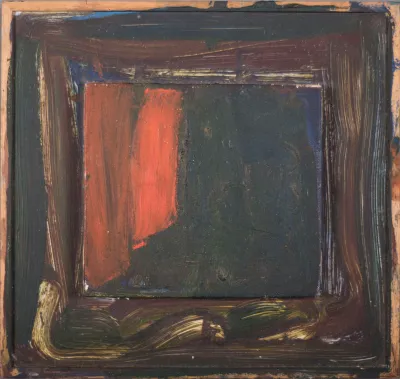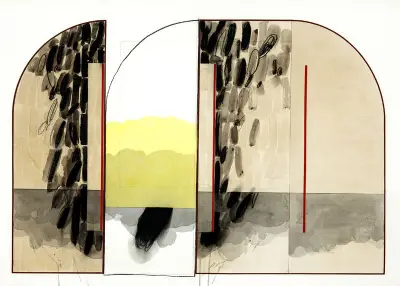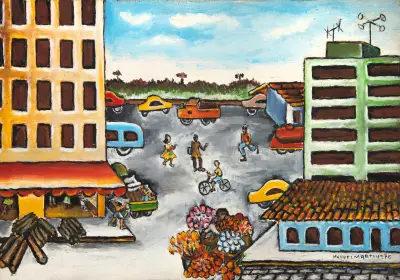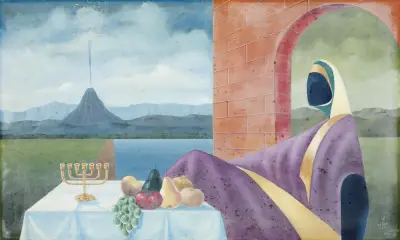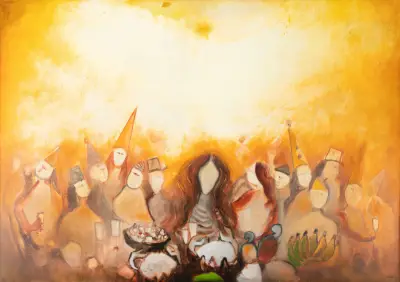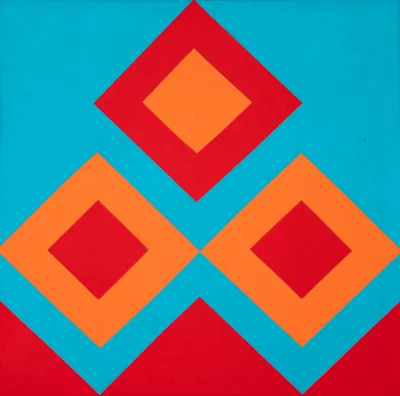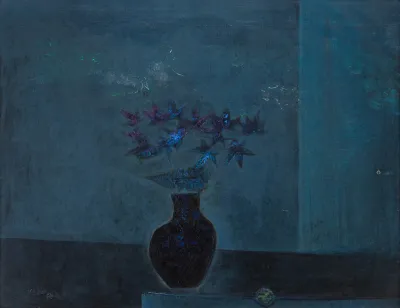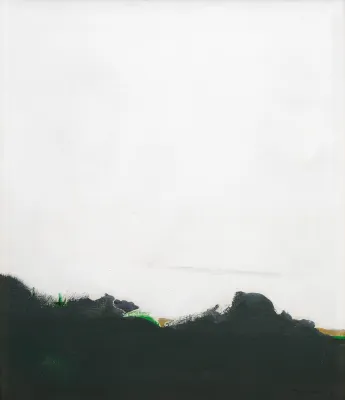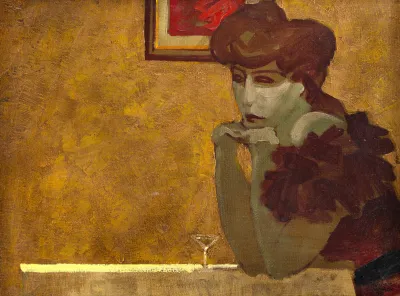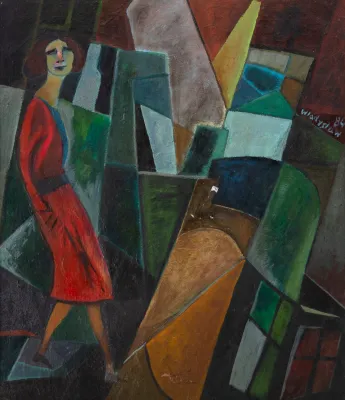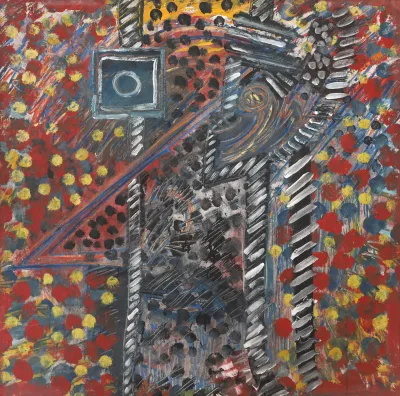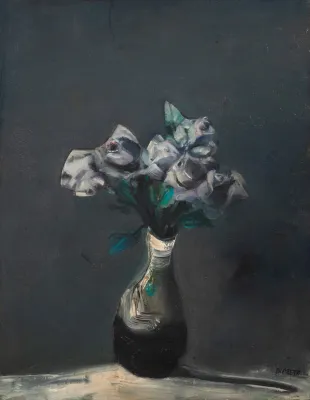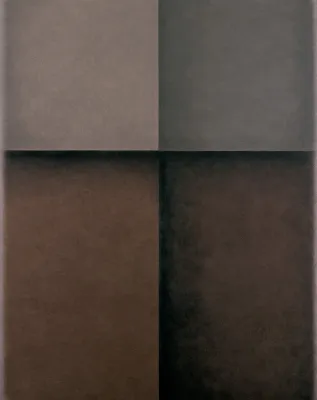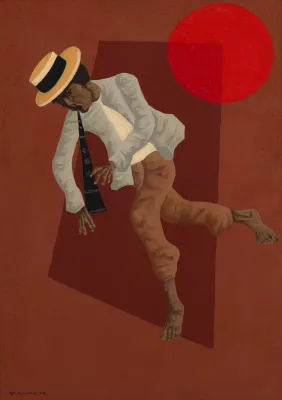
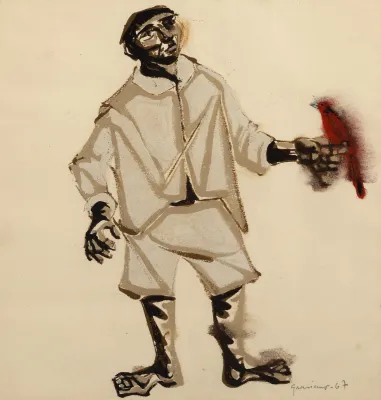
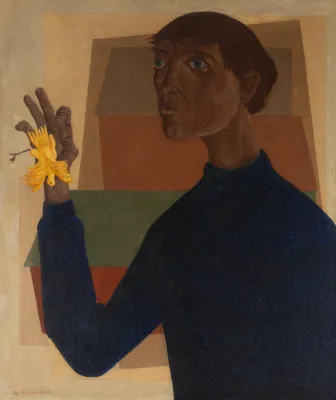
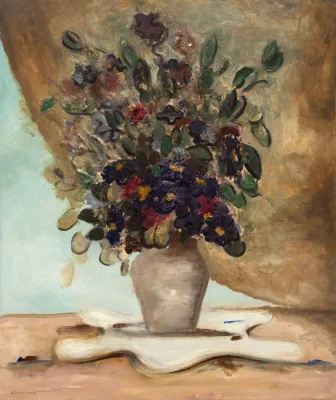
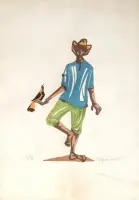

Clóvis Graciano (Araras SP 1907 - São Paulo SP 1988)
Clóvis Graciano was a prominent painter, draftsman, set designer, printmaker and illustrator on the Brazilian art scene. Born in Araras (SP), he settled in São Paulo in 1934, where he studied with the painter Waldemar da Costa between 1935 and 1937. In 1937, Graciano joined the Santa Helena Group, alongside artists such as Francisco Rebolo, Mario Zanini and Bonadei, marking the beginning of his career alongside important names in Brazilian art. During this period, he attended the drawing course at the Escola Paulista de Belas Artes until 1938, without completing formal training. In 1939, he was elected president of the Família Artística Paulista (FAP), a key group on the São Paulo art scene at the time.
Graciano’s career was consolidated through his active participation in the Salons of the Sindicato dos Artistas Plásticos, and he held his first solo exhibition in 1941. In 1948, he was one of the founding members of the Museu de Arte Moderna de São Paulo (MAM/SP), strengthening his ties with Brazilian cultural institutions. That same year, he received an award at the Salão Nacional de Belas Artes that made possible his trip to Europe in 1949, where he spent two years, mostly in Paris, studying mural painting and printmaking. This period was decisive for his artistic development, especially in mural painting, which he came to master in the following years.
From the 1950s onward, Clóvis Graciano devoted himself mainly to mural painting, while also illustrating important literary works such as "Cancioneiro da Bahia", by Dorival Caymmi, and "Terras do Sem Fim", by Jorge Amado. In 1971, he became director of the Pinacoteca do Estado de São Paulo (Pesp), a post that reinforced his commitment to preserving and disseminating Brazilian art. From 1976 to 1978, he served as cultural attaché in Paris, expanding his international influence.
Throughout his career, Graciano remained faithful to figuration, with a body of work marked by the depiction of social themes and the search for an art that reflected the issues of Brazil and its people. His work, which moves across different artistic languages, became an important milestone in the history of modern art in Brazil.
An Indolent Bureaucrat
Born in Araras (SP), he died in São Paulo. A descendant of Italian immigrants, he was orphaned at the age of 12 and, to survive, worked at the humblest of trades.
Drawing since primary school, in 1927 he took a job with the Estrada de Ferro Sorocabana railway (Fepasa), where his task was to paint posts and signboards for the railroad.
In 1934 he moved to São Paulo as a tax inspector, dividing his time from then on between his job as a bureaucrat and his art, clearly to the latter’s advantage, so much so that ten years later he was dismissed for job abandonment.
Broadening Horizons
Drawing, which he practiced as a self-taught artist, would be the solid foundation on which he built his career from then on.
A fellow boarder who saw some of his work introduced him to Portinari (five years his senior) and, on his advice, Graciano began attending Waldemar da Costa’s studio and absorbing his teachings (1935-1937).
From drawing he soon moved on to watercolor, and from there to oil. He also attended, as an auditing student, the drawing course at the Escola Paulista de Belas Artes until 1938.
The Santa Helena Group
In 1937 he set up in the Palacete Santa Helena, where, together with Rebolo, Zanini, Bonadei and other painters who worked and experimented in an atmosphere of close cooperation, he made remarkable technical progress.
As he would say many years later, «the Santa Helena Group may not have had a thesis. It was more a group of artisan painters who sought to reform academic painting, and there was an exchange of knowledge among all of them: Volpi, Rebolo, Bonadei, Pennacchi, Tomás Santa Rosa and a number of others. They exchanged knowledge, exchanged techniques, and ended up doing something very important for the time».
He held his first exhibition in 1937, in Pará, with other members of the Santa Helena Group. From the Group, he moved on to the Família Artística Paulista (of which he would be president in 1939) and to the Sindicato dos Artistas Plásticos, regularly taking part in their exhibitions.
Following His Own Path
But it was only in 1941 that he held a solo exhibition, at the Centro Paranaense in São Paulo: India ink drawings, gouaches and monotypes, since he would only exhibit his first oil paintings in 1943. The following year he took part in a drawing competition organized by the Serviço do Patrimônio Histórico e Artístico Nacional, winning first prize.
From 1940 onward, exhibiting at the Salão Nacional de Belas Artes (Modern Division), he successively received an honorable mention in painting (1940), a silver medal in drawing (1941) and a gold medal in painting (1941).
He received the travel-abroad prize in 1948. Thus, in 1949, he left for a two-year stay in France, Italy, Belgium and other countries.
Embracing Muralism
On his return, he exhibited 30 paintings and then went on to execute a huge series of panels in São Paulo and other cities. And he explains why:
«The panel is the most democratic form of painting. The government, if it wished, could have panels painted in public places, such as stations, sports grounds, etc.
It is a way of bringing art to the people, of immortalizing historical moments, so that everyone has the chance to see them. The canvas belongs to a minority. The panel belongs to all who wish to see it.»
A Figurative Painter by Devotion
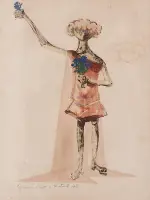
Graciano, who also worked in set design and created costumes for theater and ballet, stood out as a book illustrator and also held some public posts, such as director of the Pinacoteca do Estado de São Paulo (to which he was appointed in 1971) and cultural attaché in Paris.
Throughout his career, Graciano remained faithful to figuration, never having felt even slightly the lure of Abstractionism. In a 1972 interview, the artist would explain, not without a certain pride:
My business is the figure, which I have never abandoned.
Studying this apparent immunity of Graciano to Non-Figurativism, José Geraldo Vieira explained it ingeniously in a 1957 text published in Habitat:
«To anyone who might find it strange that Clovis Graciano, always so astute, has stubbornly remained with the human figure and nature, one may answer that, at the outset, he was of necessity an abstract painter by profession.
For, painting posts and gates, along occasional routes of signboards and branch lines of a railway, he left on many a log, with the taboo look of a totem, concrete colors, without gradation, sufficiently dense.
And on the semaphore discs of sidings and transfer points he left many chromatic balls in the manner of those of Sophie Taeuber-Arp.»
Influences of Picasso and Cézanne
But, like so many other Brazilian painters of his time, Graciano was at times influenced by Picasso’s Cubism – and it may be fair to see, in those same paintings of the Bombardment series, an echo of Guernica, which preceded it by only a few years.
More than Picasso, however, it was Cézanne who left his mark on him. Curiously, it is not in the still lifes that the Cézannian note resonates; on the contrary: Graciano’s still lifes remain faithful to tradition, and in one of them, from around 1942, one can even see insects and larvae, the same ones that stealthily swarm in the marvelous flowers of Velvet Brueghel or Daniel Seghers, in a morbid allusion to death and the decay of matter.
No: Graciano assimilated Cézanne’s lesson by rationally ordering the large spaces of his panels, by composing with a geometer’s concerns the space of his biblical landscapes or of his scenes of musicians and bird catchers, in which the figurative approach of the foreground contrasts with the geometric schematization that serves as its backdrop.
Depicting horses and riders, musicians and dancers twisting in unusual poses, bird catchers and other similar themes, Graciano at times touched on the fantastic and the uncanny.»
Portinari’s Mark
No influence, however, surpassed that of Portinari, his older companion, adviser and friend, with whom he even worked for a while during his stay in Rio de Janeiro.
Portinari marked him technically, thematically and stylistically: a painting such as Família, from 1945, is linked to the great compositions on Northeastern themes that Portinari had painted shortly before, just as the many São Franciscos that Graciano painted over the years all point to Pampulha.
Conversely, some argue that Portinari found in Graciano’s Scarecrows the motivation for the many he would paint afterward.
None of these influences is enough to stifle or conceal the personal characteristics of Graciano’s style, summed up by Almeida Sales in a 1972 text as «a salient presence of drawing, a solemnly scenographic composition and, in theme, the eagerness to confer dignity on humility».
Above all, set design seems to mark all of Graciano’s work, but we would also highlight the artist’s tendency to freeze masses and volumes in midair, in the middle of a movement, temporarily devoid of gravity – a tendency more of a filmmaker than of a painter, exemplified by the painting O Domador (The Tamer), from 1974, in which the rider’s leg runs parallel to the animal’s back, in the instant before he mounts it.
This tendency toward movement, perhaps combined with some remnant of Cubism, also accounts for the paintings in which the boundaries of the forms interpenetrate, as in a juxtaposition of photographic negatives, forming what we call "the X-ray style": Mulher na Cadeira (Woman in the Chair), 1942, O Violinista (The Violinist), 1945, etc.
Critical Commentary
Clóvis Graciano studied painting with Waldemar da Costa (1904 - 1982) and joined the Santa Helena Group in 1937. With the prize he won at the Salão Nacional de Belas Artes in 1948, he traveled to Paris, where he studied printmaking and mural painting. He produced well-constructed landscapes and still lifes whose qualities, in the words of the critic Mário de Andrade (1893 - 1945), lie in the singularity of the framing, the speed of execution and the concise graphic line.
The artist shows admiration for the work of Candido Portinari (1903 - 1962), especially the Biblical Series, resorting to post-Cubist spatial structuring, in which planes overlap, destroying the illusory representation of perspective, and also using the device of distorting the figures’ hands and feet.
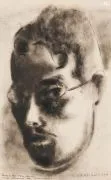
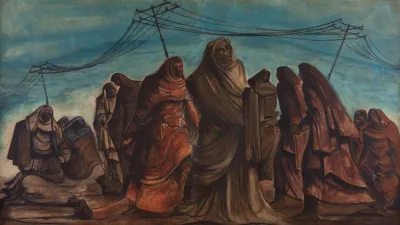
In the 1940s, Clóvis Graciano’s work was marked by the human figure and by social themes, such as that of the migrants (retirantes). He also produced self-portraits that reveal psychological nuances, expressing inner tensions, as well as several canvases on the themes of musicians and dance. From the 1950s onward, he created several murals, notably Armistício de Iperoig, at the Fundação Armando Álvares Penteado - Faap (1962); Operário, on Avenida Moreira Guimarães (1979); and the panel in the Diário Popular building, inspired by Renaissance frescoes and developing the narrative in spaces constructed from geometric planes.
Critiques
"Without ulterior motives, what I mean is that Clóvis Graciano’s paintings are almost always very simple in the intentionality of their aesthetic expression. They are not anthological works of the technical processes the artist resolves in his gradual transformation. But if, at each step, the painter dispenses with acquired qualities or problems already solved, this does not mean that he abandons them in the infidelity of a new conception of art and life. He merely dispenses with certain problems and processes of beautiful expression because, less a question of phase in general than of the immediate reality of the painting to be made, he recognizes that they are, at that moment, merely virtuoso high notes, detrimental to the painting in progress. (...)
It is true that São Paulo painting, with some rare exception, is generally characterized by the rejection of virtuosity, but within it Clóvis Graciano stands out as the anti-virtuoso par excellence. Not that he disdains the elements, any elements, through which art is Fine Art; he transfers everything through beauty and grounds himself in his concept of the intuitive manifestation of knowledge.
But in Clóvis Graciano the elements of virtuoso skill not only do not accumulate, but resist any displacement. It shines where it can shine, distorts when and as much as it must distort, and holds back when it needs to hold back. For restraint, in colors as in sounds or words, is often a form of virtuosity too, when it is not a deception.
(...) If Clóvis Graciano gives all the brilliance of color and all the glimmer of tone to a light (paper) flower, in the colored drawing of the monotype, he is not the false virtuoso who forgets the work of art, but the legitimate artist who knows how to forget himself. And it is in this acceptance, always modest, that chooses the adulterous immodesty of the monotype to let it shine, the confessional force of drawing to reveal men, genre painting to fight, landscape for the grave restraint of strict painting, that Clóvis Graciano is a perfect anti-virtuoso. His lesson is most intelligent".
Mário de Andrade
ANDRADE, Mário de. Ensaio sobre Clovis Graciano. Revista do Instituto de Estudos Brasileiros, São Paulo, n. 10, p. 156-175, 1971.
"The strong kinship among the Santa Helena painters does not exclude aspects of individual affirmation, as in the case of Clóvis Graciano. Landscape was not a concern for him to the same extent as for the others, while the human figure became the main object of his attention, especially in the themes devoted to the 'tragic voluptuousness of dance' (Mário de Andrade). An expressionist interpreter of movement, Graciano, who in terms of color is not on a par with the best painters of the brotherhood, achieved the most salient values of his work through drawing and a broad, ample sense of composition. The presence of social themes showed, at the time, an inclination that was not always encouraged among the group’s members. His production includes mural decoration, which had other representatives in this circle devoted to the study of ancestral techniques".
Walter Zanini
ZANINI, Walter (org.). História geral da arte no Brasil. São Paulo: Instituto Walther Moreira Salles: Fundação Djalma Guimarães, 1983. 2 v.
"Graciano is not, however, an expressionist merely because in him distortion is a 'necessity', a 'requirement', as Mário de Andrade keenly perceived. Graciano is an expressionist because he gives primacy to technique as work, as participatory construction, as constant experimentation, which is reflected in his concise, simple, dense line, averse to sensory vibrancy, ready to capture the essential, always seeking improvement, as shown by the evolution of his plastic motifs, gathered in series or interrelated, yet different.
If this honest technical search is common ground for the experiments of the 'São Paulo school', Graciano nevertheless endows it with his own characteristics, both expressive and thematic. And drawing soon becomes the distinguishing mark of his singularity within the Santa Helena group – a drawing built, in the expressionist manner, through a powerful chiaroscuro, by means of a firm, thick line that best highlights the contrast of black and white, exalting the luminosity of content and container, transforming black into an absolute chromatic value.
With this dense line, color and line at once, Graciano achieves in his drawings the results that the expressionist painters attained in their paintings – paintings whose meaning is determined by an arbitrary chromaticism and by the collapse of the laws of perspective. Graciano’s drawings are ones in which the inner substance is structured from a simple composition – the dialogue of lines with the spatiality of the paper. Lines, simple at first, dominated by the black/white chromatic contrast, which gradually acquire a more incorporeal, more diaphanous density as they assert themselves as a pure plastic principle, as a true agent of time and space – a time and a space that at times interpenetrate, faithful to post-Cubist lessons".
Annateresa Fabris
GRACIANO, Clóvis. Clóvis Graciano: acervo exposição e comentários. São Paulo: Centro Cultural São Paulo, 1985.
Solo Exhibitions
1939 - São Paulo SP - Solo, at Galeria Itá
1941 - São Paulo SP - Solo, at Centro Paranaense em São Paulo
1943 - São Paulo SP - Solo, at Galeria Itá
1951 - São Paulo SP - Solo, at Galeria Domus
1957 - São Paulo SP - Solo, at Clube dos Artistas
1959 - São Paulo SP - Solo, at Galeria Esquisses
1965 - São Paulo SP - Solo, at Clube Athlético Paulistano
1971 - São Paulo SP - Solo, at Galeria Cosme Velho
1973 - São Paulo SP - Solo, at Documenta Galeria de Arte
1974 - Brasília DF - Solo, at Oscar Seráphico Galeria de Arte
1978 - São Paulo SP - Clóvis Graciano: Drawings and Prints, at Christina Faria de Paula Galeria de Arte
1985 - São Paulo SP - Solo, at CCSP. Divisão de Artes Plásticas
Group Exhibitions
1937 - São Paulo SP - 1st Salon of the Família Artística Paulista, at Esplanada Hotel
1939 - Porto Alegre RS - 2nd Salon of the Associação de Artes Plásticas Francisco Lisboa
1939 - São Paulo SP - Salon of the Sindicato dos Artistas Plásticos de São Paulo
1939 - São Paulo SP - 2nd Salon of the Família Artística Paulista, at Automóvel Clube
1939 - São Paulo SP - 3rd Salão de Maio, at Galeria Itá
1939 - São Paulo SP - 5th Salon of the Sindicato dos Artistas Plásticos, at Galeria Prestes Maia
1940 - Rio de Janeiro RJ - 46th National Fine Arts Salon - Modern Division, at MNBA - honorable mention in painting
1940 - Rio de Janeiro RJ - 3rd Salon of the Família Artística Paulista, at Palace Hotel
1941 - Rio de Janeiro RJ - National Fine Arts Salon - Modern Division, at MNBA - silver medal in drawing and gold medal in painting
1941 - Rio de Janeiro RJ - 47th National Fine Arts Salon, at MNBA
1941 - São Paulo SP - 1st Art Salon of the Feira Nacional de Indústrias, at Parque da Água Branca
1942 - São Paulo SP - 7th Salon of the Sindicato dos Artistas Plásticos, at Galeria Prestes Maia
1943 - Rio de Janeiro RJ - Anti-Axis Exhibition, at Museu Histórico e Diplomático, Palácio Itamaraty
1943 - São Paulo SP - Salão Itá
1943 - São Paulo SP - Nelson Nóbrega, Clóvis Graciano and Francisco Rebolo, at Galeria Itá
1944 - Belo Horizonte MG - Modern Art Exhibition, at Edifício Mariana
1944 - London (England) - Exhibition of Modern Brazilian Paintings, at Royal Academy of Arts
1944 - Norwich (England) - Exhibition of Modern Brazilian Paintings, at Norwich Castle and Museum
1944 - Rio de Janeiro RJ - 50th National Fine Arts Salon, at MNBA
1944 - São Paulo SP - Anita Malfatti, Clóvis Graciano, Hilde Weber, Nelson Nóbrega, Francisco Rebolo, at Galeria Jaraguá
1944 - São Paulo SP - Solo, at Clóvis Graciano’s studio
1944 - São Paulo SP - Exhibition of Brazilian-North American Modern Painting, at Galeria Prestes Maia
1944 - São Paulo SP - 9th Salon of the Sindicato dos Artistas Plásticos, at Galeria Prestes Maia
1945 - Bath (England) - Exhibition of Modern Brazilian Paintings, at Victoria Art Gallery
1945 - Bristol (England) - Exhibition of Modern Brazilian Paintings, at Bristol City Museum & Art Gallery
1945 - Buenos Aires (Argentina) - 20 Artistas Brasileños, at Salas Nacionales de Exposición
1945 - Edinburgh (Scotland) - Exhibition of Modern Brazilian Paintings, at National Gallery
1945 - Glasgow (Scotland) - Exhibition of Modern Brazilian Paintings, at Kelvingrove Art Gallery
1945 - La Plata (Argentina) - 20 Artistas Brasileños, at Museo Provincial de Bellas Artes
1945 - Manchester (England) - Exhibition of Modern Brazilian Paintings, at Manchester Art Gallery
1945 - Montevideo (Uruguay) - 20 Artistas Brasileños, at Comisión Municipal de Cultura
1945 - São Paulo SP - Anita Malfatti, Virgínia Artigas, Clóvis Graciano, Mick Carnicelli, Oswald de Andrade Filho, José Pancetti, Carlos Prado, Francisco Rebolo, Quirino da Silva, Alfredo Volpi, Mario Zanini, at Galeria Itapetininga
1948 - Rio de Janeiro RJ - 54th National Fine Arts Salon - Modern Division, at MNBA - travel abroad prize
1949 - Rio de Janeiro RJ - São Paulo Painting Exhibition
1952 - Feira de Santana BA - 1st Modern Art Exhibition of Feira de Santana, at Banco Econômico
1952 - Rio de Janeiro RJ - Exhibition of Brazilian Artists, at MAM/RJ
1954 - Goiânia GO - Exhibition of the National Congress of Intellectuals
1954 - São Paulo SP - Contemporary Art: Exhibition of the Collection of the Museu de Arte Moderna de São Paulo, at MAM/SP
1955 - São Paulo SP - 4th São Paulo Modern Art Salon, at Galeria Prestes Maia
1956 - Rio de Janeiro RJ - 1st Railway Salon, at MEC
1957 - Buenos Aires (Argentina) - Modern Art in Brazil, at Museo de Arte Moderno
1957 - Lima (Peru) - Modern Art in Brazil, at Museo de Arte de Lima
1957 - Rosario (Argentina) - Modern Art in Brazil, at Museo Municipal de Bellas Artes Juan B. Castagnino
1957 - Santiago (Chile) - Modern Art in Brazil, at Museo de Arte Contemporáneo
1957 - São Paulo SP - Clube dos Artistas e Amigos da Arte
1962 - Rabat (Morocco) - Exhibition of Brazilian Artists
1962 - Casablanca (Morocco) - Exhibition of Brazilian Artists
1962 - Tangier (Morocco) - Exhibition of Brazilian Artists
1963 - Campinas SP - Contemporary Painting and Sculpture, at Museu Carlos Gomes
1964 - Rio de Janeiro RJ - The Nude in Contemporary Art, at Galeria Ibeu Copacabana
1966 - Rio de Janeiro RJ - Self-Portraits, at Galeria Ibeu Copacabana
1966 - São Paulo SP - The Santa Helena Group, Today, at Galeria de Arte 4 Planetas
1967 - São Paulo SP - The Família Artística Paulista: Thirty Years Later, at Auditório Itália
1969 - São Paulo SP - 1st Panorama of Current Brazilian Art, at MAM/SP
1970 - São Paulo SP - 2nd Panorama of Current Brazilian Art, at MAM/SP
1970 - São Paulo SP - Art/Brazil/Today: 50 Years Later, at Galeria Collectio
1972 - São Paulo SP - The Week of 22: Antecedents and Consequences, at Masp
1972 - São Paulo SP - Waldemar da Costa Retrospective: Homage to the Master, at MAC/USP
1972 - São Paulo SP - 2nd International Printmaking Exhibition, at MAM/SP
1972 - São Paulo SP - Waldemar da Costa Retrospective: Homage to the Master, at MAM/SP
1973 - São Paulo SP - 1st Brazil-Japan Fine Arts Exhibition
1975 - São Paulo SP - 40 Years: Santa Helena Group, at MIS/SP
1976 - Penápolis SP - 2nd Northwest Visual Arts Salon, at Fundação Educacional de Penápolis. Faculdade de Filosofia, Ciências e Letras de Penápolis
1976 - São Paulo SP - The Salons: of the Família Artística Paulista, of May and of the Sindicato dos Artistas Plásticos de São Paulo, at Museu Lasar Segall
1977 - São Paulo SP - 3rd Brazil-Japan Fine Arts Exhibition
1977 - São Paulo SP - Seibi Group - Santa Helena Group: 1935 to 1945, at MAB/Faap
1977 - São Paulo SP - Art Show, at Grupo Financeiro BBI
1979 - São Paulo SP - 4th Brazil-Japan Fine Arts Exhibition
1979 - São Paulo SP - The Santa Helena Group, at Uirapuru Galeria de Arte
1979 - Tokyo (Japan) - 4th Brazil-Japan Fine Arts Exhibition
1979 - Atami (Japan) - 4th Brazil-Japan Fine Arts Exhibition
1979 - Kyoto (Japan) - 4th Brazil-Japan Fine Arts Exhibition
1980 - Buenos Aires (Argentina) - Ochenta Años de Arte Brasileño, at Banco Itaú
1980 - Penápolis SP - 4th Northwest Visual Arts Salon, at Fundação Educacional de Penápolis. Faculdade de Filosofia, Ciências e Letras de Penápolis
1981 - São Paulo SP - 5th Brazil-Japan Fine Arts Exhibition
1981 - Tokyo (Japan) - 5th Brazil-Japan Fine Arts Exhibition
1981 - Atami (Japan) - 5th Brazil-Japan Fine Arts Exhibition
1981 - Kyoto (Japan) - 5th Brazil-Japan Fine Arts Exhibition
1982 - Bauru SP - 80 Years of Brazilian Art
1982 - Marília SP - 80 Years of Brazilian Art
1982 - São Paulo SP - 80 Years of Brazilian Art, at MAB/Faap
1982 - São Paulo SP - From Modernism to the Biennial, at MAM/SP
1983 - Belo Horizonte MG - 80 Years of Brazilian Art, at Fundação Clóvis Salgado. Palácio das Artes
1983 - Campinas SP - 80 Years of Brazilian Art, at MACC
1983 - Curitiba PR - 80 Years of Brazilian Art, at MAC/PR
1983 - Olinda PE - 2nd Exhibition of the Abelardo Rodrigues Visual Arts Collection, at MAC/Olinda
1983 - Ribeirão Preto SP - 80 Years of Brazilian Art
1983 - Rio de Janeiro RJ - Brazilian Self-Portraits, at Galeria de Arte Banerj
1983 - Rio de Janeiro RJ - 6th National Visual Arts Salon, at MAM/RJ
1983 - Santo André SP - 80 Years of Brazilian Art, at Prefeitura Municipal de Santo André
1984 - São Paulo SP - Tradition and Rupture: A Synthesis of Brazilian Art and Culture, at Fundação Bienal
1985 - Penápolis SP - 6th Northwest Visual Arts Salon, at Fundação Educacional de Penápolis. Faculdade de Filosofia, Ciências e Letras de Penápolis
1985 - Rio de Janeiro RJ - Six Decades of Modern Art: Roberto Marinho Collection, at Paço Imperial
1985 - São Paulo SP - 100 Itaú Works, at Masp
1985 - São Paulo SP - 18th São Paulo International Biennial, at Fundação Bienal
1988 - São Paulo SP - Brasiliana: Man and Land, at Pinacoteca do Estado
1988 - São Paulo SP - MAC 25 Years: Highlights of the Initial Collection, at MAC/USP
Posthumous Exhibitions
1988 - São Paulo SP - 15 Years of the Brazil-Japan Fine Arts Exhibition, at Fundação Mokiti Okada
1989 - Lisbon (Portugal) - Six Decades of Brazilian Modern Art: Roberto Marinho Collection, at Centro de Arte Moderna José de Azeredo Perdigão
1992 - Poços de Caldas MG - Brazilian Modern Art: Collection of the Museum of Contemporary Art of the University of São Paulo, at Casa da Cultura de Poços de Caldas
1992 - São Paulo SP - Sérgio’s Gaze on Brazilian Art: Drawings and Paintings, at Biblioteca Municipal Mário de Andrade
1993 - Campina Grande PB - Assis Chateaubriand - UEPB, at Maac
1993 - São Paulo SP - 100 Masterpieces of the Mário de Andrade Collection: Painting and Sculpture, at IEB/USP
1994 - São Paulo SP - Brazil 20th Century Biennial, at Fundação Bienal
1995 - São Paulo SP - The Santa Helena Group, at MAM/SP
1996 - Rio de Janeiro RJ - The Santa Helena Group, at CCBB
1996 - São Paulo SP - Brazilian Art: 50 Years of History in the MAC/USP Collection: 1920-1970, at MAC/USP
1996 - São Paulo SP - Ex Libris/Home Page, at Paço das Artes
1996 - São Paulo SP - The Santa Helena Group, at CCBB
1998 - São Paulo SP - Brazilian Fantasy: The Ballet of the IV Centenary, at Sesc Belenzinho
1998 - São Paulo SP - The Collector, at MAM/SP
1999 - São Paulo SP - The Female Figure in the MAB Collection, at MAB/Faap
2000 - São Paulo SP - The Female Figure in the MAB Collection, at MAB/Faap
2000 - São Paulo SP - The Human Figure in the Itaú Collection, at Itaú Cultural
2000 - São Paulo SP - Clóvis Graciano, at Museu do Club Atlético Paulistano
2000 - São Paulo SP - Santa Helena Group, at Jo Slaviero Galeria de Arte
2000 - São Paulo SP - Solo, at Clube Atlético Paulistano
2000 - São Paulo SP - Coffee, at Banco Real
2001 - São Paulo SP - 4 Decades, at Nova André Galeria
2001 - São Paulo SP - Museu de Arte Brasileira: 40 Years, at MAB/Faap
2001 - Uberlândia MG - Brazilian Prints from the MUnA Collection: 1960s, 70s and 80s, at Museu Universitário de Arte
2002 - São Paulo SP - Wild Mirror: Modern Art in Brazil in the First Half of the 20th Century, Nemirovsky Collection, at MAM/SP
2002 - São Paulo SP - Modernism: From the Week of 22 to Sérgio Milliet’s Art Section, at CCSP
2002 - São Paulo SP - Workers on Paulista: MAC-USP and the Artisan Artists, at Galeria de Arte do Sesi
2003 - Belém PA - 22nd Arte Pará Salon, at Museu do Estado do Pará
2003 - São Paulo SP - Art and Society: A Controversial Relationship, at Itaú Cultural
2003 - São Paulo SP - Painters of the São Paulo Coast, at Sociarte
2004 - São Paulo SP - Paper Cabinet, at CCSP
2004 - São Paulo SP - New Acquisitions: 1995 - 2003, at MAB/Faap
2004 - São Paulo SP - Collection Room, at Ricardo Camargo Galeria
2004 - São Paulo SP - Everything Is Drawing, at CCSP
2005 - São Paulo SP - Collection 2005, at MAB/Faap