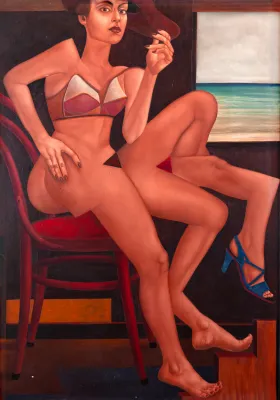

João Câmara (João Pessoa PB 1944)
João Câmara is a painter, printmaker, draftsman, graphic artist, teacher and critic, recognized as one of the most important names in Brazilian contemporary art. João Câmara was born in João Pessoa, Paraíba, on January 12, 1944, and had his first contact with the visual arts at 16, through the open course of the Escola de Belas Artes of the Universidade Federal de Pernambuco (UFPE), where he studied painting from 1960 to 1963. Since then, João Câmara has developed a broad, diverse and conceptually consistent production, consolidated over more than six decades of activity in Brazilian art.
In 1963, João Câmara was elected president of the Sociedade de Arte Moderna do Recife (SAMR), an institution whose reestablishment he helped to organize and strengthen. In the same period, João Câmara deepened his training in woodcut under Henrique Oswald (1918 - 1965) and Emanoel Araújo (1940 - 2022), at the Escola de Belas Artes of the Universidade Federal da Bahia, broadening his technical and conceptual research in printmaking.
João Câmara was one of the founders of the Ateliê Coletivo da Ribeira, in 1964, together with Adão Pinheiro, José Tavares and Guita Charifker, and also of the Ateliê + Dez, created in 1965. Both spaces, located in Olinda, played a fundamental role in renewing the Pernambuco art scene. João Câmara also took part in setting up the art gallery and collective studio of the Mercado da Ribeira. From 1967 to 1970, João Câmara taught painting at the Escola de Belas Artes of the Universidade Federal da Paraíba, contributing significantly to the training of new generations of artists.
In 1974, João Câmara created a lithography studio that gave rise to the Oficina Guaianases de Gravura, in Recife. The space became an important center for training, production and graphic experimentation and, from 1995, became part of the Laboratório de Artes Visuais of UFPE, consolidating its institutional and educational relevance for Brazilian art.
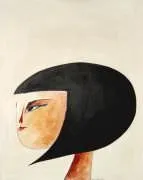
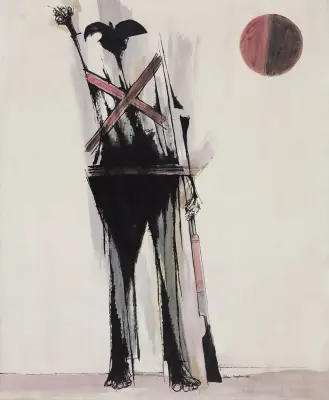
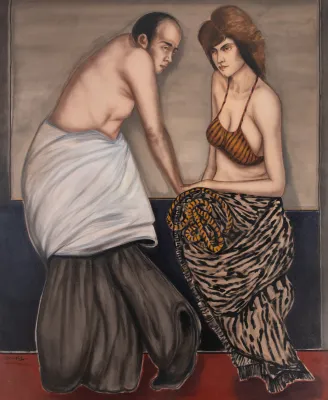
Since the 1960s, João Câmara has developed a production marked by the recurring presence of the human figure, represented by structurally defined bodies combined with fragmentation, deformation and dense settings. These elements give the works a singular character of strangeness, reflection and social critique. Although he defines himself primarily as a painter, João Câmara has also built a consistent career in lithography, as well as in drawing, printmaking and works on digital supports.
João Câmara's career is structured by three major series. Cenas da Vida Brasileira [Scenes of Brazilian Life], made between 1974 and 1976 and comprising 10 paintings and 100 lithographs, addresses political and cultural issues in Brazil from the 1930s to the 1950s. Dez Casos de Amor e uma Pintura de Câmara [Ten Love Affairs and a Painting by Câmara], developed between 1977 and 1983, is a poetic and political investigation of the affective universe, bringing together lithographs, a triptych, 10 paintings, 70 prints, 22 assemblages and three objects. Duas Cidades [Two Cities], developed between 1987 and 2001, centers on Recife and Olinda and comprises 38 paintings and 18 objects.
Besides these series, João Câmara has maintained a significant production of non-serial works since the 1960s, building a singular and continually renewed repertoire. In 1986, João Câmara made the series O Olho de Meu Pai sobre a Cidade [My Father's Eye on the City], an autobiographical work that combines memory, the urban landscape and a tribute to his father.
João Câmara's career is marked by numerous solo and group exhibitions in Brazil and abroad, as well as participation in art salons and biennials. His works are in the collections of important Brazilian and international museums, as well as public and private collections, reaffirming his relevance to the history of Brazilian contemporary art.
João Câmara has received national and international awards and has been widely discussed by critics such as Ferreira Gullar, Frederico Morais and Weydson de Barros Leal. Alongside his visual production, João Câmara devotes himself to writing, contributing to newspapers and magazines specializing in the visual arts and publishing key books on his work and career, among them Dez Casos de Amor – Teoria e Corpo do Pintor Secreto, Cenas da Vida Brasileira, A Estranheza de João Câmara and O Olho de Meu Pai Sobre a Cidade.
João Câmara currently lives and works in Olinda, Pernambuco. His collection, documentation and recent production can be consulted by appointment at his storage facility in Recife.
João Câmara keeps his studio in Olinda, in a building designed by the architect Vital Pessoa de Melo. The city, one of the oldest and most culturally significant in Brazil, has been recognized by UNESCO as a World Cultural Heritage site. Founded in 1537 and marked by the Dutch occupation in the early 17th century, Olinda remains a place of residence, creation and inspiration for João Câmara.
João Câmara is considered by many scholars and critics to be one of the leading Brazilian artists of his generation. On João Câmara's importance for Brazilian art, the critic Weydson de Barros Leal states:
“João Câmara is the author of one of the greatest bodies of work in progress in Brazilian art. He is one of the artists who most reveal themselves as instigators of themes and sources in contemporary art. This goes beyond line or form, which he has notoriously mastered through permanent and lasting practice, and reaches areas unsuspected by most painters. His fields of cultivation and harvest are, above all, his reading and his high culture.”
Critical Commentary
João Câmara began his production in 1959, painting landscapes under the guidance of José Tavares. In 1960, he enrolled in the science course at the Colégio Nóbrega, in Recife, and in the open painting course of the Universidade Federal de Pernambuco (UFPE), which he attended until 1963. He studied with Mário Nunes (1889 - 1982), Laerte Baldini and, occasionally, Vicente do Rego Monteiro (1899 - 1970). In this period, the young artist turned to the Cubism and post-Cubism of Pablo Picasso (1881 - 1973), as well as references such as Abelardo da Hora (1924 - 2014), Francisco Brennand (1927 - 2019), Lula Cardoso Ayres (1910 - 1987), Reynaldo Fonseca (1925 - 2019) and Wellington Virgolino (1929 - 1988). João Câmara's preference for large surfaces was already taking shape, unfolding into diptychs, triptychs and polyptychs.
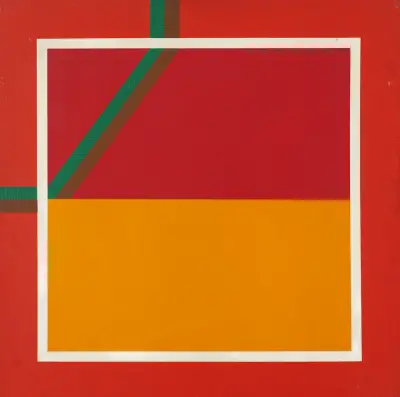
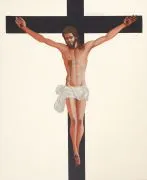
In the 1960s, his work drew closer to Expressionism and Fauvism. In several canvases, violence emerges as a central theme, heightened by the use of dark tones set against vibrant reds and blues, as in Vietonose Perfil III (1966) and Exposição e Motivos da Violência [Exhibition and Motives of Violence] (1967). In 1971, works such as Testemunhal [Testimonial], Reconstituição [Reconstitution] and Uma Confissão [A Confession] explore torture and human oppression. Concentrating on the body, João Câmara subjects it to twists and deformations, while preserving an erotic component that runs through these compositions.
Also in 1963, he began a woodcut course with Henrique Oswald (1918 - 1965) and Emanoel Araújo (1940 - 2022), at the Escola de Belas Artes in Salvador. In the early 1970s, he began working in lithography and, with Delano, improvised a studio for the technique in Recife, later moved to the Mercado da Ribeira, in Olinda. For João Câmara, lithography became both a space of formal freedom and a field for preliminary studies for his large-format paintings.
Several series mark his production, among them Cenas da Vida Brasileira 1930/1954 (1974 - 1980) and Dez Casos de Amor e uma Pintura de Câmara (1977 - 1980), which includes assemblages and objects. In Cenas da Vida Brasileira, the artist does not seek historical fidelity to the political episodes of the period; on the contrary, he mixes real figures, such as Getúlio Vargas (1882 - 1954), with fictional characters and unusual objects, creating a visual narrative of his own, shot through with childhood memories. In Dez Casos de Amor e uma Pintura de Câmara, the female figure takes center stage, while elements such as eyelets, screws, leather, fabric and lead materially expand the pictorial surface.
From the 1980s onward, regional themes became more frequent in João Câmara's work. In O Olho de Meu Pai sobre a Cidade (1986), the artist pays tribute to his father and to Recife, strengthening his bond with local references. In the 1990s, he developed the series Duas Cidades, in which Recife and Olinda are the predominant settings and become axes of visual and symbolic reflection.
According to the scholar Almerinda da Silva Lopes, João Câmara's poetic project has, from the beginning, consisted of translating into visual form a critical view of society. His work engages with Brazil's political history, with art and with mythology, building metaphors through which he ironizes power and examines social relations. This interplay of critique, memory and invention reinforces the singular place João Câmara occupies in Brazilian contemporary art.
Critiques
"The most evident trait of João Câmara's work is its clear presence. Or, put another way, it is convincing: in its dimensions, technique, themes and titles. We may not like what we are seeing, but it is impossible to escape its presence. We may dislike the colors, the hard-edged drawing, the ostentatiousness of the human figure, almost always male, with the marks of time visible on the exposed body, the machine-objects that become terrifying and aggressive, as do the animals and food in the abrupt irruption of the domestic into the public scene, or vice versa, the grave and serious character of the situations narrated, and, finally, the suffocation that results from the absence of space, or rather, from its rigidly compartmentalized space. All this may be unpleasant, but at the same time it exerts a powerful attraction. We are caught by the work, seized by a sense of strangeness. A strangeness that grows as we watch, frame by frame, as if on a stage, some well-known actors of the Brazilian political scene parade before us. Figures that seemed stored away in some dark compartment of our memory, or already turned into documents, photos, microfilms, annals, but which suddenly burst onto the canvas/stage as if they were alive. Or are they ghosts projected onto the screen of the canvas? These faces (or are they masks?), these gestures, almost always rhetorical, sometimes comic or tragic, these postures and gazes, these threatening hands and fingers appear almost disturbing, uncomfortable, but also fascinating. And our unease (or fascination) will grow as we penetrate the climate of the work, just as, as we identify the actors and settings (periods) in which they acted, we also identify their role".
Frederico Morais
JOÃO Câmara Filho: cenas da vida brasileira: 1930/1954. Apresentação de Frederico Morais. São Paulo: MASP, 1976. n. p.
"(...) Series, of greater or lesser extent in time and quantity, were the Pseudopersonas Nacionais [National Pseudopersonas], portraits between introspection and irony, from 1969 on and crystallizing in 1974; the Variações Imperiais [Imperial Variations], sarcastically bombastic narratives about Dom Pedro I, throughout 1970; and the recent Cenas da Vida Brasileira 1930-1954 [Scenes of Brazilian Life 1930-1954], paintings and lithographs executed between 1974 and 1976, reinventing the documentary of characters and scenes that marked such an important stretch of contemporary national history. Both in these three series and in the paintings made outside and between them, a critical, magical and telluric realism persisted at every moment in João Câmara, under wrappings that are at once surrealizing and conceptual. There is an idea, a backbone, running from one end to the other of this painting, at times somber, at times vibrant, distorting or photographic in its handling of human anatomy. There is also, there, the pursuit of the dimension of the mural panel, as if the artist wished to place us once again in the ancestry of the kingdoms of the Sun and in the engaged monumentalism of the Mexican tradition of our century. Bringing together opposing elements, this is a body of work in which the archaic and the contemporary, the national and the universal mix in an inevitable and forceful impulse. In it, although the land is somehow present, there is nothing of regionalism in the purely documentary sense of the term; the exotic for its own sake does not attract João Câmara, but rather the violence of the gap between the primitive and the technological".
Roberto Pontual
BARIL: pintura. Apresentação de Marinho Neto. Vitória: Galeria de Arte e Pesquisa da UFES, 1987.
"João Câmara emerged on the Brazilian art scene in the mid-1960s as a revelation from Pernambuco, where he lives, amid a fertile generation of artists from that state. As early as 1967 he took part in the Córdoba Biennial, in Argentina, with works of great strength and vitality, with striking figures that bring to mind characters such as comic-book superheroes in accumulated and violent compositions. Between 1974 and 1976 he produced his great serial work Cenas da Vida Brasileira - 1930-1954 [Scenes of Brazilian Life - 1930-1954], consisting of ten panels and one hundred lithographs, on the theme of the Vargas period. A trained psychologist who had already worked as an art critic, Câmara's intellectualism permeates his creative process in painting, which would always take a theme as the starting point for his works (O Baile da Ilha Fiscal [The Ilha Fiscal Ball], 1979; Carisma/Quaresma [Charisma/Lent], 1981; and Retrato de Família [Family Portrait], from 1981, also addressed specific themes). After the Cenas, João Câmara developed Dez Casos de Amor e uma Pintura de Câmara [Ten Love Affairs and a Chamber Painting], large panels, likewise accompanied by freer lithographs, which result from a play of symbols with an intriguing iconography in composition in which, as throughout his work, realistic drawing is broken and intercepted by other planes, though with an implicit realism as well. Tiradentes is his recent work based on a historical theme. (...)"
Aracy Amaral
AMARAL, Aracy A., org. Museu de Arte Contemporânea da Universidade de São Paulo: perfil de um acervo. Prefácio de Ana Mae Barbosa. Textos de Aracy Amaral e Sônia Salzstein Goldberg. São Paulo: Techint Engenharia: Ex Libris, 1988.
"From the beginning of his production, João Câmara has shown a total obsession with the portrait and the human body, subjecting them, most of the time, to strange distortions and ambiguities. He creates metaphors with which he mocks bourgeois hypocrisy, the ills of power and the vulnerability of relations between men. Hence his poetic codes demand that the viewer pause in attentive dialogue and curious perception to untangle the threads of this labyrinth.
In some works he constructs scenes and settings in which the figures project themselves with such verisimilitude, as if they were alive on the screen of the canvas to face, provoke and challenge us. More slowly, we begin to realize the paradoxes and the jest, whether through the absurdity of attitudes and actions or through the amputations, twists and rotations he imposes on the body or parts of it.
Without our being able to deny its non-transferable singularities, this universal imagery of Câmara also reveals the author's cultural roots and the strong regionalist residue, whether in the colors, at times incendiary, in the extravagance of the fabric prints and the kitsch decoration, in man's domineering action toward woman, or in the eroticization and particularity of the bodies. It is through this context that he expresses his way of seeing, thinking and feeling, highlighting human values, aspirations, ills and contradictions".
Almerinda da Silva Lopes
LOPES, Almerinda da Silva. João Câmara. Prefácio Annateresa Fabris. São Paulo: Edusp, 1995. p. 54.
Testimonials
"In our group [in Recife] there was a concern with a figure that had to pass through the spirit of the grotesque, through political caricature. [...] At that time my painting [...] had a surrealist manipulation of the image, but I was not interested in the contrasts proposed by the surrealists. I was more interested in similarities. I am not a surrealist, I am obscene. I am interested in the degree of closeness between things".
João Câmara a Wilson Coutinho - 1979
COUTINHO, Wilson. O brilho fugaz da história. Arte Hoje. Rio de Janeiro, nov. 1979. p. 22.
"The caricature of Angelo de Agostini in Semana Ilustrada, the whole saga of the Empire, of the republican struggle, these things are close. [...] Caricature, like commedia dell'arte, belongs to the theater, so it served me well. And they are staged situations, as caricature is: caricare, to place upon, to set up, to create situations, to create within the mask. [...] [Caricature] did not serve me as a visual model, but as a model of a critical order, of critical disposition, of the possibility of critical sharpening, since, after all, the struggle of the republicans and liberals was very close: to classify the obscure field of the monarchy. [...] The choice of spatial system I make is neither an archaizing space, although there are archaic elements, nor a 'modernist' space, although there are elements of modernity, or of contemporaneity".
João Câmara a Frederico Morais - 1980
MORAIS, Frederico; LIMA SOBRINHO, Barbosa. Cenas da Vida Brasileira: 1930/1954, 10 pinturas e 100 litografias de João Câmara Filho. Recife: Prefeitura Municipal. 1980. p. 33.
"[...] In the last painting of the series Cenas da Vida Brasileira [Scenes of Brazilian Life] - the one in which I am in front of Getúlio -, but it was necessary, because the painting of the last panel is a confrontation between an author of a fantasy and a real period... so the painting is divided into two parts, and there is a true moment, which is Vargas dead, but inside my studio, with me present. [...] It is a fact that the author is the measure of his work, so he is present as a witness. [...]
The problem of narrative painting is the distinction between narrative painting and illustrative painting. Illustrative painting seeks to translate a verbal idea by visual means, while in narrative painting an oralized conduct is established from a visuality; it is figuration that determines orality, it does not interpret orality".
João Câmara a José Manoel Júnior - 11 de julho de 1991
MANOEL Júnior, José. Alguns risos de Câmara. Jornal do Comércio, Recife, 11 de jul. 1991.
Solo Exhibitions
1963 - João Pessoa PB - First solo exhibition, at Galeria de Arte Contemporânea da Universidade da Paraíba
1966 - Recife PE - Solo, at Galeria Conciliação
1966 - Recife PE - Solo, at Galeria Ônix
1968 - Recife PE - Solo, at Galeria da Empetur
1970 - Rio de Janeiro RJ - Solo, at Galeria Bonino
1972 - Recife PE - Solo, at Galeria Degrau
1972 - São Paulo SP - Solo, at Galeria de Arte Ipanema
1973 - Rio de Janeiro RJ - Solo, at Galeria Bonino
1974 - Rio de Janeiro RJ - Solo, at Galeria de Arte Ipanema
1976 - Rio de Janeiro RJ - Cenas da Vida Brasileira [Scenes of Brazilian Life]: 1930/1954, at MAM/RJ
1976 - Rio de Janeiro RJ - Solo, at Galeria Bonino
1976 - São Paulo SP - Cenas da Vida Brasileira [Scenes of Brazilian Life]: 1930/1954, at Masp - APCA Prize
1978 - Mexico City (Mexico) - Cenas da Vida Brasileira [Scenes of Brazilian Life]: 1930/1954, at Galeria Juan Martín
1981 - Rio de Janeiro RJ - Solo, at Galeria Bonino
1983 - Rio de Janeiro RJ - Dez Casos de Amor e uma Pintura de Câmara [Ten Love Affairs and a Painting by Câmara]: Paintings, Assemblages, Lithographs, Objects, at MAM/RJ
1983 - São Paulo SP - Dez Casos de Amor e uma Pintura de Câmara [Ten Love Affairs and a Painting by Câmara]: Paintings, Assemblages, Lithographs, Objects, at MAC/USP
1984 - Olinda PE - Dez Casos de Amor e uma Pintura de Câmara [Ten Love Affairs and a Painting by Câmara], at MAC/Olinda
1984 - São Paulo SP - Dez Casos de Amor e uma Pintura de Câmara [Ten Love Affairs and a Painting by Câmara], at Galeria São Paulo
1984 - Salvador BA - Dez Casos de Amor e uma Pintura de Câmara [Ten Love Affairs and a Painting by Câmara], at Museu de Arte da Bahia
1984 - Belo Horizonte MG - Dez Casos de Amor e uma Pintura de Câmara [Ten Love Affairs and a Painting by Câmara], at Palácio das Artes
1986 - Rio de Janeiro RJ - Solo, at Anna Maria Niemeyer Art Interiores
1987 - São Paulo SP - Solo, at Galeria Montesanti Roesler
1988 - Berlin (Germany) - Solo, at Staatliche Kunsthalle
1988 - Curitiba PR - Solo, at Fundação Cultural de Curitiba
1988 - Curitiba PR - João Câmara Filho: Lithographs, at MAC/PR
1989 - Fortaleza CE - Tango em Maracorday e os Papéis do Amigo do Povo [Tango in Maracorday and the Papers of the Friend of the People], at Galeria Multiarte
1990 - Berlin (Germany) - Genres, at Galeria Poll
1990 - Recife PE - Solo, at Galeria Metropolitana Aloísio Magalhães
1990 - São Paulo SP - Genres, at Galeria de Arte São Paulo
1991 - Recife PE - Sketches, at Galeria Vicente do Rego Monteiro
1993 - Paris (France) - Solo, at Maison de l'Amérique Latine
1994 - Copenhagen (Denmark) - João Câmara: Beyond Circumstances, at Museu Charlottenborg
1994 - São Paulo SP - João Câmara: Beyond Circumstances, at Galeria do Sesc Pompeia
1994 - Oslo (Norway) - Cenas da Vida Brasileira: Paintings, at Henie Onstad Kunstsenter
1994 - Potsdam (Germany) - Solo, at Galeria Kulturhaus Altes Rathaus
1995 - São Paulo SP - Scenes in Black and White, at MAC/USP
1995 - São Paulo SP - João Câmara, at Dan Galeria
1996 - Asunción (Paraguay) - Escenas de la Vida Brasileña, at Centro Cultural da Embaixada do Brasil
1996 - Miami (United States) - João Câmara in America, at Lucio Rodrigues Gallery
1996 - Recife PE - Virtual Exhibition of João Câmara - presentation and internet access to the artist's homepage, at Instituto de Arte Contemporânea
1997 - New York (United States) - João Câmara: Recent Paintings, at Neuhoff Gallery
1998 - Recife PE - Cenas da Vida Brasileira [Scenes of Brazilian Life]: 1930/1954, at Mamam
2002 - Rio de Janeiro RJ - Duas Cidades [Two Cities], at MNBA
2002 - São Paulo SP - Duas Cidades [Two Cities], at Pinacoteca do Estado
Group Exhibitions
1961 - Recife PE - 3rd Galeria Rozenblit Group Exhibition, at Galeria Rozenblit
1962 - Belo Horizonte MG - Belo Horizonte University Salon - 1st prize in painting and 2nd prize in drawing
1962 - Recife PE - 21st Annual Painting Salon, at Museu do Estado de Pernambuco
1962 - Recife PE - Pernambuco State Salon - 1st prize in painting
1963 - Salvador BA - Artists from the Northeast, at MAM/BA
1964 - Olinda PE - Atelier da Ribeira Exhibition, at Atelier da Ribeira
1964 - Recife PE - 23rd Annual Painting Salon, at Museu do Estado de Pernambuco
1964 - Recife PE - Pernambuco State Salon - printmaking prize
1965 - Porto Alegre RS - Six Pernambuco Artists, at Margs
1966 - Córdoba (Argentina) - 3rd American Art Biennial - Gold Plaque of the Córdoba Stock Exchange
1966 - Salvador BA - 1st National Visual Arts Biennial - acquisition prize
1967 - Brasília DF - 4th Federal District Salon of Modern Art, at Teatro Nacional Cláudio Santoro - grand prize
1967 - São Paulo SP - Pernambuco Workshop, at MAC/USP
1968 - Salvador BA - 2nd National Visual Arts Biennial, at MAM/BA - special room
1969 - Rio de Janeiro RJ - Paris Biennale Selection Exhibition, at MAM/RJ
1969 - Rio de Janeiro RJ - 18th National Salon of Modern Art
1969 - São Paulo SP - 10th Bienal Internacional de São Paulo, at Fundação Bienal
1969 - São Paulo SP - 1st Panorama of Current Brazilian Art, at MAM/SP
1970 - Rio de Janeiro RJ - 19th National Salon of Modern Art, at MAM/RJ
1970 - Rio de Janeiro RJ - Brazilian Contemporary Art, at Banco de Boston
1970 - Rio de Janeiro RJ - National Salon of Modern Art, at MAM/RJ
1970 - São Paulo SP - Contemporary Art, at MAM/RJ
1971 - Rio de Janeiro RJ - 9th JB Art Summary, at MAM/RJ
1971 - Rio de Janeiro RJ - 20th National Salon of Modern Art
1972 - Rio de Janeiro RJ - 21st National Salon of Modern Art, at MEC
1972 - São Paulo SP - Art/Brazil/Today: 50 Years Later, at Galeria da Collectio
1972 - São Paulo SP - Recent Donations and Acquisitions, at MAC/USP
1973 - Rio de Janeiro RJ - The Face and the Work, at Galeria do Ibeu
1973 - São Paulo SP - 5th Panorama of Current Brazilian Art, at MAM/SP
1975 - Medellín (Colombia) - Medellín Biennial - Coltejer - guest artist
1976 - Buenos Aires (Argentina) - 20 Brazilian Artists, at Centro de Arte y Comunicación
1976 - Cali (Colombia) - 3rd American Graphic Arts Biennial, at Museo de Arte Moderno La Tertulia
1976 - Campinas SP - 10th Campinas Contemporary Art Salon, at MACC
1976 - Florence (Italy) - 5th Biennale Internazionale della Grafica d'Arte
1976 - São Paulo SP - Drawing in Pernambuco, at Galeria Nara Roesler
1977 - São Paulo SP - 9th Panorama of Current Brazilian Art, at MAM/SP
1978 - Curitiba PR - 1st Curitiba City Annual Printmaking Exhibition, at Centro de Criatividade
1979 - Curitiba PR - 2nd Curitiba City Annual Printmaking Exhibition, at Centro de Criatividade
1979 - São Paulo SP - 15th Bienal Internacional de São Paulo, at Fundação Bienal
1980 - Belo Horizonte MG - Hilton Painting Highlight, at Fundação Clóvis Salgado. Palácio das Artes
1980 - Brasília DF - Hilton Painting Highlight, at Fundação Cultural do Distrito Federal
1980 - Mexico City (Mexico) - 2nd Ibero-American Art Biennial
1980 - Curitiba PR - Hilton Painting Highlight, at Teatro Guaíra
1980 - Porto Alegre RS - Hilton Painting Highlight, at Margs
1980 - Rio de Janeiro RJ - Hilton Painting Highlight, at MAM/RJ
1980 - Santiago (Chile) - 20 Pintores Brasileños, at Academia Chilena de Bellas Artes
1981 - São Paulo SP - Contemporary Brazilian Artists, at Escritório de Arte São Paulo
1982 - Belo Horizonte MG - 14th Belo Horizonte National Contemporary Art Salon, at MAP
1982 - Lisbon (Portugal) - Brazil 60 Years of Modern Art: Gilberto Chateaubriand Collection, at Centro de Arte Moderna José de Azeredo Perdigão
1982 - London (England) - Brazil 60 Years of Modern Art: Gilberto Chateaubriand Collection, at Barbican Art Gallery
1982 - Rio de Janeiro RJ - Universe of Football, at MAM/RJ
1984 - Rio de Janeiro RJ - Active Brazilian Painting, at Espaço Petrobras
1984 - São Paulo SP - Tradition and Rupture: A Synthesis of Brazilian Art and Culture, at Fundação Bienal
1985 - Brasília DF - Brazilianness and Independence, at Teatro Nacional Cláudio Santoro
1985 - Rio de Janeiro RJ - Six Decades of Modern Art: Roberto Marinho Collection, at Paço Imperial
1985 - São Paulo SP - 18th Bienal Internacional de São Paulo, at Fundação Bienal
1985 - São Paulo SP - 7 Painters of Brazilian Contemporary Art, at Galeria de Arte Portal
1986 - Brasília DF - Pernambuco Artists in Brasília, at ECT Galeria de Arte
1986 - Rio de Janeiro RJ - 1st Christian Dior Contemporary Art Exhibition: Painting, at Paço Imperial
1987 - Brasília DF - Art on Paper, at Galeria Contemporânea de Arte
1987 - Olinda PE - Lithography - Oficina Guaianases de Gravura - Olinda, at Galeria de Arte Álvaro Conde
1987 - Paris (France) - Modernity: 20th-Century Brazilian Art, at Musée d'Art Moderne de la Ville de Paris
1987 - Rio de Janeiro RJ - To the Collector: Tribute to Gilberto Chateaubriand, at MAM/RJ
1987 - São Paulo SP - 18th Panorama of Current Brazilian Art, at MAM/SP
1987 - São Paulo SP - Art on Paper, at MAM/SP
1987 - São Paulo SP - The Craft of Art: Painting, at Sesc
1987 - São Paulo SP - Panorama of Current Brazilian Art, at MAM/SP
1987 - Vitória ES - Oficina Guaianases de Gravura, at Galeria Álvaro Conde
1988 - Curitiba PR - Curitiba City Printmaking Show
1988 - Rio de Janeiro RJ - Le Déjeuner sur l'Art: Manet in Brazil, at EAV/Parque Lage
1988 - São Paulo SP - 63/66 Figure and Object, at Galeria Millan
1988 - São Paulo SP - Modernity: 20th-Century Brazilian Art, at MAM/SP
1988 - São Paulo SP - Rhythms and Forms: Brazilian Contemporary Art, at Sesc Pompeia
1989 - Copenhagen (Denmark) - Rhythms and Forms: Brazilian Contemporary Art, at Museu Charlottenborg
1989 - Curitiba PR - 8th Curitiba City Printmaking Exhibition, at Fundação Cultural
1989 - Fortaleza CE - Brazilian Art of the 19th and 20th Centuries in Ceará Collections: Paintings and Drawings, at Espaço Cultural da Unifor
1989 - Juiz de Fora MG - Each Head a Sentence, at Museu Mariano Procópio
1989 - Lisbon (Portugal) - Six Decades of Brazilian Modern Art: Roberto Marinho Collection, at Fundação Calouste Gulbenkian
1989 - Rio de Janeiro RJ - 8 Artists Paint the French Revolution, at Casa de Cultura Laura Alvim
1989 - Rio de Janeiro RJ - Brazilian Printmaking: 4 Themes, at EAV/Parque Lage
1989 - São Paulo SP - The Tables, at Ranulpho Galeria de Arte
1989 - São Paulo SP - Thirty-Three Ways of Seeing the World, at Ranulpho Galeria de Arte
1990 - Atami (Japan) - 9th Brazil-Japan Contemporary Art Exhibition
1990 - Brasília DF - Brasília, 30 Years, at Performance Galeria
1990 - Brasília DF - 9th Brazil-Japan Contemporary Art Exhibition
1990 - João Pessoa PB - 2nd Current Paraíba Art, at Fundação Espaço Cultural da Paraíba
1990 - Rio de Janeiro RJ - 9th Brazil-Japan Contemporary Art Exhibition
1990 - São Paulo SP - 9th Brazil-Japan Contemporary Art Exhibition, at Fundação Brasil-Japão
1990 - Sapporo (Japan) - 9th Brazil-Japan Contemporary Art Exhibition
1990 - Tokyo (Japan) - 9th Brazil-Japan Contemporary Art Exhibition
1991 - São Paulo SP - Chico and the Animals, at Ranulpho Galeria de Arte
1992 - Poços de Caldas MG - Brazilian Modern Art: Collection of the Museu de Arte Contemporânea da Universidade de São Paulo, at Casa de Cultura
1992 - Rio de Janeiro RJ - 1st On the Way to Niterói: João Sattamini Collection, at Paço Imperial
1992 - Rio de Janeiro RJ - The Arts of Power, at Paço Imperial
1992 - Rio de Janeiro RJ - Eco Art, at MAM/RJ
1992 - São Paulo SP - The 1960s/70s: Gilberto Chateaubriand Collection/Museu de Arte Moderna, at Galeria de Arte do Sesi
1992 - São Paulo SP - Representations: Decisive Presences, at Paço das Artes
1993 - João Pessoa PB - Woodcut: From Cordel to the Gallery, at Funesc
1993 - Rio de Janeiro RJ - Brazil, 100 Years of Modern Art, at MNBA
1994 - Lisbon (Portugal) - Beyond Taprobana: The Human Figure in the Visual Arts of Portuguese-Speaking Countries, at Sociedade Nacional de Belas Artes
1994 - Rio de Janeiro RJ - Beyond Taprobana: The Human Figure in the Visual Arts of Portuguese-Speaking Countries, at Museu Nacional de Belas Artes
1994 - São Paulo SP - Bienal Brasil Século XX, at Fundação Bienal
1994 - São Paulo SP - The New Travelers, at Sesc Pompeia
1994 - São Paulo SP - Woodcut: From Cordel to the Gallery, at Metrô
1995 - Brasília DF - Brasília Collections, at Ministério das Relações Exteriores. Palácio do Itamaraty
1995 - Rio de Janeiro RJ - Beyond Taprobana: The Human Figure in the Visual Arts of Portuguese-Speaking Countries
1995 - São Paulo SP - Contact Project, at Galeria Sesc Paulista
1996 - Belém PA - 15th Salão Arte do Pará, at Museu de Arte de Belém
1996 - Belém PA - Salão Arte Pará, at Museu do Estado Palácio Lauro Sodré
1996 - Leverkusen (Germany) - Brasilianische Kunst der Gegenwart, at Bayer AG - Foyer Hochhaus W1
1996 - Dormagen (Germany) - Brasilianische Kunst der Gegenwart, at Bayer AG - Feierabendhaus
1996 - São Paulo SP - Brazilian Contemporary Art, at MAM/SP
1996 - São Paulo SP - Brazilian Art: 50 Years of History in the MAC/USP Collection: 1920-1970, at MAC/USP
1996 - São Paulo SP - Figure and Landscape in the MAM Collection: Tribute to Volpi, at MAM/SP
1997 - Goiânia GO - Brazilianness: A Collection of Brazilian Artists, at Galeria de Arte Marina Potrich
1997 - Porto Alegre RS - 1st Bienal de Artes Visuais do Mercosul, at Aplub, Casa de Cultura Mário Quintana, DC Navegantes, Edel, Usina do Gasômetro, Instituto de Artes da UFRGS, Fundação Bienal de Artes Visuais do Mercosul, Margs, Espaço Ulbra, Museu de Comunicação Social, Reitoria da UFRGS and Theatro São Pedro
1997 - Porto Alegre RS - Cildo Meireles and João Câmara, at UFRGS. Reitoria
1997 - Porto Alegre RS - Political Strand, at Fundação Bienal de Artes Visuais do Mercosul
1997 - Recife PE - Seeing the Reverse, at Mamam
1998 - Cuenca (Ecuador) - 6th Cuenca International Biennial - honorable mention
1998 - Niterói RJ - Mirror of the Biennial, at MAC/Niterói
1998 - São Paulo SP - The Art of Exhibiting Art, at MAM/SP
1998 - São Paulo SP - Figurations: 30 Years of Brazilian Art, at MAC/USP
1998 - São Paulo SP - Frontiers, at Itaú Cultural
1998 - São Paulo SP - Featured Works, at Dan Galeria
1999 - Belém PA - 3rd Eletromidia de Arte: Virtual Exhibition, at Rua Boaventura da Silva x Av. Doca de Souza Franco
1999 - Belo Horizonte MG - 3rd Eletromidia de Arte: Virtual Exhibition, at Av. Contorno x Av. Amazonas
1999 - Campinas SP - 3rd Eletromidia de Arte: Virtual Exhibition
1999 - Campo Grande MS - Eletromidia de Arte: Virtual Exhibition, at Av. Afonso Pena x R. Treze de Maio
1999 - Cuiabá MT - 3rd Eletromidia de Arte: Virtual Exhibition, at Av. Fernando Correia da Costa, s/n
1999 - Goiânia GO - 2nd Great Group Show of Brazilian Art, at Galeria de Arte Marina Potrich
1999 - Jundiaí SP - 3rd Eletromidia de Arte: Virtual Exhibition, at Av. Nove de Julho, 1400
1999 - Manaus AM - 3rd Eletromidia de Arte: Virtual Exhibition, at Av. Paraíba x Rua Efigênio Sales
1999 - Osasco SP - 3rd Eletromidia de Arte: Virtual Exhibition, at Av. dos Autonomistas, near no. 2973
1999 - Porto Alegre RS - 3rd Eletromidia de Arte: Virtual Exhibition, at Av. Goethe x Rua Mostardeiro and Rua Vinte e Quatro de Outubro x Rua Bordini
1999 - Recife PE - 3rd Eletromidia de Arte: Virtual Exhibition
1999 - Ribeirão Preto SP - 3rd Eletromidia de Arte: Virtual Exhibition, at Av. Presidente Vargas, 915
1999 - Rio de Janeiro RJ - Mostra Rio Gravura. Cícero Dias and João Câmara: Pernambuco Printmakers, at Versailles Galeria de Arte
1999 - Rio de Janeiro RJ - 3rd Eletromidia de Arte: Virtual Exhibition, at Av. Venceslau Brás x R. General Severiano; Radial Oeste, near Praça da Bandeira; and Largo do Humaitá
1999 - Rio de Janeiro RJ - Mostra Rio Gravura. Brazilian Modern Printmaking: Collection of the Museu Nacional de Belas Artes, at MNBA
1999 - Salvador BA - 3rd Eletromidia de Arte: Virtual Exhibition, at Av. Tancredo Neves, 805
1999 - Santo André SP - 3rd Eletromidia de Arte: Virtual Exhibition, at R. Dom Pedro II x R. Catequese
1999 - Santos SP - 3rd Eletromidia de Arte: Virtual Exhibition
1999 - São Paulo SP - 3rd Eletromidia de Arte: Virtual Exhibition, at Av. Cidade Jardim x Av. Brig. Faria Lima; Av. Brig. Faria Lima x Av. Rebouças; Av. Eng. Luís Carlos Berrini x Av. Águas Espraiadas; Rua Vergueiro x Av. Paulista; Av. Juscelino Kubitschek x Av. Brig. Faria Lima; and Av. Paulista x Al. Campinas
1999 - São Vicente SP - 3rd Eletromidia de Arte: Virtual Exhibition, at Av. Presidente Wilson x Av. Antônio Emmerich
2000 - Recife PE - Ateliê Pernambuco: Tribute to Bajado and the Mamam Collection, at Mamam
2000 - Rio de Janeiro RJ - Brasil + 500 Rediscovery Exhibition. Black in Body and Soul, at Fundação Casa França-Brasil
2000 - Rio de Janeiro RJ - Brasil + 500 Rediscovery Exhibition. Letter of Pero Vaz de Caminha, at Museu Histórico Nacional
2000 - São Paulo SP - Almeida Júnior: An Artist Revisited, at Pinacoteca do Estado
2000 - São Paulo SP - Ars Erotica: Sex and Eroticism in Brazilian Art, at MAM/SP
2000 - São Paulo SP - Brasil + 500 Rediscovery Exhibition, at Fundação Bienal
2000 - São Paulo SP - Investigations. Brazilian Printmaking, at Itaú Cultural
2000 - São Paulo SP - The Angels Are Back, at Pinacoteca do Estado
2001 - Brasília DF - Investigations. Brazilian Printmaking, at Galeria Itaú Cultural
2001 - Penápolis SP - Investigations. Brazilian Printmaking, at Galeria Itaú Cultural
2003 - Recife PE - See Again/See the New, at Mamam
2003 - Rio de Janeiro RJ - Projeto Brazilianart, at Almacén Galeria de Arte
2003 - São Paulo SP - Art and Society: A Controversial Relationship, at Itaú Cultural
2003 - São Paulo SP - Entre Aberto, at Gravura Brasileira
2003 - São Paulo SP - Black Memories, Memories of Black People: The Luso-Afro-Brazilian Imaginary and the Legacy of Slavery, at Galeria de Arte do Sesi
2004 - São Paulo SP - The Price of Seduction: From Corset to Silicone, at Itaú Cultural