Clóvis Graciano (Araras SP 1907 - São Paulo SP 1988)
Clóvis Graciano was a prominent painter, designer, scenographer, engraver and illustrator in the Brazilian art scene. Born in São Paulo, he settled in the city in 1934, where he began his studies with the painter Waldemar da Costa, between 1935 and 1937. In 1937, Graciano joined the Santa Helena group, alongside artists Like Francisco Rebolo, Mario Zanini and Bonadei, marking the beginning of his trajectory alongside important names in Brazilian art. During this period, he attended the drawing course at Escola Paulista de Belas Artes until 1938, but without completing his formal training. In 1939, he was elected president of the São Paulo Artistic Family (FAP), a fundamental group in the São Paulo artistic scene at the time. In 1948, he was one of the founding partners of the Museum of Modern Art of São Paulo (MAM/SP), strengthening his bond with Brazilian cultural institutions. In 1949, he was awarded at the National Salon of Fine Arts, which made his trip to Europe possible, where he stayed in Paris for two years, studying mural painting and engraving. This period was decisive for his artistic training, especially in the field of mural painting, which he came to dominate in his career in the following years.
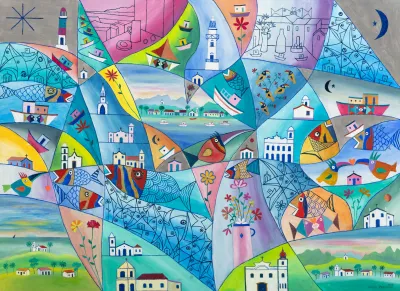
From the 1950s onwards, Clóvis Graciano dedicated himself mainly to mural painting, in addition to developing illustrations for works important literary books, such as the "Cancioneiro da Bahia", by Dorival Caymmi, and "Terras do Sem Fim", by Jorge Amado. In 1971, he assumed the position of director of the Pinacoteca do Estado de São Paulo (Pesp), a position that reinforced his commitment to the preservation and dissemination of Brazilian art. From 1976 to 1978, he served as a cultural attaché in Paris, expanding his international influence.
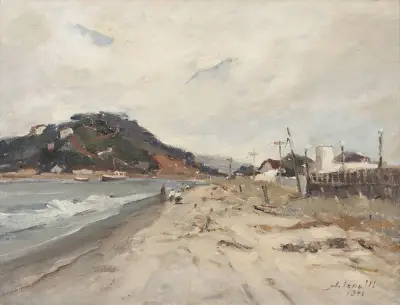
Throughout his career, Graciano remained faithful to figurativeism, with a production marked by the representation of social themes and the search for an art that reflect the issues of Brazil and its people. His work, which transits between different artistic languages, has consolidated itself as an important milestone in the history of modern art in Brazil. Descendant of Italian immigrants, he was orphaned at the age of 12 and, to survive, he played the most humble crafts.
Drawing from the school group (1st grade school), he was employed in 1927 on the road to Sorocabana iron (Fepasa), it is up to him to paint posts and tablets for the railroad.
In 1934 he transferred to São Paulo, as a consumption inspector, dividing from then on his time between the use of bureaucrat and the art, with evident advantages for this, so much so that ten years later he was fired - for abandonment of employment.
Enlarging the horizons
The design, which he practiced as a self-taught, will be the solid foundation on which he will build his career.
A pension colleague who saw him some work brought him closer to Portinari (five years older than him) and, on his advice, Graciano started to frequent Waldemar da Costa's studio and absorbed his teachings (1935-1937).
From the drawing, it then goes to watercolor, and from there to the oil. The drawing course of the Escola Paulista de Belas Artes also follows as a free student, until 1938.
Grupo Santa Helena
She was installed in 1937 at the Palacete Santa Helena Ali, together with Rebolo, Zanini, Bonadei and other painters who worked and researched in an atmosphere of intimate cooperation, made notable technical advances.
As I would say, many years later, “the Santa Helena group could not have a thesis. It was a group of more artisan painters, who sought to reform academic painting, and there was a transit of knowledge among all of them: Volpi, Rebolo, Bonadei, Pennacchi, Tomás Santa Rosa and a portion of them. They exchanged knowledge, exchanged techniques, and ended up doing one thing, for the time, very important».
He held his first exhibition in 1937, in Pará, with other members of the Santa Helena group. of the group, he had passed to the São Paulo Artistic Family (of which he would be president, in 1939) and to the Plastic Artists Union, regularly participating in his exhibitions. Paranaense in São Paulo: drawings by ink, gouaches and monotypes, since only in 1943 would he exhibit his first oil paintings. The following year, he participated in a drawing contest promoted by the National Historical and Artistic Heritage Service, receiving the first prize. (1940), Silver Medal in Drawing (1941), Gold Medal in Painting (1941).
He received the foreign travel award in 1948. Thus, he embarks, in 1949, for a two-year stay in France, Italy, Belgium and other countries.
Adhering to muralism
When returning, he exposed 30 paintings, then launching a huge series of panels in São Paulo and other cities. And it explains why:
The panel is the most democratic form of painting. The government, if it wanted, could have panels painted in public places, such as stations, sports fields, etc.
It is a way of bringing art to the people, of immortalizing historical moments, so that everyone is able to see them. The screen belongs to a minority. The panel to all who want to see it.”
Figurative by devotion
Graciano, who also dedicated himself to scenography and made customs for theater and ballet, stood out as a book illustrator and also performed some public office, such as the management of the Pinacoteca do Estado de São Paulo (for which he was appointed in 1971) and the role of cultural attaché in Paris. even lightly the seduction of abstractionism. The artist, in an interview in 1972, would explain, not without a certain pride:
My business is the figure, which I have never abandoned.
Studying this apparent invulnerability of Graciano to non-figurativeism, José Geraldo Vieira explained it in an ingenious way, in a 1957 text published in Habitat:
To whom it is surprising that Clovis Graciano, always so wise, has remained relentlessly in the human figure and in nature, if he can answer that, at first, he was necessarily an abstract painter by profession.
For, painting posts and gates, in eventual itineraries of tablets and branches of a railroad, he left on top of a lot of logs, with a taboo appearance of Totem, concrete colors, without gamma, sufficiently dense.
Which on traffic lights of deviations and transfers left many chromatic balls in the genre of Sophie Tauber-ARP.»
Influences of Picasso and Cézanne
But, like so many other Brazilian painters of his time, Graciano sometimes suffered the influence of Picassian cubism - and it may be lawful to see, in these same paintings of the bombing series, an echo of Guernica, who preceded it only in a few years.
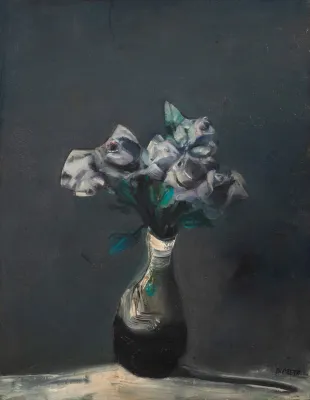
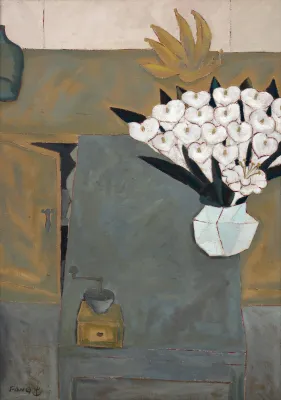
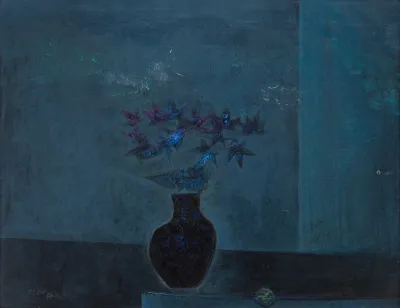
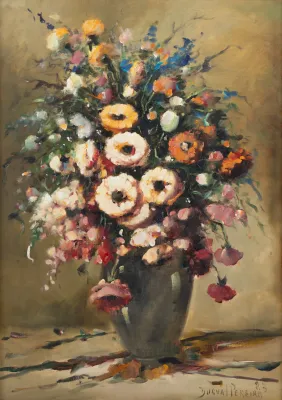
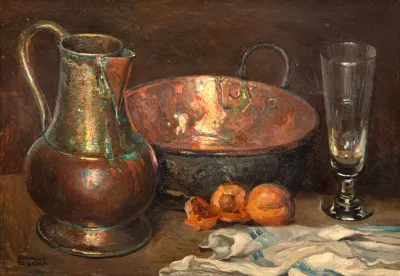
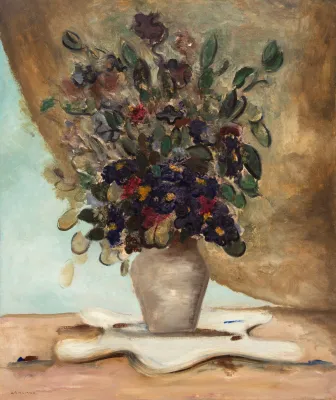
More than Picasso, was Cézanne who marked him. Interestingly, it is not in the still lifes that the Cezannian note has repercussions, on the contrary: the still lifes of Gratiano remain faithful to the tradition, and in one, from about 1942, it is even possible to see insects and larvae, the same who surreptitiously swarmed in the wonderful flowers of Bruegel de Velours or Daniel Seghers, in a sickening allusion to death and the destruction of matter.
No: the lesson of Cézanne, Graciano assimilated it, By rationally ordering the large spaces of his panels, when composing with geometer concerns the space of his biblical landscapes or the scenes of musicians and birders, in which the figurative party of the foreground contrasts with the geometrical schematization that serves as a Scenario.
Depicting horses and knights, musicians and dancers who writhe in unusual poses, birders and other similar themes, Graciano sometimes brushed the fantastic and the unusual.»
The brand of Portinari
No influence has yet surpassed that of Portinari, the eldest companion, counselor and friend, with whom he worked for some time during his stay in Rio de Janeiro. Stylistically: a painting as a family, from 1945, is linked to the great compositions of a Northeastern theme that Portinari had performed shortly before, as well as the various São Franciscos that Graciano painted over the years, all point to Pampulha.
Conversely, there are those who maintain that Portinari reaped in Gratiano's scarecrows the motivation for the many who would follow.
All these influences are not enough to suffocate or hide the personal characteristics of Gratiano's style, summarized by Almeida Sales in a 1972 text as a “salient presence of the drawing, a solemnly scenographic composition and, in the theme, the effort to give dignity to humility”. Graciano, but we would also highlight the tendency, which the artist has, in freezing, in midair, in the midst of a movement, masses and volumes, temporarily devoid of gravity more of a filmmaker than of a painter, and of which the painting The Tamer is an example, 1974, in which the rider's leg forms a parallel with the animal's back, the moment before he will assemble it.
This tendency to movement, perhaps combined with some remnant of Cubism, is also responsible for the paintings in which the limits of the Forms interpenetrate, as in a juxtaposition of photographic negatives, forming what we call "the X-ray style", woman in the chair, 1942, The Violinist, 1945, etc.
Critical Comment
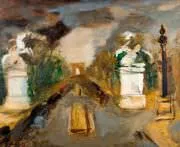
Clóvis Graciano studies painting with Waldemar da Costa (1904 - 1982), and is part of the Santa Helena group in 1937. engraving and mural painting. It produces well-built landscapes and still lifes whose qualities, in the words of the critic Mário de Andrade (1893 - 1945), reside in the singularity of the cut, the speed of execution and the synthetic graphics.
The artist reveals admiration for the work of Candido Portinari (1903 - 1962), especially by the biblical series, resorting to post-cubist spatial determination, in which the planes overlap, destroying the illusory representation of the perspective and also using the resource of deformation of the hands and From the feet of the figures.
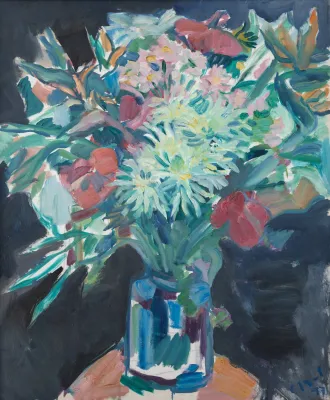
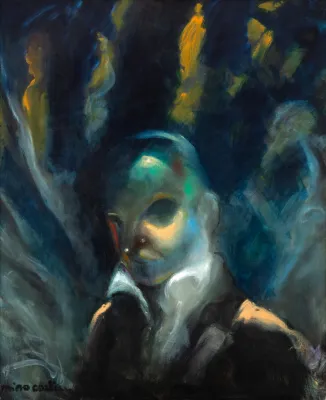
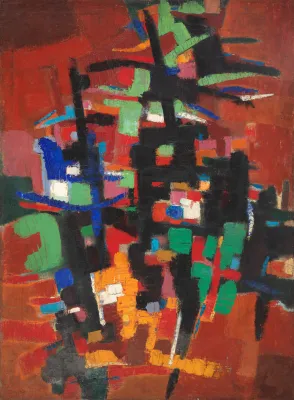
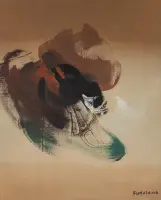
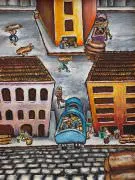
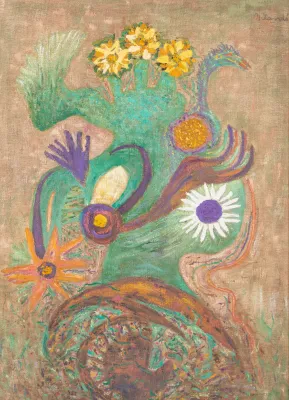
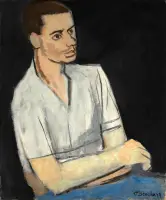
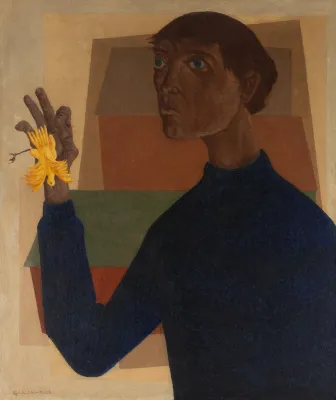
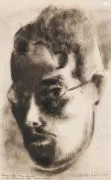
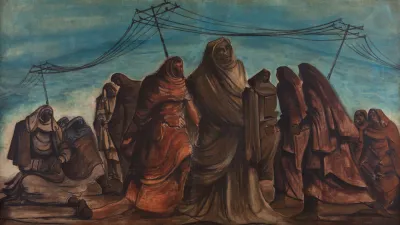
In the 1940s, the work of Clovis Graciano is marked by the human figure and social themes, such as that of the migrants. It also produces self-portraits, which reveal psychological variables, expressing intimate tensions. He also performs several canvases with themes by musicians and dance. From the 1950s onwards, he made several mural paintings, with emphasis on the works Armistice de Iperoig, at Fundação Armando Álvares Pesnteado - FAAP (1962); Operário, on Avenida Moreira Guimarães (1979) and the panel in the building of the Diário Popular, inspired by frescoes from the Renaissance and developing the narrative in spaces built by geometric planes.
Criticism
"Without ulterior motives, what I mean is that Clovis Graciano's paintings are almost always very simple in the intentionality of aesthetic expression. Step, the painter dispenses with acquired qualities or problems already solved, this does not mean that he leaves them, in the infidelity of a new conception of art and life. immediate reality of the picture to be realized, he recognizes that they are, at the moment, only virtuosic chests, harmful to the condition in creation. Virtuosity, but within it Clóvis Graciano presents himself as the antivirtuosis par excellence. Not that he disdains the elements, any elements, by which art is Fine Arts, transfers everything through beauty and establishes itself in its concept of intuitive manifestation of knowledge.
But in Clóvis Graciano the elements of virtuosic skill accumulate, as they resist any displacement. It shines where it can shine, deforms when and how much it needs to deform, and it recedes when it needs to recline. Because modesty, both in colors and sounds or words, is often a virtuosity too, when it is not a deception.
(...) si Clóvis Graciano gives all the brightness of colors and all the lucilation of tones to a light flower (of paper), In the colorful drawing of monotony, he is not the false virtuoso that forgets the work of art, but the legitimate artist who knows how to forget himself. And it is in this acceptance, always modest, that chooses the adulterous immodesty of the monotype to let it shine, the confessional strength of the drawing to reveal men, the gender picture to fight, the landscape pro modessingly of strict painting, which Clovis Graciano is a perfect anti-virtuosist. Its lesson is very intelligent".
Mário de Andrade
ANDRADE, Mário de. Essay on Clovis Graciano. Revista do Instituto de Estudos Brasileiros, São Paulo, n. 10, p. 156-175, 1971.
"The strong consagüinity existing among santelenist painters does not exclude aspects of individual affirmation, as in the case of Clovis Graciano. The landscape interest was not a concern for him in the same proportion as the others, while the human figure became the greatest object of his attention, especially in the themes devoted to the 'tragic volúpia do ballado' (Mário de Andrade). Expressionist interpreter of the movement, Graciano, who, from the point of view of color, does not level up with the best painters of the brotherhood, achieved through the design and the broad and wide sense of the composition the most salient values of his work. The presence of social themes showed at the time an inclination that was not always stimulated among the members of the group. In his production appears the mural decoration that had other representatives in this studious environment of ancestral techniques".
Walter Zanini
ZANINI, Walter (org.). General History of Art in Brazil. Salles: Djalma Guimarães Foundation, 1983. 2 V.
"Graciano is not, however, expressionist only because in him deformation is a 'necessity', an 'demand', as he had perceived sharply Mário de Andrade. Graciano is expressionist because he gives primacy to technique as work, as a participant construction, as constant experimentation, which is reflected in his concise, simple, dense, averse to sensory vibrancy, ready to reap the essentials, always in search of improvement, as demonstrated by the evolution of its plastic motifs, agglutinated in series or interactive, but different.
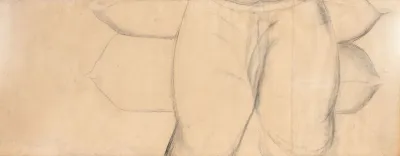
If this honest technical search is common ground to the experiences of the 'São Paulo school', Graciano endows it, however, with its own characteristics, expressive and thematic same time. And then the drawing will be the discriminator of its peculiarity within the scope of the group of Saint Helena, a drawing that is built, in the expressionist way, by a thriving dark, through a firm, thick line, that best enhances the contrast of black and white, exalting The luminosity of content and continent, transforming black into an absolute chromatic value.
With this dense trait, color and line at the same time, Graciano obtains in his drawings the results that Expressionist painters achieved in his paintings. Frames whose meaning is determined by an arbitrary chromaticism, by the collapse of the laws of perspective. Drawings, those of Graciano, in which inner substance is structured from a simple composition - the dialogue of the lines with the spatiality of the paper. Lines, at first simple, dominated by the black/white chromatic contrast, which gradually acquire a more incorporeal density, more diaphanous insofar as they assert themselves as a pure plastic principle, as a true agent of time and space - a time and a space that sometimes interpenetrate, faithful to the post-Cubist lessons".
Annateresa Fabris
Graciano, Clóvis. Clóvis Graciano: Collection Exhibition and comments. São Paulo: Centro Cultural São Paulo, 1985.
Individual exhibitions
1939 - São Paulo SP - Individual, at Galeria Itá
1941 - São Paulo SP - Individual, in the center of Paraná in São Paulo
1943 - São Paulo SP - Individual, at Galeria Itá
1951 - São Paulo SP - Individual, at the Domus Gallery
1957 - São Paulo SP - Individual, at the Clube dos Artistas
1959 - São Paulo SP - Individual, in Galeria Esquisses
1965 - São Paulo SP - Individual, at Clube Athletico Paulistano
1971 - São Paulo SP - Individual, at the Cosme Velho Gallery
1973 - São Paulo SP - Individual, at the Documenta Galeria de Arte
1974 - Brasília DF - Individual, at Oscar Seraphico Art Gallery
1978 - São Paulo SP - Clóvis Graciano: Drawings and engravings, at Christina Faria de Paula Art Gallery
1985 - São Paulo SP - Individual, in the CCSP. Visual Arts Division
Collective exhibitions
1937 - São Paulo SP - 1st Salon of the São Paulo Artistic Family, at Esplanada Hotel
1939 - Porto Alegre RS - 2nd Salon of the Associação de Artes Plásticas Francisco Lisboa
1939 - São Paulo SP - Hall of the Union of Plastic Artists of São Paulo
1939 - São Paulo SP - 2nd Salon of the São Paulo Artistic Family, at Automóvel Clube
1939 - São Paulo SP - 3rd Salon in May Galeria Itá
1939 - São Paulo SP - 5th Hall of the Plastic Artists Union, at the Prestes Maia Gallery
1940 - Rio de Janeiro RJ - 46th National Salon of Fine Arts - Modern Division, at MNBA - Menção Honorable in Painting
1940 - Rio de Janeiro RJ - 3rd Salon of the São Paulo Artistic Family, at the Palace Hotel
1941 - Rio de Janeiro RJ - National Salon of Fine Arts - Modern Division, at the MNBA - Silver Medal in Drawing and Medal Gold in Painting
1941 - Rio de Janeiro RJ - 47th National Salon of Fine Arts, at MNBA
1941 - São Paulo SP - 1st Art Salon of the National Industry Fair, at Água Branca Park
1942 - São Paulo SP - 7th Hall of the Plastic Artists Union, at the Prestes Maia Gallery
1943 - Rio de Janeiro RJ - Anti-Axis Exhibition, at the Historical and Diplomatic Museum, at the Itamaraty Palace
1943 - São Paulo SP - Salão Itá
1943 - São Paulo SP - Nelson Nóbrega, Clóvis Graciano and Francisco Rebolo, at Galeria Itá
1944 - Belo Horizonte MG - Exhibition of Modern Art, in the Mariana Building
1944 - London (England) - Exhibition of Modern Brazilian Paintings, at the Royal Academy of Arts
1944 - Norwich (England) - Exhibition of Modern Brazilian Paintings, at the Norwich Castle and Museum
1944 - Rio de Janeiro RJ - 50th National Salon of Fine Arts, at MNBA
1944 - São Paulo SP - Anita Malfati, Clóvis Graciano, Hilde Weber, Nelson Nóbrega, Francisco Rebolo, at Galeria Jaraguá
1944 - São Paulo SP - Individual, at the Clóvis Graciano studio
1944 - São Paulo SP - Exhibition of Brazilian-North-American Modern Painting, at the Prestes Maia Gallery
1944 - São Paulo SP - 9th Hall of the Plastic Artists Union, at the Prestes Maia Gallery
1945 - Baht (England) - Exhibition of Modern Brazilian Paintings, at the Victory Art Gallery
1945 - Bristol (England) - Exhibition of Modern Brazilian Paintings, at the Bristol City Museum & Art Gallery
1945 - Buenos Aires (Argentina) - 20 Brazilian artists, in the National Exhibition Rooms
1945 - Edinburgh (Scotland) - Exhibition of Modern Brazilian Paintings at the National Gallery
1945 - Glasgow (Scotland) - Exhibition of Modern Brazilian Paintings, at Kelingrove Art Gallery
1945 - LA Plata (Argentina) - 20 Brazilian artists, at the Provincial Museo de Bellas Artes
1945 - Manchester (England) - Exhibition of Modern Brazilian Paintings, Manchester Art Gallery
1945 - Montevideo (Uruguay) - 20 Brasileños artists, at the Municipal Culture Committee
1945 - São Paulo SP - Anita Malfati, Virginia Artigas, Clovis Graciano, Mick Carnicelli, Oswald de Andrade Filho, José Pancetti, Carlos Prado, Francisco Rebolo, Quirino da Silva, Alfredo Volpi, Mario Zanini, at the Itapetininga Gallery
1948 - Rio de January RJ - 54th National Salon of Fine Arts - Modern Division, at the MNBA - Travel abroad Award
1949 - Rio de Janeiro RJ - São Paulo Painting Exhibition
1952 - Feira de Santana BA - 1st Exhibition of Modern Art of Fair of Santana, at Banco Econômico
1952 - Rio de Janeiro RJ - Exhibition of Brazilian Artists, at MAM/RJ
1954 - Goiânia GO - Exhibition of the National Congress of Intellectuals
1954 - São Paulo SP - Contemporary Art: Exhibition from the collection of the Museum of Modern Art of São Paulo, at MAM/SP
1955 - São Paulo SP - 4th São Paulo Salon of Modern Art, at the Prestes Maia Gallery
1956 - Rio de Janeiro RJ - 1st Railroad Salon MEC
1957 - Buenos Aires (Argentina) - Modern Art in Brazil, at the Museum of Modern Art
1957 - Lima (Peru) - Modern Art in Brazil, at the Lima Art Museum
1957 - Rosario (Argentina) - Modern Art in Brazil, at the Municipal Museo de Bellas Artes Juan B. Castagnino
1957 - Santiago (Chile) - Modern Art in Brazil, at the Contemporary Art Museum
1957 - São Paulo SP - Club of Artists and Friends of Art
1962 - Rabat (Morocco) - Exhibition of Brazilian artists
1962 - Casablanca (Moroccos) - Exhibition of Brazilian artists
1962 - Tanger (Morocco) - Exhibition of Brazilian artists
1963 - Campinas SP - Contemporary painting and sculpture, at the Carlos Gomes Museum
1964 - Rio de Janeiro RJ - The Nu in Contemporary Art, at the Ibeu Copacabana Gallery
1966 - Rio de Janeiro RJ - Self-portraits, at Galeria Ibeu Copacabana
1966 - São Paulo SP - The Santa Helena Group, today, at the 4 Planetas Art Gallery
1967 - São Paulo SP - The São Paulo Artistic Family: thirty years later, In the auditorium Italy
1969 - São Paulo SP - 1st Panorama of Current Brazilian Art, at MAM/SP
1970 - São Paulo SP - 2nd Panorama of Current Brazilian Art, at MAM/SP
1970 - São Paulo SP - Art/Brazil/Today: 50 years later, at Galeria Collectio
1972 - São Paulo SP - The Week of 22: Background and Consequences, at Masp
1972 - São Paulo SP - Retrospective Waldemar da Costa: Homage to the Master, at MAC/USP
1972 - São Paulo SP - 2nd International Engraving Exhibition, at MAM/SP
1972 - São Paulo SP - Retrospective Waldemar da Costa: Homage to the Master, in the MAM/SP
1973 - São Paulo SP - 1st Exhibition of Fine Arts Brazil-Japan
1975 - São Paulo SP - 40 years: Grupo Santa Helena, at MIS/SP
1976 - Penápolis SP - 2nd Northwest Plastic Arts Hall, at the Penápolis Educational Foundation. Faculty of Philosophy, Sciences and Letters of Penápolis
1976 - São Paulo SP - The Salons: From the São Paulo Artistic Family, in May and from the São Paulo Plastic Artists Union, at the Lasar Segall Museum
1977 - São Paulo SP - 3rd Exhibition of Fine Arts Brazil-Japan
1977 - São Paulo SP - Grupo Seibi - Santa Helena Group: Decade 35 to 45, at MAB/FAAP
1977 - São Paulo SP - Art Exhibition, in the financial group BBI
1979 - São Paulo SP - 4th Exhibition of Fine Arts Brazil-Japan
1979 - São Paulo SP - The Santa Helena Group, at Uirapuru Art Gallery
1979 - Tokyo (Japan) - 4th Brazil-Japan Fine Arts Exhibition
1979 - Atami (Japan) - 4th Brazil-Japan Fine Arts Exhibition
1979 - Kyoto (Japan) - 4th Brazil-Japan Fine Arts Exhibition
1980 - Buenos Aires (Argentina) - OCHENTA AÑOS DE ARTS BRASILEÑO, at Banco Itaú
1980 - Penápolis SP - 4th Salon of Visual Arts of the Northwest, at the Educational Foundation of Penápolis. Faculty of Philosophy, Sciences and Letters of Penápolis
1981 - São Paulo SP - 5th Exhibition of Fine Arts Brazil-Japan
1981 - Tokyo (Japan) - 5th Exhibition of Fine Arts Brazil-Japan
1981 - Atami (Japan) - 5th Exhibition of Fine Arts Brazil-Japan
1981 - Kyoto (Japan) - 5th Exhibition of Fine Arts Brazil-Japan
1982 - Bauru SP - 80 years of Brazilian art
1982 - Marília SP - 80 years of Brazilian art
1982 - São Paulo SP - 80 years of Brazilian art, at MAB/FAAP
1982 - São Paulo SP - From Modernism to Bienal, at MAM/SP
1983 - Belo Horizonte MG - 80 years of Brazilian art, at the Clóvis Salgado Foundation. Palácio das Artes
1983 - Campinas SP - 80 years of Brazilian art, at Macc
1983 - Curitiba PR - 80 years of Brazilian art, at MAC/PR
1983 - Olinda PE - 2nd exhibition of the collection Abelardo Rodrigues de Artes Plasticas, at Mac/Olinda
1983 - Ribeirão Preto SP - 80 years of Brazilian art
1983 - Rio de Janeiro RJ - Brazilian self-portraits, at the Banerj Art Gallery
1983 - Rio de Janeiro RJ - National Salon of Plastic Arts, at MAM/RJ
1983 - Rio de Janeiro RJ - Brazilian self-portraits, at the Banerj Art Gallery
1983 - Rio de Janeiro RJ - 6th National Salon of Plastic Arts, at MAM/RJ
1983 - Santo André SP - 80 years of Brazilian art, at the Municipality of Santo André
1984 - São Paulo SP - Tradition and rupture: synthesis of Brazilian art and culture, at the Bienal
1985 - Penápolis SP - 6th Northwest Plastic Arts Hall, at the Penápolis Educational Foundation. Faculty of Philosophy, Sciences and Letters of Penápolis
1985 - Rio de Janeiro RJ - Six decades of modern art: Roberto Marinho Collection, at the Paço Imperial
1985 - São Paulo SP - 100 Obras Itaú, at Masp
1985 - São Paulo SP - 18th São Paulo International Biennial, at Fundação Bienal
1988 - São Paulo SP - Brasiliana: O Homem e a Terra, at the Pinacoteca do Estado
1988 - São Paulo SP - MAC 25 years: Highlights of the initial collection, at MAC/USP
Posthumous exhibitions
1988 - São Paulo SP - 15 years of the Brazil-Japan Fine Arts Exhibition, at the Mokiti Okada Foundation
1989 - Lisbon (Portugal) - Six decades of Brazilian modern art: Roberto Marinho Collection, at the José de Azeredo Perdigão Modern Art Center
1992 - Poços de Caldas MG - Brazilian modern art: collection of the Museum of Contemporary Art of the University of São Paulo. Paulo, at the Casa da Cultura de Poços de Caldas
1992 - São Paulo SP - Sérgio's look at Brazilian art: drawings and paintings, at the Mário de Andrade Municipal Library
1993 - Campina Grande PB - Assis Chateaubriand - UEPB, at MAAC
1993 - São Paulo SP - 100 masterpieces of the Mário de Andrade Collection: painting and sculpture, at IEB/USP
1994 - São Paulo SP - Bienal Brasil Céculo 20, at the Fundação Bienal
1995 - São Paulo SP - The Santa Helena Group, at MAM/SP
1996 - Rio de Janeiro RJ - The Santa Helena Group, at CCBB
1996 - São Paulo SP - Brazilian art: 50 Years of history in the MAC/USP collection: 1920-1970, at MAC/USP
1996 - São Paulo SP - Ex Libris/Home Page, at Paço das Artes
1996 - São Paulo SP - O Grupo Santa Helena, at CCBB
1998 - São Paulo SP - Brazilian Fantasy: The Ballet of the IV Centenary, at Sesc Belenzinho
1998 - São Paulo SP - The Collector, at MAM/SP
1999 - São Paulo SP - The female figure in the MAB collection, at MAB/FAAP
2000 - São Paulo SP - The female figure in the MAB collection, at MAB/FAAP
2000 - São Paulo SP - The human figure in the Itaú collection, in the Itaú Cultural
2000 - São Paulo SP - Clóvis Graciano, at the Museu do Club Atlético Paulistano
2000 - São Paulo SP - Grupo Santa Helena, at Jo Slaviero Art Gallery
2000 - São Paulo SP - Individual, at Clube Atlético Paulistano
2000 - São Paulo SP - Café, at Banco Real
2001 - São Paulo SP - 4 decades, at Nova André Galeria
2001 - São Paulo SP - Brazilian Art Museum: 40 years old, at MAB/FAAP
2001 - Uberlândia MG - Brazilian prints from the muna collection: 60's, 70's and 80's, at the University Museum of Art
2002 - São Paulo SP - Wild Mirror: modern art in Brazil in the first half From the 20th century, Nemirovsky Collection, at MAM/SP
2002 - São Paulo SP - Modernism: from the week of the 22nd to the Sérgio Milliet Art Section, at the CCSP
2002 - São Paulo SP - Workers in Paulista: MAC-USP and Artist Artisans, at the SESI Art Gallery
2003 - Belém PA - 22nd Salão Arte Pará, at the Pará State Museum
2003 - São Paulo SP - Art and Society: a controversial relationship, in the Itaú Cultural
2003 - São Paulo SP - Painters from the coast of São Paulo, at Sociarte
2004 - São Paulo SP - Paper Office, at CCSP
2004 - São Paulo SP - New acquisitions: 1995 - 2003, at MAB/FAAP
2004 - São Paulo SP - Collection Room, at Ricardo Camargo Galeria
2004 - São Paulo SP - Tudo é Desenho, at CCSP
2005 - São Paulo SP - Collection 2005, at MAB/FAAP