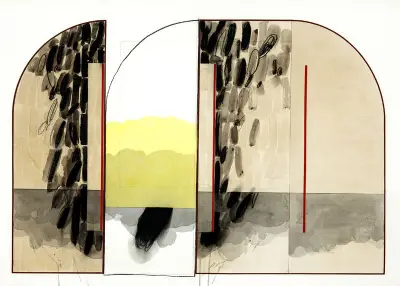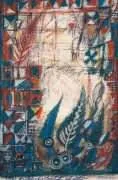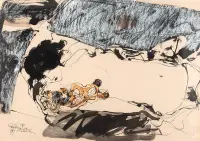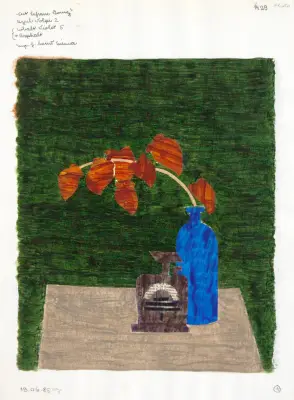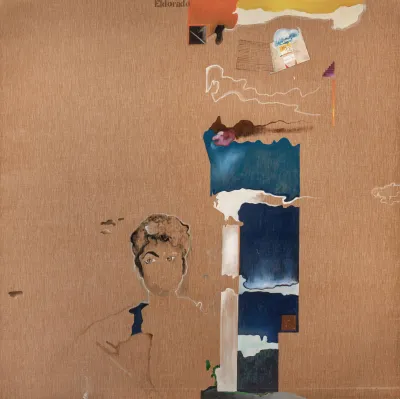
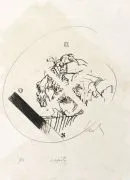
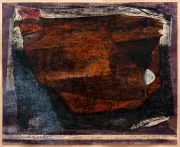
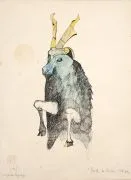
Wesley Duke Lee (São Paulo SP 1931 - idem 2010)
Wesley Duke Lee was a draftsman, printmaker, graphic artist and teacher. In 1951, he took a free drawing course at the Museu de Arte de São Paulo Assis Chateaubriand (Masp). The following year, he traveled to the United States, where he studied at the Parsons School of Design and the American Institute of Graphic Arts, in New York, until 1955. During this period, he witnessed the first manifestations of Pop Art and came into contact with works by artists such as Robert Rauschenberg (1925 - 2008), Jasper Johns (1930) and Cy Twombly (1928 - 2011).
Back in Brazil, in 1957, he gave up advertising to become a student of the painter Karl Plattner (1919 - 1986), with whom he worked in São Paulo and later in Italy and Austria, until 1960. During this phase, he also lived in Paris, where he attended the Académie de la Grande Chaumière and the studio of Johnny Friedlaender (1912 - 1992). He returned to Brazil in 1960.
In 1963, he began working with the young artists Carlos Fajardo (1941), Frederico Nasser (1945), José Resende (1945) and Luiz Paulo Baravelli (1942), among others. That same year, at the João Sebastião Bar, in São Paulo, he staged O Grande Espetáculo das Artes [The Great Spectacle of the Arts], considered one of the first happenings in Brazil. He sought to organize the art movement known as Magic Realism, together with Maria Cecília (1928), Bernardo Cid (1925 - 1982), Otto Stupakoff (1935 - 2009), Pedro Manuel-Gismondi (1925 - 1999) and others.
In 1966, he founded the Grupo Rex with Nelson Leirner (1932 - 2020), Geraldo de Barros (1923 - 1998), José Resende, Carlos Fajardo and Frederico Nasser, as a critical reaction to the art market. The group remained active until 1967.
Critical Commentary
Wesley Duke Lee was a pioneer in incorporating the themes and language of Pop Art in Brazil. In 1963, he created the Magic Realism movement with Maria Cecília, Pedro Manuel-Gismondi, Otto Stupakoff and Carlos Felipe Saldanha. The movement's figurative approach was an alternative to the academicization of abstractionism in Brazil.
Also in 1963, he taught artists such as Carlos Fajardo, Frederico Nasser, José Resende and Luiz Paulo Baravelli. Duke Lee worked intensively with these students for about two years. During this period, the painter's work left the plane and entered three-dimensional space. Works such as O Trapézio ou Uma Confusão [The Trapeze or A Confusion], 1966, and O Helicóptero [The Helicopter], 1967, already function as environments. In 1969, he lived in California, where he experimented with new technologies and taught at the University of Southern California, in Irvine. During the 1970s, he engaged with other traditions, such as cartography, Eastern calligraphy and botanical drawing.
Critiques
"The paintings and drawings of this young Brazilian artist reveal, at first sight, a whole series of uncommon qualities: a refined sensibility, technical mastery, a complex taste that bears witness to an intelligent training. It is like a continuous osmosis between references to reality and references to the data of culture, in these sharply, lovingly defined images. This is the immediate fulcrum of the real suddenly filtered through the plane of fantasy and of the cultural memory best able to supply the stylistic elements most appropriate to the character of the image. It is a refined divertissement, if not the most elegant irony, which then reveals itself as a serious poetic commitment aimed at giving precise and original form to the inventions and variations of the 'figure' that dream, or intellectual inspiration, or an almost venomous sensuality may suggest to his inspiration. References to Redon, to the great Viennese of the Secession, to Klee, to Michaux, to Schwitters can easily be made, not as an accusation of eclectic refinement, but as linguistic support for a coherent discourse that uses such references as it uses reality and nature.
A brilliant and moving discourse at the same time, touching intimate motivations and nostalgic themes suddenly enveloped by rationally elaborated forms, crystallized through a precious objectification of cultural allusions. An excellent draftsman, of clear, immediate measure and rhythm, a colorist who knows how to entrust an intense lyrical effectiveness to the various qualities of the luminous tone of matter, Duke Lee, committed to the exciting and risky path of the accord between 'diary' and 'tale', is an artist who affirms his personality and his whole, spontaneous language through the many citations of a sharp reader, passionate as well as free, and even merciless, in his judgments and his private notes".
Franco Russoli
RUSSOLI, Franco. Apresentação de Exposição Galleria Sistina - Milão. Abril de 1963. In: COSTA, Cacilda Teixeira da. (org.). Antologia Crítica de Wesley Duke Lee. São Paulo: Galeria Paulo Figueiredo, 1981. p. 14-15.
"Anyone who visited the Tokyo Biennial this year must have been surprised by the nine unusual paintings in the Brazilian Section.
Informal touches, lines of varying strength and bright colors are combined in constructions of female bodies symbolizing animals and plants. Several parts of the painting are left empty, where letters and words are inscribed. One of the paintings, called A Zona: abre [The Zone: Open], has a fig leaf preserved in plastic over the sex of a reclining woman. Another, titled A Zona: mindah!, has a transistor radio built into the frame. I did not know much about Brazilian modern art. Until then I had seen its entries in previous biennials, such as fauvist-style nudes, rather loose copies of woodcuts and abstract geometries in the manner of Max Bill (1908 - 1994), and I did not think highly of them.
I would like to say that, for the first time, the works mentioned above from Wesley Duke Lee's Zona series managed to express a national characteristic of Brazil. Brazil - a melting pot of Indians, Black people and Europeans, most of Portuguese origin; a strange mixture of the primitive and the modern; a land of vast construction and rapid industrialization among cannibals living with the mysterious Amazon in the background.
Wesley Duke Lee, with his relaxed style, displays the passion and the ennui, the laughter and the modesty that are part of this unique civilization. The female faces in his paintings form strange signs and his fantasy is full of sensuality.
In his paintings, the white spaces of nihilism seem to predominate, but charged with spontaneity, wit and energy".
Ichiro Haryu
HARYU, Ichiro. Realismo Mágico. Apresentação de Exposição Tokio Gallery. Tokio: julho de 1965. In: COSTA, Cacilda Teixeira da. (org.). Antologia Crítica de Wesley Duke Lee. São Paulo: Galeria Paulo Figueiredo, 1981. p. 17.
"Images of life and death, of struggle and harmony follow one another in Viagem à Grécia [Journey to Greece]. This dialectic, however, does not represent an insoluble bipolarity, but rather the full development of the cosmogonic myth, for life and death, creation and destruction are equally new situations, demanding the renewal of the first archetypal gesture.
If the world is a constant flow, a becoming, the beginning and the end cannot fail to be dialectically articulated: the struggle of the old and the young, chaos and harmony overlap and pursue each other throughout Wesley's journey, partially resolving until they find the integrating figure (the philosopher) and final harmony (the Grail) in a long process activated by the feminine principle. A symbol of birth and rebirth (initiation), the female image evolves from archetype (Kore, Great Mother) to stereotype (glamorized femininity), until it becomes the embodiment of consciousness and takes part in the birth of the hero, the fruit of the harmonization between the young and the old.
Life and death play another role in Viagem à Grécia if we perceive in the work a representation of initiation rites. Some of the more evident episodes - the armed struggle, the entry into the forest - are a clear manifestation of the death/birth axis. A death that does not represent an end but a transition to a new mode of life. A necessary return to Chaos to make a new Creation possible. The discovery of the mysteries of human existence - the sacred, sexuality, death:
'Philosophically speaking, initiation amounts to an ontological mutation of the existential regime. At the end of his trials, the neophyte enjoys an existence other than the one he had before initiation: he becomes another.' (M. Eliade, apud: P. Vidal-Naquet, "Os jovens", in J. Le Goff and P. Nora, História: novos objetos. Rio de Janeiro, 1976, p. 122.)
Temporality, creation, utopian projection, cosmogony, initiation. The planes of the myth are multiple, but they have an internal coherence, embodied in the first gesture.
The recovery of 'collective memory', the journey through time (and Wesley fuses several temporalities: the Greek pantheon, Leonardo's helicopter, the Grail, current symbols), far from constituting a paralyzing barrier, are on the contrary the affirmation of the constant possibility of transforming reality".
Annateresa Fabris
FABRIS, Annateresa. O Espaço do Mito. São Paulo: 1978. COSTA, Cacilda Teixeira da. (org.). Antologia Crítica sobre Wesley Duke Lee. São Paulo: Galeria Paulo Figueiredo, 1981. p. 36-37.
"Wesley Duke Lee's work is built through series related to techniques, materials, processes and conceptions specific to each. In counterpoint, there remain concepts, substances of form that the artist captures (sometimes in an intense narrative) and 'presents' in drawings, paintings, prints, environments, artist's books, installations and videos. It can be said that poetry (in the broadest and most original sense of the term) permeates these sequences, diverse representations of an essential concern: the mysteries of origin, the sacred, sexuality and death. Wesley's experimentalism runs through his way of being and creating; however, a deep connection underlies these variations and guides the changes.
Thus, as his work unfolds, in different expressions of the image, he modifies the traditional systems of representation, intensely experiencing every available medium, from medieval tempera to the computer. For him, all are fascinating, but they have no special meaning unless a concept runs through them, a making with meaning arising from the erotic presence of a deep truth. And Wesley believes that an ethical and integrating attitude that gives meaning to all these perceptions is essential.
Teacher and master, his way of feeling and making art spreads through the Escola Brasil:, founded by his students. Consequently, despite his distance, he exerts a strong influence on the art world and marks the new generations with his singular stance".
Cacilda Teixeira da Costa
COSTA, Cacilda Teixeira da. Retrospectiva Wesley Duke Lee. In: LEE, Wesley Duke. Retrospectiva Wesley Duke Lee. Texto de Cacilda Teixeira da Costa. São Paulo: Masp; Rio de Janeiro: Centro Cultural Banco do Brasil, 1992/1993. p.11, p.33.
Testimonials
"That was not even the intention; I was only showing what I was doing, my personal 'imagery', the fruit of my learning and experience.
But many people did not understand; they thought anything goes, and it caused a tremendous stir. I did not intend to provoke such a violent reaction, because, among other things, it had a negative effect on me personally. I wanted to join the others, and this way I was even more marginalized.
I can say, with great knowledge, that it is not easy to be marginal. However, what makes one an artist, that is, the access you have to certain states, marginalizes you automatically, and there is no way out.
It is a difficult position, which causes immense confusion, until, with age, it starts not to matter.
Still, I was never left out and I am a deep participant; I just do not belong to the group (and joining it would achieve nothing; it would be a mere formality).
My aim, like that of any artist, is the group of 'colleagues': the Van Goghs, Cézannes, Picassos and Matisses, and that is not even a group, it is a subjectivity.
Over time I understood that segregation, the impossibility of assimilation, are part of the process and that one must accept them. When I was younger, I resisted marginality (today I even joke about it).
At that time, on top of everything, it was the phase of the Série das Ligas [Garter Series], considered highly pornographic. They thought I was a sex maniac with a garter fixation, and that was that.
I was cut from the Salon, from the Bienal; nobody wanted to show my work anymore. They did not understand; I allowed myself to break away, to be free, and that was an incredible barrier.
What I did was not 'similar', do you understand?
So all I had left was individual action. That was when the happenings took place. I held the exhibition at the João Sebastião Bar because I had nowhere to show, and there I 'perpetrated' my inventions; I put flashlights at the entrance and people came, with flashlights, to see the pictures one by one because the bar was very dark. Even the riot police came, because the exhibition was erotic and I don't know what else".
Wesley Duke Lee
COSTA, Cacilda Teixeira da. Wesley Duke Lee. Rio de Janeiro: Funarte, 1980. (Coleção Arte Brasileira Contemporânea). p.20-21.
Solo Exhibitions
1961 - São Paulo SP - Solo, at Galeria Sistina
1962 - São Paulo SP - Solo, at Galeria Michel
1963 - Milan (Italy) - Solo, at Galeria Sistina
1963 - São Paulo SP - Wesley Realista Mágico apresenta A Exposição [Wesley, Magic Realist, Presents The Exhibition], at João Sebastião Bar (first happening in Brazil)
1964 - Rio de Janeiro RJ - Wesley: Temperas and Drawings, at Petite Galerie
1964 - São Paulo SP - Pau Brasil, at Galeria Atrium
1964 - Vienna (Austria) - Solo, at Nebehay Gallery
1965 - São Paulo SP - W.D.Lee, at Seta Galeria de Arte
1965 - Tokyo (Japan) - Wesley Duke Lee Exhibition, at Tokio Gallery
1968 - São Paulo SP - A Zona - Considerações [The Zone - Considerations]: Portrait of Assis Chateaubriand, at MAC/USP
1970 - São Paulo SP - Botanical Iconography, at Galeria Ralph Camargo
1972 - São Paulo SP - Wesley Duke Lee: Three Books of Prints and a Sketchbook, at Masp
1975 - Exhibition of drawings made for the Annual Report of Financeiras Itaú
1976 - São Paulo SP - As Sombra Ações, at Galeria Luisa Strina
1976 - São Paulo SP - Solo, at Galeria Luisa Strina
1977 - São Paulo SP - Solo, at Galeria Luisa Strina
1977 - São Paulo SP - Wesley Shows Calligraphies, Ideograms, etc., at Galeria Luisa Strina
1978 - Rio de Janeiro RJ - Wesley Shows Calligraphies, Ideograms, etc., at Galeria Luiz Buarque de Hollanda e Paulo Bittencourt
1978 - São Paulo SP - My Journey to Greece in Leonardo da Vinci's Helicopter, at Masp
1979 - Rio de Janeiro RJ - Papers Series, at Bolsa de Valores do Rio de Janeiro
1979 - São Paulo SP - Papers Series, at Bolsa de Valores de São Paulo
1979 - São Paulo SP - Papers Series, at Galeria Luisa Strina
1980 - Porto Alegre RS - Maps, at Galeria Salamandra
1980 - Ribeirão Preto SP - Papers, at Casa da Cultura de Ribeirão Preto
1980 - São Paulo SP - Animic Cartography, at Galeria Luisa Strina
1980 - São Paulo SP - Masterpiece of Masp, at Centro Campestre Sesc
1981 - São Paulo SP - Solo, at Paulo Figueiredo Galeria de Arte
1986 - São Paulo SP - O Triumpho de Maximiliano I [The Triumph of Maximilian I], at Escritório de Arte São Paulo
1991 - São Paulo SP - The Labors of Eros: Preparation for the Annunciation of the Age of the Son, at Kate Art Gallery
1992 - São Paulo SP - Wesley Duke Lee Retrospective, at Masp
1993 - Rio de Janeiro RJ - Wesley Duke Lee Retrospective, at CCBB
1999 - São Paulo SP - O Filiarcado [The Filiarchy], an Alchemical Essay with Children's Games. Albedo, at Escritório de Arte São Paulo
1999 - São Paulo SP - O Filiarcado [The Filiarchy], an Alchemical Essay with Children's Games. Rubedo, at Escritório de Arte São Paulo
2000 - São Paulo SP - O Filiarcado [The Filiarchy], an Alchemical Essay with Children's Games. Nigredo, at Escritório de Arte São Paulo
2004 - São Paulo SP - Everything Is Drawing, at CCSP
2005 - São Paulo SP - Wesley Duke Lee: Two Unseen Series from the 1960s, at Pinacoteca do Estado
2006 - São Paulo SP - Solo, at Valu Oria Galeria de Arte
Group Exhibitions
1952 - São Paulo SP - 2nd São Paulo Salon of Modern Art, at Galeria Prestes Maia
1955 - São Paulo SP - 1st São Paulo Advertising Salon - two honorable mentions
1961 - São Paulo SP - Visual Arts Group Show. Solidarity with the Political Prisoners of Spain and Portugal, at Galeria Prestes Maia
1961 - São Paulo SP - Group show, at Galeria Astréia
1962 - Madrid (Spain) - Arte de América y España, at Instituto de Cultura Hispânica de Madrid
1962 - São Paulo SP - Works from the Collection, at Galeria Sistina
1963 - Campinas SP - 1st Young National Drawing Exhibition, at Centro de Ciências, Letras e Artes. Museu Carlos Gomes
1963 - São Paulo SP - 1st Young National Drawing Exhibition, at Faap
1964 - Belo Horizonte MG - 1st Young National Drawing Exhibition, at Museu de Arte da Pampulha - MAP
1964 - Belo Horizonte MG - Phases, at UFMG. Grande Galeria do Saguão da Reitoria
1964 - Brussels (Belgium) - Phases, at Musée d'Ixelles
1964 - Curitiba PR - 1st Young National Drawing Exhibition, at Museu de Arte do Paraná
1964 - Milan (Italy) - Group show, at Galleria Santa Maria di Piazza
1964 - Ribeirão Preto SP - 1st Young National Printmaking Exhibition, at Escola de Artes Plásticas
1964 - Rio de Janeiro RJ - 2nd The Face and the Work, at Galeria Ibeu Copacabana
1964 - Rio de Janeiro RJ - The Nude in Contemporary Art, at Galeria Ibeu Copacabana
1964 - Rio de Janeiro RJ - Phases, at MAM/RJ
1964 - São Paulo SP - 1st Young National Printmaking Exhibition, at MAC/USP
1964 - São Paulo SP - Art at the IAB, at IAB/SP
1964 - São Paulo SP - Phases Exhibition, at MAC/USP
1964 - São Paulo SP - Tribute to the Galleries of São Paulo, at Sociedade Amigos da Cinemateca
1964 - Taubaté SP - Art Exhibition, at Galeria Mobilia/Galeria Seta
1965 - Belo Horizonte MG - 1st Young National Printmaking Exhibition, at MAP
1965 - Caracas (Venezuela) - Evaluación de la Pintura Latinoamericana Años 60, at Museo de Bellas Artes
1965 - Curitiba PR - 1st Young National Printmaking Exhibition, at Secretaria do Estado de Educação - 1st prize
1965 - Florianópolis SC - 1st Young National Printmaking Exhibition, at Masc
1965 - L'Aquila (Italy) - L'Aquila Biennial
1965 - London (England) - Brazilian Art Today, at Royal Academy of Arts
1965 - Rio de Janeiro RJ - Opinião 65, at MAM/RJ
1965 - São Paulo SP - 8th Bienal Internacional de São Paulo, at Fundação Bienal
1965 - São Paulo SP - Recent Acquisitions and Donations, at MAC/USP
1965 - São Paulo SP - Brazilian Graphic Artists, at FAU/USP
1965 - São Paulo SP - Propostas 65, at MAB/Faap
1965 - Tokyo (Japan) - 8th Tokyo Biennial - International Art Promotion Award
1965 - Vienna (Austria) - Brasilianische Kunst Heute, at Museum für Angewandte Kunst
1966 - Asunción (Paraguay) - Arte Hoy en el Brasil, at Galeria da Missão Cultural Brasileira
1966 - Austin (United States) - Art of Latin America since Independence, at The University of Texas at Austin. Archer M. Huntington Art Gallery
1966 - Bonn (Germany) - Brasilianische Kunst Heute, at Beethovenhalle
1966 - London (England) - Small Works: Paintings, Graphics, Sculpture, at Axion Gallery
1966 - New York (United States) - The Emergent Decade: Latin American Painters and Paintings in the 1960's, at Solomon R. Guggenheim Museum
1966 - Rio de Janeiro RJ - 1st Salão de Abril [April Salon], at MAM/RJ
1966 - Rio de Janeiro RJ - The Artist and the Machine, at MAM/RJ
1966 - Rio de Janeiro RJ - Supermarket 66, at Galeria Relevo
1966 - São Paulo SP - Warning: It's War, at Rex Gallery & Sons
1966 - São Paulo SP - Discovery of America, at Rex Gallery & Sons
1966 - São Paulo SP - Flash Back, at Rex Gallery & Sons
1966 - São Paulo SP - Galeria Rex: Inaugural Exhibition, at Rex Gallery & Sons
1966 - São Paulo SP - Half a Century of New Art, at MAC/USP
1966 - São Paulo SP - The Artist and the Machine, at Masp
1966 - Venice (Italy) - 33rd Venice Biennale
1967 - Belgrade (Yugoslavia) - Dimenzije Realnog, at Galerija Doma Omladine
1967 - São Paulo SP - 9th Bienal Internacional de São Paulo, at Fundação Bienal
1967 - São Paulo SP - The Act of Creation, at Rex Gallery & Sons - in tribute to Marcel Duchamp
1968 - Campo Grande MS - 28 Artists from the Collection of the Museu de Arte Contemporânea da Universidade de São Paulo, at Galeria do Diário da Serra
1968 - Florianópolis SC - 1st National Visual Arts Exhibition, at Masc
1968 - Rio de Janeiro RJ - Brazilian Printmaking, at Museu Histórico Nacional - MHN
1968 - São Paulo SP - Group show, at Galeria Miani
1969 - Belém PA - 28 Artists of the New Generations, at UFPA
1969 - Fortaleza CE - 28 Artists from the Collection of the Museu de Arte Contemporânea da Universidade de São Paulo, at Centro de Artes Visuais Raimundo Cela
1969 - São Paulo SP - 28 Artists of the New Generations, at MAC/USP
1969 - São Paulo SP - Pioneer Artists of Fantastic Art in Brazil, at Teatro Itália
1969 - Tokyo (Japan) - Dialogue Between the East and the West, at The National Museum of Modern Art
1970 - Campina Grande PB - 27 Artists from the Collection of the Museu de Arte Contemporânea da Universidade de São Paulo, at Museu de Arte da Fundação Universidade Regional do Nordeste
1970 - Olinda PE - 27 Artists from the Collection of the Museu de Arte Contemporânea da Universidade de São Paulo, at MAC/Olinda
1970 - São Paulo SP - Fantastic Art, at Galeria Astréia
1970 - São Paulo SP - Fantastic Art, at Seta Galeria de Arte
1971 - Rio de Janeiro RJ - The Great Decade, Brazilian Abstractionism: Some Works from 1955-1965, at Galeria Barcinsky
1971 - Rio de Janeiro RJ - Printmaking, at MAM/RJ
1972 - São Paulo SP - 2nd International Printmaking Exhibition, at MAM/SP
1972 - São Paulo SP - Art Brazil Today, at Banco Novo Mundo
1972 - São Paulo SP - Art/Brazil/Today: 50 Years Later, at Galeria da Collectio
1972 - São Paulo SP - Group show, at A Galeria
1973 - Brasília DF - Museu de Arte de São Paulo Assis Chateaubriand in Brasília, at Ministério das Relações Exteriores. Palácio do Itamaraty
1973 - Brussels (Belgium) - Image du Brésil, at Manhattan Center
1974 - São Paulo SP - Galeria Luisa Strina: Inaugural Exhibition, at Galeria Luisa Strina
1976 - Paris (France) - Brazil: 20th-Century Artists, at Artcurial
1976 - Rio de Janeiro RJ - Preview 76, at Graffiti Galeria de Arte
1976 - São Paulo SP - Group show, at Galeria Luisa Strina
1978 - Caracas (Venezuela) - Cuatro Artistas Brasileños, at Banco do Brasil
1978 - São Paulo SP - The Object in Art: Brazil in the 1960s, at MAB/Faap
1979 - São Paulo SP - Group show, at Galpão
1979 - São Paulo SP - Eros/Art Exhibition, at Galeria Arte Aplicada
1979 - São Paulo SP - Return to the Figure: The 1960s, at Museu Lasar Segall
1979 - Tokyo (Japan) - 24 Brazilian Contemporary Engravers Exhibition
1980 - Curitiba PR - 2nd Brazilian Drawing Exhibition, at Teatro Guaíra
1980 - Santiago (Chile) - 20 Pintores Brasileños, at Academia Chilena de Bellas Artes
1981 - Rio de Janeiro RJ - From Modern to Contemporary: Gilberto Chateaubriand Collection, at MAM/RJ
1981 - São Paulo SP - Contemporary Brazilian Artists, at Escritório de Arte São Paulo
1982 - Lisbon (Portugal) - Brazil 60 Years of Modern Art: Gilberto Chateaubriand Collection, at Centro de Arte Moderna José de Azeredo Perdigão
1982 - Lisbon (Portugal) - From Modern to Contemporary: Gilberto Chateaubriand Collection, at Centro de Arte Moderna José de Azeredo Perdigão
1982 - London (England) - Brazil 60 Years of Modern Art: Gilberto Chateaubriand Collection, at Barbican Art Gallery
1984 - London (England) - Portraits of a Country: Brazilian Modern Art from the Gilberto Chateaubriand Collection, at Barbican Art Gallery
1984 - São Paulo SP - Gilberto Chateaubriand Collection: Portrait and Self-Portrait of Brazilian Art, at MAM/SP
1984 - São Paulo SP - Tradition and Rupture: A Synthesis of Brazilian Art and Culture, at Fundação Bienal
1985 - Rio de Janeiro RJ - Calligraphies and Scripts, at Funarte. Galeria Sérgio Milliet
1985 - Rio de Janeiro RJ - Opinião 65, at Galeria de Arte Banerj
1985 - São Paulo SP - 100 Itaú Works, at Masp
1985 - São Paulo SP - 18th Bienal Internacional de São Paulo, at Fundação Bienal
1985 - São Paulo SP - The Art of the Imaginary, at Galeria Encontro das Artes
1985 - São Paulo SP - Tendencies of the Artist's Book in Brazil, at CCSP
1986 - São Paulo SP - Pedra Dura em Água Molha, Tanto Bate, Até que Dura, at Museu da Casa Brasileira
1987 - Rio de Janeiro RJ - To the Collector: Tribute to Gilberto Chateaubriand, at MAM/RJ
1987 - São Paulo SP - 19th Bienal Internacional de São Paulo, at Fundação Bienal
1987 - São Paulo SP - The Weave of Taste: Another Look at Everyday Life, at Fundação Bienal
1987 - São Paulo SP - Palavra Imágica [Imagic Word], at MAC/USP
1988 - New York (United States) - The Latin American Spirit: Art and Artists in the United States: 1920-1970, at The Bronx Museum of the Arts
1988 - São Paulo SP - 63/66 Figure and Object, at Galeria Millan
1989 - El Paso (United States) - The Latin American Spirit: Art and Artists in the United States, 1920-1970, at El Paso Museum of Art
1989 - Recife PE - Memory Game
1989 - Rio de Janeiro RJ - Memory Game, at Montesanti Galleria
1989 - Rio de Janeiro RJ - Yesterday, Today, Tomorrow, at Galeria do Centro Empresarial Rio
1989 - San Diego (United States) - The Latin American Spirit: Art and Artists in the United States, 1920-1970, at San Diego Museum of Art
1989 - San Juan (Puerto Rico) - The Latin American Spirit: Art and Artists in the United States, 1920-1970, at Instituto de Cultura Puertorriqueña
1989 - São Paulo SP - 20th Bienal Internacional de São Paulo, at Fundação Bienal
1989 - São Paulo SP - 20th Panorama of Current Brazilian Art, at MAM/SP
1989 - São Paulo SP - Galeria São Paulo Collection, at Escritório de Arte São Paulo
1989 - São Paulo SP - Memory Game, at Galeria Montesanti Roesler
1990 - Atami (Japan) - 9th Brazil-Japan Contemporary Art Exhibition
1990 - Brasília DF - 9th Brazil-Japan Contemporary Art Exhibition
1990 - Curitiba PR - 1st Brazilian Design Biennial
1990 - Miami (United States) - The Latin American Spirit: Art and Artists in the United States: 1920-1970, at Center for the Fine Arts Miami Art Museum of Dade
1990 - Rio de Janeiro RJ - 9th Brazil-Japan Contemporary Art Exhibition
1990 - Rio de Janeiro RJ - Indigenous Traps, at Funarte
1990 - São Paulo SP - 9th Brazil-Japan Contemporary Art Exhibition, at Fundação Brasil-Japão
1990 - São Paulo SP - Indigenous Traps, at Masp
1990 - Sapporo (Japan) - 9th Brazil-Japan Contemporary Art Exhibition
1990 - Tokyo (Japan) - 9th Brazil-Japan Contemporary Art Exhibition
1990 - Venice (Italy) - 44th Venice Biennale
1991 - São Paulo SP - What Are You Doing Now, Generation 60?: Young Art of the 1960s Revisited, at MAC/USP
1992 - Poços de Caldas MG - Brazilian Modern Art: Collection of the Museu de Arte Contemporânea da Universidade de São Paulo, at Casa de Cultura de Poços de Caldas
1992 - São Paulo SP - The Seduction of Volumes: The Three-Dimensional Works of the MAC, at MAC/USP
1992 - São Paulo SP - The 1960s/70s: Gilberto Chateaubriand Collection - MAM/RJ, at Galeria de Arte do Sesi
1992 - São Paulo SP - Dominant White, at Escritório de Arte São Paulo
1993 - Rio de Janeiro RJ - Brazil, 100 Years of Modern Art, at MNBA
1993 - Rio de Janeiro RJ - Emblems of the Body: The Nude in Brazilian Modern Art, at CCBB
1993 - São Paulo SP - Modern Drawing in Brazil: Gilberto Chateaubriand Collection, at Galeria de Arte do Sesi
1993 - São Paulo SP - Works for Illustrating the Literary Supplement: 1956-1967, at MAM/SP
1994 - Belo Horizonte MG - The Ephemeral in Brazilian Art: 1960s/70s
1994 - Penápolis SP - The Ephemeral in Brazilian Art: 1960s/70s, at Itaugaleria
1994 - Poços de Caldas MG - Unibanco Collection: Exhibition Celebrating Unibanco's 70th Anniversary, at Casa da Cultura
1994 - Rio de Janeiro RJ - Modern Drawing in Brazil: Gilberto Chateaubriand Collection, at MAM/RJ
1994 - Rio de Janeiro RJ - Trenches: Art and Politics in Brazil, at MAM/RJ
1994 - Rio de Janeiro RJ - Via Fax, at Museu do Telephone
1994 - São Paulo SP - Bienal Brasil Século XX, at Fundação Bienal
1994 - São Paulo SP - The Ephemeral in Brazilian Art: 1960s/70s, at Itaú Cultural
1994 - São Paulo SP - Senses: A Sensitive Look at Current Art, at Renato Magalhães Gouvêa Escritório de Arte
1995 - Rio de Janeiro RJ - Unibanco Collection: Exhibition Celebrating Unibanco's 70th Anniversary, at MAM/RJ
1995 - Rio de Janeiro RJ - Opinião 65: 30 Years, at CCBB
1995 - São Paulo SP - Collector Artists, at Valu Oria Galeria de Arte
1996 - Brasília DF - The Ephemeral in Brazilian Art: 1960s/70s, at Itaugaleria
1996 - São Paulo SP - 4th Unesp, Sesc, Senai Image Technologies Studio, at Sesc Pompéia
1996 - São Paulo SP - Brazilian Art: 50 Years of History in the MAC/USP Collection: 1920-1970, at MAC/USP
1997 - São Paulo SP - Phases: Surrealism and Contemporaneity - Grupo Austral and Southern Cone, at MAC/USP
1998 - São Paulo SP - 24th Bienal Internacional de São Paulo, at Fundação Bienal
1998 - São Paulo SP - Elective Affinities I: The Collector's Eye, at Casa das Rosas
1998 - São Paulo SP - The 1970s, at Galeria de Arte São Paulo
1998 - São Paulo SP - Highlights of the Unibanco Collection, at Instituto Moreira Salles
1998 - São Paulo SP - Figurations: 30 Years in Brazilian Art, at MAC/USP
1998 - São Paulo SP - The Modern and the Contemporary in Brazilian Art: Gilberto Chateaubriand Collection - MAM/RJ, at Masp
1998 - São Paulo SP - Featured Works, at Dan Galeria
1999 - Rio de Janeiro RJ - Everyday/Art. Object 1960s/90s, at MAM/RJ
1999 - São Paulo SP - Everyday/Art. Object 1960s/90s, at Itaú Cultural
1999 - São Paulo SP - Transcendences: Boxes of Being, at Casa das Rosas
2000 - Lisbon (Portugal) - 20th Century: Art of Brazil, at Fundação Calouste Gulbenkian. Centro de Arte Moderna José de Azeredo Perdigão
2000 - São Paulo SP - Ars Erotica: Sex and Eroticism in Brazilian Art, at MAM/SP
2000 - São Paulo SP - Brasil + 500 Rediscovery Exhibition: Contemporary Art, at Fundação Bienal
2001 - São Paulo SP - Museu de Arte Brasileira: 40 Years, at MAB/Faap
2002 - Fortaleza CE - Ceará Rediscovers Brazil, at Centro Dragão do Mar de Arte e Cultura
2002 - Niterói RJ - Dialogue, Antagonism and Replication in the Sattamini Collection, at MAC/Niterói
2002 - Rio de Janeiro RJ - Paths of the Contemporary, at Paço Imperial
2002 - Rio de Janeiro RJ - Identities: The Brazilian Portrait in the Gilberto Chateaubriand Collection, at MAM/RJ
2002 - São Paulo SP - Map of Now: Recent Brazilian Art in the João Sattamini Collection of the Museu de Arte Contemporânea de Niterói, at Instituto Tomie Ohtake
2003 - Rio de Janeiro RJ - Grupo Rex/Escola Brasil, at MAM/RJ
2003 - São Paulo SP - The Subversion of Media, at Itaú Cultural
2003 - São Paulo SP - Approaches to the Pop Spirit: 1963-1968, at MAM/SP
2003 - São Paulo SP - Arteconhecimento: 70 Years of USP, at MAC/USP
2003 - São Paulo SP - Aesthetics of the Fluid, at MAM/SP - Espaço MAM - Villa-Lobos
2004 - São Paulo SP - Contemporary Art in the Municipal Collection, at CCSP
2004 - São Paulo SP - New Acquisitions: 1995 - 2003, at MAB/Faap
2004 - São Paulo SP - The Price of Seduction: From Corset to Silicone, at Itaú Cultural
2004 - São Paulo SP - São Paulo 450 Years: The Image and Memory of the City in the Instituto Moreira Salles Collection, at Centro Cultural Fiesp
2004 - São Paulo SP - Everything Is Drawing, at CCSP
2005 - São Paulo SP - 10 Years of a New MAM: Anthology of a Collection, at MAM/SP
2005 - São Paulo SP - Erotica: The Senses in Art, at CCBB
2005 - São Paulo SP - Ship of Fools, at MAC/USP
2005 - São Paulo SP - The Body in Brazilian Contemporary Art, at Itaú Cultural
2005 - São Paulo SP - The Portrait as Image of the World, at MAM/SP
2006 - Rio de Janeiro RJ - Erotica: The Senses in Art, at CCBB
Source: Itaú Cultural