Rosângela Rennó (Belo Horizonte MG 1962)
Intermedia artist, photographer.
Rosângela Rennó Gomes graduated in Architecture from the Federal University of Minas Gerais - UFMG, in 1986, and in Visual Arts by the Guignard School, in 1987. At the end of the 1980s, he created his first works, which are based on photographs of family albums. Between 1991 and 1993, he was part of Visorama, a group of contemporary art studies. In her photographs, objects, videos and installations, the artist addresses discussions about the nature of the image. It works based on 3 x 4 photos, produced in popular studios. In 1992, he began the project Arquivo Universal, a virtual database, composed of excerpts from journalistic texts, which contain references to photographic images. In parallel, he works with photographs taken from public and private archives, such as images of prisoners from the extinct Department of Medicine and Criminology, belonging to the São Paulo Penitentiary Museum. He holds a PhD in Arts from the School of Communications and Arts of the University of São Paulo - ECA/USP, in 1997. He received scholarships from the Civitella Ranieri Foundation, from Umbertide, Italy, in 1995; of the Vitae Foundation, in 1998; and the John Simon Guggenheim Memorial Foundation, from New York, in 1999. In 2003, the book Rosangêla Rennó was published: [The Universal Archives and Other Archives], by Cosac & Naify.
Critical Comment
Rosângela Rennó composes his work by appropriating images and texts by anonymous authors. In 1985, he carried out the work Hora do Ângelus, in which he combines drawing and photography. He completed the Fine Arts course in 1987. From there he works with pieces grouped into series. In the series Tale of Witches (1988), he subverts the illustrations of children's stories and gives them a surrealist character. In 1988, he created the small series ecology of the image, in which, for the first time, he appropriates photographs by anonymous authors. The works of his individual from 1989, Anti-Cinema - Photographic Veleidades, in the Exhibition Corpo room, in Belo Horizonte, are made with the manipulation of film frames collected from archives.
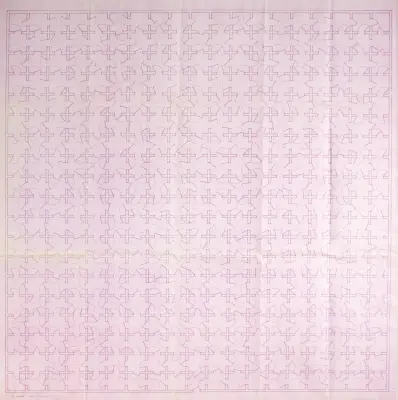
She moves to Rio de Janeiro in 1989. starts to use photographs as a material for the composition of objects and progressively acquires an interest in space. He works with publications, such as The Great Book of Adeus (1989) and Private Eye (1992). He also uses photographs in playful works, such as puzzles (1990). After 1991, he makes installations, such as two lessons of fantastic realism (1991) and attack on power (1992). The art critic Paulo Herkenhoff comments that, at the time, the artist's theme shifts "from the conflicts from the private sphere to the public or collective sphere".1 dialogues with the work of artists such as Christian Boltanski (1944) and John Baldessari. (1931).
In 1993, the Universal Archive project begins. In this series, it replaces the images with news about photography. In other facilities, it combines image and text, such as in Oblivionem (1994/1995). These are texts that speak of the absent image. The manipulation of the meanings of writing is related to the work of the American artist Joseph Kosuth (1945). In 1994, he participated in the 22nd International Biennial of São Paulo with the Candelária installation. In the 1996 series Scar, he works with images collected from the São Paulo Penitentiary Museum. Negatives from the same file are used in the 1998 Conjunto Vulgo. In 2003, he participated in the Venice Biennale and retrospectively sets up at the Centro Cultural Banco do Brasil - CCBB, in Rio de Janeiro, with works from 1990 to 2003. Among them, it shows the series Bibliotheca (2002), made with images collected from anonymous photographic albums. This series is shown, in the same year, at the Pampulha Art Museum, in Belo Horizonte, and at the Fortes Vilaça gallery, in São Paulo.
Notes
1 Herkenhoff, Paulo. rennó or the beauty and sweetness of the present. In: RENNÓ, Rosângela. Rosangela Rennó. São Paulo: Edusp, 1998. (USP artists, 9). p. 136.
Critiques
"Precise rules, given as tacit, are the basis of identity photography: neutral background, dosed lighting, conventional pose, the personal expression given at most by a smile sketched. If there are precise rules, it is because identity photography, in a way, is the specular opposite of the bourgeois portrait, even sharing with it the ideology of the reflection, underlying the photographic operation. One and the other, with different degrees of objectivity, build the image of a subject who is both an individual and character, singular and faithful to the conventions of the social group itself.
It is these considerations about the portrait, seen as an artifice that restores to the individual the social consciousness of himself, which starts with Rosângela Rennó's current research. A vast archive of identity photographs made by anonymous photographers, from which several artistic operations originated towards the deconstruction of the photographic code, the presentation of the identity as a non-identity, or, rather, the revelation of the identity as a simple appearance, as an indication Fragile of a subjectivity that cannot be captured so easily.
The subtle game of deconstruction and reconstruction, to which Rosângela Rennó submits her images trouvées, allows her to penetrate the fundamental ideology of photography: the Objectivity and the reflex reveal products inherent to a social practice and far outweigh the idea of homology intrinsic to the apparatus. Rosângela Rennó A continuous confrontation between industry and art, between truth and fiction.
Denial of neutrality and affirmation of representation codes as construction of an identity and as a symbolic process of vision are its result, logical conclusion of an investigation aimed at the Questioning of the concept of identification".
Annaresa Fabris
Fabris, Annaresa. l'indizio negato. In: Biennale di Venezia, 45., 1993. Aperto' 93. p.382.
"In a world marked by the excess of images, Rennó resorts to the optional forms of appropriation, which, with the quote and the pastiche, are characterizing the postmodern photograph (Fredric Jameson) His references to the history of photography have been asserted not as a citationism of classical photos but as a critical operation in the face of procedures and attitudes of a path since the camera obscura. They can also pass through the tomb of swimming. No more photographing - It is the last and most coherent option of the artist. Working with negatives found by the thousands. This is her contradictory principle of economics. Historically, Renó approaches the experimental 'epistéme' of the decade. of 70. dating back to the most remote inheritance of the words of Murilo Mendes on the photomontages of Jorge de Lima, another poet: 'A revenge against the restriction of an order of knowledge'.
Rosângela Rennó deals with history saturated with photography, with its loss of symbolic substance. The wonder has long since given way to banality. Rennó seeks another iconicity, merging the levels of perception of the image, the corporeality and the symbolic power of photography. Precisely because it involves so many instances, this work is made like a photograph outside the code. The gaze travels between the interior of the image and the body of the photograph and, not penetrating the corporeality, acts on the skin of the film (two lessons of fantastic realism). The image is no longer limited to the object of the photograph. it projects like an abyss that had become shallow. The loss of depth is compensated at some point between the surface and the transparency. If this is still photography, it now also expresses itself by her body. The magnification of the image generates the loss of intimacy, as the change of position can change the pathos. The image is now what Rennó has built as an articulation of mechanisms of perception. Accumulated 3x4 photos dissipate the singularity and the difference (obituaries). reach a zero degree of expressiveness. They are like waste of images, recovered by an operation of semiological eschatology, which invents them an ultimate possibility. the ideality of the pose and the identity submerged in the same void. In this sea of others, otherness is re-articulated in an order of corporeality, under the formal organization by proximity of tones, faded in time, negatives.
The only threat to these ghosts of gelatin would be in any excess of narrative that would replace the plot of language by Drama literature, such as the installation of a mutant virus of photojournalism. Surviving a merciless irony is a frequent challenge for these figures. Furthermore, the expansion of the field despises a pure status of photography. The appropriation of the photographic fetish by the artist, also surpassing anthropology and gratuity, focuses on an idea of lack there, where the subject is constituted. These beings seem, then, to live the paradox of experiencing, as their only clarity, the opacity. They are diaphanous indices of a rarefied memory. What Rosângela Rennó produces crudely are melancholy identities, as if the images claimed the nostalgia for a day being someone.
The historicity of language in these photographic bodies is between silence, death, transparencies and mirror. The vulgar contingency of the freezing of time, reiterated in the physical operations on the body (fading, cuts, cuts, projections, etc., or the optical distortion of top negatives in amnesia), points to a logic also outside the image. This new death would dwell on a plain, at a point between the circulation of the symbol and the consumption of the sign. Between the destiny of the last things and the epiphany of being, a circularity of time emerges. In the place where photography would be an agency of death (Roland Barthes), photographic fragments, temporal excerpts, crumbs of desire reintegrate a presence, and can finally point to the construction of the subject". Herkenhoff
HERKENHOFF, Paulo. Construction of the Subject. Guia das Artes, n.32, p.12-13.
"In the beginning, Rennó's trajectory seemed to move towards a kind of Lyrical exaltation of the comezinho, traditionally feminine universe. At first, the artist manifested herself through appropriate family photos from albums, where Rennó placed inscriptions; Soon after, through objects where the still appropriate photograph took on a new dimension, a thickness, let's say, never seen before on this terrain in Brazil; Then, the artist takes over the real exhibition space, through installations still produced with appropriate photos. Then another turn: the feminine universe ceased to interest it particularly, or rather, it merged with the interest in the drama - and epic - of the human condition at this end of the millennium. a photographer, a 'sculptor', an 'installation artist'? Where to put, how to catalog the production of Rosângela Rennó? For those who had difficulties in identifying the artist and her production in the middle of the last decade, nowadays this intention seems irrevocably impossible. Alongside her photos, the artist, at the beginning of this decade, began to appropriate captions of photographs stamped on large-scale publications obliterating, preventing any cataloging: after all, a photographer who does not photograph, a writer who does not write, showing her production on the Visual Arts Circuit? The poetics of Rosângela Rennó have broken once and for all with the borders between photography, visual arts and literature, entering a terrain prior to any established aesthetic modality: the proper territory and originating from art".
Tadeu Chiarelli
Tridimensionality in 20th Century Brazilian Art. Presentation Ricardo Ribenboim; Collaboration Annateresa Fabris, Tadeu Chiarelli; Text Annateresa Fabris, Fernando Cocchiarale Celso Favaretto São Paulo: Itaú Cultural, 1997. p.176.
"The image is today a tool of inattention. The more images we can devour, the more images we end up forgetting. If our ability to store is apparently very elastic, the active memory holds only a limited amount of information. The rest goes to the mass grave of oblivion. Rosângela Rennó comes to verify this cemetery and its dead.
Since the first works, its objective was not to add images to our aesthetic repertoire, but to appropriate an existing anonymous repertoire that should have functioned as someone's affective memory without the spectator being identify who it would be. The proposed exercise is precisely the one we will do when trying to keep the fog away from an exiled memory a long time ago: what was your face really like?
Photographic anonymity remained an issue throughout a production that ran through family albums, 3x4 portraits, images of newspaper and archives and texts alluding to photography. But, instead of identifying, Rosângela's works erase the difference between people, precisely because they elaborate the techniques of massification. Nothing identifies one model more than another: they are all interchangeable, as in Rosângela's games.
The social dimension of photographic anonymity is a constant concern of the artist, which shows in the institutional mechanisms of dissociation between memory and image. Instead of people, Rosângela presents our acquired habit of dealing with types. characteristic of our inattentive memory, we end up forgetting the vision as much as we insist: the forgetting of the instituted ways of guarding our official memory".
Felipe Chaimovich
Catalog of the Exhibition Sixth Bienal de la Habana - el individual y su memoria (Paris: Association Française d'Action Artistique, 1997)
Testimonies
"There is an abyss between the emulsion and celluloid of the photographic negative. To dive into this abyss is to illuminate the images that history (of the winners) forgot to show."
"The intervention in the Penitentiary Museum took place through the long work of recovery of a set of glass negatives from its collection. the precarious state of conservation of photographic material, the lack of a system for archiving the images that would allow any consultation, the total inexperience of the personnel involved in the custody of the collection and above all the urgency to save a part of the country's penitentiary history led me to prepare and offer the Acadepen a cleaning and reconditioning project for those negatives. The project would serve as a starting point for the constitution of a true penitentiary museum, through a partnership between the artist and the state. The undertaking, which initially was based on aesthetic principles, also became a political action. The ineffectiveness and stagnation of what in penitentiary jargon is simply the ?system? and its ramifications presented me with the true dimension of what the artist's political attitude can be. The contemporary artist is empowered and authorized to discuss, speak out about, open paths in, and circulate through not necessarily artistic territories, especially institutional ones."
Rosângela Rennó
Week of Art of Londrina (6. : 2000: Londrina, PR), MOREIRA, Maria Carla Guarinello de Araujo (coord.). Possible images: [Contemporary photography]. Presentation Maria Carla G. de Araujo Moreira; Curatoria Angela MAGALHÃES, Nadja Peregrino; Texto Nadja Peregrino, Angela Magalhães Londrina: State University of Londrina, 2000. p.37.
Individual exhibitions
1985 - Belo Horizonte MG - Individual, at Itaugaleria
1989 - Belo Horizonte MG - Anti-Cinema - Photographic Veleidades, in the Exhibition Corps room
1991 - São Paulo SP - The identity at stake, in the CCSP
1991 - São Paulo SP - Identity at stake, in the Bienal Pavilion
1992 - Rio de Janeiro RJ - Identity at stake, at Funarte. Macunaíma Gallery
1994 - Rio de Janeiro RJ - Humoral, at the Art Gallery of Ibeu Copacabana
1994 - Rio de Janeiro RJ - Fantastic Realism, at the Art Gallery of Ibeu Madureira
1995 - Amsterdam (Holland) - in Oblivioneem (in Landscape), in Appel Foundation
1995 - São Paulo SP - Hippocampo, at the Camargo Vilaça Gallery
1996 - Los Angeles (United States) - Scar, at The Musem of Contemporary Art
1997 - Valencia (Spain) - Individual, at Galeria Luis Adelantado
1998 - New York (United States) - aka [Alias], at Lombard Freid Gallery
1998 - Recife PE - Individual, at the Joaquim Nabuco Foundation
1998 - São Paulo SP - Parede Cega (one hundred portraits), at MAM/SP
1998 - São Paulo SP - Vulgo, Camargo Vilaça Gallery
1999 - Sydney (Australia) - alias [Alias], at the Australian Center for Photography
2000 - Lisbon (Portugal) - Individual, at the Module Gallery
2000 - Londrina PR - Scar / Landscape, at the Londrina Folha Shed
2001 - Madrid (Spain) - Individual, at the Juana de Aizpuru Gallery
2001 - Rio de Janeiro RJ - Individual, at Laura Marsiaj Contemporary Art
2001 - São Paulo SP - Individual, at the Tomie Ohtake Institute
2002 - Belo Horizonte MG - Individual, at MAP
2003 - New York (United States) - Daily Mirror, at Lombard-Freid Fine Arts
2003 - Rio das Ostras RJ - Individual, at CCBB
2004 - São Paulo SP - Individual, at CCSP
Collective exhibitions
1984 - Belo Horizonte MG - 1st Visual Arts Salon of the Clóvis Salgado Foundation, at Fundação Clóvis Salgado. Palácio das Artes
1984 - Belo Horizonte MG - Guignard School 40 Years of Art, at Itaú Cultural
1985 - Belo Horizonte MG - Drawings and other poisonings, at the IAB/MG gallery
1985 - Belo Horizonte MG - Photographs, at Itaú Cultural
1986 - Belo Horizonte MG - Dolls & Puppets, at Palácio das Artes
1986 - Belo Horizonte MG - 9th National Salon of Plastic Arts: Southeast, at Fundação Clóvis Salgado. Palácio das Artes
1986 - Curitiba PR - 7th Brazilian Drawing Exhibition, at MAC/PR
1986 - Recife PE - 39th Pernambuco Plastic Arts Salon - Acquisition Company Cautos Award
1987 - Belo Horizonte MG - Dec Photographers, in the grand gallery of the Palace of the Arts
1987 - Belo Horizonte MG - 19th National Salon of Contemporary Art of Belo Horizonte, at MAP
1987 - Recife PE - 40th Contemporary Art Salon of Pernambuco, at the Metropolitan Gallery Aloísio Magalhães
1988 - Belo Horizonte MG - 20th National Salon of Art - Hoescht Brazilian Purchasing Award
1988 - Ribeirão Preto SP - 13th Salon of Plastic Arts in Ribeirão Preto, at the Casa da Cultura de Ribeirão Preto - 2nd Prize
1988 - Rio de Janeiro RJ - Luz, Cor & Experimentation, at Funarte. Galeria do Infoto
1989 - Belo Horizonte MG - The elective affinities, at the Centro de Arte Corpo
1989 - Belo Horizonte MG - Fundamental Operations - The sum of differences, in the great gallery of the Palácio das Artes
1989 - São Paulo SP - 7th Salão Paulista de Arte Contemporânea - Fotoptica Award
1990 - São Paulo SP - 4 Eyes, at Galeria Casa Triângulo
1990 - São Paulo SP - Iconographers, 14 photographers today, at MAM/SP
1990 - São Paulo SP - Objects, at the Casa Triângulo Gallery
1990 - São Paulo SP - Quatro Olhos, at the Casa Triângulo Gallery
1991 - Belo Horizonte MG - Environmental Montages, at the UFMG Cultural Center
1991 - Ribeirão Preto SP - 16th Ribeirão Preto Arts Salon - Acquisitive Award City of Ribeirão Preto
1991 - São Paulo SP - Appropriations 91, at Paço das Artes
1991 - São Paulo SP - Program of visual arts exhibitions, at CCSP
1992 - London (England) - Turning the Map - Images from the Americas, at the Camerawork Gallery
1992 - Rio de Janeiro RJ - Brazilian Contemporary ART, at EAV/Parque Lage
1992 - Rio de Janeiro RJ - Eco-sensory: Urban Extractivism, at EAV/Parque Lage
1992 - Rio de Janeiro RJ - Macunaíma Project, NA Funarte. Arts Center
1992 - São Paulo SP - Annual Program for Plastic Arts Exhibition 91, at Fundação Bienal
1993 - Belém PA - 2nd Contemporary Art Salon of Contemporary Art - Acquisition Award
1993 - Brasília DF - A look at Joseph Beuys, at the Athos Bulcão Foundation
1993 - New York (United States) - Space of Time: Contemporary Art from the Americas, at the Americas Society
1993 - Rio de Janeiro RJ - 13th National Salon of Plastic Arts, IBAC/FUNARTE - Acquisition Award
1993 - São Paulo SP - The presence of ready-made: 80 years, at MAC/USP
1993 - São Paulo SP - Brazilian Contemporary Art - Image Distribution Project, at MAC/USP
1993 - São Paulo SP - Cinco, at Casa Triângulo Gallery
1993 - São Paulo SP - sandwich man, at Praça Ramos de Azevedo
1993 - São Paulo SP - In the absence of truth, at the Casa Triângulo gallery
1993 - Venice (Italy) - Aperto'93: Emerranza, at the 45th Bienalle di Venezia
1993 - Washington (United States) - Ultramodern: The Art of the Contemporary Brazil, at the National Museum of Womem in the Arts
1994 - Belo Horizonte MG - Guignard: 50 years of an art school, at the gallery Vidyã
1994 - Brasília DF and São Paulo SP - reviewing Brasília, at the Athos Bulcão Gallery of the National Theater and at MIS/SP
1994 - Frankfurt (Germany) - The thickness of light, in the photograph Forum
1994 - Havana (Cuba) - 5th Bienal de Havana
1994 - Lisbon (Portugal) - In addition to Taprobana: the human figure in the plastic arts of Portuguese-speaking countries, in the National Society of Fine Arts
1994 - Madrid (Spain) - Cocido y Crudo, at the Museo Nacional Centro de Arte Reina Sofía
1994 - San Francisco (United States) - Contemporary Brazilian Photography: A Selection of photographs from the collection of Joaquim Paiva, at the Yerba Buena Center for the Arts
1994 - São Paulo SP - 22nd São Paulo International Biennial, at the Bienal Foundation
1994 - São Paulo SP - Mirrors and Shadows, at MAM/SP
1994 - São Paulo SP - Contaminated photography, at CCSP
1995 - Belo Horizonte MG - Rochelle Costi, Rosângela Rennó and Mabe Bethonico, in the Itaugaleria
1995 - Curitiba PR - 11th Mostra da Engraving Cidade de Curitiba, at Solar do Barão
1995 - Curitiba PR - Engraved object, at the Engraving Museum Cidade de Curitiba
1995 - Curitiba PR - Reviewing Brasília - Brasília Neu Gesehen, at MAC/PR
1995 - Porto Alegre RS - Resending Brasília - Brasília Neu Gesehen, at the Casa de Cultura Mario Quintana
1995 - Belo Horizonte MG - Resending Brasília - Brasília Neu Gesehen, at the UFMG Cultural Center
1995 - Berlin (Germany) - reviewing Brasília - Brasília Neu Gesehen, at the Haus der Kulturn der Welt
1995 - Enschede (Netherlands) - Obsessions: From Wunderkammer to Cyberspace, Photo Biennale Enschede, at Rijksmuseum Twenthe
1995 - Miami (United States) - Space of Time: Contemporary Art from the Americas, at the Center for the Fine Arts
1995 - Rio de Janeiro RJ - In addition to Taprobana: the human figure in the visual arts of Portuguese-speaking countries
1995 - Rio de Janeiro RJ - Mirrors and Shadows, at CCBB
1995 - Rio de Janeiro RJ - Contemporary Brazilian Photography, at CCBB
1996 - Caracas (Venezuela) Alejandro Otero
1996 - Copenhagen (Denmark) - 96 Containers: Art Across the Oceans, Langelinie
1996 - Eindhoven (Netherlands), in public Works at Van Abbemuseum
1996 - Frankfurt (Germany) - Prospect 96, Frankfurt Kunstverein
1996 - London (England) - New crossings: recent Photographie Art from Brazil, at The Photographers Gallery
1996 - Portland (United States) - Pushing Image Paradigms: Conceptual Manoeuvers in Recent Photography, Portland Institute for Contemporary Art
1996 - Rio de Janeiro RJ - Transparencies, at MAM/RJ
1996 - São Paulo SP - Modernity and Contemporaneity in the Visual Arts, at CCSP
1996 - São Paulo SP - Artist's Gold, at the Casa Triângulo Gallery
1996 - São Paulo SP - 4th Studio UNESP SESC SENAI of Image Technologies, at SESC Pompéia
1997 - Belo Horizonte MG - Mabe Bethônico, Rochelle Costi and Rosângela Rennó, at Itaú Cultural
1997 - Berlin (Germany) - Die Anderen Modernen, at Haus der Kulturen der Welt
1997 - Caracas (Venezuela) - Hacer Memoria, at the Museo Alejandro Otero
1997 - Mexico City (Mexico) - Así está la cosa: Art Object and Instalaciones de Latinoamérica, at Centro Cultural Arte Contemporáneo
1997 - Curitiba PR - The Contemporary Art of Engraving, at the Metropolitan Museum of Art of Curitiba
1997 - Havana (Cuba) - 6th Havana Biennial, at the Contemporary Art Center Wifredo Lam
1997 - Johannesburg (South Africa) - 2nd Johannesburg Biennale
1997 - Kwangju (South Korea) - 2nd Kwangju Biennale
1997 - Porto Alegre RS - 1st Mercosul Visual Arts Biennial, at APLUB; at the Mário Quintana House of Culture; at DC Navegantes; at Edel; at the gasometer plant; at the UFRGS Institute of Arts; at the Mercosur Visual Arts Biennial Foundation; in margs; in the ULBRA space; at the Social Communication Museum; at the UFRGS rectory and at Theatro São Pedro
1997 - Porto Alegre RS - Political Side, at the Mercosur Biennial Visual Arts Foundation
1997 - Rio de Janeiro RJ - Identity/No Identity: the current Brazilian photography, at the Light Cultural Center
1997 - San Diego (United States) - Insite 97
1997 - Tijuana (Mexico) - Insite 97
1997 - São Paulo SP - 25th Panorama of Brazilian Art, at MAM/SP
1997 - São Paulo SP - Identity/No Identity: Current Brazilian photography, at MAM/SP
1997 - São Paulo SP - Intervals, at Paço das Artes
1997 - São Paulo SP - Three-dimensionality in Brazilian art of the 20th century, at Itaú Cultural
1998 - Belo Horizonte MG - Three-dimensionality in Brazilian art of the 20th century, at Itaú Cultural
1998 - Brasília DF - Three-dimensionality in Brazilian art of the 20th century, in the Itaú Cultural Gallery
1998 - Copenhagen (Denmark) - The Garden of the Forking Paths at Kunstforingen
1998 - Houston (United States) - Contemporary Brazilian Photography From Joaquim Paiva Collection, at Barbara Davis Gallery at Pennzoil Place
1998 - New York (United States) - Contemporary Brazilian Photography from Joaquim Paiva Collection, Consulate General of Argentina
1998 - Las Palmas de Gran Canaria (Canary Islands, Spain) - Transatlántico, at the Atlantic Center of Modern Art
1998 - Linz (Austria) - Archiv X, at Offenes Kulturhaus
1998 - Niterói RJ - 25th Panorama of Brazilian Art, at MAC/Niterói
1998 - Penápolis SP - Three-dimensionality in Brazilian art of the 20th century, in the gallery Itaú Cultural
1998 - Recife PE - 25th Panorama of Brazilian Art, at MAMAM
1998 - Rio de Janeiro RJ - The image of the sound of Caetano Veloso, in the Paço Imperial
1998 - Rio de Janeiro RJ - 90s - Gilberto Chateaubriand Collection, at MAM/RJ
1998 - Rio de Janeiro RJ - Reflective horizon, at the Light Cultural Center
1998 - Rio de Janeiro RJ - Kidnapped images, MAM/RJ
1998 - Rio de Janeiro RJ - 16th National Salon of Plastic Arts, at MAM/RJ
1998 - Salvador BA - 25th Brazilian Art Panorama, at MAM/BA
1998 - São Paulo SP - 24th São Paulo International Biennial, at Fundação Bienal
1998 - São Paulo SP - Camargo Vilaça Bis - 46, at the Camargo Vilaça Gallery
1998 - São Paulo SP - O Moderno e o Contemporary in Brazilian Art: Gilberto Chateaubriand Collection - MAM/RJ, at MASP
1999 - Caracas (Venezuela) - Contemporánea - Acquisiciones 1994-1998, at Museo Alejandro Otero
1999 - Stockholm (Sweden) - The Garden of the Forking Paths, at Edsvic & Kultur
1999 - Helsinki (Finland) - The Garden of the Forking Paths at Helsinki City Art Museum
1999 - Graz (Austria) - Der Anagrammatische Körper, At Neue Galerie
1999 - Mürzzuschlag (Austria) - der Anagrammatische Körper, at Kunsthaus Muerz
1999 - Madrid (Spain) - Vueltas with Los Sentidos, in the Pabellón de Caballerizas da Casa de América
1999 - Rio de Janeiro RJ - The image of the sound of Chico Buarque, in the Paço Imperial
1999 - São João da Boa Vista SP - 2nd Week Fernando Furlanetto of Photography, at the Municipal Theater
1999 - São Paulo SP - 80 years of art in Brazil, at MAM/SP
2000 - Buenos Aires (Argentina) - Brazil: plural y singular, Buenos Aires Museum of Modern Art
2000 - Curitiba PR - 12th Exhibition of Engraving of Curitiba. Body marks, Soul folds
2000 - Curitiba PR - New Trends, at Casa Vermelha
2000 - Guadalajara (Mexico) - America Latin photo: La Fotografia en el Arte Contemporáneo, at the Museo de Las Artes de la Universidad de Guadalajara
2000 - Lisbon (Portugal) - 20th Century: Art of Brazil, at the José de Azeredo Perdigão Modern Art Center
2000 - Lisbon (Portugal) - a Whole Ocean for Swimming, at Culturgest
2000 - Londrina PR - Possible Images: Contemporary Photography, 6th Week of Art in Londrina
2000 - Rio de Janeiro RJ - The image of the sound of Gilberto Gil, in the Paço Imperial
2000 - Rio de Janeiro RJ - Brazil + 500 rediscovery show. Letter from Pero Vaz de Caminha, at the National Historical Museum
2000 - São Paulo SP - Brazil + 500 Rediscovery Exhibition, at the Bienal Foundation
2000 - São Paulo SP - Cá Entre Nós, at Paço das Artes
2000 - São Paulo SP - End of Millennium: The 90s at MAM, at MAM/SP
2000 - São Paulo SP - New work, at MAC/USP
2000 - São Paulo SP - 2nd Expanded Territory, At Sesc Pompéia
2001 - Campinas SP - Displacements of the Self: The Digital and Pre-Digital Self-Portrait in Brazilian Art 1976 - 2001, at Itaú Cultural
2001 - Madrid (Spain) - El Final del Eclipse: El Arte de América Latina en la Transición al Siglo XXI, at Fundación Telefonica
2001 - Oxford (England) - Experiment Experience: Art in Brazil 1958-2000, at the Museum of Modern Art
2001 - Recife PE - Policies de la Diferencia: Iberoamerican Arte Fin de Siglo, at the Pernambuco Convention Center
2001 - Rio de Janeiro RJ - Blind Mirror: Selections of a contemporary collection, at Paço Imperial
2001 - Rio de Janeiro RJ - The spirit of our time, at MAM/RJ
2001 - São Paulo SP - Bienal 50 years: a tribute to Ciccillo Matarazzo, At Fundação Bienal
2001 - São Paulo SP - 10th Pirelli Collection/Masp of Photographs, at MASP
2001 - São Paulo SP - Blind Mirror: Selections from a contemporary collection, at MAM/SP
2001 - São Paulo SP - Photography/Not Photography, at MAM/SP
2001 - São Paulo SP - The spirit of our time, at MAM/SP
2001 - São Paulo SP - Trajectory of light in Brazilian art, at Itaú Cultural
2001 - Washington (United States) - Virgin Territory: Women, Gender, and History in Contemporary Brazilian Art, at the National Museum of Women in the Arts
2002 - Barra Mansa RJ - sidaids, at the Sesc Barra Mansa Art Gallery
2002 - Brasília DF - Fragments to its magnet, in the contemporary cultural space Venâncio
2002 - Fortaleza CE - Ceará rediscovered Brazil, at Centro Dragão do Mar de Arte and Culture
2002 - Londrina PR - Are they or are they not engravings?, at the Museum of Art of Londrina
2002 - Porto Alegre RS - Appropriations and collections, at Santander Cultural
2002 - Rio de Janeiro RJ - Culture in times of AIDS, in the MNBA
2002 - Rio de Janeiro RJ - Artephoto, at CCBB
2002 - Rio de Janeiro RJ - Caminhos do Contemporânea 1952-2002, in Paço Imperial
2002 - Rio de Janeiro RJ - Book: Object of Art, at the Candido Mendes Cultural Center
2002 - Rio de Janeiro RJ - Parallels: Brazilian art from the second half of the 20th century in context, Collección Cisneros, MAM/RJ
2002 - São Gonçalo RJ - Sidaids, at Sesc São Gonçalo
2002 - São Paulo SP - 20 artists / 20 years old, at CCSP
2002 - São Paulo sp - Photos in the collection of the Museum of Modern Art of São Paulo, at MAM/SP
2002 - São Paulo SP - Appropriate images, at MAM/SP
2002 - São Paulo SP - Paralela, in the shed located on Avenida Matarazzo, 530
2002 - São Paulo SP - Parallels: Brazilian art from the second half of the 20th century in context, Colección Cisneros, at MAM/SP
2002 - São Paulo SP - Rotating Phase 2, at Galeria Fortes Vilaça
2002 - São Paulo SP - Visions and Alumbraments: Contemporary Brazilian photography from the Joaquim Paiva Collection, at Oca
2003 - Brasília DF - Artefoto, at CCBB
2003 - Goiânia GO - 3rd Sérgio Motta Cultural Award, at MAC/GO
2003 - Niterói RJ - Sidaids, at the SESC
2003 - Rio de Janeiro RJ Art Gallery - Art in Motion, at the BNDES space
2003 - São Paulo SP - The engraving goes well, thank you: the Brazilian historical and contemporary engraving, at Espaço Virgílio
2003 - São Paulo SP - The subversion of the media, at Itaú Cultural
2003 - São Paulo SP - Art and Society: a controversial relationship, at Itaú Cultural
2003 - São Paulo SP - My friends, at MAM/SP
2003 - São Paulo SP - Rosângela Rennó, at Galeria Fortes Vilaça
2003 - Venice (Italy) - 50th Venice Biennale, Arsenale and Giardini della Biennale.
2004 - Madrid (Spain) - Arco/2004, at Parque Ferial Juan Carlos I
2004 - Rio de Janeiro RJ - Brazilian contemporary art in the collections of Rio, at MAM/RJ
2004 - Rio de Janeiro RJ - New Acquisitions 2003: Gilberto Chateubriand Collection, at MAM/RJ
2004 - São Paulo SP - Photography and sculpture in the MAM collection - 1995 to 2004, at MAM/SP
2005 - São Paulo SP - The body in Brazilian contemporary art, at Itaú Cultural
Source: Itaú cultural