Oscar Pereira da Silva (São Fidélis RJ 1867 - São Paulo SP 1939)
Painter, decorator, designer, teacher. Between 1882 and 1887, he studied at the Imperial Academy of Fine Arts - AIBA, and is a student of Zeferino da Costa, Victor Meirelles, Chaves Pinheiro and José Maria de Medeiros. In 1887, he became Zeferino da Costa's assistant in the decoration of the Church of Candelária, in Rio de Janeiro. He won the last foreign travel award awarded by Emperor Dom Pedro II, moving to Paris in 1889. He studies with painters Léon Bonnat and Jean-Léon Gérôme. During the period in which he remains in France, he produces several studies and canvases. He returns to Brazil in 1896. In Rio de Janeiro, he holds an individual exhibition in the hall of the National School of Fine Arts - ENBA, where 33 works are presented in Europe. In the same year, he moved to São Paulo. He teaches at the Liceu de Artes e Ofícios de São Paulo - LAOSP and at the Gymnasium of the State, and also teaches private classes in his studio. In 1897, he founded the artistic nucleus, which later becomes the School of Fine Arts, where he teaches. Between 1903 and 1911, he works in the decoration of the Municipal Theater of São Paulo, preparing three murals: the theater in ancient Greece, dance and music. Between 1907 and 1917, he made paintings for the Church of Santa Cecília. As a pensioner for the Government of the State of São Paulo, he traveled to Paris in 1925.
Critical Comment
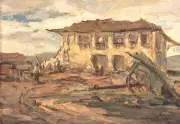
Historical painting author, portraits, religious themes, genre scenes, still lifes and landscapes, Oscar Pereira da Silva It is also a great copyist. In the city of São Paulo are his main works, among which stand out Escrava Romana, ca.1882, Infância de Giotto, 1895, and Foundation of the City of São Paulo, 1909, belonging to the Pinacoteca do Estado de São Paulo - pesp; Disembarkation of Cabral in Porto Seguro, 1922, and the Prince Regent D. Pedro, Jorge Avilez next to the Fragata União, from the São Paulo Museum of the University of São Paulo - MP/USP. The experience at the Church of Candelária, in Rio de Janeiro, as an assistant to Zeferino da Costa, bears fruit in São Paulo, where he performs the decoration of the Church of Santa Cecília. At the dome, the evangelists are portrayed; In the chapels, the Immaculate Conception and the spousals of São José. Completing the set, there are several portraits of clerics around the nave. At the beginning of the 20th century, in São Paulo, several colonial chapels were replaced by neo-Gothic or neo-colonial buildings, opening a work front for decorating artists, such as Oscar Pereira da Silva and Benedito Calixto. In addition to the Church of Santa Cecília, both work in the churches of Santa Ifigênia, Consolação and Rosario. Pereira da Silva also carries out decorative works for the Church of Nossa Senhora da Conceição.
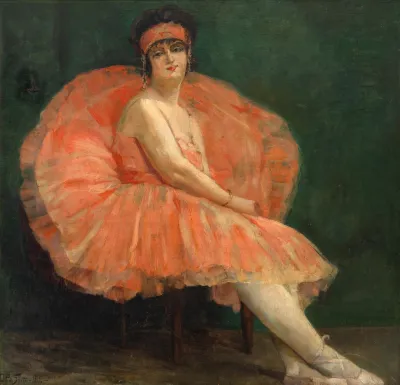
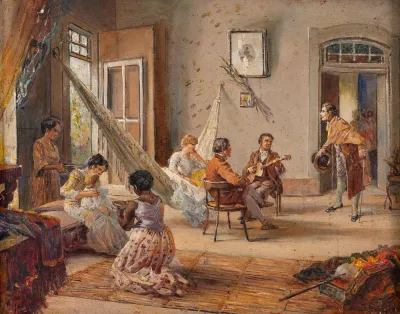
In Paris, he performs his artistic improvement in the studios of conservative painters, not being interested in realism and much less by impressionism. In large part, due to the academic training he receives, he is not influenced by modern painting, preferring to continue in a traditional line, which works with great technical quality. Examples of this tendency are Salomé, 1913, Lídia, Slave Romana, canvas of feminine figures that reveal the attachment to academic traditions and that seem anachronistic for their time. His works reveal a meticulous and perfect design, like master Zeferino da Costa. Some works, especially the genre scenes, of which are examples created by grandma, 1890, porcelain repairer, 1894, kitchen in the fields and intimate singing seem less severely guided by traditional aesthetics, revealing some boldness more in the thematic than in the pictorial treatment.
His laborious compositions are characteristics of the expansion of painting that predominates in the Brazilian artistic milieu at the beginning of the Republic, which explains both its high productivity and acceptance in the period and the criticisms it was targeted at later. Pereira da Silva is successfully inserted in a context in which artistic education and official orders are the main sources of activities for artists. He then carries out the activity of a teacher and is highly requested to carry out works for institutions linked to the government.
Also performs some landscapes, but the main task he assumes is to recreate, in large compositions, episodes of national or São Paulo history. The best example is certainly Cabral's disembarkation in Porto Seguro. The canvas gains such notoriety, serving as iconography for school books and other publications, which to this day appears as the most popular representation of the arrival of Pedro Álvares Cabral in Brazil. It is interesting to consider that the work is carried out for the celebrations of the centenary of the independence of Brazil, in 1922, in the same year that the Week of Modern Art stirs up the cultural environment of São Paulo. Another important historical canvas is the session of the Lisbon Courts on May 9, 1822, an episode in which several Brazilian deputies, led by Antonio Carlos de Andrade e Silva, defended in the Portuguese Court that a single sovereign should govern the kingdoms of Portugal and Brazil. Like the landing, the canvas is commissioned by the historian and director of the Museu Paulista, Afonso d'Escragnolle Taunay, to occupy the spaces of the newly created museum. The election of certain historical moments is part of the project for the construction and elaboration of the national identity and memory.
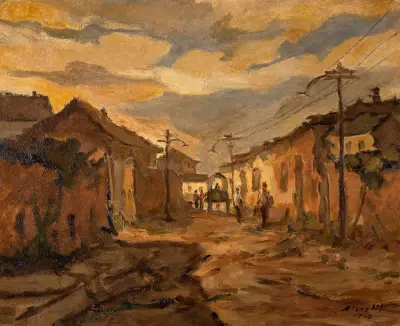
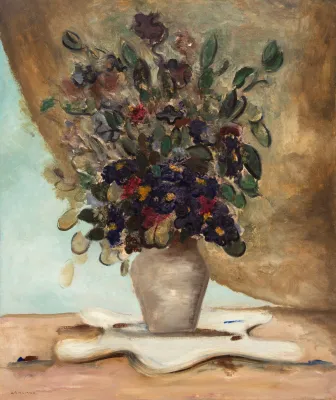
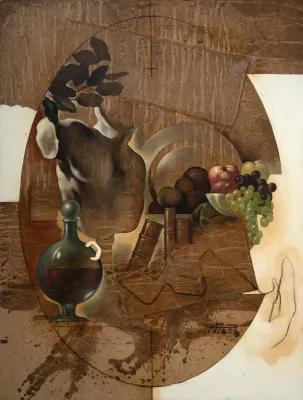
One can criticize Oscar Pereira da Silva for the repetition of formulas and the impermeability of the new pictorial trends in vogue internationally. At the end of his life, he starts to produce a greater number of marines, landscapes, still lifes and watercolors. Author of a numerous but unequal production, almost always based on traditional aesthetics, considered by some critics as a weak and overly praised painter,1 guides his work, as stated by the critic Quirino Campofiorito, "in the conviction that he was inadmissible to an artist deform, in order to thus better express".2
Notes
1 Cockroach, Mário. Painting and sculpture: positions of academicism and attempts at symbolism. In: ZANINI, Walter (org). General History of Art in Brazil. São Paulo: Walther Moreira Salles Institute, Djalma Guimarães Foundation, 1983. p. 443.
2 Campofiorito, Quirino. The Protection of the Emperor and the Painters of the Second Reign: 1850 - 1890. Rio de Janeiro: Pinakotheke, 1983. (History of Brazilian painting in the 19th century, 4). p. 50.
Criticism
"Like artists handed over to the discipline of teaching at École Nationale des Beaux-Arts, he refused to admit some interest in renewing artistic movements since realism audacious of Courbet, through the technical and inspiring liberation of Delacroix's romanticism, much less then Impressionism, already victorious outside the borders of official art. conviction that it was inadmissible for an artist to deform, in order to better express it. It was the postulate even respected by the reactionary criticism of the renewing movements, that an artist can only conceive of beautiful shapes and noble subjects, and that it is up to him to draw with exactness and beautify even the most vicious realism that life shows. (...) With such artistic convictions it continued (...) when the movement triggered by the 1922 Modern Art Week had already changed the face of our most representative art and this confirmed in the support that ensures the generation that is notable in the thirties. (...) Without having revealed vigorous impulses that showed him emotive power, Oscar Pereira da Silva knew how to keep in the course of a good fifty-seven years of permanent and intense production, since he returned to the country, in 1896, all the care of a severe design elaborated, without in a single moment turning to the new semblance that painting acquired in this transposition of time".
Quirino Campofiorito
Campofiorito, Quirino. History of Brazilian painting in the 19th century. Rio de Janeiro: Pinakotheke, 1983.
Carves
Pinacoteca do Estado de São Paulo (SP)
Church of Consolação - São Paulo SP
Mariano Procópio Museum - Juiz de Fora MG
National Museum of Fine Arts - MNBA - Rio de Janeiro RJ
Paulista Museum of the University of São Paulo - MP/USP - São Paulo SP
Individual exhibitions
1896 - Rio de Janeiro RJ - individual, at Enba
1898 - São Paulo SP - Individual, at Banco União de São Paulo
1898 - São Paulo SP - Individual, at Banco Construtor
Collective exhibitions
1884 - Rio de Janeiro RJ - 26th General Exhibition of Fine Arts, at AIBA
1890 - Rio de Janeiro RJ - General Exhibition of Fine Arts, at ENBA
1894 - Rio de Janeiro RJ - 1st General Exhibition of Fine Arts, NA ENBA
1896 - Rio de Janeiro RJ - 3rd General Exhibition of Fine Arts, at Enba
1897 - Rio de Janeiro RJ - 4th General Exhibition of Fine Arts, at Enba
1898 - Rio de Janeiro RJ - 5th General Exhibition of Fine Arts, at ENBA
1902 - São Paulo SP - Exhibition of Industrial Fine Arts
1904 - Saint Louis (United States) - Exhibition of Saint-Louis
1904 - São Paulo SP - Exhibition of Saint-Louis
1907 - Rio de Janeiro RJ - 14th General Exhibition of Fine Arts
1907 - Rio de Janeiro RJ - 14th General Exhibition of Fine Arts, at Enba
1908 - Rio de Janeiro RJ - Exhibition commemorating the opening of ports
1912 - São Paulo SP - 2nd Brazilian Exhibition of Fine Arts, at the Liceu de Artes e Ofícios
1914 - Rio de Janeiro RJ - 21st Exhibition General of Fine Arts, at Enba
1922 - São Paulo SP - 1st General Exhibition of Fine Arts, at Palácio das Indústrias
1928 - São Paulo SP - Grupo Almeida Júnior, at Palácio das Arcades
1934 - São Paulo SP - 1st Paulista Salão de Belas Artes, at Rua 11 de Agosto
1935 - São Paulo SP - 2nd São Paulo Salon of Fine Arts
1935 - São Paulo SP - 3rd São Paulo Salon of Fine Arts
1936 - São Paulo SP - Individual, at Palácio das Arcadas
1937 - São Paulo SP - 5th Paulista Salon of Fine Arts
1939 - São Paulo SP - 6th São Paulo Salon of Fine Arts
Posthumous exhibitions
1940 - São Paulo SP - Retrospective Exhibition: Works of the Great Masters of Painting and His Disciples
1944 - São Paulo SP - 10th Paulista Salon of Fine Arts, at the Prestes Maia Gallery
1946 - São Paulo SP - 12th Salão Paulista de Belas Artes, at Galeria Prestes Maia
1948 - Rio de Janeiro RJ - Retrospective of painting in Brazil, at MNBA
1950 - Rio de Janeiro RJ - A century of Brazilian painting: 1850-1950, at the MNBA
1954 - São Paulo SP - Salão Paulista de Belas Artes, at the Prestes Maia Gallery
1970 - São Paulo SP - Pinacoteca do Estado de São Paulo 1970, in the MAB/FAAP
1976 - São Paulo SP - The portrait in the collection of the Pinacoteca, at the Pinacoteca do Estado
1980 - São Paulo SP - The Brazilian landscape: 1650-1976, in the Paço das Arts
1981 - São Paulo SP - Four great painters in São Paulo, at the Bienal Foundation
1982 - Rio de Janeiro RJ - 150 years of marine painting in the history of Brazilian art, at MNBA
1984 - São Paulo SP - Tradition and Rupture: Synthesis of Brazilian Art and Culture, at the Bienal Foundation
1985 - São Paulo SP - 100 Obras Itaú, at MASP
1986 - São Paulo SP - Nineteenth century: a turn in the century, in the Pinacoteca do Estado
1991 - São Paulo SP - Desire at the Academy: 1847-1916, at the Pinacoteca do Estado
1991 - São Paulo SP - Oscar Pereira da Silva: Aquarelas, at Renato Magalhães Gouvêa Art Office
1994 - São Paulo SP - A critical look at the 19th century collection at the Pinacoteca do Estado
1998 - Rio de Janeiro RJ - Marines in large collections from São Paulo, in the cultural space of Navy/Naval Museum
1998 - São Paulo SP - São Paulo iconography in private collections, at the Brazilian House Museum
2000 - Caxias do Sul RS - Itinerant Exhibition of the Margs Collection
2000 - Passo Fundo RS - Traveling exhibition of the Margs collection
2000 - Pelotas RS - Itinerant exhibition of the Margs collection
2000 - Porto Alegre RS - from Frans Post to Eliseu Visconti: National Museum of Fine Arts Collection - RJ, at Margs
2000 - Rio de Janeiro RJ - Brazil + 500 Rediscovery Exhibition. Letter from Pero Vaz de Caminha, at the National Historical Museum
2000 - Santa Maria RS - Itinerant Exhibition of the Margs Collection
2000 - São Paulo SP - The human figure in the Itaú collection, at Itaú Cultural
2000 - São Paulo SP - Brazil + 500 Rediscovery Show, at Fundação Bienal
2001 - São Paulo SP - Aldo Franco Collection, at Pinacoteca do Estado
2002 - Brasília DF - Barão do Rio Branco: His work and his time at the Ministry of Foreign Affairs. Palácio do Itamaraty
2003 - São Paulo SP - Painters of the coast of São Paulo, at Sociarte
2004 - São Paulo SP - The price of seduction: from the corset to the silicone, at Itaú Cultural
Source: Itaú Cultural