
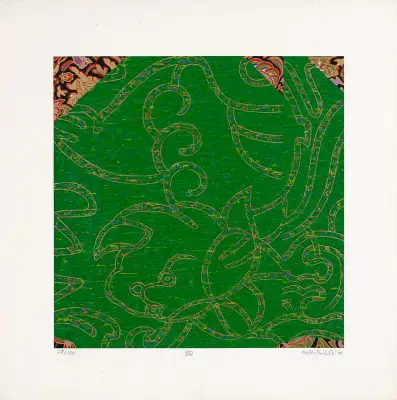

Kazuo Wakabayashi (Kobe, Japão 1931 - 2021)
Kazuo Wakabayashi was a painter. He was born in Kobe, Japan, in 1931. He studied at the Hikone Technical School in Shiga in 1944 and, between 1947 and 1950, attended the School of Fine Arts and the Niki Academy in Tokyo, as well as classes with Kanosuke Tamura. In 1950, he gave up architecture to devote himself to painting. He took part in the Babel and Seiki groups and illustrated Japanese newspapers such as Shinko Shimbun and All Sports. He received awards at art salons in Japan between 1947 and 1959.
He moved to São Paulo in 1961 and joined the Grupo Seibi, with the support of Manabu Mabe and Tomie Ohtake. In 1963, he received the gold medal at the 12th São Paulo Salon of Modern Art and at the 7th Grupo Seibi Salon. In 1966, he won first prize at the Salão de Abril [April Salon] of MAM/RJ. He took part in several editions of the Bienal de São Paulo between 1963 and 1967, receiving awards. In 1992, a book on his work was published with an introduction by Jayme Mauricio and, in 1993, the Paço das Artes held a retrospective of his work.
Critical Commentary
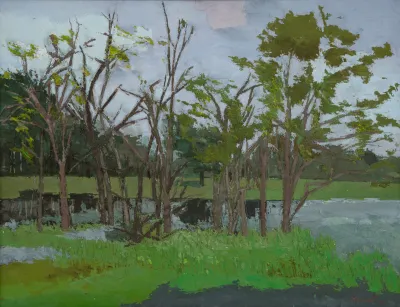
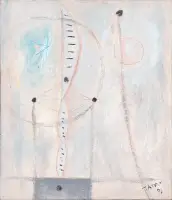
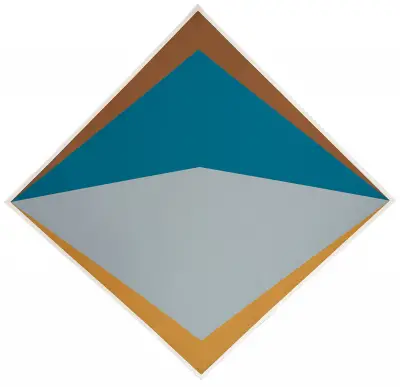
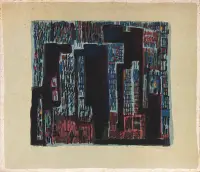
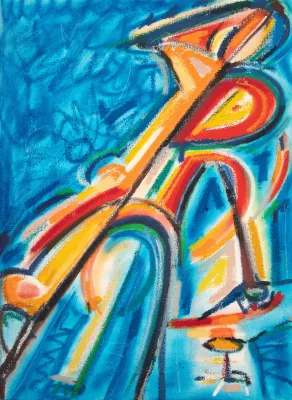
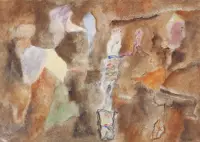
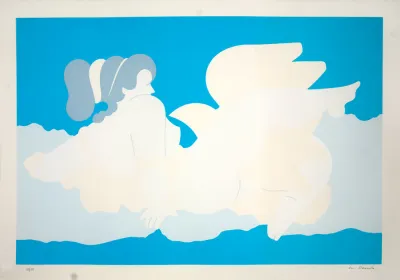
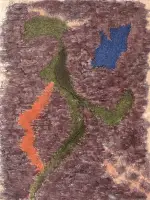
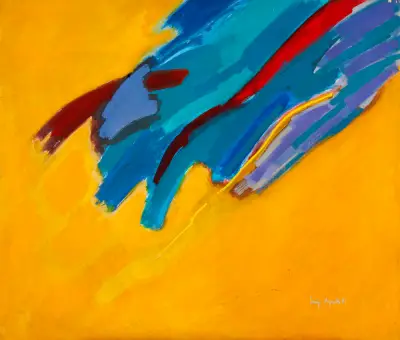
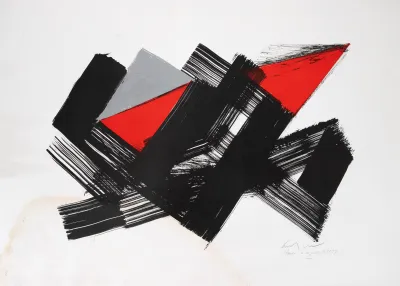
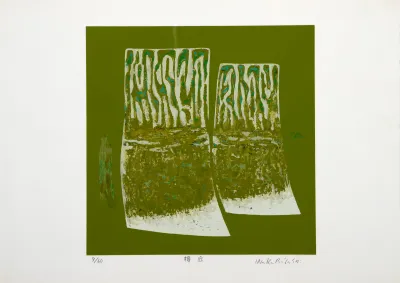
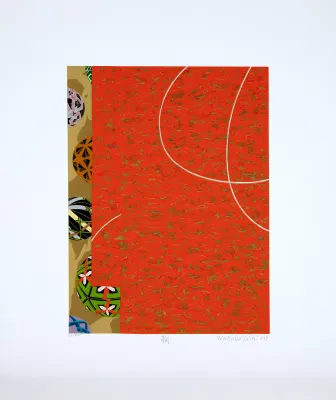
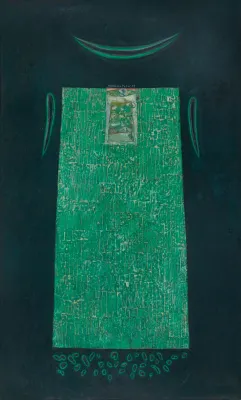
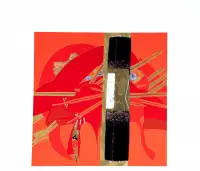
Kazuo Wakabayashi arrived in Brazil in 1961 as a mature artist, with a consolidated career in Japan. He developed an abstract body of work of informal orientation, marked by research into techniques, colors and materials. Between the 1960s and 1970s, he worked with precise contours and intense colors, exploring formal variations within rhythmic compositions, as in Sem Título [Untitled] (1966) and Contraponto [Counterpoint] (1970). He also created monochromatic surfaces with relief and texture, as in Vermelho [Red] (1964) and Abstração [Abstraction] (c. 1960).
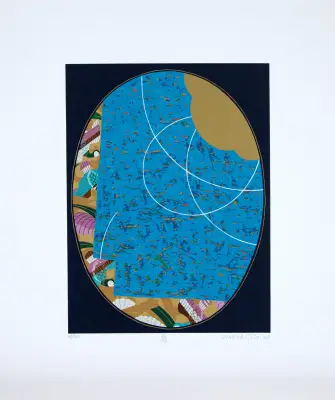
From the late 1970s onward, he placed greater emphasis on texture and relief, often uniform across the whole canvas or concentrated in specific areas, as in Composição em Amarelo [Composition in Yellow] (1971) and Composição em Branco [Composition in White] (1983). In works such as Composição Abstrata [Abstract Composition] (1970), he uses cut circular forms to reveal internal contrasts of color and texture.
In the following years, he drew closer to the tradition of Japanese ukiyo-e printmaking, incorporating Japanese fabric prints into his canvases. He developed collages combined with painting, as in Insinuação em Negro [Insinuation in Black] (1988), Sem Título [Untitled] (1987) and Composição em Relevo [Composition in Relief] (1983), creating visual relationships between applied textures and decorative patterns. In some works, he adopted titles suggesting natural themes, as in Onda [Wave] (1987) and Mensagem do Mar [Message from the Sea] (1987).
Source: Itaú Cultural