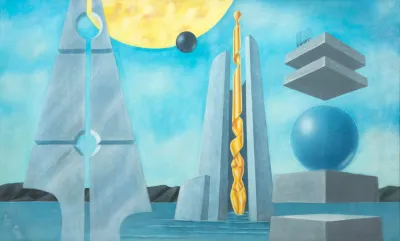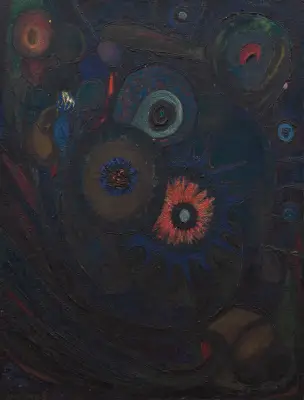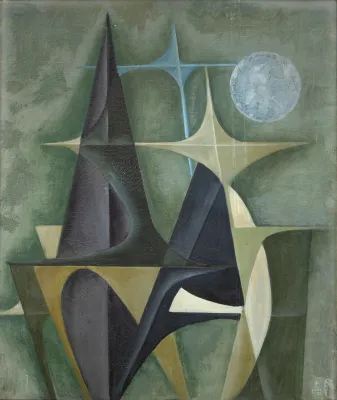

Daniel Senise (Rio de Janeiro RJ 1955)
Daniel Senise is a Brazilian painter and printmaker, recognized for his fundamental contribution to contemporary art in Brazil and abroad. Having graduated in civil engineering from the Universidade Federal do Rio de Janeiro (UFRJ) in 1980, that same year he entered the Escola de Artes Visuais do Parque Lage (EAV/Parque Lage), where he also taught in the Painting Department from 1986 to 1991. During his training, Daniel Senise studied with artists such as John Nicholson (1951) and Luiz Aquila (1943), standing out in the historic exhibition Como Vai Você Geração 80? [How Are You, Generation 80?], held in 1984, a landmark in the renewal of Brazilian painting.
Daniel Senise held his first solo exhibition in 1984, at the Galeria do Centro Empresarial Rio, and became a member of the Ateliê da Lapa, alongside artists such as Angelo Venosa (1954), Luiz Pizarro (1958), and João Magalhães (1945). In 1985, he gained international recognition by participating in the Grande Tela [Big Canvas] at the 18th Bienal Internacional de São Paulo, alongside other prominent names in Brazilian art. In 1986, he was awarded the gold medal at the 1st Latin American Biennial of Art on Paper, solidifying his critical recognition.
Daniel Senise's international career includes notable solo exhibitions, such as at the Museum of Contemporary Art of Chicago (1991) and the Museo de Arte Contemporáneo de Monterrey, Mexico (1994), as well as numerous group shows at museums and institutions around the world. In 1997, he served as gallery coordinator at the Centro Cultural Light in Rio de Janeiro, fostering dialogue and the circulation of contemporary art.
In 1998, the book Daniel Senise: Ela que não Está [Daniel Senise: She Who Is Not There] was published by Cosac & Naify, with critical texts by Ivo Mesquita, Dawn Ades, and Gabriel Pérez-Barreiro. In 2002, the book The Piano Factory, published by Andrea Jakobsson Estúdio Editorial, brought together texts by Agnaldo Farias and Alexandre Mello in an in-depth analysis of Daniel Senise's work, reflecting on its processes and transformations.
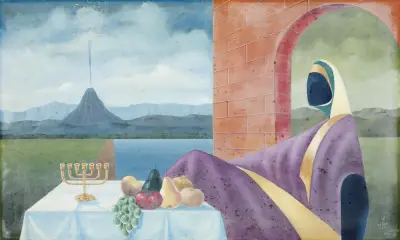
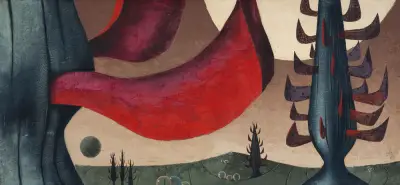
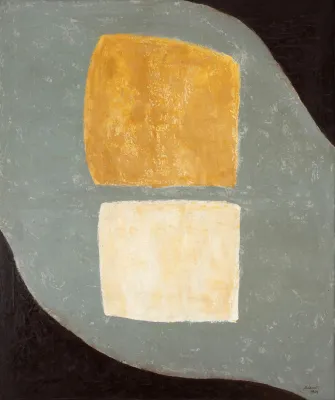
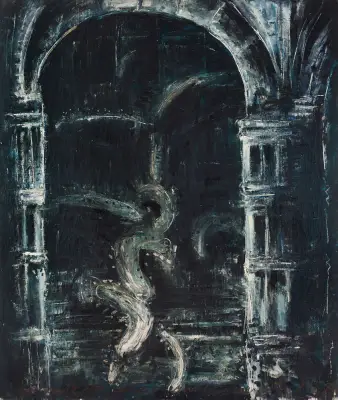
Early in his career, Daniel Senise developed abstract compositions with empty volumes and undefined images, inspired by everyday objects. In the late 1980s, he began to employ more intense colors and visual arrangements focused on imaginary and discontinuous landscapes. Since then, his work has incorporated references to Renaissance painting, evoking the history of art as the basis for a contemporary language.
Throughout his career, Daniel Senise has explored the concept of the fragmented image as an instrument of meaning, reconstruction, and access to knowledge in the postmodern context. His work constantly seeks to activate the viewer's imagination, creating visual experiences that involve memory, perception, and time.
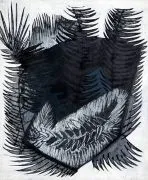
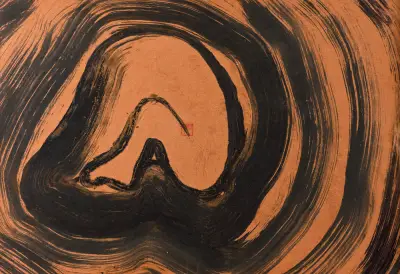
After returning to Brazil from the United States in 2005, Daniel Senise began a new phase in his studio, marked by the use of organic processes and the unique technique of "wood impressions." The technique emerged accidentally: while spilling paint on the floor of his studio and covering the surface with fabric, he observed the formation of unique textures, which he began to explore systematically. Since then, he has applied glue and paint to different types of wood flooring, covering them with fabrics that capture these marks, which are later cut and rearranged into compositions that reflect construction, decomposition, and visual memory. Some of these works were exhibited at the Galeria Brito Cimino.
In 2006, Daniel Senise presented an exhibition of 23 paintings, some of which had never been seen before, at the Museu Oscar Niemeyer in Curitiba. The exhibition, curated by Agnaldo Farias, was divided into three sections, including the series Chãos [Floors], featuring hospital and hotel fabrics imbued with latent memories. The remaining series included historical works and new compositions featuring architectural elements and complex symbolic structures.
In addition to his work in museums and galleries, Daniel Senise participated in the Absolut Brasil project, creating a custom bottle for the Absolut Vodka campaign, reinforcing his presence in highly visible cultural projects.
The grandson of Italian immigrants from the Basilicata region, Daniel Senise built a career marked by a balance between formal rigor, historical sensitivity, and technical invention, earning him wide recognition as one of the leading figures in contemporary Brazilian art.
Critical Commentary
Daniel Senise entered the Escola de Artes Visuais do Parque Lage (EAV/Parque Lage) in 1980, where he studied with John Nicholson (1951) and Luiz Aquila (1943). Between 1986 and 1991, he taught at the same institution. Also in the 1980s, he attended Luiz Aquila's free painting studio and was a member of the Ateliê da Lapa, alongside Angelo Venosa (1954), Luiz Pizarro (1958), and João Magalhães (1945). In 1984, Daniel Senise participated in the exhibition Como Vai Você, Geração 80? [How Are You, Generation 80?], which brought together artists from different fields with the aim of revaluing painting by exploring new techniques and materials. Since then, the artist has been featured in exhibitions in Brazil and abroad. He currently maintains studios in Rio de Janeiro and New York.
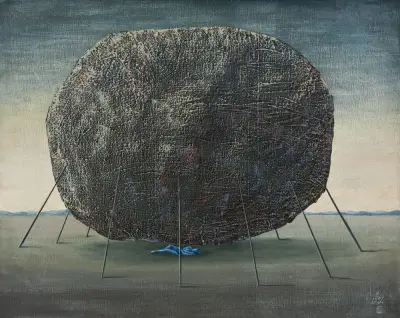
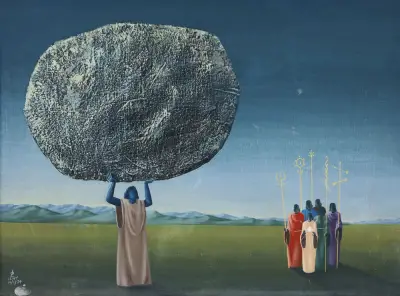
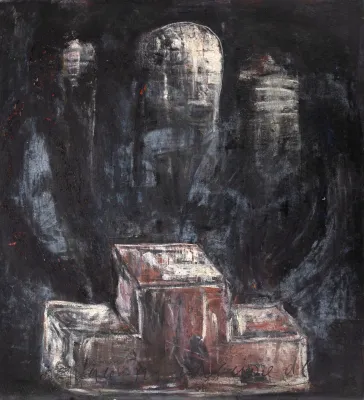
Early in his career, Daniel Senise produced works composed of landscapes, in which voluminous forms dominate almost the entire canvas. These elements impose themselves as monumental presences, but without thematic connotations. Critic Fernando Cocchiarale highlights that Senise's painting is characterized by ambiguity: he simultaneously reveals and conceals, creating images that evoke everyday objects but are not easily identifiable. The drama of these early works results from the articulation between the volume of the images and a somber chromatic palette, as in Coração [Heart] and Sax (both from 1985).
Starting in the second half of the 1980s, the figure became less central in Daniel Senise's works, and his use of color diversified. The artist began to incorporate marks and impressions of external elements into the canvas, applying pigments to the canvas and then pressing it against the still-wet studio floor. When the canvas is peeled off, the surface retains the roughness of the floor and traces of other works, which are later reworked.
Daniel Senise thus develops a repertoire of images that evoke the wear and tear of time. From 1989 onward, he also uses iron nails, whose rust marks are recorded in the painting. In São Sebastião [Saint Sebastian] (1991), a rope riddled with nails symbolizes the saint martyred by arrows. In other works, he uses industrial silver paints, which evoke the memory and aesthetics of the photographic image.
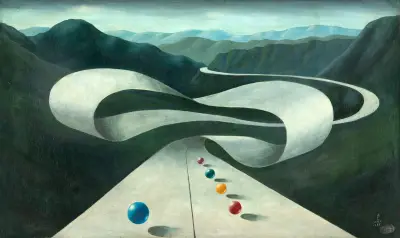
Landscape and perspective are also explored by Daniel Senise, as in Altivez na Velocidade [Haughtiness in Speed] (1997), a diptych with wooden objects on canvas, inspired by the work The Avenue at Middelharnis by the Dutch painter Meindert Hobbema (1638–1709).
Daniel Senise's paintings establish direct connections with the history of art, the universe of images, and their perception. Using materials such as iron powder, lead objects, fabrics such as voile, and everyday elements, his works range from densely worked surfaces to almost ethereal layers. For English critic Dawn Ades, his paintings explore balance and weight, presence and absence. The images created by Senise open up to multiple sensory, material, and poetic experiences.
Critiques
Wilson Coutinho
Senise's Painting and the Expressionist Atmosphere
"(...) Daniel Senise's paintings often resemble a 'noir' series of partial objects, metaphorically displaced onto the canvas. His palette—black, white, with hints of red and blue—not only intensifies the drama of the images, making them unsettling, but also makes us feel present in an Expressionist scene. There is something grandiose and Wellesian about these images, which seem devoid of meaning. Senise seems to have shaken up an art of stillness, as if it were excessively indifferent. The objects toward which the artist directs his perception are charged with narrative; they are expressions, traces, and remains of something lived, something intimate. With his voluminous forms, Senise constructs a heroic and physical sensation of the objects, turning them into obvious and commonplace signs in a drama of fragmented sensation. His objects, whether models, landscapes, or psychic evocations, carry ruptures and mutilations. At the same time, his art, which plays with the meaninglessness of things, is inserted into an environment where the scenographic space is accentuated. The vision Senise presents transforms the mundane into something possessed by the restlessness of things. His art, in the 1980s, reflects a borderline situation for painting: how to continue creating the unexpected when there is no longer any expectation? Something similar to what Beckett's theater proposes as the beginning of its action."
Source: COUTINHO, Wilson. MODERNIDADE: arte brasileira do século XX. Paris: Musée d'Art Moderne de la Ville de Paris, 1988.
Gabriel Pérez-Barreiro
The Return to Painting and the Complexity of Technique
"Daniel Senise's work has often been considered an example of the 'return to painting' in the visual arts of the 1980s. In this context, he is compared to artists such as Anselm Kiefer, Guillermo Kuitca, and Rainer Fetting, who led the revival of interest in painting as an expressive medium, in a reaction against the conceptualism of the 1970s. However, this reading of his work does not go beyond the similarity of characteristics typical of the new generation of painters: large-scale paintings, a certain romanticism, and a suggestive set of images. However, Senise's work has distanced itself from traditional painting, especially in its surface. Many of his recent works are not actually 'painted,' but constructed from layers of diverse materials, such as rust, resin, glue, or dust. His painting is characterized by the absence of gestures, an aspect one would expect in the new painters. Although his work carries a romantic impulse, it does not reference specific cultural systems, such as psychoanalysis or national mythology, which give meaning to the work of other contemporaries. However, Daniel Senise reveals a deep concern with painting, working from complex discourses on the nature of image and representation. Painting, therefore, is the theme of his works, even if it is not always the technique used."
Source: PÉREZ-BARREIRO, Gabriel. SENISE, Daniel. Daniel Senise: ela que não está. São Paulo: Cosac & Naify, 1998. p. 27.
Agnaldo Farias
The Crossroads of Signs and Temporalities
"(...) The artist is the one who operates in language. Conceiving his work as a source of proliferation of meanings, Daniel Senise transforms his canvases into a crossroads of signs and temporalities. The white surface of the fabric ceases to be an ideal territory, a quadrilateral of purity and silence, to gradually become populated by stains and fragments of matter. This field becomes fertile for the flowering of isolated images, clear or diffuse, images that arise from the combination of found objects, such as a metal bowl or a doorknob, or that simply coexist with them. These images, taken from old canvases or ordinary sources, have univocal meanings or are expanded by the viewer's imagination. Since purity is impossible, Senise's canvases are simultaneously painted, scraped, rubbed, and glued face down to the floor, allowing studio debris to stick to them."
Source: FARIAS, Agnaldo. SENISE, Daniel. The Piano Factory. São Paulo: Andrea Jakobsson Estúdio, 2003. p. 54.
Solo Exhibitions
1984 - Rio de Janeiro RJ - Solo, at Galeria do Centro Empresarial Rio
1985 - Rio de Janeiro RJ - Solo, at Galeria do CCCM
1985 - São Paulo SP - Solo, at Subdistrito Comercial de Arte
1986 - Brasília DF - Solo, at Galeria Espaço Capital
1986 - Rio de Janeiro RJ - Solo, at Galeria Thomas Cohn
1987 - São Paulo SP - Solo, at Subdistrito Comercial de Arte
1988 - Brasília DF - Solo, at Galeria Espaço Capital
1988 - Paris (France) - Solo, at Galerie Michel Vidal
1988 - Vitória ES - Solo, at Galeria Usina
1989 - Porto Alegre RS - Solo, at Galeria Tina Zappoli
1989 - Rio de Janeiro RJ - Solo, at Galeria Thomas Cohn
1990 - Amsterdam (Netherlands) - Solo, at Pulitzer Art Gallery
1990 - Recife PE - Solo, at Passárgada Arte Contemporânea
1991 - Chicago (United States) - Solo, at Museum of Contemporary Art
1991 - Stockholm (Sweden) - Solo, at Gallery Engström
1991 - Paris (France) - Solo, at Galerie Michel Vidal
1991 - Rio de Janeiro RJ - Solo, at Itaúgaleria
1992 - Lisbon (Portugal) - Solo, at Galeria Módulo
1992 - Paris (France) - Solo, at Galerie Michel Vidal
1992 - Rio de Janeiro RJ - Solo, at Galeria Thomas Cohn
1992 - São Paulo SP - Retrospective, at Galeria Dan
1993 - Granada (Spain) - Solo, at Centro de Américas - Santa Fé
1993 - Niterói RJ - Solo, at Galeria da UFF
1993 - São Paulo SP - Solo, at Galeria Camargo Vilaça
1994 - Monterrey (Mexico) - Solo, at Museo de Arte Contemporáneo
1994 - Rio de Janeiro RJ - Solo, at Galeria Thomas Cohn
1994 - Rio de Janeiro RJ - Solo, at Paço Imperial
1995 - New York (United States) - Solo, at Charles Cowles Gallery
1995 - Rio de Janeiro RJ - Solo, at Museu Chácara do Céu
1995 - São Paulo SP - Solo, at Galeria Camargo Vilaça
1996 - Rio de Janeiro RJ - Solo, at Thomas Cohn Arte Contemporânea
1997 - Curitiba PR - Solo, at Museu Alfredo Andersen
1997 - Rio de Janeiro RJ - Solo, at Galeria Cohn Edelstein
1998 - Belo Horizonte MG - Landscapes, at AM Galeria de Arte
1998 - Curitiba PR - Ela que Não Está [She Who Is Not There], at MuMA
1998 - Porto Alegre RS - Daniel Senise: The 1990s, at Margs
1999 - Buenos Aires (Argentina) - Solo, at Diana Lowenstein Fine Arts
1999 - New York (United States) - Solo, at Galeria Ramis Barquet
1999 - São Paulo SP - Solo, at Galeria Thomas Cohn
2000 - Salvador BA - Solo, at Paulo Darzé Galeria de Arte
2001 - São Paulo SP - Solo, at Galeria Brito Cimino
2002 - São Paulo SP - Daniel Senise: Recent Paintings, at Instituto Tomie Ohtake
2003 - Niterói RJ - Almost Infinite, at Museu de Arte Contemporânea
2003 - Porto Alegre RS - Solo, at Bolsa de Arte
2005 - Rio de Janeiro RJ - Solo, at Silvia Cintra Galeria de Arte
Group Exhibitions
1983 - Rio de Janeiro RJ - Around Parque Lage, at Piccola Galeria
1983 - Rio de Janeiro RJ - Painting, Painting, at Fundação Casa de Rui Barbosa
1984 - Fortaleza CE - 7th National Visual Arts Salon
1984 - Niterói RJ - 1st Current Brazilian Art Salon, at Museu do Ingá - acquisition prize Souza Cruz
1984 - Rio de Janeiro RJ - 7th National Visual Arts Salon, at MAM/RJ - domestic travel prize
1984 - Rio de Janeiro RJ - How Are You, Geração 80?, at EAV/Parque Lage
1984 - São Paulo SP - 4th Brazil/Japan Brazilian Art Salon - M.O.A. prize, trip to Japan
1984 - São Paulo SP - Art in the Street 2
1985 - Atami (Japan) - 7th Brazil-Japan Fine Arts Exhibition
1985 - Kyoto (Japan) - 7th Brazil-Japan Fine Arts Exhibition
1985 - Niterói RJ - The Ateliê da Lapa, at Galeria da UFF
1985 - Rio de Janeiro RJ - 7th Brazil-Japan Fine Arts Exhibition
1985 - Rio de Janeiro RJ - 8th National Visual Arts Salon, at MAM/RJ - guest artist
1985 - Rio de Janeiro RJ - Art Construction: 21 Contemporary Artists, at Galeria do Centro Empresarial Rio
1985 - Rio de Janeiro RJ - Rio Narcissus, at EAV/Parque Lage
1985 - São Paulo SP - 18th Bienal Internacional de São Paulo, at Fundação Bienal
1985 - São Paulo SP - 3rd São Paulo Contemporary Art Salon, at Fundação Bienal
1985 - São Paulo SP - 7th Brazil-Japan Fine Arts Exhibition, at Fundação Brasil-Japão
1985 - Tokyo (Japan) - 7th Brazil-Japan Fine Arts Exhibition
1986 - Belo Horizonte MG - 9th National Visual Arts Salon: Southeast, at Fundação Clóvis Salgado. Palácio das Artes
1986 - Buenos Aires (Argentina) - 1st Latin American Biennial of Art on Paper - gold medal
1986 - Cali (Colombia) - 5th American Biennial of Graphic Arts
1986 - Guadalajara (Mexico) - Paintings: Escrete Volador
1986 - Havana (Cuba) - 2nd Havana Biennial
1986 - New Delhi (India) - 6th Triennale India
1986 - Paris (France) - Modernity: 20th-Century Brazilian Art, at Musée d'Art Moderne de la Ville de Paris
1986 - Porto Alegre RS - Paths of Brazilian Drawing, at Margs - second prize/drawing
1986 - Rio de Janeiro RJ - 1st Christian Dior Contemporary Art Exhibition: Painting, at Paço Imperial
1986 - Rio de Janeiro RJ - Seven Decades of Italian Presence in Brazilian Art, at Paço Imperial
1986 - Rio de Janeiro RJ - Occupied Territory, at EAV/Parque Lage
1986 - São Paulo SP - 17th Panorama of Current Brazilian Art, at MAM/SP
1987 - Brasília DF - Missions 300 Years: The Artist's View, at Teatro Nacional Cláudio Santoro
1987 - Ivry-sur-Seine (France) - Ouverture Brésilienne, at Centre d'Art Contemporain. Galerie Fernand Léger
1987 - Rio de Janeiro RJ - To the Collector: Tribute to Gilberto Chateaubriand, at MAM/RJ
1988 - Belo Horizonte MG - Climbing the Mountains, at Fundação Clóvis Salgado. Palácio das Artes
1988 - Paris (France) - Exhibition, at Galeria Michel Vidal
1988 - Porto Alegre RS - Missions 300 Years: The Artist's View
1988 - Ribeirão Preto SP - Art Today 88, at Casa da Cultura de Ribeirão Preto
1988 - Rio de Janeiro RJ - Abolition, at Galeria de Arte Ipanema
1988 - Rio de Janeiro RJ - Missions 300 Years: The Artist's View, at EAV/Parque Lage
1988 - São Paulo SP - 15 Years of the Brazil-Japan Fine Arts Exhibition, at Fundação Mokiti Okada M.O.A.
1988 - São Paulo SP - Eduardo Brandão Private Collection, at Galeria Casa Triângulo
1988 - São Paulo SP - MAC 25 Years: Recent Acquisitions and Donations, at MAC/USP
1988 - São Paulo SP - Missions 300 Years: The Artist's View, at Masp
1988 - São Paulo SP - Modernity: 20th-Century Brazilian Art, at MAM/SP
1989 - Cologne (Germany) - 23rd Art Cologne, at Messehalle Koeln
1989 - Rio de Janeiro RJ - Rio Today, at MAM/RJ
1989 - Rio de Janeiro RJ - Stand E 204, at Thomas Cohn Arte Contemporânea
1989 - São Paulo SP - 20th Bienal Internacional de São Paulo, at Fundação Bienal
1989 - São Paulo SP - 20th Panorama of Current Brazilian Art, at MAM/SP
1989 - São Paulo SP - Fábio Cardoso, Leonilson, Daniel Senise and Luiz Zerbini, at Masp
1990 - Atami (Japan) - 9th Brazil-Japan Contemporary Art Exhibition
1990 - Brasília DF - 9th Brazil-Japan Contemporary Art Exhibition
1990 - Niterói RJ - Contemporary Collection, at Galeria de Artes UFF
1990 - Rio de Janeiro RJ - 9th Brazil-Japan Contemporary Art Exhibition
1990 - Rio de Janeiro RJ - Arqueos Projects, at Fundição Progresso
1990 - São Paulo SP - 6th Brazilian Art Salon, at Fundação Mokiti Okada M.O.A. - guest artist
1990 - São Paulo SP - 9th Brazil-Japan Contemporary Art Exhibition, at Fundação Brasil-Japão
1990 - Sapporo (Japan) - 9th Brazil-Japan Contemporary Art Exhibition
1990 - Tokyo (Japan) - 9th Brazil-Japan Contemporary Art Exhibition
1991 - Caracas (Venezuela) - Brasil: la nueva generación, at Fundación Museo de Bellas Artes
1991 - Rio de Janeiro RJ - BR/80 Brazilian Painting of the 1980s, at Fundação Casa França-Brasil
1991 - Rio de Janeiro RJ - Process No. 738.765-2, at EAV/Parque Lage
1992 - Paris (France) - Amériques Latines: art contemporain, at Hôtel des Arts
1992 - Paris (France) - Latin American Artists of the Twentieth Century, at Centre Georges Pompidou
1992 - Poços de Caldas MG - Brazilian Modern Art: Collection of the Museu de Arte Contemporânea da Universidade de São Paulo, at Casa da Cultura
1992 - Rio de Janeiro RJ - 1st On the Way to Niterói: João Sattamini Collection, at Paço Imperial
1992 - Rio de Janeiro RJ - Brazilian Contemporary Art, at EAV/Parque Lage
1992 - Rio de Janeiro RJ - Eco Art, at MAM/RJ
1992 - São Paulo SP - 7th Brazilian Art Salon, at Fundação Mokiti Okada M.O.A. - guest artist
1992 - São Paulo SP - Dominant White, at Escritório de Arte São Paulo
1992 - São Paulo SP - Galeria Camargo Vilaça: Inaugural Exhibition, at Galeria Fortes Vilaça
1992 - São Paulo SP - João Sattamini/Subdistrito, at Casa das Rosas
1992 - Seville (Spain) - Latin American Artists of the Twentieth Century, at Estación Plaza de Armas
1993 - Cologne (Germany) - Latin American Artists of the Twentieth Century, at Kunsthalle Cologne
1993 - Niterói RJ - 2nd On the Way to Niterói: João Sattamini Collection, at Mac-Niterói
1993 - New York (United States) - Latin American Artists of the Twentieth Century, at MoMA
1993 - São Paulo SP - Brazilian Art in the World, a Trajectory: 24 Brazilian Artists, at Dan Galeria
1993 - São Paulo SP - Modern Drawing in Brazil: Gilberto Chateaubriand Collection, at Galeria de Arte do Sesi
1993 - São Paulo SP - Representation: Decisive Presences, at Paço das Artes
1994 - Rio de Janeiro RJ - Modern Drawing in Brazil: Gilberto Chateaubriand Collection, at MAM/RJ
1994 - Rio de Janeiro RJ - Under the Sign of Gemini, at Galeria Saramenha
1994 - São Paulo SP - Bienal Brasil Século XX, at Fundação Bienal
1994 - São Paulo SP - Seascapes, at Galeria Nara Roesler
1995 - Rio de Janeiro RJ - 24th Panorama of Brazilian Art, at MAM/RJ
1995 - Rio de Janeiro RJ - Black and White Salon, at MNBA
1995 - São Paulo SP - 24th Panorama of Brazilian Art, at MAM/SP
1995 - São Paulo SP - The 1980s: The Stage of Diversity, at Galeria de Arte do Sesi
1995 - São Paulo SP - Contact Project, at Galeria Sesc Paulista
1996 - Cascavel PR - 3rd VentoSul: Southern Cone Integration Visual Arts Exhibition, at Museu de Arte
1996 - Niterói RJ - Brazilian Contemporary Art in the João Sattamini Collection, at MAC-Niterói
1996 - Rio de Janeiro RJ - Daniel Senise and Angelo Venosa, at Paço Imperial
1996 - Rio de Janeiro RJ - Guignard: The Artist's Choice, at Paço Imperial
1996 - Rio de Janeiro RJ - Venosa, Senise, at Paço Imperial
1996 - São Paulo SP - Brazilian Contemporary Art: Recent Donations/96, at MAM/SP
1997 - Curitiba PR - Contemporary Printmaking, at MuMA
1997 - Curitiba PR - The Last Figuration, at Casa da Imagem
1997 - Ouro Preto MG - Experiences and Perspectives: 12 Contemporary Visions, at Museu Casa dos Contos. Centro de Estudos do Ciclo do Ouro
1997 - Rio de Janeiro RJ - Air: Exhibition of Visual Arts, Toys, Objects and Models, at Paço Imperial
1998 - Belo Horizonte MG - The Contemporary Urban Landscape, at Itaú Cultural
1998 - Campinas SP - The Contemporary Urban Landscape, at Itaú Cultural Campinas
1998 - Goiânia GO - The 1980s, at Galeria de Arte Marina Potrich
1998 - Niterói RJ - Mirror of the Biennial, at MAC-Niterói
1998 - Penápolis SP - The Contemporary Urban Landscape, at Galeria Itaú Cultural
1998 - Rio de Janeiro RJ - The Image of Sound of Caetano Veloso, at Paço Imperial
1998 - Rio de Janeiro RJ - Brazilian Art in the Collection of the Museu de Arte Moderna de São Paulo: Recent Donations 1996/1998, at CCBB
1998 - Rio de Janeiro RJ - Terra Incognita, at CCBB
1998 - São Paulo SP - 24th Bienal Internacional de São Paulo, at Fundação Bienal
1998 - São Paulo SP - The Contemporary Urban Landscape, at MAM/SP
1998 - São Paulo SP - Elective Affinities I: The Collector's Eye, at Casa das Rosas
1998 - São Paulo SP - Cohntemporânea, at Galeria Thomas Cohn
1998 - São Paulo SP - Highlights of the Unibanco Collection, at Instituto Moreira Salles
1998 - São Paulo SP - Mirror of the Biennial, at MAC-Niterói
1998 - São Paulo SP - The Collector, at MAM/SP
1998 - São Paulo SP - The Modern and the Contemporary in Brazilian Art: Gilberto Chateaubriand Collection - MAM/RJ, at Masp
1998 - São Paulo SP - The Collectors Guita and José Mindlin: Matrices and Prints, at Galeria de Arte do Sesi
1999 - Liverpool (England) - 1st Liverpool Biennial of Contemporary Art: ArtLovers, at Compton House
1999 - Madrid (Spain) - Cuerpos, Redes, Voces, Tránsitos: Horizontes Combinantes, at Casa de América
1999 - New York (United States) - Today and Everyday: An Exhibition for Children, at Galeria Ramis Barquet
1999 - Rio de Janeiro RJ - Rio Printmaking Show. Engraved Space, at Museu do Telefone
1999 - Rio de Janeiro RJ - Rio Printmaking Show: Contemporary Impressions, at Paço Imperial
1999 - São Paulo SP - Figures, Almost Figures, at MAM/RJ
2000 - Colchester (United Kingdom) - Outros 500: Highlights of Brazilian Contemporary Art in UECLAA, at Art Gallery - University of Essex
2000 - Lisbon (Portugal) - 20th Century: Art of Brazil, at Centro de Arte Moderna José de Azeredo Perdigão
2000 - Niterói RJ - Paintings in the João Sattamini Collection, at MAC-Niterói
2000 - São Paulo SP - Brasil + 500 Rediscovery Exhibition, at Fundação Bienal
2001 - Barra Mansa RJ - The Hedonist Gaze, at UBM
2001 - Porto Alegre RS - 3rd Bienal de Artes Visuais do Mercosul
2001 - Porto Alegre RS - Liba and Rubem Knijnik Collection: Brazilian Contemporary Art, at Margs
2001 - Rio de Janeiro RJ - Blind Mirror: Selections from a Contemporary Collection, at Paço Imperial
2001 - Rio de Janeiro RJ - The Spirit of Our Time, at MAM/RJ
2001 - São Paulo SP - Blind Mirror: Selections from a Contemporary Collection, at MAM/SP
2001 - São Paulo SP - The Spirit of Our Time, at MAM/SP
2001 - São Paulo SP - Trajectory of Light in Brazilian Art, at Itaú Cultural
2002 - Niterói RJ - The Recent MAC Collection, at MAC-Niterói
2002 - Niterói RJ - Dialogue, Antagonism and Replication in the Sattamini Collection, at MAC-Niterói
2002 - Rio de Janeiro RJ - Walking with Faith.., at Galeria Sesc Copacabana
2002 - Rio de Janeiro RJ - Paths of the Contemporary 1952-2002, at Paço Imperial
2002 - São Paulo SP - 28 (+) Painting, at Espaço Virgílio
2002 - São Paulo SP - Map of Now: Recent Brazilian Art in the João Sattamini Collection of the Museu de Arte Contemporânea de Niterói, at Instituto Tomie Ohtake
2002 - São Paulo SP - Paralela, at a warehouse on Avenida Matarazzo - exhibition conceived and organized jointly by the galleries Fortes Vilaça, Luisa Strina, Casa Triângulo and Brito Cimino.
2003 - Iowa City (United States) - Layers of Brazilian Art, at Faulconer Gallery
2003 - Rio de Janeiro RJ - 11th Universidarte, at Universidade Estácio de Sá
2003 - Rio de Janeiro RJ - Art in Motion, at Espaço BNDES
2003 - Rio de Janeiro RJ - Caixa Treasures: Brazilian Modern Art in the Caixa Collection, at Conjunto Cultural da Caixa
2003 - São Paulo SP - 2080, at MAM/SP
2003 - São Paulo SP - MAC USP 40 Years: Contemporary Interfaces, at MAC/USP
2003 - São Paulo SP - Marcantonio Vilaça - Contemporary Passport, at MAC/USP
2003 - São Paulo SP - My Friends, at Espaço MAM - Villa-Lobos
2003 - Vila Velha ES - The Salt of the Earth, at Museu Vale do Rio Doce
2004 - Niterói RJ - Painting and Drawing - 90/00
2004 - Rio de Janeiro RJ - 30 Artists, at Mercedes Viegas Escritório de Arte
2004 - Rio de Janeiro RJ - Brazilian Contemporary Art in Rio Collections, at MAM/RJ
2004 - Rio de Janeiro RJ - Where Are You, Geração 80?, at CCBB
2004 - São Paulo SP - Contemporary Art at Iberê Camargo's Studio, at Centro Universitário Maria Antonia
2004 - São Paulo SP - Brazilian Version, at Galeria Brito Cimino
Source: Itaú Cultural