
Antonio Gomide (Itapetininga SP 1895 - Ubatuba SP 1967)
Antonio Gomide was a Brazilian painter, sculptor, decorator and scenographer, whose artistic trajectory had a strong European influence and central role in the diffusion of modernism in Brazil. In 1913, he moved with his family to Switzerland, where he attended the Geneva Academy of Fine Arts until 1918, studying with artists such as Gillard and Ferdinand Hodler, a reference for symbolism and precursor of expressionism. In the following decade, he transferred to France, deepening his studies and acquiring mastery of the technique of fresco with Marcel Lenoir, in Toulouse, in 1922. He established a studio in Paris between 1924 and 1926, where he had Contact with the European artistic vanguards and lived with relevant names such as Victor Brecheret and Vicente do Rego Monteiro.
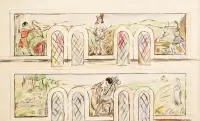
By returning to Brazil in 1929, Gomide became one of the active figures in the promotion of São Paulo modernism. In 1932, he was one of the founders of the Sociedade Pró-Arte Moderna (SPAM) and the Clube dos Artistas Modernos (CAM), initiatives that contributed to the consolidation of a modern artistic scene in the country. During the 1930s and 1940s, in addition to his paintings, he stood out in the realization of frescoes and in the creation of stained glass cards, working in different areas of the visual arts with great versatility and technical refinement.
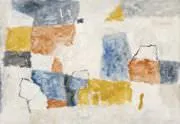
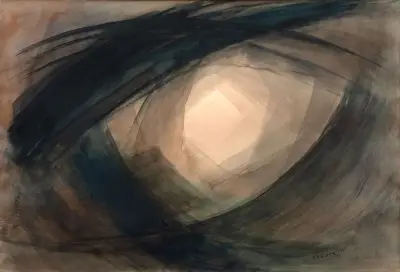
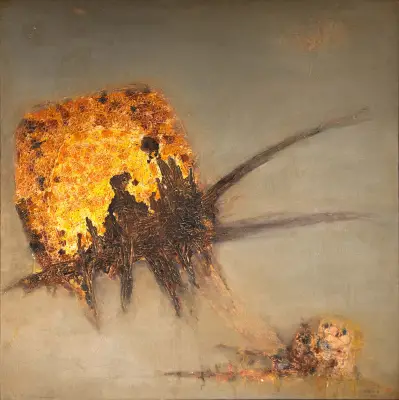
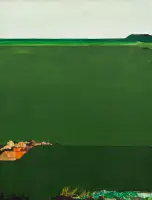
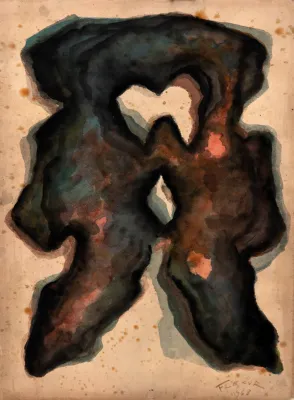
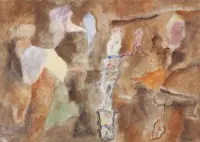
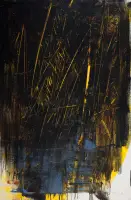
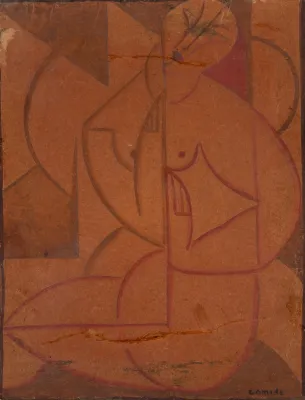
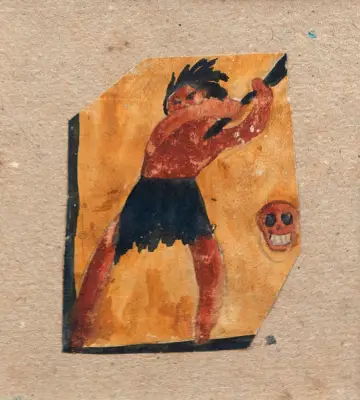
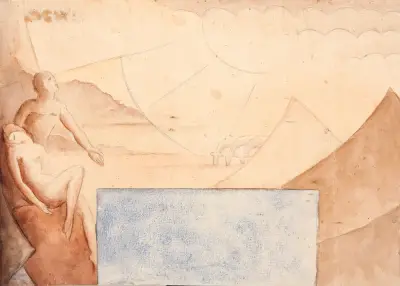
Its production Pictorial is characterized by a fusion between abstract forms and elements of Brazilian indigenous culture, in addition to compositions with stylized landscapes. These aspects reveal an interest in translating a national visual identity through a modern vocabulary. In the 1950s, he also served as a drawing teacher at the Escolinha of the Museum of Modern Art of São Paulo (MAM/SP), between 1952 and 1954, contributing to the training of new artists.
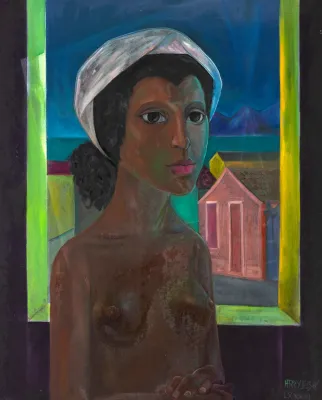
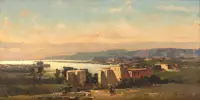
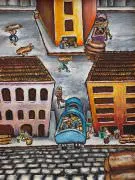
Antonio Gomide is still Recognized, alongside Regina Graz and John Graz, as one of the introducers of the Art Deco style in Brazil, especially in the field of decorative arts. His work expresses the intersection between tradition and modernity, combining classic techniques with visual experiments that marked the modern movement in the country. painters linked to Cubism and other vanguard movements. The landscape paintings with boats and the Bridge of Saint-Michel (both 1923) reveal the geometrization and formal simplification of Cubists, combined with a palette with soft passages of tone that refers to the French painter Paul Cézanne (1839-1906). The portrait of Vera Azevedo (1930), in the opinion of the critic Maria Alice Milliet, represents the maximum assimilation of Art Deco in Brazil, with its highly stylized character. The architecture determines the ascending rhythm of the painting, following the verticalization of the São Paulo metropolis. Some works by Gomide reveal stylistic affinities with the production of Vicente do Rego Monteiro (1899-1970) and Victor Brecheret (1894-1955).
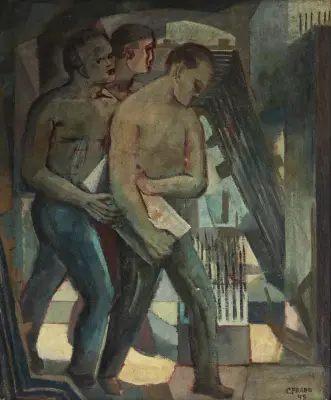
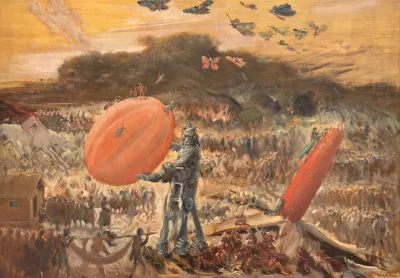
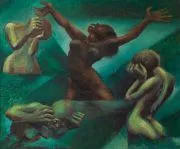
From the decade of 1930, with Gomide's return to Brazil, his painting began to emphasize national themes. As the art historian Walter Zanini notes, the Cubist inspiration of his 1920s works oppose later works, characterized by the more spontaneous approach of a diversified repertoire, in which the human figure predominates.
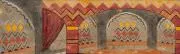
Antonio Gomide stands out for its technical versatility, performing oil paintings, watercolors, drawings, frescoes, cards for stained glass and various decorative designs, in which sinuous lines and abstract shapes are allied to motifs indigenous people or compositions with landscapes. In the area of decorative arts, with Regina Graz (1897-1973) and John Graz (1891-1980), he is considered one of the introducers of the Art Deco style in the country.
Critiques
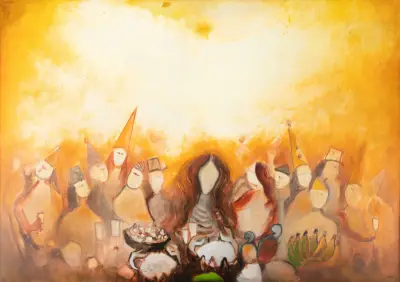
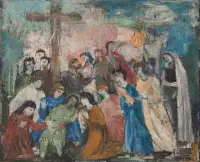
Gomide found, in watercolor, the most appropriate way to express his plastic vision of the world. This is where your language becomes most natural. The mastery of the drawing allowed him great spontaneity in the use of this difficult technique, perhaps less rich, less dramatic, but more demanding and more delicate than the oil. (...). Gomide had perfect control of the water and knew how to skillfully take the white of the paper itself, as the descent of the cross demonstrates. His acute sense of composition made the main elements of it highlight, of course, the main elements of it, in general human figures, for which all his preferences went. after them the trees. Almost everything he paints, especially in the watercolors, is outdoors, so that trees appear. (...) More than with games of lights and shadows, Gomide managed the contrasts and lighting of his watercolors with a right gradation of tones of few colors, usually the yellows descending to the ochers and the lands, the reds that soften Even the light pink, the green and the various changes of the blue. It was only when he wanted to obtain greater drama that he used pure colors, as in the aforementioned descent of the cross, in the many Holy Suppers he left and in the boat whipped by the gale (...)".
Luís Arrobas Martins
GOMIDE, Antonio. Antonio G. Gomide São Paulo: A Ponte Galeria de Arte, 1973.
" (...) phases, which can be divided, generically, into three, given the Evidenceal characteristics: the European phase or, more precisely, Parisian, in which three remarkable 'influences' cannot be escaped: Cubism, the Renaissance and the Art Deco; the phase of adaptation to the 'national' and the phase of sambas and macumbas. (...) stylistically defining the work of Antonio Gomide is an easy task, since the artist, a great researcher, immediately mastered the new technique, turns to a new research and, not infrequently, produces almost at the same time works of different characteristics: see the works of the Parisian phase and the 1930s, although each of them has a striking characteristic and individualism. (...) As for learning the material, knowing 'perfectly the processes, the demands, the secrets of the material that will move', Gomide can be considered one of the most experimental Brazilian artists. There was practically no 'middle' in which it was not expressed: drawing (pencil, charcoal, sanguine), watercolor, engraving, painting, fresco, bas-relief, sandblasting relief, stained glass design and execution, ceramics (tiles), Sculpture".
Elvira Vernaschi
Vernaschi, Elvira. Critical Commentary and Cataloging by Antônio Gomide (1895-1967). São Paulo: ECA/USP, 1980.
"To the cubist inspiration of Gomide's works in the 1920s and early 1930s, the later phases are set, characterized by the more spontaneous approach of a diversified repertoire, but dominated by the human figure. Painter attracted at first by formalist solutions, when he applies in an alternately sacred and profane theme, he later tends to give vent to his deeply popular mentality, expressing equally in the modus vivendi. If we can register a certain dispersion and inconstancy in Gomide's objectives, it is necessary to recognize the virtues that dominate his work, from a stylistic and psychological point of view, that invest it in an unmistakable peculiar climate and that in its time knew how to make a vital contribution to our development. Art".
Walter Zanini
LOUZADA, Júlio. Fine Arts Brazil 1985: its market, its auctions. São Paulo: J. Louzada, 1984.
Testimonies
"next to the 1945s automatic door, a small corridor, and in the back a tiny elevator where a sparse-footed attendant took us to the fourth floor - A narrow and long studio with a large window in the back that led to Anhangabaú: easels, smell of paint, turpentine and alcohol to fix fusains of still lifes and sketches of Zuma, the model. In the studio was Gomide: tall, athletic, I don't know what a shy Prussian officer and very Brazilian.
Then my drawing classes started by him with great simplicity began, without imposing ways or tricks. He hated the skilled and had an angel's patience with the less skilled they suffered to say something. He gave everything he knew: he had a solid and lucid formation, he urged the students to research, but with himself he had too much scrupulousness and great humility. There was in him the common sense to encourage the 'boldness' of young people even when he did not agree with the trend.
For me Gomide was the basis of everything and even today, in difficult times, is his lesson that comes to mind: the geometry of space, digested, the solution of space. Resolving the space on the screen like that of the interior of each one and establishing the balance between the two is that the work of art exists. When Gomide noticed this kind of contact between the two spaces, he left closely like someone who cranks a motor to make it work."
Arthur Luiz Piza
GOMIDE, Antonio. Antônio Gomide. Paulo: MAC/USP, 1968.
Individual exhibitions
1927 - São Paulo SP - Individual, in the former gallery of Avenida São João
1942 - São Paulo SP - Individual, at the Terminus
1959 - São Paulo SP - Individual, in his studio
1963 - São Paulo SP - Individual, at Galeria Selearte
1964 - São Paulo SP - Individual, at the plastic artist's house
Collective exhibitions
1922 - Geneva (Switzerland) - Collective, at the Rath Museum and Athénée Museum - Honorable Mention
1924 - Paris (France) - Salon Des Indépendants
1926 - Paris (France) - 19th Salon d'Automne, at the Palais de Bois
1927 - São Paulo SP - Collective, at Galeria Blanchon
1930 - New York (United States) - The First Representative Collection of Paintings by Brazilian Artists, at the International Art Center, Roerich Museum
1930 - São Paulo SP - Exhibition of a modernist house, in the modernist house
1931 - Rio de Janeiro - Exhibition at the first modernist house in Rio de Janeiro, at Rua Toneleros.
1931 - Rio de Janeiro RJ - Revolutionary Hall, at Enba
1931 - São Paulo SP - 1st Pro-Arte Salon, at Enba
1933 - São Paulo SP - 1st Spam Modern Art Exhibition, at Palacete Campinas
1937 - São Paulo SP - 1st Salão de Maio, at Esplanada Hotel de São Paulo
1938 - São Paulo SP - 2nd Salon in May, at the Esplanada Hotel de São Paulo
1939 - São Paulo SP - 3rd Salon in May, at Galeria Itá
1939 - São Paulo SP - 5th Salon of the Plastic Artists Union, at the Prestes Maia Gallery
1941 - São Paulo SP - 1st Art Salon of the National Industry Fair, at Água Branca Park
1941 - São Paulo SP - 6th Union Hall of Plastic Artists, at the Prestes Maia Gallery
1947 - São Paulo SP - John Graz and Antonio Gomide, at Rua Barão de Itapetininga
1951 - São Paulo SP - 1st International Biennial of São Paulo, at the Trianon Pavilion
1954 - Goiânia GO - Exhibition of the National Congress of Intellectuals
1954 - São Paulo SP - Juninos Panels, at MAM/SP
1966 - São Paulo SP - half century de Arte Nova, at MAC/USP
1967 - São Paulo SP - Gomide, Osir and Visconti, at Art Galeria
Posthetic exhibitions
1968 - São Paulo SP - Antonio Gomide: Retrospective, at MAC/USP
1969 - São Paulo SP - Antonio Gomide: Watercolors and Drawings, in The Gallery
1970 - São Paulo SP - 4 Recent acquisitions and donations groups from the International Society of Plastic and Visual Art, at MAC/USP 
1972 - São Paulo SP - The Week of 22: Background and Consequences, at MASP
1973 - São Paulo SP - Antonio Gomide: Watercolors, at Galeria A Bridge
1974 - São Paulo SP - Time of the Modernists, at Masp
1975 - São Paulo SP - Modernism from 1917 to 1930, at the Lasar Segall Museum
1975 - São Paulo SP - Spam and Cam, at the Lasar Segall Museum
1976 - São Paulo SP - The Graz family - Gomide: The Art Deco in Brazil, at the Lasar Segall Museum
1976 - São Paulo SP - The halls: the artistic family Paulista, May and the São Paulo Plastic Artists Union, at the Lasar Segall Museum
1977 - São Paulo SP - Arcadas collectors, at the Largo São Francisco Law School and at MAM/SP
1979 - São Paulo SP - Antonio Gomide: Watercolors, in Applied Art I - Gallery
1981 - Rio de Janeiro RJ - Universe of Carnival: Images and Reflections, at the Art Gallery Collection
1982 - Bauru SP - 80 years of art Brazilian
1982 - Lisbon (Portugal) - Brazil 60 years of modern art: Gilberto Chateaubriand collection, at the José de Azeredo Perdigão Modern Art Center
1982 - London (United Kingdom) - Brazil 60 years of modern art: Gilberto Chateaubriand collection, at Barbican Art Gallery
1982 - Marília SP - 80 years of Brazilian art
1982 - Rio de Janeiro RJ - Football universe, at MAM/RJ
1982 - São Paulo SP - 80 years of Brazilian art, at MAB/FAAP
1982 - São Paulo SP - From modernism to the biennial, at MAM/SP
1982 - São Paulo SP - A century of sculpture in Brazil, at Masp
1983 - Belo Horizonte MG - 80 years of Brazilian art, at the Clóvis Salgado Foundation. Palácio das Artes  
1983 - Campinas SP - 80 years of Brazilian art, at MacC  
1983 - Curitiba PR - 80 years of Brazilian art, at Mac
1983 - Ribeirão Preto SP - 80 years of Brazilian art
1983 - Santo André SP - 80 years of Brazilian art, at the Municipality of Santo André
1984 - Fortaleza CE - 7th National Salon of Plastic Arts
1984 - Rio de Janeiro RJ - 7th Salon of 31, at Funarte
1984 - Rio de Janeiro RJ - 7th National Salon of Plastic Arts - Salon of 31
1984 - São Paulo SP - Gilberto Chateaubriand Collection: Portrait and Self-Portrait of Brazilian Art, at MAM/SP
1984 - São Paulo SP - Tradition and Rupture: Synthesis of Brazilian Art and Culture, at the Bienal Foundation
1985 - São Paulo SP - 100 Obras Itaú, at MASP
1987 - Rio de Janeiro RJ - to the collector: Homage to Gilberto Chateaubriand, at MAM/RJ
1987 - São Paulo SP - The craft of art: painting, in the Sesc
1988 - São Paulo SP - MAC 25 years: Acquisitions and recent donations, at MAC/USP
1989 - São Paulo SP - Antonio Gomide: 60 unpublished works, 30's, 40's and 50, at Espaço Cultural José Duarte Aguiar and Ricardo Camargo
1990 - Brasília DF - Figurativism/Abstractionism: the red in Brazilian painting, at Itaú Galeria  
1990 - São Paulo SP - Figoftivism/abstractionism: the red in Brazilian painting, at Itaú Cultural
1991 - Belo Horizonte MG - Figurativism/abstractionism: the red in Brazilian painting
1991 - Santos SP - 3rd Santos Biennial of Santos, at the Patrícia Galvão Cultural Center
1992 - Poços de Caldas MG - Brazilian modern art: collection of the Museum of Contemporary Art of the University of São Paulo, at the Casa de Cultura de Poços de Caldas
1992 - São Paulo SP - Antonio Gomide: Between Two Wars and the Revolution of 32, at the Pinacoteca do Estado
1992 - São Paulo SP - Sérgio's gaze on Brazilian art: drawings and paintings, at the Mário de Andrade Municipal Library
1992 - Zurich (Switzerland) - Brasilien: Entdeckung und Selbstentdeckung, at Kunsthaus Zürich
1993 - Campina Grande PB - Assis Chateaubriand: Artistic Collection - UEPB, MAAC
1993 - Campinas SP - Figofivismo/abstractionismo: The red in Brazilian painting
1993 - Rio de Janeiro RJ - Body emblems: the nude in Brazilian modern art, in the CCBB
1993 - São Paulo SP - 100 masterpieces from the Mário de Andrade Collection: Painting and Sculpture, at IEB/USP
1993 - São Paulo SP - The modern design in Brazil: Gilberto Chateaubriand collection, at the SESI Art Gallery
1994 - Rio de Janeiro RJ - The modern design in Brazil: Gilberto Chateubriand Collection, at MAM/RJ
1994 - São Paulo SP - Bienal Brasil Céculo 20th, at the Biennial Foundation
1995 - São Paulo SP - Modernism Paris 1920s: Experiences and coexistence, at MAC/USP 
1996 - São Paulo SP - Brazilian art: 50 years of history in the MAC/USP collection 1920-1970, in the MAC/USP
1997 - São Paulo SP - Antonio Gomide: 43 works, 20/50s, at Ricardo Camargo Galeria
1997 - São Paulo SP - Big names in Brazilian painting, at JO Slaviero Art Gallery
1997 - São Paulo SP - The revealing touch: portraits and self-portraits, at MAC/USP
1998 - Brasília DF - Brazilian like me, like me?, at the Ministry of Relations exteriors
1998 - Rio de Janeiro RJ - Negotiated Images: Portraits of the Brazilian Elite, at CCBB  
1998 - São Paulo SP - Constructive Art in Brazil: Adolpho Leirner Collection, MAM/SP
1998 - São Paulo SP - The modern and the contemporary in Brazilian art: Gilberto Chateaubriand Collection - MAM/RJ, at MASP
1999 - Porto Alegre RS - 2nd Mercosur Visual Arts Biennial, at the Mercosul Visual Arts Biennial Foundation
1999 - Porto Alegre RS - Picasso, Cubismo and Latin America, at Margs
1999 - Rio de Janeiro RJ - Constructive Art in Brazil: Adolpho Leirner Collection, mam/rj
1999 - São Paulo SP - The female figure in the MAB collection, at MAB/FAAP
1999 - São Paulo SP - Brazilian like me, like who?, at MAB/FAAP 
1999 - SÃO PAULO SP - Papers on paper: from modernism to abstraction, at Dan Galeria
2000 - Brasília DF - Exhibition Brazil Europe: Encounters in the 20th Century, in the Cultural Complex of Caixa
2000 - Lisbon (Portugal) - 20th Century: Art of Brazil, at the José de Azeredo Perdigão Modern Art Center
2000 - São Paulo SP - The female figure in the MAB collection, at MAB/FAAP
2000 - São Paulo SP - The human figure in the collection Itaú, at Itaú Cultural
2000 - São Paulo SP - Brazil + 500 rediscovery show. Modern and black art of body and soul, at the Bienal Foundation
2000 - São Paulo SP - Brazil on paper: hues and experiences, in the Unicid Arts Space
2000 - Valencia (Spain) - from La Anthropophagia Brasilía: Brazil 1920-1950, at IVAM. Center Julio Gonzáles
2001 - Brasília DF - Collections of Brazil, at CCBB
2001 - Rio de Janeiro RJ - Brazilian Watercolor, at the Light Cultural Center
2001 - São Paulo SP - Antonio Gomide: Four decades of modernity, at Dan Galeria
2001 - São Paulo SP - Aldo Franco Collection, at the Pinacoteca do Estado
2001 - São Paulo SP - Figures and faces, at A Galeria
2001 - São Paulo SP - Brazilian Art Museum: 40 years old, at MAB/FAAP 
2001 - São Paulo SP - Four decades of modernity, at Dan Galeria
2002 - Rio de Janeiro RJ - Brazilian art in the Fadel collection: from the restlessness of the modern to the autonomy of language, at CCBB
2002 - São Paulo SP - 22 and the idea of the modern, at MAC/USP
2002 - São Paulo SP - Brazilian art in the collection Fadel: From the restlessness of the modern to the autonomy of language, at the CCBB
2002 - São Paulo SP - From anthropophagy to Brasília: Brazil 1920-1950, at MAB/FAAP
2002 - São Paulo SP - Wild mirror: modern art in Brazil in the first half of the 20th century, Nemirovsky Collection, at MAM/SP
2002 - São Paulo SP - Modernism: from the week of the 22nd to the Art Section of Sérgio Milliet, at the CCSP
2003 - Belém PA - 22nd Salão Arte Pará, at the Pará State Museum
2003 - Brasília DF - Brazilian art in the Fadel collection: from the restlessness of the modern to the autonomy of language, at the CCBB
2003 - Rio de Janeiro RJ - Design autonomy, at MAM/RJ
2004 - São Paulo SP - Paper Office, at CCSP
2004 - São Paulo SP - New acquisitions: 1995 - 2003, at MAB/FAAP
2004 - São Paulo SP - The price of seduction: from the corset to the silicone, at Itaú Cultural
2004 - São Paulo SP - Room of the collection, at Ricardo Camargo Galeria
Source: Itaú Cultural