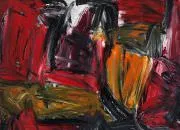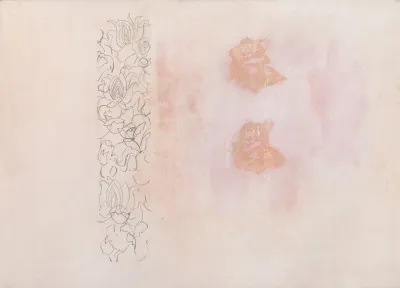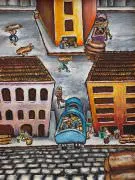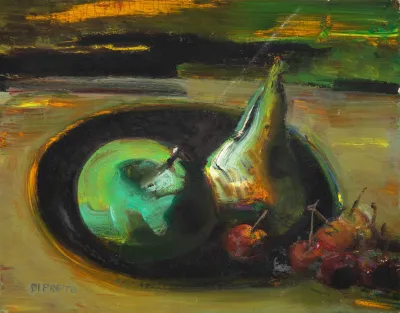
Roberto Magalhães (Rio de Janeiro RJ 1940)
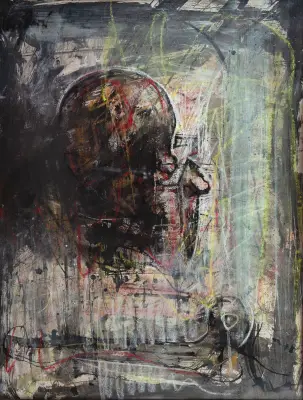
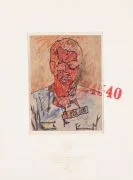
Roberto de Oliveira Magalhães is a Brazilian plastic artist, painter, draftsman, engraver, sculptor, illustrator, scenographer and teacher, recognized as a Icon of "Geração 60" in Brazil. His artistic career began at an early stage, when he worked at his uncle's printer, creating designs for labels and advertisements. Later, he started making covers of books, records and advertising drawings. In 1961, he joined as a free student at the National School of Fine Arts (ENBA).
In the 1960s, he participated in several collective exhibitions, both in Brazil and abroad. In 1962, he exhibited drawings to India in the Macunaíma gallery, in São Paulo. In 1964, he held his first solo exhibition of woodcuts at Petite Galerie, in Rio de Janeiro, and, the following year, received the engraving award at the 4th Bienal de Paris. In 1967, after winning the Viagem Abroad Award at the 15th National Salon of Modern Art (SNAM), with the woodcut decipher the Enigma of the Sphinx, he moved to Paris. In 1968, he exhibited together with Antonio Dias at the Debret gallery, also in Paris.
In the following years, he began to study occultism, theosophy and, mainly, approached Buddhism, which led him to reside for four years at the meditation center of the Buddhist society of Brazil, interrupting its artistic production. In 1975, he resumed his artistic work with individual exhibitions of drawing and painting in Rio de Janeiro and São Paulo, in addition to classes at the Museum of Modern Art in Rio de Janeiro (MAM/RJ). During the 1980s, he was part of engravings and drawings. In 1992, the Centro Cultural Banco do Brasil (CCBB), in Rio de Janeiro, organized a retrospective of the 30 years of his career, the greatest dedicated to his work.
Critical Comment
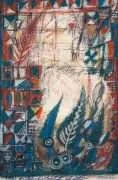
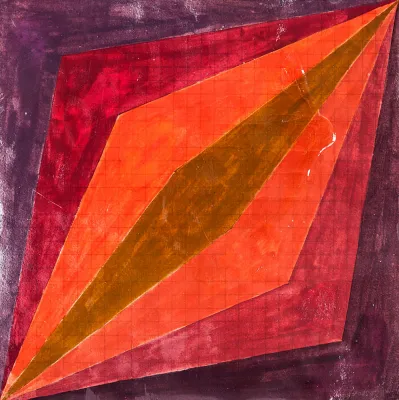
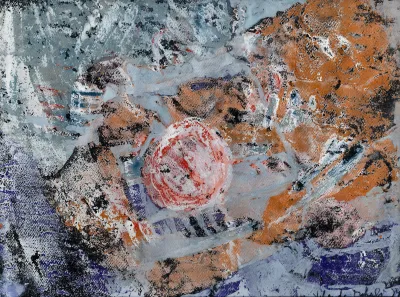
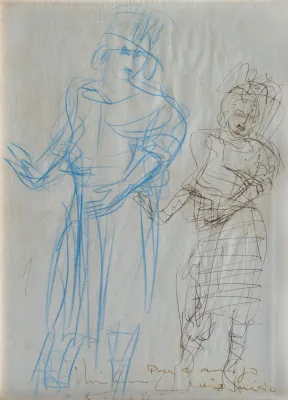
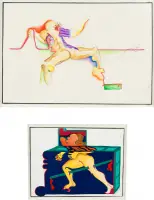
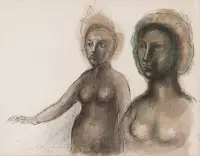
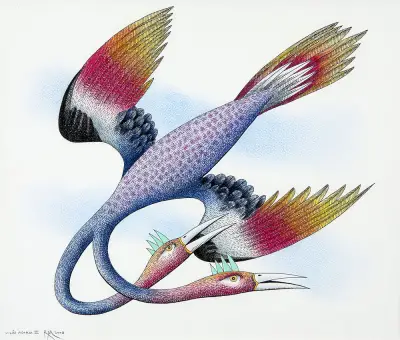
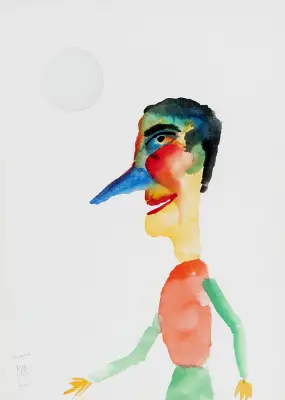
Even in line with the new Figures that come to the public in exhibitions such as Opinião 65 and Nova Objetividade Brasileira, Roberto Magalhães builds his own path, not connecting to groups or movements. Permanent transit by different techniques (colored pencils, pen-toes, watercolor, lithography, woodcut and oil painting) and a particular thematic repertoire make it difficult to locate in trends or schools. In any case, critics speak of "surrealist experiments", close to those of Salvador Dalí, and in affinities of his work with the symbolic compositions of Arcimboldo, with the childish imagination of Paul Klee and also with the "mole sculptures" by Claes Oldenburg. Magalhães emphasizes his proximity to the mystical experience and esotericism, in an attempt to bring art, science and philosophy closer together. "Esoteric art," he says, in addition to being carried out under "true inspiration", believes in the existence of an essential affinity between shapes and colors, aiming to project, through images, "eternal truths".
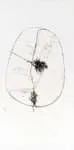
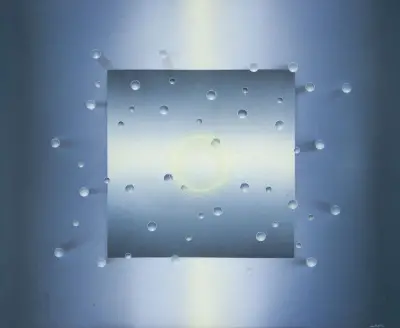
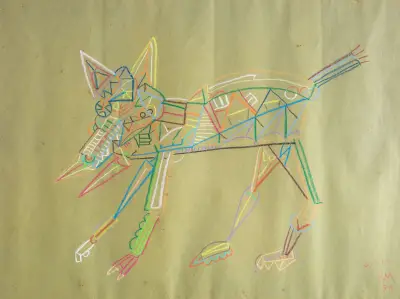
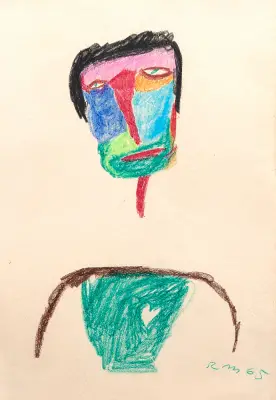
Fantastic realism explored in the 1960s As in a flying boat driving a skeleton, 1962, he coexists with a wide range of symbols and allegories worked on in the 1970s, under the inspiration of treatises on esotericism and alchemy, books on occultism and astrology - Capricorn, 1970 and the Philosopher's Stone, 1973. The existential dive carried out in this period extends research with color and form, considered the fruits of an alchemical operation, in Minister of Hell, 1975 and a duly man Pintado, 1976. In these works, emblematic elements of his work are already present: deformation of the figure; Anthropomorphization of Nature; Metamorphoses of all kinds (bird mountains, fantastic animals, noses that perform acrobatics, machines and humanized constructions, car houses, etc.). Such elements integrate compositions marked by humor - sometimes black -, in which the artist associates the exploration of children's memory and the dream universe with unusual elements taken from everyday life and the observations held by cities. Central do Brasil, 1983, 10th Planet, 1986, and Monday, 1994, are some of these unusual landscapes. Machine men, monstrous beings or simple characters from children's stories are other of his known creations, seen as a woman of the future, 1975, Giant examining a house, 1988 and inhabitant of the moon, 1994. The location of different phases in Magalhães' work does not prevent the identification of a personal style built, from the beginning, in a close dialogue with the techniques and themes of illustration, comic books and caricatures.
Critiques
"Desse Almost-group formed by Antonio Dias, Carlos Vergara, Roberto Magalhães and Rubens Gerchman - whose activity began in Rio as soon as the 1960s opened and whose affinities were concentrated, at that moment, on the resumption of figuration, under Critical surroundings of a certain mixture of surrealism, magical realism and pop-art - perhaps Roberto Magalhães was the one who remained most interested in developing, calmly and consistently, step by step, the same nucleus of problems of form and content immediately situated. If Dias and Gerchman, after the new Brazilian objectivity and the fixation abroad, turned to the scope of the conceptual, although always in the critical contemporaneity level, and Vergara multiplied research with poor or noble materials, also interested in the direct participation of the spectator in the proposal-work, Magalhães wanted nothing more, over a decade and little work, especially drawing and engraving, and now in painting, than unfolding his natural propensity for the fantastic ('art is a magical power and only wizards have access to it' or 'Art is to grope the deity', according to his own words), (...)"
Roberto Pontual
PONTUAL, Roberto Art/Brazil/Today: 50 years later. São Paulo: Collectio, 1973.
"What today Roberto Magalhães offers as paintings are delicate visual surprises, poetic licenses with everyday scenes and changes in the world's scale. There is a sweet irony and a nostalgic reflection on power and force, on the laws of the universe and on the hierarchy of forms - because what gives it the most pleasure is to invert the rules and norms of representation of nature. (...) In the most recent works, he left aside the allegorical character of his scenes to focus on human heads or scenes from a fantastic daily life. Their homes writhe, flowers and animals take on a strange appearance, the descriptions of the most banal activity grow to another dimension. What gives it an exceptional artist dimension is that its choices are very accurate. The characters deform themselves as in old vignettes, they are surrounded by mind-blowing elements, but all this paraphernalia is rigidly controlled. There is a geometric organization of space and the alteration of the laws of vision with the security of those who know exactly what they want to cause. Thanks to this control, Roberto Magalhães managed, over 25 years of work, to keep himself off an affiliation or an identity with any artistic tendency. (...)"
Casimiro Xavier de Mendonça
São Paulo - Rio - Paris. Presentation by Marie-Odile Briot. Texts by Isaac Ortizar et al. 1987.
"(...) Roberto Magalhães interprets the accuracy of his woodcut in a tactile way, as he also caresses the wood, moving away from the concepts of, as he says, 'expressionism', powerful in the Beginning of the 1960s. Introduced in the figuration by another bias, that of publicity, it is not yet the comic book that is on the horizon of its figures, which also happens with his paintings and drawings. On the contrary, valuing the cut in the woodcut, it anticipates the comics that adopt the same party as the flat and cut figures. These produce the same laughter that, in the early 1960s, was released from the engravings of Roberto Magalhães, whose drawings simulate, however, dark and relief, distancing himself from the xylos. The humor in the print of the fall of Troy shows the rhetorical-graphic procedures that produce it. The famous self-portrait speaking spits aside the speech, but, absent, it relates to the comic book in an uncertain way and with the angel of Annunciation of Simone Martini in a very right way, despite the difference in the genres. The artist-character, who is thus pronounced, is conceived, like the extras of Troy, as mixed, as well as the aggregation of heterogeneous beings. Which, reduced to the action of the characters, is produced as a comedy, erudite in the rhetorical moves in which it plays the ambiguity of parts and the whole, but also the juxtaposition in mixed. The woodcuts of the 60s can stage; As it turned out, the epic dimension of the Trojan taking, with its reptilian horse, its mechanically articulated bodies and, everything in the plane, absent light-dark, like a game of aggressively geometrically-cutting. Humor, in Roberto Magalhães, is parodic, textually; It is also, graphically, in the inept loads of the figures stiffened by rivets and loose because they do not fix it. The unbelievable of the bodies in other genres is exposed as believable satirical in Roberto Magalhães".
Leon Kossovitch and Mayra Laudanna
En>Egravure: Art 20th century Brazilian presentation Ricardo Ribenboim, text Leon Kossovitch, Mayra Laudanna, Ricardo Resende; Design Rodney Schunck, Ricardo Ribenboim; cover photograph Romulo Fialdini São Paulo: Itaú Cultural: Cosac & Naify, 2000, P. 8.
Testimonies
"I worked in an advertising company. It did layout and artwork. (...) But, before that, I drew cachaça labels, wines and such. (...) I made a lot of book covers and illustrations. (...) Advertising gave me the objective view of these graphic things, of printing. (...)
I read a lot of science initiation books - something I really like, in addition to science fiction. This was my kind of reading, more science-oriented. At that time, people recorded in a basically expressionist theme. It was the school of Goeldi, of the expressionist woodcut. But I started recording, perhaps by intuition, in a different process. Some people criticized me and said that it was not a woodcut. This was not how a woodcut was made. But I ask: was it not engraved on the wood? (...) It was woodcut. I made a drawing on paper, checked the paper and passed that drawing to the wood. Or, then, I drew directly on the wood, with a brush and ink, you know? I made the drawing on the wood. I drew what would be the positive. This, at the time, people thought it was a heresy, which was not how it was recorded.
So, I did my studies on paper, with ink. All designed with that spontaneity that the brush gives. From there, it passed faithfully to the wood, to the wooden board. and with that it suppressed the expressionist characteristics of the engraving of the time. At that time, no one did that, you know? So it was like a heresy even recording that way, I couldn't. It was forbidden.
At school, people were shocked and told me it wasn't like that, I couldn't. But I continued. However, not all people were, just a few more traditionalist heads.
I started attending the National School of Fine Arts, I mean, I took a test, I didn't pass, but even so I started to frequent and meet the artists, the students. That's when I attended the engraving studio, with Adir Botelho. There I saw that there was something called xylograph, you know? and was dug with the gouge on the wood and printed itself. (...)
Yes, the school has always been more linked to academic forms. But I learned a lot there, because it was the first contact I had with artists. Before, I worked alone. The socializing was very good for me, not only human contact, but also with techniques, drawing, painting. (...)
Enba was a great place in every way. Afterwards, the ease of attending school freely ended in the time of the dictatorship. They started throwing bombs at the school door. People started to get very scared and then they closed it off. Those who were not a student could not enter, and the atmosphere of companionship disappeared. (...)
I did collective exhibitions there at the Escola Nacional de Belas-Artes, in a gallery that is now a room, right at the entrance on the right. And my prints began to be sold. And as the print runs were twenty each, it sold several times. So, I could live on art.
My work as an advertising designer helped a lot in my work process. I learned a lot of graphics, printing techniques, drawing techniques to be reproduced. I often took a drawing, pieces of drawings and put it together, making a bigger drawing, which was also another heresy, right? I gathered and formed something that I thought gave a good engraving. I started to get excited because the result was very good. (...)"
Roberto Magalhães - Sesc Tijuca, September 4, 1986 and August 3, 1997
engraving: Brazilian art of the 20th century. Ribenboim; Text Leon Kossovitch, Mayra Laudanna, Ricardo Resende; Design Rodney Schunck, Ricardo Ribenboim; Cover Photography Romulo Fialdini. São Paulo: Itaú Cultural: Cosac & Naify, 2000, p. 56.
Individual exhibitions
1962 - Rio de Janeiro RJ - First individual drawings, at Funarte. Macunaíma Gallery
1964 - Rio de Janeiro RJ - Individual, at Petite Galerie
1965 - Belo Horizonte MG - Individual, at Galeria Morada
1965 - Rio de Janeiro RJ - Individual, at Petite Galerie
1966 - Houston (United States) - Individual, at Kiko Gallery
1967 - Rio de Janeiro RJ - Individual, at MAM/RJ
1968 - Paris (France) - Individual, at Galeria Debret
1975 - Rio de Janeiro RJ - Roberto Magalhães: works from the Gilberto Chateaubriand Collection, at Petite Gallery
1975 - Rio de Janeiro RJ - Roberto Magalhães: works from the Gilberto Chateaubriand collection, at the Galerie Maison de France
1975 - Paulo SP - Individual, at the Global Art Gallery
1978 - Rio de Janeiro RJ - Individual, at the Saramenha Gallery
1980 - Rio de Janeiro RJ - Individual, at Funarte
1981 - Rio de Janeiro RJ - Individual, at the gallery de Arte Sigaud
1983 - São Paulo SP - Individual, at Galeria Arte Global
1984 - Rio de Janeiro RJ - Roberto Magalhães: Paintings and Serigraphy 1980-1984, at Galeria Saramenha
1987 - Rio de Janeiro RJ - Individual, at the Art Office Cleide Wanderley
1987 - Rio de Janeiro RJ - Individual, at Galeria Investiarte
1987 - Rio de Janeiro RJ - Individual, at Galeria Saramenha
1987 - Rio de Janeiro RJ - Individual, at Petite Galerie
1988 - London (England) - Individual, at the Embassy of Brazil in England
1991 - Rio de Janeiro RJ - Individual, at GB Art
1992 - Rio de Janeiro RJ - Individual drawings, at Galeria Sarraceni
1992 - Rio de Janeiro RJ - Roberto Magalhães: drawings and paintings, at CCBB
1992 - Rio de Janeiro RJ - Roberto Magalhães: Drawings, at Galeria Sarraceni
1994 - Rio de Janeiro RJ - Individual, at Castro Maya Museums. Céu Farm Museum
1995 - Guadalajara (Mexico) - Roberto Magalhães: Xylography/Xilographs, at the Museo de las Artes de la Universidad de Guadalajara
1995 - Rio de Janeiro RJ - Trace and Matrix, at the Instituto Cultural Villa Maurina
2001 - Rio de Janeiro RJ - Individual, at the Moreira Salles Institute
2001 - São Paulo SP - Individual, at the Moreira Salles Institute
2006 - São Paulo SP - Roberto Magalhães: Painting and Drawing, Valu Oria Art Gallery
2010 - São Paulo SP - Individual, James Lisboa Art Office
2012 - Rio de Janeiro RJ - Who am I, from where I came from and to Where I'm Going, Paço Imperial
Collective exhibitions
1963 - Bonn (Germany) - Brazilian Art Today
1963 - Brussels (Belgium) - Brazilian Today
1963 - São Paulo SP - 1st Exhibition of the Young National Drawing, at FAAP - Acquisition Award
1963 - Vienna (Austria) - Brazilian Art Today
1964 - Belo Horizonte MG - 1st Exhibition of the Young National Drawing, at MAP
1964 - Philadelphia (United States) - Brazilian recorders, at The Print Club
1964 - Paris (France) - Salon Comparaisons, at the Musée d'Art Moderne de la Ville de Paris
1964 - Ribeirão Preto SP - 1st Exhibition of the Young National Engraving
1964 - Rio de Janeiro RJ - 13th National Salon of Modern Art
1964 - Rio de Janeiro RJ - 2nd Summary of Art JB, at MAM/RJ
1964 - São Paulo SP - 1st Exhibition of the Young National Engraving, at MAC/USP - Acquisition Award
1964 - Tokyo (Japan) - 4th International Biennial Exhibition of Prints
1965 - Barcelona (Spain) - Ocho brasileños grabadores, at the René Metras Gallery
1965 - Belo Horizonte MG - 1st Exhibition of the Young National Engraving, MAP
1965 - Curitiba PR - 1st Exhibition of the Young National Engraving, at the State Department of Education
1965 - Florianópolis SC - 1st Exhibition of the Young National Engraving, in the Masc
1965 - London (England) - Brazilian Art Today, at the Royal Academy of Arts
1965 - Paris (France) - 4th Bienal de Paris, at the Musée d'Art Moderne de la Ville de Paris - Prize of engraving
1965 - Rio de Janeiro RJ - 14th National Salon of Modern Art, at MAM/RJ
1965 - Rio de Janeiro RJ - 3rd Summary of Art JB, at MAM/RJ
1965 - Rio de Janeiro RJ - Opinion 65, at MAM/RJ
1965 - São Paulo SP - 2nd National Youth Design Exhibition, at MAC/USP
1965 - São Paulo SP - 8th International Bienal de São Paulo, at Fundação Bienal
1965 - São Paulo SP - Proposal 65, at MAB/FAAP
1966 - Buenos Aires (Argentina) - Contemporary Brazilian artists, at the Museum of Modern Art in Buenos Aires
1966 - Philadelphia (United States) - Contemporary Brazilian engravers, at Cornell University
1966 - Ribeirão Preto SP - 40 national and foreign engravings of the MAC collection, at the School of Plastic Arts of Ribeirão Preto
1966 - Rio de Janeiro RJ - 15th National Salon of Modern Art
1966 - Rio de Janeiro RJ - 1st April Salon, at MAM/RJ
1966 - Rio de Janeiro RJ - 4th Summary of Art JB, at MAM/RJ
1966 - Rio de Janeiro RJ - Opinion 66, at MAM/RJ
1966 - Rio de Janeiro RJ - Pare, at Galeria G4
1966 - São Paulo SP - 40 national and foreign engravings of the MAC collection, at MAC/USP
1966 - São Paulo SP - 8 artists, at Atrium
1967 - Rio de Janeiro RJ - 5th Summary of Art JB, in the MAM/RJ
1967 - Rio de Janeiro RJ - New Brazilian Objectivity, at MAM/RJ
1967 - Santiago (Chile) - 3rd American Engraving Biennial, at the Art Museum Contemporáneo
1967 - São Paulo SP - 1st Young Contemporary Art, at MAC/USP
1968 - Campo Grande MS - 28 artists from the collection of the Museum of Contemporary Art of the University of São Paulo, in the Diário da Serra
1968 - Paris (France) - Toys, at Galeria Saint-Luc, at USP. ESALQ
1969 - Fortaleza CE - 28 artists from the collection of the Museum of Contemporary Art of the University of São Paulo, at the Raimundo Cela Center of Visual Arts
1969 - Rio de Janeiro RJ - 9 engravers, at the USAID Gallery
1970 - Olinda PE - 40 national and foreign engravings of the MAC collection, at MAC/OLINDA
1970 - Penápolis SP - 40 national and foreign engravings from the MAC collection
1972 - Rio de Janeiro RJ - Exhibition, at MAM/RJ
1972 - São Paulo SP - Art/Brazil/Today: 50 years later, at the Collectio Gallery
1973 - Rio de Janeiro RJ - Vanguarda Internacional, at the IBEU Gallery Copacabana
1974 - Campinas SP - Panorama of the Brazilian Drawing, at Macc
1974 - Campinas SP - 9th Contemporary Art Salon of Campinas, at MacC
1974 - Rio de Janeiro RJ - Designers Brazilians, at Galeria Maison de France
1975 - Rio de Janeiro RJ - Communication according to plastic artists
1977 - Belo Horizonte MG - 5th Global Winter Salon, at Fundação Palácio das Artes
1977 - Brasília DF - 5th Global Winter Salon
1977 - Rio de Janeiro RJ - 5th Global Winter Hall, at the MNBA
1977 - Rio de Janeiro RJ - Identification of Artist - A Book, at EAV/Parque Lage
1977 - São Paulo SP - 5th Global Winter Hall, at MASP
1979 - São Paulo SP - 15th São Paulo International Biennial, at the Bienal Foundation
1981 - Porto Alegre RS - Artists Brazilians from the 60s and 70s in the Rubem Knijnik collection, in the space at Galeria Chaves
1981 - Rio de Janeiro RJ - Collective Nuchy, at the Nuchy Art Gallery
1982 - Lisbon (Portugal) - Brazil 60 years of modern art: Gilberto Chateaubriand Collection, at the José de Azeredo Perdigão Modern Art Center
1982 - London (England) - Brazil 60 years of modern art: Gilberto Chateaubriand collection Gallery
1982 - Rio de Janeiro RJ - Football universe, MAM/RJ
1982 - Rio de Janeiro RJ - What is this house of Brazilian art? Plasticas, at MAM/RJ
1983 - Rio de Janeiro RJ - Brazilian self-portraits, at the Banerj Art Gallery
1984 - Curitiba PR - 6th Exhibition of Engraving City of Curitiba. The woodcut in the history of Brazilian art, at Casa Romário Martins
1984 - Ribeirão Preto SP - Brazilian recorders 50/60, at the Campus-USP-Banespa gallery
1984 - Rio de Janeiro RJ - The woodcut in the history of Brazilian art, at Funarte. Arts Center
1984 - Rio de Janeiro RJ - Acting Brazilian Art, at Galeria Maison de France
1984 - Rio de Janeiro RJ - Active Brazilian painting, at Espaço Petrobras
1984 - Rio de Janeiro RJ - Viva The painting, at Petite Gallery
1984 - Rio de Janeiro RJ - Antonio Dias, Carlos Vergara, Roberto Magalhães and Rubens Gerchman, at the Rio Business Center Gallery
1984 - Rio de Janeiro RJ - Viva a Painting, at Petite Galerie
1984 - São Paulo SP - Brasil Drawing, at the Clovis Salgado Foundation. Palácio das Artes
1984 - São Paulo SP - Gilberto Chateaubriand Collection: Portrait and Self-Portrait of Brazilian Art, at MAM/SP
1984 - São Paulo SP - First works, at the Maison de France Gallery
1984 - São Paulo SP - Tradition and Rupture: Synthesis of Brazilian Art and Culture, at Fundação Bienal
1985 - Belo Horizonte MG - The Collector's Portrait: a collection of self-portraits, at Cemig Espaço Cultural Galeria de Arte
1985 - Brasília DF - Brazilianity and Independence, at the Cláudio Santoro National Theater
1985 - Rio de Janeiro RJ - The figure today, at the Ibeu Copacabana Gallery
1985 - Rio de Janeiro RJ - Calligraphy and Scriptures, at Funarte. Sérgio Milliet Gallery
1985 - Rio de Janeiro RJ - Meetings, at Petite Galerie
1985 - Rio de Janeiro RJ - Opinion 65, at the Banerj Art Gallery
1985 - Rio de Janeiro RJ - small spaces, at GB Art
1985 - Rio de Janeiro RJ - Velha Mania: Brazilian Drawing, at EAV/Parque Lage
1985 - São Paulo SP - Highlights of Brazilian Contemporary Art, at MAM/SP
1986 - Porto Alegre RS - Rubem Knijnik Collection: Brazilian Arts 60/70/80, at Margs
1986 - Rio de Janeiro RJ - Transvanguarda and national cultures, at MAM/RJ
1987 - Paris (France) - Modernity: 20th century Brazilian art, at the Musée d'art Moderne de la Ville de Paris
1987 - Paris (France) - São Paulo-Rio-Paris, at the Galerie 1900-2000
1987 - Rio de Janeiro RJ - To the collector: Homage to Gilberto Chateaubriand, at MAM/RJ
1987 - Rio de Janeiro RJ - São Paulo-Rio-Paris, NA Montesanti Galleria
1987 - São Paulo SP - Modernity: Brazilian Art of the 20th Century, at MAM/SP
1987 - São Paulo SP - The craft of art: painting, at SESC
1987 - São Paulo SP - São Paulo-Rio-Paris, at Montesanti Roesler Gallery
1988 - Rio de Janeiro RJ - Hedonism: Gilberto Chateaubriand Collection, at the Gilberto Chateaubriand Building Gallery
1988 - Rio de Janeiro RJ - O Eternal is ephemeral, at Petite Galerie
1988 - São Paulo SP - 63/66 Figure and object, at the Millan Gallery
1989 - São Paulo SP - Collection, at the São Paulo Art Gallery
1990 - Atami (Japan) - 9th Brazil-Japan Contemporary Art Exhibition
1990 - Brasília DF - 9th Brazil-Japan Contemporary Art Exhibition
1990 - Curitiba PR - 9th Engraving Exhibition City of Curitiba, Engraving Museum
1990 - Rio de Janeiro RJ - Spring 90, at Galeria H. Stern
1990 - Rio de Janeiro RJ - 9th Brazil-Japan Contemporary Art Exhibition
1990 - São Paulo SP - 9th Exhibition Brazil - Japan of Contemporary Art, at the Brazil-Japan Foundation
1990 - Sapporo (Japan) - 9th Exhibition Brazil - Japan of Contemporary Art
1990 - Tokyo (Japan) - 9th Exhibition Brazil - Japan of Contemporary Art
1991 - Paris (France) - Six Latin American artists, at the 1900-2000 Gallery
1991 - Rio de Janeiro RJ - Mário Pedrosa, Art, Revolution and Reflection, CCBB
1991 - São Paulo SP - What Are You Now Generation 60?: Young Contemporary Art from the 60s Revisited, at MAC/USP
1992 - Paris (France) - Diversité Latin Americaine, NA Galerie 1900-2000
1992 - Porto Alegre RS - Mário Pedrosa, Art, Revolution and Reflection, at the Municipal Culture Center
1992 - Rio de Janeiro RJ - Art engraving in Brazil: proposal for a Mapping, at CCBB
1992 - Rio de Janeiro RJ - 1st on the way to Niterói: João Sattamini Collection, at the Imperial Palace
1992 - Rio de Janeiro RJ - Nature: Four centuries of art in Brazil, in the CCBB
1992 - São Paulo SP - 60s/70s: Gilberto Chateubriand Collection/Museum of Modern Art - RJ, at the SESI Art Gallery
1993 - João Pessoa PB - Xylograph: From cordel to the gallery, at Funesc
1993 - Rio de Janeiro RJ - Erotic Art, at MAM/RJ
1993 - Rio de Janeiro RJ - Body emblems: the nude in Brazilian modern art, at CCBB
1993 - Rio de Janeiro RJ - The Paper of Rio, in the Imperial Palace
1993 - São Paulo SP - The modern design in Brazil: Gilberto Chateaubriand Collection, at the SESI Art Gallery
1994 - Poços de Caldas MG - Unibanco Collection: Exhibition commemorating the 70th anniversary of Unibanco, at Casa da Cultura
1994 - Rio de Janeiro RJ - 100 years of football art, at MNBA
1994 - Rio de Janeiro RJ - Football and art, Rio Design Center
1994 - Rio de Janeiro RJ - The modern design in Brazil: Gilberto Chateubriand Collection, at MAM/RJ
1994 - Rio de Janeiro RJ - Trenches: Art and Politics in Brazil, MAM/RJ
1994 - São Paulo SP - Bienal Brasil Século 20th, at the Bienal Foundation
1994 - São Paulo SP - The new travelers, at Sesc Pompéia
1994 - São Paulo SP - Landscapes, at the São Paulo Art Gallery
1994 - São Paulo SP - Poetics of the Resistance: Aspects of Brazilian Engraving, at the SESI Art Gallery
1994 - São Paulo SP - Woodcut: from cordel to the gallery, in the subway
1995 - Beijing (China) - Role of Brazil: Contemporary Art, at the Workers' Palace
1995 - Rio de Janeiro RJ - The new figuration - The 60s, at the Jean Boghici Gallery
1995 - Rio de Janeiro RJ - Unibanco Collection: Commemorative Exhibition of 70 years of Unibanco, at MAM/RJ
1995 - Rio de Janeiro RJ - da Cor do Rio, at the Correios Cultural Space
1995 - Rio de Janeiro RJ - Teatro Faz Arte, at Rio Design Center
1995 - Rio de Janeiro RJ - Opinion 65: 30 years old, at CCBB
1995 - Rio de Janeiro RJ - Female representations, at Rio Design Center
1995 - Rio de Janeiro RJ - Salon in black and white, at MNBA
1995 - Rio de Janeiro RJ - Draw, at the Toulouse Art Gallery
1995 - São Paulo SP - Filhos do Abaporu, at the Brazilian Art Gallery
1996 - Belo Horizonte MG - Impressions Itinerants, at Palácio das Artes
1996 - Niterói RJ - Brazilian Contemporary Art in the João Sattamini Collection, at MAC/Niterói
1996 - Rio de Janeiro RJ - 1st Sesc Engraving Hall. Roberto Magalhães, at the Sesc Tijuca Art Gallery
1996 - Rio de Janeiro RJ - 4 Masters of Brazilian Engraving, Galeria SESC Copacabana
1996 - Rio de Janeiro RJ - Reila Gracie, Roberto MAGALHÃES, Antonio Dias, at Paço Imperial
1997 - Rio de Janeiro RJ - Air: Exhibition of Plastic Arts, Toys, Objects and Models, in the Imperial Palace
1998 - Niterói RJ - Mirror of the Bienal, at MAC/Niterói
1998 - Rio de Janeiro RJ - The image of the sound of Caetano Veloso, in the Imperial Palace
1998 - Rio de Janeiro RJ - The little doll saw: 60 years 1938-1998, at CCBB
1998 - Rio de Janeiro RJ - 60's/70's: Gilberto Chateaubriand Collection, at MAM/RJ
1998 - Rio de Janeiro RJ - O doll Saw: 60 years 1938-1998, at CCBB
1998 - Rio de Janeiro RJ - Thirty years of 68, at CCBB
1998 - São Paulo SP - Highlights of the Unibanco collection, at Instituto Moreira Salles
1998 - São Paulo SP - The little doll saw: 60 years 1938-1998, at the Brazilian House Museum
1998 - São Paulo SP - The modern and the contemporary in Brazilian art: Gilberto Collection Chateaubriand - MAM/RJ, at MASP
1998 - São Paulo SP - The Collectors - Guita and José Mindlin: Matrixes and engravings, at the SESI Art Gallery
1999 - Niterói RJ - Mostra Rio engraving. Banerj Collection, at the Ingá Museum
1999 - Rio de Janeiro RJ - Exhibition Rio Engravura. Brazilian modern engraving: Collection National Museum of Fine Arts, in the MNBA
1999 - São Paulo SP - The resacralization of art, at Sesc Pompéia
2000 - Rio de Janeiro RJ - Brasilidades, at the Cultural Center light
2000 - Rio de Janeiro RJ - Antonio Dias, Carlos Vergara, Roberto Magalhães, Rubens Gerchman, at GB Art
2000 - Rio de Janeiro RJ - Situations: Brazilian Arts 70s, at Fundação Casa França-Brasil
2000 - São Paulo SP - The human figure in the Itaú Collection, at Itaú Cultural
2000 - São Paulo SP - Brazil + 500 Rediscovery Exhibition, at the Fundação Bienal
2000 - São Paulo SP - Investigations: Brazilian engraving, at Itaú Cultural
2001 - Brasília DF - Investigations. The Brazilian engraving, at Galeria Itaú Cultural
2001 - Penápolis SP - Investigations. The Brazilian engraving, at Galeria Itaú Cultural
2001 - Porto Alegre RS - Liba and Rubem Knijnik Collection: Contemporary Brazilian Art, at Margs
2001 - Rio de Janeiro RJ - Brazilian Watercolor, at Centro Cultural Light
2002 - Niterói RJ - Paper collection, at MAC/Niterói
2002 - Niterói RJ - Dialogue, antagonism and replication in the Sattamini collection, in the Mac/Niterói
2002 - Passo Fundo RS - Engravings: Paulo Dalacorte Collection, at the Ruth Schneider Museum of Visual Arts
2002 - Porto Alegre RS - Engravings: Paulo Dalacorte Collection, at the Museu do Trabalho
2002 - Rio de Janeiro RJ - Caminhos do Contemporânea 1952-2002, at Paço Imperial
2002 - São Paulo SP - Map of the Now: Recent Brazilian Art in the João Sattamini Collection of the Museum of Contemporary Art in Niterói, at the Instituto Tomie Ohtake
2003 - Rio de Janeiro RJ - Art in Motion, at the BNDES Space
2003 - Rio de Janeiro RJ - Autonomy of the design, at MAM/RJ
2004 - São Paulo SP - The price of Seduction: from corset to silicone, at Itaú Cultural
2006 - São Paulo SP - Football and Art, Vivo Cultural Space
2006 - São Paulo SP - 2nd Contemporary Centers, Valu Oria Art Gallery
2007 - São Paulo SP - 70s - Art as a question, Tomie Ohtake Institute
2008 - São Paulo SP - MAM 60, OCA
2008 - Madrid (Spain) - 27th ARCO, Instituto Feria de Madrid
2008 - Osasco SP - 44th Expo Arte Fieo, Unifieo
2009 - Niterói RJ - Contemporary Brazilian Art in the João Sattamini and MAC collections of Niterói, Museum of Art Contemporary
2010 - São Paulo SP - 41st Chapel Art Show, Maria Imaculada School - Chapel School
2010 - São Paulo SP - 6th SP-Arte, Bienal Foundation
2010 - Brasília DF - 2nd Brasília Art Biennial
2010 - Rio de Janeiro RJ - Contemporary Genealogies, Museum of Modern Art
2011 - São Paulo SP - Collections of collections, Galeria Ricardo Camargo
2011 - São Paulo SP - 7th SP-Arte, Bienal Foundation
2011 - Brussels (Belgium) Louvière
Source: Itaú Cultural