Quirino Campofiorito (Belém PA 1902 - Niterói RJ 1993)
Pintor, draftsman, engraver, critic and art historian, illustrator, caricaturist, teacher.
In 1917, in Rio de Janeiro, he works as an illustrator in the magazines Tico-Tico and Revista Infantil, and as a caricaturist in the periodicals A Maçã, o Malho, D. Quixote and the Masque. He begins a painting course at the National School of Fine Arts - ENBA, in 1920, and his teachers are modest Brocos, Baptista da Costa, Augusto Bracet and Rodolfo Chambelland. He receives the Travel Abroad Award in 1929, goes to Paris and remains there until 1932, studying in the Pongheon studio at Académie Julien and at the Académie de la Grande Chaumiere. Between 1932 and 1934, he resides in Rome and attends the painting course at the Scuola di Belle Arti di Roma [Escola de Belas Artes de Rome] e the drawing course of the artistic circle and the English Academy of Rome. He returns to Brazil in 1935, will live in Rio de Janeiro, where he publishes and directs, among others, the Mensário Belas Artes, the first Brazilian newspaper to deal exclusively with art, closed in 1940 under pressure from the Department of Press and Propaganda - DIP. After a short time in Rio, he started to live in the interior of the state of São Paulo, during which time he organizes and directs the School of Fine Arts in Araraquara, in which he teaches painting until 1937. Returns to Rio de Janeiro in 1938, teaches drawing and arts classes decorative until 1949 at ENBA. He became deputy director of ENBA and, in 1950, he was carried out in the Chair of Decorative Arts. In 1940, he joined the organizing committee of the modern division of the National Salon of Fine Arts - SNBA, in Rio de Janeiro. He also participates in the Bernardelli Nucleus, and is elected its president in 1942. Aiming at the reform of the regulation of this institution, in 1957, he travels through Europe in a cultural mission at the University of Brazil to observe the teaching arts teaching programs, and takes the opportunity to study the mosaic technique in Raven, Italy. Between 1961 and 1963, he joined the National Commission of Fine Arts. Wins the title of Professor Emeritus at the Federal University of Rio de Janeiro - UFRJ, in 1981. He is the author, among others, of the book History of Brazilian Painting in the 19th century, released by the Pinakotheke editions in 1983, and with him receives the Jabuti Prize of the Brazilian Chamber of the book.
Critical Comment
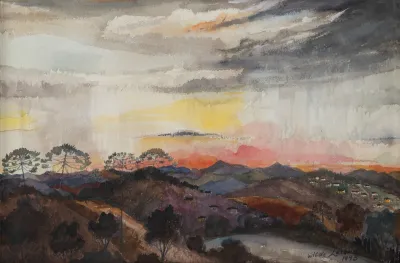
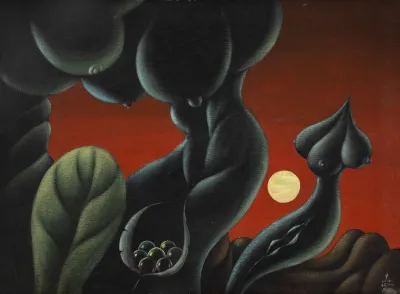
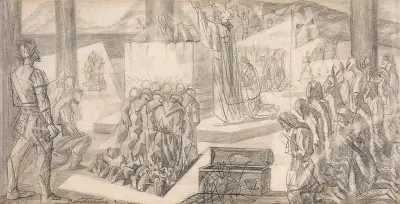
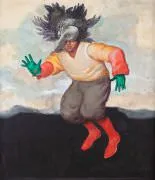
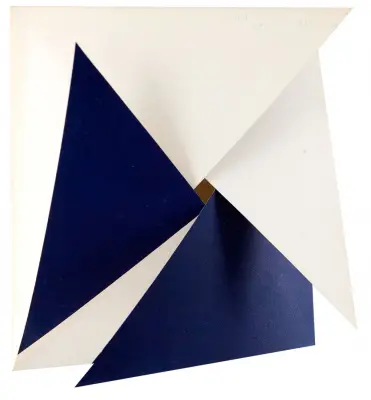
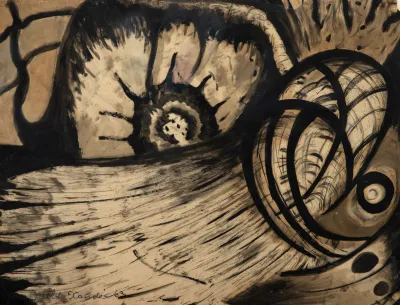
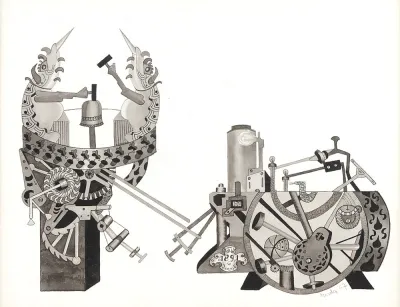
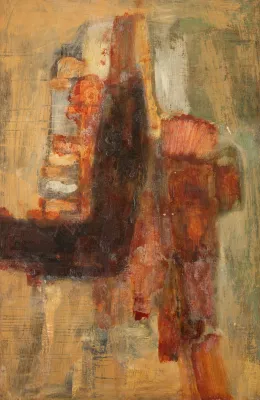
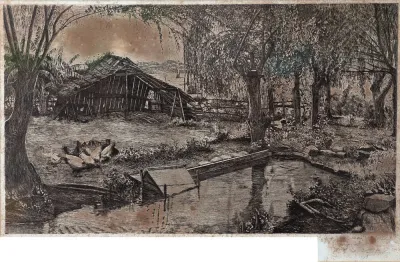
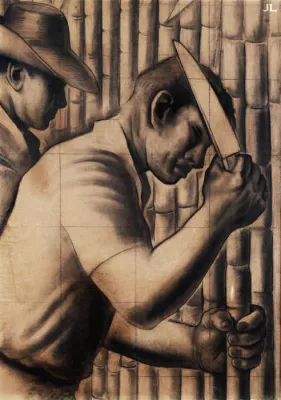
Quirino Campofiorito's initial works reveal concern with social issues, such as the daily work of workers. It also paints urban scenes, figures and still lifes, which stand out for their stripped and lyrical compositions. During the 1940s, he was part of the Bernardelli Nucleus, presenting figurative works that, in some cases, reveal affinities with the metaphysical painting of Giorgio de Chirico (1888-1978). As the art historian Tadeu Chiarelli notes, his production, such as that of other artists linked to the Bernardelli nucleus, can be understood within the purposes of the return to order. In the Triptico Café (1940), the affinity with the painting of the Italian Renaissance can be perceived, with works by Mario Sironi (1885-1961) and also with Candido Portinari. Artistic, Quirino Campofiorito has a relevant role as an art historian and publishes, in 1983, the book History of Brazilian Painting in the 19th Century. (Argentina)
Museum of Fine Arts - Belém PA
National Museum of Fine Arts - MNBA - Rio de Janeiro RJ
Criticism
"In fact, and from the beginning, the career of the painter Quirino Campofiorite is contradictory and interestingly 'postmodern'. In the mid-twenties, its figurative learning is born from two sources, at that time, antagonistic and from the disciplined and apathetic academicism of the School of Fine Arts, and, at the same time, from the Reinvigorating activity as a cartoonist and publicist illustrator at Metro Goldwin Meyer, the ease with which he then understood the modernism of Paris of the thirties and, three decades later, the appropriation of the USA. During the forty years that followed around Europe, a naturally modest temperament led to a constant critical aggression, always dedicated to the renewal of the artistic environment, to compensate for a retracted painting (...). date of the end of the sixties, what we call the ostensible resumption of painting. And, as if to remember the beginning of his professional life, Quirino Campofiorito presented in 1971 - his first exhibition since 1935 - one of the two aspects of his current painting. 'poster-painting', deliberately allegorical but oil-painted posters and conceived as tributes to Miguel Angelo, from Chirico, Brecht, Charlie-Chaplin and Malevitch (...)".
Ítalo Campofiorito
Campofiorito. Presentation by Italo Campofiorito. Rio de Janeiro: Bolsa de Arte, 1977.
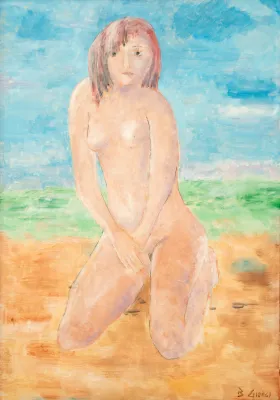
"Although the teaching and critical activity have undoubtedly stolen from the artist time Precious, Campofiorito is the author of considerable baggage, highlighting as the author of urban views, studies of nude and figures, still lifes and allegories, in which the influence of de Chirico and metaphysicism has a very intense influence. Perhaps the most lasting part of his pictorial work is still lifes, in some of which he has achieved admirable effects of lyricism, a personal note and a stripped, unmistakable composition."
José Roberto Teixeira Leite
LEITE, José Roberto Teixeira. Critical Dictionary of Painting in Brazil Rio de Janeiro: Artlivre, 1988.
Testimonies
"My life as a painter is different from life common of painters. These are always committed to the strict activities of the studio. exclusive attendance to the workshop, so that the totality of what he can give to his work is achieved. I am one of those rare examples that have always run over the attendance of the painter's studio with an equally assiduous dedication to other activities that moved me in very demanding spaces. However, I did not deny for a single moment a great and responsible application to the art really indicated by my authentic vocation: painting. The other activities result in the result that were presented, unfoldings of my convictions as a painter, which opened paths that end up making themselves so compromising my sensitivity to the problems inherent in the visual arts as, in particular, was shown in our country. It was impossible for my temperament to be just a painter. (...) Painting, the graphic arts (in the totality of their variations), journalism and teaching, trace the axis of my artistic life. Around this behavior in rectilinear development, having been the painter I am, the graphic artist always excited about a seductive variety of tasks, the journalist always focused on the dissemination and artistic commentary (from the simple information to the responsible essay) and the teaching that does not escape the objectives that govern the artist's understandings and professional training, the rigor of the work of art (its technicality)". 90 years of the artist Rio de Janeiro : MNBA, 1992. p. 13.
Individual exhibitions
1935 - Rio de Janeiro RJ - Individual, at the Association of Brazilian Artists
1936 - Araraguara SP - Individual
1973 - Brasília DF - Retrospective, at the Cultural Foundation of the Federal District
1973 - Rio de Janeiro RJ - Retrospective summary 1920-1973, in the MIS/RJ
1977 - Rio de Janeiro RJ - Retrostectiva: 50 years of painting, on the art bag
1978 - Rio de Janeiro RJ - Drawings from the 30s, at Galeria Estampa
1979 - Rio de Janeiro RJ - Individual, at Galeria Am Niemeyer
1982 - Rio de Janeiro RJ - Quirino Campofiorito - 80 years old, at EAV Parque Lage
1984 - Rio de Janeiro RJ - Individual, at the Galeria de Art
1992 - Niterói RJ - Retrospective, at the Antonio Parreiras Museum
1992 - Rio de Janeiro RJ - Commemorative retrospective of the artist's 90th anniversary, at MNBA
1993 - Rio de Janeiro RJ - Retrospective 80 years of graphic passion: Quirino Campofiorito, at the National Library
Collective exhibitions
1927 - Rio de Janeiro RJ - 34th General Exhibition of Fine Arts, ENBA - Grande Silver Medal
1928 - Rio de Janeiro RJ - 35th General Exhibition of Fine Arts - Great Gold Medal
1929 - Rio de Janeiro RJ - 36th General Exhibition of Fine Arts, at ENBA - Exterior Travel Award
1932 - Paris (France) - Salon de la Societé Nationale
1933 - Paris (France) - Autumn Salon
1935 - Rio de Janeiro RJ - 41st National Salon of Fine Arts - Medal of Silver
1937 - São Paulo SP - 5th Paulista Salon of Fine Arts
1938 - Rio de Janeiro RJ - 2nd Salon of May
1938 - San Francisco (United States) - International Exhibition of California
1943 - Rio de Janeiro RJ - Anti-shaft exhibition, at the Historical and Diplomatic Museum. Itamaraty Palace
1944 - Belo Horizonte MG - Exhibition of Modern Art, in the Mariana Building
1944 - London (England) - Exhibition of Modern Brazilian Paintings, at the Royal Academy of Arts
1944 - Norwich (England) - Exhibition of Modern Brazilian Paintings, at the Norwich Castle and Museum
1944 - Rio de Janeiro RJ - 50th National Salon of Belas Arts at MNBA
1945 - Baht (England) - Exhibition of Modern Brazilian Paintings, at the Victory Art Gallery
1945 - Bristol (England) - Exhibition of Modern Brazilian Paintings, at the Bristol City Museum & Art Gallery
1945 - Buenos Aires (Argentina) - 20 Brasileños artists, at the National Exposición
1945 - Edinburgh (Scotland) - Exhibition of Modern Brazilian Paintings at the National Gallery
1945 - Glasgow (Scotland) - Exhibition of Modern Brazilian Paintings, at Kelingrove Art Gallery
1945 - LA Plata (Argentina) - 20 Brazilian artists, at the Provincial Museo de Bellas Artes
1945 - Manchester (England) - Exhibition of Modern Brazilian Paintings, Manchester Art Gallery
1945 - Montevideo (Uruguay) - 20 Brazilian artists, at the Municipal Culture Committee
1946 - London (England) - Brazilian artists' exhibition to the people of London
1946 - Rio de Janeiro RJ - The painters go to the Escola do Povo, in the Academic Directory of ENBA
1952 - Rio de Janeiro RJ - 1st National Hall of Modern Art
1953 - Rio de Janeiro RJ - 4th Salon of Dead Natures, at Theatro Municipal
1954 - Goiânia GO - Exhibition of the National Congress of Intellectuals
1954 - Rio de Janeiro RJ - Black and White Hall, at the Palace of Culture
1955 - Porto Alegre RS - 1st Exhibition of Contemporary Brazilian Art, at Margs
1956 - Rio de Janeiro RJ - 1st Railway Salon, at MEC
1956 - Rio de Janeiro RJ - 5th National Salon of Modern Art
1956 - Rio de Janeiro RJ - 50 years of Brazilian landscape, at MNBA  
1958 - Rio de Janeiro RJ - Work in Art, at MNBA
1967 - Rio de Janeiro RJ - 16th National Salon of Modern Art
1970 - Rio de Janeiro RJ - 19th National Salon of Modern Art, at MAM/RJ
1973 - Rio de Janeiro RJ - 22nd National Salon of Modern Art
1976 - Rio de Janeiro RJ - 25th National Salon of Modern Art
1982 - Rio de Janeiro RJ - Football universe, at MAM/RJ
1982 - São Paulo SP - Exhibition Núcleo Bernardelli: Brazilian art in the 30s and 40s, in the Collection of Art Gallery
1983 - Rio de Janeiro RJ - Brazilian self-portraits, at the Banerj Art Gallery
1984 - São Paulo SP - Tradition and rupture: synthesis of Brazilian art and culture, at the Bienal Foundation
1985 - Rio de Janeiro RJ - 8th National Salon of Plastic Arts, at MAM/RJ
1988 - Rio de Janeiro RJ - Visions of work, in the MNBA
1993 - São Paulo SP - The modern design in Brazil: Gilberto Collection Chateaubriand, SESI Art Gallery
Posthumous exhibitions
1994 - Rio de Janeiro RJ - The modern design in Brazil: Gilberto Chateubriand Collection, at MAM/RJ
1994 - São Paulo SP - Bienal Brasil Século 20th Century, at the Bienal Foundation
1998 - São Paulo SP - The modern and the contemporary in Brazilian art: Gilberto Chateaubriand Collection - MAM/RJ, at Masp
2000 - Belém PA - Arte Pará 2000, at the Museum of Sacred Art
2000 - Rio de Janeiro RJ - Brazil + 500 Rediscovery Exhibition. Negro de Corpo e Alma, at Fundação Casa França-Brasil  
2000 - Rio de Janeiro RJ - When Brazil was modern: plastic arts in Rio de Janeiro from 1905 to 1960, at the Imperial Palace
2000 - São Paulo SP - Ars Erotica: Sex and Eroticism in Brazilian Art, at MAM/SP
2000 - São Paulo SP - Brazil + 500 Rediscovery Exhibition, at the Biennial Foundation
2002 - São Paulo SP - Art and Politics, at MAM/SP
2003 - São Paulo SP - Art and Society: a controversial relationship, at Itaú Cultural
Source: Itaú Cultural