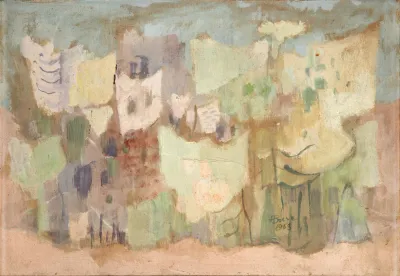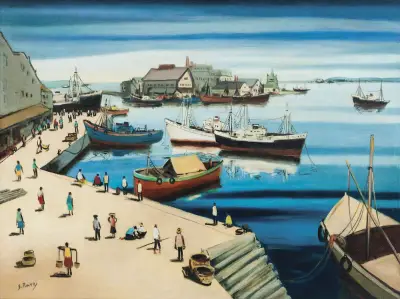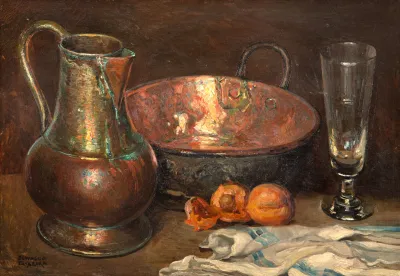

Oswaldo Teixeira (Rio de Janeiro RJ 1905 - idem 1974)
Oswaldo Teixeira was a painter, teacher, art critic and art historian. He studied at the Liceu de Artes e Ofícios do Rio de Janeiro with Argemiro Cunha and Eurico Moreira Alves, and at the Escola Nacional de Belas Artes (Enba) with Rodolfo Chambelland and Baptista da Costa. In 1924, he won the foreign travel prize at the 31st Exposição Geral de Belas Artes with the canvas Pescador Brasileiro [Brazilian Fisherman]. The following year, he traveled to Europe, visiting Portugal, Spain, France and Italy. He taught drawing at Enba and at the Instituto Nacional de Educação from 1932 to 1937. That same year, he became director of the Museu Nacional de Belas Artes (MNBA), in Rio de Janeiro, a post he held until 1961. He published the book Getúlio Vargas e a Arte no Brasil [Getúlio Vargas and Art in Brazil] in 1940 and wrote the preface to História da Pintura no Brasil [History of Painting in Brazil], by Reis Júnior, in 1944.
His work was shown in important exhibitions at the MNBA, such as Exposição de Pintura Religiosa [Exhibition of Religious Painting] (1943), Um Século de Pintura Brasileira [A Century of Brazilian Painting] (1952) and O Trabalho na Arte [Work in Art] (1958). In 1973, he was given a retrospective at the Galeria Grupo B, in Rio de Janeiro, organized by the critic Roberto Pontual. Until the end of his life, he taught painting and drawing at several institutions, including the Instituto de Belas Artes.
Critical Commentary
Oswaldo Teixeira is a controversial figure. He is always at the center of heated debates, in which he is attacked for his artistic and political positions. He vehemently disparages modernism and defends academicism, which sets against him artists such as Quirino Campofiorito and Flávio de Carvalho and critics such as José Roberto Teixeira Leite.
His anti-modernism is openly declared. He considers modern art hermetic and anarchic; a mere expedient to hide technical deficiency; a refuge for those who cannot draw or paint and for critics who cannot see or write. He accepts only Candido Portinari, early Picasso and Paul Cézanne, for his integrity. Even so, some modern artists exhibit at the Museu Nacional de Belas Artes - MNBA and take part in the Salão Nacional de Belas Artes - SNBA during his tenure, although the Museu de Arte Moderna do Rio de Janeiro - MAM/RJ is far more receptive.
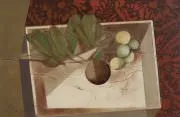
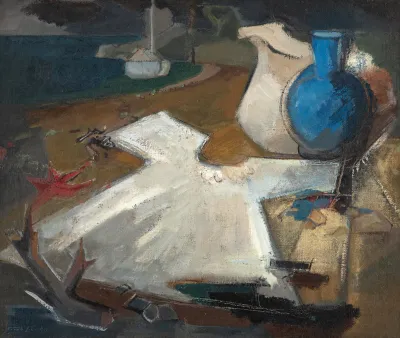
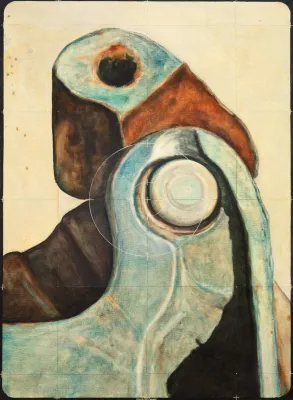
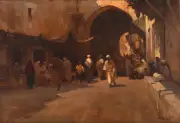
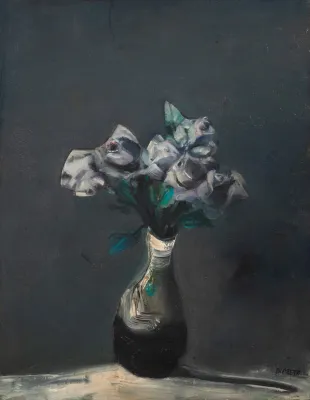
His view of academicism is equally explicit. He believes academic training is the only kind that can give the painter the technique his craft requires. The Renaissance is his favorite period. Paintings such as Vênus Loura [Blonde Venus], Pescador Brasileiro [Brazilian Fisherman] and Velha Beata [Old Churchwoman] are traditionalist in subject and execution. They seek to depict nature, with its reliefs, colors and textures, without realism. For him, good painting is made of technique, emotion and truth. The latter is idealized, as he himself illustrates: "In the portrait of Judge Martins de Oliveira, for example, I could not be entirely faithful. The face is exactly like him. But the body did not suit his office. He was short, stocky, of the northeastern type. I painted him imposing. The thing is, I was not painting just the man. I also had to portray the magistrate".1 He paints portraits, still lifes, landscapes, religious subjects and, above all, female nudes. His output is abundant - some speak of 4,000 drawings and 2,000 canvases - and sells well.
Note
1 SILVA, H. Pereira da. Oswaldo Teixeira em 3a. dimensão: vida, obra e época. Apresentação Oswaldo Teixeira. Rio de Janeiro: Museu de Armas Ferreira da Cunha, 1975, p. 128.
Critiques
"Oswaldo Teixeira repeated 'I am not an academic' so often that he grew tired of it. Rarely, even in his youth, did he fail to rebel against being counted among the academics. In fact, even later, when already a 'consecrated academic', he would deny this mistaken 'consecration', unfounded in view of what he painted. He knew that he did not observe without adding, omitting and, above all, creating details that did not exist in his models. The skin color of his figures, for example, according to Vianna Moog, a connoisseur of European and American museums, 'is unequaled anywhere in the world'. The academician, holder of a chair in the House of Machado de Assis, did not hide his admiration for Oswaldo Teixeira. He would say, with the authority and frankness that characterize him: 'He is the greatest painter of skin in the world!' (...)."
M. Pereira da Silva
GARCIA, Maria Amélia Bulhões. O significado social da atuação dos artistas plásticos Oswaldo Teixeira e Cândido Portinari durante o Estado Novo. Porto Alegre: IFCH/PUC, 1983. (Mestrado).
"Oswaldo Teixeira, who practiced every genre, has sound draftsmanship. But, endowed with a conventional and reactionary view of art, he prolonged well into the 20th century a certain kind of pictorial sensibility that harks back directly to the 19th and even the 18th century, practicing an overripe ('faisandée') and contrived painting that often slipped into kitsch. More than his works, it was his constant invectives against modern art - and against Portinari and Picasso in particular - that became well known."
José Roberto Teixeira Leite
LEITE, José Roberto Teixeira. Dicionário crítico da pintura no Brasil. Rio de Janeiro: Artlivre, 1988.
Solo Exhibitions
1971 - Rio de Janeiro RJ - Solo, at Sociarte
1973 - Rio de Janeiro RJ - Retrospective, at Galeria Grupo B
Group Exhibitions
1918 - Rio de Janeiro RJ - 25th General Exhibition of Fine Arts, at Enba
1919 - Rio de Janeiro RJ - 26th General Exhibition of Fine Arts, at Enba
1921 - Rio de Janeiro RJ - 28th General Exhibition of Fine Arts, at Enba - bronze medal
1922 - Rio de Janeiro RJ - 29th General Exhibition of Fine Arts, at Enba - large silver medal
1923 - Rio de Janeiro RJ - 30th General Exhibition of Fine Arts, at Enba
1924 - Rio de Janeiro RJ - 31st General Exhibition of Fine Arts, at Enba - foreign travel prize
1925 - Rio de Janeiro RJ - 32nd General Exhibition of Fine Arts, at Enba
1927 - Rio de Janeiro RJ - 34th General Exhibition of Fine Arts, at Enba - gold medal
1928 - Rio de Janeiro RJ - 35th General Exhibition of Fine Arts, at Enba
1928 - São Paulo SP - Almeida Júnior Group, at Palácio das Arcadas
1929 - Rio de Janeiro RJ - 36th General Exhibition of Fine Arts, at Enba
1930 - Rio de Janeiro RJ - 37th General Exhibition of Fine Arts, at Enba
1930 - New York (United States) - Group Show of Brazilian Artists, at Roerich Museum
1933 - Rio de Janeiro RJ - 40th General Exhibition of Fine Arts, at Escola de Belas Artes
1937 - São Paulo SP - 5th São Paulo Fine Arts Salon - small silver medal
1938 - Rio de Janeiro RJ - National Salon of Fine Arts - medal of honor
1939 - São Paulo SP - 6th São Paulo Fine Arts Salon - small gold medal
1940 - São Paulo SP - 7th São Paulo Fine Arts Salon, at Salão de Arte Almeida Júnior da Prefeitura Municipal de São Paulo
1942 - São Paulo SP - 8th São Paulo Fine Arts Salon, at Galeria Prestes Maia
1943 - São Paulo SP - 9th São Paulo Fine Arts Salon, at Galeria Prestes Maia
1943 - Rio de Janeiro RJ - Religious Painting, at MNBA
1944 - Rio de Janeiro RJ - 50th National Salon of Fine Arts, at MNBA
1945 - São Paulo SP - 11th São Paulo Fine Arts Salon, at Galeria Prestes Maia - Federal Intervenor Prize
1946 - São Paulo SP - 12th São Paulo Fine Arts Salon, at Galeria Prestes Maia - large gold medal and 1st Federal Intervenor Prize
1947 - São Paulo SP - 13th São Paulo Fine Arts Salon, at Galeria Prestes Maia
1948 - São Paulo SP - 14th São Paulo Fine Arts Salon, at Galeria Prestes Maia
1949 - São Paulo SP - 15th São Paulo Fine Arts Salon, at Galeria Prestes Maia
1950 - Rio de Janeiro RJ - A Century of Brazilian Painting: 1850-1950, at MNBA
1951 - São Paulo SP - 16th São Paulo Fine Arts Salon, at Galeria Prestes Maia
1952 - São Paulo SP - 17th São Paulo Fine Arts Salon, at Salões do Trianon (Av. Paulista)
1953 - São Paulo SP - 18th São Paulo Fine Arts Salon, at Galeria Prestes Maia - acquisition prize
1954 - Goiânia GO - Exhibition of the National Congress of Intellectuals
1954 - São Paulo SP - 19th São Paulo Fine Arts Salon, at Galeria Prestes Maia
1956 - São Paulo SP - 20th São Paulo Fine Arts Salon - acquisition prize and 2nd State Government Prize
1957 - São Paulo SP - 21st São Paulo Fine Arts Salon - medal of honor
1958 - Rio de Janeiro RJ - Salão do Mar [Sea Salon]
1958 - Rio de Janeiro RJ - Work in Art, at MNBA
1959 - São Paulo SP - 24th São Paulo Fine Arts Salon, at Galeria Prestes Maia - São Paulo City Prize
1962 - São Paulo SP - 27th São Paulo Fine Arts Salon - acquisition prize
1963 - São Paulo SP - São Paulo Fine Arts Salon - 2nd State Government Prize
1970 - Rio de Janeiro RJ - 75th National Salon of Fine Arts, at MNBA
1973 - São Paulo SP - São Paulo Fine Arts Salon - 2nd State Government Prize
Source: Itaú Cultural