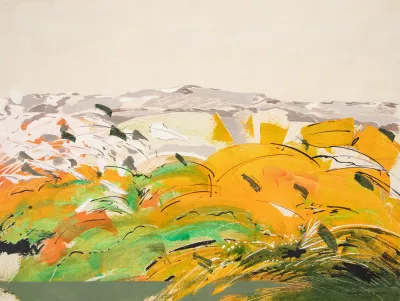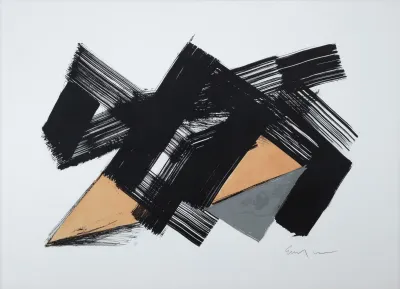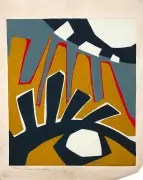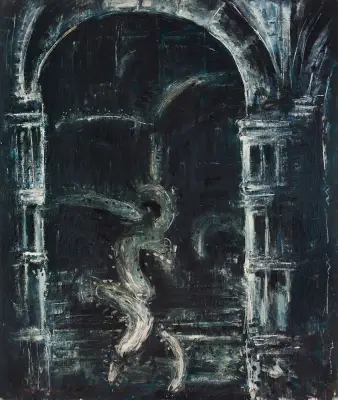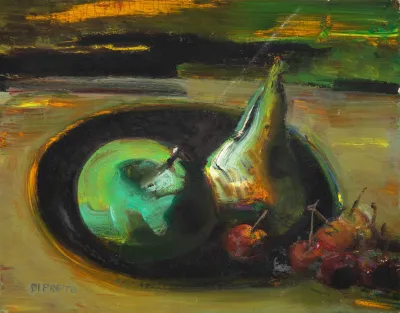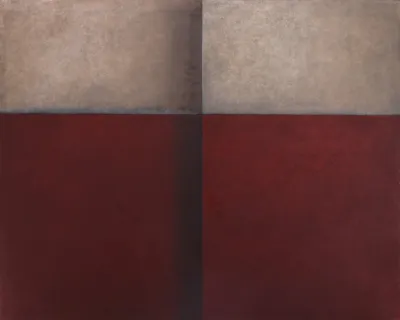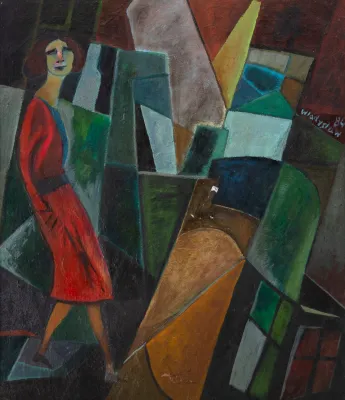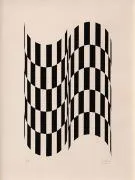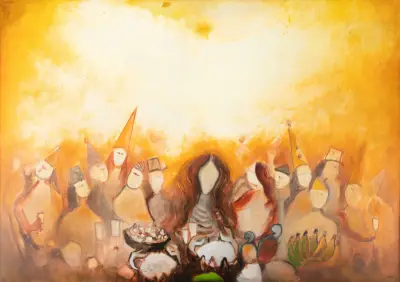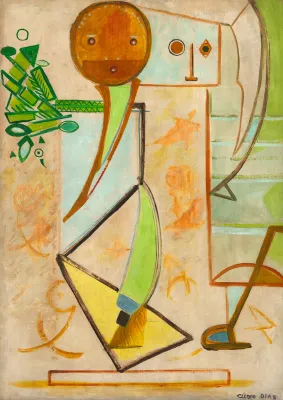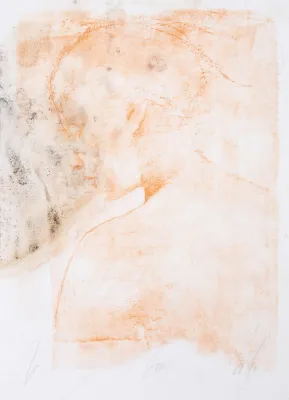
Milton Dacosta (Niterói RJ 1915 - Rio de Janeiro RJ 1988)
Milton DaCosta was a painter, designer, engraver and illustrator. He began his studies of drawing and painting in 1929, with the German professor August Hantv. The following year, he enrolled in the Free Course of Marques Júnior (1887-1960) at the National School of Fine Arts (ENBA), which was closed by the 1930 Revolution. In 1931, together with Edson Motta (1910-1981), Bustamante Sá (1907-1988), Ado Malagoli (1906-1994) and other artists, created the Bernardelli Nucleus. His first solo exhibition took place in 1936, in Rio de Janeiro, the year in which he also received an honorable mention at the National Salon of Fine Arts. in the previous year. In New York, he studied at the Arts Students League of New York. The following year, he went to Lisbon, where he met Almada Negreiros (1893-1970) and Antonio Pedro (1909-1966). After visiting several European countries, he settled in Paris, studying at the Académie de la Grande Chaumière. There, he met Pablo Picasso (1881-1973), through Cícero Dias (1907-2003), and attended the workshops of Georges Braque (1882-1963) and Georges Rouault (1871-1958). He exhibited at the Salon d'Automne and returned to Brazil in 1947.
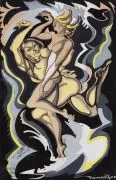
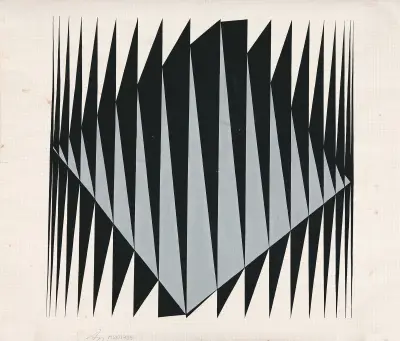
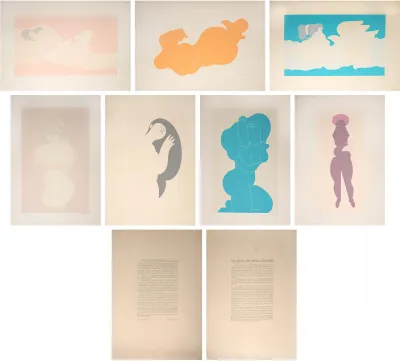
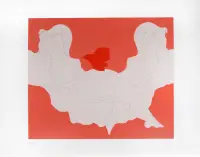
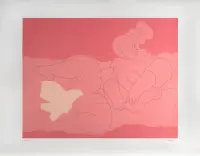
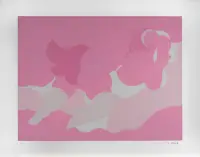
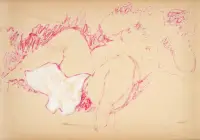
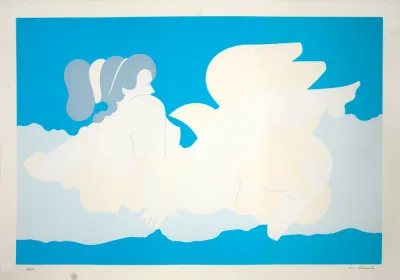
In 1949, he married the painter Maria Leontina (1917-1984) and moved to São Paulo. In the 1950s, he developed a work of a constructivist character, a style that he modified in the following decade, by resuming the figurative with the series of colored metal engravings on the theme Venus. A shy room, on the first floor of an old townhouse on Rua São José, in Rio de Janeiro, on whose ground floor was the Casa Cavalier store.
In the left corner, a living model. Throughout the room, young painting students, two or three with easels, spread out as they could, the rest with a drawing board, each looking for a better angle to reproduce the naked body, in front of him.
No teachers. It was the Bernardelli nucleus that gathered every night in the same place, contesting the traditional teaching, especially the National School of Fine Arts, lost in the shadows of the past, to teach, in the mid-1930s, romantic and neoclassical painting, undermining any initiative by the modernization of art.
Here, the painting was free, no one obeyed prefixed methods or techniques. Each one painted as he wanted, gave free to the imagination, in a relentless fight between paints and brushes, which tried to reconcile, without patent results.
Among the free art experimenters were the sailor José Pancetti (1902-1958), Ado Malagoli (1906-1994) Milton Dacosta (1915-1988) and, of course, the founder of the Nucleus, Edson Mota (1910-1981).
The master's verdict
Prepared, perfect and finished work, an expert was invited to give his impressions on the evolution of those young aspirants. The master was Manuel Santiago (1897-1987), in the fullness of his 37 years, but already with a respectable baggage, having participated in several exhibitions in Brazil and France, where he was, taking advantage of a travel award won in 1927 in the hall of the National School of Fine Arts. quite an authority to assess the possibilities of those anxious young people.
Santiago walked, atonic, through the paintings that were exposed to him, almost not believing in what he saw, examining and reassessing each one, to make sure that it was not a dream, but a reality of the work performed by each of the participants of the group.
What they do is a guava of the most ordinary, thinking they are independent and have personality - he later writes to his wife, the painter Haydea Santiago (1896-1980). It is a heavy criticism, but it is corrected, then, clarifying the thought:
I was happy with this group of Barbouilleurs (lambuzões) and I think I will dedicate myself entirely to them, because they show they have willpower and need to a good friend, older, to make them great painters.
The progress of a snail
Milton Dacosta, one of the Barbouilleurs referred to by Santiago, was born in Niteroi, State of Rio de Janeiro, in 1915, and died in the city of Rio de Janeiro in 1988, showing an attraction to the design since childhood, when he made his scribbles on any material that was within his reach, such as shoeboxes, pieces of cardboard and whatever else.
At 14, he met a German teacher, Augusto Hantz, with whom he took his first classes and, the following year, enrolled in the free course that was taught by Augusto José Marques Júnior (1860-1937) at the National School of Fine Arts.
That was not what I wanted and, at 16, participated in the foundation of the Núcleo Bernardelli, a wrong project, but which was the first phase to free her painting from the canons Academics.
The hall opens its doors
In 1936, after performing an individual, which achieved relative success, Dacosta was encouraged to try, once again, to register at the National Salon of Belas Arts.
In the previous attempt, he left frustrated, as his paintings were not only refused by the salon but also ridiculed. This time, however, he not only exposed, but received an honorable mention, an indication that academics, refractory to change, began to make concessions to new painters.
This became more evident in the following exhibitions, when he won a bronze, silver medal and, In 1944, the coveted overseas travel award. This is how, in 1945, he traveled to the United States, in the company of the painter Djanira and, from there, went to Europe, staying in Paris for two years. Dacosta was no longer the same, since the first scribbles of his childhood and the smudges in free style practiced in the first phase of Núcleo Bernardelli. Dacosta evolved, but gradually evolved, step by step, without burning stages.
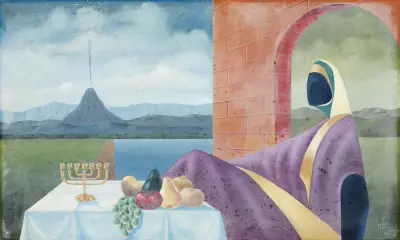
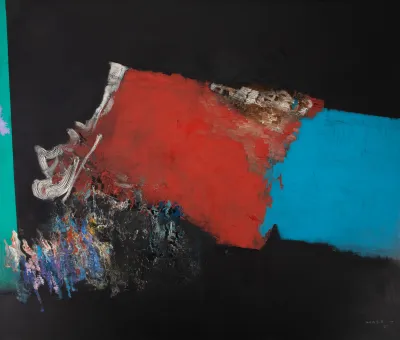
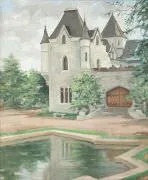
In his first moments, as is often the case with beginners, he felt an irresistible attraction to Impressionism, moving sequentially to the Expressionism, Cubism, Concretism, finally returning to Cubism, as a definitive option.
Milton Dacosta married, in 1949, the painter Maria Leontina, a marriage that lasted 37 years and only Extinguished with her death in 1984. Together they walked the path of life and the path of art, participated in biennials, traveled abroad in improvement courses, served as support for each other, growing together in the mission they chose, to make the world more Belo.
Four years after the widowhood, Dacosta also dies, when she was experiencing the most important phase of his painting, in a series he called Venus and the Birds.
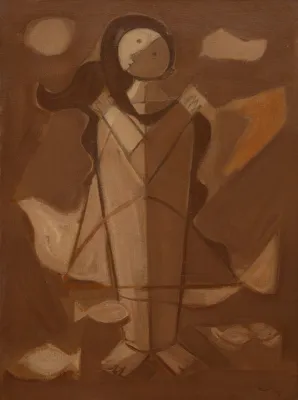
Comparing the paintings painted from 1963, within this series, with the paintings made in the 1940s, it can be seen that the ingenuity of the features and the color gave way to the maturity of the artist, where the form overlaps with the color, where the refinement of style, with sobriety and Elegance, dominates the picture in its entirety.
Text: Paulo Victorino
Individual exhibitions
1936
Rio de Janeiro RJ - First individual, at Galeria Santo Antonio
1945
Rio de Janeiro RJ - Individual, at IAB/RJ
1949
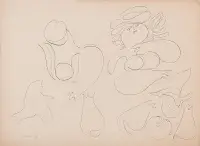
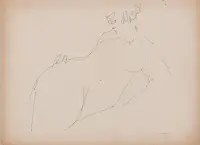
São Paulo SP - Milton DaCosta: Guaches and Drawings, at Galeria Jaraguá
1950
Rio de Janeiro RJ - Individual, at the Ministry of Education and Culture
São Paulo SP - Individual, at Galeria Itapetininga
1951
São Paulo SP - Individual, at Galeria Ambiente
São Paulo SP - Individual, at Galeria Domus
1955
Rio de Janeiro RJ - Individual, at Petite Galerie
1956
São Paulo SP - Individual, at MAM/SP - Isai Leirner Award for Contemporary Art
1959
Rio de Janeiro RJ - Milton DaCosta: Retrospective, at GEA Gallery
Rio de Janeiro RJ - Milton DaCosta: Retrospective 1939-1959, at MAM/RJ
1963
Rio de Janeiro RJ - Individual, at the Ambiente-Spazio Gallery
1964
São Paulo SP - Individual, at the Mobilínea Gallery
1967
Rio de Janeiro RJ - Individual, at the Module Gallery
Rio de Janeiro RJ - Individual, at the Barcinsky Gallery
1971
Rio de Janeiro RJ - Individual, at Petite Galerie
Rio de Janeiro RJ - Individual, at Petite Galerie
1973
Rio de Janeiro RJ - Homage to Milton Dacosta, at Galeria da Praça
1974
São Paulo SP - Individual, at Galeria Global Art
1976
Rio de Janeiro RJ - Individual, at Galeria da Praça
1977
São Paulo SP - Individual, at the Luís Caetano Art Office
1979
Rio de Janeiro RJ - Individual, at the Art Gallery Collection
1981
São Paulo SP - Milton Dacosta: Retrospective, at MAM/SP
1982
Rio de Janeiro RJ - Milton DaCosta: Review of the 50s, at the Paulo Klabin Gallery
São Paulo SP - Milton Dacosta: Review of the 50's, at Documenta Galeria de Arte
1983
Rio de Janeiro RJ - Individual
1986
São Paulo SP - Milton DaCosta: Constructive Phase 1954-1960, at the Art Office Raquel Arnaud
1987
São Paulo SP - Individual, in the arts company
1988
Rio de Janeiro RJ - Milton Dacosta, 1950s, at Funarte
São Paulo SP - Individual, at the Mário de Andrade Municipal Library
1989
Salvador BA - Milton Dacosta: Engravings, in the test of the artist Galeria
2005
Rio de Janeiro RJ - Individual, at the Ipanema Art Gallery
2006
São Paulo SP - Individual, at the Bergamin Gallery
Collective exhibitions
1933
Rio de Janeiro RJ - 40th General Exhibition of Fine Arts, at Enba
1934
Rio de Janeiro RJ - 3rd Salon of the Bernardelli Nucleus, at Enba
1936
Rio de Janeiro RJ - 42nd National Salon of Fine Arts, at the Instituto de Previdência - Honorable Mention
1937
Rio de Janeiro RJ - Milton DaCosta e Bustamante Sá, NA Galeria Santo Antônio
1939
Rio de Janeiro RJ - 45th National Salon of Fine Arts, at the MNBA - Bronze Medal
1941
Rio de Janeiro RJ - 47th National Salon of Fine Arts, at the MNBA - Silver Medal and Jury Waiver
1944
Belo Horizonte MG - Exhibition of Modern Art, in the Mariana Building
London (England) - Exhibition of Modern Brazilian Paintings, at the Royal Academy of Arts
Norwich (England) - Exhibition of Modern Brazilian Paintings, at Norwich Castlemuseum
Rio de Janeiro RJ - 50th National Salon of Fine Arts, MNBA - Travel abroad award
1945
Baht (England) - Exhibition of Modern Brazilian Paintings, at the Victory Art Gallery
Bristol (England) - Exhibition of Modern Brazilian Paintings, at the Bristol City Museum & Art Gallery
Buenos Aires (Argentina) - 20 Brazilian artists, in the National Exhibition Rooms
Edinburgh (Scotland) - Exhibition of Modern Brazilian Paintings, National Gallery
Glasgow (Scotland) - Exhibition of Modern Brazilian Paintings, at Kelingrove Art Gallery
La Plata (Argentina) - 20 Brazilian artists at the Provincial Museum de Bellas Artes
Manchester (England) - Exhibition of Modern Brazilian Paintings, Manchester Art Gallery
Montevideo (Uruguay) - 20 Brazilian artists at the Municipal Comisión de Culture
Santiago (Chile) - 20 Brazilian artists, at the University of Santiago de Chile
1947
Paris (France) - Salon D"Automne, at the Grand Palais
1950
Venice (Italy) - 25th Venice Biennale
1951
Rio de Janeiro RJ - Exhibition of dead natures, in the Food and Social Security Service
São Paulo SP - 1st São Paulo International Biennial, at the Trianon Pavilion
São Paulo SP - 1st Paulista Salon of Modern Art, at the Prestes Maia Gallery - State Government Award
1952
Paris (France) - 38th Salon of May
Rio de Janeiro RJ - Exhibition of Brazilian Artists, at MAM/RJ
Santiago (Chile) - Exposición de Painting, Dibujos and Grabados Contemporáneos del Brasil, at Universidad de Chile. Contemporary Art Museum
1953
São Paulo SP - Extraordinary Congress of the International Association of Art Critics, at MASP
1954
Rio de Janeiro RJ - Milton Dacosta and José Pedrosa, at the Tenreiro Gallery
Salvador BA - 4th Baiano Salão de Belas Artes, at the Hotel Bahia - Silver/Painting Medal
São Paulo SP - Contemporary Art: Exhibition of the Museum of Modern Art of São Paulo, at MAM/SP
1955
Lissone (Italy) - 9th International Lissone Award
Lugano (Switzerland) - Exhibition organized by MAM/SP and MAM/RJ
São Paulo SP - 3rd International Biennial of São Paulo, Pavilion of Nations - Best Brazilian Painter Award
1956
Rio de Janeiro RJ - National Exhibition of the Guggenheim Award, at MAM/RJ
1957
New York (United States) - Guggenheim International Award: 1956, at Solomon R. Guggenheim Museum
São Paulo SP - 4th International Biennial of São Paulo, at the Ciccilo Matarazzo Sobrinho Pavilion - Acquisition Award
1958
Pittsburg (United States) - 43rd International Exhibition of Contemporary Painting and Sculpture
1959
Leverkusen (Germany) - First collective exhibition of Brazilian artists in Europe
Munich (Germany) - First collective exhibition of Brazilian artists in Europe, at Kunsthaus
Rio de Janeiro RJ - 30 years of Brazilian art, at the Macunaíma gallery
São Paulo SP - Milton Dacosta and Maria Leontina, at the Associação dos Amigos do MAM/SP
Vienna (Austria) - First collective exhibition of Brazilian artists in Europe
1960
Hamburg (Germany) - First collective exhibition of Brazilian artists in Europe
Lisbon (Portugal) - first collective exhibition of Brazilian artists in Europe
Madrid (Spain) - First collective exhibition of Brazilian artists in Europe
Paris (France) - first collective exhibition by Brazilian artists in Europe
Rio de Janeiro RJ - Inaugural press conference of the Bonino Gallery
São Paulo SP - Leirner Collection, at the Galeria de Art of the Leaves
Utrecht (Holland) - First collective exhibition of Brazilian artists in Europe
1961
Rio de Janeiro RJ - 1st The face and the work, at the Ibeu Copacabana Gallery
Rio de Janeiro RJ - Salão of Art by Petite Galerie, at Petite Galerie - First Prize
São Paulo SP - 6th São Paulo International Biennial, at the Ciccilo Matarazzo Sobrinho Pavilion - Special Room
1962
Rio de Janeiro RJ - Milton Dacosta and Anna Letycia, at Petite Galerie
São Paulo SP - Selection of Brazilian works of art from the Ernesto Wolf collection, at MAM/SP
1963
Campinas SP - Contemporary painting and sculpture, at the Carlos Gomes Museum
Rio de Janeiro RJ - 1st Summary of Art JB, at Jornal do Brasil
Rio de Janeiro RJ - The landscape as theme, at the Ibeu Copacabana Gallery
1964
Lisbon (Portugal) - collective, at Palácio da Foz
Rio de Janeiro RJ - The Nu in Contemporary Art, at the Ibeu Copacabana Gallery
1966
Rio de Janeiro RJ - Self-portraits, at the Ibeu Copacabana Gallery
Salvador BA - 1st National Biennial of Plastic Arts - Special Room
São Paulo SP - Half a century of Art Nouveau, at MAC/USP
1971
São Paulo SP - 3rd Panorama of Current Brazilian Art, at MAM/SP
São Paulo SP - Collective, at Galeria Astreia
1972
São Paulo SP - Art/Brazil/Today: 50 years later, at Galeria da Collectio
1976
São Paulo SP - Brazilian art in the 20th century: Paths and Trends, at Galeria Arte Global
São Paulo SP - The Youth Drawing of the 40s, at the Pinacoteca do Estado
1977
Rio de Janeiro RJ - Brazilian constructive project in art: 1950-1962, at MAM/RJ
São Paulo SP - Brazilian constructive project in art: 1950-1962, at the Pinacoteca do Estado
1978
São Paulo SP - As Bienais and the abstraction: the 50's, at the Lasar Segall Museum
1979
São Paulo SP - 15th São Paulo International Biennial, at the Bienal Foundation
1980
Rio de Janeiro RJ - Homage to Mário Pedrosa, at the Jean Boghici Gallery
Rio de Janeiro RJ - Milton DaCosta, Volpi, Bruno Giorgi, at the Art Gallery Collection
1981
São Paulo SP - Transcendent Art MAM/SP
1982
Lisbon (Portugal) - Brazil 60 years of modern art: Gilberto Chateaubriand Collection, at the José de Azeredo Perdigão Modern Art Center
London (England) - Brazil 60 Years of Modern Art: Gilberto Chateaubriand Collection, at the Barbican Art Gallery
Penápolis SP - 5th Northwest Plastic Arts Salon, at the Penápolis Educational Foundation. Faculty of Philosophy, Sciences and Letters of Penápolis
Salvador BA - The Brazilian Art of the Odorico Tavares Collection, at the Carlos Costa Pinto Museum
São Paulo SP - From Modernism to Biennial, at MAM/SP
São Paulo SP - Exhibition Núcleo Bernardelli: Brazilian Arts 30s and 40s, at the Art Gallery Collection
1983
Rio de Janeiro RJ - 6th National Salon of Plastic Arts, at MAM/RJ
Rio de Janeiro RJ - Brazilian self-portraits, at the Art Gallery Banerj
1984
Rio de Janeiro RJ - Acting Brazilian painting, at Espaço Petrobras
São Paulo SP - Gilberto Chateaubriand Collection: Portrait and Self-Portrait of Brazilian Art, at MAM/SP
São Paulo SP - Tradition and rupture: synthesis of Brazilian art and culture, at the Bienal Foundation
1985
Porto Alegre RS - Iberê Camargo: trajectory and meetings, at Margs
Rio de Janeiro RJ - Meetings, at Petite Galerie
Rio de Janeiro RJ - Six decades of modern art: Roberto Marinho Collection, at the Paço Imperial
São Paulo SP - 100 Obras Itaú, at Masp
1986
Brasília DF - Iberê Camargo: trajectory and Encontros, at the Cláudio Santoro National Theater
Rio de Janeiro RJ - Iberê Camargo: trajectory and meetings, at MAM/RJ
Rio de Janeiro RJ - JK and the 50s: a vision of culture and everyday life, in the gallery Investarte
Rio de Janeiro RJ - War Times: International Hotel, at the Art Gallery Banerj
Rio de Janeiro RJ - War Times: Pensão Mauá, at the Banerj Art Gallery
São Paulo SP - Iberê Camargo: trajectory and meetings, in the MASP
1987
Paris (France) - Modernity: Brazilian art of the 20th century, at the Musée d"art moderne de la ville de Paris
Rio de Janeiro RJ - to the collector: tribute to Gilberto Chateaubriand, at MAM/RJ
Rio de Janeiro RJ - Rio de Janeiro, February, March: From Modernism to Generation 80, at the Art Gallery Banerj
São Paulo SP - The biennials in the MAC collection: 1951 A 1985, at MAC/USP
São Paulo SP - The Craft of Art: Painting, at SESC
1988
Rio de Janeiro RJ - 2nd Geometric Abstraction, at Funarte. Arts Center
São Paulo SP - MAC 25 years: Highlights of the initial collection, at MAC/USP
São Paulo SP - Modernity: 20th century Brazilian art, at MAM/SP