Mário Raul de Moraes Andrade (São Paulo SP 1893 - Idem 1945)
Poet, chronicler and novelist, literary and art critic, musicologist, researcher of Brazilian folklore, photographer.
He completed the piano course at the Conservatório Dramático e Musical de São Paulo in 1917. That year, under the pseudonym Mário Sobral, he published his first book of verse, Há Uma Gota de Sangue em Cada Poema [There Is a Drop of Blood in Every Poem]. He met Oswald de Andrade (1890 - 1954) and visited the modernist exhibition of the painter Anita Malfatti (1889 - 1964).
In 1918, he wrote for A Gazeta as a music critic, and the following year he contributed to A Cigarra and O Echo while continuing at A Gazeta. In 1920, he worked regularly for the São Paulo magazine Papel e Tinta. At that time he frequented the studio of the sculptor Victor Brecheret (1894 - 1955), from whom he bought a cast of the bronze Cabeça de Cristo [Head of Christ]. In 1921, he wrote the series Mestres do Passado [Masters of the Past] for the Jornal do Commercio, against Parnassianism, and in 1922 he contributed to the magazine Klaxon. He was a member of the Grupo dos Cinco [Group of Five] with Tarsila do Amaral (1886 - 1973), Anita Malfatti, Oswald de Andrade (1890 - 1954) and Menotti del Picchia (1892 - 1988).
One of the organizers of the Semana de Arte Moderna [Modern Art Week] in February 1922, he read his poems on the stage of the Theatro Municipal de São Paulo during the event and was booed. That year, he published his second book, Pauliceia Desvairada [Hallucinated City], a landmark of modern Brazilian literature. He taught history of music and aesthetics at the Conservatório Dramático e Musical de São Paulo. In 1923, he bought a Kodak camera and worked as a photographer until 1931. In 1924, with Olívia Guedes Penteado (1872 - 1934), Oswald de Andrade, Tarsila do Amaral and others, he made a study trip to the historic towns of Minas Gerais to show the Brazilian interior to the French-Swiss poet Blaise Cendrars (1887 - 1961).
His 1925 book of essays, A Escrava que Não É Isaura [The Slave Who Is Not Isaura], discusses certain trends in modernist poetry and established its author as one of the leading theorists of the modernist movement. In 1927, he traveled through the Amazon region and, the following year, through the Brazilian Northeast, photographing the landscapes, architecture and people of the places he visited. He also photographed São Paulo landscapes, especially the city center, and scenes at Oswald and Tarsila's farm. In 1927, he published the novel Amar, Verbo Intransitivo [Love, Intransitive Verb]. He began writing for the Diário Nacional, the newspaper of the Partido Democrático - PD, which he joined. He published most of his output there - reviews, short stories, chronicles and poems - until 1932. In 1928, he published Macunaíma, Herói sem Caráter [Macunaíma, Hero Without Character] and Ensaio Sobre Música Brasileira [Essay on Brazilian Music]; in 1929, Compêndio da História da Música [Compendium of the History of Music]; in 1930, Modinhas Imperiais [Imperial Modinhas]; and in 1933, Música, Doce Música [Music, Sweet Music]. Always interested in both classical and popular music, he sought to promote research toward the nationalization of Brazilian music.
From 1933 to 1935, he was a critic for the Diário de São Paulo. In 1935, with Paulo Duarte, he founded the Departamento Municipal de Cultura de São Paulo [São Paulo Municipal Culture Department] and became its first director. In that position, he created the Discoteca Pública [Public Record Library], now the Discoteca Oneyda Alvarenga. The following year, he took part in drafting the bill that created the Serviço do Patrimônio Histórico e Artístico Nacional - Sphan [National Historic and Artistic Heritage Service]. In 1937, as director of the Department, he invited the Lévi-Strauss couple to teach a course in ethnography. With Dina Lévi-Strauss, he founded the Sociedade de Etnografia e Folclore [Society of Ethnography and Folklore] and became its first president. He organized the Congresso de Língua Nacional Cantada [Congress of the Sung National Language]. He was elected a member of the Academia Paulista de Letras.
From February to July 1938, he sent a group of researchers to the North and Northeast of Brazil. Named the Missão de Pesquisas Folclóricas [Folklore Research Mission], the expedition he conceived recorded, photographed, filmed and studied a great variety of melodies sung at work, in festivities and in prayers. In 1938, he moved to Rio de Janeiro, where he directed the Instituto de Artes of the Universidade do Distrito Federal and held the chair of history and philosophy of art. He returned to São Paulo in 1941. As an expert for the São Paulo branch of Sphan, he traveled throughout the state conducting research. With other intellectuals opposed to the Estado Novo dictatorship, in 1942 he founded the Associação Brasileira de Escritores - Abre [Brazilian Writers' Association], which fought for the redemocratization of the country. He contributed to the Diário de S. Paulo and the Folha de S. Paulo. In the conference hall of the Library of the Ministry of Foreign Affairs, he gave the famous lecture "O movimento modernista" [The Modernist Movement], included in the book Aspectos da Literatura Brasileira [Aspects of Brazilian Literature], from 1943.
In 1943, he published O Baile das Quatro Artes [The Ball of the Four Arts], with literary and art criticism, and the following year he wrote Lira Paulistana [São Paulo Lyre], a book of poems published posthumously.
Critical Commentary
Mário de Andrade was a man of many talents and singular influence on twentieth-century Brazilian culture. His work in poetry, fiction, chronicles, journalism, music, folklore and criticism was always guided by the search for defining aspects of national identity and by the appreciation of Brazil's artistic and cultural expressions.
His ideas and positions, expressed in books and articles and also in the countless letters he wrote to friends and collaborators, contributed decisively to the emergence of new artistic and literary movements and trends. The quality of his poetry and the insight and vehemence of the questions that "shook" the Brazilian cultural scene of his time make him one of the country's foremost writers and intellectuals.
In the series Mestres do Passado [Masters of the Past], published in 1921 in the Jornal do Commercio, one can see a critical rereading of Parnassianism and the defense of a new direction for literature, characteristic of modernism. The book Pauliceia Desvairada, from 1922, reveals his contact with the European avant-gardes, such as Futurism, Expressionism and Dadaism. In the "Prefácio Interessantíssimo" [Most Interesting Preface], he expresses the complex task of combining a modern orientation with local reality, the "Brazilian language". Proclaiming "desvairismo" - incongruity, extravagance, eccentricity - he asserts his resistance to artistic doctrines: "In art: school = the imbecility of many for the vanity of one".1
In 1925, Mário de Andrade published the famous essay A Escrava que Não É Isaura, in which he develops the ideas outlined in the "Prefácio Interessantíssimo" and proposes "primitivism" in poetry - the emphasis on expressiveness and inspiration, the pursuit of synthesis and spontaneity, achieved technically through free verse.
His relationship with modernist painters was close, at times intimate. He can be said to be the person most responsible for promoting modernist art and for formulating an agenda for artists to follow, guiding themes and languages. His assessment of the modernist movement in the 1920s and 1930s was enthusiastic and even exaggerated, explained partly by his aim of promoting a renewal of the arts and reinforcing his campaign for a national and modern art, and partly by the friendship, intimacy and admiration he felt for the artists.
For Mário, Brazilian art and literature needed to immerse themselves in the reality of the country. This was the path announced by him and Oswald de Andrade and followed by many. This "Brazilianization", however, should not lapse into regionalism.
Of all the Brazilian artists he wrote about, Candido Portinari (1903 - 1962) was undoubtedly the most decisive for his thinking and his work as an art critic. For Mário, Portinari's work was an example in defense of his critical positions. In it he saw the main qualities he valued in art: regard for visual values, the craft of painting, interest in national subjects, the ability to convey Brazil's human reality, and social commitment. An admirer and friend of Portinari, Mário sought to raise him to the rank of the greatest national artist of his time, which sometimes led him to an overly indulgent view of Portinari's production when it was markedly realist or regionalist.
In 1931, he published an analysis of Portinari's exhibition at the Salão Modernista, and in 1938 and 1940 he wrote articles on the artist for the Revista Acadêmica. As the historian Tadeu Chiarelli states, Mário de Andrade saw in Portinari's painting the same project to which he himself was devoted in literature and criticism: to produce a national and modern art, to found a Brazilian visual art, just as he had sought since the 1920s to found a Brazilian language.2
On the twentieth anniversary of the Semana de Arte Moderna, at the request of the writer Edgard Cavalheiro (1911 - 1958), he wrote a text about his participation in the movement. This text gave rise to a famous lecture, "O Movimento Modernista" [The Modernist Movement], delivered at Itamaraty in April 1942. In it, Mário recounts the history of modernism from a very personal perspective, revisiting moments of his literary career in an autobiographical tone, recalling people and situations, but also assessing modernism, dividing it into phases and characterizing each of them.
In several passages of the lecture, one can grasp his understanding of what the modernist movement consisted of, as in the following:
"Although it included figures and groups concerned with building, the modernist spirit that swept over Brazil, which gave the historical meaning of the national intelligentsia of that period, was destructive. But this destruction not only contained all the seeds of the present, it was also a very deep convulsion of Brazilian reality. What characterizes this reality imposed by the modernist movement is, in my view, the fusion of three fundamental principles: the permanent right to aesthetic research; the updating of Brazilian artistic intelligence; and the stabilization of a national creative consciousness. None of this is exactly an innovation, and examples of all of it can be found in the country's art history. The fundamental novelty imposed by the movement was the combination of these three norms into an organic whole of collective consciousness".3
A destructive, foreshadowing, preparatory movement, creator of a new state of mind, driver of the remodeling of the national intelligence - this is how Mário describes modernism. And the modernists who led this process, such as Anita Malfatti (1889 - 1964), Victor Brecheret (1894 - 1955) and himself, served as "loudspeakers of a universal and national force" that went beyond them.
In 1965, Editora Martins published Aspectos das Artes Plásticas no Brasil [Aspects of the Visual Arts in Brazil], comprising four studies by Mário de Andrade: "O Aleijadinho", originally published in 1935; "Lasar Segall", written for the catalog of the artist's exhibition in Rio de Janeiro in 1943; and "Do Desenho" [On Drawing] and "A Capela de Santo Antônio" [The Chapel of Saint Anthony], first published in the Revista do Sphan in 1937.
Mário de Andrade was known to read several European art and culture magazines. Between 1920 and 1925, he subscribed to L'Esprit Nouveau, which disseminated the concepts and positions of the Return to Order. Some of his articles in the 1965 collection reveal the influence of these ideas, probably absorbed through reading some of the magazine's contributors, such as the French painter Amédée Ozenfant (1886 - 1966).
His critical essay on Aleijadinho (1730 - 1814) helped establish the sculptor as a great genius of the national arts. Mário sees the master architect and sculptor as a genuinely national artist and an example of Brazil's complex relationship with the European artistic tradition:
"In him Brazil produced its greatest artistic genius, I believe (...). He was, of all, the only one who could be called national, by the originality of his solutions. He was already a product of the land, and of man living in it, and he was unaware of other, better existences overseas: an acclimatized man, in the psychological sense of the term. But, a genius already national, he was the greatest false rumor of nationality, while at the same time he characterized the whole falsification of our civilized identity, made not of internal, natural development, moving from the center to the periphery and becoming eccentric by expansion, but of accommodating and irregular imports, artificial, coming from abroad. In fact, Antonio Francisco Lisboa prophesied for the nation a visual genius that the later Almeida Juniors, so rare!, are not enough to confirm".4
Another famous text by Mário on art is "O Artista e o Artesão" [The Artist and the Artisan], the inaugural lecture given in 1938 for the courses in philosophy and art history at the Universidade do Distrito Federal, published in O Baile das Quatro Artes in 1943. In it, he reflects on the relationship between artistic creation and technique, the influence of the social and political sphere on the artist's individual production, and the clash between artistic virtuosity and social art. He brings art and craft together, valuing technical refinement as a way of reinforcing the collective, artisanal dimension of art.
Another of Mário de Andrade's passions was music, to which he devoted years of practical study and theoretical reflection. Throughout his career, he published works on Brazilian music, all of which value popular music as an expression of national identity and originality. A scholar of folklore and popular culture, in 1938 he assembled a team to record and study music from the North and Northeast of Brazil. The Missão de Pesquisas Folclóricas, as the team was called, made sound, photographic and audiovisual recordings of many melodies, songs and dances of men and women at work, at religious festivals, and in moments of prayer and leisure.
Although most of his writing on Brazilian art consists of articles and essays, he wrote an important monograph on the life and work of Frei Jesuíno do Monte Carmelo (1764 - 1819), an eighteenth-century painter, carver, architect and musician. Written between 1941 and 1945 on commission from the Serviço do Patrimônio Histórico e Artístico Nacional - Sphan, which published it posthumously, the study, the result of careful historical and biographical research, presents the critic's analysis of the paintings and decorations of the churches of Itu and São Paulo. It also reveals aspects of his thinking about Brazilian colonial art, which, in his view, should be considered independently of European art and Brazilian academic art and examined in its own original visual characteristics.
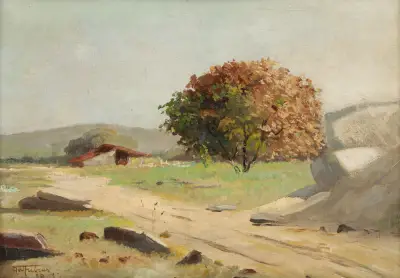
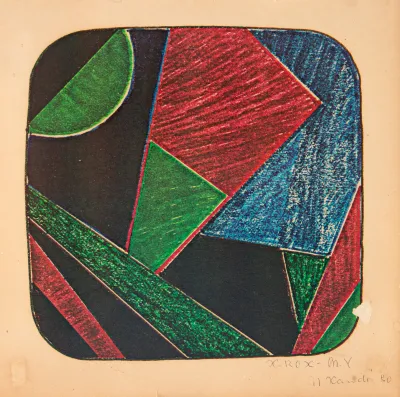
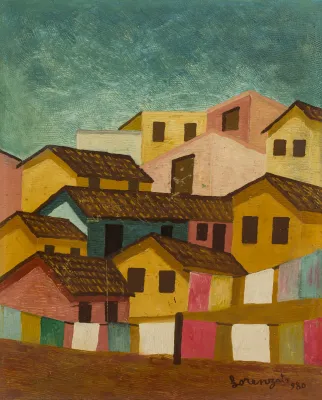
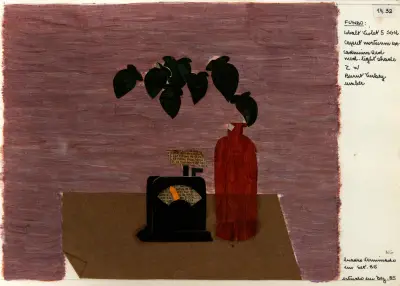
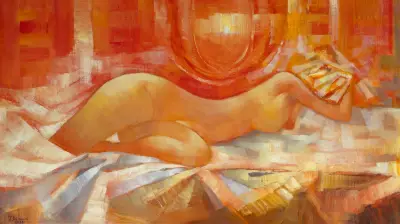
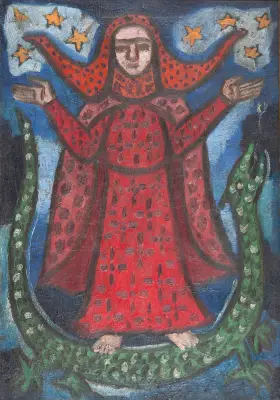
Mário de Andrade was a great collector of paintings, sculptures and prints, but also of folk art, Catholic devotional objects, Afro-Brazilian ritual objects and Indigenous artifacts. His visual arts collection - now at the Instituto de Estudos Brasileiros da Universidade de São Paulo - IEB/USP - includes, among many other works, several portraits given to him by leading modernists such as Anita Malfatti, Tarsila do Amaral, Segall and Portinari. The IEB/USP also holds his library of books, magazines and scores on subjects such as Brazilian modernism, the European avant-gardes, music, folklore and ethnography. The collection includes the main modernist magazines published in the early twentieth century and many art books.
A separate chapter of his literary production is the voluminous correspondence he maintained with Manuel Bandeira (1886 - 1968), Carlos Drummond de Andrade (1902 - 1987), Oswald de Andrade (1890 - 1954), Tarsila do Amaral, Fernando Sabino (1923 - 2004), Augusto Meyer (1902 - 1970) and others.
Notes
1 ANDRADE, Mário. Prefácio interessantíssimo. Pauliceia desvairada. In: ______. Poesias completas. São Paulo: Livraria Martins Editora, 1966.
2 CHIARELLI, Tadeu. De Almeida Jr. a Almeida Jr.: a crítica de arte de Mário de Andrade. 1996. 512p. Tese (Doutorado) - Escola de Comunicações e Artes da Universidade de São Paulo - ECA/USP, São Paulo, 1996. p.132 a 154.
3 ANDRADE, Mário de. O Movimento Modernista. In: BERRIEL, Carlos E. O (org). Mário de Andrade hoje. São Paulo: Editora Ensaio, 1990. p. 26.
4 ANDRADE, Mário de. Aspectos das artes plásticas no Brasil. 3.ed. Belo Horizonte: Itatiaia, 1984. (Obras completas de Mário de Andrade, 12).
Critiques
"The cosmopolitan concern [of Mário de Andrade], following the great urban transformations of the early century, corresponds to the avant-garde phase, the mask of the 'harlequinate troubadour', the sentimental and mocking poet who embodies the spirit of modernity and its contradictions; the concern with an exact knowledge of the country and its potential corresponds to the image of the scholar who compiles uses and customs (seeking to understand them and organize them into a great unity), the mask of the 'diligent poet'; the concern with the structural changes of 1930, which for the bourgeoisie meant the realignment and readjustment of its forces into a new balance, corresponds to the image of the writer torn between many paths, the multiple poet, the very mask 'of diversity' in search of unity; the concern with the successive crises of hegemony faced by the State in the years immediately after the revolution corresponds to the image of crisis (or the crisis of the image?), the mask of a tormented intimacy made of mutilations and mismatches, a kind of 'mirror without reflection'; the concern with class struggle, which flourished in the 1930s and which the bourgeoisie resolved through dictatorship and the betrayal of its egalitarian principles, corresponds to the last face drawn by the poet, the figure of a protesting conscience, the mask of the political poet".
João Luiz Lafetá
Lafetá, João Luiz [1986]. Figuração da intimidade: imagens na poesia de Mário de Andrade. p. 15-16.
"The poetic process that characterizes Mário's mature work is mysterious, intentionally oblique and therefore difficult. Thought always surfaces camouflaged by symbols, metaphors, substitutions - an impenetrable device for those without a deeper knowledge of both Brazilian reality and the writer's biography. Indeed, one of the references of his poetic code is Brazil, which he seeks to grasp at various levels: in the semantic and syntactic variations of the language, in the traditional processes of erudite and popular poetics, in the images and metaphors he draws from external reality - the native city where he lived, the much wider world of the country's geography, history and complex culture. And as the other reference of the code is the artist's tormented self, the poetry results in a reality at once wild and refined, primitive and rational, collective and secret, which does not shy away from scrutiny but is always disguised behind a multiplicity of masks".
Gilda de Mello Souza
Souza, Gilda de Mello e, apres. [1988]. In: Andrade, Mário de. Os melhores poemas. p. 10-11.
"Between 1923 and 1926 there are few images - relatives and friends in Araraquara and in São Paulo. A concern with framing in snapshots and poses matures, some of them set up by himself. During the trip to the Amazon, the photographer truly emerges in the fullness of his creative eye, combined with a search for technical precision. Having rechristened the camera, Brazilian-style, 'Codaque', the Apprentice Tourist invents the verb 'fotar' [to photo]. Attentive, he tests the possibilities of an art new to him, until recently admired only in the work of others, in cinema, or in the modern magazines from France and Germany, which also presented the work of English, Australian and American photographers. (...) The extraordinary ability to see, to convey photographically and even cinematically the visual elements of the landscape, consolidates the camera eye in the text. At the same time, the photographer devotes himself to the art. He knows that imagining is not enough and that a good result depends on applying the right techniques. He immediately notes down his working procedures, later transferring the data to the back of the printed photos: time, light, aperture. He records dates and places precisely. The gradations of light, the shadows, the reflection and transparency of the waters, the landscape, the beauty of a movement merge with sensations; tones, smells and sounds overwhelm the chronicler".
Telê Ancona Lopez
Mário de Andrade: fotógrafo e turista aprendiz. São Paulo: Instituto de Estudos Brasileiros, 1993, p. 111 e 113.
Collections
Coleção de Artes Visuais do Instituto de Estudos Brasileiros - IEB/USP - São Paulo SP
Posthumous Exhibitions
1971 - Rio de Janeiro RJ - Release of the LP Mário de Andrade In Memoriam Poesia e Som [Mário de Andrade In Memoriam: Poetry and Sound], celebrating the 50th anniversary of the Semana de Arte Moderna (Festa Disco label)
1990 - São Paulo SP - Mário de Andrade: Turista e Fotógrafo na Amazônia [Mário de Andrade: Tourist and Photographer in the Amazon], at Associação Pró Parque Modernismo
1992 - São Paulo SP - Eu Sou Trezentos, sou Trezentos e Cincoenta [I Am Three Hundred, I Am Three Hundred and Fifty], at CCSP
1993 - Poços de Caldas MG - Coleção Mário de Andrade: o modernismo em 50 obras sobre papel [Mário de Andrade Collection: Modernism in 50 Works on Paper], at Casa da Cultura
1993 - São Paulo SP - 100 Masterpieces from the Mário de Andrade Collection: Painting and Sculpture, at IEB/USP
1993 - São Paulo SP - Launch of the book Mário de Andrade: fotógrafo e turista aprendiz [Mário de Andrade: Photographer and Apprentice Tourist], by IEB/USP
1993 - São Paulo SP - Mário... Um Homem Desinfeliz [Mário... An Unhappy Man], video by Adilson Ruiz celebrating the centenary of the writer's birth, conceived and produced by Itaú Cultural
1998 - São Paulo SP - Do Catálogo [From the Catalog], at IEB/USP
1999 - São Paulo SP - Brasileiro Que Nem Eu. Que Nem Quem? [Brazilian Like Me. Like Whom?], at Faap
2001 - São Paulo SP - Trajectory of Light in Brazilian Art, at Itaú Cultural
Source: Itaú Cultural