Juraci Dórea Falcão (Feira de Santana BA 1944)
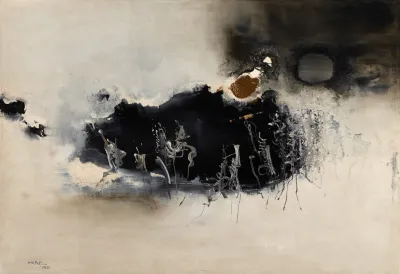
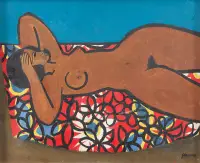
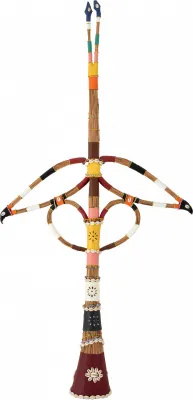
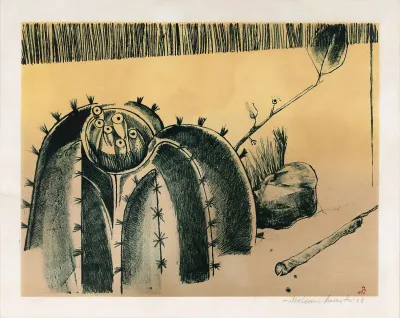
Juraci Dórea Falcão is a sculptor, painter, designer, photographer and visual programmer. He graduated in Architecture from the Federal University of Bahia (UFBA) in 1968. In the 1980s, he started the Terra project, aimed at the creation of large sculptures in leather and wood, in addition to murals in the Bahian hinterland. During this period, he was awarded a grant to support the production of plastic artists, offered by the Ivan Serpa/MEC/Funarte/Inap/Capes contest, in Rio de Janeiro. In 1990, he carried out the Canudos project, at the Castro Alves Theater and at the Cocorobó dam, in Salvador, in collaboration with Washington Falcão.
Criticism
"(...) (...) 'to make an art without urban references and show it in the very environment that inspired it, the sertão'. situating, in rural areas, issues that have long concerned the producers and ideologues of an essentially urban art. Unusual billboards among goats, lean oxen and xiquexiques´, or painting their murals on old walls of adobe or mud in some lost corner of the sertão, Juraci Dórea is performing, in his own way, 'Public art', taking to practice an old dream of museologists, the 'Outdoor Museum', as well as participating, in its space, in the new muralist outbreak, today a worldwide phenomenon. And like the Mexicans, in the past, and the Chicans, today, use the mural to talk about things close to the real that surrounds local populations, their traditions, habits, myths and legends".
Frederico Morais
Morais, Frederico The popular and sertaneja art of Juraci Dórea: a utopia?. Salvador, Cordel, 1987. (Documents,4).
"Here is the true land of cacti. Here is the backlands of Juraci Dórea. the same one portrayed by Euclides: stage for the most absurd war in our history. Canudos, a citadel of ragged warriors, today submerged in the waters of the Vaza-Barris, just a blue landscape between small mountains. There the artist stuck crude sticks, covered them with some soles, tied them firmly and dropped them in time. They didn't even bother the birds: there was nothing strange. The sertão was really that: rough sticks, dry leathers, abandonment. Here is Juraci Dórea's proposal. An art for no one, we would think. Because a vernissage in such a hall, next to natures like mandacarus, the xiquexiques, the friar's heads, the tie, the paddles, and more lizards, scorpions, jararacas, Teús, agoutis, seems not to address anyone. (...) only in part. that purest part of an intention. what we would call ideal. In fact, this proposal was brought to the presence of people: roadsides, terreiros, street markets. And the people - people of the place, tabaréus - made it the most varied use, in line with their nature: they tied animals, they leaned back for prose, they undid it to make Loros, or admired the 'unstudy' of the Artist".
Antônio Brasileiro
Brazilian, Antônio. Juraci Dórea: The Sertão de Juraci Dórea. In: Bienal Internacional de São Paulo, 19. , 1987. General catalog. P. 132.
"(...) The cowboys initially appeared in their oil paintings. Then he started working on leather, a series he called Jacuipe's banners. (...) His first sculptures were made still close to Feira de Santana, in the middle of the pasture, in a place called Tapera, outside the city. Then he began to install some in Monte Santo. Finally, with the Ivan Serpa scholarship award, from Funarte, Juraci was able to continue with his work by making sculptures even in the shallows of Catarina. Alongside these leather sculptures, a parallel work began to be developed from 1984 onwards. He began to paint panels on the rammed earth wall that makes the wall of the houses in the caatinga. Some of these paintings he had already done on canvas but they seem like curious medieval friezes, they resemble cordel drawings, but at the same time they have their own identity - they are scenes of many characters, seen in profile, in a very rhythm alignment and almost always with a little color treatment and a lot of use of white and black".
Justino Marinho
Marinho, Justino. Juraci Dórea: Formas no Sertão. Galeria: Revista de Arte, São Paulo: Area Editorial, n. 9, p. 88-90, 1988.
"There is Juraci's originality. his art of the sertão stay in the sertão. Being a hunter and hunting. be hunger and food. It is the character being his own narrator with sertão and sertanejo integrated in this dialogue that goes beyond a mere aesthetic concept, even if the sertão becomes the sea and these sculptures have a room at the São Paulo International Biennial and represent Brazil at the Venice Biennial. The aesthetic concept of the sertão, until when? Drought, poverty, misery, and this art, popular in its means and materials, continues to be, translates comfort, affirms the complaint and says of the daily material environment of the sertanejo and the sertão of Bahia. Transforming into a poetic object does not change that leather is a livelihood and the rods, the countryside landscape of the sertanejo. transforming itself into a poetic object, leather and rods, it just says: the sertão is never sea."
Claudius Portugal
Portugal, Claudius. Juraci Dórea. Exu, Salvador: Casa de Jorge Foundation Amado, N. 33, 1993. Insert.
"Just as no individual lives isolated and independent of the rest of the world, society is also ideally present in the spirit of the artist when he creates. By appropriating all this imaginary of the backlands of Brazil, transforming it into pure art and presenting it at fairs, porches, markets or painting murals on murals on rat and adobe walls, or even putting their Sculptures-Totems in desert and lonely places, Juraci Dórea performs a public, open art, with direct interference from man and of his own time (which acts by modifying his sculptures), materializing, possibly, an interior project of his own, of occupying all the spaces of the earth (utopia?) to signal to man that art plays a unifying role and that the work of art must be an instrument for peace and fraternity among peoples".
Eduardo Evangelista
Evangelista, Eduardo. Juraci Dórea. In: Dórea, Juraci. Juraci Dórea. N. P.
Individual exhibitions
1962 - Feira de Santana BA - Individual, at the Arnold Silva Municipal Library
1965 - Salvador BA - Individual, at the USIS gallery
1973 - Salvador BA - Individual, at the Bahia Artistic and Cultural Heritage Foundation
1980 - Feira de Santana BA - Individual, at the Regional Museum
1980 - Salvador BA - individual, at MAM/BA
1984 - Feira de Santana BA - Individual, in the cattle field
1985 - Feira de Santana BA - Terra - Juraci Dórea, traveling exhibition sponsored by Desenbanco
1985 - Canudos BA - Terra - Juraci Dórea, traveling exhibition sponsored by Desenbanco
1985 - Raso da Catarina BA - Terra - Juraci Dórea, traveling exhibition sponsored by Desenbanco
1985 - Monte Santo BA - Terra - Juraci Dórea, traveling exhibition sponsored by Desenbanco
1996 - Lisbon (Portugal) - Individual, at Espaço Oikos
1999 - Paris (France) - Project Terre
Collective exhibitions
1978 - Rio de Janeiro RJ - 1st National Salon of Visual Arts, at MNBA
1979 - São Paulo SP - 15th International Biennial of São Paulo Paulo, at the Bienal Foundation
1979 - São Paulo SP - Playful Sculpture Exhibition, at MASP - Award for Best Show of the Year, for APCA
1979 - Vitória ES - 5 Bahian artists, at the Espírito Santo Cultural Foundation
1980 - Curitiba PR - 37th Salão Paranaense, at Teatro Guaíra
1980 - Salvador BA - Proposal 80, at MAM/BA
1981 - Rio de Janeiro RJ - 4th National Salon of Plastic Arts, at MAM/RJ
1983 - Curitiba PR - 5th Brazilian Drawing Exhibition, at the Guaíra Theater
1983 - Feira de Santana BA - Four Days of Art, at Clube de C. Cajueiro
1983 - Recife PE - 36th Salão de Artes Flásticas, at the Pernambuco State Museum - José Gomes Figueiredo Acquisition Award and the José Gomes Figueiredo Award, for the set of works
1983 - São Paulo SP - Contemporary Artists of Bahia, at MAC/USP
1984 - Belo Horizonte MG - 16th National Art Salon, at MABH
1984 - Feira de Santana BA - Collective, in the cattle field
1984 - Fortaleza CE - 7th National Salon of Plastic Arts
1984 - Recife PE - 37th Plastic Arts Salon - Acquisition Award
1984 - Rio de Janeiro RJ - 1st FotoNordeste, at Funarte
1984 - Rio de Janeiro RJ - 7th National Salon of Plastic Arts, in the MAM/RJ
1985 - Atami (Japan) - 7th Exhibition of Fine Arts Brazil-Japan
1985 - Kyoto (Japan) - 7th Exhibition of Fine Arts Brazil-Japan
1985 - Recife PE - 38th Salon of Plastic Arts
1985 - Rio de Janeiro RJ - 7th Exhibition of Fine Arts Brazil-Japan, at the Brazil-Japan Foundation
1985 - Rio de Janeiro RJ - Velha Mania: Brazilian design, at EAV/Parque Lage
1985 - Santa Cruz BA - Collective - Itinerant
1985 - Santa Rosa BA - Collective - Itinerant
1985 - Pedra Vermelha BA - Collective - itinerant
1985 - Acaru BA - Collective - Itinerant
1985 - Monte Santo BA - Collective - Itinerant
1985 - São Paulo SP - 3rd São Paulo Contemporary Art Salon, at the Bienal
1985 - São Paulo SP - 7th Exhibition of Fine Arts Brazil-Japan, at the Brazil-Japan Foundation
1985 - Tokyo (Japan) - 7th Fine Arts Exhibition Brazil-Japan
1986 - Belo Horizonte MG - 18th National Art Salon, at the Belo Horizonte Museum of Art
1986 - Camaçari BA - 1st METANOR SALON/COPENOR of Visual Arts of Bahia, NA METANOR/COPENOR
1986 - Curitiba PR - 43rd Salão Paranaense - Awarded
1986 - Curitiba PR - 7th Brazilian Drawing Exhibition, at MAC/PR
1986 - Fortaleza CE - 1st Exhibition International Ephemeral Sculptures
1986 - Recife PE - 36th Plastic Arts Salon
1986 - Salvador BA - Tropical Imaginary, at the Bahia Art Office
1987 - Feira de Santana BA - Octahedro, at the Raimundo Oliveira Gallery
1987 - São Paulo SP - 19th São Paulo International Biennial, at the Bienal Foundation
1988 - Salvador BA - 1st Bahian Salon of Plastic Arts, in the MAM/BA
1988 - São Paulo SP - 15 years of the Brazil-Japan Fine Arts Exhibition, at the Mokiti Okada M.O.A. Foundation.
1988 - Venice (Italy) - 43rd Bienal de Venice
1989 - Havana (Cuba) - 3rd Havana Biennial
1990 - Salvador BA - Canudos, NA Fiat
1991 - Brasília DF - Art - The eternal recycling, at the Historical Institute and Geographic of the Federal District
1991 - São Félix BA - 1st Bienal do Recôncavo, at the Dannemann Cultural Center
1992 - Salvador BA - The religiosity in contemporary Bahian art, at Galeria Acbeu
1993 - Feira de Santana BA - Inauguration of the Banco do Brasil Cultural Space
1994 - Salvador BA - 1st MAM/BA Salon of Plastic Arts, at MAM/BA
1995 - Feira de Santana BA - Artists from Bahia, at Espaço Cultural Ponto do Livro
1996 - Lisbon (Portugal) - Painting and sculpture of the Northeast of Brazil, at Espaço Oikos
1997 - Salvador BA - A toast to the café, at Espaço Cafelier
1998 - Paris (France) - Bahia to Paris: Arts Plastiques d'Aujourd'hui, at Galerie Debret
1998 - Salvador BA - Tropicália 30 years: 40 Bahian artists, at MAM/BA
1999 - Curitiba PR - Arte-Arte Salvador 450 years, at the Cultural Foundation of Curitiba. Solar do Barão
1999 - Rio de Janeiro RJ - Arte-Arte Salvador 450 years old, at the Historical Museum of the City of Rio de Janeiro
1999 - Salvador BA - 100 plastic artists from Bahia, at the Museum of Sacred Art
1999 - Salvador BA - Arte-Arte Salvador 450 years old, at MAM/BA
Source: Itaú Cultural