Inimá de Paula (Itanhomi MG 1918 - Belo Horizonte MG 1999)
Pintor and Designer.
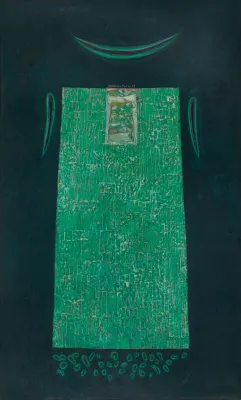
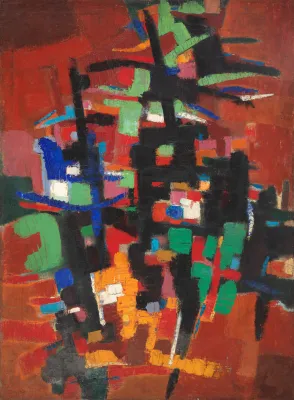
From 1937, he frequents the Antônio Parreiras nucleus, in Juiz de Fora, Minas Gerais. In 1940, he settled in Rio de Janeiro, enrolling in the classes of Argemiro Cunha (1880-1940) at the Liceu de Artes e Ofícios in Rio de Janeiro, which he leaves in a short time. He starts painting with some of the former members of Núcleo Bernardelli. In 1944, he moved to Fortaleza, where he meets local artists and participates in the creation of the Ceará Society of Plastic Arts (SCAP). Return to Rio de Janeiro in 1945 and exhibits with Aldemir Martins (1922-2006), Antonio Bandeira (1922-1967) and Jean-Pierre Chabloz (1910-1984), at the gallery ASKANASY. In 1948, thanks to the support of Candido Portinari (1903-1962), he made his first individual show at the Instituto dos Arquitetos do Brasil (IAB/RJ). In 1950, he won the prize for traveling to the country of the National Salon of Fine Arts (SNBA) and, the following year, traveled and exhibited in Bahia. In 1952, he received the award for travel abroad from the National Salon of Modern Art (SNAM). In Paris, between 1954 and 1956, he attended courses at the Académie de la Grande Chaumière and the École Normale Supérieure des Beaux-Arts. Then he follows the classes of André Lhote (1885 - 1962) and Gino Severini (1883-1966). When he returns, he starts to make abstract paintings, some of which are shown at the 5th Bienal de São Paulo. In the first half of the 1960s, he moved to Belo Horizonte and resumed figurative painting. In 1998, the Inimá de Paula Foundation was created in Belo Horizonte.
Critical Comment
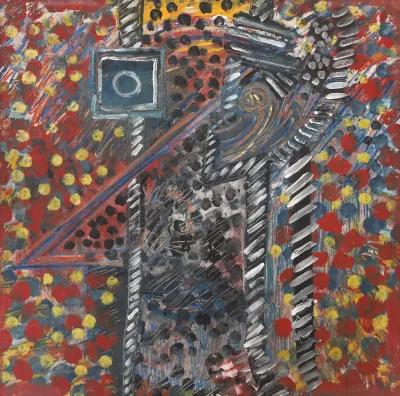
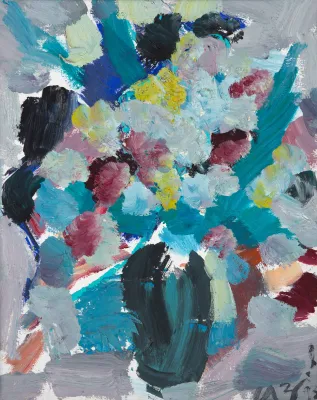
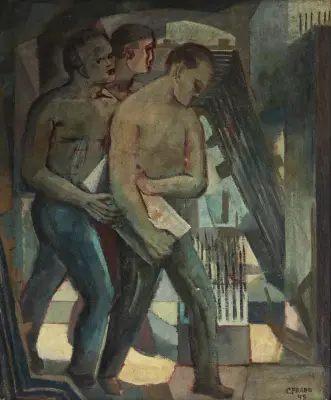
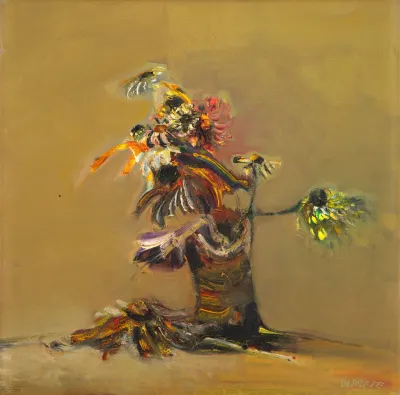
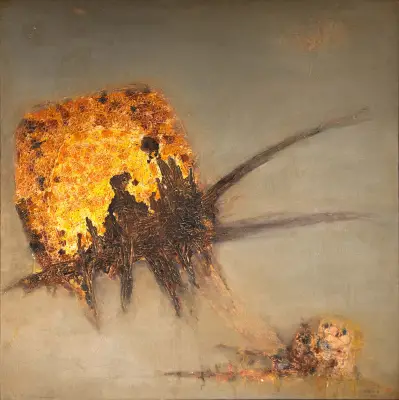
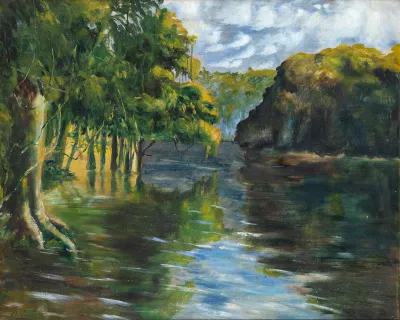
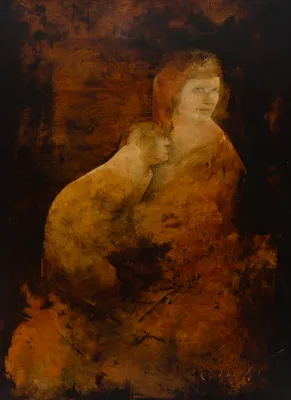
Inimá is known as "the Brazilian fauve"1 due to the strong and vibrant colors with which it paints and which are indeed a striking feature. of your work. They are red, blue, yellow and green that look pure and are inscribed on the screen with vigorous movements. In some cases, he recalls Henri Matisse (1869-1954) de la Plage Rouge (1905) and, in others, Expressionism. as in the Navy Pequeno Porto (1987), all of intense colors, or even in some self-portraits, in which vigorous traces and dark colors give disturbance to the figure.
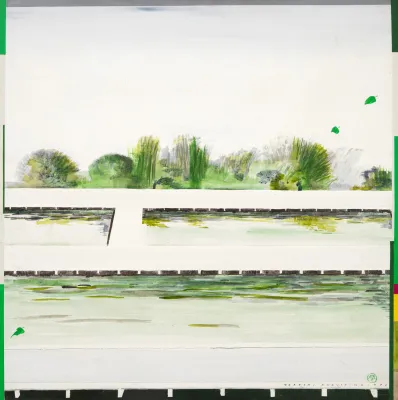
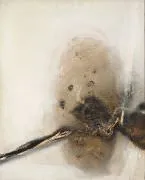
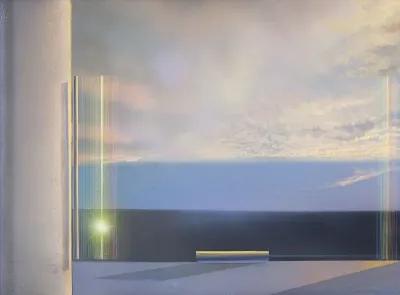
However, throughout his career, Inimá also performs works in which the Whites and grays dominate. Whether in the urban landscapes of Santa Teresa, or in the Ceará navy, or later in the mining views, white is used as a color, giving even more tranquility to the scenes already practically devoid of action. Many critics emphasize this aspect.2
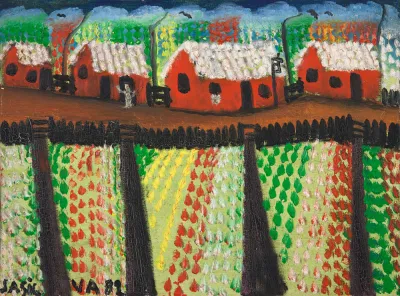
Another point that usually defines the work of Inimá is the predominance of the landscape, specifically the urban one. The combination of architecture and nature allows the painter to make very balanced compositions, in which he tends to cover most of the canvas, leaving little space for the sky, alternating the colors organized in the house with the color spots of the vegetation.
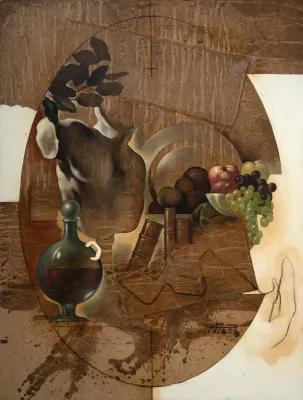
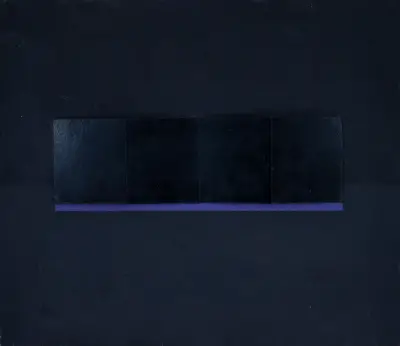
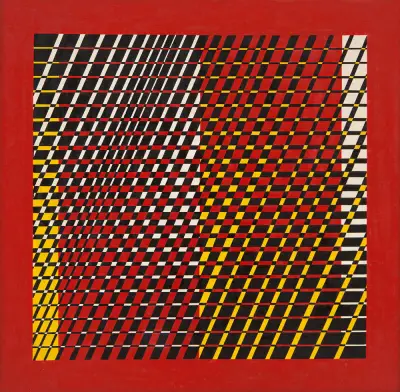
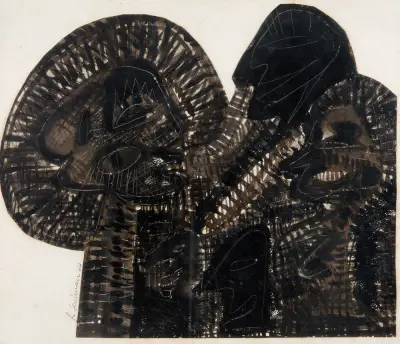
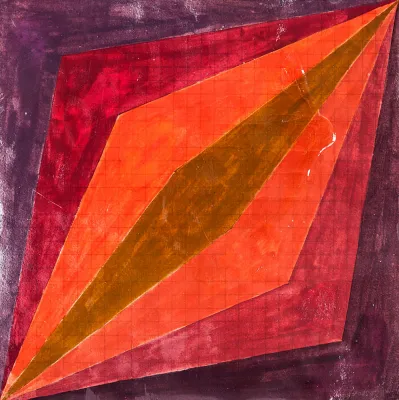
However, he also paints portraits, still lifes and abstract compositions. Still lifes reveal the influences of Paul Cézanne (1839-1906) and Matisse, both in the lines and in the colors and in the objects. Its abstract period is varied, encompassing more cubist compositions that maintain a remnant of figure, and more informal ones.
Notes
1Morals, Frederico. Inima de Paula. Rio de Janeiro: L. Christiano, 1987, p. 15.
2MORAIS, Frederico. op cit., p. 23 and, for example, Rubens Navarra in Sampaio, Renato. Inima. Belo Horizonte: RONA, 1999, p. 172.
Criticism
"(...) Inimá has remained expressionist, throughout her artistic career, with the only exception of an abstract phase, resulting from her stay in Paris. (...) Permanence in Rio, Inimá painted urban landscapes of Guanabara, especially the centenary houses of the new city and Santa Teresa. (...) These paintings, followed by some portraits, are the most representative works of this expressionist period of the painter. (...) he is then concerned, above all, with the schema of space and the geometric representation of nature, according to the ideas of his master. (...) Coming from Europe, Inimá returned to Minas, having settled between Belo Horizonte and Ouro Preto. The crisis of abstraction was already evident in Europe (...). The expressionist tendency would soon rise in the early days of this new lap to the figuration, marked shortly after by a surprising revaluation of the object. The Minas Gerais landscapes of Inimá, especially those of Ouro Preto, differ from the paintings of Guignard. (...) But, if Guignard's solutions are almost always pictorial, those of Inimá have other designs in view, including spatial or architectural orders, although the artist is also concerned with imposing a subjectivity on the composition, obeying, in this regard, the a characteristic of expressionist painters. Finally, in its second phase, the carioca, (...) the art of Inimá is enriched and its landscapes are more varied (...)"
Antônio Bento
CAVALCANTI, Carlos; AYALA, Walmir, Org. Brazilian Dictionary of Plastic Artists. Presentation by Maria Alice Barroso Brasília: MEC/INL, 1973-1980. (Specialized Dictionaries, 5).
"With the exception of the long period of work in abstractionism, During most of the 1950s and the beginning of the following, the miner Inimá de Paula has been conserving a natural tendency towards a mixture of fovismo and expressionism, through which it involves its favorite themes: the landscape and the portrait. As Antônio Bento noted, it is possible that this basic propensity has developed more intensely from the years spent in Ceará, even when he started his career as a painter after a brief learning in Juiz de Fora and Rio. Contrasts and violence that would be reflected in the scenographically dramatized aspects of the portraits, in the luminosity of the Minas Gerais and Rio landscapes of various phases or in the matisseanly intense and lyrical interiors of other moments. Even the years of non-figurative language - at first dominated, under the stimulus of studies with André Lhote, in Paris, for the search for constructive discipline, and later transferred to the area of tachism - ended up serving as a dynamo to densify the entire previous structure fauve-expressionist that defines it. More recently, this foundation has led to paintings where the landscape is subjected to wide and serious brushstrokes of boiling colors, with a predominance of greens, reds, blues and whites, without their limits of cubist origin, however, disguised. altogether, although they increasingly tend to disperse in the gestural effort. (...)"
Roberto Pontual
Pontual, Roberto. Contemporary Brazilian Art: Gilberto Chateaubriand Collection. Translation by John Knox; Florence Eleanor Irvin. Presentation by Pereira Carneiro. Rio de Janeiro: Jornal of Brazil, 1976.
"You cannot properly speak of phases in the painting of Inimá de Paula. Or, at least, they are not well-delimited thematically and formally. At most, one can circumscribe its production to its geographical displacements, even so precariously, because, above them, is the artist's own state of mind. There is no sequential or linear development of themes and color in your work. The color sometimes bursts furiously amid long periods of predominance of whites and ashes, and this does not depend on the place where it is. Likewise, in his abstract phase, he did not fail to paint figurative works. (...)
However, the most visible and at the same time the most profound brand is Fovismo, which is fully affirmed in its last phase, that of Minas Gerais. Through Fovismo and his approach to Kaminagai's painting, he is linked to the Paris school, but without losing its Brazilian roots. When Inimá says that she has always been an expressionist, it is necessary to understand the meaning of her statement well. It may be a reference to more dramatic moments in his painting, such as the Carioca period of 1967/1968, or he is using the term in its broadest sense, which defines Expressionism as a permanent trend in the history of art, which reappears from time to time, whenever There is a crisis, whether aesthetic, moral, political or economic. In other words, expressionism would be the pole of the crisis, as opposed to the pole of construction, of which Cubism is an example. Crisis and construction or emotion and rigor would be, then, the two fundamental aspects of the history of art, each of them harboring different schools, isms, tendencies. Within this broader perspective, Fovismo integrates the expressionist aspect. Or, it can be said that he is one of his roots, alongside Die Brücke and Blau Reiter, born in Germany, homeland par excellence of expressionism.
(...) Vibrate atmosphere for color. As he says: 'Work the painting without hurting him, spontaneously, fluidly, one brushstroke, another, another, but without losing the meaning of the form, always seeking the resonance and vibration of the color'. "
Frederico Morais
MORAIS, Frederico. The work. In: ___. Inimá de Paula. Rio de Janeiro: L. Christiano, 1987. p. 65, p. 68, P. 112.
Testimonies
"I love to paint people and landscapes. When I can't paint naturally, outdoors, for whatever reason, I take pictures and go to the easel. Of course, the final work has nothing to do with the photograph itself, because it has been changed. Sometimes I put people in my landscapes and always due to compositional problems and when they are absolutely indispensable. But, anyway, the landscape is always bigger and stronger than the man on my screens".
Inimá de Paula to the afternoon newspaper, 1982
PAULA, Iinimá de. Landscapes. In: Morais, Frederico. Inimá de Paula. Presentation of Israel Pedrosa. Rio de Janeiro: L. Christiano, 1987. p. 78
Individual exhibitions
1948 - Rio de Janeiro RJ - Individual, in the Hotel Copacabana Palace
1948 - Rio de Janeiro RJ - Individual, at IAB/RJ
1948 - Rio de Janeiro RJ - Individual, at MEC
1948 - Salvador BA - Individual, in the gallery Oxumaré
1949 - Rio de Janeiro RJ - Individual, at Galeria Montmartre
1954 - Rio de Janeiro RJ - Individual, at Galeria Montmartre
1954 - Rio de Janeiro RJ - Individual, MEC
1959 - Belo Horizonte MG - Individual, at Galeria Dantez
1961 - Belo Horizonte MG - Individual, at Galeria Penguim
1962 - Rio de Janeiro RJ - Individual, Picolla Galeria do Instituto Di Cultura
1965 - Rio de Janeiro RJ - Individual, at the National Library
1965 - Rio de Janeiro RJ - Individual, at Galeria Barcinski
1965 - Rio de Janeiro RJ - Individual, at Galeria G4
1965 - Rio de Janeiro RJ - Individual, at the Macunaíma/Funarte Gallery
1966 - Belo Horizonte MG - Individual, at the Grupiara Gallery
1966 - Belo Horizonte MG - Individual, at Galeria Penguim
1967 - Belo Horizonte MG - Individual, at Galeria Guignard
1967 - Belo Horizonte MG - Individual, at IBEU
1967 - Belo Horizonte MG - Individual, at MAP
1968 - Belo Horizonte MG - Individual, at Galeria Guignard
1970 - Rio de Janeiro RJ - Individual, at the Copacabana Palace Hotel
1971 - Belo Horizonte MG - Individual, at Colégio Santa Dorotéia
1974 - Belo Horizonte MG - Individual, at the Royal Art Gallery
1974 - Rio de Janeiro RJ - Individual, at Vernissage Art Gallery
1975 - Brasília DF - Individual, at the Art Gallery Performance
1976 - Belo Horizonte MG - Individual, at Galeria Caminito Artes e Presentes
1977 - Brasília DF - Individual, at Oscar Seraphico Art Gallery
1977 - Rio de Janeiro RJ - Individual, at Banco América del Sul S. A.
1978 - Belo Horizonte MG - Individual, at AMI Art Gallery
1978 - Salvador Ba - Individual, at Kattya Art Gallery
1981 - Belo Horizonte MG - Inimá de Paula: 43 years of painting, at AMI Art Gallery
1982 - Rio de Janeiro RJ - Individual, in reality Art Gallery
1982 - São Paulo SP - Individual, at the Portal Art Gallery
1983 - Rio de Janeiro RJ - Individual, at the Bonino Gallery
1984 - Rio de Janeiro RJ - Individual, at the Bonino Gallery
1985 - Belo Horizonte MG - Retrospective, at MAP
1985 - Brasília DF - Individual, at the Art Gallery Performance
1985 - São Paulo SP - Retrospective, at MAM/SP 
1986 - Rio de Janeiro RJ - Landscapes and Brazilian marines, at Villa Bernini Galeria
1988 - Belo Horizonte MG - Individual, at Chromos Art Gallery
1989 - Belo Horizonte MG - Inimá de Paula: Recent Works, at the Lloyds Cultural Space Bank
1993 - Salvador BA - Inimá, at the MCR Galeria de Arte
1996 - Brasília DF - Individual, at Royal Art - Art Gallery
1997 - Belo Horizonte MG - Retrospective, at Palácio das Artes
1998 - Belo Horizonte MG - Individual, at Galeria Inimá
1998 - Belo Horizonte MG - Individual, at Fundação Inimá de Paula
1998 - Rio de Janeiro RJ - Retrospective, at MNBA
Collective exhibitions
1945 - Rio de Janeiro RJ - Grupo Cearense, at the Askanazy Gallery
1946 - Rio de Janeiro RJ - The painters go to the people's school, at Enba
1946 - Rio de Janeiro RJ - 52nd National Salon of Fine Arts, at MNBA
1947 - Rio de Janeiro RJ - 53rd National Salon of Fine Arts - Modern Division, at the MNBA - Honorable Mention
1948 - Fortaleza CE - 4th Salon of April - 1st Prize
1948 - Rio de Janeiro RJ - 54th National Salon of Fine Arts, at the MNBA - Silver Medal
1949 - Rio de Janeiro RJ - 55th National Salon of Fine Arts - Modern Division, at the MNBA - Silver Medal
1949 - Salvador BA - 1st Baiano Salão de Belas Artes, at the Hotel Bahia
1950 - Rio de Janeiro RJ - 56th National Salon of Fine Arts, at the MNBA - Travel Award for the Country
1950 - Salvador BA - 2nd Bahia Fine Arts Hall, at Belvedere da Sé - Silver Medal
1951 - Fortaleza CE - 4th Salão Cearense de Belas Artes - Gold Medal
1951 - Rio de Janeiro RJ - 57th National Salon of Fine Arts, at MNBA
1951 - Rio de Janeiro RJ - Exhibition of dead natures, at the Food and Social Security Service
1951 - São Paulo SP - 1st International Biennial of São Paulo, at the Trianon Pavilion
1952 - Feira de Santana BA - 1st Exhibition of Modern Art of Feira de Santana, at Banco Econômico
1952 - Rio de Janeiro RJ - 1st National Salon of Modern Art - Travel Award abroad
1952 - Rio de Janeiro RJ - Exhibition of Brazilian Artists, at MAM/RJ
1952 - Rio de Janeiro RJ - 1st National Salon of Modern Art, at MAM/RJ
1953 - Belo Horizonte MG - Salon of Fine Arts of the City of Belo Horizonte
1954 - Belo Horizonte MG - Salão de Belas Artes of the City of Belo Horizonte
1954 - Goiânia GO - Exhibition of the National Congress of Intellectuals
1954 - Rio de Janeiro RJ - Black and White Salon, at the Palácio da Cultura - Travel Award abroad
1954 - Salvador BA - 4th Bahia Salon of Fine Arts, at the Bahia Hotel - Silver Medal
1955 - Rio de Janeiro RJ - 4th National Salon of Modern Art - Hors-Concours
1956 - Belo Horizonte MG - 11th Salon of Fine Arts of the City of Belo Horizonte - Award/Painting
1956 - Rio de Janeiro RJ - 1st Salon Ferroviário, at the Ministry of Education and Culture  - 1st Prize/Painting
1957 - Buenos Aires (Argentina) - Modern Art in Brazil, at the Museum of Modern Art in Buenos Aires
1957 - Lima (Peru) - Modern Art in Brazil, at the Museo de Arte de Lima
1957 - Rosario (Argentina) - Modern Art in Brazil, at the Municipal Museo de Bellas Artes Juan B. Castagnino
1957 - Santiago (Chile) - Modern Art in Brazil, at the Museo de Arte Contemporáneo de Santiago
1958 - Rio de Janeiro RJ - Eight contemporary artists, at the Macunaíma Gallery
1958 - Rio de Janeiro RJ - Salão de Arte A Mãe and the child
1958 - Rio de Janeiro RJ - Salão do Mar
1959 - Leverkusen (Germany) - First collective exhibition by Brazilian artists in Europe
1959 - Munich (Germany) - first collective exhibition of Brazilian artists in Europe, at Kunsthaus.
1959 - New York (United States) - Inter-American Cultural and Artistic Competition, at Ceceille Art Gallery - 1st Prize
1959 - São Paulo SP - 5th São Paulo International Biennial, at the Ciccilo Matarazzo Sobrinho Pavilion
1959 - Vienna (Austria) - First collective exhibition of Brazilian artists in Europe
1960 - Hamburg (Germany) - First collective exhibition of Brazilian artists in Europe
1960 - Lisbon (Portugal) - First collective exhibition by Brazilian artists in Europe
1960 - Madrid (Spain) - First collective exhibition by Brazilian artists in Europe
1960 - Paris (France) - First collective exhibition of Brazilian artists in Europe
1960 - Utrecht (Holland) - First collective exhibition of Brazilian artists in Europe
1960 - Utrecht (Holland) - First collective exhibition by artists Brazilians in Europe
1961 - Rio de Janeiro RJ - Rio in Brazilian painting, at the State Library of Guanabara
1963 - Belo Horizonte MG - Belo Horizonte City Hall of Fine Arts - 2nd Prize
1963 - Rio de Janeiro RJ - The landscape as theme, Galeria Ibeu Copacabana
1966 - Brasília DF - 3rd Federal District Modern Art Salon - Guest Artist
1966 - Rio de Janeiro RJ - Self-portraits, at IBEU Copacabana
1968 - Florianópolis SC - 1st National Exhibition of Plastic Arts, at MASC
1969 - São Paulo SP - 1st Panorama of Current Brazilian Art, at MAM/SP
1972 - São Paulo SP - Art/Brazil/Today: 50 years later, at the Collectio Gallery
1973 - Atami (Japan) - 1st Exhibition of Fine Arts Brazil-Japan
1973 - Brasília DF - 1 Brazil-Japan Fine Arts Exhibition
1973 - Brasília DF - Celebration of the 107th anniversary of the Battle of Riachuelo, at the Hotel Nacional Brasília
1973 - Osaka (Japan) - 1st Exhibition of Fine Arts Brazil-Japan
1973 - Rio de Janeiro RJ - 1st Exhibition of Fine Arts Brazil-Japan
1973 - São Paulo SP - 1st Exhibition of Fine Arts Brazil-Japan
1973 - Tokyo (Japan) - 1st Exhibition of Fine Arts Brazil-Japan
1974 - Belo Horizonte BH - 2nd Global Winter Salon, at the Palace of the Arts
1974 - Tokyo (Japan) - Brazilian painters In Japan
1975 - Japan - 2nd Brazil-Japan Fine Arts Exhibition, at the State Legislative Assembly Hall
1975 - New York (United States) - Collective, at Genaile Art Gallery Inc. 1975 - Rio de Janeiro RJ - 2nd Exhibition of Fine Arts Brazil-Japan, at Centro Lume
1975 - São Paulo SP - 2nd Exhibition of Fine Arts Brazil-Japan, in the Hall of the State Legislative Assembly
1976 - Belo Horizonte MG - Mural exhibitions of the municipal schools of Belo Horizonte
1977 - São Paulo SP - 3rd Exhibition of Fine Arts Brazil-Japan
1977 - Rio de Janeiro RJ - 3rd Exhibition of Fine Arts Brazil-Japan
1977 - Tokyo (Japan) - 3rd Exhibition of Fine Arts Brazil-Japan
1979 - São Paulo SP - 4th Exhibition of Fine Arts Brazil-Japan
1979 - Tokyo (Japan) - 4th Exhibition of Fine Arts Brazil-Japan
1979 - Kyoto (Japan) - 4th Exhibition of Fine Arts Brazil-Japan
1979 - Atami (Japan) - 4th Brazil-Japan Fine Arts Exhibition
1981 - Atami (Japan) - 5th Brazil-Japan Fine Arts Exhibition
1981 - Belo Horizonte MG - 8th Global Winter Hall, at Palácio das Artes
1981 - Belo Horizonte MG - Arte de Minas in featured, at Palácio das Artes
1981 - Belo Horizonte MG - Six artists from Minas, at AMI Art Gallery
1981 - Brasília DF - 5th Brazil-Japan Fine Arts Exhibition
1981 - Kyoto (Japan) - 5th Brazil-Japan Fine Arts Exhibition
1981 - Nekai (Japan) - 5th Fine Arts Exhibition Brazil-Japan
1981 - Rio de Janeiro RJ - 5th Exhibition of Fine Arts Brazil-Japan
1981 - São Paulo SP - 5th Exhibition of Fine Arts Brazil-Japan
1981 - São Paulo SP - 8th Global Winter Salon at MASP
1981 - Tokyo (Japan) - 5th Brazil-Japan Fine Arts Exhibition
1982 - Belo Horizonte MG - Collective of Brazilian painters, at Gauguin Galeria de Art
1983 - Atami (Japan) - 6th Exhibition of Fine Arts Brazil-Japan
1983 - Kyoto (Japan) - 6th Exhibition of Fine Arts Brazil-Japan
1983 - Rio de Janeiro RJ - 6th Exhibition of Fine Arts Brazil-Japan, at MNBA
1983 - Rio de Janeiro RJ - 6th National Salon of Plastic Arts, at MAM/SP
1983 - São Paulo SP - 14th Panorama of Current Brazilian Art, at MAM/SP
1983 - São Paulo SP - 6th Brazil-Japan Fine Arts Exhibition, at MAM/SP
1983 - Tokyo (Japan) - 6th Exhibition of Fine Arts Brazil-Japan
1984 - Rio de Janeiro RJ - Brazilian painting active, at Espaço Petrobras
1984 - São Paulo SP - Tradition and rupture: synthesis of Brazilian art and culture, at the Bienal Foundation
1985 - Atami (Japan) - 7th Exhibition of Fine Arts Brazil-Japan
1985 - Kyoto (Japan) - 7th Exhibition of Fine Arts Brazil-Japan
1985 - Rio de Janeiro RJ - 7th Exhibition of Fine Arts Brazil-Japan, at the Brasil-Japan Foundation for Plastic Arts
1985 - Rio de Janeiro RJ - Six decades of modern art: Roberto Marinho Collection, at the Paço Imperial
1985 - São Paulo SP - 7th Brazil-Japan Fine Arts Exhibition, at the Mokiti Okada Foundation - MOA
1985 - Tokyo (Japan) - 7th Exhibition of Fine Arts Brazil-Japan
1986 - Rio de Janeiro RJ - War Times: International Hotel, at the Banerj Art Gallery
1986 - Rio de Janeiro RJ - War Times: Pensão Mauá, at the Banerj Art Gallery
1987 - São Paulo SP - The craft of art: painting Sesc
1988 - São Paulo SP - 15 years of the exhibition of Fine Arts Brazil-Japan, at the Mokiti Okada Foundation
1989 - Lisbon (Portugal) - Six decades of Brazilian modern art: Roberto Marinho Collection, at the Foundation Calouste Gulbenkian. José de Azeredo Perdigão Modern Art Center
1989 - São Paulo SP - Thirty-three ways to see the world, at Ranulpho Art Gallery
1990 - Goiânia GO - 20 years of the Museum of Art of Goiânia, at the Museum of Art
1990 - São Paulo SP - 6th Brazilian Art Salon, at the Mokiti Okada Foundation
1991 - Fortaleza CE - SCAP: 50 years, at the Imperial Othon Palace Hotel
1992 - Rio de Janeiro RJ - 1st on the way to Niterói: João Sattamini Collection, at the Imperial Palace
1992 - Rio de Janeiro RJ - Eco Art, at MAM/RJ
1992 - São Paulo SP - 7th Brazilian Salon de Arte, at Fundação Mokiti Okada - MOA
1994 - São Paulo SP - Bienal Brasil Século 20th, at Fundação Bienal
1994 - São Paulo SP - Guignard: 50 years of an art school, at the Vidyã
1995 - Belo Horizonte MG - Inaugural Exhibition Nuance Art Gallery, at Nuance Art Gallery
1995 - São Paulo SP - Brazil-Japan Art, at the Mokiti Okada Foundation - MOA
1996 - Rio de Janeiro RJ - Visions of Rio, at MAM/RJ
1998 - Belo Horizonte MG - Art Encontro-Brazil/Portugal: a moment of convergence, at the Mineiro Museum
1999 - São Paulo SP - A Resacralization of Art, at Sesc/Pompéia
Posthetic exhibitions
2000 - Fortaleza CE - Inimá de Paula: The Brazilian Fauve, at Galeria Oboé Financeira
Source: Itaú Cultural