
Eduardo Sued (Rio de Janeiro RJ 1925)
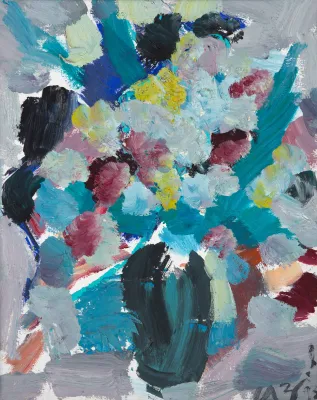
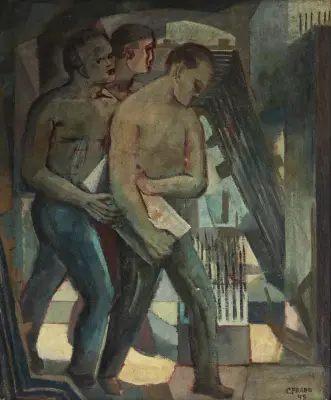
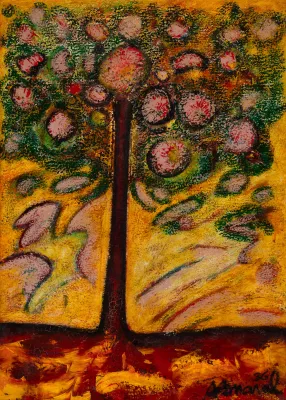
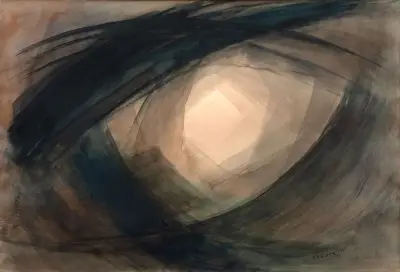
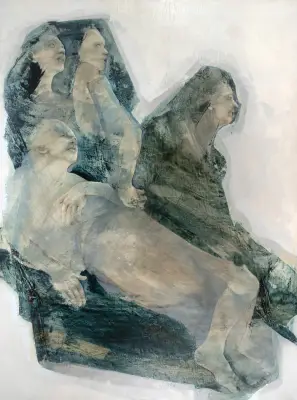
Eduardo Sued is a painter, engraver, illustrator, draftsman, stained-glass writer and teacher. He graduated from the National School of Engineering of Rio de Janeiro in 1948. The following year, he began his studies of drawing and painting with Henrique Boese (1897-1982). Between 1950 and 1951, he worked as a draftsman at the office of the architect Oscar Niemeyer (1907). In 1951, he traveled to Paris, where he attended the La Grande Chaumière and Julian academies. During his stay in the French capital, he had contact with the works of Pablo Picasso (1881-1973), Joan Miró (1893-1983), Henri Matisse (1869-1954) and Georges Braque. (1882-1963). He returned to Rio de Janeiro in 1953 and started to attend the studio of Iberê Camargo (1914-1994) to study metal engraving, later becoming his assistant. Teaching drawing and painting at the Escolinha de Arte do Brasil and, the following year, he moved to São Paulo, where he taught drawing, painting and engraving classes at Fundação Armando Álvares Penteado (FAAP) from 1958 to 1963. In 1964, He returned to live in Rio de Janeiro and published the album of Águas-Fortes 25 Engravings. Sued was not linked to any movement, keeping away from the artistic debates of the time. His career included a brief figurative phase, followed by the transition to geometric abstraction. In the 1970s, he approached the constructive aspects, developing his work based on the reflections on Piet Mondrian (1872-1944) and the Bauhaus. Between 1974 and 1980, he taught metal engraving at the Museum of Modern Art in Rio de Janeiro (MAM/RJ). 1946 to 1948 The National School of Engineering in Rio de Janeiro. In 1949, he began training as a plastic artist in the free course of painting and drawing by the German painter Henrique Boese (1897 - 1982). From 1950 to 1951, he collaborates as an Architectural Designer at Oscar Niemeyer's office (1907). With the money from the sale of some watercolors, he left for Paris in 1951, remaining there until 1953. During his stay in France he came into direct contact with the works of the École de Paris, by Pablo Picasso (1881 - 1973), Joán Miró (1893 - 1983), Henri Matisse (1869 - 1954) and Georges Braque (1882 - 1963). As a student, he frequents the academics Julian and de la Grande Chaumière, which more than schools were places where students freely expressed themselves through drawing and painting. Back in Brazil, he begins a course in metal engraving with Iberê Camargo (1914 - 1994), later becoming his assistant in the studio. About this contact, the artist says: "Iberê was a serious artist, dedicated, a model for me". (1970) and the International Engraving Biennial (1970), in Poland. In 1956, he began his career as a teacher of drawing, painting and engraving in metal, an activity that leaves 1980. His interest in large chromatic areas and the search for more plasticity lead him to dedicate himself more and more exclusively to painting in the middle of the years. 1960.
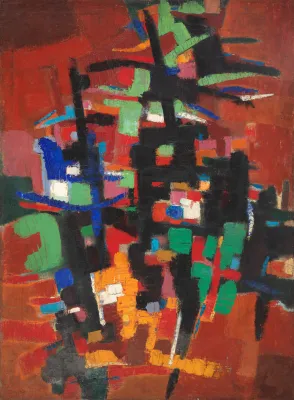
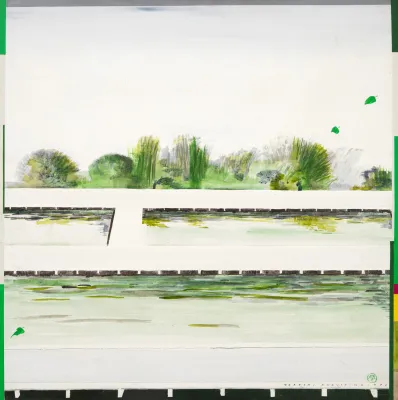
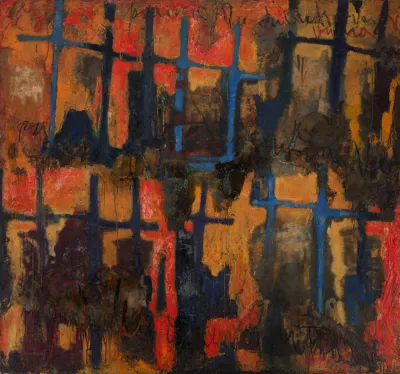
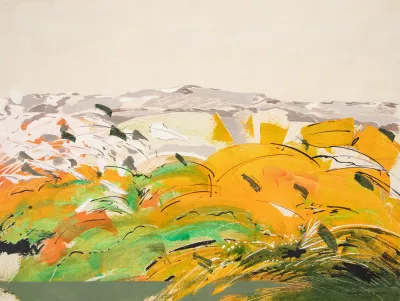
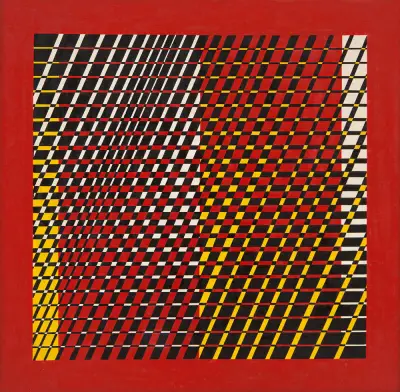
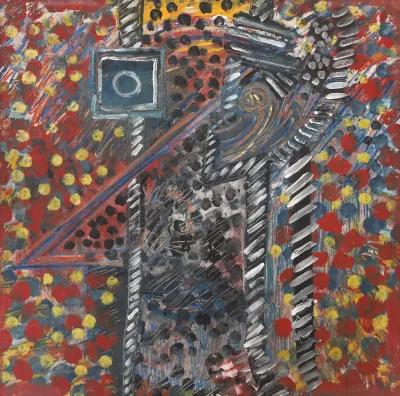
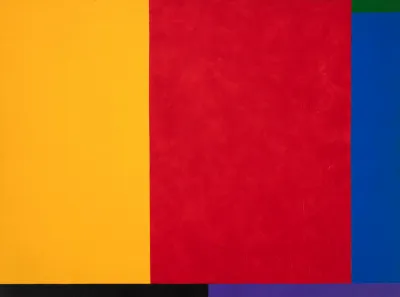
He believes in painting How to make intellectual, solitary and meditative. Therefore, the one who, in the view of the critic Ronaldo Brito "is the great disinhibitor of abstract languages, of constructive origin, in modern Brazilian painting"1 does not actively participate in any movement, remaining out of the disputes between concrete and neoconcrete 1950 and also the discussions on the new figuration of the 1960s. His abstract poetics is formed little by little, in constant and reflected dialogue with the tradition of modern international and Brazilian painting. After a brief period of figurative production, Sued conquered in the early 1970s the safe mastery of constructive language from the reflection on Piet Mondrian (1872 - 1944) and the Bauhaus. However, it is an updated constructivism and not the immediate application of the postulates of artists from the beginning of the 20th century. On the other hand, at the national level, it is concerned with expanding "Brazilian constructive painting without losing the productive conflict introduced by the neoconcretes", as the critic Paulo Sérgio Duarte evaluated. Brazilian. In his works he manages to overcome the intimate character that permeates the work of some of our best modern painters, such as Alfredo Volpi (1896 - 1988) and Milton Dacosta (1915 - 1988), for example. Sued breaks with the local color of figurative traces, with the reminiscent and personal atmosphere by which the use of geometric elements in these artists is marked. On canvas of "monumental" dimensions by the standards of the history of Brazilian art, it projects out the space of the painting through the precise, rigorous and "impersonal" structuring of the surface of the canvas in varied fields of color. This movement to the exterior occurs both in huge almost monochromatic panel paintings and in works that bet on the vibrant tension between different chromatic fields organized according to a geometry "outside the axes", creating a frenetic rhythm, in which the flat surface seems to pulsate.
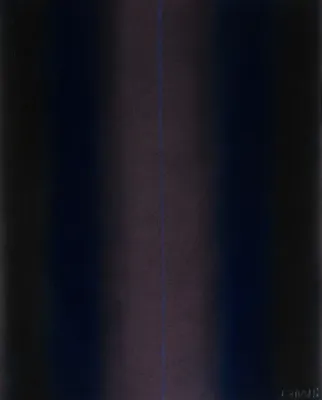
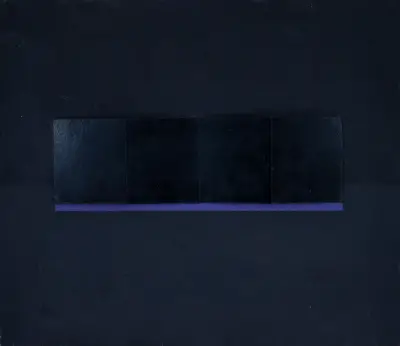
It is noted that in more than 30 years of production, Eduardo Sued did not crystallize his abstract language in preconceived structures. For him, "trying is accepting the challenge of doubt. I am a painter as an artist who experiments". This exercise is expressed in a trajectory that constantly reinvents its challenges and solutions. The canvases, developed since the 1980s, of vast gray or black areas interspersed precisely by colored bands, in a sober but vibrant game of expansion and containment, stand out in the set of this work. In the mid-1990s, Sued introduces new elements in his work, such as aluminum paint and thick and discontinuous brush strokes so that the surface looks "almost carved", in addition to returning to the bond, present in the 1960s and 1970. Such compositions present an accurate reflection on the relationships between light, surface, space and time in painting, reaffirming once again the artist's position as a constant "disinhibitor" in Brazilian art.
Notes
1 Ronaldo Brito has been following the work of Eduardo Sued since the 1970s, being the one who wrote the most about the artist. This statement was made in 1998 in the text The Contemporary Thought of Color, written for the catalog of the exhibition Eduardo Sued: Paintings 1980-1998, held at the Hélio Oiticica Arts Center, in Rio de Janeiro.
Criticism
"Paint, as Merleau-Ponty notes, will always and ultimately restore the question of meaning, to be in the world. Investigate the body in its first joints, before becoming an instrument of a will. revisit it no longer as the subject's support, but as its condition. And then, inevitably, the gaze ceases to be the unequivocal point of view of the subject in front of the object to appear as an incessant, indefinite movement, where they meet and lose themselves subject and object. Painter is someone who chose to exist in the midst of this whirlwind. Someone who throws his own body in the task of 'looking at the true look' - what put the world and puts us in it. Sued's painting practice is immersed in this phenomenological questioning. an object, put a screen thing in the real to represent it or interpret it. There is nothing prior to the screen, but neither does it have the power to spread an idea of the world. What there is is a process, a problem place - a pulsating field that, in the midst of objects, seems to go beyond them, cross them and, in front of the subject, has the strength to face it and deny it as pure ideality". Ronaldo Brito
BRITO, Ronaldo. Eduardo Sued. In: São Paulo International Biennial, 16.,1981, São Paulo, SP. General Catalog Introduction Walter Zanini. São Paulo: Fundação Bienal de São Paulo, 1981. P. 34.
"Few times the work of a Brazilian artist knew how to incorporate with such greatness the dilemmas and impasses of contemporary art as the work of Eduardo Sued. Never, as today, the old constituent elements of the painting have faced such an adverse situation: colors that do not bring any doubt in the background about the veracity of their appearance, can hardly arise with authenticity; Structures and forms need, at each moment, to stop their tendency to lead everything to a good order - inevitably false in our days - without, however, failing to structure and formalize; Formats fluctuate uncertainly between their physical extension and the sensitive dimension of the works, with verticals that do not ascend and horizontal that do not rest; And even the inks move, indecisive, between the neutrality of simple placement and the insinuance of the object. In short, we live in a world that has made the perception so problematic that any univocal understanding or simply enthusiastic about pictorial elements can pass through naivety, when it does not run the risk of being just hypocrisy".
Rodrigo Naves
NAVES, Rodrigo. Evidence and dissolution. In. Precision: Amilcar de Castro, Eduardo Sued, Waltercio Caldas. Rio de Janeiro: Centro Cultural Banco do Brasil, 1994. p. 65 [Text published Originally in the catalog Galeria Luisa Strina. São Paulo, 1989.]
"The artist confesses that 'the choice of colors is secret. they come naturally'. When Sued finishes a work, everything is 'right', everything is 'correct'. But underneath the apparent calmness, the tension created by the combination of colors, by the symmetry outside the axis, by the line that interrupts, that dynamizes, that echoes, forces us to question, to reflect and to ask the picture that appears inside the painting in a refined exercise of perception. It often seems as if the color, in its expansion, would vent the limits of the screen, and it is then that Sued creates a rigorous structure that contains it on the sides, at the top and at the base. It places a line that composes but also intends, dynamizes (line and color of an almost irritating, indisputable precision). Sometimes it puts a track with a different tone, with different rhythms and silences or of another color that retains the expansion of the previous one, which 'swallows' when this color is black".
Irma Arestizábal
Arestizábal, Irma. A Linha e a Cor. In. Precision: Amilcar de Castro, Eduardo Sued, Waltercio Caldas. Rio de Janeiro: Centro Cultural Banco do Brasil, 1994. P. 11.
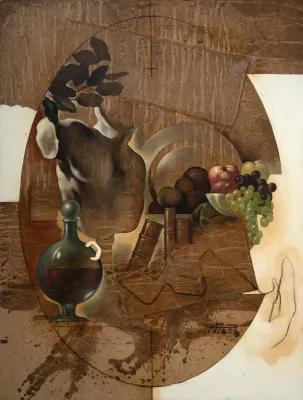
"It moves away from a pure rationalist project to get closer and closer to an empirical exercise where surprises occur such as cut-off elements, masks and foreign materials that gradually come to be incorporated into the painting. Now, the elements that add to the screen come to a certain brutalism. It is a courageous symbolic violence practiced by the language of this painting. First, with regard to his own story that he never ceases to question. And this questioning does not occur through evasive questions, a questioning by the edges, but through a confrontation, sometimes brutal, with itself, as if always wondering about its own limits. Second, it marks and delimits a field of tension within contemporary painting itself and its relations with the history of modern art.
(...)
Works such as Eduardo Sued's own are the poetic evidence of how the time of modern culture works. The complex notion of history that is embedded in the work, sees time much more as the geological cut of the layers that accumulate, each one on the other, each presenting its own characteristics and successive discontinuities in relation to the others. Their poetic vigor and power undoubtedly reside in this ability to capture the characteristics of modern time and incorporate them as the very method of painting. The more it advances in the search for its own limits, the more it visually mobilizes the historical elements of its past". Sued. São Paulo: São Paulo Art Gallery, 1999. P. 6-7.
"Also adept at constructive issues, Eduardo Sued arrives at a constructivism by a different path from that of Lygia Pape. He states that Klee, Picasso and Mondrian condition his perception, allowing him to understand freedom in approaching things from space, always susceptible, therefore, of reassessment. Thinking since the 1940s the works of Bauhaus artists, after their return from the European study trip in the mid-1950s, he began to organize his knowledge. Therefore, Eduardo Sued does not align himself with the discussions of the Concretists and Neoconcretists in Rio de Janeiro; Its direction is different, always averse to norms. For Sued, mathematics is a model of clarity of thought and discipline applied to form, which does not, however, imply that its production of works is assisted by the same mathematics. Sued builds, in the 1960s, works that he classifies under the name 'dialectical constructivism', in which, as in his pictorial work, he denies the appearances of vision". Laudanna
Kossovitch, Leon and Laudanna, Mayra. Abstract-concrete. In: Engraving: Brazilian art of the 20th century. São Paulo: Itaú Cultural : Cosac & Naify, 2000, p. 20.
Testimations
"Color is a formative element, fundamental in my work. The question about the Land of Lights leads me to considerations prior to the events of modernity, when the painting was a docile reflection of nature. Each region has its luminosity. It is known that light is given to us by colors; Through them we would then talk about the luminosity of São Paulo, Venice, Madrid, Nice, etc. It could not be understood that the luminosity of the North of Brazil, for example, was interpreted by dark colors. The appearance of the independent painter, from the 19th century onwards, made the issue color and light, and its interrelation, eminently unusual or even disconnected, exempts the artist from any references, consultations or loans. He is free to the extent of his work, in the urgency of his doing. Therefore, despite the strong luminosity of the country, the concern for color depends mainly on the artist as a viewer of his own interiority. which allows the artist to impregnate with singular lights things or situations apparently arbitrary, being able, for example, to translate the colors of the river by the saturated tones of magentas, greens, blues, yellows-oranges, whites and blacks".
Eduardo Sued
Eduardo Sued. Interview Lúcia Carneiro, Ileana Pradilla Rio de Janeiro: Nova Aguilar, 1998, (Artist's Word Collection) P.55.
Individual exhibitions
1968 - Rio de Janeiro RJ - Individual, at the Bonino Gallery
1970 - Rio de Janeiro RJ - Eduardo Sued: Painting and Collage, at Prisma Galeria de Arte
1974 - Rio de Janeiro RJ - Individual, at the Luiz Buarque de Holanda and Paulo Bittencourt Gallery
1982 - Rio de Janeiro RJ - Individual, at Espaço ABC/Funarte, at MAM/RJ
1982 - São Paulo SP - Individual, at Galeria Luisa Strina
1983 - Rio de Janeiro RJ - Individual, at the Thomas Cohn Gallery
1984 - São Paulo SP - Individual, at the Art Office Raquel Arnaud
1986 - Rio de Janeiro RJ - Individual, at the Thomas Cohn Gallery
1987 - Rio de Janeiro RJ - Individual, at the Thomas Cohn Gallery
1989 - São Paulo SP - Individual, at Galeria Luisa Strina
1990 - Rio de Janeiro RJ - Individual, at GB-Arte
1992 - Rio de Janeiro RJ - Individual, at Paço Imperial
1993 - São Paulo SP - Individual, at the Art Office Raquel Arnaud
1994 - Rio de Janeiro RJ - Individual, in the MNBA. Gallery of the 21st Century
1995 - Curitiba PR - Individual, at Casa da Imagem
1997 - Rio de Janeiro RJ - Individual, Atelier Finep, at Paço Imperial
1998 - Rio de Janeiro RJ - Eduardo Sued: Paintings 1980-1998, at the Hélio Oiticica Art Center
1999 - Rio de Janeiro RJ - The engraving and drawings, at the Chácara do Céu Museum
1999 - Rio de Janeiro RJ - Eduardo Sued: Collages, at Galeria Paulo Fernandes
1999 - São Paulo SP - Eduardo Sued: Paintings, Installation, Collages, at Galeria São Paulo
2000 - Rio de Janeiro RJ - Eduardo Sued: Small format, paintings, at Galeria Ostupas Directs
2003 - São Paulo SP - Individual, at Marília Razuk Art Gallery
2004 - Rio de Janeiro RJ - The painting experience, at CCBB
2005 - São Paulo SP - Individual, at Marília Razuk Art Gallery
Collective exhibitions
1953 - Paris (France) - Salon des Travaux Publics, at the Galerie Metro Beaux-Arts
1958 - São Paulo SP - press conference Grassman, Gruber and Darel
1962 - São Paulo SP - Marcelo Grassmann, Eduardo Sued, Oswaldo Goeldi and Darel, at the Residence Gallery
1964 - Rio de Janeiro RJ - Collective, at Petite Galerie
1967 - Rio de Janeiro RJ - 3rd The face and the work, at the Ibeu Copacabana Gallery
1968 - Brasília DF - Brazilian engraving, at the Encontro Gallery
1970 - Krakow (Poland) - 3rd International Engraving Biennial
1970 - Rio de Janeiro RJ - Collective, at Galeria Delaparra
1970 - Rio de Janeiro RJ - Collective, at Galeria Espaço
1970 - San Juan (Puerto Rico) - Bienal de San Juan del Grabado Latinoamericana y del Caribe
1971 - Biella (Italy) - International Engraving Award
1971 - Helsinki (Finland) Brazilian engraving, at Galeria Pinx
1971 - São Paulo SP - Collective, at Collectio Gallery
1972 - São Paulo SP - Art/Brazil/Today: 50 years later, at the Collectio Gallery
1973 - Rio de Janeiro RJ - Four Brazilian recorders, at Galeria Grupo B
1973 - Rome (Italy) - Brazilian graphic today, at the Casa do Brasil gallery
1975 - Rio de Janeiro RJ - Brazilian art, MAM/RJ
1976 - Buenos Aires (Argentina) - 20 Brazilian artists, at the Centro de Arte y Comunicación
1978 - Caracas (Venezuela) - Four Brazilian artists, at Fundación Eugenio Mendonza
1978 - Rio de Janeiro RJ - 3rd Art Now: Latin America, Sensitive Geometry, at MAM/RJ
1981 - Porto Alegre RS - Brazilian artists from the 60s and 70s in the Rubem collection Knijnik, at the space at Galeria Chaves
1981 - São Paulo SP - 16th São Paulo International Biennial, at the Bienal Foundation
1981 - São Paulo SP - Contemporary Brazilian artists, at the São Paulo Art Gallery
1982 - Lisbon (Portugal) - Brazil 60 Years of Modern Art: Gilberto Chateaubriand Collection, at the José de Azeredo Perdigão Center for Modern Art
1982 - London (England) - Brazil 60 years of modern art: Gilberto Chateaubriand Collection, at Barbican Art Gallery
1983 - Rio de Janeiro RJ - 13 artists/13 works, at Thomas Cohn Contemporary Art
1983 - São Paulo SP - Imaginar o Presente, at Cabinet de Arte Raquel Arnaud
1984 - Niterói RJ - Collective, at the UFF Art Gallery
1984 - Rio de Janeiro RJ - Collective, at the Thomas Cohn Gallery
1984 - Rio de Janeiro RJ - Donations Recents 82-84, at MNBA
1984 - Rio de Janeiro RJ - Brazilian painting active, at Espaço Petrobras
1984 - São Paulo SP - Tradition and rupture: synthesis of Brazilian art and culture, at the Bienal Foundation
1984 - São Paulo SP - Victor Grippo, Hercules Barsotti, Marco do Valle, Eduardo Sued, Carlos Fajardo, at the Art Cabinet
1984 - Venice (Italy) - 41st Venice Biennale
1985 - Porto Alegre RS - Iberê Camargo: trajectory and meetings, at Margs
1985 - Rio de Janeiro RJ - Meetings, at Petite Galerie
1985 - São Paulo SP - Highlights of Brazilian contemporary art, at MAM/SP
1986 - Brasília DF - Iberê Camargo: trajectory and meetings, at the Cláudio Santoro National Theater
1986 - Fortaleza CE - Collective, at Arte Galeria
1986 - Niterói RJ - The order in question, at the Art Gallery UFF
1986 - Porto Alegre RS - Rubem Knijnik Collection: Brazilian Arts 60/70/80, at Margs
1986 - Rio de Janeiro RJ - Collective, at Petite Galerie
1986 - Rio de Janeiro RJ - Iberê Camargo: trajectory and meetings, at MAM/RJ
1986 - São Paulo SP - Collective, at Galeria Luisa Strina
1986 - São Paulo SP - Iberê Camargo: trajectory and meetings, at MASP
1987 - São Paulo SP - 19th São Paulo International Biennial, at the Bienal Foundation
1989 - Rio de Janeiro RJ - Geometry without manifesto, in the cabinet de Arte Cleide Wanderley
1989 - Rio de Janeiro RJ - Rio Hoje, at MAM/RJ
1989 - São Paulo SP - 20th São Paulo International Biennial, at the Bienal Foundation
1989 - São Paulo SP - Gesture and structure, at the Art Office Raquel Arnaud
1990 - Atami (Japan) - 9th Brazil-Japan Contemporary Art Exhibition
1990 - Brasília DF - 9th Brazil-Japan Art Exhibition Contemporary
1990 - Rio de Janeiro RJ - 9th Brazil-Japan Contemporary Art Exhibition
1990 - São Paulo SP - 9th Brazil-Japan Contemporary Art Exhibition, at the Brazil-Japan Foundation
1990 - Sapporo (Japan) - 9th Brazil-Japan Contemporary Art Exhibition
1990 - Tokyo (Japan) - 9th Brazil-Japan Contemporary Art Exhibition
1992 - Niterói RJ - Galeria de Arte UFF: 10 years old, at the UFF Art Gallery
1992 - Rio de Janeiro RJ - 1st on the way to Niterói: João Sattamini Collection, at Paço Imperial
1992 - São Paulo SP - years 60/70: Gilberto Chateubriand Collection/Museum of Modern Art-RJ, at the SESI Art Gallery
1992 - São Paulo SP - Collective, at the Raquel Arnaud Art Office
1994 - Poços de Caldas MG - Unibanco Collection: Exhibition commemorating the 70th anniversary of Unibanco, at Casa da Cultura
1994 - Rio de Janeiro RJ - Precision, at CCBB
1994 - São Paulo SP - Bienal Brasil Século 20, at the Bienal
1995 - Rio de Janeiro RJ - Unibanco Collection: Exhibition commemorating the 70th anniversary of Unibanco, at MAM/RJ
1995 - Rio de Janeiro RJ - Contemporary Challenges, at P. A. Objects of Art
1995 - Rio de Janeiro RJ - Black and White Salon, at MNBA
1995 - Rio de Janeiro RJ - A poetics of reflection, at MNBA
1995 - São Paulo SP - Morandi in Brazil, at CCSP
1996 - Niterói RJ - Brazilian contemporary art at the João Sattamini Collection, at MAC/Niterói
1996 - Rio de Janeiro RJ - Geometry-Rio, at the Paço Imperial
1997 - Rio de Janeiro RJ - Award Johnnie Walker at the MNBA. Sala Século XXI - Awarded
1998 - Londrina PR - Brazilian Art, at UEL
1998 - São Paulo SP - Highlights of the Unibanco Collection, at the Moreira Salles Institute
1998 - São Paulo SP - O Moderno and the contemporary in Brazilian art: Gilberto Chateaubriand Collection - MAM/RJ, at MASP
1998 - São Paulo SP - Os Collectoros - Guita and José Mindlin: matrices and engravings, at the SESI Art Gallery
1999 - Niterói RJ - Rio Engraving Show. Banerj Collection, at the Ingá Museum
1999 - Rio de Janeiro RJ - Exhibition Rio Engravura. Guita and José Mindlin Collection, at the Correios Cultural Space
1999 - Rio de Janeiro RJ - Exhibition Rio Engravura. Brazilian modern engraving: Collection National Museum of Fine Arts, at MNBA
1999 - Rio de Janeiro RJ - Volpi and Sued, at the Ipanema Art Gallery
2000 - Niterói RJ - Paintings in the João Collection Sattamini, at Mac/Niterói
2000 - São Paulo SP - Brazil + 500 Rediscovery Exhibition, at the Bienal Foundation
2000 - São Paulo SP - Investigations. The Brazilian engraving, at Itaú Cultural
2001 - Brasília DF - Investigations. The Brazilian engraving, at Galeria Itaú Cultural
2001 - Penápolis SP - Investigations. The Brazilian engraving, at Galeria Itaú Cultural
2001 - Porto Alegre RS - Liba Collection and Rubem Knijnik: Contemporary Brazilian Art, at Margs
2001 - Rio de Janeiro RJ - The image of the sound of Antônio Carlos Jobim, At Paço Imperial
2001 - Rio de Janeiro RJ - Brazilian Watercolor, at the Light Cultural Center
2001 - Rio de Janeiro RJ - The spirit of our time, at MAM/RJ
2001 - São Paulo SP - O Espírito de Our time, at MAM/SP
2002 - Niterói RJ - Dialogue, Antagonism and Replication in the Sattamini Collection, at MAC/Niterói
2002 - Passo Fundo RS - Engravings: Paulo Dalacorte Collection, At the Ruth Schneider Visual Arts Museum
2002 - Porto Alegre RS - Engravings: Paulo Dalacorte Collection, at the Work Museum
2002 - Rio de Janeiro RJ - The image of the sound of rock pop Brazil, at the Paço Imperial
2002 - Rio de Janeiro RJ - Caminhos do Contemporânea 1952-2002, at Paço Imperial
2002 - São Paulo SP - 10 years Marília Razuk, at Marília Razuk Art Gallery
2002 - São Paulo SP - 28 (+) Painting, at Espaço Virgílio
2002 - São Paulo SP - Geometric and Kinetic, at the Art Cabinet Raquel Arnaud
2002 - São Paulo SP - Map of the Now: Recent Brazilian Art João Sattamini Collection of the Museum of Contemporary Art of Niterói, at the Instituto Tomie Ohtake
2003 - Rio de Janeiro RJ - BrazilianArt Project, at Almacén Art Gallery
2004 - Rio de Janeiro RJ - 30 artists, at the Mercedes Viegas Art Office
Source: Itaú Cultural