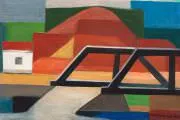

Arnaldo Ferrari (São Paulo SP 1906 - idem 1974)
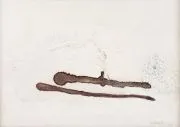
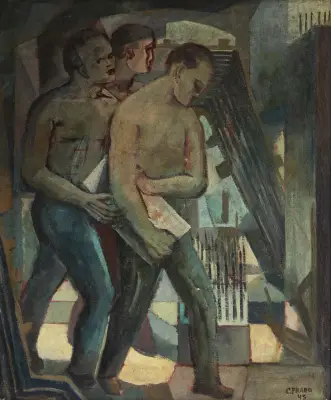
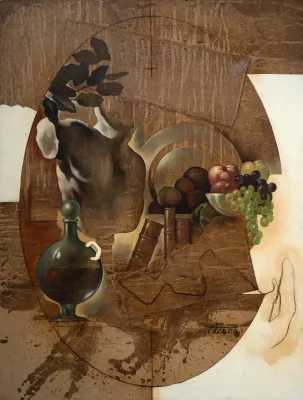
Arnaldo Ferrari was a painter, draftsman and teacher. Following in his father's footsteps, he worked as a decorative painter, making ornamental friezes for homes. He studied decorative arts at the Liceu de Artes e Ofícios de São Paulo between 1925 and 1935. In 1934, he shared a studio with friends in the Santa Helena building and, through his friendship with the painter Mario Zanini (1907–1971), came close to the other members of the Grupo Santa Helena. Like Alfredo Volpi (1896–1988), he made decorations for mansions, devoting himself to painting only sporadically. He also attended the open course in painting and drawing at the Escola Nacional de Belas Artes (Enba), where he studied with Enrico Vio (1874–1960) between 1936 and 1938. His early production shares similarities with that of the Grupo Santa Helena painters, in both themes and compositions, including landscapes of the outskirts of São Paulo, still lifes and nudes. Between 1950 and 1959, he was a member of the Grupo Guanabara, alongside Thomaz (1932–2001), Tomie Ohtake (1913–2015), Tikashi Fukushima (1920–2001) and Oswald de Andrade Filho (1914–1972), among others.
In the mid-1950s, he became interested in the work of the Uruguayan painter Joaquín Torres-García (1874–1949) and began devoting himself to abstract and constructivist painting. In 1975, a retrospective of his work was presented at the Paço das Artes in São Paulo, with a catalog including texts by Theon Spanudis (1915–1986), José Geraldo Vieira (1897–1977) and Mário Schenberg (1914–1990), among others.
Critical Commentary
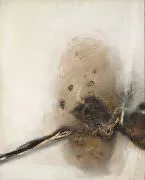
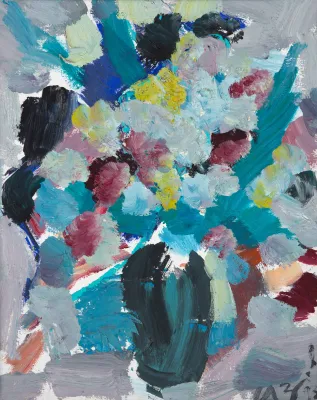
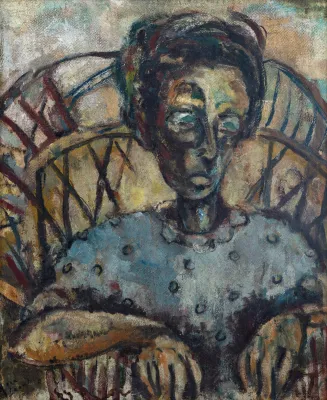
Arnaldo Ferrari studied drawing at the Liceu de Artes e Ofícios between 1925 and 1935. Also around 1930, he attended the open course in drawing and painting at the Escola de Belas Artes de São Paulo, where he studied with Enrico Vio (1874-1960). Until the 1950s, he followed the Grupo Santa Helena, producing still lifes and landscapes of the outskirts of São Paulo marked by great formal simplification and a palette of dark tones.
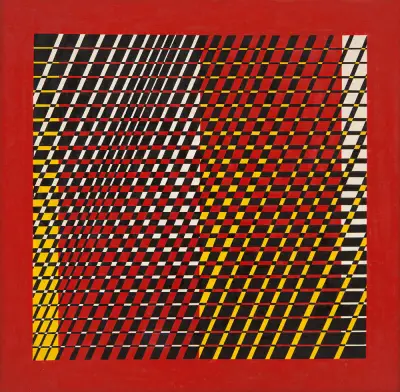
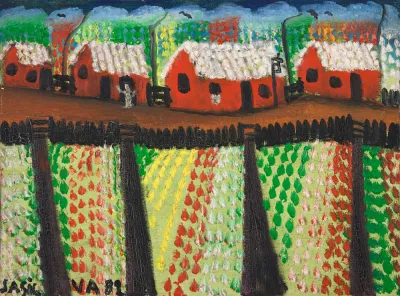
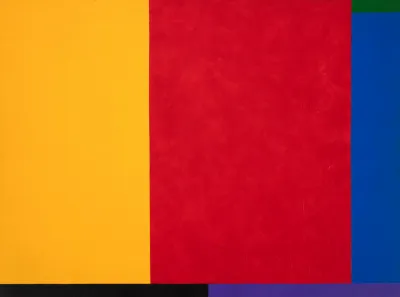
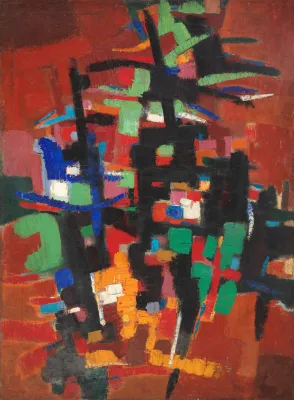
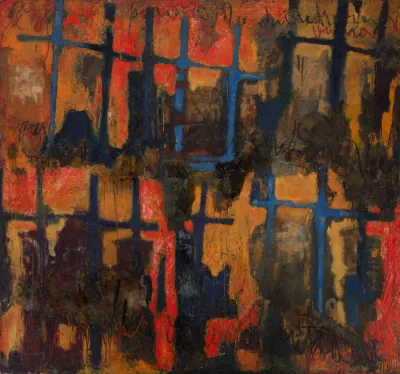
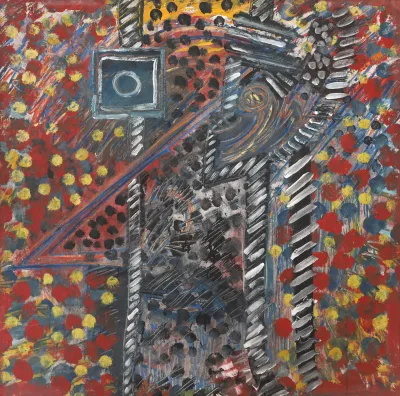
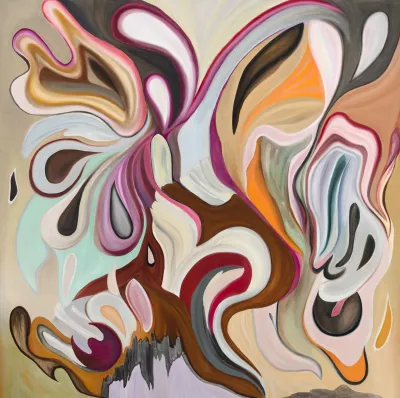
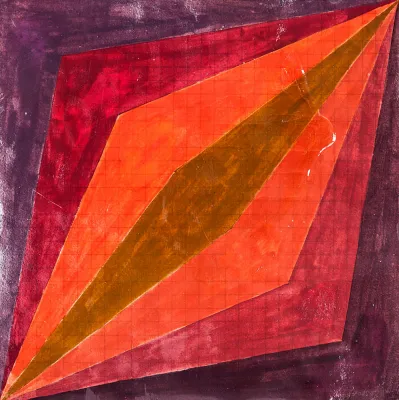
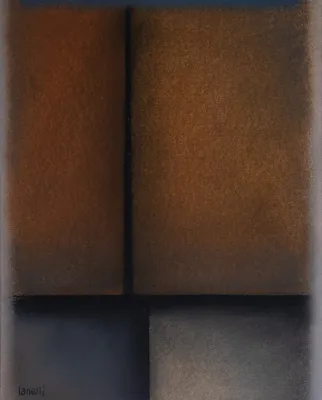
From the mid-1950s on, he drew close to the Grupo Guanabara, also from São Paulo. At that time, he began painting urban landscapes, mainly house façades, whose formal treatment tended increasingly toward abstraction, as in Casario [Row of Houses] (1960) and Igrejas e Casas [Churches and Houses] (1962). His painting became linked to geometric constructivism, revealing his appreciation of the work of the Uruguayan painter Joaquín Torres-García (1874-1949). His works are dominated by a vibrant visual rhythm, produced by the frequency of curves and countercurves or by the play of orthogonals, in carefully composed works. The pictures reveal a strong inner pulse, also created by the use of a dense, deep chromatic range, more profound than striking. In the view of art historian Walter Zanini (1925-2013), the artist's work always shows a spiritualization of everything that makes up his universe.
Critiques
"Cultural connections cannot, however, influence our judgment in considering Arnaldo Ferrari as an artist grounded in himself. His laborious and refined compositions are no less the fruit of primordial impulses, of unconscious or irrational forces. Intuitively, he governs his compositions, organized according to rigorous topological principles, but in which forms, contours and colors finally fall into order as if they had earned the right to their own initiative in finding and defining their most natural dimension. Unfailingly, this painter who discovered himself in full maturity tends toward a dynamic language. It is vibrant not only through the frequency of curves and countercurves and of ascending and descending diagonal lines, but also through the extreme liveliness in the use of primary colors. (...) While there is undeniable vigor in this clear graphic and visual organization, it is no less true that the painter's hidden emotionality takes him far beyond fixation on the visual limits of form. Theon Spanudis speaks of his 'mystical message'. I prefer, more generally, to speak of a spiritualization of everything that makes up his dynamic, yet sober and reflective universe".
Walter Zanini
ARNALDO Ferrari. Apresentação de Walter Zanini. Texto de Daisy Peccinini de Silva. São Paulo: Portal Galeria de Arte, s.d.
"It was in the mid-1950s, stimulated by his knowledge of the 'constructive universalism' of the Uruguayan painter Joaquín Torres García and by the growing predominance of geometric abstraction among us, that Ferrari set out more insistently, first toward the distillation of the real, in landscapes built with few, rarefied elements, and then toward the complete abandonment of the figure, in compositions almost always situated at the meeting point of reason and emotion, of geometry and visceral feeling. (...) He also made sure our eye would never see in his straight lines and curves the absolute precision of ruler and compass, endowing each meeting of areas with a very strong inner pulse, originating in regions beyond the purely mental. He wanted forms to join one another as if in a constant movement of systole and diastole. And to color, of a heavy nature, he gave depth rather than impact. All of this reveals the accord of freedom with order, the synchrony of the emotional with the rational, the union of the intuitive and the constructed, in a painting that is generally dense, thick and pulsating, nourished by earth rather than air. A painting that critics still have the task of discovering and understanding better".
Roberto Pontual
5 Mestres brasileiros. trad. Judith Hodgson. BIEZUS, Ladi. Roberto Pontual. Rio de Janeiro, Kosmos, 1977.
Collections
Coleção Museu de Arte Contemporânea da Universidade de São Paulo - MAC/USP - São Paulo SP
Acervo da Pinacoteca do Estado de São Paulo/Brasil - São Paulo SP
Solo Exhibitions
1961 - Campinas SP - Solo, at Galeria Aremar
1962 - São Paulo SP - Solo, at Clube dos Artistas
1963 - São Paulo SP - Solo, at Galeria Astreia
1964 - São Paulo SP - Solo, at Galeria La Ruche
1964 - São Paulo SP - Solo, at Galeria Novas Tendências
1973 - São Paulo SP - Solo, at Galeria Portal
1969 - São Paulo SP - Solo, at MAC/USP
1969 - Belo Horizonte MG - Solo, at Museu de Arte de Belo Horizonte
1969 - Juiz de Fora MG - Solo, at UFJF
Group Exhibitions
1944 - São Paulo SP - 9th Salon of the Visual Artists' Union, at Galeria Prestes Maia
1949 - São Paulo SP - 15th São Paulo Fine Arts Salon, at Galeria Prestes Maia
1952 - São Paulo SP - 2nd São Paulo Salon of Modern Art, at Galeria Prestes Maia - silver medal
1954 - Goiânia GO - Exhibition of the National Congress of Intellectuals
1954 - São Paulo SP - 3rd São Paulo Salon of Modern Art, at Galeria Prestes Maia
1955 - São Paulo SP - 4th São Paulo Salon of Modern Art, at Galeria Prestes Maia
1958 - São Paulo SP - 7th São Paulo Salon of Modern Art, at Galeria Prestes Maia - small silver medal
1959 - São Paulo SP - 8th São Paulo Salon of Modern Art, at Galeria Prestes Maia - acquisition prize
1960 - São Paulo SP - 9th São Paulo Salon of Modern Art, at Galeria Prestes Maia
1960 - São Paulo SP - Exhibition with Geraldo de Souza, Trindade Leal and Geza Heller, at Galeria de Arte das Folhas
1961 - Rio de Janeiro RJ - 10th National Salon of Modern Art
1961 - São Paulo SP - 10th São Paulo Salon of Modern Art, at Galeria Prestes Maia - domestic travel prize
1962 - Rio de Janeiro RJ - 11th National Salon of Modern Art
1963 - São Paulo SP - 7th São Paulo International Biennial, at Fundação Bienal
1963 - São Paulo SP - 12th São Paulo Salon of Modern Art, at Galeria Prestes Maia - acquisition prize
1965 - São Paulo SP - 8th São Paulo International Biennial, at Fundação Bienal
1966 - Brasília DF - 3rd Federal District Salon of Modern Art
1966 - Campinas SP - 2nd Campinas Contemporary Art Salon
1966 - United States - Dezessete Pintores Latino-Americanos da 8ª Bienal Internacional de São Paulo [Seventeen Latin American Painters from the 8th São Paulo International Biennial], traveling exhibition
1966 - Salvador BA - 1st National Visual Arts Biennial
1966 - São Paulo SP - 15th São Paulo Salon of Modern Art, at Galeria Prestes Maia - gold medal
1966 - São Paulo SP - Three Premises, at MAB/Faap
1967 - Campinas SP - 3rd Campinas Contemporary Art Salon, at MACC
1967 - São Paulo SP - 9th São Paulo International Biennial, at Fundação Bienal
1968 - Santo André SP - 1st Santo André Contemporary Art Salon, at Paço Municipal
1968 - São Paulo SP - 17th São Paulo Salon of Modern Art
1969 - São Paulo SP - 10th São Paulo International Biennial, at Fundação Bienal
1971 - Santo André SP - 1st Contemporary Art Salon - 1st prize
1971 - São Caetano do Sul SP - 2nd Contemporary Art Salon
1971 - São Paulo SP - 11th São Paulo International Biennial, at Fundação Bienal
1972 - São Paulo SP - Independence Sesquicentennial Art Show and Brasil Plástica - 72, at Fundação Bienal
Posthumous Exhibitions
1975 - São Paulo SP - Arnaldo Ferrari: retrospectiva [Arnaldo Ferrari: Retrospective], at Paço das Artes
1978 - São Paulo SP - Construtivistas e Figurativos da Coleção Theon Spanudis [Constructivists and Figuratives from the Theon Spanudis Collection], at Centro de Artes Porto Seguro
1979 - São Paulo SP - Coleção Theon Spanudis [Theon Spanudis Collection], at MAC/USP
1981 - São Paulo SP - Arte Transcendente [Transcendent Art], at MAM/SP
1984 - São Paulo SP - Tradition and Rupture: A Synthesis of Brazilian Art and Culture, at Fundação Bienal
1990 - São Paulo SP - Figurativism/Abstraction: Red in Brazilian Painting, at Instituto Cultural Itaú. Centro de Informática e Cultura
1991 - Belo Horizonte MG - Figurativism/Abstraction: Red in Brazilian Painting, at Instituto Cultural Itaú. Núcleo de Informática e Cultura
1992 - Poços de Caldas MG - Brazilian Modern Art: Collection of the Museu de Arte Contemporânea da Universidade de São Paulo, at Casa da Cultura
1993 - Campinas SP - Figurativism/Abstraction: Red in Brazilian Painting, at Instituto Cultural Itaú. Centro de Informática e Cultura II
1994 - São Paulo SP - Bienal Brasil Século XX, at Fundação Bienal
1996 - Rio de Janeiro RJ - Constructive Tendencies in the MAC USP Collection: Construction, Measure and Proportion, at CCBB
1996 - São Paulo SP - Brazilian Art: 50 Years of History in the MAC/USP Collection: 1920-1970, at MAC/USP
1996 - São Paulo SP - O Mundo de Mário Schenberg [The World of Mário Schenberg], at Casa das Rosas
1998 - São Paulo SP - Constructive Art in Brazil: Adolpho Leirner Collection, at MAM/SP
1999 - Rio de Janeiro RJ - Constructive Art in Brazil: Adolpho Leirner Collection, at MAM/RJ
2002 - Rio de Janeiro RJ - Brazilian Art in the Fadel Collection: From the Restlessness of the Modern to the Autonomy of Language, at CCBB
2002 - São Paulo SP - Brazilian Art in the Fadel Collection: From the Restlessness of the Modern to the Autonomy of Language, at CCBB
2003 - Brasília DF - Brazilian Art in the Fadel Collection: From the Restlessness of the Modern to the Autonomy of Language, at CCBB
2003 - São Paulo SP - MAC USP 40 Years: Contemporary Interfaces, at MAC/USP
2006 - São Paulo SP - Arnaldo Ferrari: 100 anos [Arnaldo Ferrari: 100 Years], at Galeria Berenice Arvani
2008 - São Paulo SP - Ruptura, Frente e Ressonâncias [Ruptura, Frente and Resonances], at Galeria Berenice Arvani
2009 - São Paulo SP - Anos 50 - 50 Obras [The 1950s - 50 Works], at Galeria Berenice Arvani
2010 - São Paulo SP - Preto no Branco: do concreto ao contemporâneo [Black on White: From Concrete to Contemporary], at Galeria Berenice Arvani
2010 - São Paulo SP - 6th SP-Arte, at Fundação Bienal
2011 - São Paulo SP - 7th SP-Arte, at Pavilhão da Bienal
Source: Itaú Cultural