








Amilcar de Castro (Paraisópolis MG 1920 - Belo Horizonte MG 2002)
Amilcar de Castro was one of the most important Brazilian sculptors of the 20th century, as well as a printmaker, draftsman and teacher. Recognized as a central figure of Brazilian modern art and of the Neoconcrete movement, Amilcar de Castro stood out for his metal sculptures based on cuts and folds, which transformed three-dimensional language and left their mark on the history of Brazilian sculpture.
Amilcar de Castro was born in Paraisópolis, Minas Gerais, and moved to Belo Horizonte in 1935. Between 1941 and 1945, he studied Law at the Federal University of Minas Gerais (UFMG), but chose to abandon a legal career to devote himself entirely to art. From 1944 onward, he studied drawing and painting with Alberto da Veiga Guignard and sculpture with Franz Weissmann, consolidating his artistic training and beginning his career in the visual arts.
In 1952, Amilcar de Castro moved to Rio de Janeiro, where he worked as a layout designer and became a reference for the graphic redesign of the Jornal do Brasil, regarded as a landmark of Brazilian editorial design. During this period, he came into contact with the work of Max Bill, whose influence was decisive in bringing him closer to constructive sculpture. His first work in this language was presented at the São Paulo International Biennial in 1953.
During the 1950s, Amilcar de Castro took an active part in the Concrete movement and was one of the signatories of the Neoconcrete Manifesto in 1959, consolidating his importance for the development of Brazilian contemporary art. In 1960, he took part in the International Exhibition of Concrete Art in Zurich. In 1968, he received a Guggenheim Foundation fellowship and traveled to the United States, where he lived and worked until 1971.
On returning to Brazil, Amilcar de Castro settled in Belo Horizonte, where he taught at the Escola Guignard and at UFMG throughout the 1970s and 1980s. After retiring from teaching in 1990, he devoted himself exclusively to artistic production, broadening his contribution to Brazilian art.
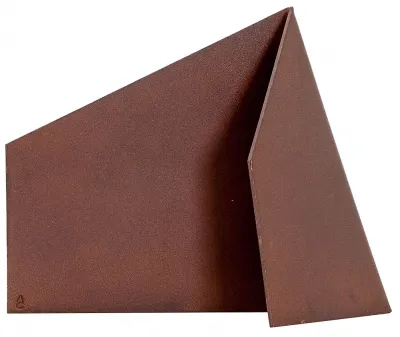
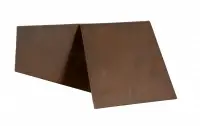
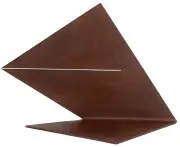
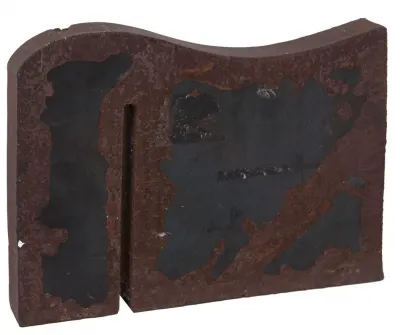
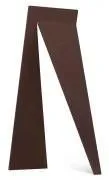
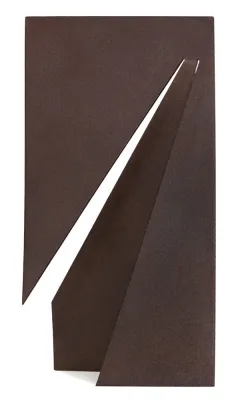
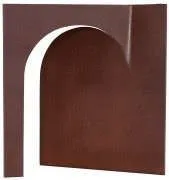
Amilcar de Castro’s works are recognized for their formal simplicity, constructive rigor and expressive force. Working mainly with iron and wood, the artist developed sculptures based on cuts and folds, exploring in a singular way the relationships between plane, space and volume. Amilcar de Castro’s production is considered one of the most relevant in Brazilian sculpture and remains a fundamental reference for artists, researchers, students and collectors of contemporary art.
Critical Commentary
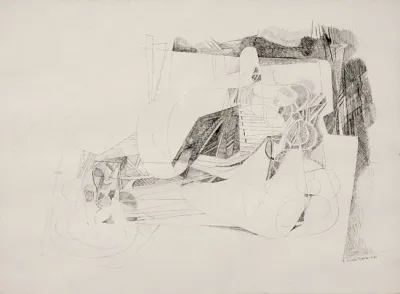
Amilcar de Castro, one of the fundamental names in Brazilian art, lived in several towns in the interior of Minas Gerais as a child. The son of a high court judge, he moved with his family to Belo Horizonte at the age of 14. In 1941, he entered the Law School of the Federal University of Minas Gerais – UFMG. In his third year, he attended the drawing and painting classes of Alberto da Veiga Guignard (1896–1962), learning to use the hard pencil, which marks the paper and demands precision in the line. At the School of Architecture and Fine Arts, he studied sculpture with Franz Weissmann (1911–2005), then a figurative artist and later his companion in Neoconcretism. He graduated in Law, worked briefly as a lawyer and took on public posts that he soon abandoned. In the late 1940s, his drawings of Ouro Preto landscapes approached abstraction, as did his first sculptures. In 1952, already married, he moved to Rio de Janeiro and worked as a layout designer for the magazines A Cigarra and Manchete.
The lecture by the Swiss artist Max Bill (1908–1994), a reference for Concrete art in Latin America, which he attended in Rio in 1949, and the prize Bill received at the 1st São Paulo International Biennial deeply influenced Amilcar de Castro. From then on, the artist deepened his study of drawing and began designing his sculptures on paper before realizing them in space, definitively moving away from figuration. In 1953, he exhibited his first constructive sculpture at the 2nd São Paulo International Biennial, marked by rigor and order. In 1956, he took part in the 1st National Exhibition of Concrete Art with a work in aluminum and iron guided by mathematical precision. The following year, he began the redesign of the Jornal do Brasil, a landmark in Brazilian editorial design. In 1959, he signed the Neoconcrete Manifesto with Ferreira Gullar, Franz Weissmann, Lygia Pape, Lygia Clark and others, and took part in the group’s exhibitions. In his sculpture, he always starts from a geometric plane – circular, rectangular or square – which is cut and folded to generate three-dimensional structures in dialogue with space. Without fragmenting the material, cuts and folds preserve the unity of the plane. The absence of welding avoids artificiality, and the resistance of the iron, marked by rust, coexists with time. Unlike the Concretism of Max Bill, which sublimates matter, Amilcar de Castro maintains a strong bond with the soil and with nature, as the historian Rodrigo Naves observes when he states that, in his works, “Minas Gerais goes far beyond a geographical and anecdotal localism”.
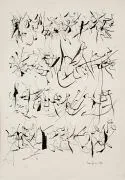
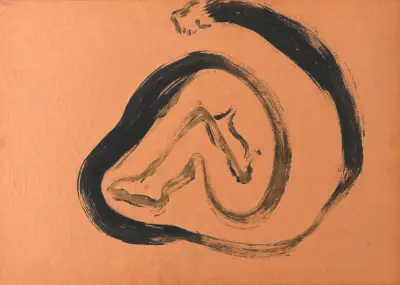
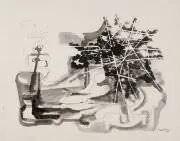
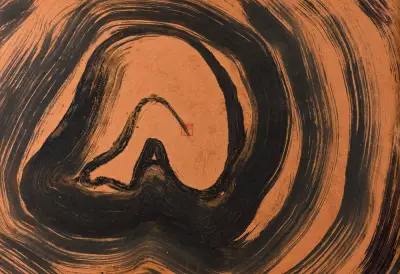
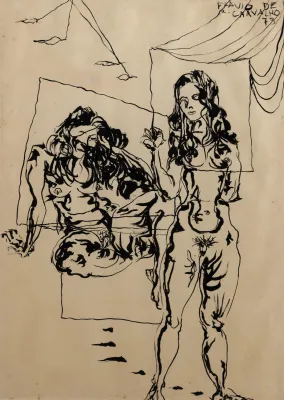
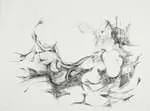
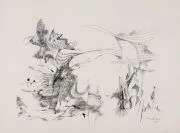
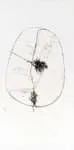
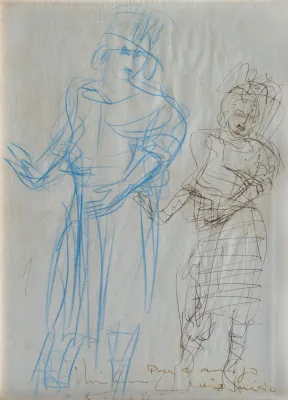
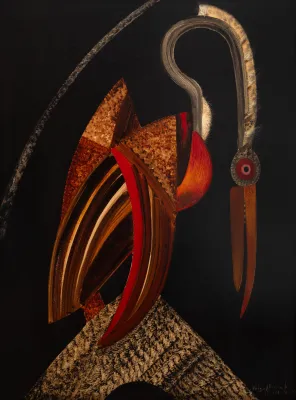
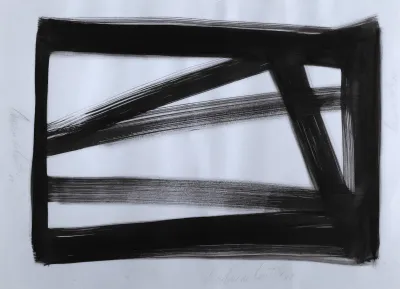
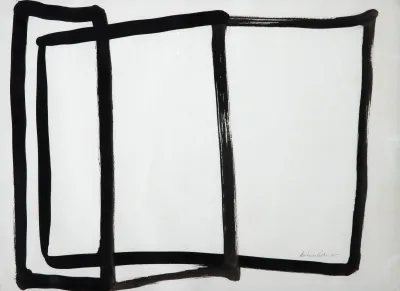
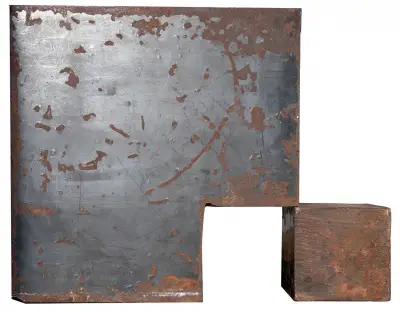
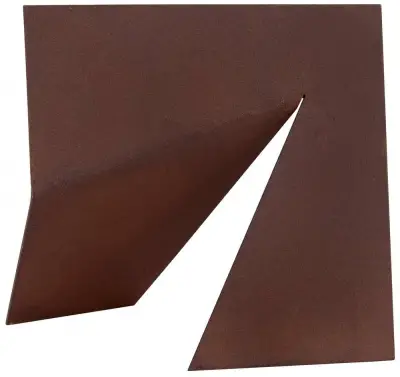
In the 1960s, Amilcar de Castro worked as a layout designer for the newspapers Diário Carioca, Última Hora, Estado de Minas and Diário de Minas. In 1968, after receiving a Guggenheim Foundation fellowship, he moved with his family to the United States, where he produced sculptures made from steel rings, plates and wires, exploring different points of balance, although he did not pursue this line further. Back in Brazil in 1971, he spent a short time in Rio and settled in Belo Horizonte. In 1973, he became a teacher at the Fundação de Arte de Ouro Preto and then taught sculpture and composition at the Escola Guignard, of which he would become director. In the 1970s and 1980s, he taught at the School of Fine Arts of UFMG. During this period, he intensified his drawing and resumed the sculpture of the period before his American stay. In his drawings – closely linked to the sculpture and to the lithographs of the 1990s – the gesture becomes freer; some works allow multiple positions, and the artist even signs them on different sides. The organization of space arises without a prior design, visible in the fluidity of the gesture and the trace of the brushstroke. In some of his last sculptures, he abandoned folds and made only cuts in thick iron plates that let light pass through. In others, he released a movable solid without breaking the unity of the plane, creating subtle juxtapositions that preserve the integration of the form. In 1990, he retired from the School of Fine Arts and devoted himself entirely to artistic production.
In 1999, Amilcar de Castro presented new works at the Centro de Arte Hélio Oiticica in Rio de Janeiro, respecting the structural limits of the historic building, and installed monumental pieces in Praça Tiradentes. In his late sculptures, distanced from constructive orthodoxy, he no longer started from the regular geometric forms that marked his earlier phase. His works expand horizontally and dialogue directly with the landscape, after many years removed from the traditional base. Over five decades, Amilcar de Castro tirelessly explored the possibilities of the plane, making his folds expressions of a more sensitive, flexible and deeply human geometry.
Critiques
"Iron is his raw material. Iron and Amilcar form a pair whose identity is as strong as that of color theories and Seurat. (...) The sculptural tradition of the 20th century, particularly from Constructivism onwards, establishes an intense dialogue with matter, determining expression and form. But, in this tradition, the same artist will use different materials throughout his work. Iron is this and something more in Amilcar's work. Mass and weight, density and resistance, color and 'texture' - expressed in oxidation - are assimilated into the whole in the same way as the artist's interventions. Just as a primary perception of space is impossible (Schilder), a primary presence of matter is impossible. Iron transforms itself to, actively, compose a whole that always betrays its original and primitive history. Sculpture realizes in iron the full meaning of folding, of one making two, duplicating and intensifying, making it more complete and, at the same time, subduing it, it rises and in the same movement rests stable on its base, the earth, the ground. This dignity, this ethics materialized in asceticism, finds a dramatic unity in form and matter, in the plane, in the cut, in the fold, and in the iron. The iron, its resistance to the artist's gesture, and the mark of this clash are part of the drama that resides in the paradox of constructing symphonic works with chamber resources. Hence, also, the traces of subjectivity, the traces of intervention in the plane, attributing to it a body whose construction does not repress the marks of the process of its elaboration."
Paulo Sérgio Duarte
DUARTE, Paulo Sérgio. Amilcar de Castro or the Adventure of Coherence. Novos Estudos Cebrap, n. 28, p. 152-158.
"Amilcar de Castro is a member of the group of Neoconcrete artists and, as such, carries out an experiment that has its origins in the Concretist aesthetic, which he deepens. From that stage of inquiry and study, Amilcar retained some general and positive characteristics: a desire for simplicity, defined structures, and direct expression. On the other hand, he rejected the so-called quantitative notion of form, which translates into serial construction, the composition of elements added to one another. And if he rejected it, it was because this analytical way of viewing structure leads to a contradictorily intellectualist and optical language; given the external way in which form is conceived, the artist must resort to visual effects to lend it dynamism. Amilcar descends to a conception prior to form to surprise it in its inception and capture it at birth. He manages, with seemingly simple elements—a rectangular plate—to reveal a dramatic experience of form, this conflict of form that wants to be born and establish itself in the comfort of our perception and the force that simultaneously solicits it and opposes it, the gesture that provokes the explosion and stops it. Amilcar's sculptures want to explode, and the explosion is latent in the virtual movement of the slab that wants to unfold and shrink, of the surface that with a living force rises from the ground and becomes immobile on the eve of a new, never-precipitated movement. His forms are monumental without being rhetorical, they are heavy without possessing mass, they are dramatic without resorting to any conventional figuration of drama."
Ferreira Gullar
GULLAR, Ferreira. Sculptures by Amilcar de Castro. In: AMARAL, Aracy (Org.). Brazilian Constructive Project in Art: 1950-1962. Rio de Janeiro: MAM, 1977. p. 241. [Text originally written for Revista Módulo No. 5, April 1961]
"Everything in Amilcar de Castro's work rejects easy and imposing forms, even though few Brazilian works of art have achieved his formal strength. After all, is it the cuts that order these pieces, or the folds? Does the structure of these sculptures derive from the line that disrupted the serenity of a rectangle, or from the twists that seem to resist the ordering pressure? Certainly, there is a dependence between the two. But more, much more than the expression formal unity usually allows. Here, the iron acquires a mode of appearance that, in principle, refuses any limitation. And yet this occurs only by virtue of a type of framing. This movement, however, demands enormous precision, which the economy of Amilcar's works knew how to rigorously orchestrate. (...)
In Amilcar de Castro's sculpture, by contrast, the rust on the surfaces testifies to the encounter of two very different times, a sign that the forms undergo injunctions of various kinds. Constructivist optimism needs to coexist with a powerful ballast - a past that makes abrupt arrangements impossible and clouds the lightness of the first day. (...)
With rust, an entire colonial legacy comes to light. Upon the formal clarity of these pieces, upon the freshness of such limpid articulations, weighs the memory of a social archaism that cannot be reversed solely through complex structures and decisive relationships. Between the corrosion of rust and the crystalline lines, between the rawness of the ore and the purity of the metal, emerge those activities that lead from one to the other—mining, metallurgy—a work that these works always keep visible, never concealing. In these sculptures, Minas Gerais goes far beyond a geographical and anecdotal localism. Something of the insane effort to extract wealth from the soil, remains in them."
Rodrigo Naves
NAVES, Rodrigo. Amilcar de Castro: matéria de risco. In: NAVES, Rodrigo. A forma difícil: ensaios sobre arte brasileira. São Paulo: Ática, 1996. p. 225, 235, 238.
"In a 1983 text, I wrote that the poetics of Amilcar's sculpture is based on the dialogue between the cut and the fold. If it were merely a cut, his sculpture would be a split object. A manifestation of his authority over raw material: a tear, a wound, an act of violence. By associating the cut with the fold, the artist introduces a poetic element into his sculpture. In the cut, the iron, even wounded, is passive. With the fold, it resists, imposes its presence. The cut is the straight line, the plane merely suggested. The fold is the curve, the plane becomes space. A living organism. The cut separates, the fold softens. The cut is an operation of no return, like that furrow a hard pencil makes on paper. It's gone, it stays. The fold is virtual, latent, something that is not completed. The cut is space, the fold is time. Cut-fold = space-time. His sculpture is pure space, as drawing is line and painting is color. Whole, solid, it needs no external support. Glue, welds, screws, rivets, hinges, frames, knots, loops, ties, internal structures—his sculpture dispenses with all these or any other mechanical resource to stand. And it doesn't ask for the spectator's playful participation. Only contemplation. And silence."
Frederico Morais
MORAIS, Frederico. The three-dimensional field: sculptures, reliefs, objects, and installations. In: TRIDIMENSIONALITY: Brazilian art of the 20th century. 2nd ed. São Paulo: Itaú Cultural: Cosac & Naify, 1999.
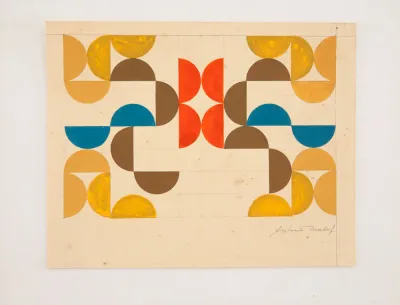
"Amilcar de Castro understands his lithographs as lightning-fast drawings: he proposes no mystery for them, being everyday art. He interprets the lithography in proximity not only to the project, but also to the completed sculpture. Comparing the drawing with the fold of the sculpture, one thinks that his lithographs can be interpreted as épures (projection drawings), in which the irregularly applied gesture of the brush describes zones in which regular forms endowed with a single color are set. Having the valence of Thais [Helt]'s chromatic setting, Amilcar's differs from it in its geometricism. This, made with a ruler, functions as the fold of the sculpture, referring the two arts to a concept that excludes mystery, that of the épure, insofar as the hidden parts are present in it thanks to the transparency of the tracing. The sculptural interpretation of the lithography proposes the hypothesis that the fold and the rust of the sculpture are the interpreters of the geometric figure and the free gesture, respectively. In the analogy, the irregular frames the regular, as the banal frames the precious: the rust envelops and enhances the work".
Leon Kossovitch and Mayra Laudanna
KOSSOVITCH, Leon; LAUDANNA, Mayra. Printmaking in the 20th Century. In: PRINTMAKING: Brazilian Art of the 20th Century. São Paulo: Itaú Cultural: Cosac & Naify, 2000. p. 23-24.
"The cut in Amilcar is a structural trait, not an ornament.
The expression 'dry and solid,' used above to define the cuts Amilcar made in the material, was used here to compare his sculpture with representatives of abstract expressionist sculpture, where one might be tempted to situate the artist's production.
To the perhaps excessive search for sensuality in the material perceived in this type of sculpture, the Brazilian artist would oppose the sobriety of the simple cut. A precise cut, without regrets, followed by equally decisive twists. Hence their dryness and solidity, hence their production of works that are still 'classic,' but nonetheless possess a certain sensuality—or, at least, a disposition for a more affective dialogue with the world.(...)
(...) In a society attacked in so many ways, Amilcar, with a sheet of iron and a decisive cut, dialogues rather than threatens, embraces rather than obstructs. And this willingness to engage in a welcoming and powerful dialogue with the observer and the surroundings (without dissolving into them or depending on them) is perhaps Amilcar's greatest contribution to sculpture in the last 50 years."
Tadeu Chiarelli
CHIARELLI, Tadeu. Amilcar de Castro: effective and affective dialogues with the world. In: AMILCAR de Castro: corte e dobra. São Paulo: Cosac & Naify, 2003. 188 p., ill. color. p. 19-20
Testimonials
"My sculpture begins in the studio. Here I draw, make a paper model, then, if I like it, I move on to iron and make a model. Then, if I like it, I increase the size. Drawing is the foundation, a way of thinking. And thinking, in art, is drawing, because without drawing, there is nothing. There are other sculptors who make sculptures without drawing. I don't know how to do anything without drawing. (...)
My work with lithography is exactly the same as drawing; there's no mystery, it's just doing it. You draw on stone and print it. I do lithography every Saturday at Thais Helt's studio in Nova Lima. I work, drink a glass of wine, and then leave, and sometimes I just drink wine. (...)
The drawings in my studio I did all at once, on the same day, in an hour at most. I draw on this table, grab the bucket of acrylic paint, the brush, and draw on the canvas. I draw without any plan, without anything planned, trying to organize the space, and that's it. Sometimes it turns out better, other times worse. I select what I don't like and throw it away, but what I like stays to see if I fight with it tomorrow or keep the romance going. (...)
For many years, I've been making large drawings on canvas. I stretch the canvas over a Eucatex board, draw with acrylic paint, remove the canvas from the board, and place it on the aluminum frame. You can position the drawing however you like, vertically or horizontally. That's because I don't do it like this, standing up (referring to a drawing), I'm doing it like a sculpture, so it's free. (...)
My work is intuitive and adventurous. Sometimes I challenge myself, start a drawing on one side, switch to the other, switch again, and start the drawing with my left hand. I have to change to see what happens with the drawing, and the same happens with the fold of the sculpture."
Amilcar de Castro, 1999
CASTRO, Amilcar de. [Testimony, Belo Horizonte, 1999]. In: PRINTMAKING: 20th-Century Brazilian Art. São Paulo: Itaú Cultural: Cosac & Naify, 2000. p. 154.
Collections
Instituto Itaú Cultural - São Paulo SP
Instituto de Arte Contemporânea Amílcar de Castro
Museu de Arte Moderna de São Paulo (MAM/SP) - São Paulo SP
Museu de Arte Moderna do Rio de Janeiro (MAM/RJ) - Rio de Janeiro RJ
Museu de Dom Silvério
Museu Nacional de Belas Artes (MNBA) - Rio de Janeiro RJ
Pinacoteca do Estado de São Paulo (Pesp) - São Paulo SP
Solo Exhibitions
1969 - New York (United States) - Solo, at Kornblee Gallery
1970 - New York (United States) - Solo, at Convent of Jesus Sacred Heart
1978 - São Paulo SP - Amilcar de Castro: drawings, at Gabinete de Artes Gráficas
1979 - Rio de Janeiro RJ - Solo, at MAM/RJ
1980 - Rio de Janeiro RJ - Amilcar de Castro: drawings and lithographs, at Galeria Gravura Brasileira
1980 - São Paulo SP - Solo, at Gabinete de Arte Raquel Arnaud
1981 - Belo Horizonte MG - Solo, at Gesto Gráfico Galeria de Arte
1982 - São Paulo SP - Solo, at Gabinete de Arte Raquel Arnaud
1983 - Belo Horizonte MG - Solo, at Gesto Gráfico Galeria de Arte
1983 - Rio de Janeiro RJ - Solo, at Thomas Cohn Gallery
1985 - Belo Horizonte MG - Solo, at Gesto Gráfico Galeria de Arte
1985 - Rio de Janeiro RJ - Solo, at Thomas Cohn Gallery
1986 - Ouro Preto MG - Amilcar de Castro: drawings and sculptures, at Museu da Inconfidência
1986 - Rio de Janeiro RJ - Solo, at Paulo Klabin Gallery
1986 - São Paulo SP - Solo, at Gabinete de Arte Raquel Arnaud
1987 - Belo Horizonte MG - Solo, at Fernando Paz Art Gallery
1987 - Belo Horizonte MG - Solo, at Lucchesi Art Gallery
1987 - Belo Horizonte MG - Solo, at Itaugaleria
1987 - Belo Horizonte MG - Solo, at Lucchesi Art Gallery
1987 - São Paulo SP - Amilcar de Castro: drawings and sculptures, at Unit II of the Art Gallery
1988 - Brasília DF - Amilcar de Castro: drawings, sculptures, and prints, at Capital Contemporary Art Space
1988 - Ribeirão Preto SP - Amilcar de Castro: retrospective, at Ribeirão Preto Promoções de Artes Plásticas
1988 - São Paulo SP - Solo, at Paulo Vasconcellos Art Gallery
1989 - Belo Horizonte MG - Solo, at Gesto Gráfico Galeria de Arte
1989 - Rio de Janeiro RJ - Solo, at Paço Imperial
1989 - São Paulo SP - Amilcar de Castro: sculptures, at Gabinete de Arte Raquel Arnaud
1989 - Tokyo (Japan) - Solo, at Hara Museum of Contemporary Art
1990 - Belo Horizonte MG - Solo, at Novo Tempo Gallery
1990 - Rio de Janeiro RJ - Solo, at Thomas Cohn Gallery
1990 - São Paulo SP - Amilcar de Castro: the artist's space as a young man, at Paço das Artes
1991 - Belo Horizonte MG - Solo, at Cemig. Cultural Space Art Gallery
1991 - Belo Horizonte MG - Solo, at Fernando Pedro Art Office
1992 - Belo Horizonte MG - Manoel Macedo Art Gallery: 10 Years: Amilcar de Castro, at Manoel Macedo Art Gallery
1992 - São Paulo SP - Solo, at Gabinete de Arte Raquel Arnaud
1993 - Niterói RJ - Amilcar de Castro: drawings and sculptures, at Fluminense Federal University Art Gallery
1993 - São Paulo SP - Solo, at Gabinete de Arte Raquel Arnaud
1994 - São Paulo SP - Amilcar de Castro: drawings and sculptures, at Gabinete de Arte Raquel Arnaud
1996 - Buenos Aires (Argentina) - An Exponent of Brazilian Concretism, at Portinari Gallery
1996 - Florianópolis SC - Amilcar de Castro: drawings, prints and models, at Victor Meirelles Museum
1996 - Recife PE - Amilcar de Castro: sculptures and drawings, at MAMAM
1997 - Curitiba PR - Solo, at Ybakatu Art Space
1998 - Goiânia GO - Solo, at Jaime Câmara Foundation
1998 - Rio de Janeiro RJ - Solo, at Gustavo Capanema Palace
1998 - São Paulo SP - Solo, at Gabinete de Arte Raquel Arnaud
1999 - Belo Horizonte MG - Solo, at Kolams Art Gallery
1999 - Recife PE - Amilcar de Castro: sculptures and drawings, at MAMAM
1999 - Rio de Janeiro RJ - Amilcar de Castro: sculptures and drawings, at Hélio Oiticica Arts Center
2000 - Belo Horizonte MG - Solo, at Kalil and Lauar Art Gallery
2000 - São Paulo SP - Amilcar de Castro: 80 years, at Thomas Cohn Gallery
2001 - São Paulo SP - Solo, at Thomas Cohn Gallery
2001 - São Paulo SP - Solo, at Pinacoteca do Estado
2002 - Rio de Janeiro RJ - Solo, at Silvia Cintra Art Gallery
2002 - Rio de Janeiro RJ - Solo, at Armazém do Rio
Group Exhibitions
1947 - Rio de Janeiro RJ - 53rd National Salon of Fine Arts, at MNBA - bronze medal in drawing
1951 - Salvador BA - 3rd Bahia Salon of Fine Arts, at Belvedere da Sé Gallery - bronze medal in sculpture
1953 - São Paulo SP - 2nd São Paulo International Biennial, at Pavilion of the States
1955 - Salvador BA - National Salon of Modern Art of Bahia - 1st prize in sculpture
1956 - São Paulo SP - 1st National Exhibition of Concrete Art, at MAM/SP
1957 - Rio de Janeiro RJ - 1st National Exhibition of Concrete Art, at MAM/RJ
1959 - Rio de Janeiro RJ - 1st Exhibition of Neoconcrete Art, at MAM/RJ
1959 - Salvador BA - 1st Exhibition of Neoconcrete Art, at Belvedere da Sé Gallery
1960 - Belo Horizonte MG - 15th Salon of Fine Arts of the City of Belo Horizonte, at MAP - 1st prize in sculpture
1960 - Rio de Janeiro RJ - 2nd Exhibition of Neoconcrete Art, at MEC
1960 - Rio de Janeiro RJ - 9th National Salon of Modern Art, at MAM/RJ - silver medal in sculpture
1960 - Zurich (Switzerland) - Konkrete Kunst, at Helmhaus
1961 - São Paulo SP - 3rd Exhibition of Neoconcrete Art, at MAM/SP
1961 - São Paulo SP - 6th São Paulo International Biennial, at Ciccillo Matarazzo Sobrinho Pavilion
1962 - Belo Horizonte MG - 17th Salon of Fine Arts of the City of Belo Horizonte, at MAP - 1st prize in sculpture
1965 - São Paulo SP - 8th São Paulo International Biennial, at Fundação Bienal
1966 - Buenos Aires (Argentina) - Contemporary Brazilian Artists, at Museum of Modern Art
1966 - Montevideo (Uruguay) - Contemporary Brazilian Artists, at Museum of Modern Art of Montevideo
1967 - Rio de Janeiro RJ - 16th National Salon of Modern Art
1970 - New York (United States) - Exhibition, at Convent of Jesus Sacred Heart
1972 - São Paulo SP - 4th Panorama of Current Brazilian Art, at MAM/SP
1972 - São Paulo SP - Art/Brazil/Today: 50 years later, at Gallery of Collectio
1972 - São Paulo SP - Brazilian Multiples, at Multiple Art Gallery
1974 - Belo Horizonte MG - 6th National Contemporary Art Salon of Belo Horizonte, at MAP - Grand Prize in Sculpture
1974 - Belo Horizonte MG - Grand Prize in Sculpture, at MAP
1976 - Campinas SP - 10th Contemporary Art Salon of Campinas, at MACC
1977 - Rio de Janeiro RJ - Brazilian Constructive Project in Art: 1950-1962, at MAM/RJ
1977 - São Paulo SP - 9th Panorama of Current Brazilian Art, at MAM/SP - Grand Prize in Drawing
1977 - São Paulo SP - Brazilian Constructive Project in Art: 1950-1962, at Pinacoteca do Estado
1978 - Rio de Janeiro RJ - 3rd Arte Agora: Latin America, Sensitive Geometry, at MAM/RJ
1978 - São Paulo SP - 10th Panorama of Current Brazilian Art, at MAM/SP - Grand Prize in Sculpture
1979 - Mexico City (Mexico) - Biennial of Drawing and Engraving
1979 - São Paulo SP - 15th São Paulo International Biennial, at Fundação Bienal
1980 - São Paulo SP - Amilcar de Castro, Lygia Clark, Sérgio de Camargo and Franz Weissmann, at Gabinete de Arte Raquel Arnaud
1981 - Belo Horizonte MG - 13th National Salon of Contemporary Art of Belo Horizonte, at MAP - Grand Prize of the City of Belo Horizonte
1981 - Belo Horizonte MG - 8th Global Winter Salon, at Fundação Palácio das Artes
1981 - Belo Horizonte MG - Guignard’s Students, at Itaugaleria
1981 - Belo Horizonte MG - Minas Gerais Art in the Spotlight, at Fundação Palácio das Artes
1981 - Rio de Janeiro RJ - 8th Global Winter Salon, at MAM/RJ
1981 - São Paulo SP - 13th Panorama of Current Brazilian Art, at MAM/SP
1981 - São Paulo SP - 8th Global Winter Salon, at Masp
1981 - São Paulo SP - Brazilian Contemporary Artists, at São Paulo Art Gallery
1982 - Rio de Janeiro RJ - Contemporaneity: a tribute to Mário Pedrosa, at MAM/RJ
1982 - Rio de Janeiro RJ - What House Is This of Brazilian Art
1982 - São Paulo SP - A Century of Sculpture in Brazil, at Masp
1983 - Rio de Janeiro RJ - 13 Artists/13 Works, at Thomas Cohn Contemporary Art
1983 - Rio de Janeiro RJ - 6th National Visual Arts Salon, at MAM/RJ
1983 - São Paulo SP - Imagining the Present, at Gabinete de Arte Raquel Arnaud
1984 - Belo Horizonte MG - 1st Visual Arts Salon of the Clóvis Salgado Foundation, at Fundação Clóvis Salgado. Palácio das Artes
1984 - Rio de Janeiro RJ - Neoconcretism 1959-1961, at Banerj Art Gallery
1984 - São Paulo SP - 10 Artists from Minas Gerais, at MAC/USP
1984 - São Paulo SP - The Color and Drawing of Brazil, at MAM/SP
1984 - São Paulo SP - Gilberto Chateaubriand Collection: portrait and self-portrait of Brazilian art, at MAM/SP
1984 - São Paulo SP - Tradition and Rupture: synthesis of Brazilian art and culture, at Fundação Bienal
1985 - Niterói RJ - A Question of Order, at UFF. Art Gallery
1985 - Porto Alegre RS - Iberê Camargo: trajectory and encounters, at Margs
1985 - Rio de Janeiro RJ - 8th National Visual Arts Salon, at MAM/RJ
1985 - Rio de Janeiro RJ - Encounters, at Petite Galerie
1985 - Rio de Janeiro RJ - Velha Mania: Brazilian drawing, at EAV/Parque Lage
1985 - São Paulo SP - 16th Panorama of Current Brazilian Art, at MAM/SP
1985 - São Paulo SP - Highlights of Brazilian Contemporary Art, at MAM/SP
1986 - Brasília DF - Iberê Camargo: trajectory and encounters, at Cláudio Santoro National Theater
1986 - Fortaleza CE - 1st International Exhibition of Ephemeral Sculptures, at Fundação Demócrito Rocha
1986 - Porto Alegre RS - Rubem Knijnik Collection: Brazilian art from the 60s, 70s, and 80s, at Margs
1986 - Rio de Janeiro RJ - Iberê Camargo: trajectory and encounters, at MAM/RJ
1986 - Rio de Janeiro RJ - JK and the 1950s: a vision of culture and everyday life, at Galeria Investiarte
1986 - São Paulo SP - Iberê Camargo: trajectory and encounters, at MAM/SP
1987 - Madrid (Spain) - Latin American Sculpture
1987 - Paris (France) - Modernity: Brazilian art of the 20th century, at Musée d'Art Moderne de la Ville de Paris
1987 - Rio de Janeiro RJ - 1st Geometric Abstraction: concretism and neoconcretism, at Funarte. Arts Center
1987 - Rio de Janeiro RJ - Geometric and Informal Abstractionism: aspects of the Brazilian avant-garde of the 1950s, at Funarte
1987 - Rio de Janeiro RJ - To the Collector: tribute to Gilberto Chateaubriand, at MAM/RJ
1987 - São Paulo SP - 18th Panorama of Current Brazilian Art, at MAM/SP
1987 - São Paulo SP - 19th São Paulo International Biennial, at Fundação Bienal
1987 - São Paulo SP - 1st Geometric Abstraction: concretism and neoconcretism, at MAB/Faap
1988 - New York (United States) - The Latin American Spirit: art and artists in the United States, 1920-1970, at The Bronx Museum of the Arts
1988 - Ribeirão Preto SP - Lívio Abramo, Iberê Camargo, and Amilcar de Castro, at Casa da Cultura de Ribeirão Preto
1988 - São Paulo SP - 19th Panorama of Current Brazilian Art, at MAM/SP
1988 - São Paulo SP - Modernity: 20th-Century Brazilian Art, at MAM/SP
1988 - São Paulo SP - Rhythms and Forms: Contemporary Brazilian Art, at Sesc Pompéia
1989 - Copenhagen (Denmark) - Rhythms and Forms: Contemporary Brazilian Art, at Charlottenborg Museum
1989 - El Paso (United States) - The Latin American Spirit: Art and Artists in the United States: 1920-1970, at El Paso Museum of Art
1989 - Rio de Janeiro RJ - Rio Hoje, at MAM/RJ
1989 - San Diego (United States) - The Latin American Spirit: Art and Artists in the United States: 1920-1970, at San Diego Museum of Art
1989 - San Juan (Puerto Rico) - The Latin American Spirit: Art and Artists in the United States: 1920-1970, at Instituto de Cultura Puertorriqueña
1989 - São Paulo SP - 10 Sculptors, at Gabinete de Arte Raquel Arnaud
1989 - São Paulo SP - 20th São Paulo International Biennial, at Fundação Bienal
1989 - São Paulo SP - Gesture and Structure, at Gabinete de Arte Raquel Arnaud
1990 - Atami (Japan) - 9th Brazil-Japan Contemporary Art Exhibition
1990 - Brasília DF - 9th Brazil-Japan Contemporary Art Exhibition
1990 - Brasília DF - Brasília Prize for Visual Arts, at Museu de Arte de Brasília
1990 - Miami (United States) - The Latin American Spirit: art and artists in the United States, 1920-1970, at Center for the Fine Arts Miami Art Museum of Dade County
1990 - Rio de Janeiro RJ - 9th Brazil-Japan Contemporary Art Exhibition
1990 - São Paulo SP - 21st Panorama of Current Brazilian Art, at MAM/SP
1990 - São Paulo SP - 9th Brazil-Japan Contemporary Art Exhibition, at Brazil-Japan Foundation
1990 - São Paulo SP - Coherence - Transformation, at Gabinete de Arte Raquel Arnaud
1990 - Sapporo (Japan) - 9th Brazil-Japan Contemporary Art Exhibition
1990 - Tokyo (Japan) - 9th Brazil-Japan Contemporary Art Exhibition
1991 - São Paulo SP - 22nd Panorama of Current Brazilian Art, at MAM/SP
1991 - São Paulo SP - Geometric and Informal Abstractionism: aspects of the Brazilian avant-garde of the 1950s, at Pinacoteca do Estado
1991 - Uberlândia MG - Sculpture, at Federal University of Uberlândia
1992 - Belo Horizonte MG - Icons of Utopia, at Fundação Palácio das Artes
1992 - Curitiba PR - 10th Curitiba Printmaking Exhibition/Mostra América, at Museu da Gravura
1992 - Niterói RJ - UFF Art Gallery: 10 Years, at UFF. Art Gallery
1992 - Rio de Janeiro RJ - Brazilian Contemporary Art, at EAV/Parque Lage
1992 - Rio de Janeiro RJ - Coca-Cola 50 Years with Art, at MAM/RJ
1992 - Rio de Janeiro RJ - Sculpture 92: Seven Expressions, at Espaço RB1
1992 - Santo André SP - Lithography: Methods and Concepts, at Paço Municipal
1992 - São Paulo SP - Coca-Cola 50 Years with Art, at MAM/SP
1992 - Zurich (Switzerland) - Brasilien: entdeckung und selbstentdeckung, at Kunsthaus Zürich
1993 - Belo Horizonte MG - 4 x Minas, at Palácio das Artes
1993 - Rio de Janeiro RJ - 4 x Minas, at MAM/RJ
1993 - Rio de Janeiro RJ - Brazil, 100 Years of Modern Art, at MNBA
1993 - Rio de Janeiro RJ - Prints by Amilcar de Castro, Antonio Dias, Iberê Camargo, and Sérgio Fingermann, at EAV/Parque Lage
1993 - Salvador BA - 4 x Minas, at MAM/BA
1993 - São Paulo SP - 4 x Minas, at Masp
1994 - Belo Horizonte MG - Guignard: 50 Years of an Art School, at Vidyã Gallery
1994 - Ouro Preto MG - Virtual Identity, at Museu da Inconfidência
1994 - Rio de Janeiro RJ - Precision, at CCBB
1994 - São Paulo SP - 20th Century Brazil Biennial, at Fundação Bienal
1995 - Belo Horizonte MG - Derived Image: a look at the unfolding of printmaking today, at MAP
1995 - Londrina PR - Brazilian Art: confrontations and contrasts, at Octávio Cesário Pereira Júnior International Pavilion
1995 - São Paulo SP - Between Drawing and Sculpture, at MAM/SP
1995 - São Paulo SP - Morandi in Brazil, at CCSP
1996 - Belo Horizonte MG - The City and the Artist: two centenaries, at BDMG Cultural
1996 - Belo Horizonte MG - Consolidation of Modernity in Belo Horizonte, at MAP
1996 - Belo Horizonte MG - Poetic Influence: ten contemporary draftsmen, Amilcar de Castro and Mira Schendel, at Fundação Palácio das Artes
1996 - Brasília DF - Art and Urban Space: fifteen proposals, at Ministry of Foreign Affairs. Itamaraty Palace
1996 - Brasília DF - Four Contemporary Brazilian Master Sculptors, at Ministry of Foreign Affairs. Itamaraty Palace
1996 - Paris (France) - Two Brazilian Artists, at Galerie Debret
1996 - Porto Alegre RS - 1st Sesc Escultura: international outdoor sculpture exhibition, at Sesc Campestre
1996 - Rio de Janeiro RJ - Poetic Influence: ten contemporary draftsmen, Amilcar de Castro and Mira Schendel, at Paço Imperial
1996 - São Paulo SP - 1st Off Biennial, at MuBE
1996 - São Paulo SP - Desexp(l)os(ign)ição, at Casa das Rosas
1996 - São Paulo SP - Urban Sculptures, at Gabinete de Arte Raquel Arnaud
1997 - Contagem MG - Guignard Students in Contagem, at Casa de Cultura Nair Mendes Moreira
1997 - Curitiba PR - The Contemporary Art of Printmaking, at Metropolitan Museum of Art of Curitiba
1997 - Porto Alegre RS - 1st Mercosul Visual Arts Biennial, at Aplub; at the Mário Quintana Cultural Center; at DC Navegantes; at Edel; at the Gasômetro Plant; at the UFRGS Arts Institute; at the Mercosul Visual Arts Fundação Bienal; at Margs; at Espaço Ulbra; at the Museum of Social Communication; at the UFRGS Rectorate and at the São Pedro Theater
1997 - Porto Alegre RS - Object Imagination, at Deprec Workshops; at the Navy Depot; in the Brazilian Navy Park and in public spaces throughout the city
1997 - Porto Alegre RS - Constructive and Design Aspects, at Ulbra Cultural Space
1997 - São Paulo SP - Diversity of Contemporary Brazilian Sculpture, on Paulista Avenue
1997 - São Paulo SP - Brazilian Sculpture: Profile of an Identity, at Banco Safra
1997 - São Paulo SP - Three-Dimensionality in 20th-Century Brazilian Art, at Itaú Cultural
1997 - Washington (United States) - Brazilian Sculpture: Profile of an Identity, at IDB Cultural Center
1998 - Belo Horizonte MG - Three-Dimensionality in 20th-Century Brazilian Art, at Itaú Cultural
1998 - Brasília DF - Three-Dimensionality in 20th-Century Brazilian Art, at Itaú Cultural Gallery
1998 - Penápolis SP - Three-Dimensionality in 20th-Century Brazilian Art, at Itaú Cultural Gallery
1998 - Rio de Janeiro RJ - 16th National Visual Arts Salon, at MAM/RJ
1998 - Rio de Janeiro RJ - Graphic Thinking: the printmaking of language, at Paço Imperial
1998 - São Paulo SP - Constructive Art in Brazil: Adolpho Leirner Collection, at MAM/SP
1998 - São Paulo SP - The Collector, at MAM/SP
1998 - São Paulo SP - The Collectors - Guita and José Mindlin: matrices and prints, at Sesi Art Gallery
1998 - São Paulo SP - Theory of Values, at MAM/SP
1999 - Florianópolis SC - Drawings and Prints: MVM Collection - 1994 to 1999, at Victor Meirelles Museum
1999 - Rio de Janeiro RJ - Constructive Art in Brazil: Adolpho Leirner Collection, at MAM/RJ
1999 - São Paulo SP - 26th Panorama of Brazilian Art, at MAM/SP
1999 - São Paulo SP - Everyday Life/Art. Consumption, at Itaú Cultural
1999 - São Paulo SP - Lithography: fidelity and memory, at Unicid Arts Space
2000 - Belo Horizonte MG - Belo Horizonte-Leiria: a meeting of cultures, at Clóvis Salgado Foundation. Minas Gerais Dance Company
2000 - Belo Horizonte MG - Presente de Reis, at Kolams Art Gallery
2000 - Colchester (England) - Outros 500: Highlights of Brazilian Contemporary Art in UECLAA, at Art Gallery - University of Essex
2000 - Curitiba PR - 12th Curitiba Printmaking Exhibition. Marks of the Body, Folds of the Soul
2000 - Fortaleza CE - 26th Panorama of Brazilian Art, at Dragão do Mar Center for Art and Culture
2000 - Leiria (Portugal) - Belo Horizonte-Leiria: a meeting of cultures, at Gallery 57 - contemporary art
2000 - Lisbon (Portugal) - 20th Century: Art of Brazil, at José de Azeredo Perdigão Center for Modern Art
2000 - Niterói RJ - 26th Panorama of Brazilian Art, at MAC/Niterói
2000 - São Paulo SP - Brazil + 500 Rediscovery Exhibition, at Fundação Bienal
2000 - São Paulo SP - Brazilian Ceramics: construction of a language, at British Brazilian Center
2000 - São Paulo SP - Brazilian Sculpture: from the Pinacoteca to the Jardim da Luz, at Pinacoteca do Estado
2000 - São Paulo SP - Investigations: Brazilian Printmaking, at Itaú Cultural
2000 - São Paulo SP - The Role of Art, at Sesi Art Gallery
2001 - Belo Horizonte MG - Modernism in Minas Gerais: Reference Icons, at Itaú Cultural
2001 - Brasília DF - Investigations: Brazilian Printmaking, at Itaú Cultural Gallery
2001 - Nova Lima MG - Allen Roscoe, Amilcar de Castro, Pedro de Castro, Rodrigo de Castro, Thais Helt, at Amilcar de Castro's Studio
2001 - Penápolis SP - Investigations: Brazilian Printmaking, at Itaú Cultural Gallery
2001 - Penápolis SP - Modernism in Minas Gerais: Reference Icons, at Itaú Cultural Gallery
2001 - Porto Alegre RS - Liba and Rubem Knijnik Collection: Contemporary Brazilian Art, at Margs
2001 - Rio de Janeiro RJ - The Image of Sound by Antônio Carlos Jobim, at Paço Imperial
2001 - Rio de Janeiro RJ - Blind Mirror: Selections from a Contemporary Collection, at Paço Imperial
2001 - Rio de Janeiro RJ - The Spirit of Our Age, at MAM/RJ
2001 - São Paulo SP - Blind Mirror: Selections from a Contemporary Collection, at MAM/SP
2001 - São Paulo SP - The Spirit of Our Age, at MAM/SP
2001 - São Paulo SP - The Trajectory of Light in Brazilian Art, at Itaú Cultural
2002 - Fortaleza CE - Ceará Rediscovers Brazil, at Dragão do Mar Center for Art and Culture
2002 - Rio de Janeiro RJ - Brazilian Art in the Fadel Collection: from the restlessness of the modern to the autonomy of language, at CCBB
2002 - Rio de Janeiro RJ - Paths of the Contemporary 1952-2002, at Paço Imperial
2002 - Rio de Janeiro RJ - Parallels: Brazilian art from the second half of the 20th century in context, Cisneros Collection, at MAM/RJ
2002 - São Paulo SP - The Line as the Structure of Form, at MAM/SP
2002 - São Paulo SP - Amilcar de Castro and Five Artists from Minas Gerais, at Marília Razuk Art Gallery
2002 - São Paulo SP - Metrópolis Collection of Contemporary Art, at Pinacoteca do Estado
2002 - São Paulo SP - Group Show 2002, at Galeria Baró Senna
2002 - São Paulo SP - Wild Mirror: Modern Art in Brazil in the First Half of the 20th Century, Nemirovsky Collection, at MAM/SP
2002 - São Paulo SP - Geometric and Kinetic, at Gabinete de Arte Raquel Arnaud
2002 - São Paulo SP - The Plane as Structure of Form, at MAM/SP
2002 - São Paulo SP - Parallels: Brazilian Art from the Second Half of the 20th Century in Context, Colección Cisneros, at MAM/SP
Posthumous Exhibitions
2002 - Brasília DF - Fragments to Their Magnet, at Venâncio Contemporary Cultural Space
2002 - Brasília DF - JK - An Aesthetic Adventure, at Caixa Cultural Complex
2002 - São Paulo SP - 10 Years of Marília Razuk, at Marília Razuk Art Gallery
2002 - São Paulo SP - Brazilian Art in the Fadel Collection: from the Restlessness of the Modern to the Autonomy of Language, at CCBB
2002 - São Paulo SP - AAA Group Show, at Baró Senna Gallery
2002 - São Paulo SP - Image and Identity: A Look at History in the Collection of the Museum of Fine Arts, at Banco Santos Cultural Institute
2002 - São Paulo SP - Brazilian Multiples 30 Years Later, at Multipla de Arte
2003 - Brasília DF - Brazilian Art in the Fadel Collection: from the restlessness of the modern to the autonomy of language, at CCBB
2003 - Mexico City (Mexico) - Cuasi Corpus: concrete and neoconcrete art from Brazil: a selection from the collection of the São Paulo Museum of Modern Art and the Adolpho Leirner Collection, at Rufino Tamayo Museum
2003 - Iowa City (United States) - Layers of Brazilian Art, at Faulconer Gallery
2003 - Rio de Janeiro RJ - Autonomy of Drawing, at MAM/RJ
2003 - Rio de Janeiro RJ - Order x Freedom, at MAM/RJ
2003 - Rio de Janeiro RJ - Brazilianart Project, at Almacén Art Gallery
2003 - Rio de Janeiro RJ - Black and White Project, at Silvia Cintra Art Gallery
2003 - São Paulo SP - Printmaking Is Doing Well, Thank You: Historical and Contemporary Brazilian Printmaking, at Espaço Virgílio
2003 - São Paulo SP - Constructivism and Form as Clothing, at MAM/SP
2003 - São Paulo SP - Cutting and Folding, at Marília Razuk Art Gallery
2003 - São Paulo SP - Sculptors - Sculptures, at Pinakotheke
2003 - São Paulo SP - Paper and Three-Dimensional, at Arvani Arte
2003 - Vila Velha ES - The Salt of the Earth, at Museu Vale do Rio Doce
2004 - Belo Horizonte MG - Pampulha, Collected Works: 1943-2003, at MAP
2004 - Rio de Janeiro RJ - 30 Artists, at Mercedes Viegas Art Office
2004 - São Paulo SP - Contemporary Art in the Municipal Collection, at CCSP
2004 - São Paulo SP - Contemporary Art at the Iberê Camargo Studio, at Maria Antonia University Center
2005 - Belo Horizonte MG - 40/80: an exhibition of Brazilian art, at Léo Bahia Contemporary Art
2005 - Rio de Janeiro RJ - Soto: the construction of immateriality, at CCBB
2005 - Porto Alegre RS - Amilcar de Castro: a retrospective
2005 - São Paulo SP - Trajectory/Trajectories, at Gabinete de Arte Raquel Arnaud
Source: Itaú Cultural, FGV CPDOC