Rubem Ludolf (Maceió AL 1932 - Rio de Janeiro RJ 2010)
Painter, architect, landscape designer.
Rubem Mauro Cardoso Ludolf graduated from the Escola Nacional de Arquitetura of the Universidade do Brasil, now the Universidade Federal do Rio de Janeiro - UFRJ, in 1955. At that time, he attended Ivan Serpa's (1923 - 1973) classes in the open painting course at the Museu de Arte Moderna do Rio de Janeiro (MAM/RJ). He took part in Grupo Frente from 1955. He joined the Concretist movement in 1956-1957. Alongside his work as a visual artist, Rubem Ludolf worked as an architect at the Departamento Nacional de Estradas de Rodagem (DNER) [National Highway Department] from 1954 to 1990, devoting himself mainly to landscape design. He took part in five editions of the São Paulo International Biennial between 1955 and 1967, receiving an acquisition prize at the last; he was one of the artists in the special room Arte Construída: homenagem a Waldemar Cordeiro [Constructed Art: Tribute to Waldemar Cordeiro], shown at the 12th edition in 1973.
Critical Commentary
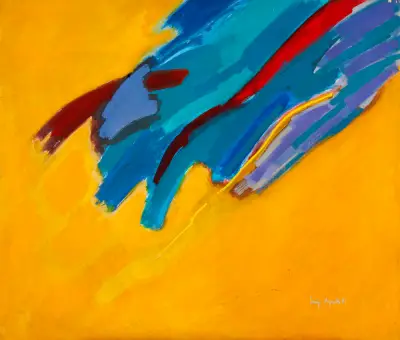
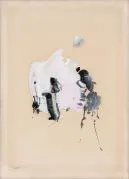
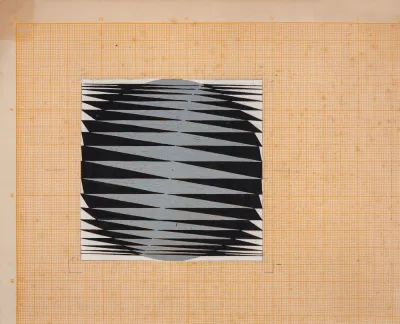
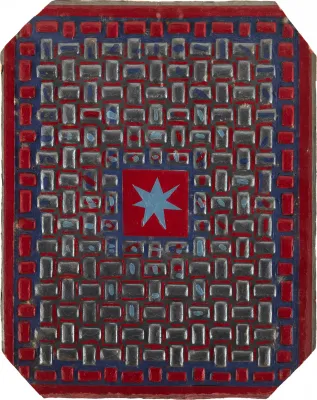
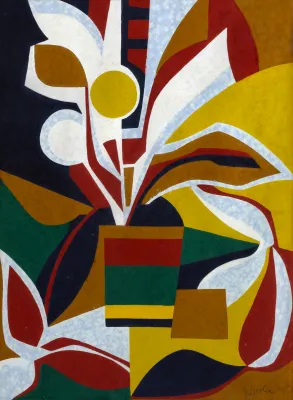
In the mid-1950s, Rubem Ludolf created geometric abstract works exploring serial structures, rhythm and optical effects, as in Assimetria Resultante do Deslocamento Simétrico [Asymmetry Resulting from Symmetrical Displacement], 1955, or Quase Quadrado [Almost Square], 1957. In Ritmo [Rhythm], 1958, the structure is created by line, by overlapping planes and by elements tending toward the graphic sign. In the 1960s, he replaced Concretist rigor with painting characterized by brushstrokes that build up webs of color. In the view of the critic Roberto Pontual, everything in Rubem Ludolf's work begins with color, an aspect in which his production shows affinities with Neo-Concretism, even though he was circumstantially linked to São Paulo Concretism in 1956-1957.
The artist creates fields of force in which dynamically arranged elements attract one another in games of visual equivalence. His production shows a rigorous ordering of forms and a refined use of color that stimulate the viewer's visual perception.
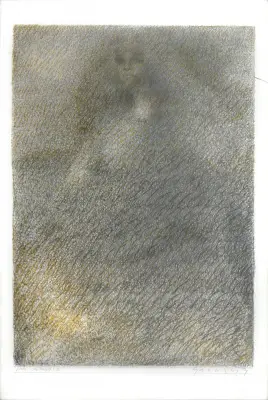
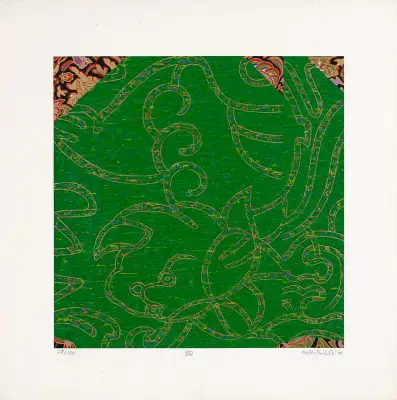
As the critic Mário Pedrosa (1900 - 1981) noted in 1965, his works are of great tonal delicacy, with webs that overlap to the point of forming, in some canvases, a third plane behind. It is these webs that particularly characterize his work. For the critic Frederico Morais, the Tramas [Webs] result from an interweaving of overlapping writings or graphic signs that form textures in which he explores the play of depth and void. The viewer's own movement in front of the paintings, approaching or stepping back, creates new chromatic vibrations and new discoveries for the eye.
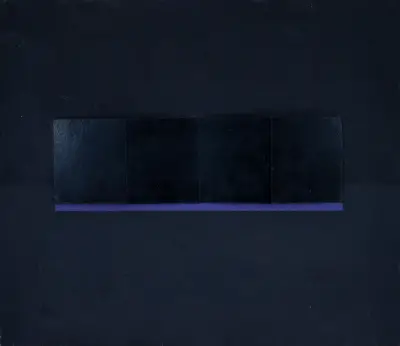
In the artist's own definition, his work consists of "painting the blank canvas as if writing with color, forming sentences in brushstrokes ordered now in one direction, now in another, never at random. Continuing to paint (write) until the webs, labyrinths, chiaroscuros and signs take shape and begin to breathe".1 In the late 1980s, his work again took on constructive features, in canvases where color is ordered in horizontal bands.
Notes
1 Citado em LUDOLF, Rubem. Rubem Ludolf. Rio de Janeiro: Galeria de Arte Centro Empresarial Rio, 1987; p. não numeradas.
Critiques
"Although the concrete artists of Rio de Janeiro soon broke away from the orthodoxy of São Paulo's Grupo Ruptura, creating the Neo-Concrete movement, Ludolf remained faithful to the theoretical principles behind the São Paulo manifesto. His work consistently pursued the issues of serial structures, of optical effects guided by a Gestalt view of space, of programmed color. For Rubem Ludolf, the surface of the painting works as a field of forces in which dynamically arranged elements attract one another in games of visual ambivalence. The rigorous mechanics of ordering forms in space, and color also treated in a linear, methodical way so as to stimulate the viewer's sensory perception, are the main constants of his work. In the 1960s, however, Mário Pedrosa already observed, in both Ludolf and Décio Vieira, a certain liberation from Concrete dogmatism, stating that 'each in his own way, freeing himself from technical rigidity and dogmatic limitations, without orthodoxy and without false regrets, shows that he has assimilated and retained from this tendency its optimistic and constructive meaning'".
Ligia Canongia
PROJETO Arte Brasileira: abstração geométrica 2. Rio de Janeiro: Funarte. Instituto Nacional de Artes Plásticas, 1988.
Solo Exhibitions
1958 - São Paulo SP - Solo, Galeria de Arte das Folhas
1959 - Rio de Janeiro RJ - Solo, Galeria de Arte do Ibeu
1965 - Rio de Janeiro RJ - Solo, Galeria de Arte do Ibeu
1972 - Santos SP - Solo, Galeria do CCBEU
1973 - Rio de Janeiro RJ - Solo, Galeria Bonino
1979 - Rio de Janeiro RJ - Solo, Galeria Candido Mendes
1981 - Rio de Janeiro RJ - Solo, Galeria Paulo Klabin
1983 - Rio de Janeiro RJ - Solo, Galeria Saramenha
1985 - Rio de Janeiro RJ - Solo, Galeria Saramenha
1986 - São Paulo SP - Solo, Galeria Paulo Klabin
1987 - Rio de Janeiro RJ - Solo, Galeria do Centro Empresarial Rio
1989 - Rio de Janeiro RJ - Solo, Galeria Paulo Klabin
1998 - Rio de Janeiro RJ - Solo, Paço Imperial
1999 - Rio de Janeiro RJ - Rubem Ludolf: Objetos Diretos [Rubem Ludolf: Direct Objects]
2002 - Rio de Janeiro RJ - Rubem Ludolf: cor & rigor [Rubem Ludolf: Color & Rigor], Museu Nacional de Belas Artes
2003 - Rio de Janeiro RJ - Solo, Estúdio Guanabara
2003 - São Paulo SP - Solo, Centro Cultural Maria Antonia
2005 - São Paulo SP - Rubem Ludolf: pinturas recentes [Rubem Ludolf: Recent Paintings], Galeria Berenice Arvani
2010 - Rio de Janeiro RJ - Rubem Ludolf - Obra Reunida [Rubem Ludolf - Collected Works], Caixa Cultural
2010 - São Paulo SP - Diálogos [Dialogues], Gabinete de Arte Raquel Arnaud
Group Exhibitions
1954 - Rio de Janeiro RJ - 1st Grupo Frente [Frente Group] exhibition, Galeria Ibeu Copacabana
1955 - Rio de Janeiro RJ - 2nd Grupo Frente exhibition, Museu de Arte Moderna
1955 - São Paulo SP - 3rd São Paulo International Biennial, Pavilhão das Nações
1956 - Resende RJ - 3rd Grupo Frente exhibition, Itatiaia Country Club
1956 - Rio de Janeiro RJ - 5th National Salon of Modern Art
1956 - São Paulo SP - 1st National Exhibition of Concrete Art, Museu de Arte Moderna
1957 - Rio de Janeiro RJ - 1st National Exhibition of Concrete Art, Ministério da Educação e Cultura
1959 - Rio de Janeiro RJ - 8th National Salon of Modern Art, Museu de Arte Moderna
1959 - São Paulo SP - 5th São Paulo International Biennial, Pavilhão Ciccillo Matarazzo Sobrinho
1960 - Rio de Janeiro RJ - 9th National Salon of Modern Art, Museu de Arte Moderna
1961 - Paris (France) - 2nd Paris Biennale, Musée d'Art Moderne de la Ville de Paris
1961 - Rio de Janeiro RJ - 10th National Salon of Modern Art
1961 - São Paulo SP - 6th São Paulo International Biennial, Pavilhão Ciccillo Matarazzo Sobrinho
1962 - Rio de Janeiro RJ - 11th National Salon of Modern Art
1963 - Rio de Janeiro RJ - 12th National Salon of Modern Art
1964 - Rio de Janeiro RJ - 13th National Salon of Modern Art
1965 - Rio de Janeiro RJ - 14th National Salon of Modern Art, Museu de Arte Moderna
1965 - Rio de Janeiro RJ - 1st Esso Salon of Young Artists, Museu de Arte Moderna
1965 - São Paulo SP - 1st Esso Salon of Young Artists, Museu de Arte Contemporânea da Universidade de São Paulo
1965 - São Paulo SP - 8th São Paulo International Biennial, Fundação Bienal
1966 - Salvador BA - 1st National Visual Arts Biennial - acquisition prize
1967 - Rio de Janeiro RJ - 16th National Salon of Modern Art
1967 - São Paulo SP - 9th São Paulo International Biennial, Fundação Bienal - acquisition prize
1968 - Rio de Janeiro RJ - 17th National Salon of Modern Art, Museu de Arte Moderna
1969 - Rio de Janeiro RJ - 18th National Salon of Modern Art
1970 - Rio de Janeiro RJ - 19th National Salon of Modern Art, Museu de Arte Moderna
1973 - São Paulo SP - 12th São Paulo International Biennial, Fundação Bienal
1973 - São Paulo SP - 5th Panorama of Current Brazilian Art, Museu de Arte Moderna
1977 - Rio de Janeiro RJ - Brazilian Constructive Project in Art: 1950-1962, Museu de Arte Moderna
1977 - São Paulo SP - Brazilian Constructive Project in Art: 1950-1962, Pinacoteca do Estado
1981 - Rio de Janeiro RJ - Nuchy Group Show, Nuchy Galeria de Arte
1982 - Rio de Janeiro RJ - 5th National Visual Arts Salon, Museu de Arte Moderna
1983 - Rio de Janeiro RJ - À Flor da Pele: pintura e prazer [Skin Deep: Painting and Pleasure], Galeria do Centro Empresarial Rio
1984 - Rio de Janeiro RJ - Grupo Frente 1954-1956 [Frente Group 1954-1956], Galeria de Arte Banerj
1984 - São Paulo SP - Gilberto Chateaubriand Collection: Portrait and Self-Portrait of Brazilian Art, Museu de Arte Moderna
1984 - São Paulo SP - Geometria 84 [Geometry 84], Paulo Figueiredo Galeria de Arte
1984 - Volta Redonda RJ - Grupo Frente 1954-1956 [Frente Group 1954-1956]
1985 - Niterói RJ - Abraham Palatnik, Abelardo Zaluar, Rubem Ludolf, Galeria Cândida Boechat
1985 - São Paulo SP - Group show, Galeria Paulo Klabin
1986 - Resende RJ - Grupo Frente 1954-1956 [Frente Group 1954-1956]
1988 - Rio de Janeiro RJ - 2nd Geometric Abstraction, Fundação Nacional de Artes. Centro de Artes
1992 - Rio de Janeiro RJ - 1st On the Way to Niterói: João Sattamini Collection, Paço Imperial
1993 - Niterói RJ - Uma Rosa É Uma Rosa É Uma Rosa [A Rose Is a Rose Is a Rose], Galeria de Arte UFF
1993 - São Paulo SP - Modern Drawing in Brazil: Gilberto Chateaubriand Collection, Galeria de Arte do Sesi
1994 - Rio de Janeiro RJ - Modern Drawing in Brazil: Gilberto Chateaubriand Collection, Museu de Arte Moderna
1994 - Rio de Janeiro RJ - Exhibition celebrating the 40th anniversary of the founding of Grupo Frente, Galeria Ibeu Copacabana
1994 - São Paulo SP - Bienal Brasil Século XX [20th Century Brazil Biennial], Fundação Bienal
1996 - Rio de Janeiro RJ - Geometria Rio [Geometry Rio], Paço Imperial
1996 - São Paulo SP - Desexp(l)os(ign)ição, Casa das Rosas
1997 - São Paulo SP - Art Support Computer, Casa das Rosas
1998 - Niterói RJ - Mirror of the Biennial, Museu de Arte Contemporânea
1998 - São Paulo SP - Constructive Art in Brazil: Adolpho Leirner Collection, Museu de Arte Moderna
1999 - Rio de Janeiro RJ - Constructive Art in Brazil: Adolpho Leirner Collection, Museu de Arte Moderna
2000 - Rio de Janeiro RJ - When Brazil Was Modern: Visual Arts in Rio de Janeiro from 1905 to 1960, Paço Imperial
2002 - Niterói RJ - Collection on Paper, Museu de Arte Contemporânea
2002 - Rio de Janeiro RJ - Brazilian Art in the Fadel Collection: From the Restlessness of the Modern to the Autonomy of Language, Centro Cultural Banco do Brasil
2002 - Rio de Janeiro RJ - Paths of the Contemporary 1952-2002, Paço Imperial
2002 - São Paulo SP - Brazilian Art in the Fadel Collection: From the Restlessness of the Modern to the Autonomy of Language, Centro Cultural Banco do Brasil
2003 - Belo Horizonte MG - Geométricos [Geometrics], Léo-Bahia Arte Contemporânea
2003 - Brasília DF - Brazilian Art in the Fadel Collection: From the Restlessness of the Modern to the Autonomy of Language, Centro Cultural Banco do Brasil
2003 - Mexico City (Mexico) - Cuasi Corpus: arte concreto y neoconcreto de Brasil: una selección del acervo del Museo de Arte Moderna de São Paulo y la Colección Adolpho Leirner, Museo Rufino Tamayo
2003 - Rio de Janeiro RJ - Order x Freedom, Museu de Arte Moderna
2003 - Rio de Janeiro RJ - Twenty-Five Years: Galeria de Arte Cândido Mendes, Galeria Candido Mendes
2004 - Rio de Janeiro RJ - New Acquisitions 2003: Gilberto Chateaubriand Collection, Museu de Arte Moderna
2005 - Belo Horizonte MG - 40/80: An Exhibition of Brazilian Art, Léo Bahia Arte Contemporânea
2005 - Porto Alegre RS - 5th Mercosul Visual Arts Biennial
2005 - São Paulo SP - Homo Ludens: do faz de conta à vertigem [Homo Ludens: From Make-Believe to Vertigo], Itaú Cultural
2006 - São Paulo SP - Concreta '56: a raiz da forma [Concreta '56: The Root of Form], Museu de Arte Moderna
2006 - São Paulo SP - Pincelada - Pintura e Método: projeções da década de 50 [Brushstroke - Painting and Method: Projections of the 1950s], Instituto Tomie Ohtake
2007 - Houston (United States) - Dimensions of Constructive Art in Brazil: The Adolpho Leirner Collection, The Museum of Fine Arts
2008 - São Paulo SP - Ruptura, Frente e Ressonâncias [Ruptura, Frente and Resonances], Galeria Berenice Arvani
2009 - São Paulo SP - Anos 50 - 50 Obras [The 1950s - 50 Works], Galeria Berenice Arvani
2010 - São Paulo SP - Preto no Branco: do concreto ao contemporâneo [Black on White: From Concrete to Contemporary], Galeria Berenice Arvani
2010 - São Paulo SP - 6th SP-Arte, Fundação Bienal
Source: Itaú Cultural