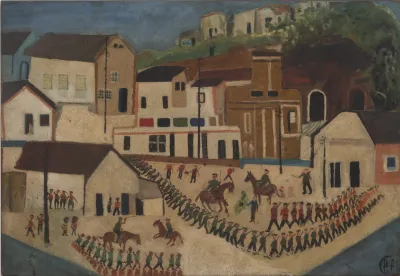

Paulo Pedro Leal (Rio de Janeiro RJ 1894 - São João do Meriti RJ ca. 1968)
Painter.
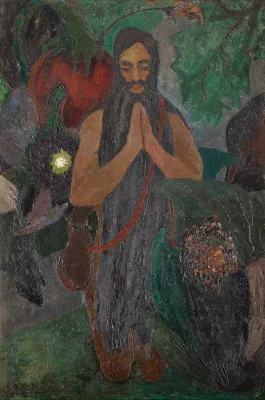
He was self-taught. He was interested in accounts of World War I, in popular art and in the religious syncretism of Umbanda. He devoted himself to crafts, creating toys (ships and houses) and sacred images from wood and cardboard - and, later, modeled clay saints and painted murals on the walls of the Umbanda center he led as a pai de santo [Umbanda priest], and in other terreiros. At the same time, he made signs for bakeries and carnival decorations - from body painting and costumes to the decoration of floats. Between 1950 and 1956, he painted on cardboard supports using unsuitable materials such as synthetic enamel and white lead. He was discovered by the art dealer Jean Boghici during his exhibitions in Rio de Janeiro's Passeio Público. From then on, he began to paint on canvas, using linseed oil paint.
Critiques
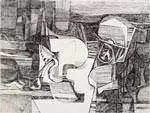
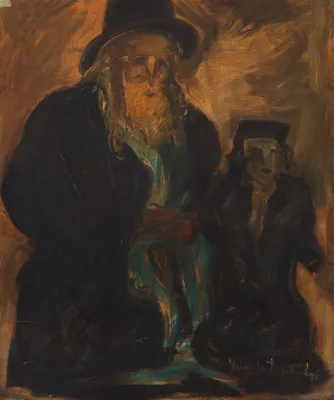
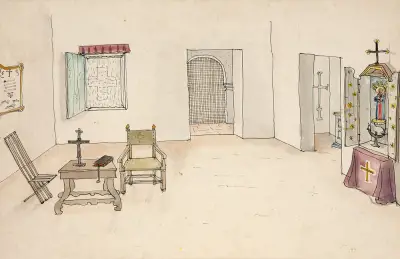
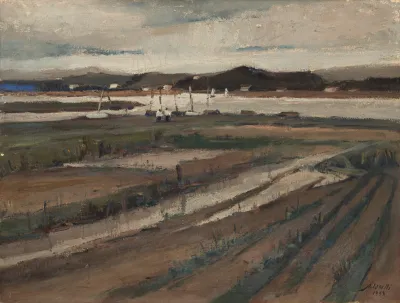
"In the art of Pedro Paulo Leal, which at times takes on tones of sarcasm and criticism of certain situations in society, there are vivid colors spread in open forms, balanced in a compensated and not perfectly symmetrical composition - as is common among the primitives. There is in it the soul of a lyrical fauve. The brushstrokes, treated with subtle transparencies, distinguish it to some extent from flat colors, a technique commonly used by the primitives".
Flávio de Aquino
AQUINO, Flávio de. Aspectos da pintura primitiva brasileira = Aspects of Brazilian primitive painting. Tradução de Richard Spock. Apresentação de Geraldo Edson de Andrade. Rio de Janeiro: Spala, 1978.
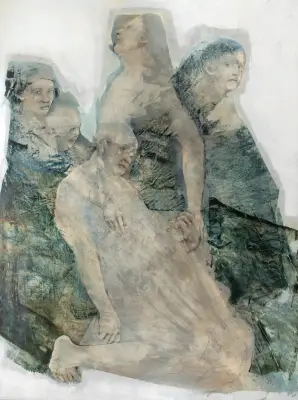
"A strange and curious painter of popular origin, practicing a kind of rustic expressionism mixed with supernatural and not infrequently demonic ingredients, Paulo Pedro Leal can be considered one of the best and most personal among the Brazilian painters of instinct".
José Roberto Teixeira Leite
LEITE, José Roberto Teixeira. Dicionário crítico da pintura no Brasil. Rio de Janeiro: Artlivre, 1988.
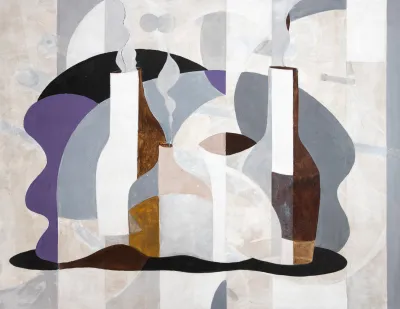
"The core of Paulo's existential interest was the human adventure, which he represents with a dramatic close-up lens (...) There is a great dynamic breath of the present moment in Paulo's Dionysian works, which reveal a tragic world of possession, crimes, shipwrecks, battles, murders. Still life itself frequently appears, in his work, endowed with hieratic solemnity".
Lélia Coelho Frota
A mão afro-brasileira: significado da contribuição artística e histórica. Joel Rufino dos Santos. Tenenge. Emanoel Araújo. ARAÚJO, Emanoel. São Paulo: Tenenge, 1988. Bibliografia: p. 396-398 Conteúdo: 1 - O barroco e o rococó 2 - O século XIX - A academia e os acadêmicos 3 - A herança africana e as artes de origem popular 4 - Arte contemporânea.
Group Exhibitions
1955 - Rio de Janeiro RJ - Exhibition, at Petite Galerie
1961 - Rio de Janeiro RJ - 10º Salão Nacional de Arte Moderna [10th National Salon of Modern Art]
1964 - Rio de Janeiro RJ - O Nu na Arte Contemporânea [The Nude in Contemporary Art], at Galeria Ibeu Copacabana
1965 - Paris (France) - Oito Pintores Ingênuos Brasileiros [Eight Brazilian Naive Painters], at Galeria Jacques Massol
1966 - Buenos Aires (Argentina) - Artistas Brasileiros Contemporâneos [Contemporary Brazilian Artists]
1966 - Moscow and several European cities - Artistas Primitivos Brasileiros [Brazilian Primitive Artists]
Source: Itaú Cultural