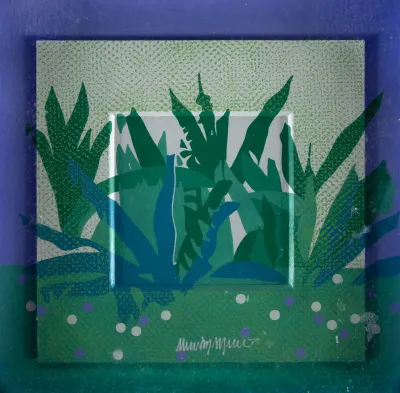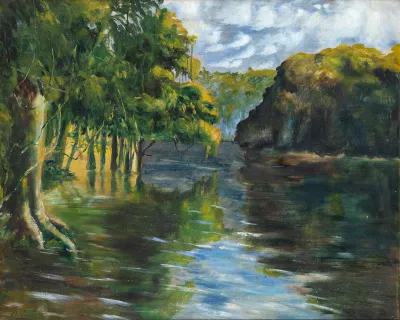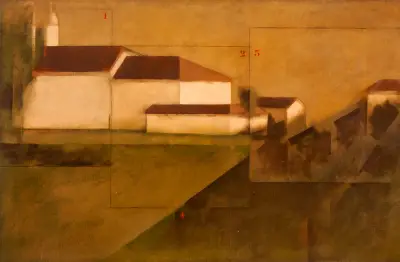

Mario Zanini (São Paulo SP 1907 - Idem 1971)
Mário Zanini was a painter, decorator, ceramist and teacher. Born in São Paulo in 1907 and died in the same city in 1971, he was the son of Italian immigrants and the seventh of nine brothers. He took primary school in a school group in Cambuci, a neighborhood where he lived most of his life.
He enrolled in the painting course at the Men's Professional School of Brás, where he studied from 1920 to 1922, and in the night course of the Liceu de Artes e Ofícios between 1924 and 1926. Between 1922 and 1924, he worked as a lyricist at Companhia Antártica Paulista, located in the Mooca neighborhood. Since 1922, Zanini made copies of old paintings and, in 1923, painted his first landscape.
The meeting with good friends
In 1927 he met Alfredo Volpi, his neighbor in Cambuci and, like him, decorator; The following year he studied for a few months with Jorge Fischer Elpons.
Recommended by Paschoal Graciano started to work with Francisco Rebolo Gonzales, who then maintained a decoration office in the Scafuto building, on Rua 3 de Dezembro. year 1933, and from then until 1938, more or less both would get rid of orders in the styles of Louis XV, Louis XVI, Damasceno, Liberty and even futuristic, according to the client's taste.
The Santa Helena Group begins to form
Of the numerous decorations made by Zanini, none apparently remained.
In 1935 Zanini moved to the Palacete Santa Helena, in Praça da Sé, where Rebolo had installed his office-atelier for a few months.
In 1936 he rented a room of his own, which he will soon share with Manoel Martins and Graciano. Thus, little by little, the so-called Santa Helena Group, the nucleus of the future São Paulo artistic family, appears.
Zanini, like the other members. of the group, leaves, when he can, from the capital, to paint outdoors in suburbs, in small neighboring towns or on the coast.
The painter begins to be noticed
Since 1934 he participated in press conferences, and in 1939, exhibiting at the II Hall of the São Paulo Artistic Family, deserves a good critical reference from Mário de Andrade, who says:
"This my namesake was a revelation for me. In it, the upholstery of a great landscaper."
The year 1940 is one of great activity and progress: Zanini, exhibiting in the modern division of the National Salon of Fine Arts, receives the silver medal (I would win the prize for travel to the country in 1941, but would never get the trip abroad).
Contact with French modernism
Later, at the invitation of Paulo Rossi Osir, produces tile patterns for Osirarte, a company set up by this last.
Continuing, he takes part in the third and final exhibition of the São Paulo Artistic Family, held in Rio de Janeiro; He is interested in the technique of Monotype.
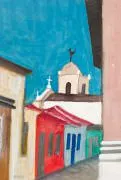
In Itanhaém, a city already visited by his friend Volpi in 1940, he began his series of navies. Brazil.
Alegrias and frustrations
Zanini performed very few individual, the first of which took place in 1944, at Livraria Brasiliense; The second took place in 1962, at the home of the plastic artist in São Paulo and grouped 81 paintings; The third took place in Porto Alegre, at Galeria Pancetti, in 1966.
The presence of Zanini was invariably verified in the press conferences, such as the Bahian Salon of Fine Arts, the Bienal de São Paulo (1951 to 1955, 1959), the Salão Paulista de Arte Moderna (Prêmio de Viagem ao País in 1955), the Salão Paranaense de Belas Artes, etc. On his own account, he traveled to Italy in the company of Volpi and Rossi Ozir, staying there from April to October 1950.
Well remembered, after his death
three years after his death, Opus Art Gallery carried out a retrospective, bringing together 39 works belonging to collectors and friends.
Coincidentally, that same year, Zanini's family donated 108 works involving the various phases of the painter to MAC-USP. This allowed, in 1976, this museum to carry out a consistent retrospective with 205 of its works, involving paintings, drawings, engravings and ceramics.
Teacher, landscaper and sailor
Mário Zanini also From 1968 onwards, he taught at the Faculty of Fine Arts of São Paulo (ten years before he taught engraving at the São Paulo Association of Fine Arts and at the Carlos de Campos School), and participated, as a judge, in several organization or selection committees and awards for competitions. Artistic.
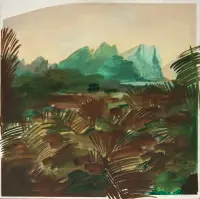
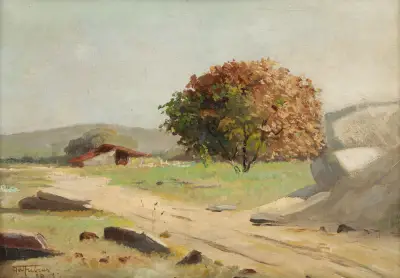
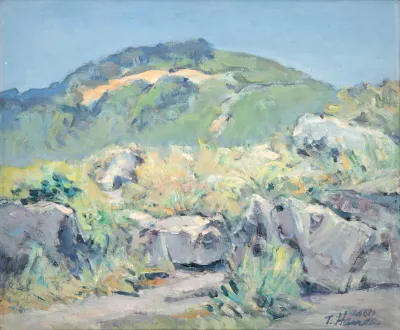
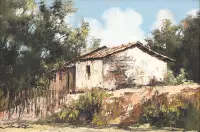
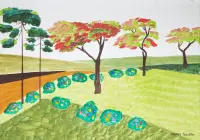
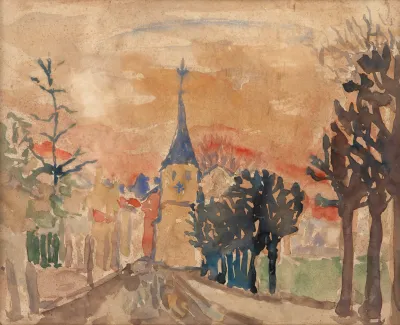
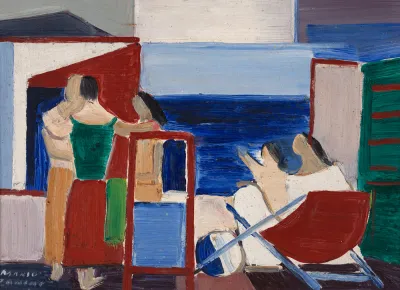
As a landscaper, Zanini interpreted, with simplicity and emotion, nature in the vicinity of São Paulo.
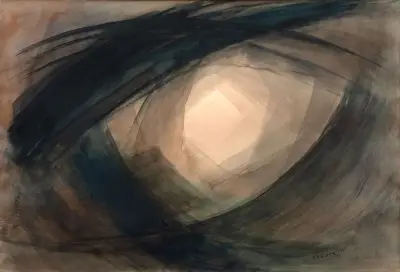
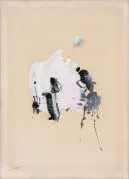
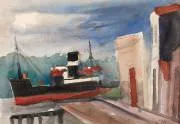
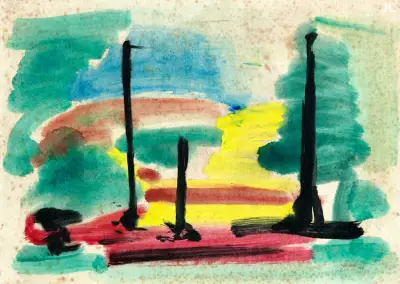
Far from the coast, his presence as a mariner is less constant, but no less notable. He embarked on still life and accidentally made some approximations to abstractionism, without ever having settled in this genre.
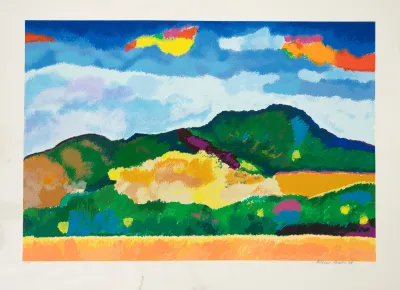
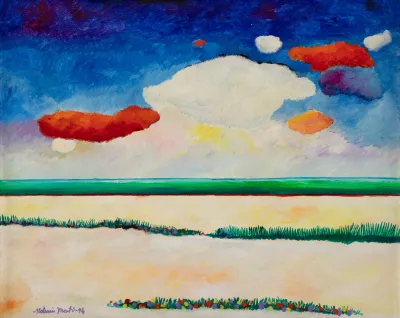
His painting, sometimes resembles that of Volpi, sometimes that of Rebolo. What, however, distinguishes him from the other members of the Santa Helena group and the São Paulo artistic family is its colorful, intense, deep, almost fauve: alongside Volpi, Zanini is, in fact, one of the great colorists of modern Brazilian painting.
Less but always sought after
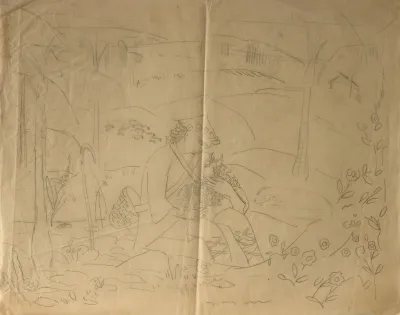
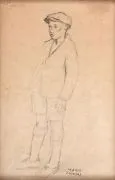
He also executed tile cards, and he had in the drawing and engraving, in that mainly, expressive means of which he made use with sensitivity and intelligence.
Producing a lot but exposing only Rarely, it was natural that he would not obtain, especially outside São Paulo, recognition and success.
Although not being a name of national expression, his presence on the Rio-São Paulo axis is always noticed, appearing frequently in art auctions in both states.
Critical Comment
Son of Italian immigrants, Mario Zanini develops his artistic trajectory in São Paulo, where he resides in the Operário do Cambuci neighborhood. In 1927, he became friends with Alfredo Volpi, joining, together with this artist, the Santa Helena group. From this coexistence, the production of freer compositions results, with the use of wide brushstrokes, marked by the tension between an emotional painting and the will to formalize, as highlighted by the art criticism Alice Brill. The affinity with Volpi, according to Brill, can be observed in the way of applying the brush strokes and in the treatment of the figures. The influence of the work of the French painter Paul Cézanne, which marks the production of santelenist artists, is present, for example, in a stretch of line, 1939.
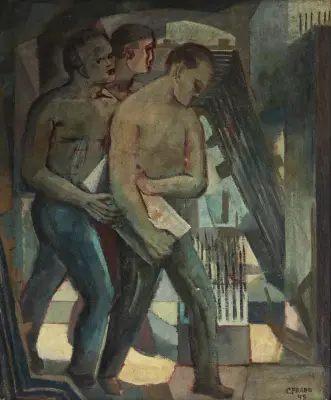
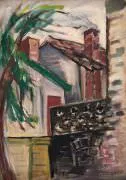
Both in engraving and painting, the artist represents several scenes from the city of São Paulo, that sometimes appear the chimneys of the factories seen from the window of your studio. The theme of urban life is constant in its production, in which, for example, popular musicians, workers and groups of children or cyclists appear portrayed.
Mario Zanini also performs many landscapes, in which he portrays the suburbs of São Paulo that were beginning to be taken by the metropolis. It represents, in several works, groups of people sitting on the banks of the Tietê River, the characteristic washerwomen and, also, the regattas that took place there. Accompanied by other artists from the Santa Helena group, he makes frequent trips to the coast and interior of the State of São Paulo, who serve as inspiration.
Criticism
"The trajectory of Mário Zanini can be defined as a slow evolution, a development of his Creative Potentialities Gradually conquered through a great artisanal and intellectual effort. The artist himself has always attached great importance to the technical and artisanal basis of his work and to the daily and constant work, in the conquest of a personal figurative language. social, documenting a typical suburban experience of the city of São Paulo, still provincial. Regarding formal research, there was a period in which the artist lets himself be carried away by the influences of the environment; in the words of Walter Zanini: ´It involves the tensions that, in Brazil, as in others Countries mark the conflict between abstraction and figuration', contrary to its natural inclination. This period presents itself as a hiatus within the artist's work, a moment of hesitation, overcome by his will to remain faithful to spontaneous figuration, general tone of the previous phases. (...) Like Cézanne, Zanini seeks to reconcile the harmony of colors with a plastic elaboration of the space, the emotionality with the constructivity. If De Fiori's focus, Van Gogh's painting and De Fiori's "expressionism" appeal to his emotionality, Cézanne's lesson represents for Zanini a more intellectualized and constructed painting, introducing new concepts of volume and spatial organization. (...)"
Alice Brill
BRILL, Alice. Mário Zanini and his time: from the Santa Helena Group to the Biennials. São Paulo: Perspectiva, 1984.
Testimonies
"Zanini was the first artist to associate with me, in Santa Helena's studio, then switched to a studio next to what I rented. Talented and sensitive, he liked music and led me to like it too, in everyday conversations; In such a way, my interest aroused my interest that I often ended up going with him to the churches, during mass hours, to listen to religious songs. He also liked to read a lot, thus making up for the retracted type he was, outside the group of friends. We started to go together, Zanini, Volpi and I, mainly, to paint 'from the natural', in Canindé, in Cambuci, and in many other points on the periphery. In fact, Volpi and Zanini were so close together that Santa Helena's people called them 'Mutt and Jeff' inseparable characters from a comic book of the time. (...) I always thought that Zanini was a great painter, as well as a good companion. Concerned about the mastery of the brushstroke, especially in the details of the paintings, he made his landscapes with a concern of great synthesis. In 1939, he was already a painter highly praised by critics, despite modesty."
F. Rebolo Gonsales
ZANINI, Mario. Mário Zanini. São Paulo: Grifo Galeria de Art, 1977. P. 4. [Testimony to Lisbeth R. Gonçalves on the occasion of the exhibition at the Opus gallery, June 1974.]
Individual exhibitions
1944 - São Paulo SP - Individual, at the Galeria da Livraria Brasiliense
1962 - São Paulo SP - 81 paintings by Mário Zanini, at the home of the plastic artist in São Paulo
1966 - Porto Alegre RS - Individual, at the Pancetti Gallery
1968 - Santos SP - Individual, at CCBEU
Collective exhibitions
1934 - São Paulo SP - 1st Paulista Salon of Fine Arts
1935 - São Paulo SP - 2nd São Paulo Salão de Fine Arts
1935 - São Paulo SP - 3rd São Paulo Salon of Fine Arts
1937 - São Paulo SP - 1st Salon of the São Paulo Artistic Family, at the Hotel Esplanada
1938 - São Paulo SP - 4th Salon do Plastic Artists Union
1939 - São Paulo SP - 2nd Salon of the São Paulo Artistic Family, at the Eldorado Hall
1940 - Rio de Janeiro RJ - 3rd Salon of the São Paulo Artistic Family, at the Palace Hotel
1940 - Rio de Janeiro RJ - 46th National Salon of Fine Arts, at the MNBA
1940 - São Paulo SP - 5th Salon of the Plastic Artists Union, at the Prestes Maia Gallery
1941 - Rio de Janeiro RJ - 47th National Salon of Fine Arts, at MNBA
1941 - São Paulo SP - 1st Art Salon of the National Industry Fair
1941 - São Paulo SP - 1st Osirarte Hall, at Rua Barão de Itapetininga, 124
1942 - São Paulo SP - 7th Hall of the Plastic Artists Union, at the Prestes Maia Gallery
1943 - Rio de Janeiro RJ - Anti-Axis Exhibition, at the Historical and Diplomatic Museum - Itamaraty Palace
1943 - Rio de Janeiro RJ - Osirarte tile exhibition, at the MNBA
1944 - Belo Horizonte MG - Exhibition of Modern Art, at MAP
1944 - London (England) - Exhibition of Modern Brazilian Paintings, at the Royal Academy of Arts
1944 - Norwich (England) - Exhibition of Modern Brazilian Paintings, at Norwich Castle and Museum 1944 - São Paulo SP - 9th Salon of the Plastic Artists Union, at the Prestes Maia Gallery
1944 - São Paulo SP - Brazilian-North-American Modern Painting Exhibition, at the Prestes Maia Gallery
1944 - São Paulo SP - Mario Zanini, Bruno Giorgi and Hilde Weber, at Livraria Brasiliense
1945 - Bath (England) - Exhibition of Modern Brazilian Paintings
1945 - Bristol (England) - Exhibition of Modern Brazilian Paintings
1945 - Edinburgh (Scotland) - Exhibition of Modern Brazilian Paintings
1945 - Glasgow (Scotland) - Exhibition of Modern Brazilian Paintings
1945 - Manchester (England) - Exhibition of Modern Brazilian Paintings
1945 - Rio de Janeiro RJ - 51st National Salon of Fine Arts, at MNBA
1945 - São Paulo SP - Alfredo Volpi, Bonadei, Carlos Prado, Quirino da Silva, Francisco Rebolo, Mario Zanini and José Pancetti, at the gallery Benedetti
1945 - São Paulo SP - Anita Malfati, Virginia Artigas, Clóvis Graciano, Mick Carnicelli, Oswald de Andrade Filho, José Pancetti, Carlos Prado, Francisco Rebolo, Quirino da Silva, Alfredo Volpi, Mario Zanini, at the Itapetininga Gallery
1945 - São Paulo SP - Galeria Domus: Inaugural Exhibition, at the Domus Gallery
1945 - São Paulo SP - Posthumous tribute to Mário de Andrade, at the gallery Ita
1946 - Buenos Aires (Argentina) - Osirarte, at Salón Peuser
1946 - São Paulo SP - Osirarte, at the Benedetti Gallery
1946 - Valparaíso (Chile) - Exhibition of the Cia Nacional de Navigação
1946 - Valparaíso (Chile) - Exhibition of Contemporary Brazilian Painting, at the Institute for the Extension of Plastic Arts
1947 - Mendoza (Argentina) - Osirarte, at the gallery Gimenez
1947 - São Paulo SP - 11th Salon of the Plastic Artists Union, at the Prestes Maia Gallery
1947 - São Paulo SP - 1st Circulating Exhibition of Plastic Arts
1947 - São Paulo SP - watercolors and gouaches, at the Mário de Andrade Municipal Library
1947 - São Paulo SP - Bonadei, Di Cavalcanti, Noêmia Mourão, Lothar Charoux, Oswald de Andrade Filho, Lúcia Suané, Cesar Lacanna, Mario Zanini and Raphael Galvez, at the Itapetininga Gallery
1947 - São Paulo SP - Mario Zanini, Rebolo, Sérgio Milliet and Volpi, at the Domus Gallery
1948 - São Paulo SP - 12th Hall of the Plastic Artists Union, at the Domus Gallery
1948 - São Paulo SP - Volpi, Zanini, Rebolo, at the Domus Gallery
1949 - Rio de Janeiro RJ - 55th National Salon of Belas Arts, at the MNBA
1949 - Salvador BA - 1st Baiano Salão de Belas Artes, at the Hotel Bahia
1950 - São Paulo SP - Alfredo Volpi, Nelson Nóbrega, Zanini, Francisco Rebolo, at the gallery Domus
1951 - São Paulo SP - 1st São Paulo International Biennial, at the Trianon Pavilion
1951 - São Paulo SP - 1st São Paulo Salon of Modern Art, at the Prestes Maia Gallery
1952 - São Paulo SP - Volpi, Zanini, Rossi, at the Ítalo-Brasilerio Cultural Institute.
1953 - São Paulo SP - 2nd São Paulo International Biennial, at MAM/SP
1953 - São Paulo SP - 2nd São Paulo International Biennial, at the State Pavilion
1954 - Goiânia GO - Exhibition of the National Congress of Intellectuals
1954 - São Paulo SP - 3rd São Paulo Hall of Modern Art, at the Prestes Maia Gallery
1954 - São Paulo SP - Contemporary Art: Exhibition of the collection of the Museum of Modern Art of São Paulo, at MAM/SP
1955 - Rio de Janeiro RJ - 4th National Salon of Modern Art
1955 - São Paulo SP - 4th Salão Paulista of Modern Art, at the Prestes Maia Gallery
1956 - Rio de Janeiro RJ - 1st Railway Hall, MEC
1956 - São Paulo SP - 50 years of Brazilian landscape, at MAM/SP
1958 - São Paulo SP - 47 artists, at the Folhas Art Gallery
1958 - São Paulo SP - 7th Salão Paulista de Arte Moderna, at Galeria Prestes Maia
1959 - São Paulo SP - 40 artists from Brazil, at Galeria São Luiz
1959 - São Paulo SP - 47 artists, at the Folhas Art Gallery
1959 - São Paulo SP - 5th São Paulo International Biennial, at the Ciccilo Matarazzo Sobrinho Pavilion
1960 - Rio de Janeiro RJ - 9th National Salon of Modern Art, at MAM/RJ
1960 - São Paulo SP - 9th Salão Paulista de Arte Moderna, at Galeria Prestes Maia
1961 - São Paulo SP - Leirner Award for Contemporary Art, at the Art Gallery of Folhas
1962 - São Paulo SP - 11th São Paulo Salon of Modern Art, at the Gallery
1963 - Campinas SP - Contemporary painting and sculpture, at the Carlos Gomes Museum
1966 - São Paulo SP - 15th Salão Paulista de Arte Moderna, At Galeria Prestes Maia
1966 - São Paulo SP - Half a century of Art Nouveau, at MAC/USP
1966 - São Paulo SP - Santa Helena's group, today, at Galeria de Arte 4 Planets
1966 - São Paulo SP - Three premises, at MAB/FAAP
1967 - Barcelona (Spain) - Brazilian painters in Spain, at Galería Syra
1969 - São Bernardo do Campo SP - 12th Art Salon of São Bernardo do Field
1969 - São Paulo SP - 1st Brazilian current art panorama, at MAM/SP
Postombent exhibitions
1974 - São Paulo SP - Individual, at the Opus Gallery
1975 - São Paulo SP - 40 years old: Grupo Santa Helena, at MIS/SP
1976 - São Paulo SP - Mario Zanini, at MAC/USP
1976 - São Paulo SP - The salons: of the São Paulo artistic family, May and the São Paulo Plastic Artists Union, at the Lasar Segall Museum
1977 - São Paulo SP - Grupo Seibi - Santa Helena Group: Decade 35 to 45, MAB/FAAP
1977 - São Paulo SP - Mario Zanini, at the Grifo Art Gallery
1978 - São Paulo SP - The Biennials and Abstraction: The 50's, at the Lasar Segall Museum
1979 - São Paulo SP - The Santa Helena Group, Uirapuru Art Gallery.
1980 - São Paulo SP - The Brazilian landscape: 1650-1976, at Paço das Artes
1982 - São Paulo SP - From modernism to the biennial, at MAM/SP
1982 - São Paulo SP - Marines and Ribeirinhas, at the Lasar Segall Museum
1984 - São Paulo SP - Tradition and Rupture: Synthesis of Brazilian Art and Culture, at the Bienal Foundation
1985 - São Paulo SP - 100 Obras Itaú, at MASP
1985 - São Paulo SP - Osirarte: paintings on tiles by Volpi, Zanini, Hilde Weber and Gerda Brantani, at the Pinacoteca do Estado
1986 - Rio de Janeiro RJ - Seven decades of the Italian presence in Brazilian art, at the Paço Imperial
1988 - São Paulo SP - MAC 25 years: Highlights of the initial collection, at MAC/USP
1992 - Poços de Caldas MG - Brazilian modern art: collection from the Museum of Contemporary Art of the University of São Paulo, at the Casa da Cultura
1992 - São Paulo SP - Sérgio's look at Brazilian art: drawings and paintings, at the Mário de Andrade Municipal Library
1993 - Rio de Janeiro RJ - Brazil, 100 years of Modern Art, at the MNBA
1994 - São Paulo SP - Bienal Brasil Século 20th, at the Bienal Foundation
1995 - Osasco SP - 2nd Art Exhibition, at the Instituto de Ensino para Osasco Foundation
1995 - São Paulo SP - The Santa Helena Group, at MAM/SP
1996 - Rio de Janeiro RJ - The Santa Helena Group, at CCBB
1996 - São Paulo SP - Brazilian art: 50 years of history in the MAC/USP collection: 1920-1970, at MAC/USP
1997 - São Paulo SP - Big names in Brazilian painting, at Jo Slaviero Art Gallery
1997 - São Paulo SP - The revealing touch: portraits and Self-portraits, at MAC/USP
1998 - São Paulo SP - São Paulo iconography in private collections, at the Museum of the Brazilian House
1999 - São Paulo SP - daily life/art. Consumption, at Itaú Cultural
2000 - São Paulo SP - Brazil on paper: nuances and experiences, at the Unicid Arts Space
2000 - São Paulo SP - Grupo Santa Helena, at Jo Slaviero Art Galeria
2000 - São Paulo SP - The Role of Art, at the SESI Art Gallery
2001 - Brasília DF - Collections of Brazil, at CCBB
2001 - São Paulo SP - Self-portrait of the artist's mirror, at the Art Gallery do Sesi
2001 - São Paulo SP - Brazilian Art Museum: 40 years old, at MAB/FAAP
2002 - São Paulo SP - Modernism: from the 22nd to the Sérgio Milliet Art Section CCSP
2002 - São Paulo SP - Workers at Paulista: MAC-USP and the Artist Artisans, at the SESI Art Gallery
2003 - São Paulo SP - The Art Behind the Art: Where they are and how they travel the works of art, in the MAM/SP
2003 - São Paulo SP - Art and society: a controversial relationship, at Itaú Cultural
2003 - São Paulo SP - painters on the coast of São Paulo, at Sociarte
2003 - São Paulo SP - ONE Coração, at MAM/SP
2004 - São Paulo SP - Paper Office, at CCSP
Source: Itaú Cultural and CD Rom: 500 years of Brazilian painting