Marina Caram (Sorocaba SP 1925 - São Paulo SP 2008)
Painter, sculptor, draftsman, printmaker and illustrator.
She began her artistic production in Sorocaba in 1945. She moved to São Paulo and was introduced to the modernist Oswald de Andrade (1890 - 1954) who, impressed by the young artist's work, introduced her to Pietro Maria Bardi (1900 - 1999). Around 1950, she met Di Cavalcanti (1897 - 1976), who lent her his studio. Her first exhibition was a solo show at the Museu de Arte de São Paulo (Masp) [São Paulo Museum of Art] in 1951. She received a scholarship from the French government to study in Paris, where she attended the École des Beaux-Arts between 1951 and 1953. Returning to Brazil, she exhibited again at Masp. She made several study trips, visiting England, Argentina, Uruguay, Bolivia and various parts of Brazil. In 1983, she was invited by the Musée Saint-Vic in Saint-Amand-Montrond, France, to exhibit her works. As an illustrator, Caram contributed to the Suplemento Literário [Literary Supplement] of the newspaper O Estado de S. Paulo and illustrated the books Ibéria Crucificada [Crucified Iberia], by Miguel Melgarejo (1961); Grito de Augusto [Augusto's Cry], by Aldenora de Sá Porto (1967); Joatão e a Ilha [Joatão and the Island], by José Fonseca Fernandes (1986); and Vocação Hipócrita [Hypocritical Vocation], by Paulo Fratelli (1986). In 1985, the Associação Paulista de Críticos de Arte (APCA) [São Paulo Art Critics Association] awarded the artist a prize in the Retrospective category for 40 years of her painting. Works by Marina Caram are in the collections of Masp, the Museu de Arte Contemporânea de São Paulo (MAC/SP) [Museum of Contemporary Art of São Paulo] and the Pinacoteca do Estado de São Paulo [São Paulo State Pinacotheca].
Critical Commentary
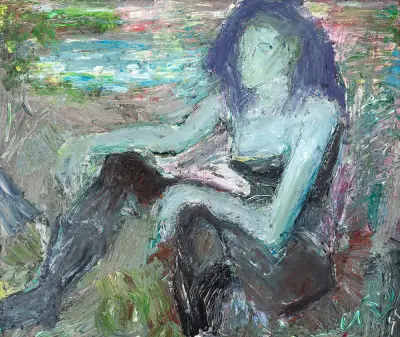
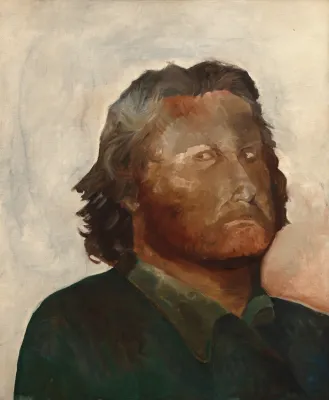
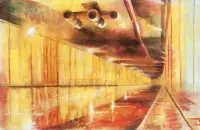
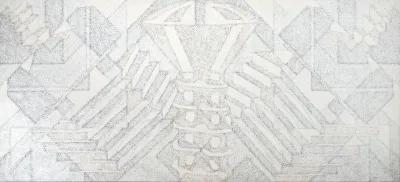
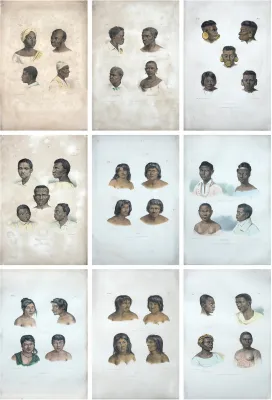
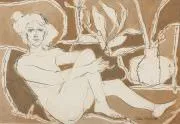
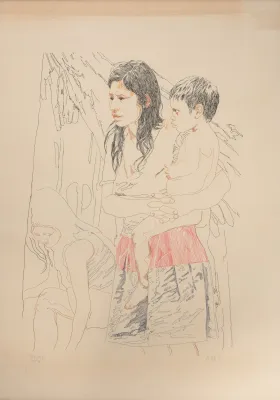
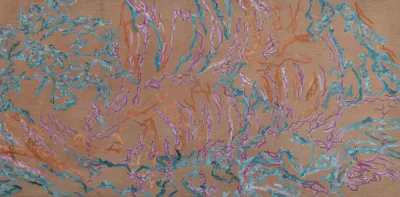
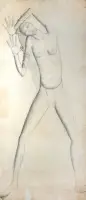
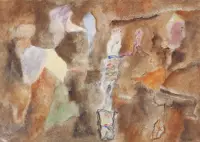
Marina Caram constructs a figuration of expressionist character within an eminently social theme, presenting in her works anonymous characters from the big cities and from folk events, as in Prostituta [Prostitute] (1952), Enterro no Morro [Burial on the Hill] (1963) and Favelado Rei do Carnaval [Slum Dweller, King of Carnival] (1974). These figures appear in a dramatic configuration, accentuated by the somber atmosphere and the vigorous brushstrokes that generally predominate in her work. For the critic and art collector Pietro Maria Bardi, Caram showed, early in her career, an affinity with the expressionist sentiment and with themes related to the human drama. The artist also addresses the religious syncretism of Bahia, composing paintings in the series Orixás, such as Omulu (1954), Oxossé (1959) and Exu (1960), always in a register of distorted representation and a search for drama. In that same period, she made the woodcut series Barroca [Baroque]. During the 1960s, other themes stand out in her work, such as the relationship between man and professions, Selos e Carimbos [Stamps and Seals] (1967), and between man and machine, Artesanato Mutilado pela Máquina [Handicraft Mutilated by the Machine] (1969). Between the 1970s and 1980s, Caram produced a series of paintings whose themes are Carnival and the circus. In these works, joy and despair are mixed, as in Fim de Carnaval [End of Carnival] (1975) and Palhaço Enamorado [Clown in Love] (1983).
Critiques
"In the specific case of Marina Caram, an expressionist through and through, the neo-expressionist wave had no effect at all. Marina, ever since she has known herself as an artist, has always expressed herself through the language, the discourse of expressionism. In choosing this form of expression as the one that suited her best, she was not unaware that, in a country where poverty, hunger and violence are part of everyday life, surviving with artistic integrity would not be easy. It was not, and still is not. Artistically, Marina Caram is one of the few artists with something to say, to communicate, to express. Her critical vision, in focusing on the social injustices of our country, indirectly encompasses those of the entire Third World. With few exhibitions, inexplicably absent from galleries and museums, Marina Caram, with works stored for years, had in 1985 a retrospective at the Museu de Arte de São Paulo in which her production could be analyzed from the point of view of both creativity and technique. In both, the artist proved fully accomplished. Without the slightest concession to fashions and the market, Caram's expressionism, faithful to its origins and roots, is an endless journey. On this journey the artist is sovereign. On canvas, paper, wood, stone, plate and bronze, Caram pours out all her innate potential. A succession of encounters, reencounters and discoveries marks her trajectory. Whole in its totality, this unusual and unparalleled body of work, scarcely publicized and in permanent ostracism, deserves the attention of museologists, critics, dealers and cultural promoters, for it signifies, in artistic terms, much of what this country is".
Carlos von Schmidt
SCHMIDT, Carlos von. Marina Caram: visão crítica. Artes, São Paulo, v. 22, n. 63, p. 48, abr./jun. 1987.
Solo Exhibitions
ca. 1948 - São Paulo SP - First solo exhibition, at Masp
ca. 1951 - São Paulo SP - Solo, at Masp
1953/1966 - São Paulo SP and Salvador BA - Solo, at Masp, MAM/SP and MAM/BA
1968 - São Paulo SP - 8 Fases de Marina Caram [8 Phases of Marina Caram], at MAB/Faap
1983 - Saint-Amand-Montrond (France) - Solo, at Musée Saint-Vic
1985 - São Paulo SP - Marina Caram: retrospectiva [Marina Caram: Retrospective], at Masp
Group Exhibitions
1953 - São Paulo SP - 2ª Bienal Internacional de São Paulo [2nd São Paulo International Biennial], at Pavilhão dos Estados
1954 - São Paulo SP - 3º Salão Paulista de Arte Moderna [3rd São Paulo Salon of Modern Art], at Galeria Prestes Maia
1955 - São Paulo SP - 3ª Bienal Internacional de São Paulo [3rd São Paulo International Biennial], at Pavilhão das Nações
1955 - São Paulo SP - 4º Salão Paulista de Arte Moderna [4th São Paulo Salon of Modern Art], at Galeria Prestes Maia
1956 - São Paulo SP - 5º Salão Paulista de Arte Moderna [5th São Paulo Salon of Modern Art], at Galeria Prestes Maia
1957 - São Paulo SP - 6º Salão Paulista de Arte Moderna [6th São Paulo Salon of Modern Art], at Galeria Prestes Maia
1958 - São Paulo SP - 7º Salão Paulista de Arte Moderna [7th São Paulo Salon of Modern Art], at Galeria Prestes Maia
1959 - São Paulo SP - 8º Salão Paulista de Arte Moderna [8th São Paulo Salon of Modern Art], at Galeria Prestes Maia
1960 - São Paulo SP - 9º Salão Paulista de Arte Moderna [9th São Paulo Salon of Modern Art], at Galeria Prestes Maia
1960 - São Paulo SP - Contribuição da Mulher às Artes Plásticas no País [Women's Contribution to the Visual Arts in Brazil], at MAM/SP
1961 - São Paulo SP - 10º Salão Paulista de Arte Moderna [10th São Paulo Salon of Modern Art], at Galeria Prestes Maia
1965 - São Paulo SP - 8ª Bienal Internacional de São Paulo [8th São Paulo International Biennial], at Fundação Bienal
1966 - Salvador BA - 1ª Bienal Nacional de Artes Plásticas [1st National Visual Arts Biennial]
1967 - São Paulo SP - 9ª Bienal Internacional de São Paulo [9th São Paulo International Biennial], at Fundação Bienal
1969 - São Paulo SP - 1º Panorama de Arte Atual Brasileira [1st Panorama of Current Brazilian Art], at MAM/SP
1969 - São Paulo SP - 10ª Bienal Internacional de São Paulo [10th São Paulo International Biennial], at Fundação Bienal
1970 - São Paulo SP - Pinacoteca do Estado de São Paulo 1970 [São Paulo State Pinacotheca 1970]
1971 - São Paulo SP - 3º Panorama de Arte Atual Brasileira [3rd Panorama of Current Brazilian Art], at MAM/SP
1972 - São Paulo SP - 2ª Exposição Internacional de Gravura [2nd International Print Exhibition], at MAM/SP
1973 - São Paulo SP - 5º Panorama de Arte Atual Brasileira [5th Panorama of Current Brazilian Art], at MAM/SP
1976 - São Paulo SP - O Desenho Jovem dos anos 40 [Young Drawing of the 1940s], at Pinacoteca do Estado
1982 - São Paulo SP - Um Século de Escultura no Brasil [A Century of Sculpture in Brazil], at Masp
1985 - São Paulo SP - 100 Obras Itaú [100 Itaú Works], at Masp
1985 - São Paulo SP - 18ª Bienal Internacional de São Paulo [18th São Paulo International Biennial], at Fundação Bienal
1993 - São Paulo SP - O Trágico e o Lírico [The Tragic and the Lyrical], at Memorial da América Latina
1993 - João Pessoa PB - Xilogravura: do cordel à galeria [Woodcut: From Cordel to Gallery], at Fundação Espaço Cultural da Paraíba
1994 - São Paulo SP - Bienal Brasil Século XX [20th-Century Brazil Biennial], at Fundação Bienal
1994 - São Paulo SP - Xilogravura: do cordel à galeria [Woodcut: From Cordel to Gallery], at Metrô
1996 - São Paulo SP - O Mundo de Mário Schenberg [The World of Mário Schenberg], at Casa das Rosas
1997 - São Paulo SP - Arte Suporte Computador [Art Support Computer], at Casa das Rosas
2003 - São Paulo SP - Arte e Sociedade: uma relação polêmica [Art and Society: A Controversial Relationship], at Itaú Cultural
2004 - São Paulo SP - Novas Aquisições: 1995 - 2003 [New Acquisitions: 1995 - 2003], at MAB/Faap
Source: Itaú Cultural