Lucílio de Albuquerque (Barras PI 1877 - Rio de Janeiro RJ 1939)
Painter, draftsman, stained-glass artist and teacher.
In 1895, he enrolled at the Faculdade de Direito de São Paulo, but left to study painting. He moved to Rio de Janeiro in 1896 and attended the Escola Nacional de Belas Artes - Enba [National School of Fine Arts] as an auditing student. From 1901 to 1906, he was enrolled in the regular course at Enba, taking classes with Rodolfo Amoedo (1857 - 1941), Zeferino da Costa (1840 - 1915) and Henrique Bernardelli (1858 - 1936). In 1906, he won the foreign travel prize at the Salão Nacional de Belas Artes - SNBA [National Fine Arts Salon] with the painting Anchieta Escrevendo o Poema à Virgem [Anchieta Writing the Poem to the Virgin], and left for Europe with his wife, the painter Georgina de Albuquerque (1885 - 1962). In Paris, he studied at the École Nationale Supérieure des Beaux-Arts and at the Académie Julian, as a student of Henri Royer (1869 - 1938), Marcel Baschet (1862 - 1941) and Jean-Paul Laurens (1838 - 1921). He took part in the Brussels International Exhibition and made stained-glass windows for the Brazilian pavilion at the Turin International Exhibition, Italy, in 1911. That same year, he returned to Rio de Janeiro and became professor of figure drawing at Enba. He was appointed director in 1937, a post he left the following year for health reasons. After his death, Georgina de Albuquerque founded the Museu Lucílio de Albuquerque in the early 1940s; its collection now belongs to the State of Rio de Janeiro.
Critical Commentary
The painter Lucílio de Albuquerque attended the Escola Nacional de Belas Artes - Enba in 1896 as an auditing student. In 1901, he became a regular student at the institution, studying with Rodolfo Amoedo (1857 - 1941), Zeferino da Costa (1840 - 1915) and Henrique Bernardelli (1858 - 1936). In 1906, he received the foreign travel prize and left for Europe with his wife, the painter Georgina de Albuquerque (1885 - 1962), where he studied at the Académie Julian. In Paris, he came into contact with Impressionism and Symbolism, producing works that engage with these tendencies.
He showed several works at the Salon des Artistes Français, for example La Campagne (1908), Agnus Dei (1909) and Raparigas do Milho [Corn Girls] (1910). At the Salon Internationale de Bruxelles he exhibited the canvas Despertar de Ícaro [The Awakening of Icarus] (1910), painted in tribute to the aviator Alberto Santos-Dumont (1873 - 1932). The following year, he designed a stained-glass window for the Brazilian Pavilion at the Turin International Exhibition.
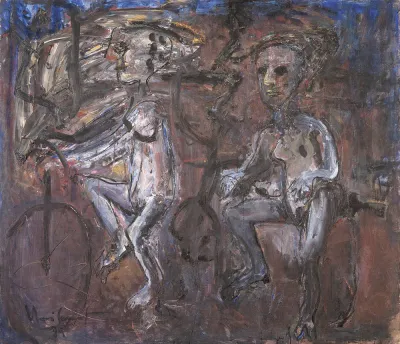
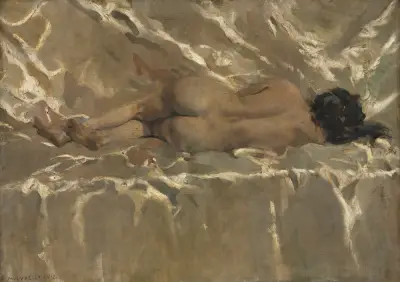
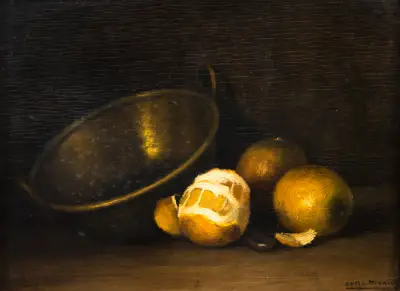
For art historian Teixeira Leite, Lucílio de Albuquerque's work moves from shadow to light, that is, from an initial use of a palette of dark tones gradually to light tones, also moving away from the realist conception of form, with its use of solid drawing, to later achieve almost expressionist chromatic effects. The artist also stands out for his landscapes, painted en plein air.
Critiques
"Lucílio de Albuquerque practiced all pictorial genres with equal ease; he preferred, however, subjects that made one think, that contained an idea. His stylistic evolution moves from a realist conception of form toward chromatic and luminous effects peculiar to pure painting: his art thus became brighter and more joyful as he matured. He composed his pictures with the help of color, but did not neglect drawing on that account. Won over by open-air painting (...), he became one of those who introduced Impressionism to Brazil (...)."
José Roberto Teixeira Leite
ARTE no Brasil. Apresentação de Pietro Maria Bardi e Pedro Manuel. São Paulo: Abril Cultural, 1979.
"In this final phase (from 1924 onward), the artist arrives more decisively at an impressionist approach, not applying himself radically to the scientific principles of light and color, but preserving an individual spontaneity, adopting the breaking of contours and thus allowing greater scope for atmospheric effects. From then on, he is more committed to the impressionist influences that had struck him in his youth but had been held in check by other aesthetic concerns. He reveals himself as the painter par excellence. And Brazilian painting gained one more of its enthusiastic interpreters (...)."
Quirino Campofiorito
CAMPOFIORITO, Quirino. História da pintura brasileira no século XIX. Rio de Janeiro: Pinakotheke, 1983.
Solo Exhibitions
1911 - Rio de Janeiro RJ - First solo exhibition
1914 - Porto Alegre RS - Solo
1914 - Salvador BA - Solo
1915 - São Paulo SP - Solo
1918 - Rio de Janeiro RJ - Solo
1920 - Recife PE - Solo
1921 - Buenos Aires (Argentina) - Solo
1931 - Rio de Janeiro RJ - Solo
1935 - Rio de Janeiro RJ - Solo
1936 - São Paulo SP - Solo
Group Exhibitions
1901 - Rio de Janeiro RJ - General Fine Arts Exhibition, at Enba
1902 - Rio de Janeiro RJ - 9th General Fine Arts Exhibition, at Enba - second-degree honorable mention
1903 - Rio de Janeiro RJ - 10th General Fine Arts Exhibition, at Enba
1904 - Rio de Janeiro RJ - 11th General Fine Arts Exhibition, at Enba - first-degree honorable mention
1905 - Rio de Janeiro RJ - 12th General Fine Arts Exhibition, at Enba
1906 - Rio de Janeiro RJ - 13th General Fine Arts Exhibition, at Enba - travel prize to Europe
1907 - Rio de Janeiro RJ - 14th General Fine Arts Exhibition, at Enba - large silver medal
1908 - Paris (France) - Salon des Artistes Français
1909 - Paris (France) - Salon des Artistes Français
1910 - Brussels (Belgium) - Brussels International Exhibition
1910 - Paris (France) - Salon des Artistes Français
1911 - Paris (France) - Salon des Artistes Français
1911 - São Paulo SP - First Brazilian Fine Arts Exhibition, at Liceu de Artes e Ofícios
1911 - Turin (Italy) - Turin International Exhibition
1912 - Rio de Janeiro RJ - 19th General Fine Arts Exhibition, at Enba - small gold medal
1912 - São Paulo SP - Second Brazilian Fine Arts Exhibition, at Liceu de Artes e Ofícios
1913 - Rio de Janeiro RJ - 20th General Fine Arts Exhibition, at Enba
1914 - Rio de Janeiro RJ - 21st General Fine Arts Exhibition, at Enba
1915 - Rio de Janeiro RJ - 22nd General Fine Arts Exhibition, at Enba
1916 - Rio de Janeiro RJ - 23rd General Fine Arts Exhibition, at Enba - large gold medal
1917 - Rio de Janeiro RJ - 24th General Fine Arts Exhibition, at Enba
1919 - Rio de Janeiro RJ - 26th General Fine Arts Exhibition, at Enba
1920 - Rio de Janeiro RJ - 27th General Fine Arts Exhibition, at Enba - medal of honor
1921 - Rio de Janeiro RJ - 28th General Fine Arts Exhibition, at Enba
1922 - Rio de Janeiro RJ - 29th General Fine Arts Exhibition, at Enba
1923 - Rio de Janeiro RJ - 30th General Fine Arts Exhibition, at Enba
1924 - Rio de Janeiro RJ - 31st General Fine Arts Exhibition, at Enba
1925 - Rio de Janeiro RJ - 32nd General Fine Arts Exhibition, at Enba
1926 - Los Angeles (United States) - Los Angeles International Salon
1926 - Rio de Janeiro RJ - 33rd General Fine Arts Exhibition, at Enba
1927 - New York (United States) - Group show, at Nicholas Roerich Museum
1927 - Rio de Janeiro RJ - 34th General Fine Arts Exhibition, at Enba
1928 - Rio de Janeiro RJ - 35th General Fine Arts Exhibition, at Enba
1929 - Rio de Janeiro RJ - 36th General Fine Arts Exhibition, at Enba
1930 - New York (United States) - The First Representative Collection of Paintings by Brazilian Artists, at Nicholas Roerich Museum
1930 - Rio de Janeiro RJ - 37th General Fine Arts Exhibition, at Enba
1933 - Rio de Janeiro RJ - 40th General Fine Arts Exhibition, at Enba
1934 - São Paulo SP - 1st São Paulo Fine Arts Salon
1935 - Pittsburgh (United States) - The 1935 International Exhibition of Paintings, at Carnegie Institute
1937 - São Paulo SP - 5th São Paulo Fine Arts Salon
Posthumous Exhibitions
ca.1940 - Rio de Janeiro RJ - Georgina de Albuquerque establishes the Museu Lucílio de Albuquerque in the couple's home
1940 - São Paulo SP - Exposição Retrospectiva: obras dos grandes mestres da pintura e seus discípulos [Retrospective Exhibition: Works by the Great Masters of Painting and Their Disciples]
1944 - Rio de Janeiro RJ - Exposição de Autorretratos [Self-Portrait Exhibition], at MNBA
1946 - São Paulo SP - 12th São Paulo Fine Arts Salon, at Galeria Prestes Maia
1948 - Rio de Janeiro RJ - Retrospectiva da Pintura no Brasil [Retrospective of Painting in Brazil], at MNBA
1950 - Rio de Janeiro RJ - Um Século da Pintura Brasileira: 1850-1950 [A Century of Brazilian Painting: 1850-1950], at MNBA
1952 - Rio de Janeiro RJ - Um Século de Pintura no Brasil [A Century of Painting in Brazil], at MNBA
1961 - Rio de Janeiro RJ - O Rio na Pintura Brasileira [Rio in Brazilian Painting], at Biblioteca Estadual da Guanabara
1970 - São Paulo SP - Pinacoteca do Estado de São Paulo 1970
1977 - Rio de Janeiro RJ - Exposição Lucílio e Georgina de Albuquerque [Lucílio and Georgina de Albuquerque Exhibition], at MNBA
1980 - São Paulo SP - A Paisagem Brasileira: 1650-1976 [The Brazilian Landscape: 1650-1976], at Paço das Artes
1984 - São Paulo SP - Tradição e Ruptura: síntese de arte e cultura brasileiras [Tradition and Rupture: A Synthesis of Brazilian Art and Culture], at Fundação Bienal
1985 - São Paulo SP - 100 Obras Itaú [100 Itaú Works], at Masp
1986 - São Paulo SP - Dezenovevinte: Uma Virada no Século [Nineteen-Twenty: A Turn of the Century], at Pinacoteca do Estado
1988 - São Paulo SP - Brasiliana: o homem e a terra [Brasiliana: Man and Land], at Pinacoteca do Estado
1989 - São Paulo SP - Pintura Brasil Século XIX: obras do acervo Banco Itaú [19th-Century Brazilian Painting: Works from the Banco Itaú Collection], at Itaugaleria
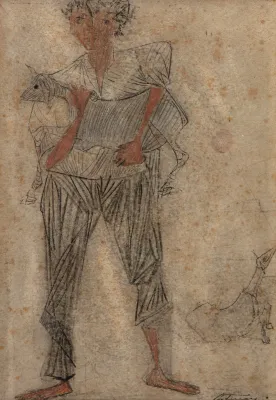
1991 - Rio de Janeiro RJ - A Arte nos Estudos de Lucílio de Albuquerque [Art in the Studies of Lucílio de Albuquerque], at Galeria Augusto Malta
1992 - São Paulo SP - O Olhar de Sérgio sobre a Arte Brasileira: desenhos e pinturas [Sérgio's View of Brazilian Art: Drawings and Paintings], at Biblioteca Municipal Mário de Andrade
1994 - São Paulo SP - Bienal Brasil Século XX [20th-Century Brazil Biennial], at Fundação Bienal
1994 - São Paulo SP - Um Olhar Crítico sobre o Acervo do Século XIX [A Critical Look at the 19th-Century Collection], at Pinacoteca do Estado
1995 - Campinas SP - Da Marinha à Natureza-Morta [From Seascape to Still Life]
1997 - Rio de Janeiro RJ - AR: exposição de artes plásticas, brinquedos, objetos e maquetes [AIR: Exhibition of Visual Arts, Toys, Objects and Models], at Paço Imperial
2000 - Porto Alegre RS - De Frans Post a Eliseu Visconti: acervo Museu Nacional de Belas Artes [From Frans Post to Eliseu Visconti: Museu Nacional de Belas Artes Collection], at Margs
2000 - Rio de Janeiro RJ - Brasil + 500 Mostra do Redescobrimento [Brazil + 500 Rediscovery Exhibition]. Negro de Corpo e Alma [Black in Body and Soul], at Fundação Casa França-Brasil
2000 - São Paulo SP - Brasil + 500 Mostra do Redescobrimento [Brazil + 500 Rediscovery Exhibition], at Fundação Bienal
2002 - Niterói RJ - Arte Brasileira sobre Papel: séculos XIX e XX [Brazilian Art on Paper: 19th and 20th Centuries], at Solar do Jambeiro
2004 - São Paulo SP - O Preço da Sedução: do espartilho ao silicone [The Price of Seduction: From Corset to Silicone], at Itaú Cultural
Source: Itaú Cultural