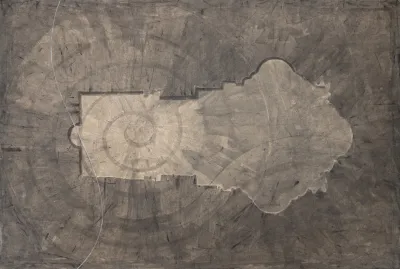
Glénio Bianchetti (Bagé RS 1928)
Recorder, painter, illustrator, upholsterer, teacher and designer.
Glénio Alves Branco Bianchetti began artistic studies at Bagé, in the 1940s, together with Glauco Rodrigues (1929 - 2004), under the guidance of José Moraes (1921 - 2003). In 1949, he joined the Instituto de Belas Artes de Porto Alegre. founded, in 1951, alongside Glauco Rodrigues and Danúbio Gonçalves (1925), the Engraving Club of Bagé, later incorporated into the Clube de Engraving de Porto Alegre, a group that performs an artistic production of a social character, in which Carlos Scliar also participates. (1920 - 2001) and Vasco Prado (1914 - 1998). In the 1950s, Bianchetti produces woodcutting and linoleogravure with themes related to work and regional customs. From the 1960s onwards, he works mainly with painting, lithography and metal engraving. In 1962, he teaches drawing and painting at the recently opened University of Brasília - UNB, where he remained until 1965, when he was removed by the military regime. In the early 1970s, he collaborated in the creation of the Museum of Art in Brasília and participates in projects aimed at artistic education. In 1988, it was reinstated to UnB. Between 1996 and 1997, it is organized a retrospective show of the Bagé group with exhibitions in various capitals. He is honored with the retrospective of his 50-year career, in 1999, at the Itamaraty Palace, in Brasília. In 2004, the book Glenio Bianchetti was published, authored by José Paulo Bertoni.
Critical commentary
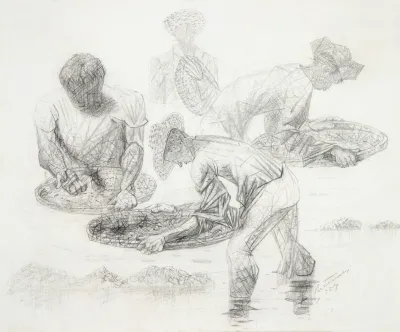
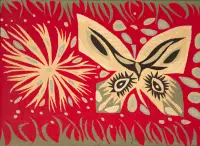
Glênio Bianchetti begins his career in the 1940s, integrating the Bagé. In 1947, he went to Porto Alegre, where he studies at the Institute of Fine Arts. Participates in the foundation of the Porto Alegre Engraving Club, a group that performs an artistic production of a social character, dealing with the reality of the poorest classes, work and regional customs. The production of Bianchetti, in the 1950s, is carried out mainly in woodcuts and linoleogravure, and shows workers in potteries or boys playing, usually in open spaces. The quality of the design and the refined use of the contrasts between light and dark, without intermediate gradations, such as in Semper Vivas (1952) or in women sewing (1957), stand out, in which the influence of Expressionism is highlighted.
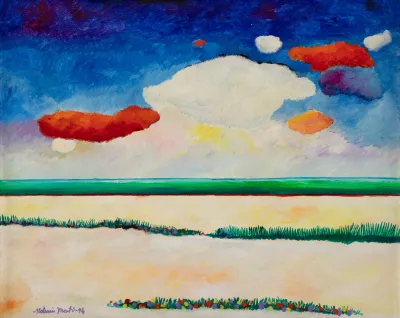
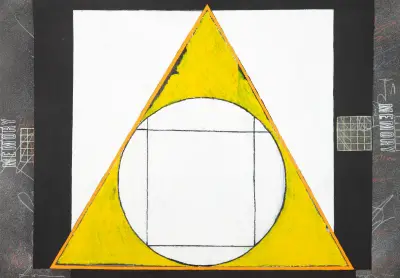
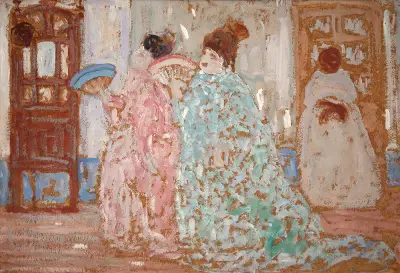
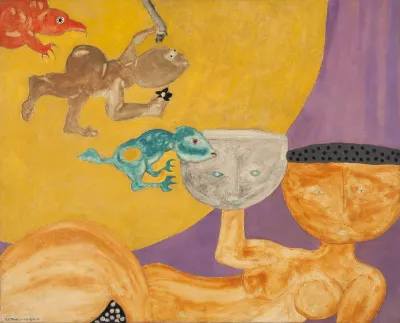
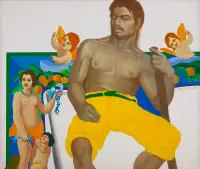
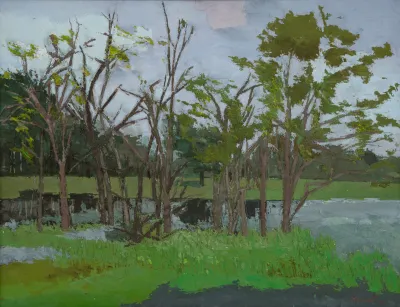
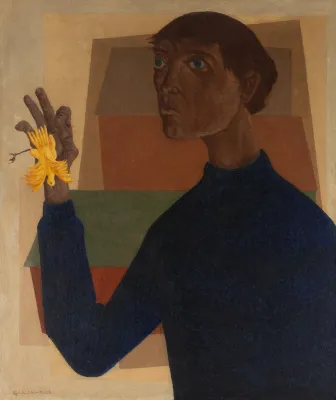
From the 1960s onwards, the artist works mainly with painting and, in the field of engraving, with lithography and metal engraving. In painting, Bianchetti's main themes are the human figure, the still life and the landscape. In the landscape of Bagé (1949), it uses great formal simplification, a gestural brushstroke and a chromatic range that gives the work a certain dramatic character. His paintings reveal admiration for Cubism and interest in abstraction. From the 1970s onwards, the artist uses the graphics alongside the color spots, in very contrasting color works, as in Moça Reading (1973).
Criticism
"Having started the Painting in 1944, in Rio Grande do Sul, Glênio Bianchetti joined from the beginning of his artistic activities to Expressionism, when the Second World War still involved the whole world in his flames and convulsions. With this artistic current, so deeply representative of the dramatic and multiple vicissitudes and emotions, experienced by man, throughout this century. (...) In different compositions, the artist takes advantage of the intensity of color, while trying to synthesize the forms of men, women or the in other paintings, there is a marked abandonment of the realistic spatiality of the image, for the benefit of the chromatic scheme, arranged in large colored flats. In fact, this process is common to the expressionists. In its search for simplification of the human figure, the artist often resorts to geometry, in an evident commitment to the Cubist line, as happens in the production of several European painters. Other times, it uses abstraction. (...) Insofar as it moves away from the dramatic aspects of society of our time, the art of the exhibitor is directed towards essentially plastic solutions and also to speculations of a spatial character, both in tapestries and easel paintings. This is one of the characteristic features of the artistic production of Glênio Bianchetti, one of our figurative expressionists of greater personal originality, after the generation of the masters of the first phase of Brazilian modernism". Bianchetti: Painting: Presentation by Antonio Bento and Joaquim Cardozo. São Paulo: MAM, 1970.
"In addition to having an absolute mastery over the drawing (...), Bianchetti presents himself as a wizard of Conceptions of color, demonstrating their mastery in the choice of pure colors, in the filtering of paints, and with which it manages to make the most pleasant colors more unpleasant for certain types of temperament. (...) Aesthetically, revealing himself to be the master of a proper and original imagery world, without falling into eccentricity, and whose conquest resulted from long research around the form, his philosophy and his symbolism, Bianchetti presents a uniformity of structural composition, despite the diversity of themes and content. It is for all these reasons that Bianchetti offers us a pictorial poetics combined with a masterful technique of execution to demonstrate that he has already won all his problems, acquired his style, becoming one of the most authentic representatives of figurative expressionism in the current cycle of our painting. Contemporary".
Hugo Auler
CAVALCANTI, Carlos; AYALA, WALMIR, Org. Brazilian Dictionary of Plastic Artists. Brasília: MEC/INL, 1973-1980. (Dictionaries specialized, 5).
"Before it is said that strictly since the beginning, even before the club's existence, Bianchetti's engraving was already clearly engaged; Their ideological positions were not a consequence, but a cause of their adherence to the movement. In that step it was understood as engagement shows the social reality of the humblest, their customs, their work, the daily toil, turning to the immediate surroundings. For the gauchos, thanks to the richness of their physical and human landscape, their culture so differentiated in the country as a whole, was a particularly well performed task. Thus, a quick look at the production of Bianchetti between 1951 and 57 shows us women sewing, pissing or making marmalade, in the midst of characteristic paraphernalia of the South; workers in their old and crude potteries, pulled by oxen; the horse race assisted by an audience of large hats, ponchos and bombachas, the meal, rest and nap after work; A typical gaucho braiding rope, barefoot boys playing with birds or with a lumba cart, the bone game (a regional fun), etc. As in the question of 'art for the people', some skepticism may arise today as to the political effectiveness of this type of image. But since it is not the militancy that scales the real quality of the work, but the elements managed in the dialogue between form and content, nor is there long, here, to worry about".
Olivio Tavares de Áraújo
ARAÚJO, Olívio Tavares de. The dimension of the human. Brasilia: Ministry of Foreign Affairs, 1999. p. 45 and 46.
Testimonies
"With the Clube dos Engravers started a cultural movement, of international scope. As the vast majority of countries and also Brazilian states had similar entities, a kind of cooperative was formed, which exchanged exhibitions throughout the Americas and Europe. 'They come from a distance', says Bianchetti, 'and ours also traveled through different countries, spreading the Brazilian engraving'. Engraving is one of the most democratic arts. Unlike other artistic forms, it is not limited to a single piece, it can be reproduced, disseminated simultaneously. This even favors the price of each work, for those who are going to purchase it'.
In these thirty years of engraving, Glênio developed the technique of woodcutting and the cutting engraving, in linoleum, the lithography and the serigraphy. Its greater identity is verified in relation to the cut engraving, whether in wood or in linoleum, which find a correspondence in the painting developed by it. 'My work has an expressionist origin. The engraving came to provide me with the missing elements in the painting, completing my work. My painting has cuts and has notches resulting from the arrangement of colors and shapes. It has a lot of engraving. ' [...]
In addition to portraying many specific social situations with the center of man, the engraving of Glênio is mainly a Brazilian art, representing today the document of a time, 'recording' the gaucho regionalism, very primitive, experienced by the artist since his childhood, Remembering values almost extinct today.
After the foundation of the Porto Alegre Engraving Club, many plastic activities followed one another in the life of Glênio, from the direction of the graphic sector of the Division of Culture of the Rio Grande do Sul Department of Education, the guidance of engraving courses at the Instituto de Belas Artes de Porto Alegre, until arriving in Brasília, in 1961, and being part of the faculty of UnB, teaching engraving and drawing, where he participated in the cultural effervescence rising from this university until 1965. He also recalls the time in that there was a great rapport between the 'artists' of the city and a greater discussion around cultural movements: 'Out of cinema, or during an exhibition, a group always gathered to discuss, evaluate and launch new ideas'". Bianchetti
Bianchetti, Glênio. 'Engraving is a democratic art'. Jornal de Brasília, Brasília, 23 Aug. 1981.
Individual exhibitions
1950 - Porto Alegre RS - Individual, at the Correio do Povo Art Gallery
1959 - Porto Alegre RS - Individual, at Margs
1962 - Porto Alegre RS - Individual, at the Institute of Fine Arts at UFRGS
1963 - Brasília DF - Individual, at the Hotel Nacional Gallery
1966 - Rio de Janeiro RJ - Individual, at Picola Galeria
1967 - Brasília DF - Individual, at the National Theater
1968 - Brasília DF - Individual, at Caixa Econômica Federal
1968 - Brasília DF - Individual, at the National Congress
1968 - Porto Alegre RS - individual, at the IAB/RS Gallery
1969 - Brasília DF - Individual, at the Paiol Gallery
1969 - Rio de Janeiro RJ - Individual, at Galeria Décor
1970 - São Paulo SP - Bianchetti: painting, at Cambona Centro de Arte
1970 - São Paulo SP - Bianchetti: Painting, at MAM/SP
1971 - Brasília DF - Individual, at Galeria Clube das Nações
1971 - Rio de Janeiro RJ - Individual, Galeria Chica da Silva
1971 - São Paulo SP - Individual, at MAM/SP
1972 - Brasília DF - Individual, at the Cultural Foundation
1972 - Porto Alegre - Individual, at the Esphera Galeria de Art
1972 - Porto Alegre RS - Individual, at Galeria Esfhera
1972 - Salvador BA - Individual, at MAM/BA
1972 - São Paulo SP - Individual, at Cosme Gallery Velho
1973 - Brasília DF - Individual, at Galeria Oscar Seraphico
1974 - Brasília DF - Individual, at Galeria Oscar Seraphico
1974 - Brasília DF - Individual, in the gallery studio
1974 - Brasília DF - Individual, at the artist's atelier
1975 - Goiânia GO - Individual, at the Hotel Bandeirantes Gallery
1976 - Rio de Janeiro RJ - Individual, at the Art Gallery Ipanema
1977 - Brasília DF - Individual, in the artist's atelier
1977 - Porto Alegre RS - Individual, at the Municipal Culture Center
1977 - Rome (Italy) - Individual, at the Casa do Art Gallery Brazil
1978 - Porto Alegre RS - Individual, at the Municipal Culture Center
1979 - Brasília DF - Individual, at Galeria Oscar Seraphico
1979 - Brasília DF - Individual, at the artist's atelier
1980 - Brasília DF - Individual, at Clube das Nações
1980 - Brasília DF - Individual, at IAB/DF
1981 - Bagé RS - Individual, at the Brazilian Engraving Museum
1981 - Brasília DF - Glênio Bianchetti: 30 years of engraving, at IAB/DF
1981 - Porto Alegre RS - Individual, at Cambona Centro de Arte
1981 - Porto Alegre RS - Individual, at the Municipal Center of Culture
1982 - Brasília DF - Individual, at Oscar Seraphico Art Gallery
1984 - Brasília DF - Individual, at the English Culture Gallery
1984 - Brasília DF - Individual, at the Atelier do Artist
1985 - Brasília DF - Glênio Bianchetti: lithographs, in the artist's atelier
1985 - Goiânia GO - Individual, at the Casa Grande Art Gallery
1986 - Brasília DF - Individual, At the contemporary art gallery
1986 - Brasília DF - Individual, at the artist's studio
1986 - Montevideo (Uruguay) - Individual, at the Banco do Brasil Gallery
1987 - Brasília DF - Individual, at Contemporary Art Gallery
1987 - Montevideo (Uruguay) - Individual, at the Banco do Brasil Gallery
1988 - Brasília DF - Individual, at the contemporary art gallery
1988 - Brasília DF - Individual, at Galeria do Centro Physician
1988 - Brasília DF - Individual, at Portfolio Art Gallery
1988 - Porto Alegre RS - Individual, at Galeria Mosaico
1990 - Brasília DF - Glênio Bianchetti: Paintings, in the artist's atelier
1993 - Brasília DF - Individual, in the Visual Art Gallery
1993 - Brasília DF - Individual, in the Caixa Cultural Complex
1994 - Brasília DF - Individual, in the Cultural Space Yacht Club
1995 - Brasília DF - Glênio Bianchetti: Painting Small Formats, at the artist's atelier
1995 - Brasília DF - Individual, at Café Galeria
1996 - Brasília DF - Individual, at the Casa da Cultura da América Latina
1996 - Goiânia GO - Individual, at the Casa Grande gallery
1997 - Brasília DF - Individual, at the Casa da Cultura da América Latina
1998 - Brasília DF - Individual, in the Atelier do Artista
1998 - Brasília DF - What are you hungry for?, at the Cultural Complex of Caixa
1998 - Porto Alegre RS - Individual, at the Mosaic Art Gallery
1999 - Brasília DF - Glênio Biachetti: 50 years of art, at the Ministry of Foreign Affairs
2000 - Brasília DF - Individual, at the artist's studio
2000 - Brasília DF - Individual, at the Cultural Space of the Chamber of Deputies
2003 - Brasília DF - Glenio Bianchetti: paintings, at the artist's residence
Collective exhibitions
1948 - Porto Alegre RS - Collective, at the People's Gallery
1951 - Curitiba PR - 8th Salão Paranaense de Belas Artes, in the Department of Culture - Honorable Mention
1952 - Curitiba PR - 9th Salão Paranaense de Belas Artes, in the Department of Culture
1952 - Porto Alegre RS - Gravura Clube Porto Alegre
1953 - Rio de Janeiro RJ - 2nd National Salon of Modern Art
1954 - Goiânia GO - Exhibition of the National Congress of Intellectuals
1954 - Rio de Janeiro RJ - Black and White Hall, at Palácio da Culture
1955 - Rio de Janeiro RJ - 4th National Salon of Modern Art
1956 - Rio de Janeiro RJ - 5th National Salon of Modern Art
1957 - Rio de Janeiro RJ - 6th Salon National Modern Art
1958 - Mexico City (Mexico) - 1st Inter-American Biennial of Painting and Grabado, at the National Institute of Fine Arts
1958 - Porto Alegre RS - 1st Pan-American Art Salon
1958 - Rio de Janeiro RJ - 7th National Salon of Modern Art, at MAM/RJ
1958 - Rio de Janeiro RJ - Mother and Child Art Salon
1966 - Brasília DF - 3rd Salon of Modern Art in the District Federal, at the Cultural Foundation
1966 - Rio de Janeiro RJ - Collective, at Galeria Giro
1967 - Bagé RS - 1st Salão Bageense de Artes Flásticas, at the Urcamp Pinacoteca
1970 - Brasília DF - 1st Meeting of Plastic Artists of Brasília, at the Cultural Foundation of the Federal District
1970 - Brasília DF - Gaucho artists, at Palácio do Buriti
1970 - Brasília DF - Collective, at the British Council 1970 - São Paulo SP - Pre - Bienal de São Paulo, at Fundação Bienal
1972 - São Paulo SP - Art/Brazil/Today: 50 years later, at Galeria Collectio
1973 - Bagé RS - Quatro de Bagé, at the Attila Taborda Foundation
1973 - Paris (France) - Plastic Artist Hall
1973 - Paris (France) - May Salon
1976 - Bagé RS - 2nd Meeting of Artists Plastics, at the Dom Diogo de Souza Museum
1976 - Bagé RS - Culture Project
1976 - Porto Alegre RS - For a Brazilian Art: Bagé Group, at UFRGS
1976 - Porto Alegre RS - Gaucho traditions, at UFRGS
1976 - São Paulo SP - 8th Panorama of Current Brazilian Art, at MAM/SP
1978 - Brasília DF - Serigraphy and engraving, at Galeria Vasp
1978 - Brasília DF - Collective, at Galeria Oscar Seraphico
1978 - Brasília DF - Fourteen artists from Brasília, at Funarte
1978 - Curitiba PR - 1st Annual Engraving Exhibition City of Curitiba, in the Creativity Center
1981 - Piauí - Collective Arts Plastics - Cláudio Gil Selection, at the Secretary of Culture
1982 - Brasília DF - Collective, at the Oscar Seraphico Gallery
1982 - Brasília DF - Collective, Studio Art
1983 - Brasília DF - Collective Pro-Northeast Campaign Campaign - Independent British Institute
1983 - Porto Alegre RS - Art Livro Gaúcho: 1950/1983, no Margs
1983 - Porto Alegre RS - From the past to the present: the visual arts in Rio Grande do Sul, at Cambona Centro de Arte
1984 - Brasília DF - Armindo Leal, Gilberto Melo, Glênio Bianchetti, Ivanir Vianna, Lêda Watson, Marlene Godoy, Marques de Sá, Minnie Sardinha, Naura Timm, Wilma Lacerda, at the Convention Center. Cultural Diffusion Sector
1984 - Brasília DF - Plastic Artists, at the Contemporary Art Gallery
1984 - Brasília DF - Collective, at Galeria New Arte
1984 - Brasília DF - Collective, at Galeria Performance
1984 - Curitiba PR - The woodcut in the history of Brazilian art, at Casa Romário Martins
1984 - Rio de Janeiro RJ - The woodcut in the history of Brazilian art, at the Sérgio Milliet Gallery
1984 - Rio de Janeiro RJ - Recent donations 82-84, at the MNBA
1985 - Brasília DF - Inaugural Exhibition of the Museum of Art of Brasília, at MAB
1985 - Rio de Janeiro RJ - 8th National Salon of Arts Plasticas, at MAM/RJ
1985 - São Paulo SP - 18th São Paulo International Biennial, at the Bienal Foundation
1986 - Brasília DF - Artists from the Midwest Region, at the Contemporary Art Gallery
1986 - Brasília DF - Posters for the Constituent Assembly, in the Federal Senate
1986 - Brasília DF - Collective Oscar Seraphico Art Gallery, at Oscar Seraphico Art Gallery
1986 - Brasília DF - Collective, at the embassy Americana
1986 - Brasília DF - All from Brasília, at the National Congress
1986 - Cairo (Egypt) - Graphic Arts of Brazil: Brazilian Artists of Today
1987 - Rio de Janeiro RJ - To the collector: Homage to Gilberto Chateaubriand, at MAM/RJ
1988 - Brasília DF - Christmas collective, at the Galeria de Arte portfolio
1988 - Brasília DF - Collective, at Galeria Arte dreer
1988 - Brasília DF - UnB professors, at the French Embassy
1988 - São Paulo SP - Current Art of Brasília, at MAB/FAAP
1989 - Brasília DF - Frames on Independence, at CEF
1990 - Brasília DF - Collective, at MAB/DF
1990 - Brasília DF - Ten contemporary artists, at Galeria Portfolio
1990 - Goiás GO - 20 years of the Museum of Art of Goiânia, at the Museum of Art
1991 - Brasília DF - Teachers Artist at UnB, at UnB
1992 - Brasília DF - Caixa Econômica Federal collection
1992 - Porto Alegre RS - Collective, at the Francisco Lisboa Association
1993 - Brasília DF - Collective, at IAB/DF
1993 - Brasília DF - Collective, at the Bulgarian Embassy
1993 - Brasília DF - Collective, at the Lago Norte Cultural Space
1993 - Brasília DF - Exhibition and auction of international organisations, at the Embassy of Colombia
1993 - João Pessoa PB - Woodcut: From Cordel to Galeria, at Funesc
1994 - Bagé RS - Homems da Terra, at the Museum of the Brazilian engraving
1994 - Brasília DF - 3rd Spring Conference, at the Embassy of Colombia
1994 - Brasília DF - Arte Brasiliense, at the MEC Cultural Space - Esplanada dos Ministérios
1994 - Brasília DF - Arte Mercosul, at the Cultural Space of the MEC
1994 - Brasília DF - People from Brasília Pinta no Botanico, in the Botanical Garden
1994 - Brasília DF - Spring press conference, at the Embassy of Colombia
1994 - São Paulo SP - The engraving clubs of Brazil, at the Pinacoteca do Estado
1994 - São Paulo SP - Poetics of the Resistance: aspects of Brazilian engraving, at the SESI Art Gallery
1994 - São Paulo SP - Woodcut: From Cordel to Gallery, in the Metro
1995 - Brasília DF - Big names, small formats, in the reference art gallery
1995 - Brasília DF - Three generations in Brazilian art, at MAB/DF
1996 - Bagé RS - Bagé Group: Retrospective of engraving, at the Brazilian Engraving Museum
1996 - Brasília DF - 2nd Salon of Visual Arts, at the Yacht Club
1996 - Porto Alegre RS - Arte Sul 96, at Margs
1996 - Porto Alegre RS - Bagé Group in the Margs collection, at Margs
1996 - Porto Alegre RS - Bagé Group at Clube de Engravura, in the Cultural Complex of Caixa
1996 - Porto Alegre RS - Bagé Group: engraving and current affairs, at the Municipal Culture Center
1996 - Porto Alegre RS - Bagé Group: Painting and Current Affairs, at the Mosaic Art Gallery
1996 - Porto Alegre RS - Siamo Tutti Buona Gente
1997 - Boston (United States) - Contemporary Art of Central Brazil, at the Scollay Square Gallery
1997 - Brasília DF - 21 expressions... a meeting, in the cultural complex of Caixa
1997 - Brasília DF - Bagé group at the engraving club: 50's, in the Caixa Cultural Complex
1997 - Curitiba PR - Bagé group at the engraving club: decade of 50, at the Caixa Econômica Federal gallery
1997 - Montevideo (Uruguay) - 1st Mercosur Interparliamentary Biennial - Honorable Mention
1997 - Rio de Janeiro RJ - Bagé Group Engraving Club: 50's, at the Caixa Econômica Federal gallery
1997 - São Paulo SP - Bagé Group at the Engraving Club: 50's, at the Caixa Econômica Federal gallery
1998 - Brasília DF - CEM Recuerdos for García Lorca, at the Cultural Space of the Federal District
1998 - Brasília DF - Great Talents, at ECT Galeria de Arte
1998 - Brasília DF - Panorama of the Visual Arts in the Federal District
1998 - Porto Alregre RS - Rescuing Memory, at CEF
1999 - Porto Alegre RS - Art Garage: Inaugural Exhibition, in the Art Garage
1999 - Rio de Janeiro RJ - Exhibition Rio Engraving: Brazilian modern engraving: Collection National Museum of Fine Arts, at MNBA
2000 - Bento Gonçalves RS - Gravura Collective, at the University of Caxias do Sul
2000 - Brasília DF - The free show, at the Renato Russo Cultural Space
2000 Buenos Aires (Argentina) - Art Gallery Fair del Mercosur, in Pabellón de la Rural
2000 - Canela RS - Engraving press conference at the University of Caxias do Sul
2000 - Caxias do Sul RS - Collective of Engraving, at the University of Caxias do Sul
2000 - Farroupilha RS - Collective of Engraving, at the University of Caxias do Sul
2000 - Guaporé RS - Collective of Engraving
2000 - Nova Prata RS - Collective of engraving, at the University of Caxias do Sul
2000 - Porto Alegre RS - Mercocidades: Visual Arts
2000 - São Paulo SP - Investigations. The Brazilian engraving, at Itaú Cultural
2000 - Vacaria RS - Collective of Engraving, at the University of Caxias do Sul
2000 - Veranópolis RS - Gravura Collective, at the University of Caxias do Sul
2001 - Brasília DF - Investigations. The Brazilian engraving, at Galeria Itaú Cultural
2001 - Penápolis SP - Investigations. The Brazilian engraving, at Galeria Itaú Cultural
2001 - Porto Alegre RS - Liba and Rubem Knijnik collection: contemporary Brazilian art, at Margs
2001 - Rio de Janeiro RJ - Trailing the engraving, at the Museum of Chácara do Céu
2002 - Brasília DF - JK: an aesthetic adventure, in the cultural set of the box
2002 - Porto Alegre RS - Drawings, engravings, sculptures and watercolors, in the art garage
2003 - São Paulo SP - Art and Society: a controversial relationship, at Itaú Cultural
Source: Itaú Cultural