Darel Valença Lins (Palmares PE 1924 - Rio de Janeiro RJ 2017)
Darel Valença Lins was a recorder, painter, draftsman, illustrator and teacher. He studied at the School of Fine Arts in Recife, currently the Federal University of Pernambuco (UFPE), between 1941 and 1942, a period in which he also worked as a technical designer. In 1946, he moved to Rio de Janeiro. He studied engraving in metal with Henrique Oswald (1918–1965) at the Lyceum of Arts and Crafts in 1948, and, two years later, contacted Oswaldo Goeldi (1895–1961). He worked as an illustrator in several periodicals, such as Manchete magazine and the newspapers Última Hora and Diário de Notícias. Between 1953 and 1966, he was responsible for the publications of the Society of Hundred Bibliophiles of Brazil.
With the award for travel abroad, received at the National Salon of Modern Art (SNAM) in Rio de Janeiro, in 1957, He traveled to Italy, where he remained until 1960. He illustrated several books, such as Memórias de um Sergeant de Milícias (1957), by Manuel Antônio de Almeida (1831–1861); Poranduba Amazonense (1961), by Barbosa Rodrigues (1842–1909); São Bernardo (1992), by Graciliano Ramos (1892–1953); and Polaquinha (2002), by Dalton Trevisan (1925). He taught engraving in metal at the São Paulo Museum of Art Assis Chateaubriand (MASP), in 1951; Lithography at the National School of Fine Arts (ENBA), in Rio de Janeiro, between 1955 and 1957; and at the Faculty of Plastic Arts of the Armando Álvares Penteado Foundation (FAAP), in São Paulo, from 1961 to 1964. Between 1968 and 1969, he made panels such as those of Palácio dos Arcos, headquarters of the Ministry of Foreign Affairs, in Brasília.
Critical Comment
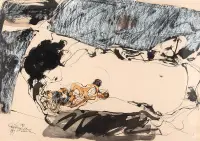
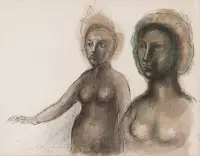
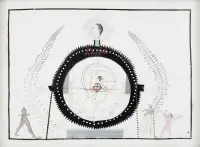
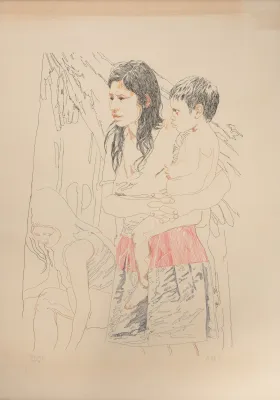
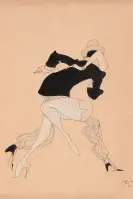
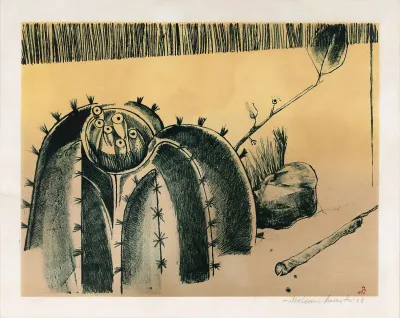
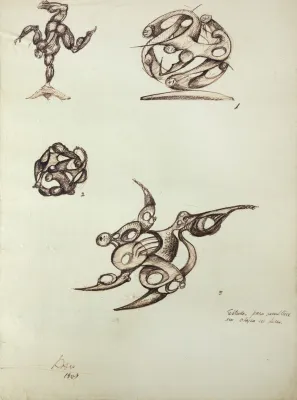
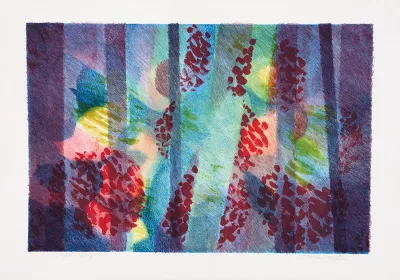
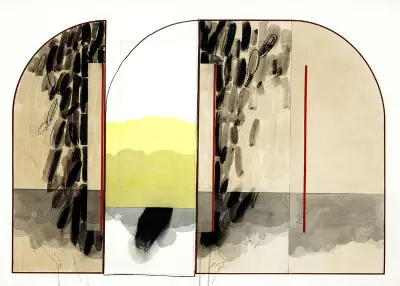
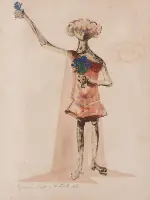
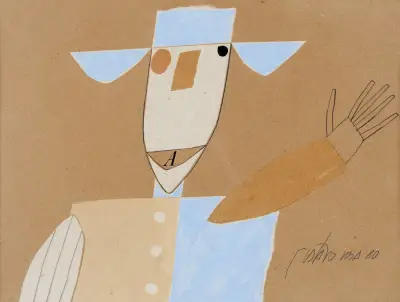
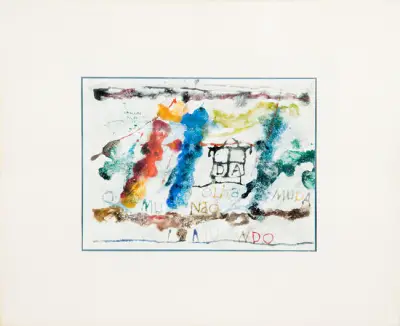
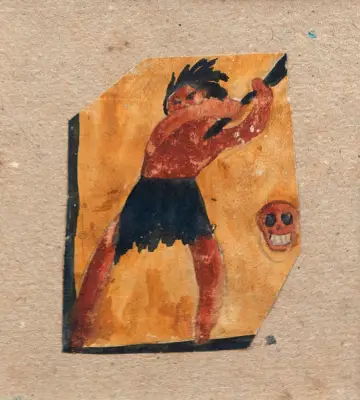
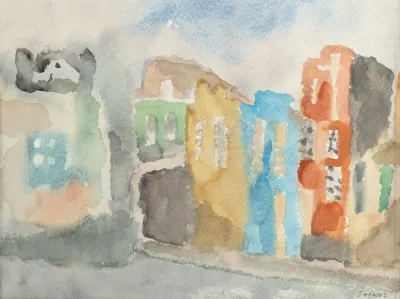
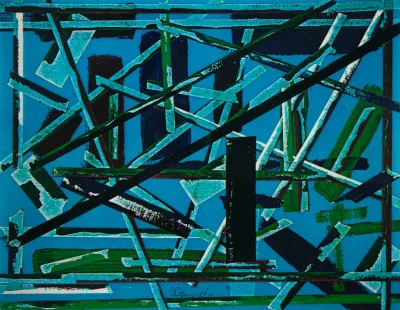
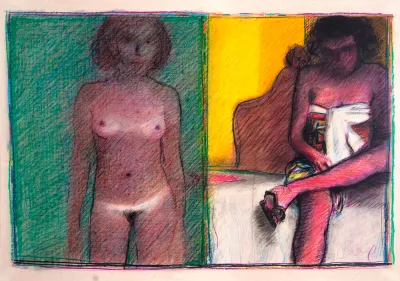
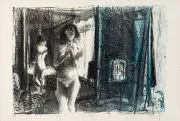
Darel is dedicated to various techniques (drawings, engravings and paintings), presenting a production marked by two main themes: imaginary cities and angels and machines. As the critic Frederico Morais notes, the cities created by Darel are seen from above or from a distance. The artist does not describe specific locations, it just hints at homes, streets or buildings. The human figure is also not clear, it appears as arabesque or stain. From the 1970s onwards, a change in its production takes place: what was distant approaches, and the figures also become more concrete. In the opinion of the critic Roberto Pontual, both the landscapes of the houses of favelas and the views of the cities of Italy and the angels in struggle with the machines, reveal the artist's characteristically expressive interest in the dynamics of the bright and full-empty. Darel's production is close, in some works, with fantastic realism.
Criticism
"Figuretivism, in Darel, is not reduced to the point of arrival, as if he wanted to fix the real in its immediate evidence; it is, on the contrary, from an instrument to commentary and transcendence, sometimes subjecting it to the attenuation of the dramatizing device through constructive evidence or, more commonly, inspiring it towards fantastic realism. Thus, both the landscapes of the houses of Favelas, suspended in the air of paper, as well as the views that evoke old cities in Spain and Italy, heavy with time; both angels in dialogue and struggle with the machine, spirit touching matter, and the demonology released in the now, alchemically armed painting of color and anguish is Darel's calligraphic agility, his characteristically expressive interest in the dark and the full-empty, which is most evident as a purpose and method. He attracts above all, in his own words, to organize, 'within a Poetic climate, birds and machines, machines and people, people and topography and cities. In another sphere, the influence of the social environment in which I live appears, everything that is related to the reality of man. Of course, I don't care about the stereotyped forms of nature, nor the sources of inspiration and traditional images. I am harassed by ideas that arise with irrepressible force and that must be translated by invented signs'".
Roberto Pontual
Pontual, Roberto. Collectio, 1973.
"Viscerally committed to the human figure, Darel only came to draw the first landscapes in Spain when he was there fulfilling the travel award he received at the National Salon of Modern Art, in 1957. 'The European landscape spoke to me about the pencil', he explains, and adds: 'or perhaps because there was no sugarcane field, not all that social drama that I lived in the interior of Pernambuco'. In the landscape of Darel the city is organized in the distance, seen from above, the distance. It does not describe specific situations, it just hints at buildings, houses, streets, alleys and pulleys, ramps, wires. It's just that a city works like an absurd machine, crushing man as inside a gear. From 1978 onwards, his work took place. What was distant (city) approaches, what floated (the angel and/or figure of a bifacial woman) low to the earth, is made of flesh and bone. What was just insinuated acquires sharpness, color penetrates its design. It is as if Darel had decided to walk the streets of his imaginary city, willing to know his people, men and women, scenarios and brothels. The city has become real, it exists, it has a name: it is Imbariê, in the Baixada Fluminense".
Frederico Morais
morais, Frederico. Pires de Mello. São Paulo: Júlio Bogoricin Imóveis, C1986.
"There is no doubt that there is a world, an original cosmic vision and personal inherent in Darel's visual language in drawing and engraving, in oil painting And in the watercolors, the city emerges with its hidden corners and symbols monuments. Urban life achieves a coral drama, where the plurality of the plastic elements mirrors the multiplicity of subjects operating in the author's soul, the triggered experiences, the cross influences of the metropolis find and live in the form of incisive and fast features, in the drawing, in the numerous and limited color fields in the painting".
Pedro Manuel Gismondi
GISMONDI, Pedro Manuel. [text]. 1991. [Text of the presentation of the Individual Exhibition, held at Galeria Seta, in 1965.]
"(...) Beauty and Nightmare mark Darel's work. How can these two words be united - only Darel knows why he lives his dreams, not as an unreal man, but as a man. Who inhabits the huge cities if not the I will give that dreams and idealizes? Dreaming and idealizing are the ideal of a man, of a woman. In giving, in addition to the artistic part itself, there is a concern with the totality of the human being in its fullness. the powerless shock of the individual in front of the machine. The dark cities where one or another window of light lit up attests that they are inhabited. Psychoanalyzed or not, he is a great artist and I have something to say about the resplendent mystery of his work. from it emanates, from both the engraving and the oil and the drawing, the great mystery of living".
Clarice Lispector
LISPECTOR, Clarice. Engravings by Darel [album], a unique edition by Julio Pacello, 1968. In: Três Mestres da Engraving in Metal : Darel, Grassmann, Gruber. São Paulo, 1995.
Testimations
"I started, then, to learn engraving. I met Poty, Goeldi, Augusto Rodrigues, Iberê Camargo and Henrique Oswald, who was my first teacher, I called him Lilico. died young man. (...)
I learned engraving with Henrique Oswald at the Lyceum of Arts and Crafts, where nothing was paid, there was material and a fabulous press. I remember that when I went in and saw a guy making an engraving, I immediately thought: 'this is a beard'. And I made a little engraving. When I took the test, I was disappointed. This was a very difficult thing. (...)
There was no more lithography in the 1950s, it had entered a period of total decay. In the 1940s, lithography was what was printed in the magazines O Malho, the Week. It was the offset of the time. It was used not as artistic work, but in the press. (...)
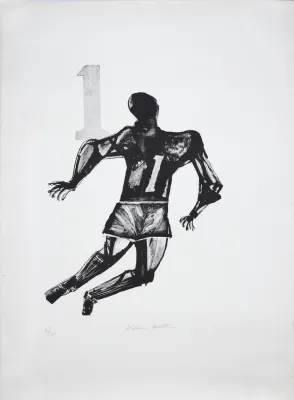
Then I bought a press and installed it on Rua Taylor, in Lapa, seeking to resurrect Lito in an artistic sense. I remembered Munch, the Norwegian painter who did lithography in the 10s as an expression of art.
In this workshop, I only did lithography; He was a teacher not linked to the fine arts, he was a free teacher and made a point of being one. I didn't want to be an ENBA teacher. I also wanted to show that the litho was a form of expression of art and not a mere process of reproduction. (...)
Three major wooden recorders in Brazil, in my opinion, São Goeldi, Lívio Abramo and Marcelo Grassmann. (...) Grassmann did the seemingly simple thing. The cut was in long thread, very simple business, his expression is one thing! Lívio Abramo was his own refinement, he had 300 pieces to cut and made it on top. He did a lot on top of the top, all full of impressionism (...).
When I started doing lithography, I thought the lithographer was a guy who drew and stamped, and I broke my face. (...) I realized (...) that there is a division: there is the lithographer and there is the stamper. This happened when I had a light and I argued with myself: 'By the size of Lautrec, by his physique, if it weren't for the stampers he would never have done a lithography'. Nowadays the stamper is essential. There are even those who know how to deal with the stone.
The artist, the lithographer, knows all the chemistry of lithography. Lautrec said: 'Learn to do lithography in two hours and you do a lithography in six years'. He knew the issue well. Today there is the so-called PA, proof of the artist. He stands next to the stamper, making several attempts to put his blacks, choose his reds, his blues. Once the color, the shades, whether it will be in dense graphite or black, this or that, it does the pa. The artist does not stand on the press to do 300 lithographs".
Darel Valença Lins - [Sesc Tijuca, December 21, 1986]
Brazilian engraving today II : Testimonials Rio de Janeiro : Sesc-Tijuca Engraving Workshop, 1995. V. 2
Individual exhibitions
1949 - Rio de Janeiro RJ - Individual, at the National Library
1951 - Recife PE - Darel: Painting and Drawing, in the Portuguese Reading Office
1952 - Milan (Italy) - Darel, at the Stendhal Gallery
1953 - São Paulo SP - Darel: Metal engraving, MASP
1958 - Rome (Italy) - Individual, at Galeria Il Siparietto
1960 - São Paulo SP - DAREL: Drawings, at Galeria São Luís
1961 - Rio de Janeiro RJ - Individual, at Petite Galerie
1963 - Buenos Aires (Argentina) - Individual, at Galeria Lascaux
1963 - Rio de Janeiro RJ - Darel: Paintings and Drawings, at Petite Galerie
1964 - Rio de Janeiro RJ - DAREL: Paintings and Drawings, at Petite Galerie
1965 - Rome (Italy) - Darel: watercolor, drawing and engraving, at the Casa do Brasil Art Gallery
1965 - Rome (Italy) - Darel: Drawing and watercolor, at the Pallazzo Doria Panphili
1965 - São Paulo SP - Darel: Watercolor, at the Arrow Art Gallery
1966 - Olinda PE - DAREL: Paintings, MAC/PE
1967 - São Paulo SP - Individual, at Galeria Mirante das Artes
1968 - Rio de Janeiro RJ - Darel: Paintings, at the Barcinski Office
1969 - Rio de Janeiro RJ - Panel Studies for the Palácio dos Arcos, at MAM/RJ
1969 - São Paulo SP - Darel: Painting and Drawings, at the Cosme Velho Gallery
1970 - Rio de Janeiro RJ - Individual, at the Grupo B
Gallery 1972 - São Paulo SP - individual, at Galeria Cosme Velho
1972 - São Paulo SP - Individual, at the Galeria no Sobrado
1973 - Rio de Janeiro RJ - Darel: Paintings, at Galeria Vernissage
1973 - São Paulo SP - Individual, In the Multiple Art Gallery
1975 - Brussels (Belgium) - Darel: Drawings and Watercolors, at the Palais de Beaux-Arts
1976 - Porto Alegre RS - Individual, at the Artistic Workshop
1977 - Copenhagen (Denmark) - Darel: Drawings and Watercolors, at CAT Galeria
1978 - São Paulo SP - Darel: Drawings and Watercolors, at Cristina Faria de Paula Art Gallery
1979 - Rio de Janeiro RJ - Darel: Drawings and Watercolors, at Galeria Engraving Brasileira
1980 - Curitiba PR - Darel 1970-1980, at the Paraná Public Library
1981 - Porto Alegre RS - DAREL: Watercolor, engraving and tempera, in the Gallery of the Shopping Center of Porto Alegre
1981 - Porto Alegre RS - DAREL: painting, drawing and lithography, at the Guignard Gallery
1981 - Rio de Janeiro RJ - Darel: Paintings and Drawings, at Galeria César Aché
1981 - São Paulo SP - Darel: Drawings, at the Ars Artis Gallery
1982 - Vitória ES - Darel: Lits and recent drawings, at the UFES Art and Research Gallery
1985 - Recife PE - DAREL: 30 years later, at Galeria Futuro 25
1985 - Rio de Janeiro RJ - Darel: lithographs, at Galeria Engraving Brasileira
1985 - São Paulo SP - Darel: Paintings and recent drawings, at Galeria Alberto Bonfiglioli
1986 - Rio de Janeiro RJ - DAREL: lithographs, at the Paulo Cunha gallery
1987 - Rio de Janeiro RJ  - DAREL: Paintings
1987 - São Paulo SP - Darel: Metal engravings and lithographs, at the Intersul Gallery
1988 - Rio de Janeiro RJ - Darel: 70's
1990 - Rio de Janeiro RJ - Individual
1991 - Curitiba PR - O Estado dos Afetos, at Sala Miguel Bakun IV
1991 - Curitiba PR - O Estado dos Afetos, at Solar do Rosário
1991 - Rio de Janeiro RJ - Darel: engraving in metal and litho, at MNBA
1991 - São Paulo SP - Darel: the artist's space when young, in the Paço das Artes
1996 - Rio de Janeiro RJ - Darel: drawing, metal engraving and litho, in the Instituto Cultural Villa Maurina
1999 - Rio de Janeiro RJ - Darel: Engraving photomontage Lito and plot
Collective exhibitions
1948 - Rio de Janeiro RJ - 54º National Salon of Fine Arts, at the MNBA - Bronze medal in engraving
1952 - Feira de Santana BA - 1st Exhibition of Modern Art of Feira de Santana, at Banco Econômico  
1952 - Recife PE - 1st Salon of Modern Art of Recife - Gravura Award
1952 - Rio de Janeiro RJ - 1st National Salon of Modern Art - Travel to the Country Award
1952 - Rio de Janeiro RJ - Exhibition of Brazilian Artists, at MAM/RJ
1954 - Goiânia GO - Exhibition of the National Congress of Intellectuals
1954 - Rio de Janeiro RJ - Black and White Salon, at the Palácio da Cultura
1956 - Rio de Janeiro RJ - 1st Railway Salon, at MEC
1957 - Rio de Janeiro RJ - 6th National Salon of Modern Art - Travel abroad Award
1958 - Rio de Janeiro RJ - Salão do Mar
1961- São Paulo SP - 6th International Biennial of São Paulo, at the Pavilion Ciccilo Matarazzo Sobrinho
1962 - São Paulo SP - Marcelo Grassmann, Eduardo Sued, Oswaldo Goeldi and Darel, at Galeria Residency
1962 - São Paulo SP - Selection of Brazilian works of art from the collection Ernesto Wolf, at MAM/SP
1963 - São Paulo SP - 7th São Paulo International Biennial, at the Bienal Foundation - Best National Designer Award
1963 - São Paulo SP - Marcelo Grassmann and Darel, At Arrow Art Gallery
1964 - Rio de Janeiro RJ - 2nd The Face and the Work, at Galeria Ibeu Copacabana
1964 - Tokyo (Japan) - 4th International Biennial Exhibition of Prints
1965 - Bonn (Germany) - Brazilian Art Today
1965 - London (England) - Brazilian Art Today, at the Royal Academy of Arts
1965 - Lugano (Switzerland) - 9th Exposizione Internazionale de Bianco and Nero
1965 - São Paulo SP - 8th International Biennial of São Paulo, at Fundação Bienal
1965 - Vienna (Austria) - Brazilian Art Today
1966 - Cornell (United States) - Contemporary Brazilian engravers at Cornell University
1966 - Lugano (Switzerland) - 10th Exposizione Internazionale de Bianco e Nero
1966 - Rio de Janeiro RJ - The artist and the machine, at MAM/RJ
1966 - São Paulo SP - The artist and the machine, at Masp
1967 - São Paulo SP - 9th São Paulo International Biennial, at Fundação Bienal  
1969 - Rio de Janeiro RJ - 7th JB Art Summary, at MAM/RJ 
1969 - São Paulo SP - 1st Panorama of Current Brazilian Art, at MAM/SP
1972 - Curitiba PR - 29th Salão Paranaense, at Teatro Guaíra - Guest Artist - Acquisition/Design Award
1972 - São Paulo SP - Art/Brazil/Today: 50 years later, at the Collectio Gallery
1976 - São Paulo SP - 8th Panorama of Current Brazilian Art, at MAM/SP
1979 - Curitiba PR - 1st Brazilian Drawing Exhibition, at the of Art of Paraná
1979 - São Paulo SP - 15th São Paulo International Biennial, at Fundação Bienal
1980 - Curitiba PR - 3rd Annual Engraving Exhibition City of Curitiba, at Casa da Engravura Solar do Barão
1980 - São Paulo SP - 12th Panorama of Current Brazilian Art, at MAM/SP
1981 - São Paulo SP - 6th Arte at Centro Campestre, at Centro Campestre Sesc Brasílio Machado Neto
1982 - Penápolis SP - 5th Northwest Plastic Arts Hall, at the Penápolis Educational Foundation. Faculty of Philosophy, Sciences and Letters of Penápolis
1983 - Olinda PE - 2nd Exhibition of the Abelardo Rodrigues Collection of Plastic Arts, at MAC/PE
1983 - Rio de Janeiro RJ - 6th National Salon of Plastic Arts, at MAM/RJ
1984 - Ribeirão Preto SP - Brazilian tape recorders 50/60, at the Campus USP-Banespa Gallery
1984 - São Paulo SP - 15th Panorama of Current Brazilian Art, in the MAM/SP
1984 - São Paulo SP - Tradition and Rupture: Synthesis of Brazilian Art and Culture, at Fundação Bienal
1985 - Penápolis SP - 6th Northwest Plastic Arts Salon, at the Penápolis Educational Foundation. Faculty of Philosophy, Sciences and Letters of Penápolis
1985 - Rio de Janeiro RJ - 8th National Salon of Plastic Arts, at MAM/RJ
1985 - Rio de Janeiro RJ - Meetings, at Petite Galerie
1985 - Rio de Janeiro RJ - Velha Mania: Brazilian drawing, at EAV/Parque Lage
1985 - São Paulo SP - 100 works Itaú, at Masp
1985 - São Paulo SP - 18th São Paulo International Biennial, at the Bienal Foundation
1985 - São Paulo SP - Highlights of Brazilian Contemporary Art, at MAM/SP
1986 - Curitiba PR - 7th Collection of the National Gravitation Museum - Casa da engraving at the Guido Viaro Museum
1986 - Porto Alegre RS - Paths of Brazilian Design, at Margs
1988 - Lisbon (Portugal) - pioneers and disciples, at the Calouste Foundation Gulbenkian. José de Azeredo Perdigão Modern Art Center
1989 - Olinda PE - Viva Olinda Viva, at Atelier Coletivo
1989 - Recife PE - Memory Game
1989 - Rio de Janeiro RJ - Game of Memory, at Montesanti Galleria
1989 - Rio de Janeiro RJ - Brazilian engraving: 4 themes, at EAV/Parque Lage
1989 - São Paulo SP - memory game, at Montesanti Gallery Roesler
1990 - Curitiba PR - 9th Exhibition of the Engraving City of Curitiba, at the Engraving Museum - Guest Artist/Special Lithography Room
1990 - Curitiba PR - 9th Guest Artists: Lithographies, at Casa Romario Martins
1991 - Curitiba PR - Municipal Museum of Art: Collection, at the Municipal Museum of Art
1992 - Rio de Janeiro RJ - Engraving of Art in Brazil: Proposal for a mapping, at the CCBB
1992 - Santo André SP- Lithogravure: Methods and Concepts, in the Municipal Palace
1993 - Lisbon (Portugal) - Brazilian matrices and engravings: Guita collection and José Mindlin, at the Calouste Gulbenkian Foundation. José de Azeredo Perdigão Modern Art Center
1994 - São Paulo SP - Bienal Brasil Século 20th, at Fundação Bienal
1994 - Beijing (China) - Contemporany Art in Brazil: Works on Paper, at the Yan Huang Art Museum
1995 - São Paulo SP - Three Masters of Metal Engraving: Darel, Grassmann, Gruber, at the Banespa Museum
1996 - São Paulo SP- Ex Libris/Home Page, at Paço das Artes
1997 - Barra Mansa RJ - Contemporary Traces: Homage to Brazilian Engraving, at the Centro Universitário de Barra Mansa
1997 - São Paulo SP - The City of Artists, at MAC/USP
1998 - São Paulo SP - Impressions: The Art of Brazilian Engraving, at Espaço Cultural Banespa
1998 - São Paulo SP - Os Collectors - Guita and José Mindlin: matrices and prints, at the SESI Art Gallery
1999 - Niterói RJ - Rio Engraving Show: Banerj Collection, at the Ingá Historical Museum
1999 - São Paulo SP- Lithography: Fidelity and memory, at the Unicid Art Space
2000 - Curitiba PR - Badep Collection Exhibition, at SEEC
2000 - São Paulo SP - Investigations. Brazilian engraving, at Itaú Cultural
2000 - São Paulo SP - Art Market nº 9, at Ricardo Camargo Galeria
2000 - São Paulo SP - Os Anjos are back, at Pinacoteca do State
2000 - São Paulo SP - Os Anjos are back, at the Pinacoteca do Estado
2001 - Brasília DF - Collections of Brazil, at CCBB
2001 - Brasília DF - investigations. The Brazilian engraving, at ItauGaleria
2001 - Penápolis SP - Investigations. The Brazilian engraving, at Galeria Itaú Cultural
2001 - Rio de Janeiro RJ - The image of the sound of Antônio Carlos Jobim, at Paço Imperial
2001 - Rio de Janeiro RJ - Brazilian watercolor, at the Centro Cultural Light
2002 - Passo Fundo RS - Engravings: Paulo Dalacorte Collection, at the Ruth Schneider Museum of Visual Arts
2002 - Porto Alegre RS - Drawings, engravings, sculptures and watercolors, in the garage of Art
2002 - Porto Alegre RS - Engravings: Paulo Dalacorte Collection, at the Work Museum
2003 - São Paulo SP - Entre Aberto, in the Brazilian engraving  
2004 - São Paulo SP - New acquisitions: 1995 - 2003, at MAB/FAAP
Source: Itaú Cultural