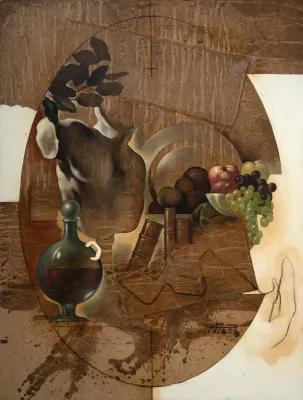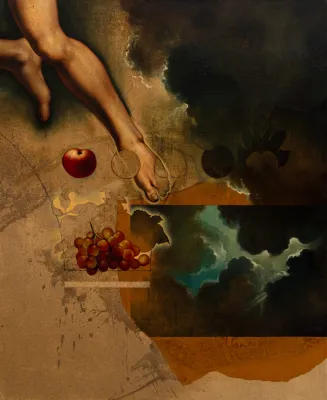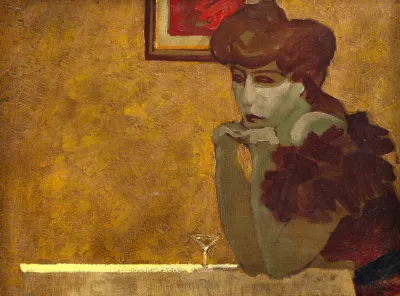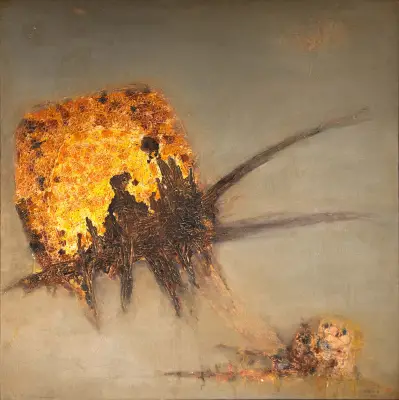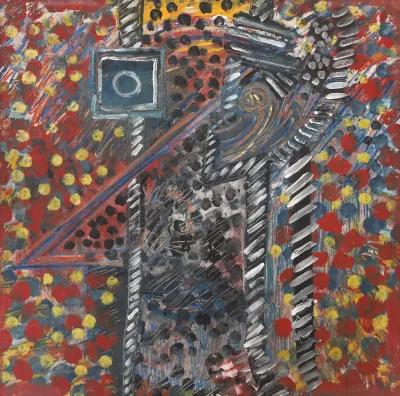

Artur Barrio (Porto, Portugal 1945)
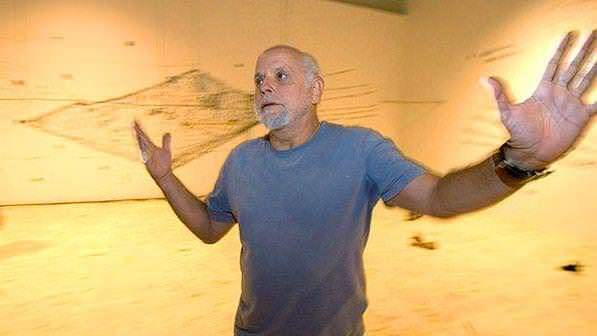
Artur Barrio
Artur Barrio is a multimedia artist and designer. He began to live in Rio de Janeiro in 1955 and began to dedicate himself to painting in 1965. From 1967 onwards, he attended the National School of Fine Arts (ENBA). During this period, he made the free notebooks, with records and notes that moved away from traditional languages. In 1969, he began the creation of situations: works of great impact, carried out with organic materials such as garbage, toilet paper, human debris and putrefying meat, as in bloodied bundles, with which he carried out interventions in the urban space. In the same year, he wrote a manifesto contesting the traditional categories of art, its relationship with the market and the social and political situation in Latin America. In 1970, in the exhibition of the Corpo à Terra, he spread bloodied bundles in a river in Belo Horizonte. He documented these situations using photography, artist notebooks and super-8 films. He also created installations and sculptures, using everyday objects. He made constant trips and also lived in Africa and Europe — in Portugal, France and the Netherlands. Since the mid-1990s, several publications and exhibitions have started to recover their work.
Critical Comment
Artur Barrio Begins to dedicate themselves to painting in 1965, in Rio de Janeiro. January. Two years later, he enters the National School of Fine Arts - ENBA. During this period, he draws a lot and does. Its "books-books", works in the form of a record and notes that depart from traditional languages. In 1969, he began the situations: works made with waste, organic materials and non-conventional objects. They are ephemeral and provocative acts, an artistic interference in the environment. According to historian Sheila Cabo, with situations, "Barrio develops the art/life relationship in the sense of the recovery of life and repowering art".1 In the same year, he launches his manifesto: a cry "against the categories of art" and the political and social situation of the third world.
Barrio throws 14 muggles with meat, bones and blood in Rio, in Belo Horizonte, during the Corpo à Terra press conference in 1970. The action has a political appeal, and is associated with the murders of the military regime and extermination groups. He often performs situations away from the public's eyes and documents these actions through super-8 films, photography, notebooks and artist books. This material becomes part of your work. Barrio also makes outdoor facilities such as Blooshluss (1972); and sculptures that use everyday objects, such as a razor clock (1970) and 1) inside out. 2) Simple (1970).
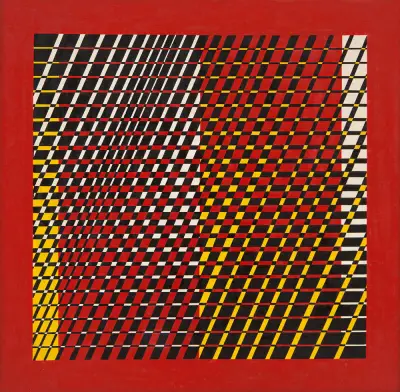
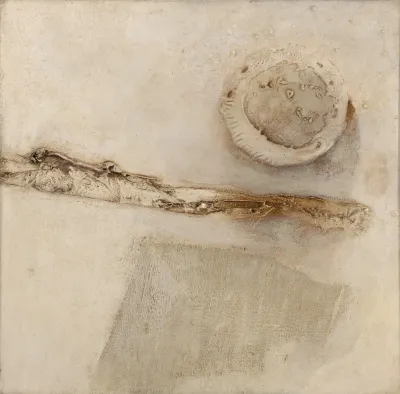
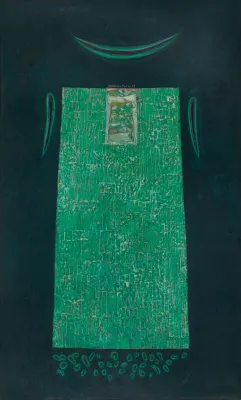
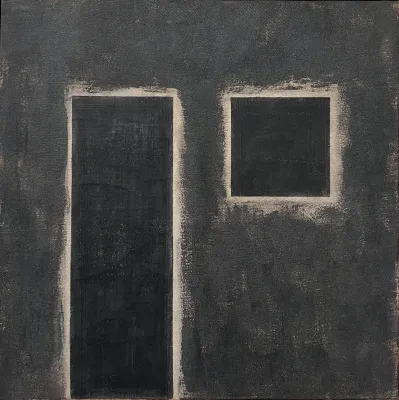
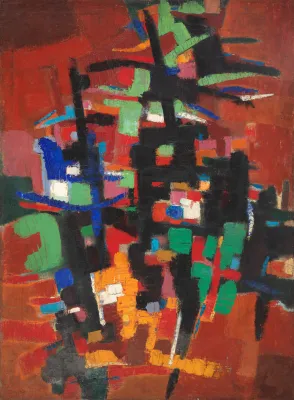
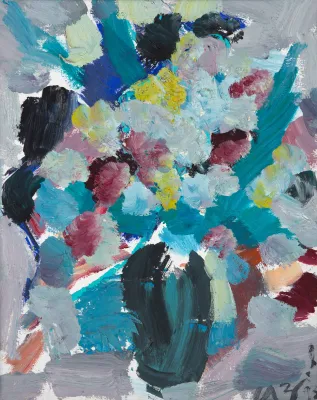
Returns to Portugal in 1974. witnesses the carnation revolution and performs situations such as 4 movements and 4 stones and the metal sculpture/cold tallow/heat. In the same year, he exhibits drawings in Rio de Janeiro, São Paulo and Iceland. The following year, he moved to Paris. There, the Center Georges Pompidou acquires his record books and artist books, such as The Book of Meat (1977). At that time, he makes performances, postal art, sculptures, books and artist notebooks. In 1982, he exhibited for the first time the set of paintings and drawings entitled the African series, in which he resumes his work with color and painting. Three years later, he shows the works of this series at the 17th São Paulo International Biennial. Presents at the Galeria do Centro Empresarial do Rio de Janeiro, in 1987, the experience nº 1. With this work, it begins a series of facilities in which it acts directly on the walls of the gallery, furrowing them and securing objects on its surface. In 1996, the Centro Cultural Banco do Brasil - CCBB in Rio de Janeiro carries out a retrospective of his work, with records of the situations.
Notes
1 - CABO, Sheila. Barrio: The death of art as a totality. In: BASBAUM, Ricardo (org.). Brazilian contemporary art: textures, dictions, fictions, strategies. Rio de Janeiro: Ambitious Rios, 2001. (n-image).
2 - Barrio, Artur. manifest. In: BARRIO, Artur. artur Barrio: The metaphor of flows 2000/1968. São Paulo: Paço das Artes, 2000. p. 100.
Criticism
"Since the early 1960s, Barrio has been interested in the leftovers, the residues we leave. Note that this interest has nothing to do with a background speech ecological, with the old denunciation of the relentlessness of instrumental reason, the destruction of nature, the ozone hole, the death of whales and so many contemporary terrors. 1970 were partially justified as comments about the hideous underground life generated by the military dictatorship. But they did not run out there. shit, snot, bones, etc. , equally dispersed in Rio de Janeiro. Like muggles, the bags were abandoned by their author to the curiosity and manipulation of anonymous passers-by, who eventually passed to co-authors of the work. Debris whose drift It was recorded - not intercepted - by the artist, who, also a passerby, paid attention to their psychoorganic reactions.
As is already evident in the description of these works, or situations, as the artist himself defined, it became very difficult to characterize them as a work of art, even if you keep in mind the degree of experimentation in those years. A more detailed examination demonstrates its distance from both the object, as it was treated by pop art, and the election of new materials, the case of Art Povera and even more of the formalist orientation of the minimalists".
Agnaldo Farias
São Paulo International Biennial, 23., 1996, São Paulo, SP. Universalis Exhibition Catalog São Paulo: Fundação Bienal de São Paulo, 1996. p.45.
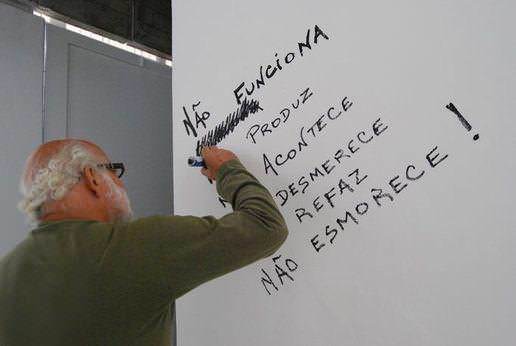
Artur Barrio
"Barrio's art exposes the economic constraint of the Third World. Barrio sustained two clashes: for freedom of expression in the dictatorship and against inequality of expression in capitalism. His strategy denounces the conditioning of production by artistic materials in the Third World. It was not a history, availability or cost of materials: 'the process was not to get the means (albeit minimal), but to do'. Barrio faces the politicization of language materials to develop overcoming strategies, acting in the stages of production, distribution and appropriation of art (...). For Barrio, the registration of works responds to the appropriation of art, irreducible to the condition of merchandise: 'things are not indicated (represented), but rather lived'. He reviewed his status: 'I give up my framing as an artist'; And the production of consumption: 'work is not recovered because it was created to be abandoned and follow its trajectory of psychological involvement'; testing the ideology of the market, deconstructed the signs with which the artistic operation was recognized in the artistic operation a possible formation of exchange value".
Paulo Herkenhoff
HERKENHOFF, Paulo. Barrio - freedom, equality and Ira. In: BARRIO, Artur. artur Barrio: A Metaphor of Flows 2000/1968. São Paulo: Paço das Artes, 2000.p.25-28.
"It is revealing as in Barrio's poetics, the double meaning of the term eschatology is manifested with intensity, which refers, then, not only to the waste of the body, but also to the 'doctrine about the consummation of time and history'. This is because organic elements of guaranteed putrefaction are, above all, metaphors of the life/death dialectic inherent to human consideration. The context of strong political repression provides the necessary parameters to understand this work, at the moment of its formulation. From adversity we live, concludes Hélio Oiticica In a general scheme of the new objectivity (1967). This adversity of the Brazilian context and, in this case, Carioca brought together the work of Barrio de Hélio Oiticica, Lygia Clark, Lygia Pape, Cildo Meireles e Antônio Manuel. The gesture takes the meaning of the action to be frankly shared through works, an activism that is made by the involvement of people, definitively subverting the institutionalized and passive idea of an art public".
Cristina Freire
FREIRE, Cristina. artur Barrio: SIC Transit Gloria Mundi. In: BARRIO, Artur. Artur Barrio: The metaphor of flows 2000/1968. Artes, 2000. p.21-24.
"The work of artur barrio constitutes, in its radical singularity, a very particular case of the way art can renounce its objectuality, in a particular critique of its conditions of production, circulation and consumption in contemporary society. Barrio does not produce 'works of art', rather raises situations in which he builds a personal discourse in which he appropriates the real, reconstituting it poeticly and politically in the residues of the same real that evidences and that are often hidden by the social domestication of taste and the Social self-legitimization of the artistic object. His projects consist of situations in which the artist uses precarious and perishable materials, often organic, which make it impossible for them to reappropriate an art system still committed to the witch circulation of the object or document".
João Fernandes
FERNANDES, João. artur Barrio: Records. In: BARRIO, Artur. Regist(r)os. Porto: Fundação de Serralves, 2000. p.16-19.
Testimations
"Seeing through symbols is also a way of seeing. But what I intend is to do exactly what I think things are. Bloody bundles or breads were not symbolic. They didn't symbolize anything. they were what they were. Pieces of meat and bread that later tried to associate with other things of the Brazilian or international reality, or with philosophical aspects. For me, they have a concrete meaning. Why is it not tried to analyze bread through matter, for what it is? The same happens with the work of the fish seller, who I developed in Portugal. That is not a symbol. It's a profession. A human being selling fish from door to door. We are full of symbols. (...) I thought that the symbolic did not fit in my work, but everything was moving to that side. The observers captured the thing that would be easier".
Artur Barrio (1987)
Barrio, Artur. Interview with Márcio Doctors - O Globo, 11/27/1987. In: Barrio, Artur. artur Barrio: the metaphor of flows 2000/1968. São Paulo: Paço das Artes, 2000. p. 53.
Artur Barrio, plastic artist Luso-Brazilian, wins the 2011 Velázquez Prize
For the jury, Barrio's choice was due to "the construction of a radical poetics, which produces a relationship and an echo with political and social situations. for the universality of its language, developed through unconventional, raw, perishable and degradable materials. for the radicalism of the use it makes of them, inside and outside the institution of the museum. His work, developed through actions, performances, installations, videos, explores the ephemeral and transitory, being interested in the symbolic effects and the appearance of an unexpected beauty". Born in the city of Porto, in Portugal, in 1945, Artur Barrio came For Rio de Janeiro, as a child, where he began to dedicate himself to painting in 1965. Two years later, he joined the National School of Fine Arts. In 1969, he created his "situations", works made with garbage, organic materials and unconventional objects. Year, it launched "Manifesto", a protest "against the categories of art" and the political and social situation of the Third World. Barrio also made outdoor installations, such as "Blooshluss" (1972), and sculptures with everyday objects. 1975, moved to Paris. The Georges Pompidou Center acquired its notebooks and books, such as the "Book of the Flesh". During this period, he created performances, postal art, sculptures, books and notebooks by an artist. In 1982, he exhibited the set of Paintings and drawings entitled "African series", in which it resumed color and painting. Three years later, he participated in the 17th edition of the São Paulo International Biennial.
Interview
Artur Barrio speaks as he writes, making prolonged use of ellipsis. The use of the interval between words is one more way of acting in the intermediate spaces of reality. "What I seek is the contact with reality in its entirety, of everything that is renegade, of everything that is put aside," he wrote in 1978, referring to the use of organic materials, such as toilet paper, blood and urine. With the same insubordination to the limits, which in the 1960s and 70s was expressed in direct interventions in the urban space, the artist has been acting in the "brechas" of institutional spaces. In 2002, he developed, for Kassel's 11th Documenta, "a subjective interrelationship idea, an operation that overflowed the room intended for him and spread into 30 outdoor gestures, in addition to having transformed into a booklet with a circulation of 10 thousand copies that were distributed. At the beginning of October, Barrio finished the execution of his "Situation/Work: from nowhere", an integral work of the 4th Mercosur Visual Arts Biennial, which reflects the artist's transitory condition. Carried out with rice bran (regged in the gaucho city of Arroio dos Ratos), this last situation/work by Barrio evokes with texts written on the walls around the rats and denies the public's participation in the work, through the phrase "The spectator does not do the work". "I am creating a split with the millenary Pythagorean tradition, which says that the work is in the center and the spectator is around and that, therefore, the work is done from the observation of the spectator", he says. The statement places a noise within the trajectory of an artist who has already divided, textually, the authorship of his work with the spectator. Installed in a warehouse in the Porto Alegre pier, Barrio's work seems to be in its natural element, in an intermediate and marginal latitude. It is part of the exhibition "O Delírio do Chimborazo", curated by Alfons Hug, which does not have its own and determined space, but happens in a transversal way, contaminating all the other exhibitions of the event.
How you feel, located between the Representations of Uruguay and Chile? Artur Barrio: The name of my work became precisely "Situation/Work: from nowhere". This is my condition: nowhere. You even asked me a little while ago if I'm Portuguese. When I arrive in Portugal, I am considered Brazilian, and here, from time to time, I am considered Portuguese. So, I'm from nowhere, which also defines my relationship with art. Because we could say that art has no borders, it has no nationality. For me, art with a nationality label does not exist. The art is international, it belongs to the human being and it belongs to the world.
And in relation to Mercosur, you look and communicate with these countries? Barrio: I am not a very, shall we say, communicative person. I've been more and nowadays I don't communicate almost with any country. Despite traveling a lot, I no longer have this elan to exchange ideas or receive people from other countries.
This communication was also cut with the public? Barrio: Yes. This concern with the public, of achieving a certain Vibrating rope For this to trigger a type of communication or participation in the work, I completely distanced myself from it and have no interest in knowing what the public's reaction will be, or whether they will accept it or not. I do the work as if it were strictly for me, not in the sense of enjoying it or contemplating it, but in the act of doing it, creating it. In the act of relating the objects and weight of these objects and all this dynamic, as if I were in my studio. As I don't have a studio, here it becomes my studio. So I won't afford to think about the other. It's selfish, but it's a creative selfishness.
His phrase "The viewer doesn't do the work" is a response to the idea of the 50th Biennial of Venice, "Dreams and conflicts: the dictatorship of the spectator"? Barrio: No. I've been using this sentence for over two years. It is part of the work I did at MAM, in Kassel. The spectator's participation is an old thing.
At the limit, your work could be dismantled on the same day it ends its execution? Barrio: Exactly. But comes that story that "Barrio takes a photo and glues it to the wall, or makes a book.". So this work here I didn't photograph. You photographed, good, but I didn't bring the machine. It could already be dismantled. The aspect of an almost closed circuit enters, which would take place inside my studio, if it were here. But it's just that it's not, so I leave the work so that it undergoes a transformation during the show. And I don't admit that there is a work restoration team, it will degrade, until it becomes perhaps something else.
This happened with the idea/situation of the 11th Documenta de Kassel? Barrio: I don't know, because I traveled before the opening. I photographed exhaustively, made a record book and only knew what happened next by other people. Each saw the work in a way. At the end of the Documenta, a person told me that the space was all lit up. It was supposed to be a space in the shadows and it seems that they lit it up. It was a slutty from Documenta.
But this work presupposed the public's participation, as I invited him to sit on a sofa and drink wine. Barrio: Participation exists, without a doubt, I can't deny people to participate. But my opinion is that the spectator does not do the work, in the sense that he, with his manipulation, or with his gaze, or the intellect, recreates the work, appropriates the work. Here I also have a barrier to the curators. The curator creates a structure and he goes on to say that this is his job, but it is not. Would he become the owner of the work by appropriating the work? ridiculous. The curator is an unnecessary need.
And what is the curator's function? Barrio: I think the curator has the idea and certain works adapt to that idea or vice versa. From there, he organizes. He is an intellectual, but not a creator. He has no creative power has the power to organize.
And in what cases does the curator claim this power? Barrio: In Rio de Janeiro it is even ridiculous, mediocre. We have Denise Mattar. She claims this publicly, in the newspapers. And there are other cases, such as Sheila Leirner, who considered herself a creator with "A Grande Canvas", in the 1980s. The artist. He became the employee, the worker. What he defended so much in the 70s, today he becomes that. In the 1970s, the artist did his work in spaces that were not institutional and did not need a curator.
How do you see this change of movement? Barrio: I worked a lot on the street, in the squares, Beaches, open. This space here, a warehouse in Cais, would be occupied, in the 70s, by a group of artists. Today this space becomes incorporated into contemporary art. At that time there was a whole movement against the system: May 68 was not so far away, the Vietnam War was racing, Brazil was experiencing the dictatorship, all this provoked the reaction.
But today there are collectives of artists... Barrio: Yes, but it turns out that those groups would never admit a curator. Apart from some, like Mário Pedrosa, with whom, of course, there was a dialogue. So there was no need for someone to organize something to foster an exhibition. I left the collective to transform myself into the individual. But today's collective people will be called for national representations and will have to reflect on this. That works like an atelier of ideas, but one hour, one of them will be called for a biennial or a document. There is a contradiction, and it is valid. I only started participating in the biennials recently.
How was the experience at Documenta? Barrio: I've been to Germany three times. I think the Okwui Enwezor made a very strong document, in addition to all the documentation produced. My work is usually turned into documentation. records. And I put together my work just like that, but the impression I had is that he created a but. Documenta is more important than any biennial. It has a much more acute focus than a biennial, which must, every two years, create a new theme or nonsense in that sense. I liked the document, but it was a fight. When I arrived to assemble, there were already hundreds of people and artists. I use the space as my studio and it is there that things arise, with my trajectory of the past, with the present, this amalgamation of time. And to maintain that process was a very complicated thing. Every day was a difficulty. Carlos Basualdo was super angry because people took the coffee with their hands, put them in their pockets and then took them to the other rooms. He got to the point where he considered closing the room. created a but with the other artists. So, I understood that Basualdo, who loved my work and is a person I value, clearly showed what he is: a person who understands that work in a photograph. But the reality is the same thing as love: the person drools a little, sex has an odor, there is sweat, there are screams. It's not a photograph. That passage to the reality of work, I think it shocked, because it extrapolated. I was very surprised, because, with a healthy ingenuity, I thought that Documenta had power in the face of this common and mediocre thing of a gallery or a small biennial, or even a museum, where everything is very aseptic. In fact, it's like anything, it's a mastodon, huge. To see all that, three months is very little, so I ask: what will be the end of these mega-expositions? I participated in a Bienal in Fortaleza, Bienal Ceará Américas, with 44 artists. But the idea of the curators is to invite 15 to 20 artists to the next Bienal. There's an alternative. reduce to a more human scale.
This issue of the work extrapolate its limits also happens here at the Mercosur Biennial, as the wind takes the rice bran to other facilities. Barrio: Yeah, The wind yesterday entered the southwest, which is a strong wind, which brings rain. He lifted the bran, which seems to have hit other rooms and that caused a draw. Because, of course, the "art" work I'm seeing is a clean job and ready to enter a bourgeois salon.
How did the Alfons Hug curatorship be behaved in this cross-section? Barrio: Look, until now I'm surprised he didn't create problems. So great. It is a person who is positively surprising me. When he invited me and brought the chimborazo theme, Simon Bolívar's delusion, I told him: "Look, in my work there is no theme, I don't accept theme". He said he had to have a theme to present to the curatorship. When I was here, in July, it was raining inside this space, a dog cold, and I saw a huge shed that served for a cargo depot. This was a port. Why not go back to the history of this place?
Evoked the rats. Barrio: I summoned the rats, who will return to eat the bran, and these bags were thrown there. I think that if it were still here the warehouse of Cais do Porto they would be more organized, of course, but anyway, there is a resumption of the history of the place, and also a certain tribute to the people who worked here, carrying these burdens. In addition to this magnificent landscape that enters space. I completely alienated the idea that there is a representation of Chile on my side, another of Uruguay, that there are other artists, because this is the best way for me to work.
Talk a little about the space used as a studio and about your studio. Pocket. Barrio: I started with art at 22 years of age and, overnight, I was completely poor, without money. Before I worked in the office, I was doing savings. I left out and completely radicalized and that left me in a kind of complicated situation. Finally, at 25, things accelerated, that's when I created the "blooded bundles", unfoldings of work on the street. At that time I lived in a room. So my notebook was my studio. All on a minimum scale. At the age of 17, I wrote a lot. Stories, poetry, this atelier notebook comes a little from there. I had many notebooks from that time, but I lost. The ones I managed to hold, I sold it to Gilberto Chateaubriand. He, as a collector, kept them. If not, I would lose them in that back-and-forth, with no fixed place. There, little by little, the idea of using the expository space as a place of germination of ideas, real experimentation, arises. and use that as something that is not determined.
This is what configures a "situation"? and fulfill. Barrio: and comply, and fulfill (laughs). I understood that it was in this gap that I had to act. But that implies an everyday struggle. I stay here, being watched by others, but that's ok.
Well or badly, you've been related to institutions. Barrio: I have. And, they, for better or worse, are letting things happen. I think this is a potential they like. Even if you don't like it as much as you would like to like it. But they accept. And I think that's cool.
Would that be possible a few decades ago? Is this relationship a recent acquisition? Barrio: completely. This starts to germinate in the 80s. It's that thing. I have an idea, but when I'm doing it. My work has always had a little bit of being transformed. When you go from an outside world to an inner world, an objective world, which is an institution, the subjective world needs to dialogue with that objective world, but not bow down. In general, art is presented not as something that was created at the moment, but as something that came from the studio, or from a prolonged study, and enters almost as an architectural structure. The facilities of Hélio Oiticica and Cildo Meireles have an architectural connotation, that is, they are set up following certain rules and are dismantled, boxed and reassembled elsewhere. I got out of it a little bit, my work is not enough to.
.Reassemble? Barrio: There is that anecdote: I did an exhibition in a small gallery in Rio de Janeiro and the dealers, in the end, were. Sweeping the floor, bagging that coffee powder, or some fish heads with coarse salt. Some gambiarras, putting everything together, because they were thinking that from there they could perhaps sell, I don't know. But then they realized that no one is going to buy that, right? Because it is no longer the whole, that is an object.
But they could buy photographs that record the situation. Barrio: Yes, but then it comes in, because the photograph is secondary.
Couldn't the record be seen as a work? Barrio: No, no way, photography is secondary. It's done a posteriori, it's something else. There are museums that bought some records, but they are not entitled to a single registration, to the negative, to a print run of five. There is none of that. The work has a very unlimited print run, the originals I don't know where they are anymore, they are turning into copies. And photography was born to have thousands of copies. I stopped working with a gallery in California because of that, because the dealer wanted me to work with records and wanted the original negatives to make a five-off. No way, I don't work like that. If anyone wants to buy it, I'll sell it. But I have the negatives and I reproduce without remorse.
And you want to go back to work outside the institution? Barrio: I have and I'm doing it. I had a sailboat built here in Triunfo, Rio Grande do Sul. I did it little by little, with my effort, it took two and a half years and now it's ready. We took a trip in February to Rio. There in Rio I made several departures, took a trip with Cristina, my wife, to Búzios, we faced a strong east wind, with the bow. She recorded it with photos, I also made some. So there's the idea of doing a job with this whole course, I write my little things there.
A logbook? Barrio: It wouldn't be a logbook, but there is the idea of doing a job outside of all contexts, outside the earth, in the water. It's already being done, but I don't think it's already come to a synthesis, that spark. But let's live, the idea is happening.
This sailor vein, where does it come from? Barrio: I love diving and doing underwater photography. I'm Portuguese, I think that's a little too. I have always lived in Copacabana, with the sea ahead, wonderful. This takes me a little away from the world of art, which is something that worries me, this day-to-day of the world of art, nhenhehém, a boredom.
The chat has no end. The spaces between the words go on and the night falls on the Guaíba River.
Individual exhibitions
1967 - Rio de Janeiro RJ - Drawings, at the Gemini Gallery
1973 - Rio de Janeiro RJ - Super 8, slides and Works, in the sacred vesture creative organization
1974 - Rio de Janeiro RJ - Records and Drawings, at the Contemporary Art Center
1974 - São Paulo SP - Artur Barrio: Drawings, at the Millan Gallery
1974 - São Paulo SP - Individual, at the Ars Mobile Gallery
1975 - Paris (France) - Plenitude, in the Espace Cairn
1977 - Porto (Portugal) - Artur Barrio: Drawings, Audiovisuals, at Galeria Alvarez
1978 - Rio de Janeiro RJ - Projects carried out and almost carried out, at MAM/RJ
1978 - São Paulo SP - Cadernos-Livros, at the Pinacoteca do Estado
1979 - Paris (France) - Showcase pour l'art actuel, in the Espace Cairn
1980 - Paris (France) - Extension, no Espace Cairn
1980 - Paris (France) - African ivory, No Espace Cairn
1980 - Paris (France) - Frozen Movement, No Espace Cairn
1981 - Paris (France) - Tennis match at Espace Cairn
1981 - Paris (France) - I'll be back in 5', at Espace Cairn
1981 - Rio de Janeiro RJ - Working records, at the Sérgio Milliet Gallery
1982 - Paris (France) - d'Après le dernier Portolano, at Espace Cairn
1982 - São Paulo SP - African Series, at the São Paulo Art Gallery
1983 - Amsterdam (Holland) - My head is empty, my eyes are full, in the Gallerij Suspekt
1983 - Paris (France) - My head is empty, my eyes are full, in the Espace Cairn
1983 - Rio de Janeiro RJ - My head is empty, my eyes are full, at MAM/RJ
1983 - São Paulo SP - African series, at the São Paulo Art Gallery
1984 - Amsterdam (Holland) Huis
1984 - Rio de Janeiro RJ - Records, at the MP2 Arte Gallery
1986 - Rio de Janeiro RJ - Artur Barrio: Paintings and Drawings, at Petite Galerie
1986 - São Paulo SP - Individual, at the Millan Gallery
1987 - Rio de Janeiro RJ - Experience nº 1, at the Galeria do Centro Empresarial do Rio de Janeiro
1988 - Rio de Janeiro RJ and São Paulo SP - Artur Barrio: Paintings, NA Montesanti Gallery
1989 - Rio de Janeiro RJ - artur Barrio: paintings, at Galeria Montesanti
1989 - Rio de Janeiro RJ - Artur Barrio: Paintings, at Artur Fidalgo Art Office
1989 - Rio de Janeiro RJ - Experience nº 4, at the Gallery of the Business Center of Rio de Janeiro
1989 - São Paulo SP - Artur Barrio: Paintings and Drawings, at Kate Art Gallery
1991 - Rio de Janeiro RJ - Experience nº 5, at the Sérgio Porto Cultural Space
1993 - Rio de Janeiro RJ - Artur Barrio: Drawings and Collages, at the Goudard Gallery
1993 - Rio de Janeiro RJ - Extension, at Galeria Ibeu Copacabana
1993 - Rio de Janeiro RJ - Variants, at Galeria Saramenha
1993 - Geneva (Switzerland) - Variants, at Galerie Brot und käse
1995 - Rio de Janeiro RJ - An extension in time, at the Paço Imperial
1996 - Rio de Janeiro RJ - Situations: Artur Barrio: Registration, at CCBB
1997 - São Paulo SP - artur Barrio: Fragmentos, at the São Paulo Art Gallery
1997 - Rio de Janeiro RJ - Artur Barrio: Fragmentos, at Galeria Cohn Edelstein
1998 - Niterói RJ - The Dream of the Archaeologist, at MAC/Niterói
1999 - Fortaleza CE - Individual, at the Dragão do Mar Center of Art and Culture
1999 - Porto (Portugal) - Individual, in the André Viana Gallery
1999 - Porto Alegre RS - Individual, at the Pinacoteca Barão de Santo Ângelo
1999 - São Paulo SP - Individual, in the new art gallery
2000 - Porto (Portugal) - regist(r)os, at the Serralves Museum of Contemporary Art
2000 - Rio de Janeiro RJ - Design, at Artur Fidalgo Art Office
2001 - São Paulo SP - The metaphor of Flows, at Paço das Artes
2001 - Salvador BA - The metaphor of flows, at MAM/BA
2001 - Rio de Janeiro RJ - The metaphor of flows, at MAM/RJ
2002 - Brasília DF - My head is empty/my eyes are full
2002 - Rio de Janeiro RJ - My head is empty/my eye is full, at MAM/RJ
2002 - Rio de Janeiro RJ - Sub: Homage to Pierre Vogel, at Artur Fidalgo Art Office
2002 - São Paulo SP - My head is empty/my eye is full, in the state's Pinacoteca
Collective exhibitions
1967 - Rio de Janeiro RJ - Collective, at Galeria Celina
1968 - Rio de Janeiro RJ - Rio de Janeiro Art Fair, at MAM/RJ
1969 - Paris (France) - 6th Bienal de Paris
1969 - Rio de Janeiro RJ - Salão da Bússola, at MAM/RJ
1970 - Belo Horizonte MG - From the earth, in the Municipal Park
1970 - Curitiba PR - Minimum situations, at MAC/PR
1970 - New York (United States) - Information, at MoMA
1970 - Rio de Janeiro RJ - 2nd Summer Hall at MAM/RJ
1971 - Mayaguez (Porto Rico) - Creation, at the University of Mayaguez
1972 - Curitiba PR - Four Meetings of Modern Art, at MAC/PR
1973 - Buenos Aires (Argentina) - Contemporary Brazilian Art, at the Centro de Arte y Comunicación
1973 - Campinas SP - 9th Campinas Contemporary Art Salon, at MACC
1973 - Paris (France) - Collective, at the Musée Gallièra
1973 - Rio de Janeiro RJ - Question about nature: meaning and function of the work of art, At Galeria Ibeu Copacabana
1973 - São Paulo SP - Expo-Projection 73, at Espaço Griffe
1974 - Campinas SP - 9th Contemporary Art Salon in Campinas, at MACC
1974 - São Paulo SP - 8th Young Contemporary Art, at MAC/USP
1974 - São Paulo SP - Prospectiva 74, at MAC/USP
1975 - Lisbon (Portugal) - Brazilian drawing at the Calouste Gulbenkian Foundation
1975 - Lisbon (Portugal) - Two International Art Meetings, at the Palace of the Coruchéus
1975 - Viana do Castelo (Portugal) - Two International Art Meetings
1975 - Vienna (Austria) - Brazilian design, at the Albertina Museum
1976 - Lansing (United States) - Modern Art in Brazil, at the Kresge Art Museum
1976 - London (England) - Art of systems/Latin America, Institute of Contemporary Art
1976 - Michigan (United States) - Modern Art in Brazil, Kresge Art Gallery, Michigan State University
1976 - Paris (France) - Art of Systems/Latin America, at Espace Cairn
1976 - Rio de Janeiro RJ - 1st Art Now: Brazil, at MAM/RJ
1977 - Antwerp (Belgium) - Postal Art, at ICC
1977 - Edewecht (Germany) - Youths, at Realschule
1977 - Gent (Belgium) - Text, Sound and Image, Small Press Festival, at Prokazwart Zall
1977 - Lansing (United States) - Postal Art at the Kresge Art Museum
1977 - Madrid (Spain) - Exhibition at the Museo de Bellas Artes
1977 - Paris (France) - Postal art, at Espace Cairn
1977 - Paris (France) - marginal editions and communications in Latin America, at Maison de la Culture du Havre
1977 - Rio de Janeiro RJ - Identification of Artist - A Book, at EAV/Parque Lage
1977 - São Paulo SP - Visual Poetics, at MAC/USP
1978 - São Paulo SP - Anna Bella Geiger e Artur A. Barrio, at the Pinacoteca do Estado
1978 - São Paulo SP - The object in the art: Brazil 60s, at MAB/FAAP
1979 - Paris (France) - Lectures, at Espace Cairn
1979 - Paris (France) - Mail Art at Galerie Diagonale
1980 - Milan (Italy) - Quasi Cinema
1981 - Amsterdam (Holland) - Mail-Art: Expressions, at the Makkon Foundation
1981 - Paris (France) - Grand Dieu, Épargnons Cela à Notre Pays, at Espace Cairn
1981 - Paris (France) - Free d'artiste, at the Center Georges Pompidou
1981 - Rio de Janeiro RJ - Quase Cinema, at MAM/RJ
1981 - São Paulo SP - 16th São Paulo International Biennial, at the Bienal Foundation
1982 - London (United Kingdom) - Brazil 60 Years of Modern Art: Gilberto Chateaubriand Collection, at Barbican Art Gallery
1982 - Rio de Janeiro RJ - Contemporaneity: Homage to Mário Pedrosa MAM/RJ
1982 - Rio de Janeiro RJ - Between Mancha and Figure, at MAM/RJ
1983 - Rio de Janeiro RJ - 3000 cubic meters, at the Sérgio Porto Cultural Space
1983 - São Paulo SP - 17th São Paulo International Biennial, at the Bienal Foundation
1983 - São Paulo SP - Art on the street
1984 - Rio de Janeiro RJ - Interventions in the urban space, at Funarte
1984 - São Paulo SP - Gilberto Chateaubrind Collection: Portrait and Self-Portrait of Brazilian Art, at MAM/SP
1985 - Rio de Janeiro RJ - 8th National Salon of Plastic Arts, at Funarte
1985 - São Paulo SP - 18th São Paulo International Biennial, at Fundação Bienal
1985 - São Paulo SP - Arte Novos Meios/Multimeios: Brasil 70/80, at MAB/FAAP
1985 - São Paulo SP - Trends of the book and artist in Brazil, at CCSP
1986 - Porto Alegre RS - Rubem Knijnik Collection: Brazilian Arts 60/70/80, at Margs
1986 - Rio and Janeiro RJ - Testimony of a generation: 1969-70, at the Banerj Art Gallery
1987 - Amsterdam (Holland) - Autobiografische News, at Gallerij Klove
1987 - Rio de Janeiro RJ - Ao Collector: Homage to Gilberto Chateaubriand, at MAM/RJ
1988 - Rio de Janeiro RJ - Expression and Concept 70s, at the Gilberto Chateaubriand Gallery
1988 - Rio de Janeiro RJ - The eternal is Ephemeral, at Petite Galerie
1989 - Rio de Janeiro RJ - Rio Hoje, at MAM/RJ
1989 - São Paulo SP - The small infinity and the large circumscribed, at Arco Contemporary Art Gallery Bruno Musatti
1991 - Rio de Janeiro RJ - Image about image, at the Sérgio Porto Cultural Space
1992 - Paris (France) - Films, videos about artists, at the Center Georges Pompidou
1992 - São Paulo SP - years 60/70: Gilberto Chateaubriand Collection - MAM/RJ, at the SESI Art Gallery
1993 - Brasília DF - A look at Joseph Beuys, at Fundação Athos Bulcão
1993 - Florence (Italy) - Brazil Segni d'Arte, at the Nationale Centrale Di Firenze
1993 - Milan (Italy) - Brasil Segni d'Arte, at the Nazionale Library Braidense
1993 - Rio de Janeiro RJ - Erotic Art, at MAM/RJ
1993 - Rome (Italy) - Brasil Segni d'Arte, at the Center for Brazilian Studies
1993 - São Paulo SP - O Modern design in Brazil: Gilberto Chateaubriand Collection, at the Sesi Art Gallery
1993 - Venice (Italy) - Brasil Segni d'Arte, at Fondazione Scientífica Querini Stampalia
1994 - Belo Horizonte MG - The ephemeral in Brazilian art: 60s/70s
1994 - Cologne (Germany) - Brazilian design, at Karmelita Kunsthaus
1994 - Penápolis SP - O Ephemeral in Brazilian Art: 60's/70's, at Galeria Itaú Cultural
1994 - Rio de Janeiro RJ - The powers of the organic, at the Castro Maya Museums. Weir Museum
1994 - Rio de Janeiro RJ - Object book: The frontier of the voids, in the CCBB
1994 - Rio de Janeiro RJ - The modern design in Brazil: Gilberto Chateaubriand collection MAM/RJ
1994 - Rio de Janeiro RJ - Trenches: Art and Politics in Brazil, at MAM/RJ
1994 - Rio de Janeiro RJ - via fax, at the Telephone Museum
1994 - São Paulo SP - BIENAL BRASIL CENTURA 2004, at the Bienal Foundation
1994 - São Paulo SP - The Ephemeral in Brazilian Art: 60/70, at Itaú Cultural
1995 - Belo Horizonte MG - Libertinos/Libertários, in the Cultural UFMG
1995 - Rio de Janeiro RJ - Libertinos/libertarians, at Funarte
1995 - São Paulo SP - Object book: The frontier of the voids, at MAM/SP
1996 - Belo Horizonte MG - Itinerant impressions, at Palácio das Artes
1996 - Brasília DF - The ephemeral in Brazilian art: 60s/70s, at Itaú Galeria
1996 - Rio de Janeiro RJ - Mensa/Mensae, at the National Center for Folklore and Popular Culture/Funarte
1996 - Rio de Janeiro RJ - O Grito, at MNBA
1996 - São Paulo SP - 23rd São Paulo International Biennial, Biennial
1997 - Little Rock (United States) - Re-aligning visions: Alternative currents in South American Drawing, at the Arkansas Art Center
1997 - New York (United States) - Re-Aligning Visions: Alternative Currents in South American Drawing, at the Museo del Barrio
1997 - Porto Alegre RS - 1st Mercosur Visual Arts Biennial, at the Mercosul
1997 - Porto Alegre RS - Exhibition of the Caixa Collection, at the Caixa Cultural Complex
1997 - Porto Alegre RS - Parallel Exhibition, at the Caixa Econômica Federal Museum
1997 - Porto Alegre RS - Political Strand, at the Fundação Mercosul Visual Arts Biennial
1997 - Rio de Janeiro RJ - Art Cinema: 60's/70's, at CCBB
1997 - Rio de Janeiro RJ - There is soup, with Tunga, in the Imperial Palace
1997 - São Paulo SP - In addition to the form/in the limit of the form, at Casa das Rosas
1997 - São Paulo SP - Exhibition of the Caixa collection, in the Caixa Cultural Complex
1998 - Austin (United States) - re-aligning Visions: Alternative Currents in South American Drawing, at Archer M. Huntington Art Gallery
1998 - Barcelona (Spain) - Out of Actions Between Performance and the Object: 1949-1979, at the Contemporani d'art museum
1998 - Barcelona (Spain) - Out of Actions: Between Performance and the Object, 1949-1979, at the Museum d'Art Contemporani
1998 - Caracas (Venezuela) - Re-aligning visions: Alternative currents in South American Drawing, at the Museo de Bellas Artes
1998 - Curitiba PR - Exhibition of the Caixa, in the Caixa Cultural Complex
1998 - Curitiba PR - Exhibition of the Caixa Collection, in the Caixa Cultural Complex
1998 - Los Angeles (United States) - Out of Actions between Performance and the Object: 1949-1979, at The Museum of Contemporary Art
1998 - Los Angeles (United States) - Out of Actions: Between Performance and the Object, 1949-1979, at the Museum of Contemporary Art
1998 - Minnesota (United States) - Studies in Latin American Contemporary Culture, at the University of Minnesota
1998 - Monterrey (Mexico) - Re-Aligning Visions: Alternative Currents in South American Drawing, at the Contemporary Art Museum
1998 - Niterói RJ - Mirror of the Bienal, at MAC/Niterói
1998 - Niterói RJ - Discoveries occupations, com Antonio Manuel, at MAC/Niterói
1998 - Rio de Janeiro RJ - 16th National Salon of Plastic Arts, at Funarte
1998 - Rio de Janeiro RJ - 16th National Salon of Plastic Arts, at MAM/RJ
1998 - Rio de Janeiro RJ - 60s/70s: Gilberto Chateaubriand collection, at MAM/RJ
1998 - Rio de Janeiro RJ - Drawings: Cildo Meireles, artur Barrio e Luiz Fonseca, at Paço Imperial
1998 - Rio de Janeiro RJ - Exhibition of the collection of Caixa, in the Caixa Cultural Complex
1998 - Rio de Janeiro RJ - Exhibition of the Caixa collection, in the Caixa Cultural Complex
1998 - Rio de Janeiro RJ - Hélio Oiticica e the American scene, in the Centro de Arte Hélio Oiticica
1998 - Rio de Janeiro RJ - Poetics of Color, at the Light Cultural Center
1998 - São Paulo SP - 24th International Biennial of São Paulo, at the Bienal
1998 - São Paulo SP - Elective Affinities I: The Collector's Look, at Casa das Rosas
1998 - São Paulo SP - 24th São Paulo International Biennial, at the Bienal Foundation
1998 - São Paulo SP - Canibáliafetiva, N'a Estufa
1998 - São Paulo SP - Fronteiras, at Itaú Cultural
1998 - São Paulo SP - The modern and the contemporary in Brazilian art: collection Gilberto Chateaubriand - MAM/RJ, at MASP
1998 - São Paulo SP - Theory of Values, at MAM/SP
1998 - Vienna (Austria) - Out of actions: between performance and the Object, 1949-1979, at the National Museum of Art - Out of Actions: Between Performance and the Object, 1949-1979, at the Austrian Museum of Applied Arts 1999 - Miami (United States) - Re-Aligning Visions: Alternative Currents in South American Drawing, at the Miami Art Museum
1999 - New York (United States) - Beyond Identities: Global Conceptualism: Local Contexts, traveling show organized by the Queens Museum of Art
1999 - Porto (Portugal) - CIRCA 1968, at the Serralves Museum of Contemporary Art
1999 - Rio de Janeiro RJ - Daily life/art. The object - 60s/90s, at MAM/RJ
1999 - Salvador BA - 60 years of Brazilian art, at the Caixa Econômica Federal Cultural Space
1999 - São Paulo SP - Daily life/Arte. The Object - The 60s/90s, at Itaú Cultural
1999 - Tokyo (Japan) - Out of Actions Between Performance and the Object: 1949-1979, at the Hara Museum of Contemporary Art
1999 - Tokyo and Osaka (Japan) - Out of Actions: Between Performance and the Object, 1949-1979, at the Hara Museum of Contemporary Art
2000 - Curitiba PR - 12th Exhibition of the Engraving of Curitiba. Body marks, soul folds
2000 - Kwangju (South Korea) - Kwangju Biennial
2000 - Lisbon (Portugal) - 20th century: Art of Brazil, at the Calouste Foundation Gulbenkian
2000 - Madrid (Spain) - Versiones del Sur: five proposals around La Arte en América, at the National Museum Reina Sofia Art Center
2000 - Niterói RJ - Collection Sattamini: from materials to internal differences, at the Mac of Niterói
2000 - Rio de Janeiro RJ - Situations: Brazilian Art - 70's, at Casa França-Brasil
2000 - Santa Vitória do Palmar and Chuí RS - Fronteiras - Construction Installation
2000 - São Paulo SP - Conceptual Art and Concepts: 70's at the MAC/USP collection, at the SESI Art Gallery
2000 - São Paulo SP - Brazil + 500 Rediscovery Show. Contemporary Art, at the Bienal Foundation
2001 - Belo Horizonte MG - From the body to the ground: a radical landmark in Brazilian art, at Itaú Cultural
2001 - Campinas SP - (almost) Efêmera Arte, at Itaú Cultural
2001 - Paris (France) - From adversity Vivenos, at the Musée d'Art Moderne de la Ville de Paris
2001 - Porto Alegre RS - Liba and Rubem Knijnik collection: contemporary Brazilian art, Margs
2001 - Rio de Janeiro RJ - Brazilian Watercolor, at the Light Cultural Center
2001 - São Paulo SP - 27th Panorama of Brazilian Art, at MAM/SP
2001 - São Paulo SP - Trajectory of light in Brazilian art, at Itaú Cultural
2002 - Kassel (Germany) - 11th Documenta, at the Fridericianum Museum
2002 - London (United Kingdom) - Experiences: Dialogues between the works of Brazilian artists from the 1960s to 2002, at the New Art Gallery Walsall
2002 - Niterói RJ - The recent MAC collection, NO
2002 - Niterói RJ - Paper Collection, at MAC/Niterói
2002 - Niterói RJ - Sattamini Collection: sculptures and objects, at MAC/Niterói
2002 - Niterói RJ - Dialogue, antagonism and replication in the Sattamini collection at MAC/Niterói
2002 - Porto Alegre RS - Violence and Passion, at Santander Cultural
2002 - Rio de Janeiro RJ - Artephoto, CCBB
2002 - Rio de Janeiro RJ - Caminhos do Contemporânea 1952-2002, at Paço Imperial
2002 - Rio de Janeiro RJ - Between the image and the word: Module 2, in the MAM-Cittá room America
2002 - Rio de Janeiro RJ - Identities: The Brazilian portrait in the Gilberto Chateaubriand collection, at MAM/RJ
2002 - Rio de Janeiro RJ - Morro/Labyrinto, at the Imperial Paço
2002 - Rio de Janeiro RJ - 1st Exhibition Rio Art Contemporary, at MAM/RJ
2002 - Rio de Janeiro RJ - 27th Panorama of Brazilian Art, at MAM/RJ
2002 - Salvador BA - 27th Brazilian Art Panorama, at MAM/BA
2002 - São Paulo SP - The Form and the Technical Image in the Art of Rio de Janeiro: 1950-1975, at Paço das Artes
2002 - São Paulo SP - Map of the Now: Recent Brazilian art in the João Sattamini Collection of the Museum of Contemporary Art of Niterói, at Instituto Tomie Ohtake
2002 - São Paulo SP - Paralela, in the shed located on Avenida Matarazzo, 530
2003 - Brasília DF - ARTFOTO, at CCBB
2003 - Niterói RJ - Appropriations: Short circuit of participatory experiences, at MAC/Niterói
2003 - Porto Alegre RS - Transversal Exhibition, at the Rio Grande do Sul Memorial
2003 - Rio de Janeiro RJ - Art in Dialogue, at MAM/RJ
2003 - Rio de Janeiro RJ - Art in Motion, at the BNDES space
2003 - Rio de Janeiro RJ - Drawings 70s, at MAM/RJ
2003 - Rio de Janeiro RJ - Brazilianart project, at Almacén Art Gallery
2003 - Rio de Janeiro RJ - Treasures of Caixa: Brazilian modern art in the Caixa collection, in the Caixa Cultural Complex
2003 - São Paulo SP - The Subversion of Media, at Itaú Cultural
2003 - São Paulo SP - Collection 2003 / 2004, at Galeria Luisa Strina
2003 - São Paulo SP - Art and Society: a controversial relationship, at Itaú Cultural
2003 - São Paulo SP - Arteconócional: 70 years USP, at MAC/USP
2003 - São Paulo SP - Galeria Luisa Strina: artists represented, at Galeria Luisa Strina
2003 - São Paulo SP - MAC USP 40 years: Contemporary Interfaces, at MAC/USP
2004 - Rio de Janeiro RJ - 30 artists, at the Mercedes Viegas Art Office
2004 - Rio de Janeiro RJ - Brazilian contemporary art in the collections of Rio, at MAM/SP
2004 - Rio de Janeiro RJ - New Acquisitions 2003: Gilberto Collection CHATEUBRIAND, at MAM/RJ
2004 - Rio de Janeiro RJ - Tudo é Brasil, at Paço Imperial
2004 - São Paulo SP - 26th São Paulo International Biennial, at the Bienal Biennial Foundation
2004 - São Paulo SP - Tudo é Brasil, at Itaú Cultural
2005 - London (United Kingdom) - Citizens, at Pitzhanger Manor Museum
Source: Itaú Cultural