
Anna Maria Maiolino (Scalea, Itália 1942)
Anna Maria Maiolino is a printmaker, painter, sculptor, multimedia artist and draftswoman. In 1954, she moved to Caracas, Venezuela, because of the scarcity brought about by the postwar period. From 1958 to 1960, she studied at the Escuela de Artes Plásticas Cristóbal Rojas and, in 1960, moved to Brazil. The following year, she began a woodcut course at the Escola Nacional de Belas Artes (Enba), in Rio de Janeiro, joining the New Figuration movement, which emerged as a reaction to abstraction and reflected a stance on the Brazilian political context.
In 1963, she attended Ivan Serpa's studio at the Museu de Arte Moderna do Rio de Janeiro (MAM/RJ) and studied printmaking with Adir Botelho. The following year, she held her first solo exhibition, at Galeria G, in Caracas. In 1967, she took part in the exhibition Nova Objetividade Brasileira [New Brazilian Objectivity], organized by critics and artists such as Hélio Oiticica, which proposed, among other principles, moving beyond the easel painting in favor of the art object.
From 1968 to 1971, she studied at the Pratt Graphic Center, in New York. From the 1970s onward, she began working with different media, such as installation, photography and film. She took part in the 1st Super-8 Film Festival, in Curitiba, winning an award for the film In-Out, Antropofagia [In-Out, Anthropophagy], her first work on film. She was also in the International Super-8 Film Festival, at Espace Cardin, in Paris; the 5th Jornada Brasileira de Curta-Metragem [Brazilian Short Film Days], in Salvador; and the 2nd National Short Film Festival, at the Alliance Française du Brésil, in Rio de Janeiro.
In the late 1970s, she began devoting herself to performances. In 1978, she staged Mitos Vadios [Vagrant Myths] on a vacant lot on Rua Augusta, in São Paulo, and, in 1981, presented Entrevidas [Between Lives] on Rua Cardoso Júnior, where dozens of hens' eggs were scattered on the ground, creating a challenging path for the audience. In the 1980s, she began working with clay, influenced by the Argentine artist Victor Grippo.
In 1990, she received the award for best exhibition of the year from the Associação Brasileira de Críticos de Arte (ABCA) for her solo exhibition held in 1989 at the Centro Cultural Cândido Mendes. In 2002, she presented a retrospective in New York, accompanied by the launch of the book A Life Line/Vida Afora.
Critical Commentary
Despite her Italian origins, Anna Maria Maiolino's artistic training is Latin American. She began her art studies early, at the Escuela de Artes Plásticas Cristóbal Rojas, in Caracas, Venezuela, in 1958. She moved to Rio de Janeiro in 1960 and attended the painting and printmaking studios of the Escola Nacional de Belas Artes - Enba. In the 1960s, the artist concentrated on woodcut, alongside the production of objects. The landscapes and interior scenes, large white areas marked by softly cut black figures, gave way to colorful narrative figuration with urban themes and/or themes related to everyday life and the condition of women. Maiolino became one of the key figures of the exhibition Nova Objetividade Brasileira, held at the Museu de Arte Moderna do Rio de Janeiro - MAM/RJ in 1967. Her approach to popular culture came through her interest in the woodcuts of cordel booklets, combining her graphic style with current social and political themes.
She moved to the United States in 1968 and stayed there for about three years. The artist turned to experimental poetry, which quickly led her to drawing. She began an important production of drawings,1 which continues to this day. Its keynote is the investigation of the materiality of paper and the limits of its spatiality. The figure leaves the scene and gives way to new elements, such as cuts, folds, thread stitching, written words, engraved incisions, etc. The sheet is explored in its sensory existence in space, sometimes worked on both sides. From this phase come series such as Mapas Mentais [Mental Maps] (1971) and the drawing-objects Buracos Negros [Black Holes] (c.1974), in which the personal and the political merge.
But the 1970s confronted Anna Maria Maiolino with the challenge of experimenting with other forms of expression, and she made films and installations. Under the dictatorship she produced the Super-8 film In-Out Antropofagia (1974) and the installations Feijão com Arroz [Rice and Beans] (1979)2 and Entrevidas (1981).
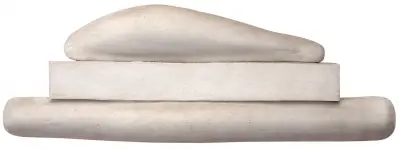
In the following decade, the artist also turned to painting. In a way, this announced her concern with gesture and the relationship with matter, present in the sculptural wall objects and reliefs (in clay, plaster and cement) of the early 1990s. Little by little, Maiolino concentrated on the manual aspect of artmaking and began to use clay almost exclusively. She developed projects with large quantities of this material, in which the repetition of the gesture and its record in the matter signal an enormous concentration of energy. Installations such as Muitos [Many] (1995) or São Estes [These Are] (1998) place the body at the center of the work of art, while transforming the forgetful gesture of everyday life into a reservoir of experience.
Notes
1 Drawing remains a central vein of Anna Maria Maiolino's production to this day. In 2002 the artist had a retrospective of her works on paper at The Drawing Center, in New York. The exhibition Anna Maria Maiolino: A Life Line/ Vida Afora, curated by the institution's director Catherine de Zegher, covered almost 35 years of her career, in recognition of the importance of her contribution to the expansion and renewal of this technique.
2 The installation was recently restaged in the Atelier Finep program of the Paço Imperial, in Rio de Janeiro.
Critiques
"(...) if the figuration of the first phase became disciplined, progressively contained and surpassed, and if the Pop influence of the late 1960s gradually moved into the conceptual field, the artist retained an interest in locating herself in a space. Between autobiographical investigation and the awareness of being collectively in the world, occupying space and enduring in time, she increasingly came to express herself through maps. In these maps, visual and verbal, her directions and the accidents accumulated along the way are recorded. The paintings on surfaces, flat or in three-dimensional assemblages, of the early period were replaced by drawings and prints, and the artist also devoted herself to the more recent production of audiovisual works and Super-8 films. In some of these works, the geographic regions appear clearly and make up moments of the artist's autobiography (...). In others, especially from the later phases, there are only indications of landscape, analogies of sky, sea, earth or appropriations of materials from the concrete world - stones, for example. Little by little, even the residual evidence of the outer landscape is lost, in exchange for an intimate geography, psychological maps. (...)".
Roberto Pontual
PONTUAL, Roberto. Arte brasileira contemporânea: Coleção Gilberto Chateaubriand. Rio de Janeiro: Jornal do Brasil, 1976.
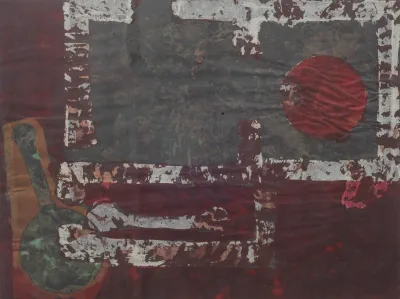
"The reliefs arise, in part, from this reconquest of the tactile - both for those who make them and for those who see them -, which evolves from the relative coldness of cutting, folding and sewing, which wound the smooth surface of the paper, to the sensory involvement of the hands with clay, an almost archetypal relationship of human making. Perhaps this is the source of the sense of timelessness experienced on seeing the reliefs. The replacement of geometry, predominant in the drawings and prints of the 1970s, by the current primacy of tactile intuition certainly shifts the axis of the methods of organizing the work, which is visible in their very diverse configurations. But tactile intuition does not imply a loss of rigor, since it is subordinate to the way the image is processed until its final form - the casting.
The plastic intelligence indispensable to a creative process through casting, which works with inverted images - positive and negative -, comes in this case from the artist's long experience in printmaking, whose methodological similarity to casting overdetermines the apparent differences between her graphic work and the reliefs. This ordering discipline of the method of making is reinforced by the painting that intervenes, either introducing some geometric elements or combining with the plastic potential of the shadow cast by the irregular surface of the pieces, inside and outside their physical limits".
Fernando Cocchiarale
MAIOLINO, Anna Maria. Anna Maria Maiolino: relevos. Rio de Janeiro: Centro Cultural Cândido Mendes, 1989.
"It was precisely in the passage from painting to this hybrid form that is the relief - painting/sculpture - that Maiolino seems to have reached her maturity as an artist and her exact significance for current Brazilian art.
There she expands and charges with new meanings and possibilities the recent local artistic tradition of operating between the limits of painting and sculpture, since in her reliefs the hybridization occurs not only in relation to the formal aspects involving painting and sculpture, but also to significant parts of the histories of these two artistic procedures: made according to the traditional techniques of modeling and retaining in their processing traces of the ancestral history of sculpture (and even printmaking), these works also embrace the history of painting through the emphasis given to the pictorial side that constitutes the relief, not only by keeping their dependence on the wall but also by using pigments and textures very typical of the pictorial universe.
Another significant fact in this new phase is that, when those forms freed themselves from the totally flat space of the canvas and paper, they were reborn in tension not only between painting and sculpture, but also between the rectangle and the oval, the rational and the irrational, the objective and the subjective. They are forms that present themselves to the world as a specific place - a typical operation of modern art in general and of Neo-Concrete works in particular - and, at the same time, represent, remap an affective place, imbued with memory, the original ovum.
In them one can perceive the representations of the tones, colors and Mediterranean topography of the artist's childhood, in perfect balance with the presentation of each relief in itself, as the result of a set of motor and perceptual operations, forms of intense visual impact".
Tadeu Chiarelli
MAIOLINO, Anna Maria. Anna Maria Maiolino: um, nenhum, cem mil. São Paulo: Gabinete de Arte Raquel Arnaud, 1993.
"In opting for the thought of action, I found in Pirandello's phrase 'One, None, One Hundred Thousand' the meaning the artist sought to give her work. In fact, a unit that repeats itself gradually dissolves, as it were, the limits of singular differences and turns, before less attentive eyes, into a uniform mass that cancels out the specific contours of form. One that is a hundred thousand becomes none through a generalizing action of thought, which detaches itself from the radical experience of the real, in which things pulse in their uniqueness. When Maiolino emphasizes gesture, as the first unit of the artist's action, what she means is that in the act of making simple forms like little coils and balls (the first techniques of clay modeling) there is a retention, a mark, of individuality. What is repeated, then, in the very act of making, beyond the coil and the ball themselves, is the uniqueness of a gesture that retains the singularity that produced it. Moreover, each gesture has the limit of matter, and it is in the play between intention and materialization, between gesture and matter, that the singular contours of form are drawn. So each coil or ball is, in fact, not the same as another".
Márcio Doctors
MAIOLINO, Anna Maria. Anna Maria Maiolino: um, nenhum, cem mil. Rio de Janeiro: Centro Cultural Banco do Brasil, 1994.
Testimonials
"(...) in the '60s the object was an eagerness to leave the dimension of the picture, of paper. . .
. . . but I don't know why so much fuss is made about it; I think there really was fuss to the extent that people began to create serious objects. . . afterward, it was more a market move than an artist's need. . . with the way of multiplying the object for a larger number of buyers; (...) in fact, a new public emerged to consume art. . . and the thing had to be relatively cheap, because it would not be possible at the level of a collector, as was usual, right? - I think that was the death of the object, the moment people began to create objects in series, the object lost all that initial force with which the work began in 64/65 (...)
(...) I think the object was spontaneous, (...) but really, at that time there was a will, an effervescence, which in fact the whole country was experiencing, (...) artists were searching for themselves, they were not isolated (...)
(...) I began working with collages, paintings (...) and, in this painting, which was in fact a pair of sweethearts, in matrimony, I put the bride's veil, really the veil. . . it had a mocking atmosphere (...) I put the veil stuck on with glue, there were paintings and collages (...)".
Anna Maria Maiolino, 1974
MAIOLINO, Anna Maria. Depoimento da artista para o Departamento de Pesquisa e Documentação de Arte Brasileira da Faap. Rio de Janeiro, 08.09.1977. In: ALVARADO, Daisy Valle Machado Peccinini de (coord.). Objeto na arte: Brasil anos 60. São Paulo: FAAP, 1978. p. 176
Solo Exhibitions
1964 - Caracas (Venezuela) - First solo exhibition, at Galeria G
1967 - Rio de Janeiro RJ - Solo, at Galeria Goeldi
1973 - Rio de Janeiro RJ - Places and Memory, at Galeria Grupo B
1974 - São Paulo SP - Solo, at Galeria Arte Global
1976 - Rio de Janeiro RJ - Little by Little, at Petite Galerie
1979 - Rio de Janeiro RJ - Feijão com Arroz [Rice and Beans], at Galeria Aliança Francesa
1980 - João Pessoa PB - Feijão com Arroz [Rice and Beans], at Núcleo de Arte Contemporânea da UFPB
1980 - Rio de Janeiro RJ - Feijão com Arroz [Rice and Beans], at Centro Cultural Candido Mendes
1981 - São Paulo SP - Anna Maria Maiolino: Drawings, at Escritório Brasileiro de Artes
1982 - Rome (Italy) - Solo, at Galeria d'Arte della Casa do Brasil
1983 - Rio de Janeiro RJ - Solo, at Galeria Matias Marcier
1984 - São Paulo SP - Anna Maria Maiolino: Drawings, at Arco Arte Contemporânea Galeria Bruno Musatti
1987 - Rio de Janeiro RJ - Solo, at Galeria Paulo Klabin
1989 - Rio de Janeiro RJ - Solo, at Centro Cultural Candido Mendes - prize Mário Pedrosa, melhor mostra pela ABCA em 1990
1991 - Belém PA - Solo, at Fundação Rômulo Maiorana
1991 - Brasília DF - Solo, at Performance Galeria de Arte
1991 - Niterói RJ - Solo, at Museu do Ingá
1991 - Rio de Janeiro RJ - Entrevidas [Between Lives], at Instituto Brasil-Estados Unidos
1991 - Rio de Janeiro RJ - Solo, at Galeria Anna Maria Niemeyer
1991 - São Paulo SP - De Vita Migrare, Anno MCMXCI - installation, at Fundação Bienal
1991 - Uberlândia MG - Solo, at Galeria de Arte e Acervo da UFU
1993 - São Paulo SP - Um, Nenhum, Cem Mil [One, None, One Hundred Thousand], at Gabinete de Arte Raquel Arnaud - Prêmio APCA de Pesquisa de Linguagem/os melhores de 1993
1994 - Rio de Janeiro RJ - Um, Nenhum, Cem Mil [One, None, One Hundred Thousand], at CCBB
1995 - Paris (France) - Solo, at Galerie Debret
1995 - Piracicaba SP - Solo, at Casa das Artes Plásticas "Miguel Dutra"
1997 - Rio de Janeiro RJ - Anna Maria Maiolino, at Joel Edelstein Arte Contemporânea
1997 - Rio de Janeiro RJ - Installation and Drawings, at Galerias Sérgio Milliet e Lygia Clark, da Funarte
1998 - São Paulo SP - São Estes [These Are] - installation, at Gabinete de Arte Raquel Arnaud
1999 - Belo Horizonte MG - Material Codifications, at Celma Albuquerque Galeria de Arte
1999 - São Paulo SP - + & -, at Gabinete de Arte Raquel Arnaud
2000 - New York (United States) - Solo, at Art in General Gallery
2002 - New York (United States) - A Life Line/Vida Afora, at Drawing Center
2002 - New York (United States) - N Times One, at Art in General
2003 - Rio de Janeiro RJ - Arroz & Feijão [Rice & Beans], at Paço Imperial
2003 - São Paulo SP - Traces, Signs and Others, at Gabinete de Arte Raquel Arnaud
2004 - Rio de Janeiro RJ - Segments, at Mercedes Viegas Escritório de Arte
2004 - São Paulo SP - Contemporary Conversation, at Gabinete de Arte Raquel Arnaud
Group Exhibitions
1958 - Caracas (Venezuela) - 2nd Salón de Jóvenes Pintores
1959 - Caracas (Venezuela) - 3rd Salón de Jóvenes Pintores
1960 - Caracas (Venezuela) - 4th Salón de Jóvenes Pintores
1961 - Caracas (Venezuela) - 21st Salón Oficial de Arte Venezolano
1963 - Curitiba PR - 20th Paraná Fine Arts Salon, at Biblioteca Pública do Paraná - acquisition prize
1965 - Rio de Janeiro RJ - 14th National Salon of Modern Art, at MAM/RJ
1966 - Brasília DF - 3rd Federal District Salon of Modern Art - special jury mention - printmaking
1966 - Rio de Janeiro RJ - Opinião 66, at MAM/RJ
1966 - Salvador BA - 1st National Visual Arts Biennial
1966 - São Paulo SP - 2nd Young National Printmaking Exhibition, at MAC/USP
1967 - Belgrade (Yugoslavia) - Brazilian Contemporary Printmaking, at Galeria Doma Omladine
1967 - Brasília DF - 4th Federal District Salon of Modern Art, at Teatro Nacional Cláudio Santoro
1967 - Campinas SP - 3rd Contemporary Art Salon, at Museu de Arte Contemporânea José Pancetti - city prize
1967 - Rio de Janeiro RJ - Nova Objetividade Brasileira [New Brazilian Objectivity], at MAM/RJ
1967 - São Paulo SP - 9th Bienal Internacional de São Paulo, at Fundação Bienal
1968 - Brasília DF - 4th Visual Arts Salon, at Salão de Arte Moderna do Distrito Federal
1968 - Rio de Janeiro RJ - 17th National Salon of Modern Art, at MAM/RJ
1968 - Rio de Janeiro RJ - 2nd Esso Salon of Young Artists, at MAM/RJ
1968 - Rio de Janeiro RJ - Flags in the Square, at Praça General Osório
1968 - São Paulo SP - 2nd Young Contemporary Art, at MAC/USP - acquisition prize
1969 - Porto Alegre RS - 2nd Young Contemporary Art, at Margs - acquisition prize
1972 - Rio de Janeiro RJ - 21st National Salon of Modern Art, at Ministério da Educação e Cultura
1972 - San Juan (Puerto Rico) - 2nd Bienal de San Juan del Grabado Latinoamericano y del Caribe, at Instituto de Cultura Puertorriqueña
1973 - Belo Horizonte MG - 5th National Contemporary Art Salon, at Museu de Arte da Pampulha - acquisition prize
1973 - Grenchen (Switzerland) - Grenchen Triennial
1973 - Niterói RJ - 2nd Rio de Janeiro State Visual Arts Exhibition - Guignard Prize/acquisition
1973 - New York (United States) - Art at Carnival, at MoMA
1973 - Paris (France) - Biennale des Jeunes, at Musée d'Art Moderne de la Ville de Paris
1973 - Rio de Janeiro RJ - 22nd National Salon of Modern Art, at Ministério da Educação e Cultura
1973 - Rio de Janeiro RJ - Inquiry into Nature: Meaning and Function of the Work of Art, at Galeria Ibeu Copacabana
1973 - São Paulo SP - 12th Bienal Internacional de São Paulo, at Fundação Bienal
1973 - São Paulo SP - Expo-Projeção 73, at Espaço Grife
1973 - Buenos Aires (Argentina) - Expo-Projeção 73, at Centro de Arte y Comunicación - CAYC
1974 - Campinas SP - 9th Campinas Contemporary Art Salon, at Museu de Arte Contemporânea José Pancetti - guest artist
1974 - São Paulo SP - 6th Panorama of Current Brazilian Art, at MAM/SP
1975 - Rio de Janeiro RJ - Communication According to Visual Artists, at Rede Globo
1975 - Rio de Janeiro RJ - Experimental Art Exhibition of Super-8 Films, Audiovisual and Videotape, at Galeria Maison de France
1976 - Salvador BA - Brazilian Art of the 1960s/70s in the Gilberto Chateaubriand Collection, at MAM/BA
1977 - Brasília DF - Brazilian Art of the 1960s/70s in the Gilberto Chateaubriand Collection, at Fundação Cultural do Distrito Federal
1977 - Madrid (Spain) - Current Ibero-American Art, at Instituto de Cultura Hispânica
1977 - Recife PE - Brazilian Art of the 1960s/70s in the Gilberto Chateaubriand Collection, at Casarão João Alfredo
1978 - São Paulo SP - Object in Art: Brazil, 1960s, at MAB/Faap
1978 - São Paulo SP - Mitos Vadios [Vagrant Myths], at Estacionamento da Rua Augusta
1979 - New York (United States) - Contemporary Brazilian Works on Paper: 49 Artists, at Nobé Gallery
1979 - Rio de Janeiro RJ - 2nd National Visual Arts Salon, at MAM/RJ
1980 - Brasília DF - Award Winners of the 3rd National Visual Arts Salon, at Galeria Oswaldo Goeldi/Funarte - acquisition prize/drawing
1980 - Belo Horizonte MG - Award Winners of the 3rd National Visual Arts Salon, at Palácio das Artes - acquisition prize/drawing
1980 - Curitiba PR - Award Winners of the 3rd National Visual Arts Salon - acquisition prize/drawing
1980 - Porto Alegre RS - Award Winners of the 3rd National Visual Arts Salon, at Margs - acquisition prize/drawing
1980 - Recife PE - Award Winners of the 3rd National Visual Arts Salon, at Galeria Massangana - acquisition prize/drawing
1980 - Rio de Janeiro RJ - 3rd National Visual Arts Salon, at MNBA
1980 - Salvador BA - Award Winners of the 3rd National Visual Arts Salon, at MAM/BA - acquisition prize/drawing
1980 - São Paulo SP - Award Winners of the 3rd National Visual Arts Salon, at Masp - acquisition prize/drawing
1981 - Rio de Janeiro RJ - 4th National Visual Arts Salon, at MAM/RJ
1981 - São Paulo SP - 2nd São Paulo Visual Arts Salon, at Paço das Artes
1981 - São Paulo SP - HMST: 4 Installations and 4 Artists, at Paço das Artes
1981 - Wroclaw (Poland) - 2nd International Drawing Triennial
1983 - Valparaíso (Chile) - 6th Valparaíso Biennial
1984 - Curitiba PR - 6th Woodcut in the History of Brazilian Art, at Casa Romário Martins
1984 - Curitiba PR - 6th Curitiba City Printmaking Show, at Fundação Cultural de Curitiba
1984 - Havana (Cuba) - 1st Havana Biennial, at Museo Nacional de Bellas Artes
1984 - Rio de Janeiro RJ - Woodcut in the History of Brazilian Art, at Funarte. Galeria Sérgio Milliet
1985 - São Paulo SP - Highlights of Brazilian Contemporary Art, at MAM/SP
1986 - Rio de Janeiro RJ - Seven Decades of Italian Presence in Brazilian Art, at Paço Imperial
1987 - Rio de Janeiro RJ - To the Collector: Tribute to Gilberto Chateaubriand, at MAM/RJ
1987 - Rio de Janeiro RJ - New Figuration Rio/Buenos Aires, at Galeria do Instituto Cultural Brasil-Argentina
1987 - Wroclaw (Poland) - 4th International Drawing Triennial
1988 - New York (United States) - Brazil: A Group Exhibition of Contemporary Painting and Sculpture, at Sergio Tissenbaum and ISD Inc.
1988 - São Paulo SP - 63/66 Figure and Object, at Galeria Millan
1989 - Rio de Janeiro RJ - Rio Today, at MAM/RJ
1990 - São Paulo SP - People of Fiber, at Sesc Pompéia
1991 - Rio de Janeiro RJ - Painting of the 1960s-70s: Gilberto Chateaubriand Collection, at MAM/RJ
1991 - São Paulo SP - 21st Bienal Internacional de São Paulo, at Fundação Bienal
1991 - São Paulo SP - The Classical in the Contemporary, at Paço das Artes
1991 - São Paulo SP - What Are You Doing Now, Generation 60?: Young Contemporary Art of the 1960s Revisited, at MAC/USP
1992 - Antwerp (Belgium) - America - Bridge of the Sun: 500 Years Latin America and the Low Countries, at The Royal Museum of Fine Arts
1992 - Curitiba PR - 10th Curitiba City Printmaking Exhibition/America Exhibition, at Museu da Gravura
1992 - Rio de Janeiro RJ - Fine Art Printmaking in Brazil: A Proposal for Mapping, at CCBB
1992 - Santo André SP - Lithography: Methods and Concepts, at Paço Municipal
1992 - São Paulo SP - The 1960s/70s: Gilberto Chateaubriand Collection/Museu de Arte Moderna-RJ, at Galeria de Arte do Sesi
1993 - Belém PA - 12th Salão Arte Pará, at Fundação Rômulo Maiorana
1993 - Florence (Italy) - Brasil: Segni d'Arte, at Biblioteca Nazionale Centrale di Firenze
1993 - João Pessoa PB - Woodcut: From Cordel to the Gallery, at Fundação Espaço Cultural da Paraíba
1993 - Milan (Italy) - Brasil: Segni d'Arte, at Biblioteca Nazionale Braidense
1993 - Rome (Italy) - Brasil: Segni d'Arte, at Centro de Estudos Brasileiros
1993 - São Paulo SP - Modern Drawing in Brazil: Gilberto Chateaubriand Collection, at Galeria de Arte do Sesi
1993 - Venice (Italy) - Brasil: Segni d'Arte, at Fondazione Scientifica Querini Stampalia
1994 - Atlanta (United States) - Multiple Word: An International Survey of Artists' Books, at The Atlanta College of Art Gallery
1994 - Frankfurt (Germany) - The Thickness of the Sign: Brazilian Contemporary Drawing, at Karmeliter Kloster
1994 - Rio de Janeiro RJ - Book-Object: The Frontier of Voids, at CCBB
1994 - Rio de Janeiro RJ - Modern Drawing in Brazil: Gilberto Chateaubriand Collection, at MAM/RJ
1994 - Rio de Janeiro RJ - Black on White and/or. . . : Drawings, at EAV/Parque Lage
1994 - São Paulo SP - Bienal Brasil Século XX, at Fundação Bienal
1994 - São Paulo SP - Poetics of Resistance: Aspects of Brazilian Printmaking, at Galeria de Arte do Sesi
1994 - São Paulo SP - Woodcut: From Cordel to the Gallery, at Companhia do Metropolitano de São Paulo
1994 - São Paulo SP - Woodcut: From Cordel to the Gallery, at Masp
1995 - Caracas (Venezuela) - 2nd Bienal Barro de América, at Museo de Arte Contemporáneo de Caracas Sofía Imber
1995 - Rio de Janeiro RJ - Tribute to Women in the Arts: Three Generations of Women Artists, at Museu da República
1995 - Santos SP - 5th Santos National Biennial, at Centro Cultural Patrícia Galvão
1995 - São Paulo SP - Book-Object: The Frontier of Voids, at MAM/SP
1995 - Maracaibo (Venezuela) - 2nd Bienal Barro de América, at Museu de Arte de Maracaibo Li Bermúdez
1996 - Belo Horizonte MG - Traveling Impressions, at Palácio das Artes
1996 - Boston (United States) - Inside the Visible, at Institute of Contemporary Art
1996 - Boston (United States) - Inside the Visible, at National Museum of Women in the Arts
1996 - Kortrijk (Belgium) - Inside the Visible, at Kanaal Art Foundation
1996 - London (England) - Inside the Visible, at Whitechapel Art Gallery
1996 - Perth (Australia) - Inside the Visible, at Art Gallery of Western Australia
1996 - São Paulo SP - 15 Brazilian Artists, at MAM/SP
1996 - São Paulo SP - Women Artists in the MAC/USP Collection, at MAC/USP
1996 - Washington D.C. (United States) - Inside the Visible, at The National Museum of Women in the Arts
1996 - Kortrijk (Belgium) - Inside the Visible, at Kanaal Foundation
1997 - Curitiba PR - The Contemporary Art of Printmaking, at Museu Metropolitano de Arte de Curitiba
1997 - New York (United States) - Re-Aligning Visions: Alternative Currents in South American Drawing, at El Museo del Barrio
1997 - Rio de Janeiro RJ - 15 Brazilian Artists, at MAM/RJ
1997 - San Diego (United States) - In Site 97
1997 - Tijuana (Mexico) - In Site 97
1997 - Little Rock (United States) - Re-Aligning Visions: Alternative Currents in South American Drawing, at Arkansas Art Center
1998 - Austin (United States) - Re-Aligning Visions: Alternative Currents in South American Drawing, at Archer M. Huntington Art Gallery
1998 - Caracas (Venezuela) - Re-Aligning Visions: Alternative Currents in South American Drawing, at Museo de Bellas Artes
1998 - Monterrey (Mexico) - Re-Aligning Visions: Alternative Currents in South American Drawing, at Museo de Arte Contemporáneo
1998 - Rio de Janeiro RJ - The 1960s/70s: Gilberto Chateaubriand Collection, at MAM/RJ
1998 - São Paulo SP - 24th Bienal Internacional de São Paulo, at Fundação Bienal
1998 - São Paulo SP - Transitive Forms: Brazilian Art, Construction and Invention 1970/1998, at Gabinete de Arte Raquel Arnaud
1998 - São Paulo SP - The Modern and the Contemporary in Brazilian Art: Gilberto Chateaubriand Collection - MAM/RJ, at Masp
1999 - Miami (United States) - Re-Aligning Visions: Alternative Currents in South American Drawing, at Miami Art Museum
1999 - New York (United States) - The Third Eye, at Art in General Gallery
1999 - Rio de Janeiro RJ - Contemporary Impressions, at Paço Imperial
1999 - Rio de Janeiro RJ - Mostra Rio Gravura. Brazilian Modern Printmaking: Collection of the Museu Nacional de Belas Artes, at MNBA
1999 - Rio de Janeiro RJ - Mostra Rio Gravura. Contemporary Impressions, at Paço Imperial
1999 - São Paulo SP - Lithography: Fidelity and Memory, at Espaço de Artes Unicid
1999 - Vila Nova de Cerveira (Portugal) - 10th Cerveira Biennial
2000 - Prague (Czech Republic) - Beyond Preconceptions: The Sixties Experiment, at National Gallery
2000 - Rio de Janeiro RJ - Situations: Brazilian Art of the 1970s, at Fundação Casa França-Brasil
2000 - São Paulo SP - Pirelli Collection in the MAM Collection: Brazilian Art in the 1960s, at MAM/SP
2000 - São Paulo SP - Exhibition, at Brito Cimino Arte Contemporânea e Moderna
2000 - Warsaw (Poland) - Beyond Preconceptions: The Sixties Experiment
2001 - Buenos Aires (Argentina) - Beyond Preconceptions: The Sixties Experiment, at Museo de Arte Moderno de Buenos Aires
2001 - Porto Alegre RS - Liba and Rubem Knijnik Collection: Brazilian Contemporary Art, at Margs
2001 - Rio de Janeiro RJ - Beyond Preconceptions: The Sixties Experiment, at Paço Imperial
2001 - Rio de Janeiro RJ - Brazilian Watercolor, at Centro Cultural Light
2001 - São Paulo SP - Trajectory of Light in Brazilian Art, at Itaú Cultural
2001 - São Paulo SP - Beyond Preconceptions: The Sixties Experiment, at MAB/Faap
2001 - Washington D.C. (United States) - Virgin Territory: Women, Gender, and History in Contemporary Brazilian Art, at The National Museum of Women in the Arts
2002 - Rio de Janeiro RJ - Paths of the Contemporary 1952-2002, at Paço Imperial
2002 - Rio de Janeiro RJ - Between Word and Image: Module 1, at Sala MAM-Città América
2002 - Rio de Janeiro RJ - Genealogy of Space, at Galeria do Parque das Ruínas
2002 - Rio de Janeiro RJ - Selection from the UCAM Art Collection, at Centro Cultural Candido Mendes
2002 - São Paulo SP - 12 Sculptures, at Galpão de Design
2002 - São Paulo SP - Form and the Technical Image in the Art of Rio de Janeiro: 1950-1975, at Paço das Artes
2002 - São Paulo SP - Beyond Preconceptions: The Sixties Experiment, at MAM/SP
2002 - São Paulo SP - Paralela, at a warehouse on Avenida Matarazzo, 530, São Paulo - Exhibition conceived and organized jointly by the galleries Fortes Vilaça, Luisa Strina, Casa Triângulo and Brito Cimino.
2003 - Iowa City (United States) - Layers of Brazilian Art, at Faulconer Gallery
2003 - Madrid (Spain) - Arco/2003, at Parque Ferial Juan Carlos I
2003 - Rio de Janeiro RJ - Twenty-Five Years: Galeria de Arte Cândido Mendes, at Galeria Candido Mendes
2003 - São Paulo SP - The Subversion of Media, at Itaú Cultural
2003 - São Paulo SP - Arco 2003, at Gabinete de Arte Raquel Arnaud
2003 - São Paulo SP - Art and Society: A Controversial Relationship, at Itaú Cultural
2004 - Rio de Janeiro RJ - 30 Artists, at Mercedes Viegas Escritório de Arte
2004 - São Paulo SP - New Acquisitions: 1995 - 2003, at MAB/Faap
2004 - São Paulo SP - Contemporary Art: An Open History, at Gabinete de Arte Raquel Arnaud
2005 - Rio de Janeiro RJ - 10 Indicate 10, at CCCM
2005 - Rio de Janeiro RJ - Group Show 2005, at Mercedes Viegas Escritório de Arte
Source: Itaú Cultural