Yoshiya Takaoka (Tokyo, Japan 1909 - São Paulo SP 1978)
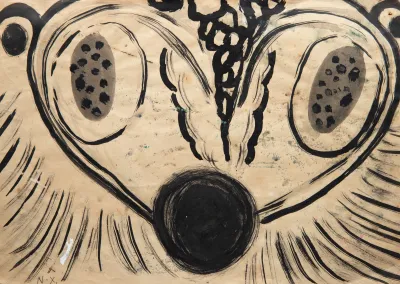
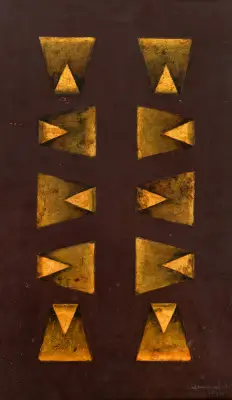
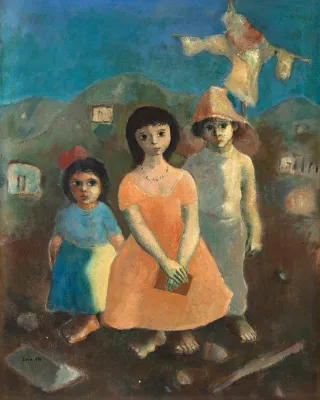
Yoshiya Takaoka was a painter, draftsman, caricaturist and set designer. He studied painting with Shin Kurihara, in Tokyo, between 1921 and 1925. In 1925, he moved to Brazil with his family, to work in the coffee plantation. He worked as a wall painter and caricaturist. In São Paulo, between 1926 and 1929, he attended the Escola Profissional Masculino do Brás and, from 1931 onwards, started to attend the Santa Helena group. In 1934, he moved to Rio de Janeiro, where he perfected his painting with Bruno Lechowski (1887-1941) and at the National School of Fine Arts (ENBA). He was part of Núcleo Bernardelli, alongside José Pancetti (1902-1958), Edson Motta (1910-1981) and Milton Dacosta (1915-1988), among others. He participated in his fourth exhibition in 1935, and in the same year he was part of the Seibi group, in São Paulo, formed by artists of Japanese origin. He returned to the capital of São Paulo in 1944.
In 1948, he founded Group 15, also known as "Do Jacaré", with Tomoo Handa (1906-1996), Tamaki (1916-1979), Flavio-Shiró (1928), Antônio Carelli (1926), Geraldo de Barros (1923-1998) and others. From 1950 to 1959, he was part of the Guanabara group, in São Paulo. He participated in the 1951 and 1959 editions of the São Paulo International Biennial. Between 1952 and 1954, he lived in Paris, where he attended the Académie de la Grande Chaumière and studied mosaic with Gino Severini (1883-1966) in the Leonardo da Vinci course. In 1953, he participated in the 1st Tokyo Biennial. The São Paulo Museum of Art of São Paulo Assis Chateaubriand (MASP) held exhibitions in his honor in 1955 and 1980.
Critical Comment
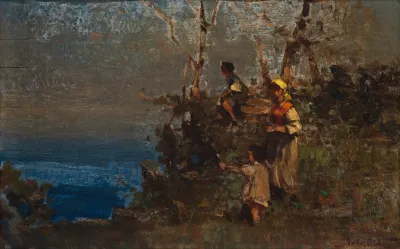
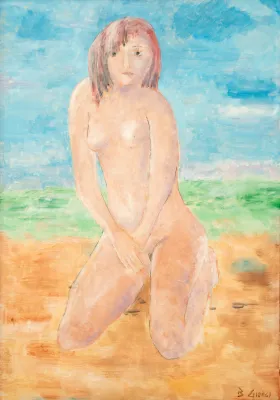
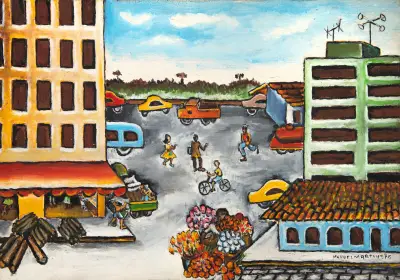
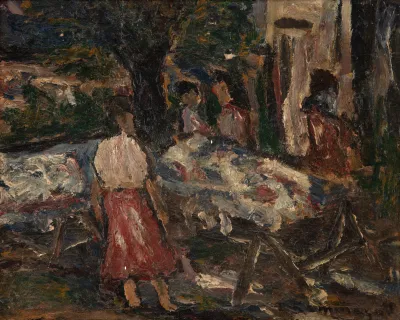
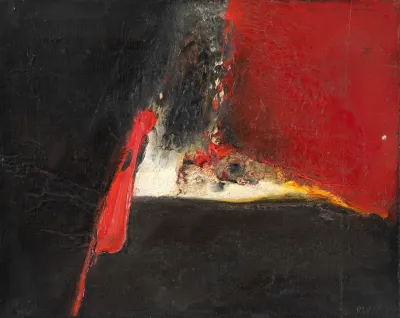
Pintor of urban and coastal landscapes of Brazil, Yoshiya Takaoka plays an important role as a cultural trainer and agitator. He works in the main artistic associations from the 1930s to the 1950s. He lives with the artists of the Santa Helena group, with whom he develops affinities, especially his interest in post-impressionism and Italian painting. But, dissatisfied with the São Paulo artistic milieu, he decided to study painting in Rio de Janeiro. He attends the National School of Fine Arts - ENBA and has classes with Bruno Lechowski (1887 - 1941), from whom he receives teachings about European painting.
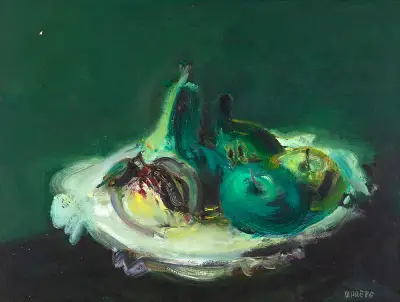
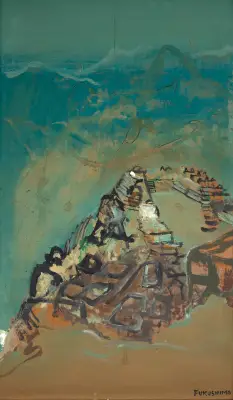
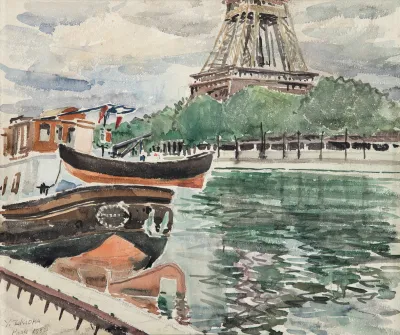
Participates in the free studio of the Núcleo Bernardelli, sharing the The group's interest in the "artistic doing" rather than for political or intellectual issues, so striking in the context of the 1930s. The artistic genres practiced there are those that characterize their production: drawing, outdoor painting, still lifes, portraits and self-portraits. From this practice comes his conception of painting as handicrafts, and the task of "solving the painting" as the main challenge of the painter. But it is possible that from this environment also comes the transformation of investigations of modern painting into traditional compositional schemes, such as the use of strong diagonals, the use of an ascending perspective in the organization of the elements of the landscape, giving weight to the last planes, as well as the gestural brushwork. Characteristics that can be observed in works such as Morro do Pinho, 1948, and in the watercolor Barco no Cais, 1942.
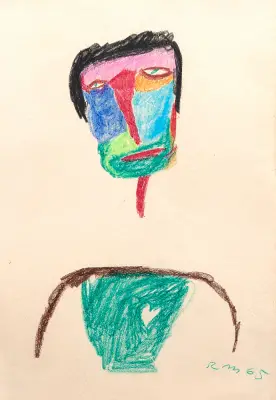
Takaoka distances itself from the controversies between modern and academic, figurative and abstract. Nevertheless, it is a point of reference for the generation of artists who follow Concretism and pass on to abstraction. Its influence can be identified in works such as the photographic self-portrait of Geraldo de Barros (1923 - 1998), 1947, which presents elements of a pose, studied and self-ironic present in the various self-portraits of Takaoka, which together with Their watercolors survive with great interest.
Criticism
"Your canvases, which reveal a cold and objective graphics, occupied many 'cimales', always demonstrating well-determined interests, such as the houses of colonial cities and the self-portrait. European sources of a certain renoiresque impressionism to the nervous graphics of Hodler, combined with the innate visuality of the oriental, marked this painter, who has many points in common with the figurative Brazilian artists of his generation". Walter Zanini
ZANINI, Walter. In: PUNCTUAL, Roberto. Dictionary of Visual Arts in Brazil. Rio de Janeiro: Civilização Brasileira, 1969.
"Few Brazilian artists were willing to have a total dedication to art as happened with Yoshiya Takaoka. Perhaps his own modest origin led him to realize that he had A mission to fulfill in front of him is a mission to convey in the drawings and paintings the emotions that nature does not cease to offer to the sensitivity of those who know how to admire it. Takaoka knew how to capture with freshness and talent all the themes that he always explored with poetry and technical mastery. (...) and watercolors in which he worked, Takaoka focused on scenes and aspects of our ancient cities. He never tired of traveling through historical sites like Ouro Preto, Sabará, Mariana, Tiradentes, Parati and many others to recreate what his eyes captured. He was a permanent visitor to the old neighborhoods of São Paulo at other times, such as Rossi Ozir, Mário Zanini, Rebolo and others. He established in São Paulo, forming groups here, guiding future artists and participating in some of our main artistic movements, he shows that he never set aside fidelity to the figurative work. For many, it was not more than an academic. It so happens that Takaoka escaped the copy of what was seen ahead. Before, he gave a recreative touch to the very place where he sketched his works. It should be noted that he has always been to compose houses and landscapes where they were found, little invented in the 'atelier'. (...) The rural and urban scenes, and the horses - these in a special way - motivated Takaoka hundreds of watercolors and drawings. They are works of mature realization and strong colorful, synthesis of almost half a century of someone focused on a single and demanding goal: art. And in it the artist found himself fully."
Ivo Zanini
Zanini, Ivo. Takaoka, the painter who recreated nature. Paulo: Masp, 1980. Color p. 7-8.
"From the Japanese artists who formed and affirmed the Japanese painting school in São Paulo, now flowered and appreciated, Yoshiya Takaoka was the master. One of the first to settle in the capital, and therefore a precursor and indicator of how to settle and behave to countrymen who were barely appearing. Of numerous colleagues, he was a cordial teacher who, having extraordinary experience in pictorial and watercolor technique, provided classes and assistance. With a good temperament, patient, always ready to provide his remarkable aid in every way, it can be said that Takaoka represented in São Paulo in the 1930s and 40s, a characteristic figure. A teacher of many young people, among them the great Mabe when he came from Lins, from Jorge Mori, from Wega. Her painting exercised her in the figure and in the landscape with bravery and oriental sensitivity, but very integrated in Western ways: a Japanese man of spirit, developing his activity in the metropolis, which owes him a lot. Respected, sincerely loved by everyone who frequented him, reserved, a being that Carlyle would have placed in the silent tacit sector, the dear Takaoka leaves a grateful memory and an artist's name among the best that Japan gave to Brazil". Pietro Maria Bardi
Bardi, Pietro Maria. 1980. 74p. Il.P.B. Color. p.5.
Individual exhibitions
1936 - Rio de Janeiro RJ - Individual, at the Palace Hotel
1937 - Rio de Janeiro RJ - Individual, at the Le Connoisseur Gallery
1948 - São Paulo SP - Individual, at the Domus Gallery
1948 - Curitiba PR - Individual
1952 - São Paulo SP - Individual, at the Clube Cherry Tree
1954 - São Paulo SP - Individual, at the Cine Niterói Hall
1956 - Rio de Janeiro RJ - Individual, at the Dezon Gallery
1958 - Campos do Jordão SP - Individual
1961 - Belo Horizonte MG - Individual, at Automóvel Club
1962 - São Paulo SP - Individual, at the plastic artist's house
1963 - São Paulo SP - Individual, at the plastic artist's house
1974 - São Paulo SP - Yoshiya Takaoka: Recent oils and watercolors, at the Ponte Galeria de Arte
Collective exhibitions
1935 - Rio de Janeiro RJ - Tamaki, Yoshiya Takaoka, Connoisseur
1935 - Rio de Janeiro RJ - 4th Hall of the Bernardelli Nucleus, at the Group's headquarters in the basement of Enba
1937 - Rio de Janeiro RJ - 43rd National Salon of Fine Arts, in the MNBA
1938 - Rio de Janeiro RJ - 44th National Salon of Fine Arts, at the MNBA - Silver Medal
1943 - Rio de Janeiro RJ - Anti-shaft exhibition, at the Historical and Diplomatic Museum - Palace Itamaraty
1944 - Rio de Janeiro RJ - 1st Exhibition of Self-Portraits, at MNBA
1946 - Rio de Janeiro RJ - The painters go to the Escola do Povo, at Enba
1946 - São Paulo SP - 12th Paulista Salon of Fine Arts, at the Prestes Maia Gallery - Small Silver Medal
1946 - São Paulo SP - 10th Salon of the Plastic Artists Union, at the Prestes Maia Gallery
1948 - São Paulo SP - 14th Salão Paulista de Belas Artes, at the Prestes Maia Gallery - Statement Award Governor of the State
1948 - Rio de Janeiro RJ - 54th National Salon of Fine Arts, at MNBA
1949 - São Paulo SP - 15th Salon Paulista de Belas Artes, at Galeria Prestes Maia
1949 - São Paulo SP - Exhibition of Group 15, at IAB/SP. Department of São Paulo
1950 - São Paulo SP - 1st Exhibition of the Guanabara Group, at the Domus Gallery
1951 - São Paulo SP - 16th Salão Paulista de Belas Artes, at Galeria Prestes Maia
1951 - São Paulo SP - 2nd Exhibition of the Guanabara Group, at the IAB/SP. Department of São Paulo
1951 - São Paulo SP - 1st São Paulo International Biennial, at the Trianon Pavilion
1952 - São Paulo SP - 1st Salon of the Seibi Group of Plastic Artists, at Clube Sakura
1953 - Tokyo (Japan) - 2nd Tokyo Biennial
1954 - Paris (France) - Salon de la Société Nationale de Beaux-Arts
1957 - São Paulo SP - 22nd Salão Paulista de Belas Artes - São Paulo City Hall Award
1958 - São Paulo SP - 4th Exhibition of Grupo Guanabara, at ACM
1958 - São Paulo SP - 23rd São Paulo Salão de Belas Artes - Prize Legislative Assembly
1958 - São Paulo SP - 4th Salon of the Seibi Group of Plastic Artists, at the Salão do Cine Niterói
1959 - São Paulo SP - 24th São Paulo Salão de Belas Artes, at the Prestes Mais Galeria. São Paulo City Hall Award
1959 - São Paulo SP - 5th Exhibition of the Guanabara Group, at ACM
1959 - São Paulo SP - 5th São Paulo International Biennial, at the Ciccilo Matarazzo Pavilion Sobrinho
1959 - São Paulo SP - 5th Salon of the Seibi Group of Plastic Artists, at the Sociedade Paulista de Cultura Japonês
1960 - São Paulo SP - Exhibition of the Seven, at the Hall of the Cooperativa Agrícola de Cotia
1960 - São Paulo SP - 25th Salão Paulista de Belas Artes, at the Prestes Maia Gallery - Comendador Mario Dedini Award
1960 - São Paulo SP - 6th Salon of the Seibi Group of Plastic Artists, at the São Paulo Society of Japanese Culture
1961 - São Paulo SP - 26th Paulista Salon of Fine Arts - Small Gold Medal
1961 - São Paulo SP - 10th São Paulo Salão de Arte Moderna, at Galeria Prestes Maia
1962 - Bragança Paulista SP - Exhibition of the six, at Clube Dois
1962 - São Paulo SP - 27th Salão Paulista de Belas Artes - 2nd Government of the State of São Paulo Award
1963 - São Paulo SP - 7th Salon of the Seibi Group of Plastic Artists, at the São Paulo Society of Japanese Culture
1964 - São Paulo SP - 8th Salon of the Seibi Group of Plastic Artists, at the São Paulo Society of Japanese Culture
1964 - Rio de Janeiro RJ - 8th Salon of the Seibi Group of Plastic Artists, at MAM/RJ
1964 - São Paulo SP - 29th Salão Paulista de Belas Artes - 1st Government of the State of São Paulo Award
1965 - São Paulo SP - 9th Salon of the Seibi Group of Plastic Artists, at the São Paulo Society of Japanese Culture
1965 - Washington (United States) - Nippo-Brazilian Paintings Today
1965 - Oakland (United States) - Nippo-Brazilian Paintings Today
1965 - Tokyo (Japan) - Nippo-Brazilian Paintings Today
1966 - São Paulo SP - 31st Salão Paulista de Belas Artes - Great Gold Medal
1966 - São Paulo SP - 10th Salon of the Seibi Group of Plastic Artists, at Sociedade Paulista of Japanese Culture
1966 - São Paulo SP - Japanese-Brazilian artists, at MAC/USP
1968 - São Paulo SP - 12th Salon of the Seibi Group of Plastic Artists, at the Brazilian Society of Japanese Culture
1969 - São Paulo SP - 13th Salon of the Seibi Group of Plastic Artists, at the Brazilian Society of Japanese Culture
1970 - São Paulo SP - 14th Salon of the Seibi Group of Plastic Artists, at the Brazilian Society of Japanese Culture
1971 - São Paulo SP - 36th São Paulo Salon of Fine Arts - Governor of the State Award
1972 - São Paulo SP - 1st Bunkyo Salon, at the Brazilian Society of Japanese Culture
1973 - São Paulo SP - 1st Exhibition of Fine Arts Brazil-Japan
1973 - Tokyo (Japan) - 1st Exhibition of Fine Arts Brazil-Japan
1973 - Osaka (Japan) - 1st Exhibition of Fine Arts Brazil-Japan
1973 - Atami (Japan) - 1st Exhibition of Fine Arts Brazil-Japan
1973 - Rio de Janeiro RJ - 1st Exhibition of Fine Arts Brazil-Japan
1973 - Brasília DF - 1st Exhibition of Fine Arts Brazil-Japan
1973 - São Paulo SP - Painting Exhibition of the Japanese Industry Fair, at the Palace of Conventions of Anhembi
1973 - São Paulo SP - 2nd Bunkyo Hall, at the Brazilian Society of Culture Japanese
1974 - São Paulo SP - 3rd Bunkyo Hall, at the Brazilian Society of Japanese Culture
1975 - São Paulo SP - Collective, at Galeria Azulão
1975 - São Paulo SP - 4th Bunkyo Hall, at Brazilian Society of Japanese Culture
1976 - São Paulo SP - 5th Bunkyo Hall, at the Brazilian Society of Japanese Culture
1977 - São Paulo SP - The groups: The 40's, at the Lasar Segall Museum
1977 - São Paulo SP - Grupo Seibi - Grupo Dosanta Helena: decade from 35 to 45, at MAB-FAAP
1978 - São Paulo SP - The art and its processes: the paper as a support, in the Pinacoteca do Estado
1978 - São Paulo SP - Immigration 70, at Centro Campestre do Sesc
Posthumous exhibitions
1980 - São Paulo SP - Yoshiya Takaoka: retrospective, at Masp
1981 - Parati RJ - Yoshiya Takaoka: Retrospective, at the Maramar Gallery
1981 - São Paulo SP - Yoshiya Takaoka: Watercolors, at the Lasar Segall Museum
1982 - São Paulo SP - Marines and Ribeirinhas, at the Lasar Segall Museum
1982 - São Paulo SP - From Modernism to Bienal, at MAM/SP
1982 - São Paulo SP - Exhibition Núcleo Bernardelli: Brazilian art in the 1930s and 40, in the Arte Galeria de Art
1984 - São Paulo SP - Tradition and Rupture: Brazilian Art and Culture Synthesis, at the Bienal Foundation
1985 - Penápolis SP - 6th Salon of Plastic Arts of the Northwest, at the Penápolis Foundation of the Arts. Faculty of Philosophy, Sciences and Letters of Penápolis
1986 - Rio de Janeiro RJ - War Times: International Hotel, at the Art Gallery Banerj
1986 - Rio de Janeiro RJ - Times of War: Pensão Mauá, at the Art Gallery Banerj
1987 - São Paulo SP - Primavera, at Liberdade Garô Art Gallery
1987 - São Paulo SP - 20th Contemporary Art Exhibition, at Chapel Art Show
1988 - São Paulo SP - Vida and Art of the Japanese in Brazil, at MASP
1988 - São Paulo SP - 15 years of the Brazil-Japan Fine Arts Exhibition, at the Mokiti Okada M.O.A Foundation
1988 - Manaus AM - Heritage From Japan: Aspects of the Japanese-Brazilian Visual Arts, at the State Pinacoteca
1988 - Belém PA - Heritage of Japan: Aspects of the Japanese-Brazilian Visual Arts, at the Rômulo Maiorana Foundation
1988 - Recife PE - Heritage of the Japan: aspects of the Japanese-Brazilian visual arts, at the Joaquim Nabuco Foundation
1988 - São Paulo SP - Heritage of Japan: aspects of the Japanese-Brazilian visual arts, at MAB-FAAP
1988 - Curitiba PR - Heritage of Japan: Aspects of Japanese-Brazilian Visual Arts, at MAC/PR
1988 - Porto Alegre RS - Japan Heritage: Aspects of Japanese-Brazilian Visual Arts, at Margs
1988 - Brasília DF - Japan Heritage: Aspects of the Visual Arts Japanese-Brazilian
1989 - Rio de Janeiro RJ - Heritage of Japan: aspects of the Japanese-Brazilian visual arts, at MNBA
1992 - São Paulo SP - Grupo Guanabara: 1950-1959, at Renato Magalhães Gouvêa - Art Office
1998 - São Paulo SP - Grupo Seibi, at Jo Slaviero Arte
1998 - São Paulo SP - São Paulo: Vision of the Japanese-Brazilians, at the Lasar Segall
1998 - São Paulo SP - São Paulo iconography in private collections, at the Brazilian House Museum
1998 - Rio de Janeiro RJ - Marines in large collections from São Paulo, at the Naval and Oceanographic Museum. Navy Documentation Service
1999 - São Paulo SP - on paper, graffiti and ink, at Banco Cidade
2001 - São Paulo SP - Japanese-Brazilian art: moments, at the Euroart Castelli gallery
2001 - Rio de Janeiro RJ - Brazilian Watercolor, at the Light Cultural Center
2003 - São Paulo SP - Art and Society: a controversial relationship, at Itaú Cultural
2004 - São Paulo SP - New acquisitions: 1995 - 2003, at MAB-FAAP
Source: Itaú Cultural