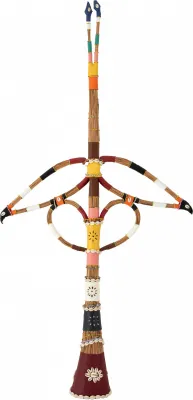

Mestre Didi (Salvador BA 1917 - Idem, 2013)
Mestre Didi was a sculptor and writer. From childhood, he made ritual objects, learning to handle materials, forms and objects with the elders of the cult of the orixá Obaluaiyê. Between 1946 and 1989, he published books on Afro-Brazilian culture, some of them illustrated by Carybé. In 1966, at the invitation of Unesco, he traveled to West Africa, where he carried out comparative research between Brazil and Africa. From the 1960s to the 1990s, he took part as a member of institutes of African and Afro-Brazilian studies and as an advisor at congresses on the same theme, both in Brazil and abroad. In 1980, he founded and presided over the Sociedade Cultural e Religiosa Ilê Asipá, devoted to the cult of the Egun ancestors, in Salvador. He was also coordinator of the Religious Council of the Instituto Nacional da Tradição e Cultura Afro-Brasileira, representing in Brazil the International Conference of Orixá Tradition and Culture.
Critiques
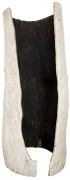
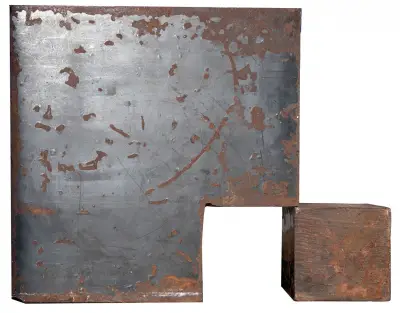
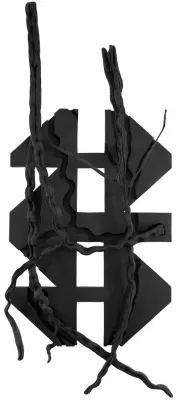
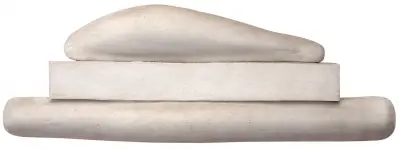
"Through aesthetic creation, he expresses a deep-rooted intimacy with his existential universe, in which African ancestry and worldview merge with his experience of life in Bahia. Completely integrated into the Nagô universe of Yoruba origin, he reveals in his works a mythical, formal, material inspiration. The Nagô language in which he expresses himself is a discourse on the experience of the sacred, manifested through a formal symbolism of aesthetic character".
Juana Elbein dos Santos
Setembro de 1996, Juana Elbein dos Santos - Mestre Didi é um sacerdote-artista, In: Escultura Brasileira: Perfil de uma identidade/curadoria de Emanoel Araujo e Sérgio Pizoli; textos de Emanoel Araujo, et al. - São Paulo - Imprensa Oficial. [1997], p. 173.
"Who said that slavery would destroy the African genius for sculpture? Black Americans were able to rediscover - wherever they kept their gods and went on living the religion of their Fathers - the art of embodying symbols in wood, iron and clay; and the rhythm of the drums was prolonged thanks to their magical hands, in the rhythm of matter reshaped, recreated musically, in America as in Africa. In fidelity. As well as in invention. In fact, Afro-American art did not become paralyzed - and, for that very reason, a sterile repetition. It is still the same ancestral rhythm that survives in Guiana in the offerings of love, and in Brazil in the liturgical objects consecrated to the cult of the Orixás. But this rhythm carries with it, drags along in its mad wheel, new symbols, new words of the Gods, here unprecedented forms of love for the Bush Negroes. For the African religion is always alive in Brazil, and Desire never ceases to reinvent its message. The exhibition organized by Deoscóredes dos Santos, beloved son of the Orixás, who gave him this gift of being able to speak with wood, with plant fibers, with all the carnal materials of the world, will be a revelation for the European public of the existence of an Afro-American art that is at once authentic and yet original. (...)"
Roger Bastide
SANTOS, Juana Elbein dos (org.). Ancestralidade africana no Brasil : Mestre Didi, 80 anos. Projeto gráfico Beto Cerqueira, Zeo Antonelli; design da capa France Arnaut; apresentação Orlando Senna, Agenor Miranda Rocha. Salvador : SECNEB, 1997, p. 191.
Testimonials
"The orixás of the Pantheon of the Earth are those who feed us and help us sustain life. My works are inspired by nature, by Mother Earth - Mud, represented by the orixá Nanã, patroness of agriculture".
Mestre Didi
DIDI, Mestre. Esculturas. Fotografia Paula Pape, Marco Aurélio Martins, Michel Rey; apresentação Juana Elbein dos Santos. Salvador : Prova do Artista, 1996, p. 24.
Solo Exhibitions
1964 - Rio de Janeiro RJ - Didi's Orixá Emblems, at Galeria Bonino
1964 - Salvador BA - Solo, at Galeria Ralf
1965 - Buenos Aires (Argentina) - Solo, at Galeria El Altillo
1965 - São Paulo SP - Didi, Sculpture and Orixá Emblem, at Galeria Atrium
1966 - Rio de Janeiro RJ - Didi: Afro-Bahian Sacred Art, at Galeria G4
1967 - Ibadan (Nigeria) - West Brazilian Sacred Arte - Didi dos Santos, at Trenchard Hall, Universidade de Ibadan
1973 - Buenos Aires (Argentina) - Mestre Didi y el Arte Afro-Brasileiro - special room, at Galeria Rubbers
1984 - Belo Horizonte MG - Religion and Blackness: Tradition of the Orixás, at Auditório Imaco
1986 - New York (United States) - Solo, at Schomburg Center
1987 - Salvador BA - Mestre Didi Memory and Existential Affirmation, at Academia de Letras da Bahia
1988 - São Paulo SP - The Presence of the Sacred in the Sculpture of Mestre Didi - special room, at Congresso Internacional de Escravidão - FFLCH/USP
1988 - Salvador BA - Replica of the sculpture Opá Esin, 12 meters high, at Largo do Pelourinho
1992 - Rio de Janeiro RJ - The Presence of the Sacred in the Sculpture of Mestre Didi, at Galeria do Ibeu
1993 - Salvador BA - Solo, at Galeria Prova do Artista
1993 - Salvador BA - Solo, at Centro Histórico de Salvador
1994 - Salvador BA - Solo, at Galeria Prova do Artista
1994 - Salvador BA - Solo, at Hotel Sofitel
1994 - Salvador BA - Solo, at Galeria de Arte no Centro Histórico de Salvador
1996 - Salvador BA - Mestre Didi 80 Years of Art, at MAM/BA
1996 - Salvador BA - Solo, at Galeria Prova do Artista - 1º Prêmio Copene de Artes Plásticas
1998 - Miami (United States) - Mestre Didi. Sacred Afro-brazilian Sculpture
2001 - São Paulo SP - Èdá-Elemi, at Galeria de Arte São Paulo
Group Exhibitions
1966 - Salvador BA - 1st National Biennial of Visual Arts
1968 - Lagos (Nigeria) - International Exhibition of Afro-Brazilian Art, at Museum of Antiquities
1969 - Accra (Ghana) - International Exhibition of Afro-Brazilian Art, at Ghana National Museum
1969 - Dakar (Senegal) - International Exhibition of Afro-Brazilian Art, at Musée Dynamique
1970 - Paris (France) - Art et Culture Afro-Brésiliens - special room, at Palácio da Unesco
1971 - London (England) - Afro-Brazilian Art, at Africa Centre
1974 - Rio de Janeiro RJ - Afro-Brazilian Week, at MAM/RJ
1974 - São Paulo SP - Black Sacred Art, at Palácio das Convenções
1984 - Salvador BA - Bahia Africa - Africa Bahia, at Museu de Arte da Bahia, Palácio da Vitória
1986 - Salvador BA - Black Sacred Art, Vitória Hall
1988 - São Paulo SP - The Afro-Brazilian Hand, at MAM/SP
1989 - London (England) - Art Latin América, at Hayward Gallery
1989 - Paris (France) - Magiciens de la Terre, at Centre Georges Pompidou
1991 - Ilhéus BA - Afro-Brazilian Week, at Fundação Cultural de Ilhéus
1994 - Frankfurt (Germany) - Afro-Brazilian Art and Religiosity, at 46ª Feira do Livro
1995 - Belo Horizonte MG - The Heirs of the Night: Fragments of the Black Imaginary, at Centro de Cultura de Belo Horizonte
1995 - São Paulo SP - The Heirs of the Night: Fragments of the Black Imaginary, at Pinacoteca do Estado
1995 - Brasília DF - The Heirs of the Night: Fragments of the Black Imaginary, at Espaço Cultural 508 Sul
1996 - São Paulo SP - 23rd Bienal Internacional de São Paulo, at Fundação Bienal
1997 - São Paulo SP - Brazilian Sculpture: Profile of an Identity, at Banco Safra
1997 - Washington (United States) - Brazilian Sculpture: Profile of an Identity, at Centro Cultural do BID
1998 - São Paulo SP - Frontiers, at Itaú Cultural
1999 - Curitiba PR - Arte-Arte Salvador 450 Years, at Fundação Cultural de Curitiba. Solar do Barão
1999 - Rio de Janeiro RJ - Arte-Arte Salvador 450 Years, at Museu Histórico da Cidade do Rio de Janeiro
1999 - Salvador BA - 100 Visual Artists from Bahia, at Museu de Arte Sacra
1999 - Salvador BA - Arte-Arte Salvador 450 Years, at MAM/BA
2000 - São Paulo SP - Brasil + 500 Mostra do Redescobrimento, at Fundação Bienal
2001 - New York (United States) - Brazil: Body and Soul, at Solomon R. Guggenheim Museum
2001 - São Paulo SP - The Trajectory of Light in Brazilian Art, at Itaú Cultural
2004 - Rio de Janeiro RJ - New Acquisitions 2003: Gilberto Chateaubriand Collection, at MAM/RJ
Source: Itaú Cultural