Luiz Pizarro (Rio de Janeiro RJ 1958)
Luiz Pizarro is a painter and art educator. Between 1981 and 1983, he studied at the School of Visual Arts at Parque Lage (EAV/Parque Lage). He was a student of John Nicholson (1951), Luiz Ernesto (1955) and attended the free painting studio by Luiz Aquila (1943). In 1984, he participated in the exhibition Como Vai Você, Geração 80? and, the following year, of the 18th International Biennial of São Paulo.
Between 1984 and 1989, he joined the Atelier da Lapa, alongside Daniel Senise (1955), Angelo Venosa (1954) and João Magalhães (1945). From 1989 to 1991, he shared the mansion of Lapa with Senise, Maurício Bentes (1958–2003) and Celeida Tostes (1929–1995), a space that functioned as a studio and nucleus. of teaching.
Between 1986 and 1990, he taught painting and drawing at EAV/Parque Lage, also working alongside Beatriz Milhazes (1960) and Daniel Senise. From 1990 to 1991, he coordinated the Galpão das Artes project, aimed at the dissemination of contemporary art, at the Museum of Modern Art in Rio de Janeiro (MAM/RJ).
In 1991, he traveled to Europe, living in Portugal until 1992 and later in Germany between 1992 and 1998. Back in Brazil, between 1999 and 2005, it developed educational projects for cultural centers and museums, such as the National Museum of Fine Arts (MNBA), in addition to participate in various exhibitions. In 2006, he received the Icatu Arts Scholarship for an artistic residency at Cité des Arts, in Paris.
Critical Comment
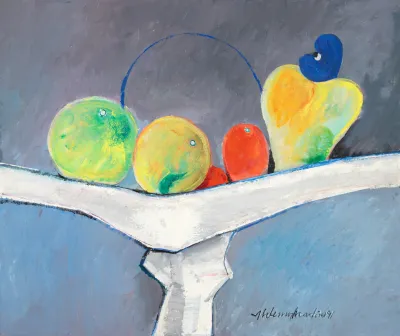
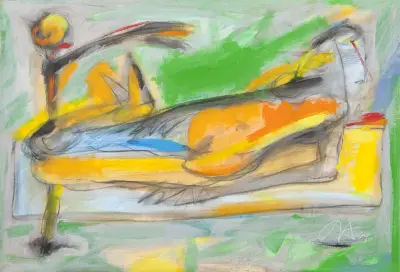
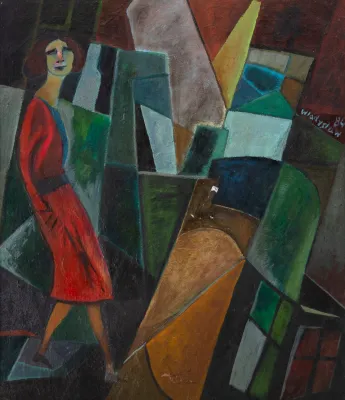
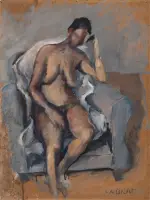
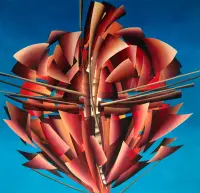
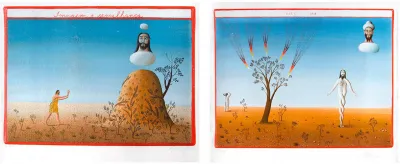
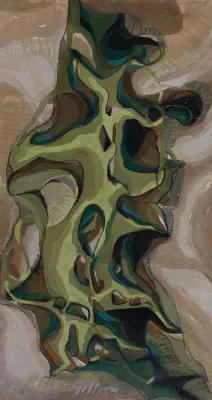
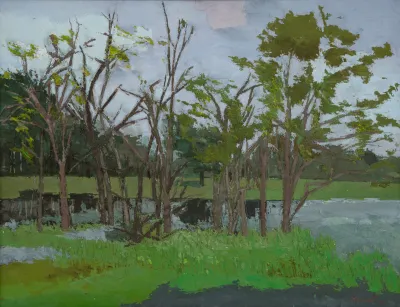
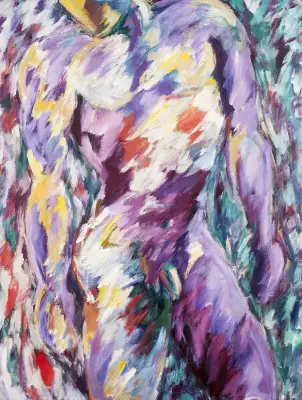
Luiz Pizarro begins to exhibit in the 1980s and presents paintings as a man in the Sofa, 1984, a naked man resting on a sofa, and untitled, 1986, which shows a couple kissing. Pizarro doesn't care about being realistic about the colors of the human body, and uses black, blue, violet, green, yellow and red, for example, instead of tones that mimic the color of the skin. In 1990, he was interested in researching new materials and produced, in addition to paintings, three-dimensional works such as the Wood Tower, he presents at the 21st Bienal Internacional de São Paulo, in 1991. Following, between 1992 and 1998, the research of materials and living in Germany, Pizarro prints on paraffin images of landscapes made by German travelers who come to Brazil in the 19th century, as in which side is paradise?, 1995.
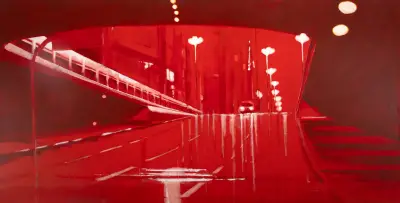
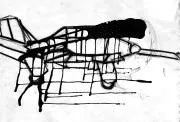
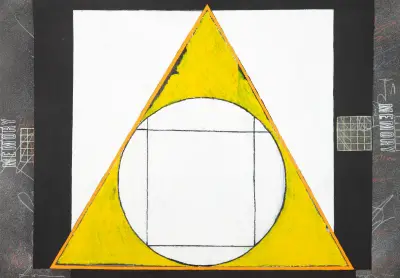
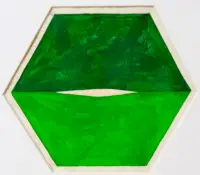
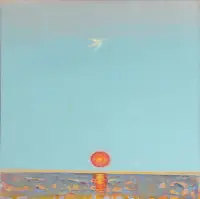
Between 1998 and 2000 divide the screen In geometric areas of color, on which black-and-white monotypes are inserted based on bone radiographs and photographic records of their own body, exercising in bodybuilding sessions. In 2001, he added to this universe the freehand drawing (ink) of fragments of bodies having sexual relations. The issue of sexuality is addressed in 2004 in works that represent martial struggles. In 2006, he resumed the use of paraffin as a support for landscapes.
Criticism
"Like many of his generation companions, it was around 1983 that the work of the carioca Luiz Pizarro reached a first state of language Conquered.” From there he made the human body, essentially the masculine, the exclusive element of a painting devoted to the fire that consumes and purifies. Mated hells by which we move just because we are in the world. Other illustrious companionships are included in this painting on the edge of the savage, but never catastrophic: it will not be difficult to perceive in it the example of William Blake, the visionary English, or the tortured Mexican Orozco. But, in addition to the burning of fire, his soul breathes the pleasure of exorcised drama. The vibration of the color cleans the wounds that it itself had opened in the flesh of the body-screen".
Roberto Punctual
PONTUAL, Roberto. Between two centuries: 20th century Brazilian art in the Gilberto Chateaubriand collection. Rio de Janeiro: Edições Jornal do Brasil, 1987.
Individual exhibitions
1984 - Rio de Janeiro RJ - First individual, at Galeria Saramenha
1985 - São Paulo SP - Individual, in the subdistrict gallery
1986 - Rio de Janeiro RJ - Individual, at the Petite Gallery
1988 - Rio de Janeiro RJ - Individual, at the Petite Gallery
1989 - Bern (Switzerland) - Individual, in the gallery Cláudio Righetti
1998 - Rio de Janeiro RJ - Looking for an Angel, at Paço Imperial
2001 - São Paulo SP - Luiz Pizarro, at Valu Ória Art Gallery
Exhibitions Collectives
1983 - Rio de Janeiro RJ - Painting, Painting, at Fundação Casa de Rui Barbosa
1983 - Rio de Janeiro RJ - 6th National Salon of Plastic Arts, at MAM/RJ - Acquisition Award
1984 - Fortaleza CE - 7th National Salon of Plastic Arts
1984 - Rio de Janeiro RJ - Como Vai Você, Geração 80?, at EAV/Parque Lage
1984 - Rio de Janeiro RJ - 7th National Salon Plasticas, at MAM/RJ
1985 - Rio de Janeiro RJ - Art Construction: 21 contemporary artists, at the Rio Empresarial Center Gallery
1985 - São Paulo SP - 3rd São Paulo Contemporary Art Salon, at the Bienal Foundation
1985 - São Paulo SP - 18th São Paulo International Biennial, at Fundação Bienal
1986 - Rio de Janeiro RJ - occupied territory, at EAV/Parque Lage
1986 - Rio de Janeiro RJ - paintings escrete voladores, at Circo Voador
1986 - São Paulo SP - paintings voladores, at the sub-district gallery
1986 - São Paulo SP - 1st selection Helena Rubinstein de Arte Jovem, at MASP
1987 - Rio de Janeiro RJ - To the collector: Homage to Gilberto Chateaubriand, at MAM/RJ
1988 - Belo Horizonte MG - going up the mountain, at Fundação Clóvis Salgado. Palácio das Artes
1988 - Rio de Janeiro RJ - 3x3 - 3 artists, 3 dimensions, at the Casa da Cultura Laura Alvim
1988 - Rio de Janeiro RJ - 88 x 68: A balance of the years
1988 - Rio de Janeiro RJ - Abolition, at the Ipanema Art Gallery
1988 - Rio de Janeiro RJ - Hedonism: Gilberto Chateaubriand Collection, at the Gilberto Chateaubriand Building Gallery
1988 - São Paulo SP - 19th Panorama of Current Brazilian Art, at MAM/SP
1989 - São Paulo SP - Cristiane Canale, Cláudio Fonseca, Beatriz Milhazes, Luiz Pizarro and Luiz Herbini, MAC/USP
1990 - Rio de Janeiro RJ - Arqueos Projects, at Fundição Progresso
1991 - São Paulo SP - 21st São Paulo International Biennial, at the Bienal Foundation
1992 - Rio de Janeiro RJ - 1st on the way to Niterói: João Sattamini Collection, at the Imperial Palace
1992 - Rio de Janeiro RJ - Eco Art, at MAM/RJ
1993 - Rio de Janeiro RJ - Arte Erotica, in the MAM/RJ
1993 - Washington D. C. (United States) - Brazil: images from the 80s and 90s, at the Art Museum of the Americas
1994 - Rio de Janeiro RJ - Brazil: images from the 80s and 90, at MAM/RJ
1994 - São Paulo SP - Brazil: images from the 80s and 90s, at Casa das Rosas
1995 - Rio de Janeiro RJ - 80s: the stage of diversity, in the MAM/RJ
1995 - São Paulo SP - 80s: The Diversity Stage, at the SESI Art Gallery
1996 - Niterói RJ - Brazilian Contemporary Art at the João Sattamini Collection, at MAC/Niterói
1998 - São Paulo SP - Collection Art Gallery São Paulo, at the São Paulo Art Office
1998 - São Paulo SP - Migratory motorcycle: four Brazilian artists in Germany, at MAC/USP
1998 - São Paulo SP - The modern and the contemporary in art Brazilian: Gilberto Chateaubriand Collection - MAM/RJ, at MASP
2000 - Rio de Janeiro RJ - The image of the sound by Gilberto Gil, at Paço Imperial
2002 - Rio de Janeiro RJ - Caminhos do Contemporânea 1952-2002, at Paço Imperial
2003 - Rio de Janeiro RJ - More than one, at Atelier Rio Comprido
2003 - São Paulo SP - 2080, at MAM/SP
2004 - São Paulo SP - The price of seduction: from corset to silicone, at Itaú Cultural
2004 - Rio de Janeiro RJ - Where are you, Geração 80?, at CCBB
Source: Itaú cultural