Joaquim Tenreiro (Melo Guarda, Portugal 1906 - Itapira SP 1992)
Designer, sculptor, painter, engraver and designer.
Joaquim Albuquerque Tenreiro, son and grandson of carpenters, at the age of two moves to Brazil with his family, taking up residence in Niterói, Rio de Janeiro. He returns to Portugal in 1914, where he helps his father to do woodwork and starts painting classes. He returned to live in Brazil between 1925 and 1927. In 1928, he moved definitively to Rio de Janeiro, starting to attend the drawing course at the Portuguese Literary Lyceum and takes courses at the Liceu de Artes e Ofícios. In 1931, he was part of the Bernardelli Nucleus, a group created in opposition to the academic teaching of the National School of Fine Arts - ENBA. In the 1940s, he dedicated himself to portrait, landscape and still life painting. Between 1933 and 1943, he works as a furniture designer at the companies Laubissh & Hirth, Leandro Martins and Francisco Gomes. In 1942, he made his first modern piece of furniture for the residence of Francisco Inácio Peixoto. In 1943, he sets up his first workshop, Langenbach & Tenreiro and, a few years later, opens two furniture stores; first in Rio de Janeiro and, later, in São Paulo. At the end of the 1960s, Joaquim Tenreiro ended his activities in the area of the design and manufacture of furniture to dedicate himself, for another 20 years, exclusively to the visual arts, mainly to sculpture. In 1969, he executed a panel for the Sidon Temple Synagogue and, in 1974, two panels for the Senai auditorium, both in Tijuca.
Critical Comment
Joaquim Tenreiro Born in Melo, a small village in Portugal, and settles in Rio de Janeiro in 1928. Son and grandson of carpenters, he learns to work with wood as a child. In 1929, he studied drawing at the Portuguese Literary Lyceum, at the same time he studied at the Liceu de Artes de Ofícios. In 1931, he participated in the Núcleo Bernardelli, having as colleagues, among others, the painters José Pancetti (1902 - 1958) and Milton Dacosta (1915 - 1988). He works, between 1933 and 1943, as a designer at Laubish & Hirth, Leandro Martins and Francisco Gomes, specialized in French, Italian and Portuguese style furniture - "Lights of all numbers and late renaissances of 400 years", as Tenreiro reports, ironically. founded, in 1943, the company Langenbach & Tenreiro, putting into practice his conception of modern furniture.
He became known as a designer in 1942, when he received the first order of furniture, for the residence of Francisco Inácio Peixoto, in Cataguases, interior of Minas Gerais, designed by the architect Oscar Niemeyer (1907 - 2012). These are the first specimens designed, designed and carried out by him, which are distinguished by the sobriety and beauty of the forms and the wise use of Brazilian woods. It also dialogues with the purity of Niemeyer's architectural forms.
The lightweight armchair (ca.1942) - performed in the light, ivory and dark wood versions, in imbuia, with fabric printed by Fayga Ostrower (1920 - 2001) - It is one of his best-known productions, conceived according to the idea that Brazilian furniture should be formally lighter. In Tenreiro's words, lightness that has nothing to do with the weight itself, but with grace and functionality. Attesting to the modernity of the furniture made in Brazil, Tenreiro's design has the principles of adapting to function and stripping.
In the three-foot chair (ca.1947), it innovates by associating geometry with a very particular use of the colors of the national woods. Composed of wood combinations of different shades (Imbuia, purple, rosewood, ivory and cabreúva), this chair features a refined chromatic game. The use of color, previously restricted to the finishing of the furniture, becomes a central concept in its creation. In the rocking chair (ca.1948) he uses the straw - a tradition of the Brazilian colonial furniture, taken up by the artist - and the rosewood. Like other Tenreiro furniture from this period, it has a light and luminous appearance, contrasting with the solid and sober furniture, previously created for the Laubisch & Hirth.
In some chairs and armchairs, the artist explores the plastic effects of the plot in straw and other materials that evoke the indigenous braid and basketry. The use of wood and natural fibers is associated with the need to adapt the furniture to the tropical climate. Along with these organic compositions, other pieces of tinreiro, such as the structural chair, present straight lines and geometric, regular elements, using both wood (1957) and metal (1961) structures. The deep knowledge of wood allows Tenreiro to obtain the poetic quality of his works.
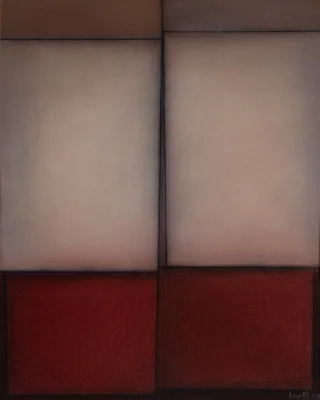
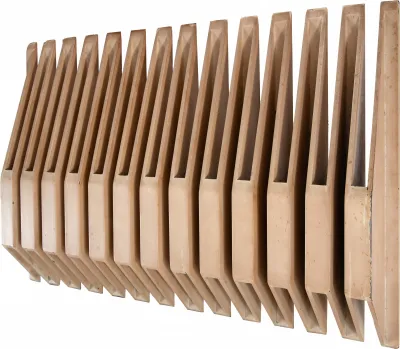
At the end of the 1960s, for personal and also market reasons, he ends the designer activities and is mainly dedicated to sculpture. It produces reliefs, trusses and columns in polychrome wood, in which the combination of artistic production and the extensive knowledge of the work stand out. Some solutions, contained in the functionality of the furniture created by him, are used more freely in the sculpture. The chromatic composition techniques used, for example, in the three-foot chair, are later taken up in some reliefs, in which the artist explores the differences in color, textures and the veins of wood, as in circles (1979). The production of Tenreiro, therefore, combines the modern characteristics of the stripping and simplicity of the use of Brazilian materials. It assures the pieces produced with an artistically elaborate quality, thus renewing the design of the Brazilian furniture.
Criticism
"When using studs, nails, blades, plywood or plywood, Tenreiro opens a Glossary capable of traveling through a good area of three-dimensional constructivism, without forcing the limitation of a pictorial composition. The third dimension in its 'plastic constructions' is the bridge of access to the 'time-space' dimension (own the sculpture as thesis), and It is in this greater attribute of a visual proposition that the current work of Joaquim Tenreiro adds spontaneity and fullness and is realized.
for not requiring the observer to biographical connotation or Kabbalistic translation to be understood, the communicability It is better supported by the immediate perception of the rhythm and harmony emerging from the cuts, leaks and reliefs. when in need of someone to help them decipher the date they bring to their souls".
Clarival do Prado Valladares
Valladares, Clarival do Prado. Tenreiro. Jornal do Commércio, Rio de Janeiro, 13 jun. 1971.
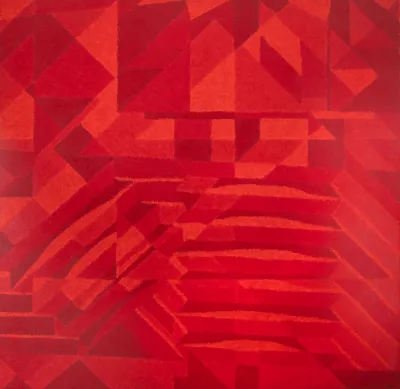
"Tenreiro, Portuguese by birth, creator of the modern line of Brazilian furniture, merged the instruments of his profession as a furniture craftsman to the technical knowledge of an artist who has already produced the most authentic and sensitive painting, usually over the landscape Carioca The composition of its reliefs obeys the basic principles of the order, the light-dark, the optical fascination that allows the illusion and magic with the perspectives. Using the wood and the cardboard, he exercised variations of geometric structures, creating undulations Organic, cells that suggest the uninterrupted tissue of the raw material on which the figures of nature are defined. The labyrinth, the shadow, the hollowed out planes, the virtual movement are physical data of this rational and organicist art, which is rooted in tradition and finds it and justification, because nothing sustains itself without the breath of the past, however future it may be."
Walmir Ayala
AYALA, Walmir. Wall sculptures. Jornal do Brasil, Rio de Janeiro, 21 Jul. 1972.
"(...) I love your love of materies-matter-wood: I love your love of texture, fiber, tactility, thermicity, ponderability, flexibility, organicity, kindness of this most noble living life even when depressed, but transfigured in his intimate neguentropic vocation, I love, in Tenreiro's love for this matter, the organizing, spoiler, seeker of the vocation of this very raw material, First, with giving it, in its very handcrafted final form, this serene essence of wood, ligno, wood, ligname. Continuations, such as friezes, such as arabesques, such as Greeks, as mottoes - sketched in their radicality, 'terminated' suspensively in operate. of its sculptural morphemes or whatever other beautiful name they have."
Antônio Houaiss
HOUAISS, Antônio, quoted by L. M. Gonzalez. In: GONZALEZ, L. M. Tenreiro at Bonino and Paoli at Studio. Jornal do Commércio, Rio de Janeiro, May 23, 1975.
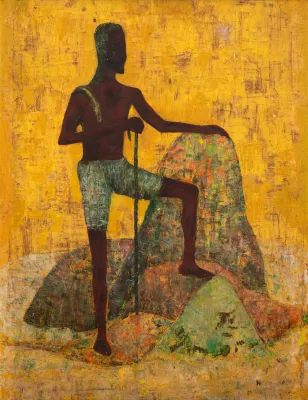
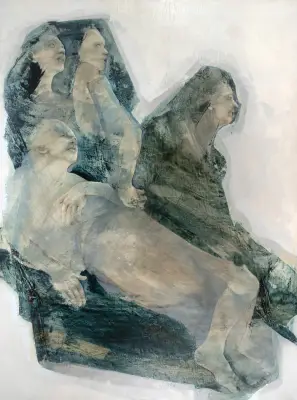
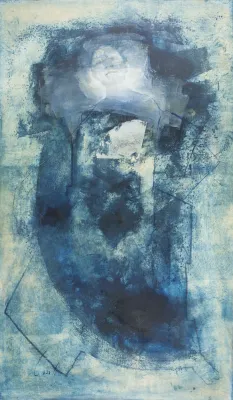
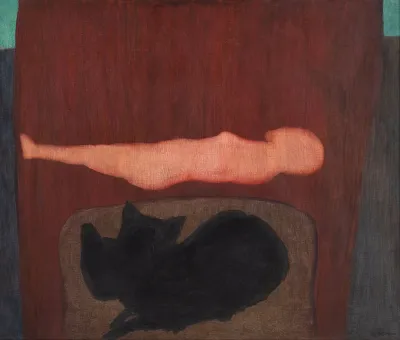
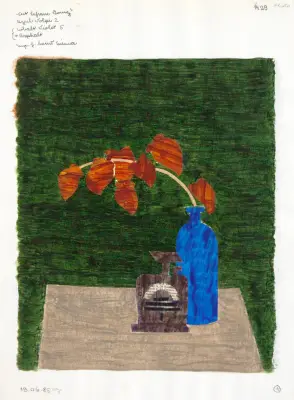
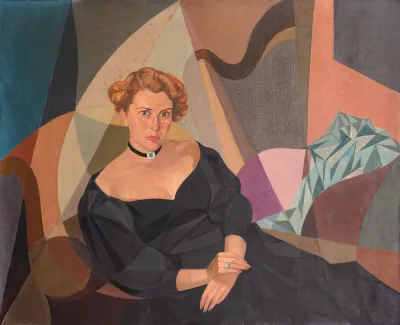
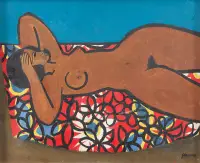
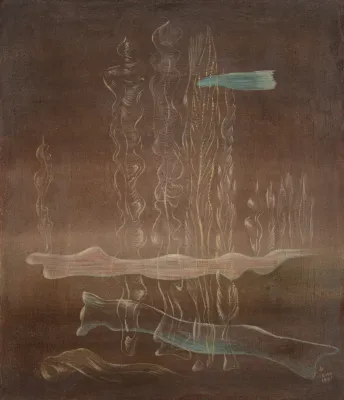
"Tenreiro would only dedicate himself more widely to painting in the 1940s. His painting of that time - portraits, self-portraits, landscapes, still lifes - It is characterized by the restraint of color and by formal despoiling. In the portraits there is a possible influence of Guignard, an artist that Tenreiro has always admired. Like his colleagues, he painted the neighborhoods that entered the carioca landscape, Glória, Santa Teresa, Laranjeiras and Morro do Querosene. The almost dark greens prevail in the landscapes that open to large spaces in which the houses are lost in the vegetation, or the ochers and ash, the half-tones, on the slopes and terraces. Almost without exception, the criticism of the years 40 - Flávio de Aquino, Antônio Bento, Mário Barata, Silvia Chalreo, among others - praised these landscapes and others carried out in historic Minas Gerais cities, such as those of São João del Rei. Justity of tones´, in the rivers, 'their ability to face them with ease, pointing out the calm sadness of some hills and suburbs'. Rubem Navarra speaks of his landscapes so well composed, with his greens so well described, so poetic, so introverted', and the 'forced ascesis of his means'. It is nothing other than what Quirino Campofiorito says, when he observes that in his painting 'there are no cries that can be heard from afar'. In fact, this restraint, serenity and emotional balance seems to be the artist's main brand. In fact, nothing in him shouts, so his work does not remove or shock the spectator".
Frederico Morais
MORAIS, Frederico. Pinakotheke, 1982.
Testimonies
Ascanio: When did your interest in painting arose? drawing, but it wasn't just Portuguese. I got into that environment and then I met the Brazilian boys who studied there. I suddenly started to have contact with people who designed, was interested in art. Sá and other boys my age. As I found these people, first with the furniture, then at the Portuguese Literary Lyceum and later at the Liceu das Artes e Ofícios, I was excited about the idea of painting. In the future of the Nucleus, we talked, we talked. We were already at that stage of founding the nucleus. I followed from 1930 to 1931 the Foundation.
Ascanio: Why the end of the core? Was there a problem, fight or was it the weather?
Tenreiro: It wasn't that good. Modern consciousness began to assert itself more and more. The arrival of Le Corbusier, the construction of the Ministry of Education, the creation of the modern hall, and other things, strengthened the modernist consciousness. The nucleus was just an anti-academic reaction, sometimes not even that. Now, we already had three poles: the academic (represented by the School of Fine Arts), the anti-academic and the modern. This caused the core to empty little by little. At the core itself, there were some who became academics and others who were overcome by even more modern positions. Some people opened their eyes to modern things more. Pancetti and Milton Dacosta, much younger, were perhaps one of the ones who most accentuated the modern feature
Pedral: Did modern ideas have any influence on the design of their first furniture? What do you consider essential in the design of a piece of furniture?
Tenreiro: About modern ideas, I think there are very modern things that were caught in the Middle Ages. You read Gropius and see that sort of thing. For example, wood, the way of sawing it, is also something that is linked to the past. To the moderns, to the artists, to the architects, he advises that they study all this. Certain things from the past have to be shown, in order to address what was done at certain points. And it's not a form problem, it's a construction problem. Anyway, it's the way of doing
Tenreiro, Joaquim. In: Joaquim Tenreiro: The Madeira Master. Coordination Ricardo Sardenberg; Presentation Marcos Mendonça, Quirino Campofiorito, Janete Costa. São Paulo: Pinacoteca, 2000. 131 p., il. color. pg. 23, 27
[Text is part of the interview carried out at MAM/RJ and published in the book Joaquim Tenreiro-Madeira Arte Design, Art Gallery of the Centro Empresarial, Rio, 1985. Mmm and Antônio José Pedral]
Individual exhibitions
1946 - Rio de Janeiro RJ - First Individual, at IAB/RJ
1949 - São Paulo SP - Individual, at the Domus Gallery
1967 - Rio de Janeiro RJ - Individual, at the Copacabana Gallery
1970 - Rio de Janeiro RJ - Individual, at the Bonino Gallery
1971 - São Paulo SP - Individual, at Galeria Documenta
1973 - São Paulo SP - Individual, at MAM/SP
1975 - Rio de Janeiro RJ - Individual, at the Bonino Gallery
1978 - São Paulo SP - Individual, at MAM/SP
1983 - Rio de Janeiro RJ - Individual, at Galeria Paulo Klabin
1985 - Rio de Janeiro RJ - Individual, at the Business Center of Rio de Janeiro
1988 - Rio de Janeiro RJ - Individual, at the Triad Gallery
1989 - São Paulo SP - Individual, at the gallery Millan
Collective exhibitions
1941 - Rio de Janeiro RJ - National Salon of Fine Arts/Modern Division - Bronze Medal
1944 - Rio de Janeiro RJ - 50th National Salon of Fine Arts, at MNBA
1945 - Rio de Janeiro RJ - National Salon of Fine Arts/Modern Division - Silver Medal
1946 - Rio de Janeiro RJ - The painters go to the Escola do Povo, at Enba
1954 - Goiânia GO - Exhibition of the National Congress of Intellectuals
1960 - Rio de Janeiro RJ - 9th National Salon of Modern Art, at MAM/RJ - Mention of the Jury in Drawing
1965 - São Paulo SP - 8th São Paulo International Biennial, at the Bienal Foundation
1967 - Rio de Janeiro RJ - 3rd The face and the work, at the Ibeu Copacabana Gallery
1971 - Rio de Janeiro RJ - 9th Art Summary JB, at MAM/RJ
1972 - São Paulo SP - 4th Panorama of Current Brazilian Art, at MAM/SP
1972 - São Paulo SP - Brazilian multiplied art, in the Multiple Art
1973 - São Paulo SP - 5th Panorama of Current Brazilian Art, at MAM/SP
1974 - Rio de Janeiro RJ - O Mar, at Galeria Ibeu Copacabana
1975 - São Paulo SP - 7th Panorama of Current Brazilian Art, MAM/SP
1977 - Rio de Janeiro RJ - Retrospective, at MAM/RJ
1978 - São Paulo SP - 10th Panorama of Current Brazilian Art, at MAM/SP
1979 - Rio de Janeiro RJ - Brazilian sculptors, at Galeria Aktuell
1981 - Rio de Janeiro RJ - Retrospective, at IAB/RJ
1982 - São Paulo SP - Exhibition Núcleo Bernardelli: Brazilian art in the 30s and 40s, in the collection Art Gallery
1983 - Rio de Janeiro RJ - 4 sculptors painters, 4 sculptor painters, at Galeria Aktuell
1983 - Rio de Janeiro RJ - Brazilian self-portraits, at the Art Gallery Banerj
1984 - Rio de Janeiro RJ - Madeira, Matter of Art, at MAM/RJ
1984 - São Paulo SP - Tradition and Rupture: Synthesis of Brazilian Art and Culture, at the Biennial Foundation
1988 - São Paulo SP - 19th Panorama of Current Brazilian Art, at MAM/SP
1991 - Rio de Janeiro RJ - Retrospective, at the Rio Design Center
Postumous exhibitions
1992 - Rio de Janeiro RJ - 1st on the way to Niterói: João Sattamini Collection, at the Paço Imperial
1993 - Rio de Janeiro RJ - Brazil: 100 years of modern art, at the MNBA
1993 - São Paulo SP - The modern design in Brazil: Gilberto Chateaubriand Collection, at the SESI Art Gallery
1994 - Rio de Janeiro RJ - The modern design in Brazil: Gilberto Chateubriand Collection, at MAM/RJ
1994 - São Paulo SP - Bienal Brasil Céculo 20th, at Fundação Bienal
1996 - Niterói RJ - Contemporary Brazilian Art in the João Sattamini Collection, at MAC/Niterói
1997 - Niterói RJ - between sculptures and objects, at MAC/Niterói
1997 - São Paulo SP - Three-dimensionality in Brazilian art of the 20th century, at Itaú Cultural
1998 - Belo Horizonte MG - Three-dimensionality in Brazilian art of the 20th century, at Itaú Cultural
1998 - Brasília DF - Three-dimensionality in Brazilian art of the 20th century, at Galeria Itaú Cultural
1998 - Niterói RJ - Mirror of the Bienal, at MAC/Niterói
1998 - Niterói RJ - Individual, at MAC/Niterói
1998 - Penápolis SP - Three-dimensionality in Brazilian art of the 20th century, at Galeria Itaú Cultural
1998 - São Paulo SP - Constructive Art in Brazil: Adolpho Leirner Collection, at MAM/SP
1998 - São Paulo SP - Multiples, at Valu Oria Art Gallery
1999 - Rio de Janeiro RJ - Constructive Art in Brazil: Adolpho Leirner Collection, at MAM/RJ
1999 - São Paulo SP - 50's and Suas Involvements, at Jo Slaviero Art Gallery
2000 - Niterói RJ - Sattamini Collection: from materials to internal differences, at MAC/Niterói
2000 - Rio de Janeiro RJ - When Brazil was modern: Arts Plastics in Rio de Janeiro from 1905 to 1960, at Paço Imperial
2000 - São Paulo SP - Brazil + 500 Rediscovery Exhibition, at the Bienal Foundation
2000 - São Paulo SP - Brazilian sculpture: Pinacoteca to Jardim da Luz, in the Pinacoteca do Estado
2002 - Brasília DF - JK - An aesthetic adventure, in the cultural complex of the box
2003 - São Paulo SP - The art behind the art: where they stay and how they travel the works of Arte, at MAM/SP
2003 - São Paulo SP - Individual, at the Jô Slaviero Art Gallery
2004 - Rio de Janeiro RJ - 30 artists, at Mercedes Viegas Art Office
Source: Itaú Cultural