Jânio Quadros (1917 - 1992)
Jânio Quadros was a Brazilian politician who stood out for his career marked by moralistic discourses and promises to fight corruption, born in Campo Grande, in the then state from Mato Grosso and current capital of Mato Grosso do Sul, on January 25, 1917, son of Gabriel Quadros and Leonor da Silva Quadros. In 1935, he joined the Faculty of Law. Graduated, he set up a small law firm in the center of the capital and began teaching at two schools.
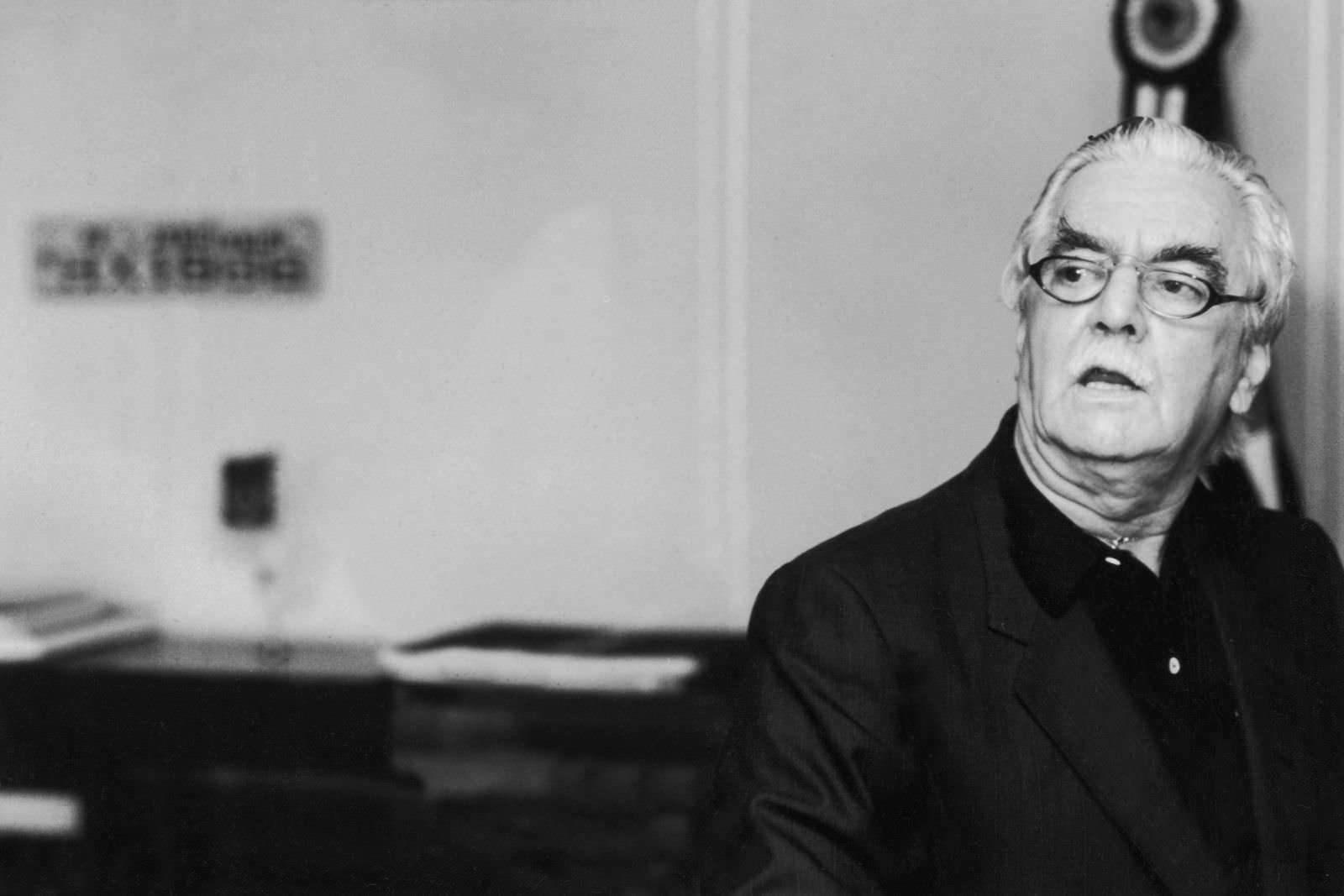
Jânio Quadros
Completed to councilor in the 1947 elections, by the Democratic Party's legend Christian (PDC), not getting enough votes for his election. However, with the suspension of the registration of the Brazilian Communist Party (PCB) and the subsequent cancellation of the mandates of its parliamentarians, there were many seats left in the São Paulo City Council, where the PCB had the largest bench. Jânio was one of the substitutes called to fill these places in 1948. His work as a councilor was decisive to project him in São Paulo's political life.
His prestige grew so much that in October 1950 he was elected state deputy. In the exercise of the mandate, he traveled through the entire interior of the state, always insisting on the banner of the moralization of the public service and asking the people for suggestions to solve the problems of each region. The capital of São Paulo witnessed, in early 1953, the first electoral campaign for the city hall in 23 years, since the 1930s revolution. local supporters.
He took over the prefecture at the age of 36, and one of his first acts was to promote mass layoffs of employees, starting a moralizing crusade that marked his management. In 1954, he deinedited himself from his position to run for governor of the state of São Paulo. Winning the elections, he was sworn in on January 31, 1955. Since the beginning of his government, he has sought to expand his political space at the national level, establishing contacts with President João Café Filho. The approximation between them created more favorable conditions for the São Paulo government to carry out a work of financial recovery of the State.
With Kubitschek's inauguration in January 1956, the application of the Goals Plan began. São Paulo was the state most benefited from the implementation of new industries and the concentration of credit, but despite this, Jânio remained aligned with the Udenist opposition in relation to important aspects of the current economic policy. The economic expansion of São Paulo in this period was reflected in the increase in the State's tax revenue and the creation of conditions favorable to the reduction of the financial deficit inherited from previous governments.
The campaign for the 1960 presidential succession was carried out in a framework amended by the Economic and social transformations that took place during the government of Kubitschek, whose developmental policy caused a great growth in cities.
On April 20, 1959, a group met at the Brazilian Press Association (ABI) In Rio de Janeiro and founded the Popular Movement Jânio Quadros (MPJQ), on that occasion, launching the candidacy of the former governor of São Paulo for the Presidency of the Republic. Jânio won the elections of October 3, 1960. In the same election, João Goulart was elected vice president. Soon after being elected, Jânio traveled to Europe, returning shortly before his inauguration.
Jânio Quadros and João Goulart were sworn in on January 31, 1961. Contrary to the general expectation, the president's inauguration speech He was discreet and kind, even pleasing the previous government. However, on the night of that same day, Jânio violently attacked the Kubitschek government in a national radio chain, attributing to the former president the practice of nepotism, administrative inefficiency and responsibility for the high inflation rates and the foreign debt of two billion dollars.
At the beginning of his government, Jânio took a series of small measures that became famous, aimed at creating an image of innovation of customs and moral sanitation. It also invested heavily against some public service rights and privileges. It reduced the advantages hitherto guaranteed to military personnel or the Ministry of Finance on a mission abroad, and extinguished the positions of aeronautical attachés with Brazilian diplomatic representations.
From the administrative point of view, it tried to further centralize powers with the adoption of a mechanic of decisions that reduced the weight of the National Congress and expanded the sphere of competence of the Presidency. With the strengthening of the union movement and the peasant leagues, and the growth of social conflicts, a political movement began to take shape in favor of the so-called basic reforms and an institutional reorganization. The union movement itself established an ambiguous relationship with the government, supporting foreign policy, fighting the economic and diverging, for the most part, from the proposal to abolition the union tax, supported by Minister Castro Neves.
On March 13 1961, Jânio announced the directions of his economic policy in a speech broadcast by radio and television. It also announced an exchange rate reform that served the interests of the exporting sector and international creditors, strongly punishing the national groups that had contracted external financing during the previous rate. Despite the improvement obtained in the budgetary situation, the foreign exchange reform was fought by the opposition parties. However, this set of measures by the Jânio government was very well received by foreign creditors and resulted in new financial agreements. civil and accounting. While developing an internal policy considered conservative and fully accepted by the United States, it sought to affirm externally the principles of an independent policy open to relations with all countries in the world. This orientation provoked protests from numerous sectors and groups that supported him.
He also carried out his project of establishing relations with the nations of the socialist bloc. In May, he received at the Palácio do Planalto the first trade mission of the People's Republic of China sent to Brazil. The same fact was repeated in July with the Soviet mission of good will, which intended to increase the commercial and cultural exchange between Brazil and the Soviet Union. The first measures for the diplomatic response between the two countries began to be taken on July 25, but the process would only be completed during the Goulart government.
Relations between the American countries and the United States were debated in August at the extraordinary meeting of the Inter-American Council. economic and social, known as the Punta del Este Conference. At the end of the meeting, Ernesto Che Guevara, Minister of Economy of Cuba, traveled to Argentina and then to Brazil in order to thank the position taken by these two countries to prevent the discussion of any political issue at the conference. Jânio took advantage of the meeting with Guevara to successfully ask for the release of 20 Spanish priests imprisoned in Cuba and discuss the possibilities of commercial exchange through the countries of Eastern Europe. Finally, on August 18, he awarded the Cuban minister with the National Order of the Southern Cross, which caused the indignation of the more conservative civil and military sectors.
A serious political crisis had been triggered. The inauguration of João Goulart, then on an official visit to China, would be the legal unfolding of Jânio Quadros' resignation. On the 25th of August, the first popular demonstrations took place. On the 27th, the resigning president boarded a ship bound for London, leading the military chiefs to consider sending a warship to force his disembarkation in Salvador, where he would take a military plane back to Brasília, a plan that did not materialize. Congress approved the additional act enacted on September 3, guaranteeing Goulart's mandate until January 31, 1966 under parliamentary regime. Goulart was finally sworn in on September 7.
Jânio returned from Europe in time to run for the São Paulo government and was launched by the National Labor Party (PTN) and the Renovador Labor Movement (MTR). However, he failed to unite again the forces that had supported him in the previous election, suffering his first electoral defeat and being in a relatively marginal position to national political life until the outbreak of the political-military movement that overthrew the Goulart government on March 31, 1964.
He had his political rights revoked on April 10, 1964 by decision of the Supreme Command of the Revolution, then began to dedicate himself to private activities. During this period, he participated in political life in a moderate and indirect way, accompanying candidates and distributing statements to the press, signed by his wife Eloá Quadros.
With the distension policy implemented by President Ernesto Geisel from 1974, Jânio reappeared with some frequency on the political news. Throughout 1977 and 1978, he defended the convening of a National Constituent Assembly that would promote the institutionalization of the 1964 movement and implemented a "strong democracy".
With the beginning of the organization of new political parties in the second half of 1979, expressed sympathy for the Brazilian Trabalho Party (PTB), in which he officially entered on November 15, 1980, and a candidate was launched for the São Paulo government at the convention held by the association in April 1981. With the disclosure of information that the government would ban party coalitions in the 1982 elections, it published a manifesto on June 26, 1981, communicating its removal from the PTB and defending the merger of all the Opposition.
After refusing invitations from Democratic Labor Parties (PDT) led by Leonel Brizola and Republican Democratic (PDR), who failed to obtain a definitive record in the Electoral Justice, Jânio Se He joined the PTB again on November 3 and, at the end of that month, announced that he would run for the Chamber of Deputies and not for the São Paulo government. However, he returned after this decision and agreed to resume his candidacy in the previous ways. In the November 1982 election, he ran for the government of São Paulo in the PTB party, suffering the second electoral defeat throughout his political career.
In 1985 he returned to the center of politics, launching himself as a candidate for mayor of São Paulo by the PTB. in the election of November 15 of that year. Elected, he was sworn in in January 1986.
He completed his term in the prefecture in December 1988. In April 1989, he carried out a tourism trip through Europe and the Middle East. After his return to Brazil, in May, he joined the Social Democratic Party (PSD).
In November 1990, already suffering health problems, Jânio was shaken by the death of his wife, Eloá do Vale, with whom he had two children. In the two subsequent years, his state of health worsened, dying on February 16, 1992 in São Paulo.
Source: Brazilian Biographical Historical Dictionary Post 1930. 2nd ed. Rio de Janeiro: Ed. FGV, 2001
Summary of the life of Jânio Quadros
1917 - At 11 am on Thursday, January 25, is born Jânio da Silva Quadros, at Rua 14 de Julho, in Campo Grande (Mato Grosso do Sul). His parents are the doctor and agronomist Gabriel Nogueira Quadros and Leonor da Silva Quadros.
1924 - The Quadros family moves from Mato Grosso to Paraná, passing through several cities in the interior of São Paulo. In Lorena, the last of them, the boy Jânio is enrolled in the primary course of the College of Salesians. He completes his first year of studies - and then all of his primary school - at the Grupo Escolar Conselheiro Zacarias, in Curitiba.
1928 - Jânio starts the junior high school at Instituto Santa Maria, also in Curitiba.
1930 - Gabriel Quadros fights against the liberal alliance in the revolution. In retaliation, he loses public jobs in Paraná and moves again, with the whole family, to São Paulo. Jânio, consequently, misses the school year.
1931 - Jânio Quadros enrolls at the Archdiocesan College to complete the gym.
1933 - In November, He finishes the junior high school course. The Quadros family provides a modest life for their children Jânio, then 16 years old, and Dirce, 14. (Dirce died at the age of 15).
1934 - At the end of the year, Jânio completes the preparatory course for the Faculty of Law of São Paulo, which will take from 1935.
1936 - increase the financial problems of the Quadros family. Student Jânio cannot pay the second installment of the school annuity and asks for a moratorium from the Faculty Director, Francisco Morato.
1938 - Professor of Geography and Portuguese at the Dante Alighieri and Vera Cruz gyms, in São Paulo, Jânio disputes his first election, for the Conservative Academic Party. She is applying for first secretary of the Centro Academico XI de Agosto, at the Faculty of Law of Largo São Francisco, and is elected after a campaign in which she asked for each of the votes in person. In the same year, he joined the Álvares de Azevedo Academic Association and to occupy the Castro Alves chair of the Academy of Letters of the Faculty of Law. He writes verses for student publications.
1940 - On January 16, Jânio receives a bachelor's degree in Legal and Social Sciences. Enrolled in the Brazilian Bar Association under No. 3,805, on October 14, he began a career in the criminal area that would last seven years.
1942 - Marries Eloá, daughter of a Pharmacist in the São Paulo neighborhood of Bom Retiro.
1943 - His only daughter is born, Dirce Maria, Tutu, with whom he will keep a relationship of hatred and affection for his whole life.
1947 - Affiliated to the Christian Democratic Party (PDC), Jânio is not elected councilor (with the Communist Party revoked), Jânio (alternate) with 1,707 votes, on 9 November. Record holder of projects and requirements in the City Council, marks his performance for controversies in the plenary that, at least once, ended in physical aggression against him.
1950 - On October 3, chosen by 17,840 voters, becomes the most voted deputy in the Legislative Assembly of São Paulo, by the same PDC.
1952 - supported by the tiny PDC and the Brazilian Socialist Party, faces A coalition of seven legends (PSP, PTB, PSD, UDN, PRP, PR and PRP) and wins the City Hall of the Capital with 284,922 votes - more than double that of all the other candidates together. Baptizes his undertaking of "White Revolution through the Vote" and carries out a Sanitizing Administration of Municipal Finances.
1954 - He leaves for three months from the position of mayor and leaves for his first trip abroad, taking the woman Eloá and the daughter Tutu. He knows the cities of Paris and Rome, at the invitation of local prefectures. Jânio had been launched in January for the state government's dispute and would win the October 3 election with 660,264 votes.
1955 - leaves the city hall on January 31, to take over the state government. He again exercises a moralistic government, with control of public money and transformation of the state deficit into a surplus.
1956 - Jânio undertakes his second trip abroad. He takes his mother, wife and daughter to the United States, France and England, in a period of sixty days. It alleges health treatment and makes statements defending resumption with communist countries.
1957 - On May 18, his father, Gabriel Quadros, then federal deputy, was murdered. Jânio declares his political career ended. It challenges censorship determinations to radio and television of the Federal Department of Public Security. In December, he registers his candidacy for federal deputy for the Paraná section of the Brazilian Labor Party (PTB).
1959 - leaves the São Paulo government on January 31 to assume the seat of deputy for Paraná, which he had won on October 3 of the year previous, with the state record of 78,810 votes. In April, the National Labor Party launched the candidate for the succession of Juscelino Kubitschek. Supported by the PDC, the campaign begins, but resigns on November 25, in a maneuver that leads Carlos Lacerda to promote a successful campaign to resume the candidacy. It also wins the support of the UDN and the PL.
1960 - Visit Havana, at the invitation of Fidel Castro. He travels more than five hundred hours by plane during the presidential campaign. On October 3, he defeated Marshal Henrique Teixeira Lott, with 1.8 million votes apart. It obtains 5,636,623 votes for the Presidency of the Republic, or 48, 57% of the total votes. After the election, he undergoes eye surgery in London. Bath the "Revelation of the Year" award on the board of the Clube dos Disco Commentadores, by the Rock-Balada Invitation of Love, a partnership with Rossini Pinto, recorded by Copacabana. The lyrics say that the world is "an immense sphere of harmony and light / and life is always eternal spring / that enchants and seduces".
1961 - assumes the presidency in January. Decorates Che Guevara with Grand Cross of Cruzeiro do Sul and, without a majority in Congress, faces harsh opposition to his government. resigns on August 25 and two days later travels to London, aboard the Uruguayan freighter Star.
1962 - returns to Brazil in March, is launched as a candidate for governor of São Paulo and suffers his first defeat at the polls, to Adhemar de Barros. Receives 1,125,941 votes, against 1,249,414 from the opponent.
1964 - Complains of the military regime in a letter to the marshal-president Castelo Branco and has political rights revoked for a period of ten years.
1966 - Launches his practical course in Portuguese and his literature, in six volumes.
1967 - Launches, with the collaboration of Afonso Arinos, the history of the Brazilian people, also in six volumes.
1968 - is punished for political pronouncements, with a four-month confinement in Corumbá (MT).
1974 - Recovers his electoral title, but remains away from the dispute for public office.
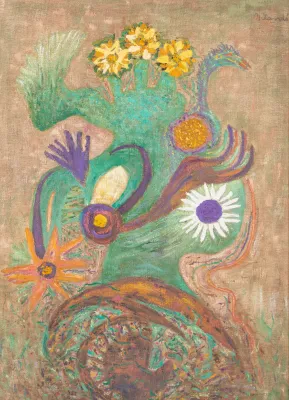
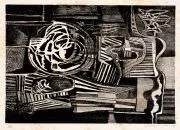
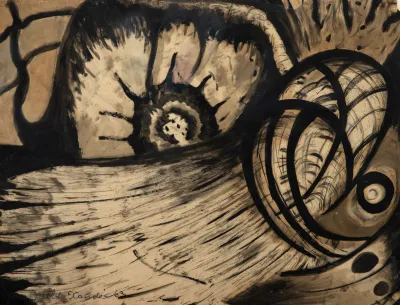
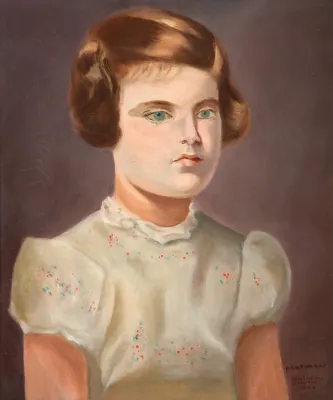
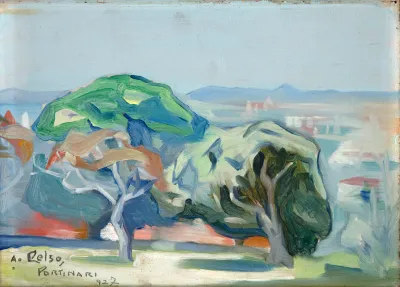
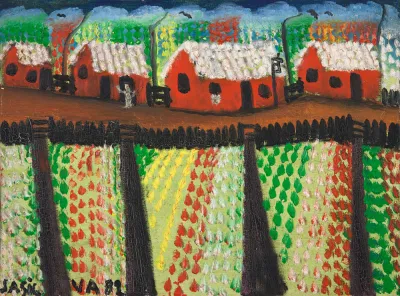
1976 - The painter Jânio Quadros is born, who runs the country with an exhibition of a series of oils he calls "my dolls".
1979 - admits to returning to public life, as a candidate for the succession of the governor of São Paulo, Paulo Maluf.
1980 - He joins the PTB of deputy Ivete Vargas, but leaves the party the following year.
1981 - signs affiliation to the PMDB in June, but ends up being barred by an challenge by the party's national executive in October. Only Orestes Quércia, Alencar Furtado and José Storópoli vote in their favor in this decision. Returns to the PTB in November.
1982 - appears as a PTB candidate for the government of São Paulo, in the first direct election after the 1964 coup. Before the election, he visits the president of Libya, Muamar Gaddafi, and of the meeting praising "his efforts for world peace". Finishes in third place, with 1,447,328 votes, against 5,209,952 of the elected Franco Montoro, from the PMDB.
1983 - launches fifteen contos, book received by stones by the critics (prefaced by José Sarney and Mário Palmério - both from the Brazilian Academy of Letters).
1984 - Standing with breast cancer, Eloá undergoes surgery in São Paulo Jânio It is launched as a candidate for mayor of São Paulo on April 30.
1985 - For the same PTB, he is elected mayor of the capital of São Paulo with 1,572,454 votes.
1986 - Takes the position of mayor and hangs in his office a pair of boots, retiring from electoral disputes.
1987 - It turns out that Jânio maintains a Numbered account in Geneva, Switzerland.
1989 - does not appear to be handed over to PT mayor Luiza Erundina. He leaves for the US and Europe, from where he starts to feed the press with speculation about his candidacy for the Presidency of the Republic. He suffers a stroke during the trip - the first in a series of strokes, which would end up getting him into a wheelchair.
1990 - In February, he claims to be available to run for the state government again. In July, he suffered a new stroke. He is admitted to InCor in October, in serious condition. He returns home in a wheelchair. In November, he loses his wife Eloá and starts to receive a few friends, first in his mansion in Morumbi and then in an aparthotel room.
1992 - On February 16, former president Jânio dies. Quadros.
Notes: (*) He is a university professor, journalist and writer
Text: Nelson Valente, website saopaulominhacidade.com.br