



Ismael Nery (Belém PA 1900 – Rio de Janeiro RJ 1934)
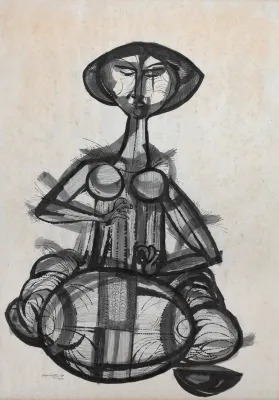
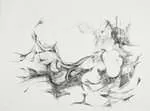
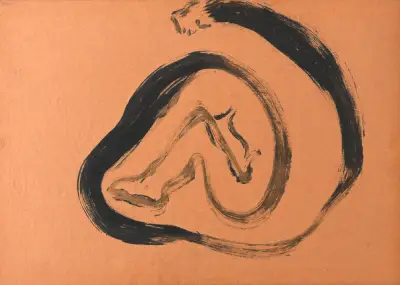
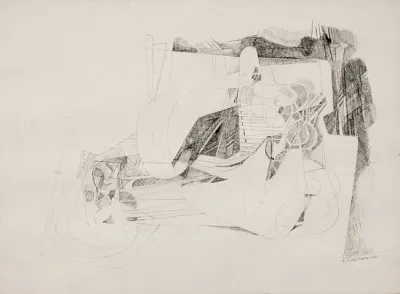
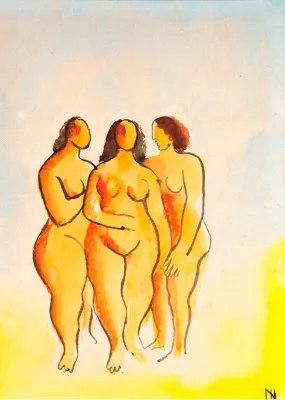
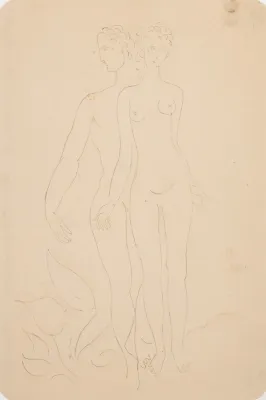
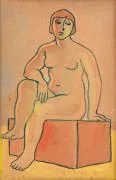
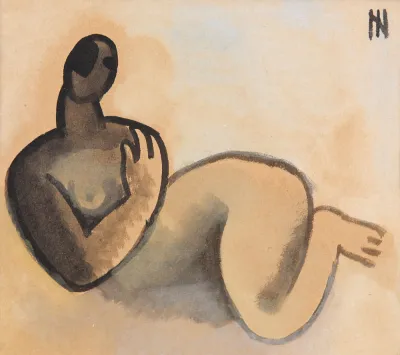
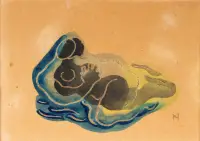
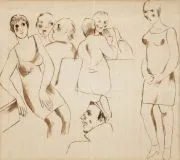
Ismael Nery was a Brazilian painter, draftsman and poet, recognized as one of the most original artists of Brazilian modern art. Born in Belém, he moved to Rio de Janeiro as a child, where he developed his artistic and intellectual education. Ismael Nery showed an interest in the visual arts from an early age. He studied at the Escola Nacional de Belas Artes between 1915 and 1916, under Henrique Bernardelli. Although he did not adapt to academic teaching, in this period he consolidated his interest in the human figure, the central theme of his artistic production and of his trajectory in Brazilian modern art.
In 1920, Ismael Nery traveled to Paris and attended the Académie Julian. During his stay in Europe, he came into contact with modernism and with artists such as Pablo Picasso, Georges Braque and Fernand Léger. He also became interested in German expressionism and in the Italian Renaissance tradition, especially Michelangelo and Raphael. This experience was fundamental to the construction of Ismael Nery's artistic language.
Back in Brazil in 1921, Ismael Nery began working at the Diretoria do Patrimônio Nacional, where he met the poet Murilo Mendes, who was responsible for preserving and promoting his work. During this period, he developed Essentialism, a philosophical system that proposed the abstraction of time and space and the valorization of the essential aspects of human existence, with a strong spiritual dimension.
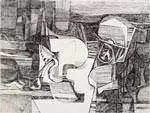
Ismael Nery's works show influences of cubism and surrealism, in dialogue with the ideas of André Breton. Unlike other Brazilian modernists, Ismael Nery's production did not seek a national identity, but a universal, symbolic and metaphysical approach to human experience. His work thus occupies a particular place in the history of Brazilian modern art.
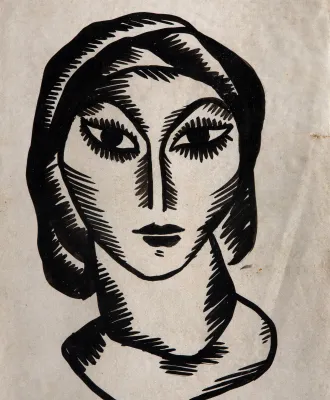
In 1922, Ismael Nery married Adalgisa Nery, who became a recurring figure in his paintings. The works of this period present idealized characters in symbolic settings, marked by an intense emotional charge. Works such as Retrato de Murilo Mendes and A Espanhola exemplify this phase of Ismael Nery's production and his investigation of the human figure.
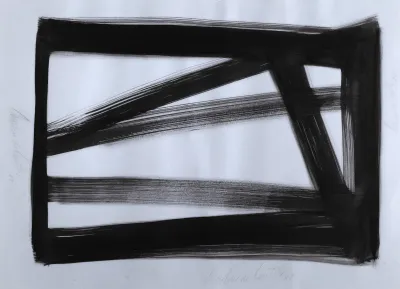
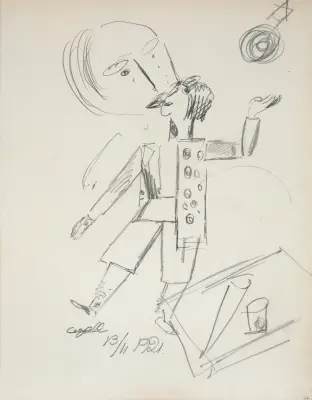
From 1924 on, Ismael Nery began to develop compositions with a stronger geometric structure, elongated forms and a sense of timelessness. His home in Rio de Janeiro became a meeting place for intellectuals such as Mário Pedrosa and Alberto da Veiga Guignard, broadening Ismael Nery's dialogue with the Brazilian artistic and intellectual milieu. In 1927, Ismael Nery traveled to Europe again, where he came into contact with Marc Chagall. Chagall's influence contributed to his approach to surrealism, establishing Ismael Nery as one of the pioneers of this current in Brazilian art.
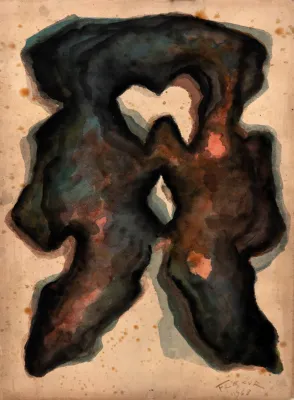
Despite the originality of his work, Ismael Nery did not achieve recognition during his lifetime. From 1930 on, after being diagnosed with tuberculosis, his production became more dramatic and existential, incorporating fragmented figures and themes related to death. Ismael Nery held his only solo exhibitions in 1929, in Belém and in Rio de Janeiro. He also took part in important events, such as the Salão Revolucionário of 1931 and the SPAM Modern Art Exhibition, in 1933. He died in 1934 of tuberculosis.
Recognition of Ismael Nery's importance came posthumously, especially from the 1960s on. Today, Ismael Nery is considered one of the leading names of Brazilian modern art, alongside Tarsila do Amaral and Di Cavalcanti, standing out for his spiritual, symbolic and universal approach to the human figure.
Testimonials
"Silence stirred in me an irrepressible urge to run. I darted like an arrow across seas and mountains with incredible ease and without fatigue. Now I find myself seated before a landscape in formation, not yet colored. My mind retraces what I have just traversed, and I marvel at having encountered nothing—until reaching the phosphorescent trail I left behind at the start. The seas now appear as ridiculous sheets of water, scarcely three or four spans deep. The mountains are static clouds, which mankind’s eternal fear will one day transform into granite. Everything is fearfully uninhabited. There are no lions or elephants in Africa’s deserts. The pyramids and the Eiffel Tower do not exist. There is only myself, perceived inversely through an idea I call woman—an ethereal idea hovering above the globe’s surface, incomprehensible, for nothing exists on earth beyond myself. I traverse space again, though this time with the slow growth of plants, multiplying progressively within my idea to reveal myself to myself. The seas are now deep, and the mountains have solidified. Lions and elephants appear in the deserts of Africa. The pyramids have been built in Egypt, and the Eiffel Tower rises in Paris, in the very year another self of mine was born in Belém do Pará. All has become abundantly populated. I now find myself seated in a prison cell, gazing calmly through the bars, awaiting judgment for the heinous crime I committed—of using myself, in my mother, wife, daughter, granddaughter, great-granddaughter, great-great-granddaughter, daughter-in-law and sister-in-law. I shall return once more to be my own Judge. Nothing exists beyond myself, save for myself. Silence".
Ismael Nery
Poema post-essencialista (Post-Essentialist Poem), 1931
NERY, Ismael. Poemas de Ismael Nery. In: ______. Ismael Nery 100 anos: a poética de um mito. Rio de Janeiro: Centro Cultural Banco do Brasil, 2000. p. 71. [Poems collected by Murilo Mendes and published in Revista A Ordem and in Boletim de Ariel, 1935.]
Critiques
"I must say that Ismael Nery’s individual stance openly defied the then-dominant 'Brazilian' trend. His painting aligned with the international orientation prevailing at the time—one that still endures in Europe and the most advanced artistic centers worldwide. For this reason, Brazilian themes are almost entirely absent from his art, as they lay outside his aesthetic and visual concerns. He was equally opposed to a painting style of regional, rustic, or folk inclination—whether of Indigenous, African, or Afro-Brazilian influence. According to his ideas, art with nationalist themes would always remain secondary, limited, and even anecdotal, in contrast to the internationalist tendency that should prevail in this century. Needless to say, the evolution of art in this century, including Brazilian art over the past twenty-five years, would demonstrate the originality of Ismael Nery’s avant-garde position—one he consistently maintained throughout his brief yet fruitful life as a painter and draftsman".
Antônio Bento
"Already in the early 1920s, we see emerging in his painting the atmosphere Di (Cavalcanti) described as 'penumbrist' in reference to this same period of his own work. In this first phase—what Antonio Bento referred to as 'expressionist'—we notice that ease, redundancies, thematic reprises, and literary elements are frequent in his portraits and figures up until around 1923, suggesting a large output yet a slow evolution. However, from 1924 onward, Cubist rigor begins to structure his painting through the reduction of elements and the self-discipline that would increasingly define his oeuvre. This transitional period extended until about 1927, the time of his stay in Paris. Chagall’s presence—and later, a metaphysical influence—emerges as another singular factor within Brazilian Modernism starting with Nery: a classicizing metaphysical tone paired, in his case, with an unprecedented exposure of self in Brazilian art. Indeed, Ismael Nery reveals himself in his works as few others do, and within this act of visual expression lies an implicit offering of his intimacy to the reflective viewer".
Aracy Amaral
"Ismael Nery has a vast talent as a painter; however, with the exception of a few paintings, his whole body of work suffers from a very restless unfinished quality. But he is a researcher of the noblest sect. He lives almost a mystical obsession, preoccupied with a number of plastic problems, chiefly composition with figures and the realization of an ideal human type. Following his works in the house of Murilo Mendes, who keeps them in Rio, one has the impression that the problems are stated in some paintings and developed in others, to be concluded in still others. The search for an ideal plastic type representative of the human being links him to certain immensely moving European researchers, above all Modigliani and Eugen Zak. And so, with all the figures confined to a single type that never satisfies this artist of absolute seriousness, Ismael Nery places them in every possible composition, seeking a purely plastic balance and harmony. These problems, of composition and of the ideal type, concern the painter so much that for a long time he completely abandoned color, using only blue. This blue phase is truly impressive as a psychological phenomenon, and some of its paintings seem to me among the most remarkable that Brazilian modernism has produced".
Mário de Andrade
"Ismael Nery's inflated ego, at the confluence of mythomania and mysticism, would lead him to make his figure coincide even more with that of Christ. Not only was he buried in the habit of Saint Francis, but he tried to make his death coincide with Good Friday, when he was also, like Christ, 33 years old. He was a little late; he died a week later, on the Friday after Easter. He died mythically surrounded by the number three. He died symbolically re-inscribing the age at which his father, also named Ismael, had died, at 33. Ismael-father and Ismael-son; Ismael-father was a doctor, Ismael-son the patient. Ismael-Christ and Ismael-man. The SELF and the OTHER. Two in one. Three in one: the mythical and psychoanalytic circularity of 33.
Much of what we have said so far could be seen again in his paintings and reread in a poem titled "Eu" (I), written in the last year of his life, which begins: "I am the tangency of two opposite and juxtaposed forms." The poem then becomes the confrontation and opposition of forces that tend toward the annulment of the individual. The line is emblematic in showing the initial refusal of the individual from the subjective point of view. And, from the aesthetic point of view, in illustrating the roots of the cubist style he adopted. It is in this sense that cubism was useful to him. The splitting of the figures, the two or three faces in conflict, correspond both to a stylistic feature and to a caesura in the tormented spirit of the artist, who sought unity in what he called ESSENCE. An ESSENCE that did not erase the erasures, which are human".
Affonso Romano de Sant'Anna
"It was at the end of 1921 that I first met Ismael Nery. I worked at the former Directorate of National Heritage within the Ministry of Finance. Ismael Nery had been appointed as a draftsman in the architecture and topography section. One fine day, a young, well-dressed man entered the room. He set up his drawing board, sat down, and began to work. Half an hour later, he left for coffee. Seizing the opportunity, I took a peek at what he was doing: he was sketching figures around a customs house project. When he returned, I struck up a conversation. We left the office together. Thus began a friendship that continued unbroken until his death on April 6, 1934. Ismael had just returned from Europe, where he had spent a year refining his painting studies. I recall him speaking with enthusiasm about the exhibitions and museums he had visited, yet he did not refer to any particular painter of the time. He anticipated a major transformation in the concept of the artist—or perhaps a return to the classical ideal—for he saw the artist as a harmonious, learned, and visionary being, not merely a cultivator of temperament. He regarded painting as being in crisis, facing the rise of cinema. Years later, I remembered these early conversations upon reading André Breton’s essay, which begins more or less like this: "The camera has dealt a mortal blow to the old means of expression [...]". Ismael felt that many of painting's intentions had been definitively realized: for instance, when he first saw Tintoretto, he thought it pointless to continue painting. Thus, I first knew Ismael Nery as a painter, draftsman, and architect. But soon, other, deeper aspects of his personality were revealed to me—that of the poet, the philosopher, and even the theologian. I must say that I offer my testimony with absolute honesty, with no desire to mystify, nor any reason to agree with those who, having known Ismael Nery only superficially, deny his greatness and accuse me of trying to create a myth".
Murilo Mendes
"As damned as Flávio de Carvalho - and with an equally autobiographical body of work - was Ismael Nery. After his death in 1934, his work began to undergo a process of rediscovery in the 1960s, when it finally became possible to know another Brazilian artist who deliberately blurred the boundaries between art and life. The scholars Antonio Bento and Chaim Hamer have tried to explain the reason for the prolonged neglect of Nery's work within the Brazilian circuit. Bento blames the unpreparedness of the Brazilian public of the 1930s for this neglect. Hamer, in turn, outlines a complex psychoanalytic hypothesis to explain the same phenomenon. But perhaps a 1928 text by Mário de Andrade can offer some clues to this neglect of more than thirty years. In the article, Andrade points out three issues that may later have contributed to the marginalization of the artist's work: the limited technical refinement of Nery's productions, the speed with which he worked, so that it seemed that "the problems were stated in some paintings, and are developed in others to be concluded in still others", and the artist's desire to find in his production "an ideal type representative of the human being". Now, Mário de Andrade was in fact always concerned with the lack of technical polish of the modernist painters. Nery, however - who after seeing works by Tintoretto thought it useless to paint - saw painting not as a technique to be fully mastered like a good craftsman, but as an instrument capable of sustaining the concretion of his ideas. Furthermore, analyzing the artist's paintings, poems, drawings and watercolors, one realizes that, in fact, the problems stated in one canvas could expand into any form of record, since what interested Nery, it seems, was not the record itself, in its peculiarities or intrinsic qualities, but the recorded idea".
Tadeu Chiarelli
Ismael Nery
Painter, draftsman, illustrator, set designer,
poet, philosopher and theologian
Belém do Pará, 1900 - Rio de Janeiro, 1934
«... Nery thought that many of painting's intentions had already been
definitively realized: for example,
the first time he saw Tintoretto, he thought it useless to go on painting...»
Murilo Mendes in O ESTADO DE SÃO PAULO 01.06.1948.
At first, Nery fits the description of the versatile artists of the Italian «quattrocento». Such a multiplicity of aims, guided by a proverbial restlessness, probably stems from the different levels of understanding and proficiency with which he absorbed cubism and the teachings embedded in the practices of the «School of Paris» (Paris, 1920), German expressionism, Italian metaphysical painting and later surrealism (Paris, Chagall, Breton 1927). To this artistic cornucopia he added his philosophical proposals, for which the thinker, poet and art critic Murilo Monteiro Mendes coined the term «Essentialism», with a Catholic and neo-scholastic foundation (Leo XIII).
Having returned definitively to Brazil (1929), he continued to favor a pictorial language of international orientation, as he was opposed to any national or regional manifestation.
Although forgotten for more than thirty years, he was rediscovered and duly restored to the spotlight, a place of honor in Brazilian modernism. During his 33 years of life, he took part in only 3 solo exhibitions and 4 other, group ones. From the 8th Bienal de São Paulo (1965) on, his work was revitalized, remembered and honored in 127 exhibitions, as well as in dozens of important bibliographic references.
Solo Exhibitions
1929 - Belém PA - Solo, at Palace Theatre
1929 - Rio de Janeiro RJ - Solo, at Galeria do Palace Hotel
1930 - Rio de Janeiro RJ - Solo, at Studio Nicolas
Group Exhibitions
1930 - New York (United States) - The First Representative Collection of Paintings by Brazilian Artists, at Nicholas Roerich Museum
1931 - Rio de Janeiro RJ - Salão Revolucionário (Revolutionary Salon), at Enba
1933 - Rio de Janeiro RJ - 3rd Pró-Arte Salon
1933 - São Paulo SP - 2nd SPAM Modern Art Exhibition, at Palacete Campinas
Posthumous Exhibitions
1935 - Rio de Janeiro RJ - Social Art Exhibition, at Clube de Cultura Moderna
1935 - Rio de Janeiro RJ - Ismael Nery: Retrospective, at Pró-Arte, Edifício da Associação dos Empregados do Comércio
1965 - São Paulo SP - 8th Bienal Internacional de São Paulo, at Fundação Bienal
1966 - Rio de Janeiro RJ - Self-Portraits, at Galeria Ibeu Copacabana
1966 - Rio de Janeiro RJ - Solo, at MAM/RJ
1966 - Rio de Janeiro RJ - Ismael Nery: Retrospective, at Petite Galerie
1967 - Rio de Janeiro RJ - 5th JB Art Summary, at MAM/RJ
1967 - Rio de Janeiro RJ - Pioneers of Modern Art in Brazil, at Diretório Acadêmico da Enba
1969 - São Paulo SP - 10th Bienal Internacional de São Paulo, at Fundação Bienal
1970 - São Paulo SP - 4 Groups of Recent Acquisitions and Donations from the International Society of Plastic and Visual Art, at MAC/USP
1970 - São Paulo SP - Ismael Nery: 40 Years Later, at MAB/Faap
1971 - Rio de Janeiro RJ - Solo, at Galeria Barcinsky
1971 - São Paulo SP - Solo, at A Hebraica
1972 - São Paulo SP - The Week of '22: Background and Consequences, at Masp
1974 - São Paulo SP - Ismael Nery: 1900-1934, at Masp
1974 - São Paulo SP - Ismael Nery: Retrospective, at MAB/Faap
1975 - São Paulo SP - Modernism from 1917 to 1930, at Museu Lasar Segall
1975 - São Paulo SP - SPAM and CAM, at Museu Lasar Segall
1976 - Porto Alegre RS - Solo, at Galeria Guignard
1976 - São Paulo SP - Ismael Nery: Drawings, Watercolors, Gouaches, at Grifo Galeria de Arte
1980 - Buenos Aires (Argentina) - Ochenta Años de Arte Brasileño, at Banco Itaú
1980 - Rio de Janeiro RJ - Tribute to Mário Pedrosa, at Galeria Jean Boghici
1980 - Santiago (Chile) - 20 Pintores Brasileños, at Academia Chilena de Bellas Artes
1981 - Maceió AL - Brazilian Artists of the First Half of the 20th Century, at Instituto Histórico e Geográfico
1981 - Rio de Janeiro RJ - Universe of Carnival: Images and Reflections, at Acervo Galeria de Arte
1982 - Bauru SP - 80 Years of Brazilian Art
1982 - Lisbon (Portugal) - Brazil 60 Years of Modern Art: Gilberto Chateaubriand Collection, at Centro de Arte Moderna José de Azeredo Perdigão
1982 - London (England) - Brazil 60 Years of Modern Art: Gilberto Chateaubriand Collection, at Barbican Art Gallery
1982 - Marília SP - 80 Years of Brazilian Art
1982 - Rio de Janeiro RJ - Universe of Football, at MAM/RJ
1982 - São Paulo SP - 80 Years of Brazilian Art, at MAB/Faap
1982 - São Paulo SP - From Modernism to the Bienal, at MAM/SP
1983 - Belo Horizonte MG - 80 Years of Brazilian Art, at Fundação Clóvis Salgado. Palácio das Artes
1983 - Campinas SP - 80 Years of Brazilian Art, at MACC
1983 - Curitiba PR - 80 Years of Brazilian Art, at MAC/PR
1983 - Ribeirão Preto SP - 80 Years of Brazilian Art
1983 - Rio de Janeiro RJ - Brazilian Self-Portraits, at Galeria de Arte Banerj
1983 - Rio de Janeiro RJ - Tribute to Ismael Nery, at Ralph Camargo Consultoria de Arte
1983 - Santo André SP - 80 Years of Brazilian Art, at Prefeitura Municipal de Santo André
1984 - Fortaleza CE - 7th National Salon of Visual Arts
1984 - Porto Alegre RS - Solo, at Kraft Escritório de Arte
1984 - Rio de Janeiro RJ - Salão de 31, at Funarte
1984 - São Paulo SP - Gilberto Chateaubriand Collection: Portrait and Self-Portrait of Brazilian Art, at MAM/SP
1984 - São Paulo SP - Ismael Nery: 50 Years Later, at MAC/USP
1984 - São Paulo SP - Tradition and Rupture: A Synthesis of Brazilian Art and Culture, at Fundação Bienal
1985 - Curitiba PR - Rio: The Surrealist Strand, at Museu Guido Viaro
1985 - Porto Alegre RS - Rio: The Surrealist Strand, at Margs
1985 - Rio de Janeiro RJ - Rio: The Surrealist Strand, at Galeria de Arte Banerj
1985 - Rio de Janeiro RJ - Six Decades of Modern Art: Roberto Marinho Collection, at Paço Imperial
1985 - São Paulo SP - 18th Bienal Internacional de São Paulo, at Fundação Bienal
1985 - São Paulo SP - The Art of the Imaginary, at Galeria Encontro das Artes
1985 - São Paulo SP - Rio: The Surrealist Strand, at MAC/USP
1987 - Paris (France) - Modernidade: Brazilian Art of the 20th Century, at Musée d'Art Moderne de la Ville de Paris
1987 - Rio de Janeiro RJ - To the Collector: Tribute to Gilberto Chateaubriand, at MAM/RJ
1987 - São Paulo SP - 19th Bienal Internacional de São Paulo, at Fundação Bienal
1987 - São Paulo SP - The Craft of Art: Painting, at Sesc
1988 - São Paulo SP - Modernidade: Brazilian Art of the 20th Century, at MAM/SP
1989 - Fortaleza CE - Brazilian Art of the 19th and 20th Centuries in Ceará Collections: Paintings and Drawings, at Espaço Cultural da Unifor
1989 - Lisbon (Portugal) - Six Decades of Brazilian Art: Roberto Marinho Collection, at Centro de Arte Moderna José de Azeredo Perdigão
1991 - São Paulo SP - Ismael Nery: Retrospective, at Dan Galeria
1992 - Poços de Caldas MG - Brazilian Modern Art: Collection of the Museu de Arte Contemporânea da Universidade de São Paulo, at Casa da Cultura
1993 - Poços de Caldas MG - Mário de Andrade Collection: Modernism in 50 Works on Paper, at Casa da Cultura
1993 - Rio de Janeiro RJ - Brazil, 100 Years of Modern Art, at MNBA
1993 - Rio de Janeiro RJ - Emblems of the Body: The Nude in Brazilian Modern Art, at CCBB
1993 - São Paulo SP - 100 Masterpieces from the Mário de Andrade Collection: Painting and Sculpture, at IEB/USP
1993 - São Paulo SP - Ismael Nery: Drawings, at Dan Galeria
1993 - São Paulo SP - Modern Drawing in Brazil: Gilberto Chateaubriand Collection, at Galeria de Arte do Sesi
1993 - São Paulo SP - Modernism at the Museu de Arte Brasileira: Painting, at MAB/Faap
1994 - Poços de Caldas MG - Unibanco Collection: Exhibition Celebrating Unibanco's 70 Years, at Casa da Cultura
1994 - Rio de Janeiro RJ - Modern Drawing in Brazil: Gilberto Chateaubriand Collection, at MAM/RJ
1994 - Rio de Janeiro RJ - Trenches: Art and Politics in Brazil, at MAM/RJ
1994 - São Paulo SP - Brazilian Modern Art: A Selection from the Roberto Marinho Collection, at Masp
1994 - São Paulo SP - Bienal Brasil Século XX, at Fundação Bienal
1995 - Brasília DF - Brasília Collections, at Ministério das Relações Exteriores. Palácio do Itamaraty
1995 - Rio de Janeiro RJ - Unibanco Collection: Exhibition Celebrating Unibanco's 70 Years, at MAM/RJ
1995 - São Paulo SP - Modernism Paris 1920s: Experiences and Encounters, at MAC/USP
1996 - Rio de Janeiro RJ - Ismael Nery: Drawings and Watercolors, at Casa das Artes Galeria
1996 - São Paulo SP - Brazilian Art: 50 Years of History in the MAC/USP Collection: 1920-1970, at MAC/USP
1997 - São Paulo SP - 25th Panorama of Brazilian Art, at MAM/SP
1998 - Niterói RJ - 25th Panorama of Brazilian Art, at MAC/Niterói
1998 - Recife PE - 25th Panorama of Brazilian Art, at Mamam
1998 - Rio de Janeiro RJ - Brazilian Art in the Collection of the Museu de Arte Moderna de São Paulo: Recent Donations 1996-1998, at CCBB
1998 - Salvador BA - 25th Panorama of Brazilian Art, at MAM/BA
1998 - São Paulo SP - 24th Bienal Internacional de São Paulo, at Fundação Bienal
1998 - São Paulo SP - Highlights of the Unibanco Collection, at Instituto Moreira Salles
1998 - São Paulo SP - The Modern and the Contemporary in Brazilian Art: Gilberto Chateaubriand Collection - MAM/RJ, at Masp
1999 - São Paulo SP - Works on Paper: From Modernism to Abstraction, at Dan Galeria
1999 - São Paulo SP - On Paper, Graphite and India Ink, at Banco Cidade
2000 - Lisbon (Portugal) - Brasil-brasis: cousas notaveis e espantosas. Modernist Views, at Museu do Chiado
2000 - Lisbon (Portugal) - 20th Century: Art of Brazil, at Centro de Arte Moderna José de Azeredo Perdigão
2000 - Rio de Janeiro RJ - Ismael Nery 100 Years: The Poetics of a Myth, at CCBB
2000 - Rio de Janeiro RJ - When Brazil Was Modern: Visual Arts in Rio de Janeiro from 1905 to 1960, at Paço Imperial
2000 - São Paulo SP - The Human Figure in the Itaú Collection, at Itaú Cultural
2000 - São Paulo SP - Ars Erótica: Sex and Eroticism in Brazilian Art, at MAM/SP
2000 - São Paulo SP - Brasil + 500 Mostra do Redescobrimento, at Fundação Bienal
2000 - São Paulo SP - Brazil on Paper: Shades and Experiences, at Espaço de Artes Unicid
2000 - São Paulo SP - Ismael Nery 100 Years: The Poetics of a Myth, at MAB/Faap
2000 - São Paulo SP - The Angels Are Back, at Pinacoteca do Estado
2000 - Valencia (Spain) - De la Antropofagia a Brasília: Brasil 1920-1950, at IVAM. Centre Julio González
2001 - Brasília DF - Collections of Brazil, at CCBB
2001 - Rio de Janeiro RJ - Brazilian Watercolor, at Centro Cultural Light
2001 - Rio de Janeiro RJ - Collections of the Modern: Hecilda and Sergio Fadel at Chácara do Céu, at Museus Castro Maya. Museu da Chácara do Céu
2001 - Rio de Janeiro RJ - Surrealism, at CCBB
2001 - São Paulo SP - 30 Masters of Painting in Brazil, at Masp
2001 - São Paulo SP - Self-Portrait, the Artist's Mirror, at Galeria de Arte do Sesi
2001 - São Paulo SP - Aldo Franco Collection, at Pinacoteca do Estado
2001 - São Paulo SP - Museu de Arte Brasileira: 40 Years, at MAB/Faap
2001 - São Paulo SP - The Trajectory of Light in Brazilian Art, at Itaú Cultural
2002 - Brasília DF - JK - An Aesthetic Adventure, at Conjunto Cultural da Caixa
2002 - Niterói RJ - Brazilian Art on Paper: 19th and 20th Centuries, at Solar do Jambeiro
2002 - Rio de Janeiro RJ - Brazilian Art in the Fadel Collection: From the Restlessness of the Modern to the Autonomy of Language, at CCBB
2002 - Rio de Janeiro RJ - Identities: The Brazilian Portrait in the Gilberto Chateaubriand Collection, at MAM/RJ
2002 - São Paulo SP - '22 and the Idea of the Modern, at MAC/USP
2002 - São Paulo SP - From Anthropophagy to Brasília: Brazil 1920-1950, at MAB/Faap
2002 - São Paulo SP - Wild Mirror: Modern Art in Brazil in the First Half of the 20th Century, Nemirovsky Collection, at MAM/SP
2003 - Belém PA - 22nd Arte Pará Salon, at Museu do Estado do Pará
2003 - Brasília DF - Brazilian Art in the Fadel Collection: From the Restlessness of the Modern to the Autonomy of Language, at CCBB
2003 - Rio de Janeiro RJ - Brazilian Art: From the 1930 Revolution to the Postwar Period, at MAM/RJ
2003 - Rio de Janeiro RJ - Autonomy of Drawing, at MAM/RJ
2003 - São Paulo SP - The Modernist Adventure of Berta Singerman: An Argentine Voice in Brazil, at Museu Lasar Segall
2003 - São Paulo SP - Arteconhecimento: 70 Years of USP, at MAC/USP
2003 - São Paulo SP - MAC USP 40 Years: Contemporary Interfaces, at MAC/USP
2003 - São Paulo SP - Tomie Ohtake in the Spiritual Weave of Brazilian Art, at Instituto Tomie Ohtake
2004 - Madrid (Spain) - Arco/2004, at Parque Ferial Juan Carlos I
2004 - Rio de Janeiro RJ - The Century of a Brazilian: Roberto Marinho Collection, at Paço Imperial
2004 - Rio de Janeiro RJ - Tomie Ohtake in the Spiritual Weave of Brazilian Art, at MNBA
2004 - São Paulo SP - The Price of Seduction: From Corset to Silicone, at Itaú Cultural
2005 - São Paulo SP - The Century of a Brazilian: Roberto Marinho Collection, at MAM/SP
Chronology
1902–1934 — Rio de Janeiro (RJ) — Settles in the city
1920-1934 — Rio de Janeiro (RJ) — Carries out studies in architecture, without executing definitive projects
1921 — Rio de Janeiro (RJ) — Works as a draftsman in the Architecture and Topography Section of the Diretoria do Patrimônio Nacional (Ministry of Finance), where he meets the poet Murilo Mendes
1925 — Rio de Janeiro (RJ) — Illustrates the book Contos e Poemas Bíblicos, by Nelson Catunda
1927 — Europe — Comes into contact with Marc Chagall, André Breton and other artists linked to surrealism
1930 — Rio de Janeiro (RJ) — Develops the philosophical system called Essentialism, a concept formulated by Murilo Mendes, based on the abstraction of time and space and on Catholic and neo-Thomist foundations
1930 — Rio de Janeiro (RJ) — Contracts tuberculosis; the following year, he is admitted to the Sanatório das Correias, where he stays for about two years
1930–1933 — Rio de Janeiro (RJ) — Devotes himself to writing poems
1948 — Rio de Janeiro (RJ) — Murilo Mendes publishes articles on the artist in O Estado de S. Paulo and in the magazine Letras e Artes, later collected in the book Recordações de Ismael Nery (EDUSP, 1996)
1969 — Rio de Janeiro (RJ) — Production of the video O Guesa, Ismael Nery, Viagem pelo Interior Paulista, by Paulo Mendes de Almeida, made by the Fundação Nacional de Artes
1973 — Publication of the book Ismael Nery, by Antonio Bento, with an introduction by Murilo Mendes
1984 — São Paulo (SP) — The critic Aracy Amaral publishes a study on the artist's work; in the same year, the exhibition Ismael Nery: 50 anos depois is held at the Museu de Arte Contemporânea da Universidade de São Paulo
1988 — São Paulo (SP) — Production of the video Pés Descalços, Mulatas, Anjos e Serras, by Zita Bressane, made by TV Cultura