
Hélio Oiticica (Rio de Janeiro RJ 1937 - Rio de Janeiro RJ 1980)
Hélio Oiticica was a Brazilian performance artist, painter and sculptor, recognized as one of the main references of contemporary art in Brazil. Hélio Oiticica's career was marked by a break with the traditional categories of art, by the incorporation of the body as a creative medium and by the active participation of the public. His work, deeply connected to ethical, social and political dimensions, established Hélio Oiticica as one of the most innovative, experimental and influential artists in 20th-century Brazilian art.
Hélio Oiticica was born into a family with a strong intellectual tradition and was the grandson of the philologist and anarchist José Oiticica. He was homeschooled until the age of 10 and, in 1947, moved to the United States after his father received a Guggenheim Foundation fellowship. Back in Brazil in 1954, he began his artistic training at the Museu de Arte Moderna do Rio de Janeiro (MAM-RJ), where he developed the experimental research that would define his artistic production.
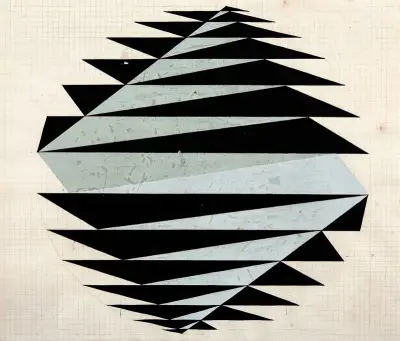
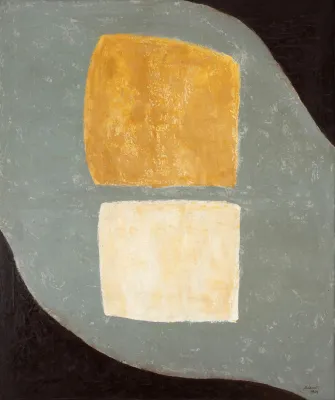
Between 1955 and 1956, Hélio Oiticica was a member of Grupo Frente, becoming part of the Brazilian Concrete movement. He later drew closer to Neo-Concretism, a decisive period in which he began to expand painting into three-dimensional space. In this phase, Hélio Oiticica broke with the two-dimensionality of the work and came to value sensory experience and physical interaction between viewer and artwork.
The critique of the traditional concept of the “art object” became one of the central axes of Hélio Oiticica's production, in dialogue with the Theory of the Non-Object formulated by Ferreira Gullar. By redefining the public as “participant”, Hélio Oiticica advocated an art based on the “experimental exercise of freedom”. This perspective placed the artist at the center of the Brazilian avant-gardes of the 1960s and 1970s, marked by aesthetic experimentation and political engagement.
Hélio Oiticica's experience in the Morro da Mangueira was decisive for the development of his work. Inspired by samba, dance and carnival, he created the Parangolés—capes, banners and wearable structures activated by the movement of the body. Regarded as a form of “anti-art”, the Parangolés dissolve the boundaries between art and life and represent one of the most radical moments in Hélio Oiticica's career. The presentation of these works at the Opinião 65 exhibition caused controversy and led to his exclusion from MAM-RJ.
Still in the 1960s, Hélio Oiticica developed key series such as the Núcleos, suspended environments that invite the public's immersion, and the Bólides, manipulable objects made of various materials such as glass, wood and pigments. These works reinforce the rejection of passive contemplation and broaden the role of the viewer as an active agent in the artistic experience.
Among Hélio Oiticica's most emblematic works is B33 – Bólide Caixa 18 (1966), a tribute to Cara de Cavalo, a marginalized figure and victim of police violence. In this work, Hélio Oiticica makes explicit his critique of social structures and processes of exclusion, drawing on reflections about spectacle and contemporary society. The phrase “Seja marginal, seja herói” (Be an outlaw, be a hero) sums up the political, critical and poetic dimension of his production.
The penetrable Tropicália (1967) is one of Hélio Oiticica's most iconic works. The installation brings together elements of Brazilian culture, such as sand, plants and vernacular architectural structures, creating a sensory environment that gave rise to the Tropicalist movement. With Tropicália, Hélio Oiticica proposes an aesthetic based on mixture, cultural diversity, creative chaos and the integration of art and everyday life.
From the 1970s, Hélio Oiticica deepened the behavioral dimension of his work through the concept of Crelazer, which proposes leisure as a creative and transformative experience. In environments such as Éden (1969), he created immersive spaces with different sensory stimuli. During his time in New York, he developed with Neville d’Almeida the Cosmococas (1973), multimedia installations exploring sound, image, participation and interaction.
Influenced by thinkers such as Friedrich Nietzsche, Herbert Marcuse and Guy Debord, Hélio Oiticica built a body of work grounded in freedom, pleasure, experimentation and the invention of new ways of life. His personal identity and experiences also run through his artistic production, especially in the series developed during his international activity.
Hélio Oiticica's early death in 1980, at the age of 42, cut short a career in full expansion. Even so, Hélio Oiticica's legacy remains fundamental to Brazilian and international contemporary art. His work continues to influence artists, researchers, curators and students, and is an essential reference in discussions of participation, the body, space, experience and freedom in art.
Critical Commentary
Hélio Oiticica was one of the most innovative and experimental artists in contemporary Brazilian art, standing out for creating works that require the active participation of the public and that engage directly with texts, commentaries and poetic propositions. Hélio Oiticica's production breaks the traditional limits of art by integrating aesthetic experience, body and language.
According to the critic Celso Favaretto, Hélio Oiticica's career can be understood in two main phases: the visual phase, which began in 1954 in the context of Concrete art and ended with the Bólides in 1963, and the sensory phase, which lasted until his death in 1980, marked by the expansion of participatory and environmental experience.
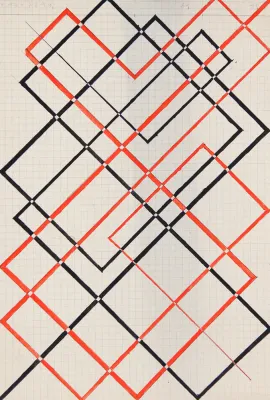
Influenced from an early age by José Oiticica, Hélio Oiticica had an unconventional education, not attending formal schools until 1947, when he moved to Washington, D.C., with his family. On returning to Brazil in 1954, he began his artistic training at MAM/RJ under Ivan Serpa. In this period, he developed the Metaesquemas gouaches, in which Hélio Oiticica already moves beyond the traditional pictorial support in search of an autonomous language.
From 1959, Hélio Oiticica began the transition from painting to space with the Invenções series, followed by the Bilaterais and Relevos Espaciais. Although he did not take part in the 1st Neo-Concrete Exhibition, he joined the second edition in 1960, drawing close to the ideas of Ferreira Gullar, especially the Theory of the Non-Object. In this context, Hélio Oiticica developed the first Núcleos and Penetráveis, consolidating the concept of the work as environment and turning the viewer into an active participant.
The Bólides, created in 1963, represent a turning point in Hélio Oiticica's work, introducing a more intense sensory dimension based on handling, gesture and direct experience of materials. In the late 1960s, his involvement with the Estação Primeira de Mangueira samba school was decisive for the creation of the Parangolés, wearable works that integrate color, dance and collectivity. These works consolidate the notion of “anti-art” and broaden the presence of popular culture in Hélio Oiticica's production.
Hélio Oiticica's participation in the exhibition Nova Objetividade Brasileira (1967) was marked by the presentation of the installation Tropicália, a key work that synthesizes elements of Brazilian culture and gave rise to the Tropicalist movement associated with Caetano Veloso. In 1969, the Éden project, presented at the Whitechapel Gallery in London, brought together different environmental propositions and introduced the concept of Crelazer, understood by Hélio Oiticica as a form of “creative leisure” that values aesthetic experience as an inventive practice.
During the 1970s in New York, Hélio Oiticica extended his research into the multimedia field, developing series such as Newyorkaises and Subterranean Tropicália Projects. In partnership with Neville d’Almeida, he created the Cosmococa project, a “quasi-cinema” made up of projections, soundtracks and interactive environments. In this period, Hélio Oiticica also made Super-8 films and new Penetráveis, deepening his investigation into environmental art and behavior.
Back in Brazil in 1978, Hélio Oiticica took part in experimental actions such as Mitos Vadios and staged the poetic-urban event Caju-Kleemania (1979). In the last year of his life, he proposed the event Esquenta pr’o Carnaval in the Morro da Mangueira and created the contra-bólide Devolver a Terra à Terra (Return the Earth to the Earth). To the end, Hélio Oiticica maintained a production devoted to the integration of art, body, space and collective participation, consolidating a radical poetics that remains central to understanding contemporary Brazilian art.
Notes
1 FAVARETTO, Celso. A Invenção de Hélio Oiticica. São Paulo: Edusp, 1992. p. 49.
2 OITICICA, Hélio. Aspiro ao grande labirinto. Rio de Janeiro: Rocco, 1986. p. 79.
Critiques
"Environmental art is what Oiticica called his practice. It is nothing else in effect. In it, nothing exists in isolation. There is no artwork to be appreciated on its own, like a painting. The perceptual-sensory whole dominates. Within this whole, the artist created a 'hierarchy of orders'—reliefs, Núcleos, Bólides (boxes) and capas, banners, tents ('Parangolés')—'all directed toward the creation of an environmental world.' It was during his initiation into samba that the artist moved from visual experience, in its pure form, to the experience of touch, movement, and the sensual enjoyment of materials, where the entire body, previously confined to the distant aristocracy of the visual, becomes a total source of sensoriality. (...) One might say the artist transfers to hands that feel and immerse, sometimes gloved, in dust, charcoal, or shells, the message of rigor, luxury, and exaltation that vision alone had provided. In this way, he completes the circle of the sensory-tactile-motor range. The ambience is one of virtual, saturated sensation.
The artist now confronts, for the first time, another reality: the world of consciousness, of states of mind, the world of values. Everything must now be framed within a meaningful behavior. Indeed, the pure and raw totality of sensory experience, so deliberately sought and decisively important in Oiticica's art, is ultimately infused with transcendence to another environment. Here, the artist—an absolute sensory machine—is overwhelmed by the human condition, convulsively caught in the dirty passions of the ego and the tragic dialectic of social encounter. This creates a symbiosis between extreme, radical aesthetic refinement and extreme psychic radicalism, encompassing the entire personality. Aesthetic nonconformity, a Luciferian sin, and social psychic nonconformity, an individual sin, merge. The mediation for this symbiosis of two Manichean nonconformities was the Mangueira samba school. (...)
Beauty, sin, revolt, and love give this young artist’s work a new emphasis in Brazilian art. Moral admonitions are useless. If one seeks antecedents, perhaps this is one: Hélio is the grandson of an anarchist."
Mário Pedrosa
PEDROSA, Mário. Environmental Art, Postmodern Art, Hélio Oiticica. In: ______. From Portinari’s Murals to the Spaces of Brasília. Organized by Aracy Amaral. São Paulo: Perspectiva, 1981, pp. 207-208. Originally published in Correio da Manhã, June 26, 1966.
"The chromatic concerns of his Neoconcretism were initially directed toward the Núcleos series, spaces formed through planes of color. These were followed by the Penetráveis, with their suggestive labyrinthine paths, exemplified by the Projeto Cães de Caça, then came the Bólides, wooden or transparent boxes revealing contained pigments (stacked), expressing a 'manifestation of color in space.' The Parangolé, wearable capes enveloping samba school dancers and the artist himself, foreshadowed Tropicália, presented at MAM Rio in 1967, an environment composed with elements of Brazilian flora and fauna."
Walter Zanini
ZANINI, Walter (Org.). General History of Art in Brazil. São Paulo: Instituto Walther Moreira Salles; Fundação Djalma Guimarães, 1983, vol. 2, p. 675.
"Hélio Oiticica is one of the rare cases in Brazilian art where the artist theorizes, conceptualizes, and reflects on his own work. He did so from his early years and developed a unique form as his poetics throughout his career. For Oiticica, writing was initially a means to 'fix' essential issues in the field of art, clearly evident in his early, brief texts, often in diary form. He actively participated in one of the most robust periods of art criticism in Brazil: the Neoconcrete years. The very production of works during this period required art criticism to focus entirely on the new questions raised by these works, resulting in a fruitful interplay between works and ideas, establishing a new way of seeing and feeling art. (...)
After the Neoconcrete Experiment (as a movement), Oiticica, in his growing production and discoveries, activated his theoretical potential, which would accompany each work viscerally. From 1960 onward, he theorized and conceptualized his own works: while during the Neoconcrete period, works he named Bilaterais and Relevos Espaciais were situated within Ferreira Gullar’s Não-Objeto theory, his subsequent production inaugurated 'orders of environmental manifestations,' with the creation of Núcleos and Penetráveis, accompanied by texts written by Oiticica himself. By naming each discovery and giving it specific conceptualization, he gained total mastery and control over his production. Intensifying this practice, he developed and refined himself as a theorist, so that writing became another form of expression, to the point where text and artwork proceed hand in hand."
Luciano Figueiredo
FIGUEIREDO, Luciano. Introduction. In: OITICICA, Hélio. Aspiro ao grande labirinto. Introduction by Luciano Figueiredo; Mário Pedrosa; compilation by Luciano Figueiredo; Lygia Pape; Wally Salomão. Rio de Janeiro: Rocco, 1986, pp. 5-6.
"The dual inscription of Oiticica’s activity charts a modern trajectory of epic scope: a deliberate effort to reactivate primary intuitions of Suprematism, Constructivism, Neoplasticism, and to date the tenets of Concrete Art, towards what he considered the horizon of possibilities opened by surpassing the painting, the frame; an impulse toward de-aestheticization, sometimes aimed at developing cultural practices that transgress modernist norms. In him shines the imagination of a saga: the relentless and passionate pursuit of something that, beyond 'experimental art,' manifests as pure 'experiment'; the experimental exercise of freedom, as Pedrosa said.
This programmatic freedom, when articulated and radicalized, liberates a non-incidental marginality, guided by an approach that demands changes in the means and conception of painting, of art: the rupture of artistic concreteness; the proposal of 'objects' interweaving plastic, verbal, and musical elements; the shift of art toward the experiential; the proposition of dissensual practices. (...)
Oiticica embodies the legend of the artist-inventor: one who ventures into the unknown, defining his own rules of creation and categories of judgment. Yet in him, rigor does not preclude passion. Invention—his Beatrice—pursued through an evolving experimentation that never settles, unfolds the tension between conceptual and sensory, construction and deconstruction, order and delirium. By allowing dualities to coexist, Oiticica’s practice composes the 'organization of delirium'*. Eccentric and visionary, he imagines reconciling Malevichian white-on-white with the unbridledness of all senses, in a language where 'conceptual and living phenomenon' intertwine. Marginality is lived; intrinsic to the program, it inscribes singular desire and differentiating utopia into the transformation of artistic and social values."
Celso Favaretto
* Cf. CAMPOS, Haroldo de. Interview with Folha de S. Paulo, 26/07/1987.
FAVARETTO, Celso. The Invention of Hélio Oiticica. São Paulo: Edusp, 1992, pp. 15-17.
"Oiticica’s production, from the Parangolés onward, is clearly marked by the search to integrate art into everyday experience. It is the refusal to be intimidated by a myth. The proposal of 'Antiarte' consists of sensitizing daily life through the reactivation of the individual’s creative 'coefficient.' The artist now becomes the motivator of creation, realized only with the participation of the 'actor/viewer.' He brings together diverse elements and resources—color, structure, music, dance, words, and photography—into what he defines as 'total-work.' Through color, Oiticica rejects the dichotomy of object/subject. He grounds the work in its relationship with the subject, who, by enacting it, performs an operation leading to self-knowledge. From his early concrete works to the Antiarte proposals, color is a guiding axis in his trajectory, leading him into real space and bridging the distance between art and life. (...)
It is the experimentalism that Oiticica embraces in the late 1960s that distinguishes this phase from his previous one. His development up to the Núcleos series is part of a process of disintegration of the traditional support of painting, where color played a central role. This process engaged with concepts still related to discussions of modernity. It involved a homogeneous spatial conception, implying virtualities and artistic autonomy. The visual experience of color suggested a comforting, reassuring situation. Spectator participation, limited to activating the Campos de Cor, traversed virtual spaces foreseen by the aesthetic play. In the Bólides, Penetráveis, and Parangolés series, Oiticica introduces a rupture situating him within more contemporary concerns. Color now relates to bodily sensations and emotions, often implying destabilizing experiences, as it questions certainties and rational stances. The traditional aesthetic sphere is clearly stretched, a discontinuous and heterogeneous space, the result of unpredictable experiences, since the works are 'receptacles open to meanings.' Aestheticizing space and everyday experience requires de-aestheticizing the artistic domain; through this experimental pursuit, Oiticica asserts his unconditional commitment to freedom."
Viviane Matesco
MATESCO, Viviane. Body-Color in Hélio Oiticica. In: BIENAL INTERNACIONAL DE SÃO PAULO, 24. Historical Core: Anthropophagy and Histories of Cannibalism. Curated by Paulo Herkenhoff, Adriano Pedrosa. São Paulo: Fundação Bienal de São Paulo, 1998, pp. 386-391.
Testimonies
"My position in proposing 'Parangolé' is the search for a new objective foundation in art. It should not be confused with 'new figuration,' that is, a pretext for returning to figurative representation, wholly surpassed, or to the 'canvas,' its expressive support. The 'Parangolé' is not only the definitive overcoming of the canvas but also the proposition of a new structure for the art-object, a new restructuring of the spatial vision of the artwork, also surpassing the contradiction of 'painting and sculpture' categories. In truth, by proposing environmental art I do not intend to move from 'canvas' to 'sculpture,' but to establish a new structural condition for the object, which no longer admits traditional categories. It would attempt the constitution of a new 'myth of the object,' which is neither the transposed object of Pop Art nor the truth-object of Nouveau Réalisme, but the foundation of the object in all its orders and categories manifested in the environmental world, revealed here by the artwork. The object that did not exist comes into existence, and what already existed is revealed differently through the vision offered by the new object. It is reserved to the artist the task and power to transform vision and concepts in their most intimate and fundamental structure; this is the most effective way for contemporary man to master the environmental world, that is, to recreate it according to his supreme will. It is also an eminently collective proposition, aiming to engage the masses and offer them a creative opportunity. This opportunity must, of course, be realized through the individuals within that collectivity; what is new here is that the possibilities for valuing the individual within the collective become increasingly widespread—there is the exaltation of collective values in their most fundamental creative aspirations, while the individual is also given the chance to invent and create—it is the revival of the myths of color, dance, and creative structures."
Hélio Oiticica
PARANGOLÉ: A New Objective Foundation in Art. In: Exhibition Cycle on Art in Rio de Janeiro - 5. OPINIÃO 65. Curated and presented by Frederico Morais. Rio de Janeiro: Galeria de Arte Banerj, 1985. [72] pp., b&w ill.
"I began with Ivan Serpa in Grupo Frente, in 1954. But, in my view, it was with the Neoconcrete movement, when I began proposing exit into space, the disintegration of the canvas—that’s when I truly started creating something entirely my own and characteristic. The disintegration of the canvas was, in fact, the disintegration of painting; it is irreversible, with no possibility or reason to return to painting or sculpture. From there on, I proceeded to create new orders, progressing from the first series of significant spaces to the abolition of the significant structure. I sought to establish meanings, which I later abolished. There was a certain influence of Merleau-Ponty and Ferreira Gullar’s theories in the evolution of Lygia Clark, for example (she discovered the notion of immanence). For me, it was a gradual abolition of meaning structures until reaching what I consider pure invention. 'Penetráveis,' 'Núcleos,' 'Bólides,' and 'Parangolés' were the path to discovering what I call the 'state of invention.' Hence, dilution is impossible. It is not about staying with ideas. Ideas separate from objects do not exist; what exists is invention. There is no longer the possibility of style or a unilateral form of expression such as painting or departmentalized sculpture. Only the great world of invention exists."
Hélio Oiticica
CARDOSO, Ivan. The Penetrable Art of Hélio Oiticica. Folha de S.Paulo, São Paulo, Nov 16, 1985, p. 48.
"What, then, is the object? A new category or a new mode of aesthetic proposition? In my view, although it possesses both senses, the most important proposition of the object, by the makers of objects, is that of a new perceptual behavior, created through increasingly active spectator participation, reaching a transcendence of the object as the end of aesthetic expression. For me, in my evolution, the object was a passage to experiences increasingly committed to the individual behavior of each participant; I emphasize that there is no search here for a 'new conditioning' for the participant, but rather the dismantling of all conditioning to pursue individual freedom, through increasingly open propositions allowing each person to find within themselves, through availability and improvisation, their inner freedom—the path to the creative state, what Mário Pedrosa prophetically called 'the experimental exercise of freedom.' (...)
I arrived at the concept I formulated as supra-sensorial (...) It is the attempt, through increasingly open propositions, to create exercises in creativity, dispensing even with the object as previously categorized—they are not a fusion of painting-sculpture-poem, tangible works, though they may possess this aspect. They are directed to the senses, aiming, through 'total perception,' to lead the individual to 'supra-sensation,' expanding their habitual sensory capacities, discovering their inner creative center, their dormant expressive spontaneity, conditioned by daily life."
Hélio Oiticica
OITICICA, Hélio. Aspiro ao grande labirinto. Introduction by Luciano Figueiredo; Mário Pedrosa; compilation by Luciano Figueiredo; Lygia Pape; Wally Salomão. Rio de Janeiro: Rocco, 1986, pp. 102-104.
"Antiarte is thus a new stage (...); it is optimism, the creation of a new vitality in human creative experience; its main objective is to give the public the chance to cease being passive spectators and become participants in the creative activity. It is the beginning of collective expression. The Parangolé, or Environmental Program, as one wishes, whether in its incisively plastic form (full use of tactile, visual, auditory, etc. plastic values) or in its more open, transformable form in space and time, is antiart par excellence."
Hélio Oiticica
OITICICA, Hélio. Aspiro ao grande labirinto. Introduction by Luciano Figueiredo; Mário Pedrosa; compilation by Luciano Figueiredo; Lygia Pape; Wally Salomão. Rio de Janeiro: Rocco, 1986, p. 82.
Collections
Banco Itaú S.A. Collection (São Paulo, SP)
Museum of Modern Art, Rio de Janeiro Collection (RJ)
Museum of Modern Art, São Paulo Collection (SP)
Museum of Contemporary Art, University of São Paulo Collection (SP)
João Sattamini/MAC Collection - Niterói
Museum of Modern Art - MoMA (New York, United States)
Tate Modern (London, England)
Solo Exhibitions
1966 - Rio de Janeiro RJ - Solo, Galeria G4
1967 - London, England - Solo, Signals Gallery
1969 - London, England - Hélio Oiticica: Retrospective, Whitechapel Gallery
1971 - Rhode Island, United States - Rhodislândia: Contact, Rhode Island University
1972 - São Paulo SP - Hélio Oiticica: Metaesquemas, Galeria Ralph Camargo
1979 - Rio de Janeiro RJ - Penetrável Rijanviera, Café des Arts at Hotel Meridien
Group Exhibitions
1954 - Rio de Janeiro RJ - 1st Grupo Frente, Galeria Ibeu Copacabana
1955 - Rio de Janeiro RJ - 2nd Grupo Frente, Museum of Modern Art
1956 - Montevideo, Uruguay - Contemporary Brazilian Painting, Instituto de Cultura Uruguayo-Brasileño
1956 - Resende RJ - 3rd Grupo Frente, Itatiaia Country Club
1956 - São Paulo SP - 1st National Exhibition of Concrete Art, Museum of Modern Art
1956 - Volta Redonda RJ - 4th Grupo Frente, Companhia Siderúrgica Nacional
1957 - Buenos Aires, Argentina - Modern Art in Brazil, Museo de Arte Moderno
1957 - Lima, Peru - Modern Art in Brazil, Museo de Arte de Lima
1957 - Rio de Janeiro RJ - 1st National Exhibition of Concrete Art, Ministry of Education and Culture
1957 - Rosario, Argentina - Modern Art in Brazil, Museo Municipal de Bellas Artes Juan B. Castagnino
1957 - Santiago, Chile - Modern Art in Brazil, Museo de Arte Contemporáneo
1957 - São Paulo SP - 4th São Paulo International Biennial, Ciccillo Matarazzo Pavilion
1959 - Rio de Janeiro RJ - 1st Neo-Concrete Art Exhibition, Museum of Modern Art
1959 - Salvador BA - 1st Neo-Concrete Art Exhibition, Galeria Belvedere da Sé
1959 - São Paulo SP - 5th São Paulo International Biennial, Ciccillo Matarazzo Pavilion
1960 - Rio de Janeiro RJ - 2nd Neo-Concrete Art Exhibition, Ministry of Education and Culture
1960 - Rio de Janeiro RJ - 9th National Salon of Modern Art, Museum of Modern Art
1960 - Zurich, Switzerland - Konkrete Kunst, Helmhaus
1961 - São Paulo SP - 3rd Neo-Concrete Art Exhibition, Museum of Modern Art
1965 - London, United Kingdom - Soundings Two Exhibit, Signals Gallery
1965 - Rio de Janeiro RJ - Opinião 65, Museum of Modern Art
1965 - São Paulo SP - 8th São Paulo International Biennial, Bienal Foundation
1966 - Belo Horizonte MG - Brazilian Vanguard, UFMG. Rectory
1966 - Rio de Janeiro RJ - Opinião 66, Museum of Modern Art
1966 - Salvador BA - 1st National Biennial of Visual Arts – Special Research Award
1966 - São Paulo SP - Proposta 66, Fundação Armando Álvares Penteado, Faculty of Communication
1967 - Brasília DF - 4th Modern Art Salon of the Federal District, Cláudio Santoro National Theater
1967 - Paris, France - 5th Paris Biennale
1967 - Rio de Janeiro RJ - New Brazilian Objectivity, Museum of Modern Art
1967 - Rio de Janeiro RJ - Parangolé Social, Galeria G4
1967 - Tokyo, Japan - 9th Tokyo Biennale
1968 - Rio de Janeiro RJ - Flags in the Square, General Osório Square
1968 - Rio de Janeiro RJ - The Brazilian Artist and Mass Iconography, Escola Superior de Desenho Industrial
1970 - Belo Horizonte MG - From Body to Earth, Belo Horizonte Municipal Park
1970 - New York, United States - Information, Museum of Modern Art
1970 - Rio de Janeiro RJ - Geometric Abstraction: Concretism and Neo-Concretism, Funarte
1972 - Rio de Janeiro RJ - EX-posição, Museum of Modern Art
1973 - São Paulo SP - Expo-Projeção 73, Espaço Grife
1976 - São Paulo SP - Brazilian Art in the 20th Century: Paths and Trends, Galeria Arte Global
1977 - Rio de Janeiro RJ - Brazilian Constructive Project in Art: 1950-1962, Museum of Modern Art
1977 - São Paulo SP - 14th São Paulo International Biennial, Bienal Foundation
1977 - São Paulo SP - Brazilian Constructive Project in Art: 1950-1962, Pinacoteca do Estado
1978 - São Paulo SP - The Object in Art: Brazil in the 1960s, Museum of Brazilian Art
1980 - Rio de Janeiro RJ - Homage to Mário Pedrosa, Galeria Jean Boghici
Posthumous Exhibitions
1981 - Rio de Janeiro RJ - Quase Cinema, Museum of Modern Art
1982 - Lisbon (Portugal) - Brazil 60 Years of Modern Art: Gilberto Chateaubriand Collection, José de Azeredo Perdigão Center for Modern Art
1982 - London (United Kingdom) - Brazil 60 Years of Modern Art: Gilberto Chateaubriand Collection, Barbican Art Gallery
1982 - Rio de Janeiro RJ - Contemporaneity: Tribute to Mário Pedrosa, Museum of Modern Art
1984 - London (United Kingdom) - Portrait of Country: Brazilian Modern Art from the Gilberto Chateaubriand Collection, Barbican Art Gallery
1984 - Rio de Janeiro RJ - Grupo Frente 1954-1956, Banerj Art Gallery
1984 - Rio de Janeiro RJ - Madeira, Matter of Art, Museum of Modern Art
1984 - Rio de Janeiro RJ - Neo-Concretism 1959-1961, Banerj Art Gallery
1984 - São Paulo SP - Gilberto Chateaubriand Collection: Portrait and Self-Portrait of Brazilian Art, Museum of Modern Art
1984 - São Paulo SP - Tradition and Rupture: Synthesis of Brazilian Art and Culture, Biennial Foundation
1984 - Volta Redonda RJ - Grupo Frente 1954-1956
1985 - Rio de Janeiro RJ - 8th National Salon of Visual Arts, Museum of Modern Art
1985 - Rio de Janeiro RJ - Opinion 65, Banerj Art Gallery
1986 - Resende RJ - Grupo Frente 1954-1956
1986 - Rio de Janeiro RJ - JK and the 1950s: A View of Culture and Daily Life, Investiarte Gallery
1986 - Rio de Janeiro RJ - Lygia Clark and Hélio Oiticica, Paço Imperial
1986 - São Paulo SP - What I Do is Music, São Paulo Art Gallery
1987 - Paris (France) - Modernity: 20th Century Brazilian Art, Musée d'Art Moderne de la Ville de Paris
1987 - Rio de Janeiro RJ - 1st Geometric Abstraction: Concretism and Neo-Concretism, National Arts Foundation, Center for the Arts
1987 - Rio de Janeiro RJ - To the Collector: Tribute to Gilberto Chateaubriand, Museum of Modern Art
1987 - São Paulo SP - 1st Geometric Abstraction: Concretism and Neo-Concretism, Museum of Brazilian Art
1987 - São Paulo SP - Lygia Clark and Hélio Oiticica, Museum of Contemporary Art, University of São Paulo
1987 - São Paulo SP - The Craft of Art: Painting, Sesc
1987 - São Paulo SP - Magic Word, Museum of Contemporary Art, University of São Paulo
1987 - São Paulo SP - Tropicália 20 Years, Sesc Pompéia
1988 - Campinas SP - 13th Contemporary Art Salon of Campinas, MACC
1988 - Campinas SP - 13th Contemporary Art Salon of Campinas, José Pancetti Museum of Contemporary Art
1988 - New York (United States) - Brazil Projects, P.S.1, The Institute for Art and Urban Resources, Inc.
1988 - New York (United States) - The Latin American Spirit: Art and Artists in the United States, 1920-1970, Bronx Museum of the Arts
1988 - São Paulo SP - MAC 25 Years: Recent Acquisitions and Donations, Museum of Contemporary Art, University of São Paulo
1988 - São Paulo SP - Modernity: 20th Century Brazilian Art, Museum of Modern Art
1989 - El Paso (United States) - The Latin American Spirit: Art and Artists in the United States, 1920-1970, El Paso Museum of Art
1989 - Stockholm (Sweden) - Art in Latin America: The Modern Era 1820-1980, Moderna Museet
1989 - London (United Kingdom) - Art in Latin America: The Modern Era 1820-1980, Hayward Gallery
1989 - Rio de Janeiro RJ - Mundo Abrigo, Galeria 110 Arte Contemporânea
1989 - Rio de Janeiro RJ - Small Greatness of the 1950s, Cleide Wanderley Art Cabinet
1989 - San Diego (United States) - The Latin American Spirit: Art and Artists in the United States, 1920-1970, San Diego Museum of Art
1989 - San Juan (Puerto Rico) - The Latin American Spirit: Art and Artists in the United States, 1920-1970, Puerto Rican Institute of Culture
1989 - São Paulo SP - São Paulo Gallery Collection, São Paulo Art Gallery
1989 - São Paulo SP - Grupo Frente and Metaesquemas, São Paulo Art Gallery
1990 - Brasília DF - Figurativism/Abstractionism: Red in Brazilian Painting, Itaugaleria
1990 - Madrid (Spain) - Art in Latin America: The Modern Era 1820-1980, Palacio de Velázquez
1990 - Miami (United States) - The Latin American Spirit: Art and Artists in the United States, 1920-1970, Center for the Fine Arts, Miami Art Museum
1990 - Rio de Janeiro RJ - Hélio Mangueira Oiticica, State University of Rio de Janeiro, Center for Education and Humanities
1990 - São Paulo SP - Coherence - Transformation, Raquel Arnaud Art Cabinet
1990 - São Paulo SP - Figurativism/Abstractionism: Red in Brazilian Painting, Itaú Cultural
1991 - Belo Horizonte MG - Figurativism/Abstractionism: Red in Brazilian Painting
1991 - São Paulo SP - Constructivism: Poster Art 40/50/60, Museum of Contemporary Art, University of São Paulo
1992 - Barcelona (Spain) - Hélio Oiticica: Retrospective, Fundació Antoni Tàpies
1992 - Curitiba PR - 10th Curitiba City Printmaking Exhibition / America Exhibition, Printmaking Museum
1992 - Paris (France) - Latin American Artists of the Twentieth Century, Centre Georges Pompidou
1992 - Poços de Caldas MG - Brazilian Modern Art: Collection of the Museum of Contemporary Art, University of São Paulo, Casa da Cultura
1992 - Rio de Janeiro RJ - 1st On the Way to Niterói: João Sattamini Collection, Paço Imperial
1992 - Rio de Janeiro RJ - Nature: Four Centuries of Art in Brazil, Banco do Brasil Cultural Center
1992 - Rotterdam (Netherlands) - Hélio Oiticica: Retrospective, Witte de With, Center for Contemporary Art
1992 - São Paulo SP - Dominant White, São Paulo Art Gallery
1992 - Seville (Spain) - Latin American Artists of the Twentieth Century, Estación Plaza de Armas
1992 - Zurich (Switzerland) - Brazil: Discovery and Self-Discovery, Kunsthaus Zürich
1993 - Campinas SP - Figurativism/Abstractionism: Red in Brazilian Painting
1993 - Cologne (Germany) - Latin American Artists of the Twentieth Century, Kunsthalle Cologne
1993 - Lisbon (Portugal) - Hélio Oiticica: Retrospective, José de Azeredo Perdigão Center for Modern Art
1993 - Minneapolis (United States) - Hélio Oiticica: Retrospective, Walker Art Center
1993 - New York (United States) - Latin American Artists of the Twentieth Century, The Museum of Modern Art
1993 - Rio de Janeiro RJ - Brazil: 100 Years of Modern Art, National Museum of Fine Arts
1993 - Rio de Janeiro RJ - Hélio Oiticica: Retrospective, Hélio Oiticica Art Center
1993 - São Paulo SP - Brazilian Art in the World, a Trajectory: 24 Brazilian Artists, Dan Gallery
1993 - São Paulo SP - Modern Drawing in Brazil: Gilberto Chateaubriand Collection, Sesi Art Gallery
1994 - Belo Horizonte MG - The Ephemeral in Brazilian Art: 60s/70s
1994 - Penápolis SP - The Ephemeral in Brazilian Art: 60s/70s, Itaugaleria
1994 - Rio de Janeiro RJ - Modern Drawing in Brazil: Gilberto Chateaubriand Collection, Museum of Modern Art
1994 - Rio de Janeiro RJ - Trenches: Art and Politics in Brazil, Museum of Modern Art
1994 - São Paulo SP - 22nd São Paulo International Biennial, Biennial Foundation
1994 - São Paulo SP - Biennial Brazil 20th Century, Biennial Foundation
1994 - São Paulo SP - Block – Experiences in Cosmococa – Programa in Progress, São Paulo Art Gallery
1994 - São Paulo SP - The Ephemeral in Brazilian Art: 60s/70s, Itaú Cultural
1995 - Rio de Janeiro RJ - Opinion 65: 30 Years, Banco do Brasil Cultural Center
1996 - Brasília DF - The Ephemeral in Brazilian Art: 1960s/70s, Itaugaleria
1996 - Niterói RJ - Brazilian Contemporary Art in the João Sattamini Collection, Museum of Contemporary Art
1996 - Rio de Janeiro RJ - Constructive Tendencies in the MAC USP Collection: construction, measurement, and proportion, Centro Cultural Banco do Brasil
1996 - São Paulo SP - Brazilian Art: 50 Years of History in the MAC/USP Collection: 1920-1970, Museum of Contemporary Art of the University of São Paulo
1996 - São Paulo SP - Desexp(l)os(ign)ição, Casa das Rosas
1997 - Kassel (Germany) - 10th Documenta, Museum Fridericianum
1997 - Niterói RJ - Visions and (Sub)Versions, MAC Niterói
1997 - Porto Alegre RS - 1st Mercosur Visual Arts Biennial, Aplub; Casa de Cultura Mário Quintana; DC Navegantes; Edel; Usina do Gasômetro; Institute of Arts at UFRGS; Mercosur Visual Arts Biennial Foundation; Margs; Ulbra Space; Museum of Social Communication; UFRGS Rectory; Theatro São Pedro; The exhibition was presented in twelve different locations simultaneously.
1997 - Porto Alegre RS - Constructive Trend and Design, Espaço Cultural ULBRA
1997 - Porto Alegre RS - Political Trend, Mercosur Visual Arts Biennial Foundation
1997 - São Paulo SP - Brazilian Sculpture: Profile of an Identity, Banco Safra
1997 - São Paulo SP - Three-Dimensionality in 20th Century Brazilian Art, Itaú Cultural
1997 - Washington (United States) - Brazilian Sculpture: Profile of an Identity, BID Cultural Center
1998 - Barcelona (Spain) - Out of Actions Between Performance and the Object: 1949-1979, Museu d'Art Contemporani
1998 - Belo Horizonte MG - Three-Dimensionality in 20th Century Brazilian Art, Itaugaleria
1998 - Brasília DF - Three-Dimensionality in 20th Century Brazilian Art, Itaugaleria
1998 - Los Angeles (United States) - Out of Actions Between Performance and the Object: 1949-1979, The Museum of Contemporary Art
1998 - Niterói RJ - Mirror of the Biennial, Museum of Contemporary Art
1998 - Penápolis SP - Three-Dimensionality in 20th Century Brazilian Art, Itaugaleria
1998 - Rio de Janeiro RJ - 1960s/70s: Gilberto Chateaubriand Collection, Museum of Modern Art
1998 - Rio de Janeiro RJ - Brazilian Art in the Collection of the Museum of Modern Art of São Paulo: Recent Donations 1996-1998, Centro Cultural Banco do Brasil
1998 - Rio de Janeiro RJ - Hélio Oiticica and the American Scene, Hélio Oiticica Art Center
1998 - Rio de Janeiro RJ - Poetics of Color, Centro Cultural Light
1998 - Rio de Janeiro RJ - Thirty Years of '68, Centro Cultural Banco do Brasil
1998 - São Paulo SP - 24th São Paulo International Biennial, Bienal Foundation
1998 - São Paulo SP - Constructive Art in Brazil: Adolpho Leirner Collection, Museum of Modern Art
1998 - São Paulo SP - Canibáliafetiva, A Estufa
1998 - São Paulo SP - Borders, Itaú Cultural
1998 - São Paulo SP - Modern and Contemporary in Brazilian Art: Gilberto Chateaubriand Collection - MAM/RJ, Museum of Art of São Paulo
1998 - São Paulo SP - Theory of Values, Museum of Modern Art
1998 - Vienna (Austria) - Out of Actions Between Performance and the Object: 1949-1979, Austrian Museum of Applied Arts
1999 - Brasília DF - LHL: Lygia Clark, Hélio Oiticica, Lygia Pape, Caixa Econômica Federal Gallery
1999 - Los Angeles (United States) - The Experimental Exercise of Freedom: Lygia Clark, Gego, Mathias Goeritz, Helio Oiticica and Mira Schendel, The Museum of Contemporary Art
1999 - Rio de Janeiro RJ - Constructive Art in Brazil: Adolpho Leirner Collection, Museum of Modern Art
1999 - Rio de Janeiro RJ - Everyday Life/Art. Object 1960s/90s, Museum of Modern Art
1999 - Rio de Janeiro RJ - From Plane to Space, Hélio Oiticica Art Center
1999 - São Paulo SP - Everyday Life/Art. Object 1960s/90s, Itaú Cultural
1999 - São Paulo SP - Brazil in the Century of Art, Sesi Art Gallery
1999 - São Paulo SP - Why Duchamp?, Paço das Artes
1999 - Tokyo (Japan) - Out of Actions Between Performance and the Object: 1949-1979, Hara Museum of Contemporary Art
2000 - Havana (Cuba) - 7th Havana Biennial, Centro de Arte Contemporáneo Wifredo Lam
2000 - Lisbon (Portugal) - 20th Century: Art from Brazil, José de Azeredo Perdigão Center of Modern Art
2000 - Prague (Czech Republic) - Beyond Preconceptions: The Sixties Experiment, National Gallery
2000 - Rio de Janeiro RJ - When Brazil Was Modern: Visual Arts in Rio de Janeiro from 1905 to 1960, Paço Imperial
2000 - Rio de Janeiro RJ - Situations: Brazilian Art of the 1970s, Fundação Casa França-Brasil
2000 - São Paulo SP - Brazil + 500: Exhibition of Rediscovery, Bienal Foundation
2001 - Belo Horizonte MG - From Body to Earth: A Radical Landmark in Brazilian Art, Itaugaleria
2001 - New York (United States) - Brazil: Body and Soul, Solomon R. Guggenheim Museum
2001 - Oxford (United Kingdom) - Experiment Experiência: Art in Brazil 1958-2000, Museum of Modern Art
2001 - Paris (France) - From Adversity We Live, Musée d'Art Moderne de la Ville de Paris
2001 - Rio de Janeiro RJ - Blind Mirror: Selections from a Contemporary Collection, Paço Imperial
2001 - São Paulo SP - Blind Mirror: Selections from a Contemporary Collection, Museum of Modern Art
2001 - São Paulo SP - Trajectory of Light in Brazilian Art, Itaú Cultural
2002 - Austin (United States) - Brazilian Visual Poetry, Mexic-Arte Museum
2002 - Fortaleza CE - Ceará Rediscovering Brazil, Centro Dragão do Mar de Arte e Cultura
2002 - Liverpool (United Kingdom) - Pot
2002 - London (United Kingdom) - Hélio Oiticica: Quasi-Cinemas, Whitechapel Art Gallery
2002 - London (United Kingdom) - Experiences: Dialogues Between the Works of Brazilian Artists from the 1960s to 2002, New Art Gallery Walsall
2002 - Niterói RJ - Collection on Paper, Museum of Contemporary Art
2002 - Niterói RJ - Sattamini Collection: Modern and Contemporary, MAC Niterói
2002 - Niterói RJ - Dialogue, Antagonism and Replication in the Sattamini Collection, Museum of Contemporary Art
2002 - Rio de Janeiro RJ - 1st Rio Contemporary Art Exhibition, Museum of Modern Art
2002 - Rio de Janeiro RJ - Archipelagos: The Plural Universe of MAM, Museum of Modern Art
2002 - Rio de Janeiro RJ - Brazilian Art in the Fadel Collection: From Modernist Restlessness to Language Autonomy, Centro Cultural Banco do Brasil
2002 - Rio de Janeiro RJ - Artefoto, Centro Cultural Banco do Brasil
2002 - Rio de Janeiro RJ - Paths of the Contemporary 1952-2002, Paço Imperial
2002 - Rio de Janeiro RJ - Parallels: Brazilian Art of the Second Half of the 20th Century in Context, Cisneros Collection, Museum of Modern Art
2002 - São Paulo SP - Brazilian Art in the Fadel Collection: From Modernist Restlessness to Language Autonomy, Centro Cultural Banco do Brasil
2002 - São Paulo SP - Beyond Preconceptions: The Sixties Experiment, Museum of Modern Art
2002 - São Paulo SP - Wild Mirror: Modern Art in Brazil in the First Half of the 20th Century, Nemirovsky Collection, Museum of Modern Art
2002 - São Paulo SP - Geometric and Kinetic, Gabinete de Arte Raquel Arnaud
2002 - São Paulo SP - Map of the Now: Recent Brazilian Art in the João Sattamini Collection at the Museum of Contemporary Art of Niterói, Instituto Tomie Ohtake
2002 - São Paulo SP - The Plane as the Structure of Form, Espaço MAM - Villa-Lobos
2002 - São Paulo SP - Open Opera: Celebration, Casa das Rosas
2002 - São Paulo SP - Parallels: Brazilian Art of the Second Half of the 20th Century in Context, Cisneros Collection, Museum of Modern Art
2002 - São Paulo SP - Pot, Fortes Vilaça Gallery
2003 - Brasília DF - Brazilian Art in the Fadel Collection: from the Restlessness of Modernity to the Autonomy of Language, Centro Cultural Banco do Brasil
2003 - Brasília DF - Artefoto, Centro Cultural Banco do Brasil
2003 - Buenos Aires (Argentina) - Geo-Metrias: Latin American Geometric Abstraction in the Cisneros Collection, Malba
2003 - Mexico City (Mexico) - Cuasi Corpus: Concrete and Neo-Concrete Art from Brazil: a selection from the São Paulo Museum of Modern Art and the Adolpho Leirner Collection, Museo Rufino Tamayo
2003 - Curitiba PR - Imagética, Museu da Gravura Cidade de Curitiba
2003 - Rio de Janeiro RJ - Bandeiras do Brasil, Museu da República
2003 - Rio de Janeiro RJ - Hélio Oiticica: Color, Image and Poetics, Centro de Arte Hélio Oiticica
2003 - Rio de Janeiro RJ - Order x Freedom, Museu de Arte Moderna
2003 - São Paulo SP - Art and Society: a Controversial Relationship, Itaú Cultural
2003 - São Paulo SP - Arteconhecimento: 70 Years of USP, Museu de Arte Contemporânea da Universidade de São Paulo
2003 - São Paulo SP - Momentos Frames, Cosmococa II, Galeria Fortes Vilaça
2003 - São Paulo SP - Cosmococa - Programa in Progress, Pinacoteca do Estado
2003 - São Paulo SP - Momentos Frames, Cosmococa, Galeria Fortes Vilaça
2003 - Venice (Italy) - 50th Venice Biennale, Arsenale and Giardini della Biennale
2004 - Niterói RJ - Transitive Modernity, Museu de Arte Contemporânea
2004 - Rio de Janeiro RJ - Brazilian Contemporary Art in the Rio Collections, Museu de Arte Moderna
2004 - São Paulo SP - The Biennials: a View on Brazilian Production 1951/2002, Galeria Bergamin
2004 - São Paulo SP - Reincarnated Painting, Paço das Artes
2004 - São Paulo SP - Plataforma São Paulo 450 Years, Museu de Arte Contemporânea da Universidade de São Paulo
2005 - Belém PA - 24th Arte Pará Salon 2005, Fundação Romulo Maiorana
2005 - Fortaleza CE - Brazilian Art: in Public and Private Collections of Ceará, Espaço Cultural Unifor
2005 - London (United Kingdom) - Open Systems: Rethinking Art c.1970, Tate Modern
2005 - Porto Alegre RS - 5th Mercosur Visual Arts Biennial
2005 - Rio de Janeiro RJ - Cosmococa, Centro de Arte Hélio Oiticica
2005 - Rio de Janeiro RJ - Soto: the Construction of Immateriality, Centro Cultural Banco do Brasil
2005 - São Paulo SP - Through, or Corrupted Geometry, Galeria Bergamin
2005 - São Paulo SP - Homo Ludens: from Make-Believe to Vertigo, Itaú Cultural
2005 - São Paulo SP - The Body in Brazilian Contemporary Art, Itaú Cultural
2006 - Belém PA - 25th Arte Pará Salon
2006 - Houston (United States) - Hélio Oiticica: The Body of Color, The Museum of Fine Arts
2006 - New York (United States) - Tropicália: a Revolution in Brazilian Culture, The Bronx Museum of the Arts
2006 - New York (United States) - Cosmococa - Programa in Progress - Quasi-Cinema CC1 Trashiscapes, Galerie Lelong
2006 - Recife PE - Modern Art in Context: ABN AMRO Real Collection, Instituto Cultural Banco Real
2006 - Rio de Janeiro RJ - Modern Art in Context: ABN AMRO Real Collection, Museu de Arte Moderna
2006 - Rio de Janeiro RJ - A Century of Brazilian Art - Gilberto Chateaubriand Collection, Museu de Arte Moderna
2006 - São Paulo SP - At the Same Time Our Time, Museu de Arte Moderna
2006 - São Paulo SP - Modern Art in Context: ABN AMRO Real Collection, Banco Real
2006 - São Paulo SP - Concreta '56: the Root of Form, Museu de Arte Moderna
2006 - São Paulo SP - Parangolés, Paulo Kuczynski Escritório de Arte
2006 - São Paulo SP - Penetrable, Galeria Nara Roesler
2006 - São Paulo SP - Brushstroke - Painting and Method: Projections from the 1950s, Instituto Tomie Ohtake
2006 - São Paulo SP - A Century of Brazilian Art - Gilberto Chateaubriand Collection, Pinacoteca do Estado
2007 - Belo Horizonte MG - Binary: Collection and Holdings, Museu de Arte da Pampulha
2007 - Belo Horizonte MG - Neo-Vanguards, Museu de Arte da Pampulha
2007 - Curitiba PR - A Century of Brazilian Art - Gilberto Chateaubriand Collection, Museu Oscar Niemeyer
2007 - Fortaleza CE - Tropicália - Brazil in Trance, Centro Cultural Banco do Nordeste
2007 - London (United Kingdom) - Hélio Oiticica: The Body of Colour, Tate Modern
2007 - Ribeirão Preto SP - E: Conjunction - Connection, Galeria de Arte Marcelo Guarnieri
2007 - Salvador BA - A Century of Brazilian Art - Gilberto Chateaubriand Collection, Museu de Arte Moderna da Bahia
2007 - São Paulo SP - The 1970s - Art as Question, Instituto Tomie Ohtake
2007 - Zurich (Switzerland) - Face to Face, Daros-Latinamerica AG
2008 - Madrid (Spain) - 27th ARCO, Instituto Feria de Madrid
2008 - New York (United States) - Untitled (Vicarious): Photographing the Constructed Object, Gagosian Gallery
2008 - Rio de Janeiro RJ - Penetrables, Centro de Arte Hélio Oiticica
2008 - São Paulo SP - Strategies to Enter and Exit Modernity in the Itaú Moderno Collection, Museu de Arte de São Paulo
2008 - São Paulo SP - MAM 60, Oca
2008 - São Paulo SP - When Lives Become Form: Dialogue with the Future Brazil-Japan, Museu de Arte Moderna
2009 - Niterói RJ - Brazilian Contemporary Art in the João Sattamini and Mac de Niterói Collections, Museu de Arte Contemporânea
2009 - New York (United States) - Intersections: The Grand Concourse at 100, The Bronx Museum of the Arts
2009 - Rio de Janeiro RJ - Us, Museu da República
2009 - Zurich (Switzerland) - Hot Spots: Rio de Janeiro / Milan - Turin / Los Angeles, Kunsthaus Zürich