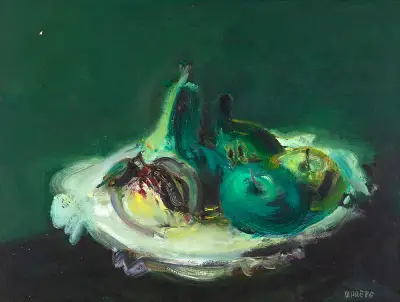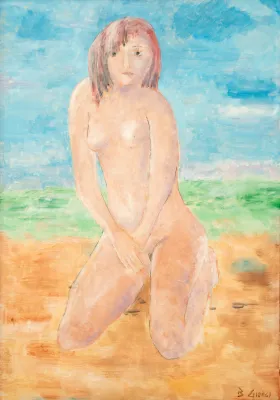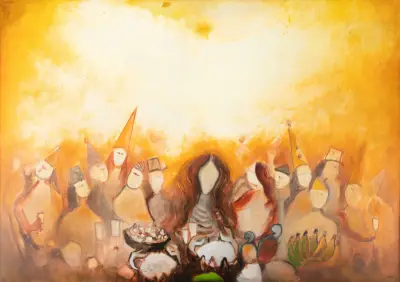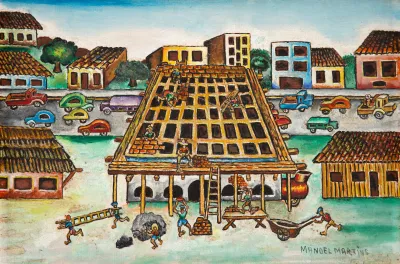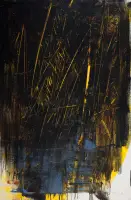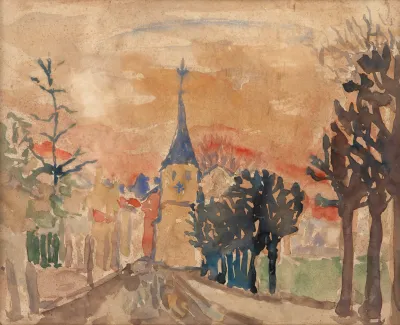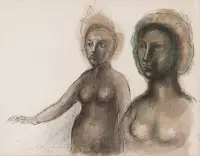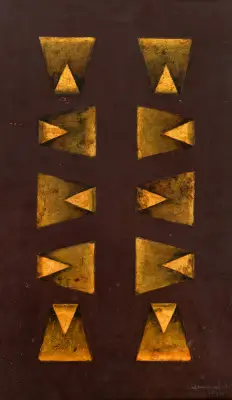
Harry Elsas (Stuttgart, Germany 1925 - Taubaté SP 1994)
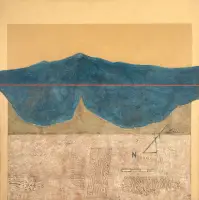
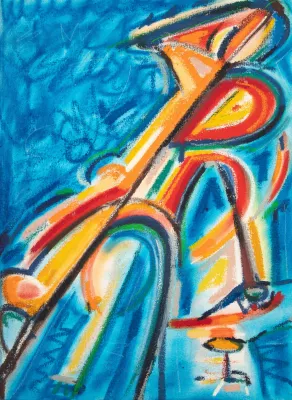
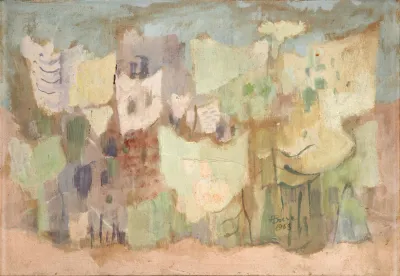
Harry Elsas was a muralist, engraver and painter. He began his artistic career as a self-taught. He lived in Brazil since 1936 and was strongly influenced by the regional culture of the Northeast. In 1945, he received guidance from Lasar Segall and held his first individual show at the Ministry of Education and Culture (MEC), in Rio de Janeiro. From 1970 onwards, he settled in São Paulo, where he executed murals for Banco Safra, in 1971, and for Banco Cidade de São Paulo, in 1976.
Criticism
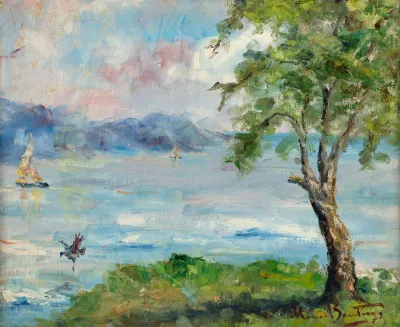
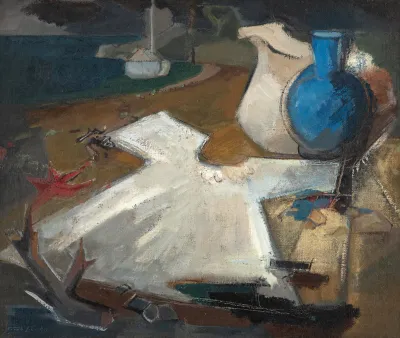
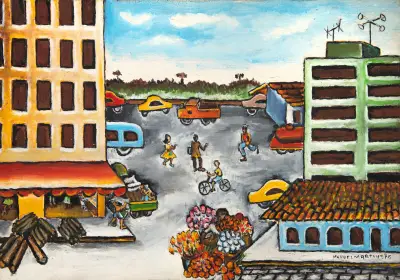
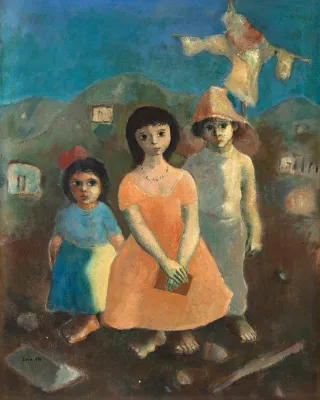
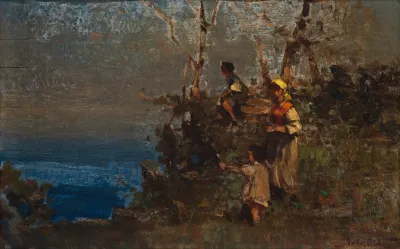
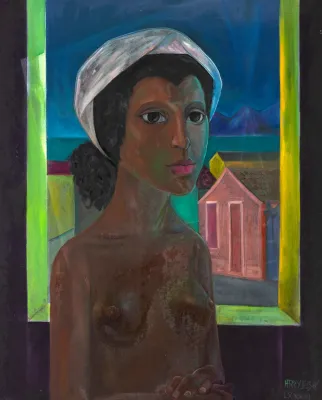
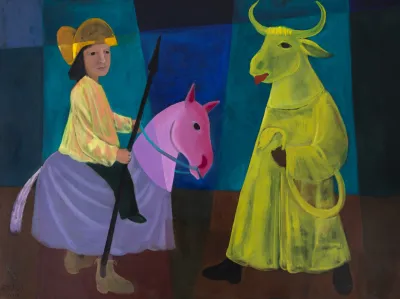
" It is true that there is a language behind the own language of Harry elsas. It is not exhausted in its first visuality. Which is, in fact, one of the essential conditions of Art. This cover-up, the reality within reality, the ability to present the visible world and to make visible the unnoticed world, it is what gives the psychological depth of these images. There are elements that are entirely noticeable. The extraordinary pictorial quality, the luminosity of their colors, the surprising luminosity of these unusual colors, the use of a primitive chromatism, the similarity of primitive Flemish. The hieratic composition of the figures, their exact placement on the screen, the rigor of their marking. This resembles the Renaissance. The drama of its characters, its immersion in misery and injustice, its Decreptitude, all this links your work to expressionism. These are your great qualities and marks of this painting. The primitive Flamengo, the human centrality of the Renaissance, the expressionist tragedy, the cleaning of the design, the luminosity of the colors, the general quality of their doing. And the second mark, the underlying message, the language that hides behind the apparent language, what is behind the first visuality. It is the artist's ability to make his characters and his scenes situations symbols of human tragedy. "
Jacob Klintowitz
Harry Elsas: oils on canvas. Presentation by Jacob Klintowitz. São Paulo: Galeria Grossman, 1982.
"Sua Art always seeks the conciliation of the popular theme with the exquisite way of representing it. This refinement is found in the subtlety of colors and the balance of compositions. Harry Elsas, in her painting, does not escape the grotesque or tragicomic to reveal the daily life of humble beings in their atmosphere of almost distressing. The realism of the images - which associates with an expressionist climate - is always put at the service of migrants, clowns of sad circuses, old men with wrinkled and aggressive faces, deformed by time and misery. (...) His meticulous design builds the relief of the figures, accentuating the details of his unusual ugliness. Elsas seeks to transform the ugly into an expression of moral beauty. Its 'métier' was perfected by the constant study of compositions that geometrize the surfaces and contain the colors, limiting their tonal values. And these lowered colors shine in yellows and reds that light up the canvas. "
Flávio de Aquino
Harry Elsas: oils on canvas. Presentation by Jacob Klintowitz. São Paulo: Galeria Grossman, 1982.
Cervos
Bank Itaú S.A. Collection (São Paulo, SP)
Pinacoteca Collection of the State of São Paulo/Brazil (São Paulo, SP)
Individual exhibitions
1945 - Rio de Janeiro - Individual, at MEC
1955 - São Paulo SP - Individual, at MAM/SP
962 - New York (United States) - Individual, at Columbia Broadcasting System
1964 - Rio de Janeiro RJ - Individual, at Copacabana Palace
1967 - New York (United States) - Individual, at the Chelsea Art Galleries
1967 - São Paulo SP - Harry Elsa, at the gallery Astronomy
1970 - New York (United States) - Individual, at House Gallery
1971 - Chicago (United States) - Individual, at Continental Bank
1972 - São Paulo SP - Individual, Chelsea Art Gallery
1982 - São Paulo SP - Individual, at the Grossman Gallery
1986 - Rio de Janeiro RJ - Harry Elsa, at Copacabana Palace
1993 - São Paulo SP - Harry Elsa, At the Pro Arte Gallery
Postombious exhibitions
2001 - São Paulo SP - Figures and Faces, in the gallery
Source: Itaú Cultural