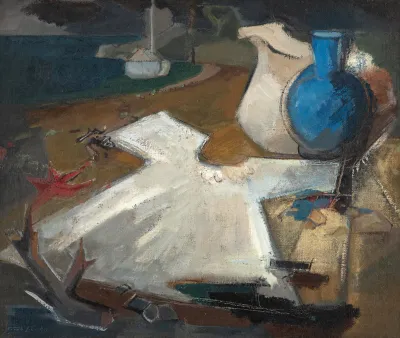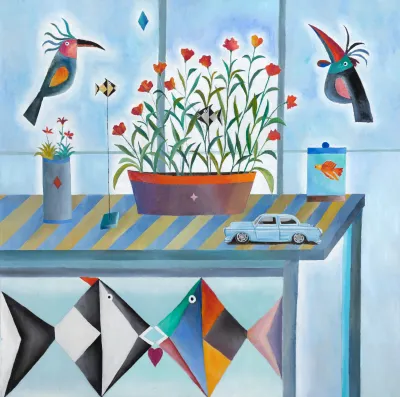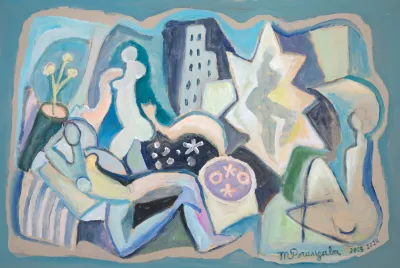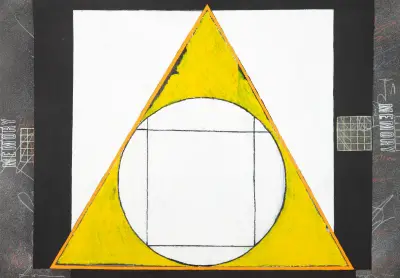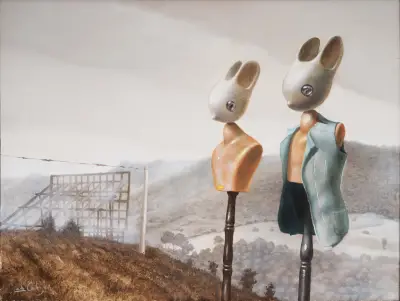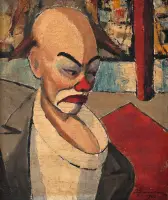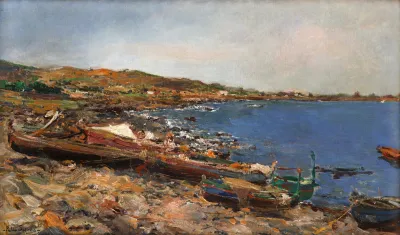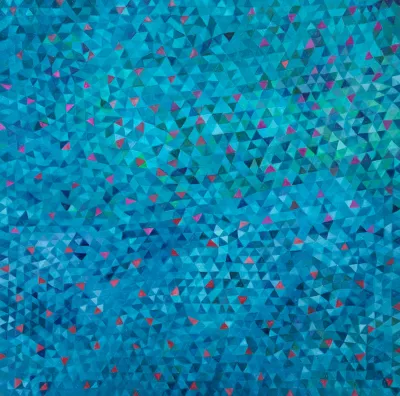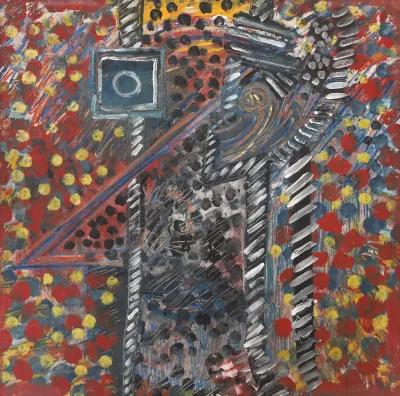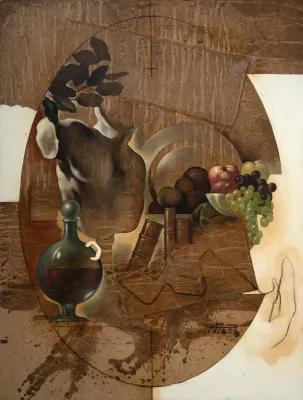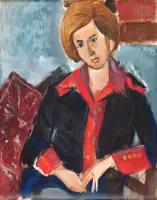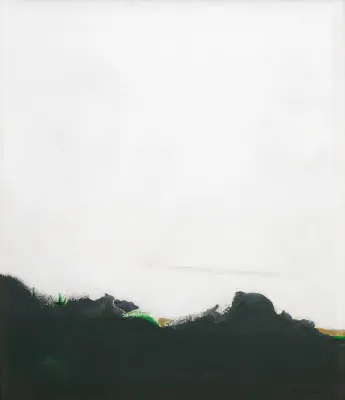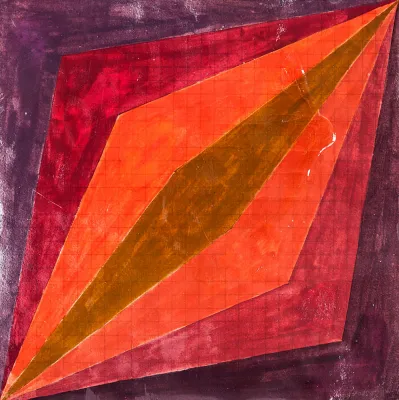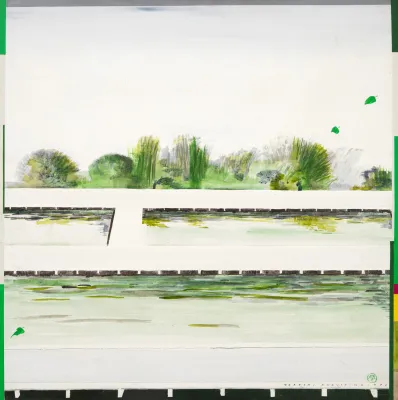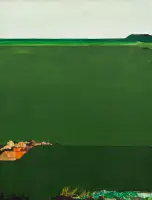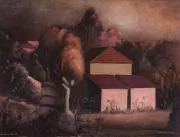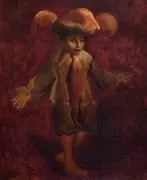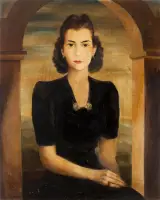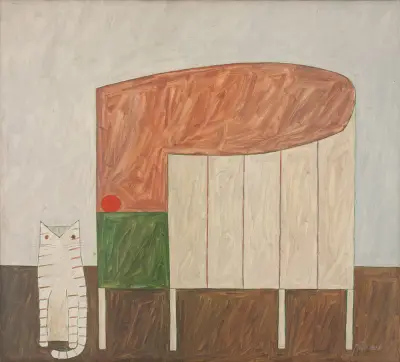
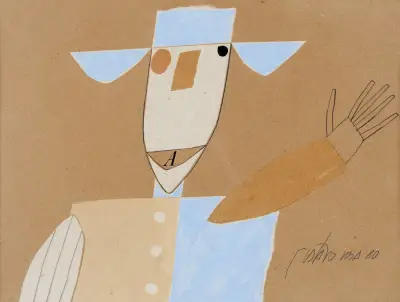

Gustavo Rosa (São Paulo SP 1946 - Idem 2013)
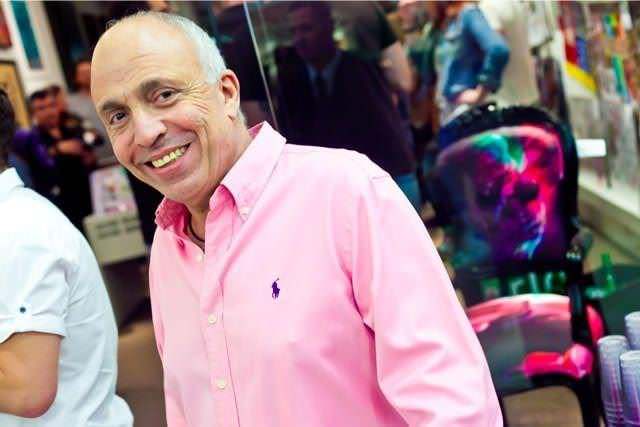
Gustavo Rosa
Gustavo Machado Rosa was a painter, designer, engraver and plastic artist Self-taught, was born on December 20, 1946, in the city of São Paulo, began his experience with painting in childhood, he managed to see the irreverent, the humor, the delicate, the grotesque and the beautiful, transforming them with sensibility. defined, simple, direct and clear. His works are Brazilian and universal, telling the ironic reality and poetically at the same time.
Its plastic universe presents its own semantics. His humor is not prosaic and anecdotal. He employs the substance of the trace, the shape and the color. His images do not need captions mean the artist's attitude towards life, a way of seeing, learning and appreciating human existence. The humor of Gustavo Rosa's painting is a reflection of the artist's freedom to live and create, who believes he is the most powerful imagination that he believes is more powerful than human beings.
In 1966 he had his first experience when he participated in a collective exhibition at FAAP. In 1968, he won the “Golden Medal” (Painting) award and a trip to Europe at the “First Festival of Interclubs” in São Paulo.
"Freedom is very good on the one hand, but bad on the other: at sometimes you get lonely. But at least I did my work, I had a foothold of my own, without copying from anyone. I think that's the essence of my career"
Gustavo Rosa - Jornal O Estado de São Paulo
held his first solo exhibition at the Alberto Bonfiglioli Gallery in 1970, having already won the gold medal in the previous year and the award for travel abroad at the 1st Interclub Art Festival, at Clube Monte Lebanon. In 1974, he studied engraving with the American Rudy Pozzati, at the Museu de Arte Brasileira of the Armando Álvares Penteado Foundation - MAB/FAAP. In 1979 and 1980, he participated in the Brazil-Japan exhibition in Tokyo. He exhibits, in 1979, at the National Salon of Plastic Arts and, in 1980 and 1983, in the panorama of current Brazilian art, at MAM/SP. It carries out external panels, in 1984 on Rua Bela Cintra and in 1987, at Rua Mario Ferraz, for Tereza Gureg. In 1990, he participated in a collective exhibition at the International Museum of 20th Century Arts in Los Angeles, United States. In 1994, he launched a brand with his name in New York. In 1998, he developed the covers of school notebooks of the Tilibra brand. In the same year, he executed a sculpture in honor of Maria Esther Bueno, in Praça California, in São Paulo. In 2000, he assembles the sculpture of a cat, under the Santa Efigênia viaduct.
Gustavo Rosa released the books "Pinting a better world with Gustavo Rosa", "Gustavo Rosa", "Sem Raça, Com Graça" and illustrated "A Best team in the world."
Lived his last 14 years bravely fighting cancer of the pancreas and died on November 12, 2013.
Criticism
" [...] he comes Debugging more and more of his canvases, suppressing all the details not strictly indispensable, thus achieving some of the most interesting portraits and some of the most convincing figures. He greatly reduced his use of color, limiting himself to using isolated spots. A young self-taught artist, and just three years ago decided to dedicate himself to painting. He made surprising progress, always maintaining his principle of seeking to learn and discovering for himself. by graphics and spatiality".
Mário Schenberg
CAVALCANTI, Carlos; Ayala, Walmir, ed. Brazilian Dictionary of Plastic Artists. Presentation by Maria Alice Barroso. Brasília: MEC/INL, 1973-1980. (specialized dictionaries, 5).
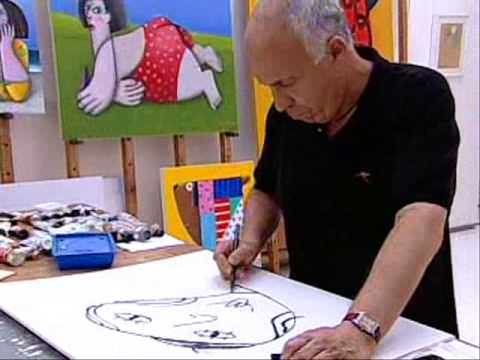
Gustavo Rosa
"Gustavo Rosa is one of the Most prominent figures in the field of Brazilian visual arts, a highlight that he won with his playful, ironic, aggressive and mentally lucid painting. With a simple and pragmatic design he creates his lapidary figures, aggressively cut, impertinently simplified, ironic and playful, products of a humor that jokes all human weaknesses. There is a lot of acute criticism in their mockery, there is a lot of discerning lucidity in their compositions, or rather, presentations. Stupidity of our lives, the ridicule of our loves, passions, customs and tantrums, all of which lead him to create his pictorial world of inexhaustible caricatured humor, but kind to our weaknesses and follies. Its design is exact, cold, mathematical, simple, aggressive and ironic. Emotionality is in the beautiful and pure colorful, although contained and controlled. [...] Next to a Fang, among the figurative painters from São Paulo today, he stands out for his originality, his firm plastic language that does not remind anyone in the choice of his intimate affairs. [...] a beautiful and valuable figure from the current pictorial panorama. a great talent, with the charisma of an acute and very pure and clear spirit."
Theon Spanudis
SPANUDIS, Theon. Gustavo Rosa's ludism. Rosa, Gustavo. Gustavo Rosa: 20 years of painting São Paulo: Galeria Alberto Bonfiglioli, 1985. , Il. Color., Photo B&b.
Testimations
"[...] My concern It was never engagement in trends or artistic movements. I've been drawing since Crainça, since school days. I've always stood out for it, it's part of me. When I got interested in painting, I researched a lot, tested techniques and went to get to know the works of artists in their studios up close, such as that of Volpi, Agenor Barbosa and Carlos Scliar. With the mastery of techniques, I developed a work with its own characteristic, which identifies me. Humor is present in my work, I don't know how to make drama. [...] When requested, I make book covers, postcards, school notebooks, watches, t-shirts or cartoons. I think it's positive that art reaches an increasing number of people who often don't have the habit or means of going to galleries and museums."
Gustavo Rosa
Eid, Denise. Gustavo's irreverent art Rosa. Revista Abigraf, Special Supplement, no. 191, p. 3-4, Dec. Grappa
Gustavo Rosa has already gone through numerous stylistic phases throughout his career as a plastic artist: from more rational and geometric works to more rounded and colorful figures, with a special touch of humor (the style he adopts today for not wanting “To take life so seriously”) Despite receiving fierce criticism from people who consider it very marketable, Gustavo does not give up. In addition to saying that he loves to do corporate works, the artist adds that criticisms help him to evolve, to improve his work. Gustavo Rosa gave an exclusive interview to Editora Grappa, which was published in the 4th edition of the FTM magazine (Flap Tur Magazine), of the tourism agency Flap Tur, made by Grappa itself. Check out the full interview below:
How did your taste for art begin? Is it true that you painted, at the age of two, the wall of your mother's house with charcoal?
Is it true. I took a charcoal from the fireplace and drew it all over the house. That was my first work of art. And then it started. I'm self-taught, I've never had a teacher, I've never had any artist in the family. I believe in vocation. It's a natural gift, it came with me.
The fact that you don't have anyone to recommend you at the beginning of your career made it difficult for you to access the field of the arts?
I'm in favor of the fight. I think the difficulty, the fact that you have to go get something, is very healthy.
Because if I hadn't gone through all the difficulties I went through, I might not have gotten where I am, maybe I wouldn't have appreciated it.
A curiosity: why people and animals portrayed in his works have an eye of each color?
This I started to do, I don't even know why! It started in the 70s, in an exhibition I had in Rio de Janeiro.
Actually, I wanted to mess with the figure. In the same way that I gained weight, I also took advantage of the cubism and the geometrization of the drawings
to put the figures in a funny way. The eye was one of the details (make one red eye and the other black). And that has become a constant. Then came a criticism saying that these two eyes had the principle of Yin Yang, contrasting life and death, which we carry. Red, then, would be life and black, death. Instinctively I did that.
And it ended up becoming my brand.
Everyone says that his works have a content of criticism and humor at the same time. Why use criticism and humor?
Theon Spanuds (which for me was one of the biggest critics in Brazil) said that my works had a humorous criticism, not in the pejorative sense, but in the constructive sense. Humor is part of my life as colorful. When I was a kid, there was a candy house that I loved, and I always chose the most colorful candy, not the tastiest one. I always embraced the colors; They play a very important role.
Ziraldo once commented to you that only those who have gone through great suffering can understand and make a good mood. past?
I think so. After her death in 1978, I started to have a more staunch mood. Until then, I was developing a very intellectual, more cerebral work, geometrizing the figures. But after my sister's death, I saw that life cannot be taken so seriously. So, I started to round the figures, playing with colors, with humor.
My works were more stripped, lighter, more colorful.
Your work is quite diverse, and maybe even because of that, you get many criticisms. In your opinion, why does this happen?
I joke and say that I was successful without “asking a license” for the market. Because the field of the arts is a very big mafia, and you are forced to follow trends. One who is not following the trend of the moment is considered an outsider, is kept out of the schedule. And as I've always done what I wanted to do, regardless of the market or the will of others, it may have irritated this intellectual layer. I have a severe criticism of myself, with my work. But I do what gives me pleasure, that comes from within. My painting is from the inside out, and not from the outside in, unlike what normally happens today, where artists follow the market trend to be engaged in programming. Nowadays, the figure of the art critic unfortunately left the scene and gave way to the figure of the curator. Critics such as Angélica de Moraes, Jacob Klintowitz and Olívio Tavares de Araújo, who used to have their columns stamped in the main newspapers, lost space for the curator, who only thinks about the marketing issue of art. Critics, who are intellectual, educated and understood people, were replaced by uncultured curators, who manufacture artists with the sole purpose of making money. These “pseudoartists” shaped by the curators produce works of art that are no longer visual, but intellectuals. The current work is no longer complete by itself: it comes with an explanatory booklet, with a CD or complementary book, and that for me is not art. So, I think the figure of the art critic is very important for the artist's evolution. I've evolved a lot with the criticism I've received, and that's fundamental.
So the criticism doesn't bother you?
No way. On the contrary… the criticisms were once worse, and nowadays they are more pleasant. After you overcome barriers, enemies begin to respect you. I think the biggest and best criticism comes from my audience, not from the experts.
Where does the inspiration for your works come from?
I don't believe in inspiration, I believe in work. Picasso had a very nice phrase about it: “If there is inspiration, she will find me working”. Inspiration is a romantic word. It's work that meets your expectations.
Is there anything else that helps you focus? Listening to music, for example?
No, I paint without music. It's a natural thing. I, for example, love the city. So I wouldn't be able to paint on an isolated island, on a farm. I need this hustle and bustle of the city. And I also only paint during the day, only with natural light, I don't paint at night. Even because the night bores me. I think it serves to drink wine and chat outside.
Do you believe that the city of São Paulo at some point influenced your work?
No. Of course you are influenced by the environment in which you live, but I think the handwriting main you bring in your genetics. I believe that the person is born with a potential, which can be developed or not throughout life. For me, the artist has to be innate, to be born with the gift. Today, many artists are made. The painter no longer needs to know how to draw and paint, just know how to manipulate a computer well.
And what do you think of the new generation of illustrators and designers who do artistic work on the computer?
In fact, the computer is very important and came to help. But I don't know what the future will be like from now on. There is an anti-tissimo Chinese saying that says: "While the hand works, the heart rests". And today there is no longer this manual work. When I was a child, I really liked to make a balloon, kites, with colorful composition, working with my hands. That is no longer done today. I think in the future, people's creativity will be more limited because of the computer.
What about social media? Don't you think about promoting your work through them?
Gustavo Rosa - No, I'm far from it, because I think it's a cold thing. I'm more emotional. Computer for me is still a very distant, very cold thing. But of course I have people who help me with this. After all, for me it's like changing a tire: why am I going to get my hands dirty if there's someone to do it for me?
What makes a work or an artist immortal? Volpi, for example, traveled a whole path in his career, reaching the concretism of the little flags, which I think is beautiful. But there was a beginning, a middle and an end. Other painters, however, took advantage of a moment, reproduced a trend and earned at a certain time, but the work did not resist time.
What motivated him to let go of all the stability in the public career and go to The world of the arts?
In art I saw freedom. And I love freedom. Even if in advertising I could exercise my gift, there is a limitation. How many times have I done a wonderful layout and the customer didn't like it? I even think that one of the reasons I didn't get married is not to have a woman on my feet, to have a certain freedom anyway.
But you still use advertising for some of your corporate works. After all, you have already developed work for Ambev, Globo, Rede Pão de Açúcar…
This corporatism is inherent to me. I really like to do corporate works. Today I am very popular with companies, but I have full freedom too. I did an entire campaign for Visa for four years, and I'm the one who took the lead and said how it would be.
Designer Cris Porto has already made a collection of jewelry based on her paintings. In addition, his works had already been reproduced on t-shirts and robes in New York. What is it like to transcend the screen and brush barrier?
It's just that I've always struggled to do what I wanted. Because if I were obedient and followed what the criticism said, I would never have done my brand at Bloomingdale's, I wouldn't have done all these corporate jobs. When I did, I was criticized. Not nowadays, now, every artist tries to do that. In addition to publicizing the work, it gives a very good recipe.
When did you realize that your name had become a brand?
I think it was in New York, when I made my brand there, in 1994. I went a lot more recognized there than here in Brazil. Unfortunately, although I love my country of origin, Brazil has a flaw: it can't stand the success of others, as Tom Jobim used to say. Being successful in Brazil is a personal offense. There in the United States I have exposed works in several places; People wore t-shirts printed on my work. Here people said I was selling myself, that I was commercial.
Do you like to travel? Which place you visited and liked the most?
As incredible as it may seem, I hate traveling. I travel more here inside my space, in my head, than physically. I hate packing my bags, taking a plane, being at the airport. I always think I'm going to lose my bags, that I won't be able to get on the flight. It makes you nervous. As for the places I visited, I really liked Hamburg, Germany. I was very well received there. I also loved a city in the United States called Carmel, south of San Francisco. It looks like a doll city, it's a very romantic place.
In 2009, you participated in the project “Painted the Respect Syndrome”, developing works with people with Down Syndrome. How did you go to work with this audience?
I always say it was a very big learning experience, it was very healthy. I learned more from them than they did with me, because the exceptional ones are very authentic. Sometimes I would help them paint and they wouldn't let them, they imposed themselves. I ended up taking advantage of this work and carried out a special series of works made by them, but with my interventions, which were exposed in the sculpture museum. And I don't want to sell these paintings.
Do you have any mania, or superstition?
In the year 2003, a numerologist friend of mine said that the signature of my paintings should change. That I couldn't cut Gustavo's "T", because that would always mean a cross in my life. So I followed her tip and modified the signature. I certainly saw a lot of improvements in my life from there.
and religion to you, does anything mean?
No, I abhor religion. I believe in a greater force, but not in religion. She has even messed up the art. The Church forbade certain artists to develop their work because it was something sinful, contrary to their will. It prevents the development of society and science.
Is the moment of your illness being more of struggle and hope, or more of reflection on introspection?
a little of both. It's a beating you get, without a doubt. You stop a little to think about, ask yourself. I think that all the emotional burden of suffering elevates spirituality. After I had this problem, my work became stronger, more colorful and more cheerful, as it was when my sister died. It's a compensatory attitude. I paint what I still would like to live. Because I don't know how to make drama, I only know how to do comedy. When I received the diagnosis, instead of dramatizing and thinking that the world ended, my attitude was to paint even more, and with more joy and lucidity.
What was the first thing you thought about when you left the hospital?
Gosh, as life is Fragile… You're here today, but tomorrow may not be anymore. I end up questioning death a lot. I'm not afraid of her, I'm afraid of suffering. After all, when I had the recurrence, I was sleeping sitting for three months, and that was a very big physical suffering. Then, when I operated on the injured spine disc, I was able to sleep lying down, and it was an immense joy. And that's where you the little things give happiness. Suffering comes to teach you to value certain things that you, when you are, don't value it. You find in the simplest things to rejoice, to be happy.
And even though you have already done everything, do you have plans for the future?
No. I believe a lot in the magic of things. As I have already said, I love freedom, and freedom for me is the unknown. If I know that in December I will have to make an exhibition with 15 paintings, and that I will have to paint a certain theme, the whole fantasy is over. The cool thing is not knowing what will happen tomorrow. I hate to do programming.
Individual exhibitions
1970 - São Paulo SP - Individual, at Galeria Alberto Bonfiglioli
1971 - São Paulo SP - Individual, at the Terry della Estufa Gallery
1973 - São Paulo SP - Individual, at Espde - Art Gallery
1975 - Rio de Janeiro RJ - Individual, at the Ipanema Art Gallery
1977 - Rio de Janeiro RJ - Individual, at the Art Gallery Ipanema
1978 - São Paulo SP - Individual, at Galeria Grife
1979 - São Paulo SP - Individual, at Galeria Documenta
1979 - Santos SP - Individual, at the Galeria do Centro Cultural Brasil-Estados
1980 - Porto Alegre RS - Individual, at Galeria Salamandra
1981 - São Paulo SP - Individual, at Paulo Prado Art Gallery
1981 - São Paulo SP - Individual, at Studio José Duarte Aguiar
1983 - New York (United States) - Individual, at Kouros Gallery
1983 - São Paulo SP - Individual, at Paulo Prado Art Gallery
1983 - Guarujá SP - Individual, at the Jequitimar Hotel
1986 - Ribeirão Preto SP - Individual, at Galeria Jardim Contemporânea
1987 - Jundiaí SP - Individual, at the Jundiaí Cultural Historical Museum
1987 - Rio de Janeiro RJ - Individual, at the Toulouse Gallery
1988 - São Paulo SP - Individual, at the Documenta Gallery
1989 - Los Angeles (United States) - Individual, at Gordon Gallery
1991 - São Paulo SP - Gustavo Rosa: independent work, at Artevital
1991 - Hamburg (Germany) - Individual, at Hamburg Sud Cultural Space
1992 - Miami (United States) - Individual, at the Collection Gallery
1992 - Berlin (Germany) - Individual, at the Cultural Space of the Palast Hotel
1994 - United States - Gustavo Rosa, at the South Egremont
1994 - Barcelona (Spain) - Gustavo Rosa, at the Picasso Museum
1998 - São Paulo SP - Individual, at the atrium of Hospital Albert Einstein
1998 - São Paulo SP - Gustavo Rosa, at Amcham Art Gallery
1999 - São Paulo SP - Gustavo's Luddism Rosa, at Espaço Cultural Banespa-Paulista
Collective exhibitions
1969 - São Paulo SP - First Interclub Arts Festival, at Clube Monte Líbano - Gold Medal - Travel Award abroad
1979 - Rio de Janeiro RJ - 2nd National Salon of Plastic Arts
1979 - Tokyo (Japan) - 4th Brazil-Japan Exhibition, at the Tokyo Museum of Fine Arts
1980 - Penápolis SP - 4th Northwest Plastic Arts Hall, at the Penápolis Educational Foundation. Faculty of Philosophy, Sciences and Letters of Penápolis - Guest Artist
1980 - São Paulo SP - 12th Panorama of Current Brazilian Art, at MAM/SP - Guest Artist
1980 - São Paulo SP - 5th Salon of Visual Arts of Clube Alto de Pinheiros - Gold Medal
1980 - Tokyo (Japan) - 5th Brazil-Japan Exhibition, at the Tokyo Museum of Fine Arts
1981 - Piracicaba SP - 14th Salon of Contemporary Art of Piracicaba, at Casa das Artes Flásicas "Miguel Dutra"
1981 - Ribeirão Preto SP - 4th Salon of Plastic Arts - Acquisition Award
1981 - Ribeirão Preto SP - 6th Salon of Art of Ribeirão Preto, at the Casa da Cultura de Ribeirão Preto
1981 - Rio de Janeiro RJ - 4th National Salon of Plastic Arts, at MAM/RJ
1981 - São Paulo SP - 2nd Salão Paulista de Artes Plásticas and Visuals, at Paço das Artes
1981 - São Paulo SP - 6th Art at Centro Campestre, at Centro Campestre Sesc Brasílio Machado Neto
1982 - Penápolis SP - 5th Northwest Plastic Arts Hall, at the Foundation Educational of Penapolis. Faculty of Philosophy, Sciences and Letters of Penápolis - Guest Artist
1983 - São Paulo SP - 14th Panorama of Current Brazilian Art, at MAM/SP - Guest Artist
1983 - São Paulo SP - Avenida Paulista, at Galeria Sesc Paulista
1984 - Curitiba PR - Simões de Assis Art Gallery: Inaugural Exhibition, at Simões de Assis Galeria de Arte
1985 - Penápolis SP - 6th Northwest Plastic Arts Salon, at Fundação Educacional de Penapolis. Faculty of Philosophy, Sciences and Letters of Penápolis
1985 - São Paulo SP - Retrospective 20 years of painting, at Galeria Alberto Bonfiglioli
1986 - Lisbon (Portugal) - Lisbon International Fair
1987 - Los Angeles (United States) - 3rd Art Exhibition (Art Expo), at the Los Angeles Convention Center
1987 - São Paulo SP - 20th Contemporary Art Exhibition, at Chapel Art Show
1987 - São Paulo SP - The plot of taste: another look at everyday life, at the Fundação Bienal
1990 - Los Angeles (United States) - Painting collective, at the International Museum of 20th Century Arts
1992 - Rio de Janeiro RJ - Eco Art, at MAM/RJ
1995 - Osasco SP - 2nd Art Exhibition, at Centro Universitário FIEO
1996 - Penápolis SP - Brazilian contemporary art in the collection of Funarpe, in Itaugaleria
1996 - São Paulo SP - 1st OFF Bienal, at MUBE
1996 - São Paulo SP - Exhibition of the collection, at Sudameris Galeria
1998 - Brasília DF - Cien recuerdos for Garcia Lorca, at the 508 Sul Cultural Space - Renato Russo
1998 - São Paulo SP - Contemporary Brazilian Art: Winter 98, at the American Express Off Gallery
1998 - São Paulo SP - Arte, at the André Art Gallery
1998 - São Paulo SP - Impressions: the art of Brazilian engraving, at the Banespa-Paulista Cultural Space
1999 - São Paulo SP - The female figure in the MAB collection, MAB/FAAP
2000 - São Paulo SP - The female figure in the MAB collection, at MAB/FAAP
2000 - São Paulo SP - Coletiva Sociarte, at Clube Atlético Monte Líbano. Cultural Space
2002 - São Paulo SP - 8 contemporary Brazilian artists, at Casa das Rosas
2003 - Rio de Janeiro RJ - Brazilianart project, at Almacén Art Gallery
2004 - São Paulo SP - 450 x 45, at Nova André Galeria
2004 - São Paulo SP - 22nd Exhibition of Contemporary Artists, at Esporte Clube Sírio
2005 - São Paulo SP - Small large works, at Cultural Blue Life
2006 - São Paulo SP - 2nd Golf in Art, at Cultural Blue Life
2006 - São Paulo SP - 2nd Off Bienal, at Mube
Source: Itaú Cultural, Espaço Arte and UOL