Georgina de Albuquerque (Taubaté SP 1885 - Rio de Janeiro RJ 1962)
Georgina de Albuquerque was a painter, designer and Brazilian teacher. At the age of 15, he began his artistic training with the Italian painter Rosalbino Santoro (1858 - s.d.). In 1904, he moved to Rio de Janeiro, where he enrolled at the National School of Fine Arts (ENBA) and studied with Henrique Bernardelli (1858 - 1936). In 1906, he married the painter Lucilio de Albuquerque (1877 - 1939) and traveled to France. In Paris, he attended the École Nationale Supérieure des Beaux-Arts and the Académie Julian, where he was a student of Henri Royer. He returned to Brazil in 1911, exhibited in São Paulo and, from that date onwards, began to participate regularly in the General Exhibition of Fine Arts. From 1927 to 1948, he taught artistic design at ENBA and, in 1935, became a professor of the Decorative Arts course at the Institute of Arts of the University of the Federal District. In 1940, he founded the Lucílio de Albuquerque Museum in his home in the Laranjeiras neighborhood, in Rio de Janeiro, and created a pioneering course in drawing and painting for children. Between 1952 and 1954, he held the position of director of ENBA.
Critical Comment
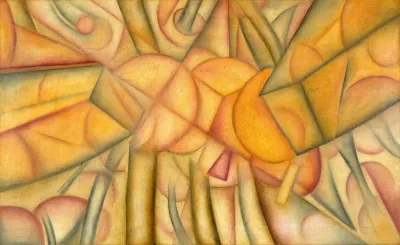
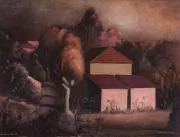
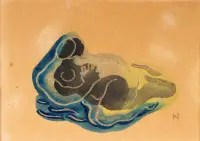
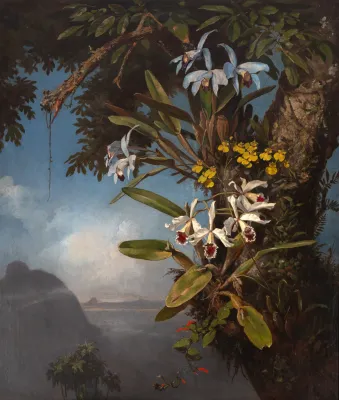
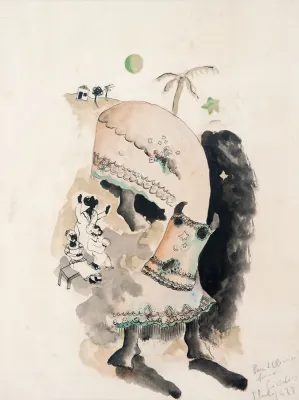
Georgina de Albuquerque is one of the main Brazilian women to be able to establish himself as an artist at the beginning of the 20th century. In her paintings, the artist has Impressionism and its derivations as a parameter. They feature a palette of luminous colors, used with sensitivity. The most constant themes of Albuquerque are the nude, the portrait and the landscape. In Sunbeam, s.d. or Summer Day, ca.1920, with wide brushstrokes, it explores luminous incidences and chromatic vibration. From 1920 onwards, he began to work with a more sober palette and to perform paintings with themes from popular life, such as two roceiras, s.d. or in the coffee plantation, ca.1930, among others.
Criticism
"(...) D. Georgina is a painter of light colors, drawing security and good making technique. presents us as a painter of greater inspiration, but less happy in the technique. (...) On the other hand, he lacks this very inner inspiration and, in the research of sun effects, has given the carnation of some of his female nudes an evidently false color, of milk, rose and gelatin. Frames of this genre give the impression that a light placed behind the main figure would fill the foreground of the screen with reflections. Forgive us, D. Georgina. But we would like to see it worry less about the effects of light on feminine forms and employ their magnificent talent in Compositions of more responsibility, which do not constitute variations of the eternal theme of the lying, chaste and naive girl, must confess that her talent can produce much more. Exuberant of talent, capable of much doing for the Brazilian arts. He has sensitivity, warmth and vocation, and he throws himself to solve the difficulties of his art with the enthusiasm of belief. Whoever trusts in his forces so much can do for the arts."
Angyone Costa
Costa, Angyone. The restlessness of bees. Rio de Janeiro: Pimenta de Mello & Cia. , 1927, p. 18.
"(...) His art is a constant renewal of ways, motifs and colorful ones (...) Regarding subjects, it cannot be said that there is a remarkable preference. The landscape, the figure, the still life, the navy, the portrait and the compositions are approached by it with enthusiasm, showing in all the most varied facets of her talent".
Regina Liberalli Laemmert
Pontual, Roberto. Dictionary of Visual Arts in Brazil. Rio de Janeiro: Brazilian Civilization, 1969.
Testimonies
"(...) the impressions of the Brazilian landscape. Brazilian Lidima, born in the interior of the former province of São Paulo, I had my childhood surrounded by the picturesque scenes of the Brazilian life of the time. I still found the ferocity of the São Paulo land, in my municipality, almost virgin. Neither the railways nor the highways that cut through it today existed. These elements, components of the landscape, did not impress my early childhood. On the other hand, the sun was the same, the joy of the Moça and Florida land was the same, the simple and peasant living of the people was perhaps, certainly, more sincere, more exact, more ours. Even at home, without leaving my Taubaté, a very small girl, I was already rehearsing my risks. Gizava, she drew toneless drawings, made figures. My mother, who was a very intelligent and very lucid spirit, soon understood my penchant for painting and, as the circumstances allowed, everything facilitated her development and perfection. It was still a belief when it appeared there, looking in the affectionate bosom of the land Moça Refúgio to think that balanced its health, an Italian painter, Rosalino Santoro. I keep a kind impression of this first pioneer of my pictorial tendency. (...) My mother began to ask her for the lessons she wanted to provide me with. Santoro resisted. But, due to his own illness, Santoro needed a family environment and it was in our house that he spent better hours, receiving the treatment, respectful and affectionate, which is traditional in the Brazilian family. (...) Santoro, when he realized, was my master, the first I had in painting. Later, I attended an exhibition by Parreiras, in São Paulo. I felt a wonder and it was no longer possible for me to stop coming to Rio, where the School of Fine Arts fascinated me. I came. I did the first year. I was a student of Henrique Bernardelli. I met Lucilio (...) we got married. We left poorly, only with the luggage of two students, to Europe, where I lived five years. In Paris my main masters were Gervais, at the École des Beaux-Arts, and Royer, in the Julien course. Then I worked on my own. I attended museums and tried to paint, paint a lot, at all hours, at all times of the day. Not even when my two children, Dante and Flamingo, were small, I left a single day to work. It's what I always do, constantly, at all times".
Georgina de Albuquerque
Costa, Angyone. The restlessness of bees. Rio de Janeiro : Pimenta de Mello & cia. , 1927, p. 90-91.
Individual exhibitions
1914 - São Paulo SP - Individual
1914 - Rio de Janeiro RJ - Individual
Collective exhibitions
1903 - Rio de Janeiro RJ - 10th General Exhibition of Fine Arts, at ENBA
1905 - Rio de Janeiro RJ - 12th General Exhibition of Fine Arts, NA ENBA
1906 - Rio de Janeiro RJ - 13th General Exhibition of Fine Arts, at Enba
1907 - Rio de Janeiro RJ - 14th General Exhibition of Fine Arts, at Enba
1909 - Rio de Janeiro RJ - 14th General Exhibition of Fine Arts January RJ - 16th General Exhibition of Fine Arts, at ENBA - 1st Degree Mention
1911 - São Paulo SP - First Brazilian Exhibition of Fine Arts, at the Liceu de Artes e Ofícios
1912 - Rio de Janeiro RJ - 19th General Exhibition of Fine Arts, NA ENBA - Small Silver Medal
1912 - São Paulo SP - Second Brazilian Exhibition of Fine Arts, at the Liceu de Artes e Ofícios
1913 - Rio de Janeiro RJ - 20th General Exhibition of Fine Arts, at ENBA
1914 - Rio de Janeiro RJ - 21st General Exhibition of Fine Arts, at ENBA
1915 - Rio de Janeiro RJ - 22nd General Exhibition of Fine Arts, at Enba
1916 - Rio de Janeiro RJ - 23rd General Exhibition of Fine Arts, at ENBA - Great Silver Medal
1917 - Rio de Janeiro RJ - 24th General Exhibition of Fine Arts, at Enba
1918 - Rio de Janeiro RJ - 24th General Exhibition of Fine Arts Janeiro RJ - 25th General Exhibition of Fine Arts, at ENBA
1919 - Rio de Janeiro RJ - 26th General Exhibition of Fine Arts, at ENBA - Gold Medal
1920 - Rio de Janeiro RJ - 27th Exhibition General of Fine Arts, at Enba
1921 - Rio de Janeiro RJ - 28th General Exhibition of Fine Arts, at ENBA
1922 - Rio de Janeiro RJ - 29th General Exhibition of Fine Arts, at Enba
1923 - Rio de Janeiro RJ - 30th General Exhibition of Fine Arts, at Enba
1924 - New York (United States) - National Association of Women Painters and Sculptures
1924 - Rio January RJ - 31st General Exhibition of Fine Arts, at Enba
1925 - Los Angeles (United States) - First Pan-American Exhibition of Oil Painting
1925 - Rio de Janeiro RJ - 32nd General Exhibition of Fine Arts, at ENBA
1926 - Austin (United States) - Art Department State Fair of Texas
1926 - Rio de Janeiro RJ - 33rd General Exhibition of Fine Arts, at Enba
1927 - Rio de Janeiro RJ - 34th General Exhibition of Fine Arts, at ENBA
1928 - Rio de Janeiro RJ - 35th General Exhibition of Fine Arts, at Enba
1928 - São Paulo SP - Grupo Almeida Júnior, at Palácio das Arcadas
1929 - Rio de Janeiro RJ - 36th General Exhibition of Fine Arts, at Enba
1930 - New York (United States) - The First Representative Collection of Paintings by Brazilian Artists, at the International Art Center, Nicholas Roerich Museum
1930 - Rio de Janeiro RJ - 37th General Exhibition of Fine Arts, at Enba
1933 - Rio de Janeiro RJ - 40th General Exhibition of Fine Arts, at ENBA
1934 - São Paulo SP - 1st São Paulo Fine Arts Hall
1937 - São Paulo SP - 5th Paulista Salão de Belas Artes
1940 - São Paulo SP - Retrospective Exhibition: Works of the Great Masters of Painting and His Disciples
1940 - São Paulo SP - 7th São Paulo Salon of Fine Arts, at the Almeida Júnior Art Salon of the Municipality of São Paulo
1941 - São Paulo SP - 13th Salão Paulista of Fine Arts - Silver Medal and 1st Fernando Costa Prize
1942 - São Paulo SP - 8th Paulista Salon of Fine Arts, at Galeria Prestes Maia
1943 - São Paulo SP - 9th São Paulo Salon of Fine Arts, at the Prestes Gallery Maia
1944 - Rio de Janeiro RJ - 1st Exhibition of Self-Portraits, at MNBA
1944 - Rio de Janeiro RJ - 50th National Salon of Fine Arts, at MNBA
1944 - São Paulo SP - 10th São Paulo Salon of Fine Arts, at the Prestes Maia Gallery
1945 - São Paulo SP - 11th São Paulo Salon of Fine Arts, at the Prestes Maia Gallery
1947 - São Paulo SP - 13th São Paulo Salão de Belas Artes Fine Arts, at the Prestes Maia Gallery
1948 - São Paulo SP - 14th Paulista Salon of Fine Arts, at the Prestes Maia Gallery
1949 - São Paulo SP - 15th São Paulo Salon of Fine Arts, at the Prestes Maia Gallery - Gold Medal and 1st Governor of the State Award
1950 - Rio de Janeiro RJ - A Century of Brazilian Painting: 1850 - 1950, at MNBA
1951 - São Paulo SP - 16th Salão Paulista de Belas Arts, at the Prestes Maia Gallery
1953 - São Paulo SP - 18th Salão Paulista de Belas Artes, at Galeria Prestes Maia
1954 - Goiânia GO - Exhibition of the National Congress of Intellectuals
1956 - Rio de Janeiro RJ - 1st Railway Salon
1957 - Rio de Janeiro RJ - O Nu na Arte, at MNBA
1958 - Rio de Janeiro RJ - Mother and Child Art Salon
1960 - São Paulo SP - Contribution of women to the fine arts in the country, at MAM/SP
Posthumous exhibitions
1977 - Rio de Janeiro RJ - Exhibition Lucilio and Georgina de Albuquerque (in commemoration of the centenary of the birth of Lucílio de Albuquerque), at MNBA
1980 - São Paulo SP - The Brazilian landscape: 1650-1976, at Paço das Artes
1981 - Rio de Janeiro RJ - Carnival universe: images and reflections, at the Art Gallery Collection
1984 - São Paulo SP - Tradition and Rupture: Synthesis of Brazilian Art and Culture, at Fundação Bienal
1985 - Rio de Janeiro RJ - 8th National Salon of Plastic Arts, at MAM/RJ
1985 - São Paulo SP - 100 Obras Itaú, at Masp
1986 - São Paulo SP - Nineteenth: a turn in the century, at the Pinacoteca do Estado
1988 - São Paulo SP - Brasiliana: Man and the Earth, at the Pinacoteca do Estado
1989 - Fortaleza CE - Brazilian art of the 19th and 20th centuries in the collections of Ceará: paintings and drawings, in the cultural space of Unifor
1994 - São Paulo SP - Bienal Brasil Século XX, at Fundação Bienal
1998 - São Paulo SP - São Paulo iconography in private collections, at the Museu da Casa Brasileira
2000 - Porto Alegre RS - From Frans Post to Eliseu Visconti: Collection National Museum of Belas Artes-RJ, at Margs
2000 - São Paulo SP - The human figure in the Itaú collection, at Itaú Cultural
2000 - São Paulo SP - O Café, at Banco Real
2001 - Rio de Janeiro RJ - Watercolor Brazilian, at the Light Cultural Center
2002 - Brasília DF - Barão do Rio Branco: her work and her time, at the Ministry of Foreign Affairs. Palácio do Itamaraty
2002 - São Paulo SP - Image and identity: a look at the history in the collection of the Museum of Fine Arts, at the Banco Santos Cultural Institute
2004 - São Paulo SP - Women painters, at the Pinacoteca do Estado
2004 - São Paulo SP - The price of seduction: from corset to silicone, at Itaú Cultural
Source: Itaú Cultural