
Emeric Marcier (Cluj, Romania 1916 - Paris, France 1990)
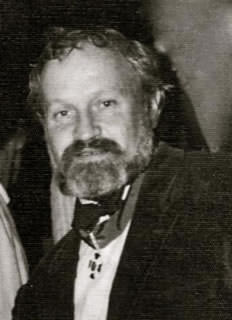
Emeric Marcier
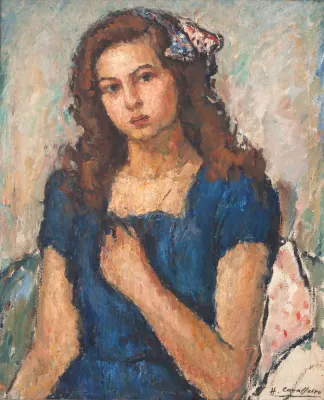
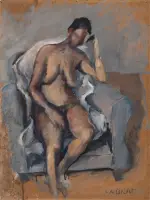
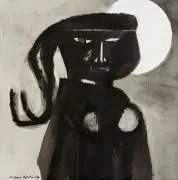
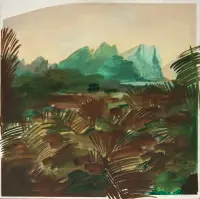
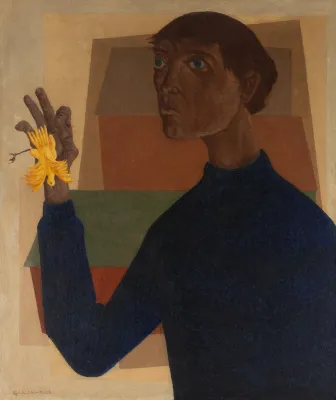
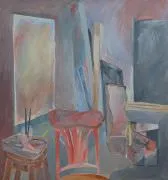
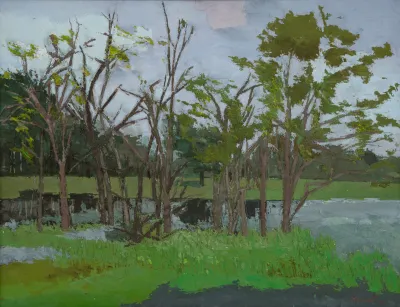
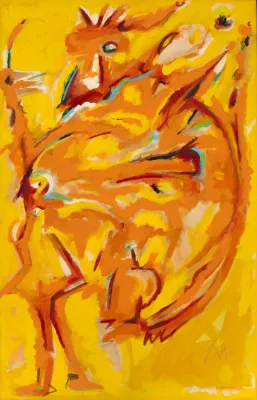
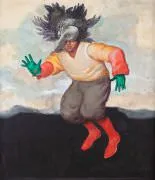
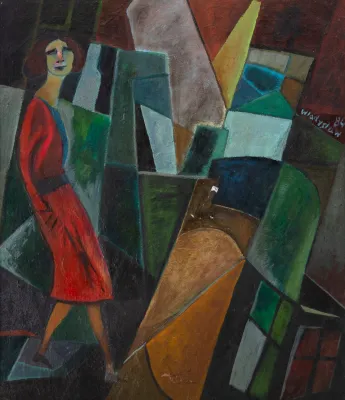
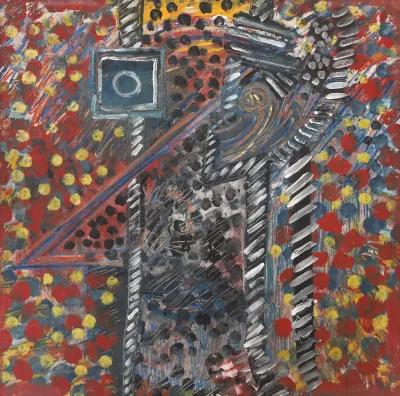
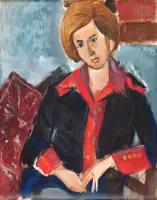
Emeric Marcier was one of the most important Brazilian modern painters, recognized for his landscapes, portraits and works of religious theme. He also stood out for the execution of large murals, especially in fresco, consolidating an artistic trajectory marked by sensitivity, technical mastery and deep connection with Brazilian culture.
At 20, he left Romania to study at the Academy of Fine Arts in Brera, In Milan, where he completed his training with the defense of a thesis on Pablo Picasso. In early 1939, with the rise of fascism in Italy, Marcier, Jewish of origin, moved to Paris. He installed his studio at Cité Falguière, a space previously occupied by his friend Victor Brauner, and deepened his surrealist production. During this period, he lived with important artists of the movement, including Victor Brauner, Jacques Herold, Arpad Szenes and Maria Helena Vieira da Silva. In Paris, he also attended the sculpture course at the École Nationale Supérieure des Beaux-Arts.
With the advance of the Second World War in France, he moved to Lisbon at the end of 1939, where he was welcomed by Arpad Szenes and Maria Helena Vieira da Silva. In the Portuguese capital, he worked in the studio of the surrealist painter António da Costa and was part of the circle of writers and intellectuals linked to the magazine Presença, one of the most important publications of the Portuguese intelligentsia of the time. insecurity in Europe, immigrated to Brazil. He arrived in Rio de Janeiro with cover letters intended for Mário de Andrade, José Lins do Rego and Candido Portinari. Through José Lins do Rego, he approached names such as Murilo Mendes, Lúcio Cardoso and Jorge de Lima, friendships he would keep for life. That year, he held his first solo exhibition at the traditional Hall of the Palace Hotel, occupying a spot left by Guignard. The show received an excellent welcome from critics, which highlighted the talent of the young European surrealist artist. In 1942, he held an important exhibition at the National Museum of Fine Arts.
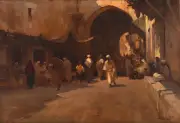
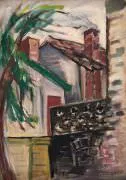
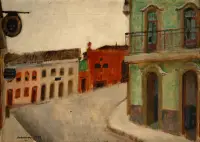
Also in 1942, he was invited by the magazine O Cruzeiro to tour the historic cities of Minas Gerais, producing paintings that would illustrate a special edition with texts by Carlos Drummond de Andrade, Abgar Renault, Aires da Matta Machado and other important writers. The contact with the Baroque Mineiro profoundly transformed his artistic production, marking the beginning of the phase dedicated to the landscapes that would characterize his work until the end of life. From that moment on, he began to portray Brazil, its people, its customs and its landscapes, becoming a true traveling painter, recording scenarios from different Brazilian regions and also from Europe.
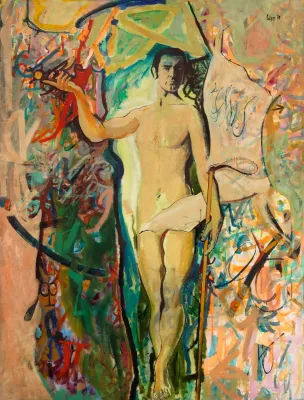
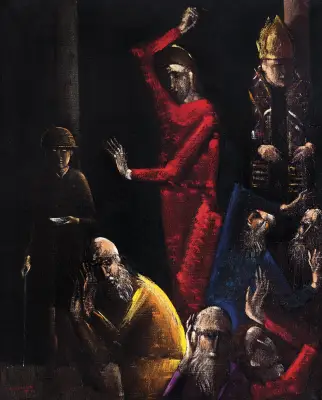
In addition to landscapes and portraits, Marcier stood out for his religious paintings. and for the large murals executed mainly in fresco. In 1946, he carried out the frescoes of the Cristo Rei Chapel, in Mauá, São Paulo. Initially based in Santa Teresa, Rio de Janeiro, he took up residence, in 1948, at Sítio Sant'Ana, in Barbacena, Minas Gerais, where he produced important large sacred canvases in his studio. From the 1970s onwards, he began to reside mainly in Ipanema, Rio de Janeiro, sharing his time with long seasons in Paris, without ever breaking ties with his place in Barbacena.
Throughout his career, he participated in the second and of the Third Biennial of São Paulo and the Salzburg Sacred Art Biennial, in addition to holding several individual and collective exhibitions in Brazil, France, Romania, the United States, Japan, Italy and other countries. His works are part of important Brazilian collections and museums, reaffirming his place among the great names of modern art.
Emeric Marcier also left the memoir deported to life, published by Francisco Alves, in which he reports his personal and artistic trajectory marked by displacements, for the war and for the construction of one of the most relevant careers in Brazilian painting of the 20th century.
Criticism
"Although the portrait and landscape are themes constant in Emeric Marcier's painting and drawing, there is no doubt that his Specificity in Brazilian art stems from a close and consistent connection with the religious theme. In it, this preference began to settle even before coming to Brazil, when, in the late 1930s, it came into contact with the Italian mural painting of the 13th and 14th centuries. That actually occurred, in the first years of staying between us, was that its naturally internalized and mystical propensity found a favorable field of unfolding in the atmosphere of religious residues from the former cities of the gold cycle, in Minas Gerais. However, despite the silent stimulus of this local ambience of religiosity, in which the mixture of the erudite and popular was always frequent, Marcier's work does not reveal more explicit links with the Brazilian source from which it is also nourished. This may happen because it never ceased to interest the other, more solidified source of tradition and atmosphere, in Europe of Art and - Christianity at length united - a source that in fact corresponds to it best to an inviolable inner structure".
Roberto PONTUAL
PONTUAL, Roberto Brazilian Art Contemporary: Gilberto Chateaubriand Collection Translation by John Knox; Florence Eleanor Irvin. Presentation by Pereira Carneiro. Rio de Janeiro: Jornal do Brasil, 1976.
"Painting for him is a purging in the sense of theology as in Greek tragedy. It must be admitted that there is an art of tragic origin and can lead us to consolation, and another that abandons us to the fear of living. An art that solves and another that incites the problems of anguish. An art whose tension educates us for the knowledge of life, and another that oppresses us with the idea of a man who is too petty and hopelessly condemned. This art has no illusions of salvation. She cultivates the feeling of the desperate man and finds no other symbol. I think of the dangers and dislikes that persecuted the painter Marcier, a fugitive from the war, in his struggle with the predestination for anguish. At a time when one conspires for the very murder of artistic life, in the traditional sense of his way, a personality like that of this twenty-something painter is an example and a force for our consciences."
Ruben Navarra
leite, José Roberto Teixeira Critical Dictionary of Painting in Brazil. Rio de Janeiro: ArtLivre, 1988.
Individual exhibitions
1940 - Rio de Janeiro RJ - Individual, in the hall of the Brazilian artist
1942 - Rio de Janeiro RJ - Individual, at MNBA
1944 - Rio de Janeiro RJ - Individual, at IAB/RJ
1952 - São Paulo SP - Individual, at Galeria Ambiente
1954 - Rio de Janeiro RJ - Individual, at Petite Galerie
1956 - Rio de Janeiro RJ - Individual, at Maison de France
1956 - Rio de Janeiro RJ - Individual, at Galeria Tenreiro
1957 - Paris (France) - Individual, at the André Weil Gallery
1960 - Rio de Janeiro RJ - Individual, at Petite Galerie
1961 - Rio de Janeiro RJ - Individual, at Galeria Relevo
1963 - Rio de Janeiro RJ - Individual, at Galeria Bonino
1965 - Lisbon (Portugal) - Individual, at the Diário de Notícias gallery
1965 - Rio de Janeiro RJ - Individual, at the Bonino Gallery
1966 - Rio de Janeiro RJ - Individual, at the gallery Relief
1966 - Rome (Italy) - Individual, at Casa do Brasil
1967 - Tokyo (Japan) - Individual, at the ISOGAIA Gallery
1968 - Bucharest (Romania) - Retrospective, at the Romanian Ateneu
1968 - Rio de Janeiro RJ - Individual, at the IBEU Gallery
1969 - São Paulo SP - Individual, at the Cosme Velho Gallery
1980 - Rio de Janeiro RJ - Individual, At Galeria Bonino
1982 - Rio de Janeiro RJ - Individual, at the Jean Boghici Gallery
1985 - Rio de Janeiro RJ - Individual, at the Bonino Gallery
1986 - Washington D.C. (United States) - Retrospective, at the Museum of Latin American Modern Art, commemorating the artist's 50th anniversary of painting
1987 - Rio de Janeiro RJ - Individual, at the Jean Boghici Gallery
1990 - Belo Horizonte MG - Individual, at MABH
1990 - Rio de Janeiro RJ - Individual, at the Bonino Gallery
Collective exhibitions
1937 - Milan (Italy) - Show at the Italian-Romanic Gallery
1944 - London (England) - Brazilian artists at Burlington House
1944 - London (England) - Exhibition of Modern Brazilian Paintings, at the Royal Academy of Arts
1944 - Norwich (England) - Exhibition of Modern Brazilian Paintings, at Norwich Castle and Museum
1945 - Bath (England) Gallery
1945 - Bristol (England) - Exhibition of Modern Brazilian Paintings, Bristol City Museum & Art Gallery
1945 - Edinburgh (Scotland) - Exhibition of Modern Brazilian Paintings, at the National Gallery
1945 - Glasgow (Scotland) - Exhibition of Modern Brazilian Paintings, at Kelingrove Art Gallery
1945 - Manchester (England) - Exhibition of Modern Brazilian Paintings, Manchester Art Gallery
1952 - Rio de Janeiro RJ - Exhibition of Brazilian artists, at MAM/RJ
1953 - Rio de Janeiro RJ - 4th Salon of Mortas Natures, at the Municipal Theater of Rio de Janeiro
1953 - São Paulo SP - 2nd International Biennial of São Paulo, in the Pavilion of the States
1954 - São Paulo SP - Contemporary Art: Exhibition of the Museum of Modern Art of São Paulo, at MAM/SP
1955 - São Paulo SP - 3rd International Biennial of São Paulo, at the Pavilion das Nations
1956 - Rio de Janeiro RJ - 1st Railway Hall, at the Ministry of Education and Culture
1957 - South America - Traveling Exhibition Brazilian Artists
1958 - Mexico City (Mexico) - 1st Inter-American Biennial
1963 - Rio de Janeiro RJ - The landscape as the theme, at the IBEU Copacabana Gallery
1964 - Rio de Janeiro RJ - The Nu in Contemporary Art, at the IBEU Copacabana Gallery
1965 - Lisbon (Portugal) - Brazilian artists, at the Calouste Gulbenkian Foundation
1965 - Paris (France) - Salon Comparaisons
1965 - Prague (Czechoslovakia - Current Republic) Czech) - Brazilian artists
1966 - Rio de Janeiro RJ - Self-portraits, at the Ibeu Copacabana Gallery
1966 - Salzburg (Austria) - Sacred Art Biennial
1972 - São Paulo SP - Art/Brazil/Today: 50 years later, at the Collectio Gallery
1974 - Rio de Janeiro RJ - O Mar, at the Ibeu Copacabana Gallery
1980 - Rio de Janeiro RJ - Homage to Mário Pedrosa, at the Jean Boghici Gallery
1981 - Maceió Al - Brazilian artists from the first half of the 20th century, at the Historical and Geographical Institute
1981 - Rio de Janeiro RJ - from the modern to the contemporary: Gilberto Chateaubriand Collection, in the MAM/RJ
1982 - Lisbon (Portugal) - Brazil 60 Years of Modern Art: Gilberto Chateaubriand Collection, at the José de Azeredo Perdigão Modern Art Center
1982 - Lisbon (Portugal) - Modern to contemporary: Gilberto Chateaubriand Collection, at the José de Azeredo Perdigão Modern Art Center
1982 - London (England) - Brazil 60 years of modern art: Gilberto Chateaubriand collection at Barbican Gallery
1982 - Rio de Janeiro RJ - Football: Interpretations, at the Art Gallery Banerj
1982 - Rio de Janeiro RJ - Universo do Futebol, at MAM/RJ
1983 - Rio de Janeiro RJ - Brazilian self-portraits, at the Banerj Art Gallery
1984 - Rio de Janeiro RJ - Brazilian painting active, at Espaço Petrobras
1984 - São Paulo SP - Gilberto Chateaubriand Collection: portrait and self-portrait of the art Brazilian, at MAM/SP
1984 - São Paulo SP - Tradition and Rupture: Synthesis of Brazilian Art and Culture, at the Bienal Foundation
1985 - Brasília DF - Acting Brazilian painting, at the Cultural Foundation of the Federal District
1985 - Rio de Janeiro RJ - Six decades of modern art: Roberto Marinho Collection, at the Paço Imperial
1985 - São Paulo SP - 18th São Paulo International Biennial, at the Bienal Foundation
1986 - Rio de Janeiro RJ - Times of War: Hotel International, at the Banerj Art Gallery
1986 - Rio de Janeiro RJ - War Times: Pensão Mauá, at the Banerj Art Gallery
1986 - São Paulo SP - War Times: Pensão Mauá, at  Fundação Biennial (
1986 - São Paulo SP - War Times: International Hotel, at Fundação Bienal
1986 - Belo Horizonte MG - Times of War: Hotel Internacional,
1986 - Belo Horizonte MG - Times of War: Pensão Mauá
1987 - Rio de Janeiro RJ - To the collector: Homage to Gilberto Chateaubriand, at MAM/RJ
1987 - Rio de Janeiro RJ - Guignard/Marcier, at Galeria Jean Boghici
1987 - São Paulo SP - The craft of art: painting, at SESC
1989 - Fortaleza CE - Brazilian art of the 19th and 20th centuries in the Ceará collections: paintings and drawings, in the cultural space of Unifor
1989 - Lisbon (Portugal) - Six decades of Brazilian modern art: Roberto Marinho Collection, at the José de Azeredo Perdigão Modern Art Center. Calouste Gulbenkian Foundation
Posthumous exhibitions
1992 - Rio de Janeiro RJ - Nature: Four centuries of art in Brazil, at CCBB
1993 - São Paulo SP - The modern design in Brazil: Gilberto Chateaubriand Collection, at the SESI Art Gallery
1994 - Rio de Janeiro RJ - The modern design in Brazil: Gilberto Chateubriand Collection, at MAM/RJ
1996 - Rio de Janeiro RJ - Visions do Rio, at MAM/RJ
1997 - Porto Alegre RS - Parallel Exhibition, at the Caixa Econômica Federal Museum
1997 - Porto Alegre RS - Caixa Collection Exhibition, Caixa Cultural Complex
1997 - São Paulo SP - Exhibition of the CAIXA, Caixa Cultural Complex
1998 - Curitiba PR - Caixa Collection Exhibition, Caixa Cultural Complex
1998 - Rio de Janeiro RJ - Caixa Collection Exhibition, Caixa Cultural Complex
2000 - Rio de Janeiro RJ - When Brazil It was modern: Fine Arts in Rio de Janeiro from 1905 to 1960, at Paço Imperial
1999 - Salvador BA - 60 years of Brazilian art, at the Caixa Econômica Federal Cultural Space
2001 - São Paulo SP - Aldo Collection Franco, at the Pinacoteca do Estado
2002 - Rio de Janeiro RJ - Identities: The Brazilian portrait in the Gilberto Chateaubriand collection, at MAM/RJ
2003 - Rio de Janeiro RJ - Treasures of the box: Brazilian modern art in Caixa collection, at the Caixa Cultural Complex
2008 - Tiradentes MG - Verdes Modernos, at Fundação Oscar Araripe
2010 - São Paulo SP-Arte, at Fundação Bienal
Sources: Matias Marcier and Itaú Cultural