

Danilo di Prete (Pisa, Italy 1911 - São Paulo SP 1985)
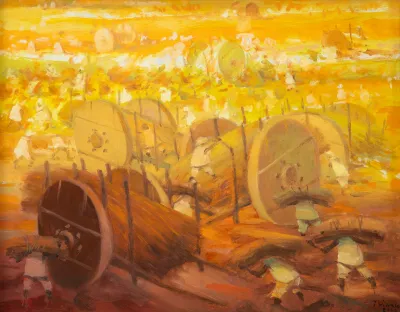
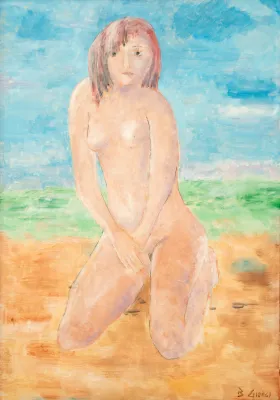
Danilo di Prete was a painter, visual artist, illustrator and poster. Self-taught, he started his career at the age of 20, in Italy. During World War II, he joined the group of Italian artists in Arms, with whom he illustrated episodes of the conflict in Albania, Greece and Yugoslavia. In this period, his painting had a figurative character, with recurring themes such as marines, still lifes and portraits, especially outside the context of the group.
In 1946, he arrived in Brazil and settled in São Paulo, where he dedicated himself to advertising for four years. In 1951, he participated in the 1st International Biennial of São Paulo, winning the National Painting Award with the work Limões. There are reports that he would have been responsible for suggesting to Ciccillo Matarazzo the creation of an Art Biennial in Brazil inspired by the molds of the Venice Biennale, with the aim of bringing post-war artists to the country. Although he is not mentioned in this role by Yolanda Penteado, wife of Matarazzo, nor by Antonio Bivar, his biographer, it is widely accepted that he participated in the planning of the event.
Danilo di Prete participated in another twelve editions of the Bienal de São Paul. In 1965, he received the National Painting Award, this time at the 8th edition of the show. Maché" for the carnival parades of Viareggio, an experience that, in his view, would help him a lot decades later, when he adopted kinetic art as a language, because in those cars - full of lights, colors and sounds, he used carpenter resources, Electrician, mechanic and toolmaker:
He is the one who says:
In my way of seeing, art must have soul, life and movement. Today it seems to me that a painting just painted is a dead object on a wall.
Because my paintings have light, sound, noise, electronic movement, life. An art not only kinetic, but with sound, too.
In Brazil, the idea of a biennial
During World War II was a telegraphist and participated in the group of Italian artists in weapons with works that represented scenes of the war in Albania, Greece and Yugoslavia.
After the conflict, he embarked for Brazil, where he arrived in September 1946, soon settled in São Paulo, where he exercised, for four consecutive years, the profession of visual programmer.
Friend of Francisco Ciccilo Matarazzo Sobrinho, he was the one who suggested the creation, in São Paulo, of an Art Biennial, similar to the one that was done in Venice. 1951 and 1967, of all the Biennials of São Paulo, becoming nationally known and discussed after his painting Limões won, at the 1st Bienal, in 1951, the National Painting Award.
Art in Movement
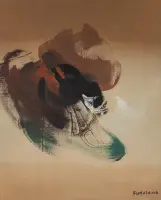
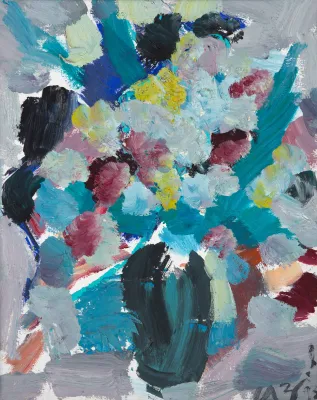
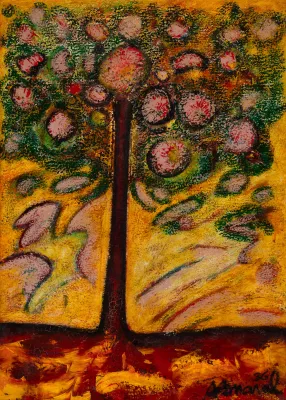
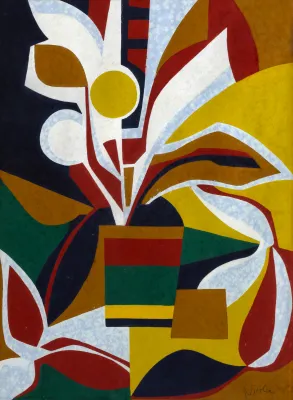
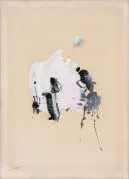
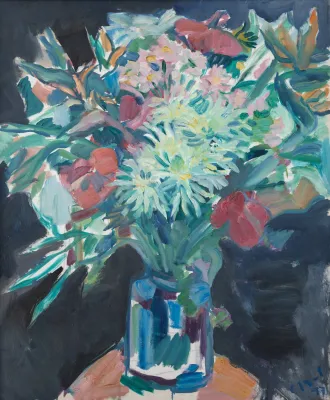
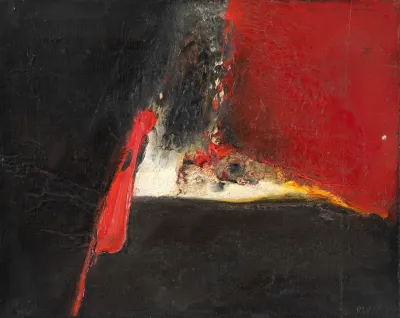
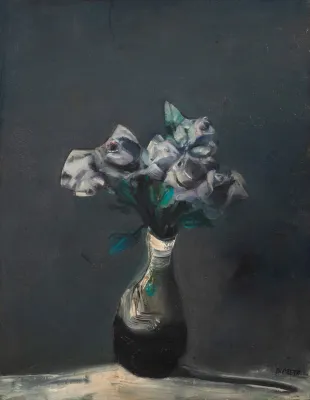
By starting from an intimate figurative art, governed by soft contrasts of shape and color, Di Prete's painting would cross different stages from the 1960s onwards.
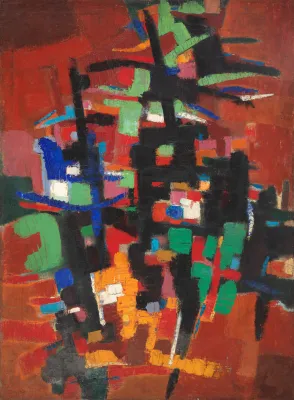
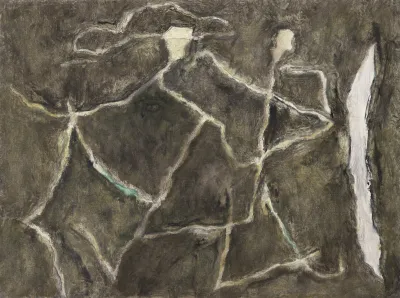
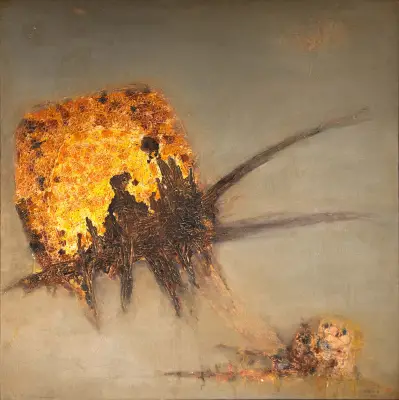
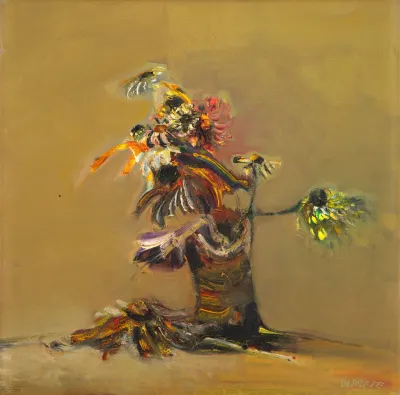
In this process of transformation, he sought successively the seduction of informal abstractionism. Abandoned the two-dimensionality, he found in kinetic art, perhaps, his strongest expression.
In an interview given to journalist Luís Ernesto Machado Kawall in 1972, the artist referred to the type of art he then produced:
Even when I was doing figurative art, I have always been concerned with the cosmic, the spatial secret, the indecipherable universe.
This is still today, when I try to integrate this fantastic relationship with the unreal, mysterious world into kinetic art, unpredictable in which we live.
And I am also thinking of introducing into my objects, in addition to movement and light, electronic music and spoken poems. "off". So, the objects I'm going to make from now on will serve the modern man, they will be utilitarian.
After arriving "destroyed" from the city, he will stay in his house, many hours, before them, listening to his sounds, seeing his colorful and electronic movements.
Always experimenting
great experimentalist, using with identical resourcefulness supports and traditional materials, side by side with wire screens, nylon, scrap, lamps, galvanized tubes, acrylic and motors electrical, di prete imprinted to all these elements the mark of his restless lucidity, deserving these consecrated words of José Geraldo Vieira:
As if the stratagems of Trompe Loeil were not enough, Danilo goes further than he Parc and Schoeffer.
Danilo associates with plastic resources the pendular movement of lit but invisible lamps that, coming and going, unravel an interior space, a new pulsatile dimension.
They awaken, in the bulge and on the periphery of mysterious paintings, diamond glows, agates, rubies, sapphires, topaz, opals, emeralds, amethysts, turquoises, silicas, Quartzs, grenades, coridons and beryls
brilliants that are, force those doorknobs, those bottle bottoms, those flakes, those pebbles to turn into gems, into capri caves, to torsos sidereals, while nylon nets begin to vibrate in moirées waves.
This is a bold syncretism of resources that, renewing Di Prete's work, elevate it to the highest level of art universal contemporary.
Critical Comment
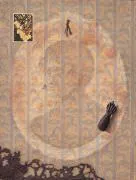
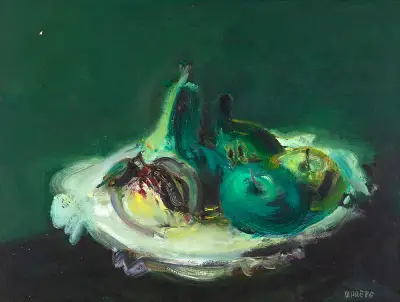
Although sometimes he works with futuristic compositions, Danilo Di Prete is far from the thematic universe of this movement. But, according to the critic Mário Pedrosa, he is influenced by the "vibrant coloristic schemes of futurism". Still, some of his paintings, such as Mushrooms, 1945, and cabins on Viareggi beach, 1946, both belonging to the Museum of Modern Art of São Paulo - MAM/SP, operate more with transitions between dark tones and Undefined in the forms that these transitions suggest than with the strong colors and delimited surfaces of futurism.
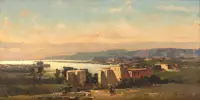
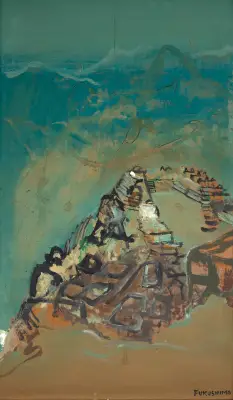
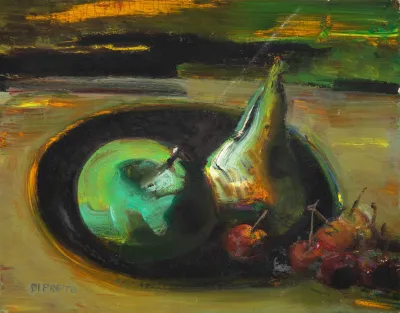
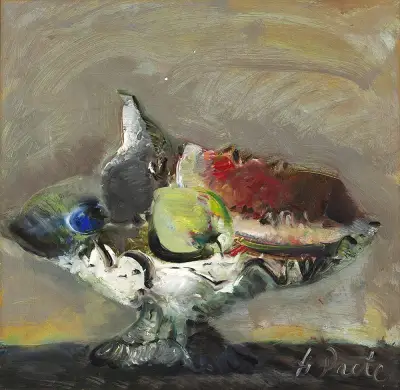
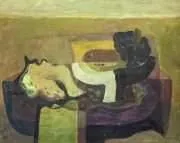
The marine work, in the 1950s, shows a boat elevated by two easels in the sand. The green that takes part of the hull is in contrast to the almost pastel tones that fill the atmosphere, subtly joining the shapes of the vessel and the beach to colors and changes in tones. This movement of almost intimate approach from the spectator to the work can be verified in an accentuated way on the screen, winner, in 1951, of the National Painting Award of the 1st International Biennial of São Paulo. A still life in which the contrast between the shape of the objects and their disposition in the perspective of the picture predominates, and between the intensity of green and the tonal transitions between the environment, the table and the objects arranged on it.
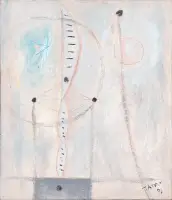
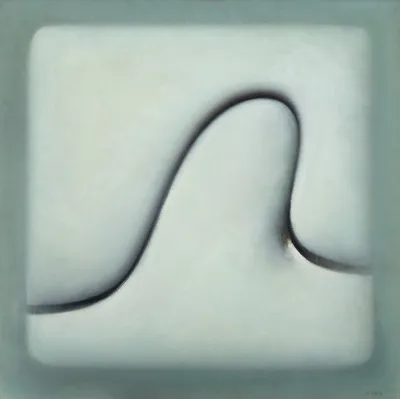
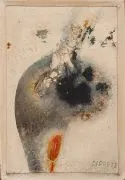
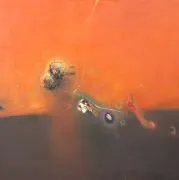
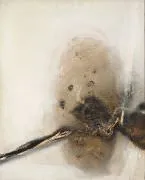
The 1960s represent a rupture in the trajectory of the artist, who abandons figurativeism and starts to create exclusively abstract canvases. Equally radical is the thematic change in his work. His paintings now depict planetary surfaces, stars and the cosmos. It is worth noting that the search for a "planetary and cosmic" painting coincides with the beginning of the space race undertaken by the Soviet Union and the United States. Progressively, the paintings gain wire, nylon, pipe, lamp and other objects. Di Prete begins to use less traditional supports, such as boxes and plastic surfaces, which give a tactile dimension to the work and more weight to the notion of movement. The dynamics of the lines become more agile and the iron materials, when bent, cause tension in the frame in such a way that these surfaces put the other elements in a state of almost agitation. There is something of technological exaltation in this procedure, recalling the mechanics of rockets and satellites themselves, as is the case of the cosmic landscape 2, from 1967, from 1967. The painting is a profusion of lines and curves that refer to the most varied celestial bodies. and if, on the one hand, the objects affixed to the screen affirm the new scientific horizon that opens at the time, on the other hand, they point to an artistic experience, called by him "total art", increasingly evident in his work.
If before the movement is the result of the tension between objects, The supports and shapes in the frame, in the mid-1970s, say it more apparently, by incorporating air vents, lights, sounds and other paraphernalia to the works. The engines and electronic devices still reinforce the idea of technology, present since its first abstract works, but the central question of the artist now is the search for an experience in which the viewer, immersed in flashing lights, sounds and images, apprehends the movement of the shapes that traditional painting can no longer. express.
Criticism
"When he had started to paint in Italy he was figurative. He made marines, portraits and still lifes but always used a lot of 'space' in his works. Initially this space was represented by the sea. Danilo lived near the beach and this empty immensity has always impressed him. When he came to Brazil he was already a consecrated painter in Italy, but here he had to start from the beginning. He thought he was mature. In 1953, already in São Paulo, he was ready for astral painting and was the first in Brazil to do 'cosmic painting'".
Jos Luyten
LUYTEN, Jos. An old man who always renews himself: Danilo di Prete. A Gazeta, São Paulo, 26 Sep. 1972.
"When Di Prete, more than ten years ago, won (...) the award for the 1st Bienal for Best Brazilian Painter, (...) of painting (...). His 'passport' for Brazilian painting, or the painting made, born in Brazil, was a neocubism of clear Italian inspiration, that is, closer to the vibrant coloristic schemes of futurism than from the ground severities of Cubism (...) The clear light that brought Italy may have densified, here, like low clouds rubbing against the rocks; its matter, the spatula, and no longer the brush, may have lost, in the pictorial experience, the direct perceptual contact With things within reach of the hand or focal vision; its colors, its green, blue may have lost its luminous transparency; the imagination shifted to universalize itself. As a result of all this, its matter ceased to be matter, the Renaissance way, to be texture, which Lifts in yeast, in orographic reliefs, in energy - sign of the times".
Mário Pedrosa
Danilo di Prete. Presentation by Jean Cassou, Geraldo Ferraz, Maria Eugenia Franco e. Texts by José Geraldo Vieira and Mário Pedrosa. São Paulo: Chap Chap Cultural Space, 1985.
Individual exhibitions
1962 - São Paulo SP - Individual, at the Selearte Gallery
1985 - São Paulo SP - DI Prete: Retrospective, at the Chap Chap Cultural Space
Collective exhibitions
1932 - Lucca (Italy) - Esposzione di Caselli - 2nd Prize
1933 - Livorno (Italy) - Esposizione dei Giovani - 2nd Prize
1938 - Viareggio (Italy) - Esposzione di Viareggio - 1st Prize del Colore
1939 - Firenze (Italy) - Esposizione degli Artisti Toscani - Acquisition Award
1940 - Cremona (Italy) - Esposizion di Cremona - Acquisition Award
1943 - Rome (Italy) - Quadriennale di Roma
1947 - São Paulo SP - 11th Salon of the Plastic Artists Union, at the Prestes Maia Gallery
1948 - São Paulo SP - Collective, at the Domus Gallery
1949 - São Paulo SP - 13th Hall of the Artists Union Plastics
1950 - New York (United States) - 30 years of posters - The Best Posters Awards
1951 - Rio de Janeiro RJ - Exhibition of dead natures, at the Food and Social Security Service
1951 - Rio de Janeiro RJ - 57th National Salon of Fine Arts, at the MNBA
1951 - São Paulo SP - 1st São Paulo International Biennial, at the Trianon Pavilion - 1st Brazilian Painting Award
1951 - São Paulo SP - 1st Paulista Salon of Modern Art, at the Prestes Maia Gallery
1952 - Paris (France) - 38th May Salon
1952 - Rio de Janeiro RJ - Exhibition of Brazilian artists, at MAM/RJ
1952 - Rio de Janeiro RJ - 1st National Salon of Modern Art, at MAM/RJ - Acquisition Award
1952 - Venice (Italy) - 26th Venice Biennale
1953 - Rio de Janeiro RJ - 2nd National Salon of Modern Art, at the MNBA
1953 - São Paulo SP - 2nd São Paulo International Biennial, at the Pavilion of the States
1954 - São Paulo SP - Contemporary Art: Exhibition of the Museum of Modern Art of São Paulo, at MAM/SP
1955 - São Paulo SP - 3rd São Paulo International Biennial, at the Pavilhão das Nações
1957 - São Paulo SP - 4th São Paulo International Biennial, at the Ciccilo Pavilion Matarazzo Sobrinho
1957 - São Paulo SP - 6th Salão Paulista de Arte Moderna, at the Prestes Maia Gallery - Gold Medal
1958 - São Paulo SP - 7th São Paulo Salão de Arte Moderna, at the Prestes Maia Gallery - 2nd Prize State Government
1959 - Dallas (United States) - Show, at the Museum of Modern Art - Acquisition Award
1959 - São Paulo SP - 5th São Paulo International Biennial, at the Ciccilo Matarazzo Sobrinho Pavilion - Odebrecht Award
1959 - São Paulo SP - 8th Salão Paulista de Arte Moderna, at Galeria Prestes Maia - Gold Medal
1960 - São Paulo SP - 9th São Paulo Salão de Arte Moderna, at the Prestes Maia Gallery
1960 - Venice (Italy) - 30th Venice Biennale
1961 - São Paulo SP - 6th São Paulo International Biennial, at the Ciccilo Matarazzo Sobrinho Pavilion
1962 - Córdoba (Argentina) - 1st American Art Biennial - Bottle Award
1962 - São Paulo SP - Selection of Brazilian works of art from the Ernesto Wolf collection, at MAM/SP
1963 - Campinas SP - Painting and Sculpture Contemporaries, at the Carlos Gomes Museum
1963 - São Paulo SP - 7th São Paulo International Biennial, at Fundação Bienal
1964 - Rio de Janeiro RJ - 2nd O Face and the Work, at the Ibeu Copacabana Gallery
1964 - Rome (Italy) - Collective, at the Casa do Brasil Art Gallery
1965 - São Paulo SP - 8th International Biennial of São Paulo, at the Bienal Foundation - Best National Painter Award
1966 - Florence (Italy) - 2nd Fiorino - Gold Medal
1966 - Florence (Italy) - Premio Internazionale Il Fiorino
1966 - São Paulo SP - Half a century of Art Nouveau, at MAC/USP
1967 - São Paulo SP - 9th São Paulo International Biennial, at Fundação Bienal
1969 - São Paulo SP - 1st Panorama of Current Brazilian Art, at MAM/SP
1970 - São Paulo SP - 2nd Panorama of Current Brazilian Art, at MAM/SP
1971 - São Paulo SP - 11th São Paulo International Biennial, at Fundação Bienal - Itamaraty Acquisition Award
1973 - São Paulo SP - 12th International Biennial of São Paulo, at Fundação Bienal - Itamaraty Acquisition Award
1973 - São Paulo SP - 5th Panorama of Current Brazilian Art, at MAM/SP
1975 - São Paulo SP - 13th International Bienal de São Paulo, in the Biennial Foundation
1978 - São Paulo SP - The Biennials and Abstraction: The 50s, at the Lasar Segall Museum
1978 - São Paulo SP - The object in art: Brazil 60s, in the MAB/FAAP
1979 - São Paulo SP - 15th São Paulo International Biennial, at Fundação Bienal
1979 - São Paulo SP - 11th Panorama of Current Brazilian Art, at MAM/SP
1980 - São Paulo SP - 12th Panorama of Current Brazilian Art, at MAM/SP
1984 - São Paulo SP - Tradition and Rupture: Synthesis of Brazilian Art and Culture, at the Bienal Foundation
Exhibitions Posthumous
1985 - São Paulo SP - 100 Obras Itaú, at Masp
1985 - São Paulo SP - Retrospective, at the Chap Chap Cultural Space
1986 - São Paulo SP - Six times: 80 years old, at the Pinacoteca do Estado
1987 - São Paulo SP - The biennials in the MAC collection: 1951 to 1985, at MAC/USP
1987 - São Paulo SP - The Craft of Art: Painting, at SESC
1988 - São Paulo SP - MAC 25 years: Highlights of the initial collection, at MAC/USP
1989 - São Paulo SP - 20th São Paulo International Biennial, at the Bienal Foundation
1989 - São Paulo SP - Painting Brazil 20th Century: Works from the collection of Banco Itaú, in Itaugaleria
1993 - São Paulo SP - The modern design in Brazil: Gilberto Chateaubriand collection, in the Geleria de Arte of SESI
1994 - Rio de Janeiro RJ - The modern design in Brazil: Gilberto Chateubriand Collection, at MAM/RJ
1994 - Rio de Janeiro RJ - Trencheiras: Art and Politics in Brazil, at MAM/RJ
1994 - São Paulo SP - Bienal Brasil Século 20th, at the Bienal Foundation
1996 - São Paulo SP - Brazilian art: 50 years of history at the MAC/USP collection: 1920-1970, at MAC/USP
1998 - São Paulo SP - 23 works, 40s/80s: Kinetics and paintings, at Ricardo Camargo Galeria
1998 - São Paulo SP - Constructive Art in Brazil: Adolpho Leirner Collection, at MAM/SP
1998 - São Paulo SP - Danilo Di Prete: 23 works, 40s/80s kinetic and paintings, at Ricardo Camargo Galeria
1998 - São Paulo SP - The Collector, at MAM/SP
1999 - Rio de Janeiro RJ - Constructive Art in Brazil: Adolpho Leirner Collection, at MAM/RJ
1999 - São Paulo SP - daily life/art. The technique, at Itaú Cultural
1999 - São Paulo SP - daily life/art. Consumption, at Itaú Cultural
1999 - São Paulo SP - Danilo di Prete: Painting, at the Clube Atlético Paulistano Museum
2003 - São Paulo SP - still life, at the BM&F
2004 - São Paulo SP - Gesture and Expression: Informal abstractionism in the JP Morgan Chase and MAM collections, at MAM/SP
Di Prete also appeared in several important artistic events, inside and outside Brazil, such as:
National Art Salon 1952.
The Parisian May Salon of the same year.
26th and the 30th Venice Biennials, in 1952 and 1960.
1st American Biennial of Córdoba, In Argentina, in 1962.
Itinerant Current Brazilian Art Exhibition, which in 1965 traveled through several European countries.
He also exhibited on several occasions individually, starting in 1962.