Cildo Meireles (Rio de Janeiro, RJ, 1948)
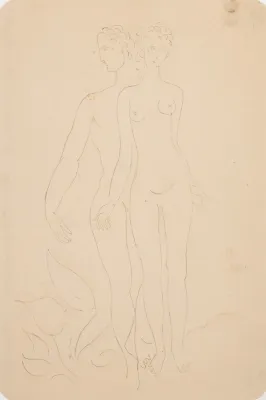
Cildo Meireles is one of the most important multimedia artists in contemporary Brazilian art, internationally recognized for his conceptual, experimental and politically engaged work. Cildo Meireles's career began in 1963 at the Fundação Cultural do Distrito Federal, in Brasília, under the guidance of the Peruvian ceramist and painter Barrenechea. His first works were drawings marked by the influence of African masks and sculptures, revealing early on his interest in symbolic languages, cultural systems and structures of representation.
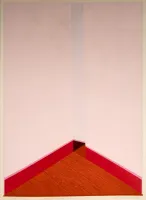
Cildo Meireles moved to Rio de Janeiro in 1967, where he briefly attended the Escola Nacional de Belas Artes (ENBA). In this period, he developed the series Espaços Virtuais: Cantos (Virtual Spaces: Corners), made up of 44 projects investigating the perception and construction of space. This research was deepened in subsequent works, such as the series Volumes Virtuais (Virtual Volumes) and Ocupações (Occupations) (1968–1969), consolidating Cildo Meireles's interest in spatial, phenomenological and conceptual questions.
Cildo Meireles was one of the founders of the Experimental Unit of the Museu de Arte Moderna do Rio de Janeiro (MAM/RJ) in 1969, where he taught until 1970. From then on, his production took on a more explicitly political character, in dialogue with the context of the military dictatorship in Brazil. Among Cildo Meireles's most emblematic works are Tiradentes: Totem-monumento ao Preso Político (Tiradentes: Totem-Monument to the Political Prisoner, 1970), Inserções em Circuitos Ideológicos: Projeto Coca-Cola (Insertions into Ideological Circuits: Coca-Cola Project, 1970) and Quem Matou Herzog? (Who Killed Herzog?, 1970), works in which the artist critically explores systems for the circulation of information, communication and power.
Cildo Meireles traveled to New York in 1971, broadening his presence in the international contemporary art circuit. In this period, he produced key works such as the installation Eureka/Blindhotland, the LP Sal sem Carne (Salt Without Meat, recorded in 1975) and the series Inserções em Circuitos Antropológicos (Insertions into Anthropological Circuits), deepening his investigation of language, culture, perception and ideology.
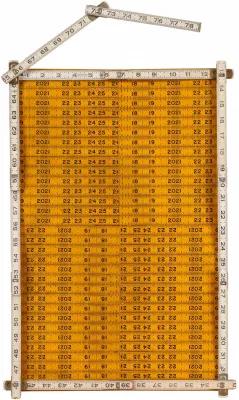
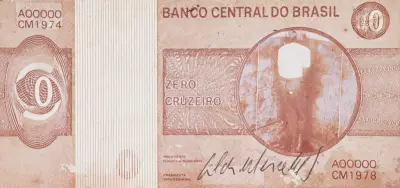
Cildo Meireles returned to Brazil in 1973 and diversified his artistic activity, also working on sets and costumes for theater and film. In 1975, he became one of the editors of the influential magazine Malasartes. Among the works of this period are pieces based on economic, social and symbolic systems, such as Zero Cruzeiro and Zero Centavo (1974–1978), as well as Zero Dólar (1978–1994). In works such as Pão de Metros (1983) and Fontes (1992), Cildo Meireles investigates units of measurement, time, value and space, reinforcing the experimental character of his production.
Cildo Meireles built a career marked by participation in major biennials and international exhibitions, including the Venice Biennale (1976), the Paris Biennale (1977), the São Paulo Biennial (1981, 1989 and 2010), the Sydney Biennale (1992), the Istanbul Biennial (2003), the Liverpool Biennial (2004), the Medellín Biennial (2007) and the Mercosul Biennial (1997 and 2007), as well as Documenta in Kassel (1992 and 2002).
Cildo Meireles has also held major retrospectives at internationally prominent institutions, such as IVAM Centre del Carme in Valencia (1995), the New Museum of Contemporary Art in New York (1999), Tate Modern in London (2008) and the Museum of Fine Arts, Houston (2009). In 2008, he received the Premio Velázquez de Artes Plásticas, awarded by the Spanish Ministry of Culture, consolidating Cildo Meireles's international recognition as one of the leading names in contemporary Brazilian art.
Cildo Meireles's career and artistic production were recorded in the documentary Cildo, released in 2009 and directed by Gustavo Moura. The film reaffirms Cildo Meireles's relevance to Brazilian and international art history, highlighting his singular contribution to conceptual art, contemporary art and the debates on language, politics and society.
Critical Commentary
Cildo Meireles is widely recognized as one of the most important artists in contemporary Brazilian art, standing out for his conceptual, experimental and politically engaged work. Cildo Meireles's path began in childhood when, at the age of 10, he moved to Brasília and came into contact with modern and contemporary art. From 1963, he studied with Barrenechea and followed international artistic production through books and magazines, expanding his visual and theoretical repertoire.
During this period, Cildo Meireles was deeply affected by the collection of African masks and sculptures from the University of Dakar, shown at the University of Brasília. At the same time, through publications, he learned about the Neo-Concrete Group of Rio de Janeiro, whose thinking attracted him with the possibility of expanding art beyond the strictly visual field. Even so, unlike the Neo-Concrete artists, Cildo Meireles's early production was marked by a gestural and figurative character, with drawings of an expressionist nature.
In 1967, Cildo Meireles moved to Rio de Janeiro, a decisive moment in his career. The artist gradually abandoned drawing and expressionist figuration and devoted himself to three-dimensional and spatial investigations. His first installation, Desvio para o Vermelho (Red Shift, 1967), shown at the Museu de Arte Moderna do Rio de Janeiro, inaugurated a new phase in his work. In the same period, he developed the series Espaços Virtuais: Cantos (1967–1969), made up of fragments of rooms in which planes intersect, creating perceptual and spatial tensions.
Cildo Meireles's entry into the international circuit came significantly in 1970, when he took part in the exhibition Information at the Museum of Modern Art in New York. On that occasion, he presented the series Inserções em Circuitos Ideológicos (1970), in which he printed subversive messages on banknotes and Coca-Cola bottles. In doing so, Cildo Meireles shifted the reception of the work from the traditional notion of audience to the idea of circuit, broadening the critical reach of art. Intervention in everyday objects became recurrent in his work between 1970 and 1975, as seen in works such as Árvore do Dinheiro (Money Tree, 1969), Introdução a uma Nova Crítica (Introduction to a New Criticism, 1970) and O Sermão da Montanha: Fiat Lux (The Sermon on the Mount: Fiat Lux, 1973).
Between 1971 and 1973, Cildo Meireles lived in the United States, a period in which he deepened his dialogue with international conceptual art. On returning to Brazil, he intensified his investigations into language, perception and symbolic systems, often through the appropriation of non-art objects. In 1974, he completed the first version of Malhas da Liberdade (Meshes of Freedom, 1976), and in 1975 he created the installation Eureka/Blindhotland, in which he explores non-visual sensory properties.
In the second half of the 1970s, Cildo Meireles expanded his research in sculptures that strain geometric and physical concepts, such as A Diferença entre um Círculo e uma Esfera É o Peso (The Difference Between a Circle and a Sphere Is Weight, 1976), Estojo de Geometria (Geometry Set, 1977) and Rodos (1978). In the 1980s, he incorporated pictorial elements into his installations, as in Volátil (1980), Maca (1983), Cinza (1984) and Para Pedro (1984), showing the constant reinvention of his language.
Among his most significant works of this period are Missão/Missões (Mission/Missions, 1987), an installation that brings together communion wafers, coins and bones in a reflection on power, religion and economics, and Através (Through, 1989), a labyrinthine environment built with materials that delimit or block off spaces, such as grilles and wire fences. In 2001, Cildo Meireles created Babel, a sound and light installation made of radios tuned to different frequencies, revisiting and updating the investigations with sound media he began in the 1970s.
Cildo Meireles's international recognition was consolidated by major retrospectives, notably the one held at Tate Modern in London in 2008. Cildo Meireles thus became the second Brazilian artist to receive a retrospective at the institution, after Hélio Oiticica, reaffirming his relevance on the global contemporary art scene.
Notes
1 HERKENHOFF, Paulo; CAMERON, Dan; MOSQUERA, Gerardo. Cildo Meireles. São Paulo: Cosac & Naify, 2000. p. 9.
2 Ibid., p. 13.
Critiques
"These three registers through which the Redshift was conceived—Impregnation, Surroundings, Deviation—actually constitute calculated simulacra of normality, where the subject will uselessly waste their mimetic affects. Each of the stages is a rigorous and persistent effort to avoid recognizing the subject in a real conceived as a mirror, to avoid the triumph of institutional certainties that produce the world as a successive chain of causes and effects, of means and ends. Hence the first work of Impregnation, imposing red as an inescapable requirement on perception, at once exposing and retracting normality. (...)
Immediately after, in the Surroundings, one might believe oneself to be free of this uncomfortable normality, one might believe one has already detected the deviant element, now duly controlled in a small bottle. A false chain of terms, one cannot demarcate the amplitude of the deviation: the red, now liquefied, pours out of the bottle in an absurdly greater flow than the container's capacity. (...)
Perhaps the resolution lay in the next step; here the source of that implausible flow was discovered, the explanation, after all: a sink, a faucet. Which would be very plausible if the subject weren't completely immersed in darkness, if that sink, with its continuous red stream, the only indicator that could guarantee at least the validity of spatial coordinates, weren't slightly tilted, indicating that perhaps this space no longer guarantees him anything. (...)
But, note well, from the subject's point of view, this is an extremely fragile situation: there is something in the deviation that can, from one moment to the next, convert it into normality, and, conversely, there is something in this normality about to become deviation.
Sônia Salzstein
SALZSTEIN, Sônia. Redshift. In: CILDO Meireles: Redshift. Presentation by Aracy Amaral; text by Sônia Salzstein, Ronaldo Brito. São Paulo: MAC/USP, 1986. p. 6-7.
"I think that through the notions of physics, economics, and politics, expressing and specifying the concrete interaction of the forces of these spheres, Cildo has been updating and determining the legitimacy of the critical impulses associated with Duchamp. (...)
In his work, physics, economics, and politics do not merely represent infrastructural or suprastructural levels, hierarchies, distinct planes, but a complex of vectors that act together, sometimes in synchrony, sometimes dissociated, often in contradiction. This complex is called Society. Ultimately, it would express the insoluble conflict between the limitlessness of the spirit and the scarcity of matter, the concrete drama of the unlimited and the limited. (...)
Physics constitutes the infrastructural level where the constant is the law of universal gravitation; it is the world of force, mass, weight, speed, acceleration, of the homogeneity of time and space that social experience calls into question (Blindhotland). The economy is the sphere of production, of value, of circulation, the politics of power. Work accompanies the 'passages,' the 'leaps,' from one sphere to another, the transposition from one plane to another, recording and specifying changes, deformations, continuities. Nothing remains static there; Movement and circulation are incessant, and the work presents 'moments' of this permanent dynamic. (...)
Cildo's Metros II reject fixed unity. They constitute a fluid in continuous change, a dialectic between abstract extension and the hard, concrete reality of things. It is no coincidence that the various works in the series are on the wall. They refer to the traditional site of representation, to the linear perspective in which the phenomenon of effort can either make the meter unit coincide with itself or reduce itself to the point—infinity. It is the illusory 'leap' from the measurable to the unmeasurable that representation establishes and Metros II disarms. (...)
With the crates—Gold and Sticks is the title of the work—we are in the sphere of production, value, and circulation. Just as the Metros II also represent limits, now three-dimensional. They are empty boxes, continents without content. Useless. The value is not in what we might find inside. The interior is nothingness. The value is in the exterior; the crate itself is the value. In the despicable element, the nail, we find gold. This series would also tend toward infinity, where we might find the ultimate, metaphysical, and still possible crate; the one made with the last and only existing nail, where scarcity would coincide with supreme value, just as God, if he exists, can only be one."
Paulo Venâncio Filho
VENÂNCIO FILHO, Paulo. Physics, economics, politics. In: MEIRELES, CILDO. Cildo Meireles: gold and sticks. Translated by Jack Liebof; text by Paulo Venancio Filho. Rio de Janeiro: Joel Edelstein Arte Contemporânea, 1995.
"It is not news to state that Cildo Meireles' research has always been associated with images of strong symbolic connotation. Several critics have explored the resistance value of this work, located in the 1970s as 'experimental avant-garde art,' an expression that already bore in its filigree the image of military dictatorships, which not only took power in Brazil but also expanded throughout many Latin American countries. The powerful metaphors constructed by the artist over a thirty-year career were set against the backdrop of the search for a sense of identity. Regarding "Brazilianness," Cildo spoke firmly, asserting that it was more of an anxiety than a question. It is a fact that, from Oswald de Andrade's Anthropophagic Manifesto to the neoconcrete propositions of Lygia Clark and Hélio Oiticica, the search for identity has been a pressing issue. But formal research could not be left out of this discussion, and the most frequently used argument, both in Brazil and from the "foreign" perspective, has been that of color (different in Tarsila do Amaral and Volpi, for example), capable of assuming countless adjectives: telluric, expansive, idealistic, tropical, etc. "
Lisette Lagnado
LAGNADO, Lisette. Cildo Meireles: Detour to Interpretation. In: SÃO PAULO INTERNATIONAL BIENNIAL, 24, 1998, São Paulo. Historical Core: Anthropophagy and Histories of Cannibalism. Curated by Paulo Herkenhoff, Adriano Pedrosa; presented by Paulo Herkenhoff, Francisco Weffort. São Paulo: Fundação Bienal de São Paulo, 1998. p. 398-401.
"Throughout Cildo Meireles' work, there is a constant manifestation of tension and torsion—whether in the realm of aesthetics, perception, science, or economics. Centering on our experience of these different branches of knowledge, his art aims to generate new meanings through the recognition of the limits and fallibility of these systems of understanding. (...)
Since the late 1960s, Cildo Meireles has played a key role in the transition of Brazilian art between the Neoconcretist production of the early 1960s—Hélio Oiticica, Lygia Clark, and Lygia Pape—and that of his generation, also informed by conceptual art and installation. Although his work developed within the Brazilian tradition, it neither retreats into regionalism nor renounces affiliations with Western culture. His art is situated in the frictional relationship between social and poetic issues specific to Brazil and the heritage of the West. For Cildo, the works of Marcel Duchamp are as important as those of Oiticica as models for problematizing art. (...)
Cildo's work could be described as a poetic theory of society. It raises questions ranging from politics to ideals and strategies. It examines spaces and processes of communication, the conditions of the spectator, the legacies of art history, and the social space of the ghetto—a space frequently evoked. The focus of his art can range from the economic expansion of international capitalism to a small cultural gesture of Brazilian Indians. His works lack hierarchy of scale or consistency of materials, ranging from a diminutive sculpture consisting of a tiny wooden cube, Cruzeiro do Sul (1969-70), to the temple-like installation incorporating hundreds of thousands of coins, Missão/Missões (How to Build Cathedrals, 1987). They can incorporate gestures, fire, space, things, social circuits, language, sound, accumulation, power, distance, and energy. Cildo's art dispenses with heroic gestures and prioritizes simple everyday actions, such as folding a piece of paper (The Shortest Distance Between Two Points Is a Curve, 1976), setting a fire (Tiradentes: totem-monument to the political prisoner, 1970) or exchanging money (Eppur si Muove, 1991). The work is conceived and structured around a nodal point where the Real, the Symbolic, and the Imaginary articulate and find their measure."
Paulo Herkenhoff
HERKENHOFF, Paulo. A Labyrinthine Ghetto: The Work of Cildo Meireles. In: HERKENHOFF, Paulo; CAMERON, Dan; MOSQUERA, Gerardo. Cildo Meireles. Translated by Len Berg; text by Jorge Luis Borges. São Paulo: Cosac & Naify, [2000?]. p. 38-78.
Testimonials
"Whenever we try to define art, we confront the divisions between what is and what is not considered an object of art. In pre-classical times, art and religion were synonymous. In classical Greece, art and architecture were equally linked. Later, a distance was created between the artistic and the architectural. Art began to be seen as the documentation or reproduction of reality, and so on. What attracted me to Neoconcretism was the possibility of thinking about art in terms beyond the visual. (...)
Inserções em Circuitos Ideológicos focused on isolating and defining the concept of circuit, drawing on a preexisting circulation system. In this sense, the phrases on Coca-Cola bottles and banknotes functioned as a kind of mobile graffiti. Insertions in Anthropological Circuits, on the other hand, consisted essentially of the manufacture—and subsequent circulation—of a series of objects that could influence political and social behavior, such as phone tokens, transportation tokens, etc. The work related to the circuit through the use of aspects that existed as a precondition of the product. (...)
With Tiradentes... I was interested in metaphor and the displacement of the theme. I wanted to use the theme, life and death, as the raw material of the work. Displacement is what matters in the history of the art object. But this work contains a more explicit, direct discourse, which is my own point of view. As a formal object, it evokes memories of self-immolation, or of victims of explosions or napalm bombings. There was all the war imagery at the time, and I wanted to reference it in a way that would draw attention. The action was performed in a displaced setting, similar to an exhibition opening at a construction site.
Of course, I would never repeat a work like Tiradentes. . . I can still hear the poor chickens in my psychological memory. But in 1970, I felt it had to be done. (...)
As a professional artist, which is perhaps a contradiction, I see the market as an important horizon. My work always seeks some kind of communion with this undefined, broad entity called the public. At the same time, it has a completely independent aspect. The work must 'stand upright,' in the sense that it must have complete autonomy. If this doesn't happen, the idea of the work disappears. (...)
In much of my work, there is an interpenetration between the work of art and daily life, and this affects the choice of material. I am interested in ambiguous materials, which can simultaneously be symbol and raw material, assuming the status of paradigmatic objects. The materials that can contain this ambiguity range from matches to Coca-Cola bottles, from coins to bills, or even a broom, as in La Bruja (1979-81). They are in the everyday world, close to their origins, still imbued with meaning. (...)
Much of my work deals with the discussion of the space of human life, which is so broad and vague. Space, in its various manifestations, encompasses psychological, social, political, physical, and historical arenas.
It doesn't really matter whether or not there is an interaction between utopian space and real space. I think there's an almost alchemical aspect: you are also being transformed by what you do. Many of these transformations occur on a hidden, subtle level. (...)
Most of my works can be reconstructed; they don't have to be unique. This discussion was very common in Brazil in the late 1960s. (...) We were concerned with the question of how to structure the work so that it could be remade in an almost identical manner and escape the aura of the original."
Cildo Meireles
MEIRELES, Cildo. [Geraldo Mosquera talks with Cildo Meireles]. In: HERKENHOFF, Paulo; CAMERON, Dan; MOSQUERA, Gerardo. Cildo Meireles. Translated by Len Berg; text by Jorge Luis Borges. São Paulo: Cosac & Naify, [2000?]. p. 8-35.
Collections
Pinacoteca do Estado de São Paulo Collection/Brazil - São Paulo SP
Gilberto Chateaubriand Collection - MAM RJ - Rio de Janeiro RJ
Museum of Contemporary Art of the University of São Paulo Collection - SP
Tate Modern Collection - London (United Kingdom)
Museum of Modern Art (MoMA) - New York (United States)
Solo Exhibitions
1967 - Salvador BA - Cildo Meireles: Drawings, at Museu de Arte Moderna de Salvador - MAM/BA
1975 - Rio de Janeiro RJ - Blindhotland/Gueto, at Galeria Luiz Buarque de Hollanda e Paulo Bittencourt
1975 - Rio de Janeiro RJ - Eureka/Blindhotland, at Museu de Arte Moderna do Rio de Janeiro - MAM/RJ
1977 - Cuiabá MT - Casos de Sacos (Cases of Bags), at Museu de Arte e Cultura Popular
1977 - São Paulo SP - Casos de Sacos (Cases of Bags), at Pinacoteca do Estado
1978 - São Paulo SP - Cildo Meireles: Drawings, at Pinacoteca do Estado
1979 - Rio de Janeiro RJ - Definite Articles, at Galeria Saramenha
1979 - Rio de Janeiro RJ - Fiat Lux: The Sermon on the Mount, at CCCM
1981 - Rio de Janeiro RJ - Cildo Meireles, at Funarte
1981 - São Paulo SP - Definite Articles and Virtual Spaces: Corners, at Galeria Luisa Strina
1983 - Rio de Janeiro RJ - Eureka/Blindhotland, at Rio Arte Humaitá
1983 - São Paulo SP - Obscura Luz: obscure light, at Galeria Luisa Strina
1983 - Rio de Janeiro RJ - Obscura Luz: obscure light, at Galeria Saramenha
1984 - Brasília DF - Two Collections: Drawings, at Sala Oswaldo Goeldi
1984 - Rio de Janeiro RJ - Desvio para o Vermelho (Red Shift), at Museu de Arte Moderna do Rio de Janeiro - MAM/RJ
1984 - São Paulo SP - Desvio para o Vermelho (Red Shift), at Museu de Arte Contemporânea da Universidade de São Paulo - MAC/USP
1986 - Rio de Janeiro RJ - Cinza, at Petite Galerie
1986 - São Paulo SP - Cinza, at Galeria Luisa Strina
1986 - São Paulo SP - Desvio para o Vermelho (Red Shift), at MAC/USP
1989 - São Paulo SP - Playing Fields, at Galeria Luisa Strina
1990 - London (England) - Missão/Missões: How to Build Cathedrals, and Cinza, at Institute of Contemporary Art (ICA), Lower Gallery
1990 - New York (United States) - Projects 21: Cildo Meireles, at MoMA
1992 - São Paulo SP - Metros I, at Galeria Luisa Strina
1994 - San Francisco (United States) - Entrevendo and Volátil, at Capp Street Project
1995 - Rio de Janeiro RJ - Ouro e Paus (Gold and Sticks), at Joel Edelstein Arte Contemporânea
1995 - Saint Louis (United States) - Two Trees, at Laumeier Sculpture Park
1995 - Valencia (Spain) - Retrospective, at IVAM Centre del Carme
1996 - Philadelphia (United States) - Solo, at The Fabric Workshop Museum
1996 - Porto (Portugal) - Cildo Meireles: Retrospective, at Museu de Arte do Porto
1996 - Rio de Janeiro RJ - Solo, at Espaço Cultural Sérgio Porto
1997 - Boston (United States) - Solo, at Institute of Contemporary Art
1997 - New York (United States) - Eureka/Blindhotland and Fio, at Galerie Lelong
1997 - Rio de Janeiro RJ - Solo, at Paço Imperial
1997 - Thiers (France) - Le Creux de l'Enfer
1998 - São Paulo SP - Camelô, at Galeria Luisa Strina
1999 - Helsinki (Finland) - Solo, at Kiasma Museum of Contemporary Art
1999 - New York (United States) - Cildo Meireles, at New Museum of Contemporary Art
2000 - Rio de Janeiro RJ - Solo, at MAM/RJ
2000 - São Paulo SP - Solo, at Galeria Luisa Strina
2000 - São Paulo SP - Solo, at Museu de Arte Moderna de São Paulo - MAM/SP
2001 - Brasília DF - Solo, at Arte Futura e Companhia
2002 - Brasília DF - Geography of Brazil, at Espaço Cultural Contemporâneo Venâncio - ECCO
2003 - Strasbourg (France) - Solo, at Musée d'Art Moderne et Contemporain
2003 - Miami (United States) - Cildo Meireles, at Miami Art Museum of Dade County
2003 - São Paulo SP - Descalas, at Galeria Luisa Strina
2005 - Rio de Janeiro RJ - Cildo Meireles: Some Drawing, at Centro Cultural Banco do Brasil - CCBB
2005 - Petrópolis RJ - Casos de Sacos (Cases of Bags), at Sesc
2006 - Vila Velha ES - Babel, at Museu Vale
2008 - Curitiba PR - Cildo Meireles: Some Drawing, at Museu Oscar Niemeyer
2008 - London (United Kingdom) - Solo, at Tate Modern
2009 - Barcelona (Spain) - Solo, at Museu d'Art Contemporani
2010 - Rio de Janeiro RJ - The Friends of Printmaking 2010, at Museus Castro Maya – Museu da Chácara do Céu
Group Exhibitions
1965 - Brasília DF - 2nd Federal District Modern Art Salon
1968 - Puerto Rico - International Drawing Exhibition, at Museo de Bellas Artes de Puerto Rico
1969 - Rio de Janeiro RJ - Salão da Bússola (Compass Salon), at Museu de Arte Moderna do Rio de Janeiro - MAM/RJ - 1st prize
1970 - Belo Horizonte MG - Do Corpo à Terra (From Body to Earth), at Parque Municipal de Belo Horizonte
1970 - New York (United States) - Information, at MoMA
1970 - Rio de Janeiro RJ - Agnus Dei, at Petite Galerie
1973 - Buenos Aires (Argentina) - Expo-Projeção 73, at Centro de Arte y Comunicación - CAYC
1973 - Rio de Janeiro RJ - Inquiry into Nature: Meaning and Function of the Work of Art, at Galeria do Ibeu Copacabana
1973 - São Paulo SP - Expo-Projeção 73, at Espaço Grife
1974 - Campinas SP - 9th Campinas Contemporary Art Salon, at MACC
1976 - London (United Kingdom) - Systems Art/Latin America, at Institute of Contemporary Art
1976 - Paris (France) - Systems Art/Latin America, at Espace Cairn
1976 - Venice (Italy) - 38th Venice Biennale
1977 - Paris (France) - 10th Paris Biennale
1977 - Rio de Janeiro RJ - Identification of Artist - a book, at EAV/Parque Lage
1977 - São Paulo SP - Casos de Sacos (Cases of Bags), at Pinacoteca do Estado
1979 - Belo Horizonte MG - Belo Horizonte National Contemporary Art Salon, at Museu de Arte da Pampulha
1981 - Rio de Janeiro RJ - Cildo Meireles, at Funarte
1981 - Medellín (Colombia) - 1st Colloquium on Non-Object Art of Medellín, at Museo de Arte Moderno
1981 - Rio de Janeiro RJ - From the Modern to the Contemporary: Gilberto Chateaubriand Collection, at Museu de Arte Moderna do Rio de Janeiro - MAM/RJ
1981 - São Paulo SP - 16th São Paulo International Biennial, at Fundação Bienal
1981 - São Paulo SP - Contemporary Brazilian Artists, at Escritório de Arte São Paulo
1982 - Lisbon (Portugal) - From the Modern to the Contemporary: Gilberto Chateaubriand Collection, at Fundação Calouste Gulbenkian
1982 - London (United Kingdom) - Brazil: 60 Years of Modern Art – Gilberto Chateaubriand Collection, at Barbican Art Gallery
1982 - Rio de Janeiro RJ - Contemporaneity: Tribute to Mário Pedrosa, at MAM/RJ
1982 - Rio de Janeiro RJ - What House Is This of Brazilian Art
1983 - Rio de Janeiro RJ - 3000 Cubic Meters, at Espaço Cultural Sérgio Porto
1983 - Rio de Janeiro RJ - Pão de Metros, at Sul América
1984 - Rio de Janeiro RJ - Recent Donations 82-84, at MNBA
1984 - Rio de Janeiro RJ - Interventions in Urban Space, at Funarte. Galeria Sérgio Milliet
1984 - Rio de Janeiro RJ - Wood, Matter of Art, at MAM/RJ
1984 - São Paulo SP - Gilberto Chateaubriand Collection: Portrait and Self-Portrait of Brazilian Art, at MAM/SP
1984 - Sydney (Australia) - 5th Biennale of Sydney, at New South Wales Art Gallery and Ivan Dougherty Art Gallery
1984 - Rio de Janeiro RJ - Interventions in Urban Space, at Galeria Sérgio Milliet
1984 - São Paulo SP - Tradition and Rupture: A Synthesis of Brazilian Art and Culture, at Fundação Bienal
1985 - Rio de Janeiro RJ - Velha Mania: Brazilian Drawing, at Escola de Artes Visuais Parque Lage - EAV/Parque Lage
1985 - São Paulo SP - Art New Media/Multimedia: Brazil 70s/80s, at MAB/Faap
1986 - Porto Alegre RS - Rubem Knijnik Collection: Brazilian Art of the 60s/70s/80s, at Museu de Arte do Rio Grande do Sul Ado Malagoli - Margs
1986 - Rio de Janeiro RJ - Testimony of a Generation: 1969-70, at Galeria de Arte Banerj
1986 - Rio de Janeiro RJ - Transavantgarde and National Cultures, at MAM/RJ
1987 - Brasília DF - Missions 300 Years: The Artist's Vision, at Teatro Nacional Cláudio Santoro
1987 - Paris (France) - Modernity: 20th-Century Brazilian Art, at Musée d'Art Moderne de la Ville de Paris
1987 - Rio de Janeiro RJ - To the Collector: Tribute to Gilberto Chateaubriand, at MAM/RJ
1987 - São Paulo SP - Non Magic Word, at MAM/SP
1987 - São Paulo SP - Palavra Imágica (Imagic Word), at Museu de Arte Contemporânea da Universidade de São Paulo - MAC/USP
1988 - New York (United States) - Brazil Projects, at PS1 - The Institute for Art and Urban Resources, Inc.
1988 - New York (United States) - The Debt, at Exit Art
1988 - New York (United States) - The Latin American Spirit: art and artists in the United States: 1920-1970, at The Bronx Museum of the Arts
1988 - Porto Alegre RS - Missions 300 Years: The Artist's Vision
1988 - Rio de Janeiro RJ - Hedonism: Gilberto Chateaubriand Collection, at Galeria Edifício Gilberto Chateaubriand
1988 - Rio de Janeiro RJ - Missions 300 Years: The Artist's Vision, at EAV/Parque Lage
1988 - São Paulo SP - Missions 300 Years: The Artist's Vision, at Museu de Arte de São Paulo - Masp
1988 - São Paulo SP - Modernity: 20th-Century Brazilian Art, at MAM/SP
1989 - El Paso (United States) - The Latin American Spirit: art and artists in the United States, 1920-1970, at El Paso Museum of Art
1989 - Kortrijk (Belgium) - Cildo Meireles: Through/Tunga: Lezarts, at Kanaal Art Foundation
1989 - Kortrijk (Belgium) - Lezarts and Through, with Tunga, at Kanaal Art Foundation
1989 - London (England) - Cildo Meireles, Tunga, at Whitechapel Gallery
1989 - Paris (France) - Magiciens de la Terre, at Centre Georges Pompidou
1989 - Rio de Janeiro RJ - Rio Today, at MAM/RJ
1989 - San Diego (United States) - The Latin American Spirit: art and artists in the United States, 1920-1970, at San Diego Museum of Art
1989 - San Juan (Puerto Rico) - The Latin American Spirit: art and artists in the United States: 1920-1970, at Instituto de Cultura Puertorriqueña
1989 - São Paulo SP - 20th São Paulo International Biennial, at Fundação Bienal
1990 - Birmingham (England) - Transcontinental, at Ikon Gallery
1990 - Manchester (England) - Transcontinental, at Cornerhouse
1990 - Miami (United States) - The Latin American Spirit: art and artists in the United States: 1920-1970, at Center for the Fine Arts Miami Art Museum of Dade County
1990 - New York (United States) - The Rhetorical Image, at MoMA
1990 - Venice (Italy) - Casino Fantasma, at Casino Municipale
1991 - São Paulo SP - National x International in Brazilian Art, at Paço das Artes
1991 - São Paulo SP - The Classical in the Contemporary, at Paço das Artes
1991 - São Paulo SP - Project: 100 Years of Avenida Paulista, at Casa das Rosas
1992 - Antwerp (Belgium) - América - Bridge of the Sun: 500 years latin america and the low countries, at Royal Museum of Fine Arts
1992 - Austin (United States) - Encounters/Displacements, at Archer M. Huntington Gallery, University of Texas at Austin
1992 - Curitiba PR - 10th Curitiba City Print Exhibition, at Museu da Gravura
1992 - Kassel (Germany) - Documenta 9, at Museum Fridericianum
1992 - Montreal (Canada) - Pour la Suite Du Monde, at Musée D'Art Contemporain de Montreal
1992 - Paris (France) - Latin American Artists of the Twentieth Century, at Centre Georges Pompidou
1992 - Rio de Janeiro RJ - 1st On the Way to Niterói: João Sattamini Collection, at Paço Imperial
1992 - Rio de Janeiro RJ - Brazilian Contemporary Art, at EAV/Parque Lage
1992 - Rouen (France) - Dénonciation, at GNAC École d'Architecture de Normandie
1992 - São Paulo SP - The Seduction of Volumes: Three-Dimensional Works of MAC, at MAC/USP
1992 - São Paulo SP - The 60s/70s: Gilberto Chateaubriand Collection/Museu de Arte Moderna - RJ, at Galeria de Arte do Sesi
1992 - São Paulo SP - Project: 100 Years of Avenida Paulista, at Casa das Rosas
1992 - Seville (Spain) - Latin American Artists of the Twentieth Century, at Estación Plaza de Armas
1992 - Sydney (Australia) - 9th Biennale of Sydney
1993 - Bignan (France) - De La Main à La Tête: l'objet théorique, at Domaine de Kerguehennec
1993 - Cologne (Germany) - Latin American Artists of the Twentieth Century, at Kunsthalle Cologne
1993 - Los Angeles (United States) - Body to Earth, at Fischer Gallery
1993 - Montevideo (Uruguay) - L'Autre a Montevideo: homenaje a Isidore Ducasse, at Museo Nacional de Artes Visuales
1993 - Newcastle (England) - Second Tyne International Exhibition of Contemporary Art, at CWS Warehouse
1993 - New York (United States) - Latin American Artists of the Twentieth Century, at MoMA
1993 - Rio de Janeiro RJ - The Rarefaction of the Senses: João Sattamini Collection - 1970s, at EAV/Parque Lage
1993 - Rio de Janeiro RJ - Erotic Art, at MAM/RJ
1993 - Rio de Janeiro RJ - Emblems of the Body: The Nude in Modern Brazilian Art, at CCBB
1993 - São Paulo SP - Brazilian Art in the World, a Trajectory: 24 Brazilian Artists, at Dan Galeria
1993 - São Paulo SP - Modern Drawing in Brazil: Gilberto Chateaubriand Collection, at Galeria de Arte do Sesi
1993 - São Paulo SP - Representation: Decisive Presences, at Paço das Artes
1993 - São Paulo SP - Brazilian Contemporary Art, at Museu de Arte Contemporânea da Universidade de São Paulo
1994 - Niterói RJ - Impressions, at Galeria de Arte do Ingá
1994 - Belo Horizonte MG - The Ephemeral in Brazilian Art: 1960s/70s
1994 - Penápolis SP - The Ephemeral in Brazilian Art: 1960s/70s, at Itaugaleria
1994 - Rio de Janeiro RJ - Modern Drawing in Brazil: Gilberto Chateaubriand Collection, at MAM/RJ
1994 - Rio de Janeiro RJ - Trenches: Art and Politics in Brazil, at MAM/RJ
1994 - São Paulo SP - 20 Years of Brazilian Art, at Masp
1994 - São Paulo SP - 20th Century Brazil Biennial, at Fundação Bienal
1994 - São Paulo SP - The Ephemeral in Brazilian Art: 1960s/70s, at Itaú Cultural
1995 - Colchester (England) - Continuum: brazilian art 1960-1990, at Art Gallery, University of Essex
1995 - New York (United States) - Art from Brazil in New York: Cildo Meireles and Waltercio Caldas, at Lelong Gallery
1995 - New York (United States) - Temporarily Possessed: the semi-permanent collection, at New Museum of Contemporary Art
1995 - Rio de Janeiro RJ - 24th Panorama of Brazilian Art, at MAM/RJ
1995 - San Sebastián (Spain) - Colisiones, at Centro Artístico Arteleku
1995 - São Paulo SP - 24th Panorama of Brazilian Art, at MAM/SP
1995 - São Paulo SP - Thomas Cohn Arte Contemporânea Visits Galeria Millan, at Galeria Millan
1996 - Belo Horizonte MG - Traveling Impressions, at Palácio das Artes
1996 - Brasília DF - The Ephemeral in Brazilian Art: 1960s/70s, at Itaugaleria
1996 - Caracas (Venezuela) - Sin Fronteras: arte latinoamericano actual, at Museo Alejandro Otero
1996 - Paris (France) - Face à l'Histoire, at Centre Georges Pompidou
1996 - São Paulo SP - Brazilian Art: 50 Years of History in the MAC/USP Collection: 1920-1970, at MAC/USP
1996 - São Paulo SP - Ex Libris/Home Page, at Paço das Artes
1997 - Belém PA - Arte Pará: Frontiers, at Museu do Estado do Pará
1997 - Mexico City (Mexico) - Así es la Cosa: instalación y arte objeto en America Latina, at Centro Cultural/Arte Contemporáneo
1997 - Curitiba PR - The Contemporary Art of Printmaking, at Museu Metropolitano de Arte de Curitiba
1997 - Johannesburg (South Africa) - 2nd Johannesburg Biennale - Trade Routes: history and geography
1997 - Little Rock (United States) - Re-Aligning Visions: alternative currents in South American drawing, at Arkansas Art Center
1997 - London (England) - Networking: art by post and fax, at Hayward Gallery
1997 - London (England) - You are Here: re-siting installations, at Royal College of Arts
1997 - New York (United States) - Re-Aligning Visions: alternative currents in South American drawing, at Museo del Barrio
1997 - Porto Alegre RS - 1st Mercosul Visual Arts Biennial, at Fundação Bienal de Artes Visuais do Mercosul
1997 - Porto Alegre RS - Cildo Meireles and João Câmara, at UFRGS - Reitoria
1997 - Porto Alegre RS - Political Strand, at Fundação Bienal de Artes Visuais do Mercosul
1997 - São Paulo SP - Arte Cidade 3: The City and Its Stories, at Estação da Luz
1997 - São Paulo SP - Diversity of Contemporary Brazilian Sculpture, on Avenida Paulista, organized by the Ministry of Culture/Itaú Cultural
1997 - São Paulo SP - Three-Dimensionality in 20th-Century Brazilian Art, at Itaú Cultural
1997 - Johannesburg (South Africa) - Johannesburg Biennale
1997 - Cape Town (South Africa) - Johannesburg Biennale: Trade Routes: History and Geography
1998 - Stockholm (Sweden) - Insertions: notes towards the dematerialization of the art exhibition, at Nordiska Museet
1998 - São Paulo SP - Football Art, at Galeria Marta Traba
1998 - Rio de Janeiro RJ - Football Art, at Fundação Casa França-Brasil
1998 - Paris (France) - Football Art
1998 - Marseille (France) - Football Art
1998 - Rio de Janeiro RJ - Theory of Values, at Fundação Casa França-Brasil
1998 - Aalborg (Denmark) - The Garden of Forking Paths: contemporary art from Latin America, at Nordjyllands Kunstmuseum
1998 - Austin (United States) - Re-Aligning Visions: alternative currents in South American drawing, at Archer M. Huntington Art Gallery
1998 - Barcelona (Spain) - Out of Actions Between Performance and the Object: 1949-1979, at Museu d'Art Contemporani
1998 - Belo Horizonte MG - Three-Dimensionality in 20th-Century Brazilian Art, at Itaú Cultural
1998 - Brasília DF - Three-Dimensionality in 20th-Century Brazilian Art, at Itaugaleria
1998 - Caracas (Venezuela) - Puntos Cardinales, at Museo Alejandro Otero
1998 - Caracas (Venezuela) - Re-Aligning Visions: alternative currents in South American drawing, at Museo de Bellas Artes
1998 - Copenhagen (Denmark) - The Garden of Forking Paths: contemporary art from Latin America, at Kunstforeningen
1998 - Stockholm (Sweden) - Insertions: notes towards the dematerialization of the art exhibition, at Nordiska Museet and Tekniska Museet
1998 - Stockholm (Sweden) - The Garden of Forking Paths: contemporary art from Latin America, at Edvik Konst & Kultur
1998 - Helsinki (Finland) - The Garden of Forking Paths: contemporary art from Latin America, at Helsinki City Art Museum
1998 - Los Angeles (United States) - Out of Actions Between Performance and the Object: 1949-1979, at Museum of Contemporary Art
1998 - Maracaibo (Venezuela) - 3rd Barro de América Biennial, at Centro de Arte de Maracaibo Lia Bermúdez
1998 - Monterrey (Mexico) - Re-Aligning Visions: alternative currents in South American drawing, at Museo de Arte Contemporáneo
1998 - Niterói RJ - Mirror of the Biennial, at MAC/Niterói
1998 - Penápolis SP - Three-Dimensionality in 20th-Century Brazilian Art, at Itaugaleria
1998 - Rio de Janeiro RJ - Cildo Meireles, Artur Barrio and Luiz Fonseca: Drawings, at Paço Imperial
1998 - Rio de Janeiro RJ - Hélio Oiticica and the American Scene, at Centro de Artes Hélio Oiticica
1998 - Rio de Janeiro RJ - Reflexive Horizon, at Centro Cultural Light
1998 - São Paulo SP - 24th São Paulo International Biennial, at Fundação Bienal
1998 - São Paulo SP - Elective Affinities I: The Collector's Eye, at Casa das Rosas
1998 - São Paulo SP - Frontiers, at Itaú Cultural
1998 - São Paulo SP - The Modern and the Contemporary in Brazilian Art: Gilberto Chateaubriand Collection - MAM/RJ, at Masp
1998 - São Paulo SP - Theory of Values, at MAM/SP
1998 - Vienna (Austria) - Out of Actions Between Performance and the Object: 1949-1979, at Austrian Museum of Applied Arts
1999 - Miami (United States) - Re-Aligning: alternative currents in South American drawing, at Miami Art Museum
1999 - New York (United States) - Global Conceptualism: points of origins 1950s-1980s, at The Queens Museum of Art
1999 - Minneapolis (United States) - Global Conceptualism: point of origin, 1950s-1980s, at Walker Art Center
1999 - Miami (United States) - Global Conceptualism: point of origin, 1950s-1980s, at Miami Art Museum
1999 - Rio de Janeiro RJ - The Image of the Sound of Chico Buarque, at Paço Imperial
1999 - Rio de Janeiro RJ - Everyday/Art. Object 60s/90s, at MAM/RJ
1999 - Santa Monica (United States) - Waltercio Caldas, Cildo Meireles, Mira Schendel, Tunga, at Christopher Grimes Gallery
1999 - São Paulo SP - Everyday/Art. Consumption - Drink Mona Lisa, at Itaú Cultural
1999 - São Paulo SP - Everyday/Art. Object 60s/90s, at Itaú Cultural
1999 - São Paulo SP - Why Duchamp?, at Paço das Artes/Itaú Cultural
1999 - São Paulo SP - Everyday/Art. The Object - 60s/90s, at Itaú Cultural
1999 - Tokyo (Japan) - Out of Actions Between Performance and the Object: 1949-1979, at Hara Museum of Contemporary Art
2000 - Buenos Aires (Argentina) - Brasil: plural y singular, at Museo de Arte Moderno de Buenos Aires
2000 - Colchester (United Kingdom) - Outros 500: highlights of brazilian contemporary art in UECLAA, at Art Gallery - University of Essex
2000 - Curitiba PR - 12th Curitiba Print Exhibition. Marks of the Body, Folds of the Soul
2000 - Niterói RJ - Sattamini Collection: From Materials to Internal Differences, at MAC/Niterói
2000 - Prague (Czech Republic) - Beyond Preconceptions: the sixties experiment, at National Gallery
2000 - Rio de Janeiro RJ - Open Newspaper, at Museu do Telefone
2000 - Rio de Janeiro RJ - Situations: Brazilian Art in the 1970s, at Fundação Casa França-Brasil
2000 - São Paulo SP - Brazil + 500 Rediscovery Exhibition: Contemporary Art, at Fundação Bienal
2000 - São Paulo SP - Between Art and Design: MAM Collection, at MAM/SP
2000 - São Paulo SP - Investigations. The Artist's Work, at Itaú Cultural
2000 - São Paulo SP - Launch of the video Cildo Meireles: Grammar of the Object, by Luis Felipe Sá, at Itaú Cultural
2000 - Warsaw (Poland) - Beyond Preconceptions: the sixties experiment
2000 - Brasília DF - Everyday/Art. Consumption - Drink Mona Lisa, at Itaugaleria
2001 - Belo Horizonte MG - Do Corpo à Terra (From Body to Earth): A Radical Landmark in Brazilian Art, at Itaú Cultural
2001 - Campinas SP - (Almost) Ephemeral Art, at Itaú Cultural
2001 - Madrid (Spain) - El Final del Eclipse: el arte de América Latina en la transición al siglo XXI, at Fundación Telefonica
2001 - Paris (France) - Da Adversidade Vivemos (Of Adversity We Live), at Musée d'Art Moderne de la Ville de Paris
2001 - Porto Alegre RS - Liba and Rubem Knijnik Collection: Contemporary Brazilian Art, at MARGS
2001 - Recife PE - Wordimage, at MAMAM
2001 - Rio de Janeiro RJ - Brazilian Watercolor, at Centro Cultural Light
2001 - Rio de Janeiro RJ - Blind Mirror: Selections from a Contemporary Collection, at Paço Imperial
2001 - Rio de Janeiro RJ - The Spirit of Our Time, at MAM/RJ
2001 - São Paulo SP - The 1970s: Trajectories, at Itaú Cultural
2001 - São Paulo SP - Paths of Form, at Galeria de Arte do Sesi
2001 - São Paulo SP - Blind Mirror: Selections from a Contemporary Collection, at MAM/SP
2001 - São Paulo SP - The Spirit of Our Time, at MAM/SP
2001 - São Paulo SP - Trajectory of Light in Brazilian Art, at Itaú Cultural
2001 - Austin (United States) - Rembrandt to Rauschenberg: Building the Collection, at The Jack S. Blanton Museum of Art. The University of Texas at Austin
2001 - Buenos Aires (Argentina) - Beyond Preconceptions: the sixties experiment, at Museo de Arte Moderno de Buenos Aires
2001 - São Paulo SP - Beyond Preconceptions: the sixties experiment, at Museu de Arte Brasileira da FAAP
2001 - Rio de Janeiro RJ - Beyond Preconceptions: the sixties experiment, at Paço Imperial
2001 - São Paulo SP - Blind Mirror: Selections from a Contemporary Collection, at Museu de Arte Moderna
2002 - Rio de Janeiro RJ - Beyond Preconceptions: the sixties experiment, at Museu de Arte Moderna
2002 - Rio de Janeiro RJ - Paths of the Contemporary 1952-2002, at Paço Imperial
2002 - Colchester (United Kingdom) - Transit, at University of Essex Art Gallery
2002 - Berkeley (United States) - Beyond Preconceptions: the sixties experiment, at Berkeley Art Museum and Pacific Film Archive
2002 - Brasília DF - Fragments to Their Magnet, at Espaço Cultural Contemporâneo Venâncio
2002 - Kassel (Germany) - Documenta 11, at Museum Fridericianum
2002 - London (United Kingdom) - Vivências: dialogues between the works of Brazilian artists from the 1960s to 2002, at New Art Gallery Walsall
2002 - Madrid (Spain) - Arco/2002, at Parque Ferial Juan Carlos I
2002 - Niterói RJ - Sattamini Collection: Sculptures and Objects, at MAC/Niterói
2002 - Niterói RJ - Dialogue, Antagonism and Replication in the Sattamini Collection, at MAC/Niterói
2002 - New York (United States) - Tempo, at MoMA
2002 - Rio de Janeiro RJ - Dialogue, Antagonism and Replication in the Sattamini Collection, at MAC/Niterói
2002 - Rio de Janeiro RJ - Between Word and Image: Module 1, at Sala MAM-Cittá América
2002 - Rio de Janeiro RJ - Parallels: Brazilian Art of the Second Half of the 20th Century in Context, Colección Cisneros, at MAM/RJ
2002 - São Paulo SP - Beyond Preconceptions: the sixties experiment, at MAM/SP
2002 - São Paulo SP - Map of the Now: 50 Years of Brazilian Art in the Sattamini Collection, at Instituto Tomie Ohtake
2002 - São Paulo SP - Paralela, at a warehouse on Avenida Matarazzo, 530
2002 - São Paulo SP - Parallels: Brazilian Art of the Second Half of the 20th Century in Context, Colección Cisneros, at MAM/Ibirapuera
2002 - São Paulo SP - Pop Brasil: Popular Art and the Popular in Art, at CCBB
2002 - Siena (Italy) - Arte all'Arte 7. Project Exhibition, at Siena Comércio de Produtos Alimentícios Ltda
2003 - Buenos Aires (Argentina) - Geo-Metrias: abstracción geométrica latinoamericana en la Colección Cisneros, at Malba
2003 - Iowa City (United States) - Layers of Brazilian Art, at Faulconer Gallery
2003 - Niterói RJ - Appropriations: Short Circuit of Participatory Experiences, at MAC/Niterói
2003 - Recife PE - Seeing Again/Seeing the New, at MAMAM
2003 - Rio de Janeiro RJ - Drawing in the 1970s, at MAM/RJ
2003 - Rio de Janeiro RJ - Grande Orlândia: Artists Below the Equator, from Rua Bela, 148 to Rua General Bruce, 230
2003 - Rio de Janeiro RJ - Unpublished Multiples, at H.A.P Galeria
2003 - São Paulo SP - 28th Panorama of Brazilian Art, at MAM/SP
2003 - São Paulo SP - The New Geometry, at Galeria Fortes Vilaça
2003 - São Paulo SP - The Subversion of Media, at Itaú Cultural
2003 - São Paulo SP - Collection 2003 / 2004, at Galeria Luisa Strina
2003 - São Paulo SP - Art and Society: A Controversial Relationship, at Itaú Cultural
2003 - São Paulo SP - Galeria Luisa Strina: Represented Artists, at Galeria Luisa Strina
2003 - São Paulo SP - MAC USP 40 Years: Contemporary Interfaces, at MAC/USP
2003 - São Paulo SP - My Friends, at Espaço MAM - Villa-Lobos
2003 - São Paulo SP - A Difficult Moment of Balance, at Espaço MAM - Villa-Lobos
2003 - Venice (Italy) - 50th Venice Biennale, at Arsenale and Giardini della Biennale
2003 - Vila Velha ES - The Salt of the Earth, at Museu Vale do Rio Doce
2003 - Curitiba PR - Imagética, at Museu da Gravura Cidade de Curitiba (PR)
2004 - São Paulo SP - Paulistano Fragments and Souvenirs - Vol. I, at Galeria Luisa Strina
2004 - Recife PE - Museu de Arte Moderna Aloísio Magalhães Collection: Donations 2001 - 2004, at Museu de Arte Moderna Aloísio Magalhães
2004 - Belo Horizonte MG - Pampulha, Collected Work: 1943-2003, at Museu de Arte da Pampulha
2004 - Madrid (Spain) - Arco/2004, at Parque Ferial Juan Carlos I
2004 - Rio de Janeiro RJ - Contemporary Brazilian Art in Rio Collections, at MAM/RJ
2004 - Rio de Janeiro RJ - 28th Panorama of Brazilian Art, at Paço Imperial
2004 - São Paulo SP - Photography and Sculpture in the MAM Collection - 1995 to 2004, at MAM/SP
2005 - Belém PA - Pará Art Salon 2005, at Fundação Romulo Maiorana
2005 - São Paulo SP - The Body in Contemporary Brazilian Art, at Itaú Cultural
2005 - Rio de Janeiro RJ - Besieged Image, at Sesc gallery in Copacabana
2005 - London (United Kingdom) - Open Systems: rethinking art c.1970, at Tate Modern
2005 - Petrópolis RJ - Besieged Image, at Sesc gallery in Petrópolis
2005 - Paris (France) - Diversity in Contemporary Brazilian Art, at Carreau du Temple
2005 - Campos dos Goytacazes RJ - Besieged Image, at Sesc de Campos
2005 - São Paulo SP - Pain, Form, Beauty: The Creative Representation of Traumatic Experience, at Estação Pinacoteca
2005 - São Paulo SP - Homo Ludens: From Make-Believe to Vertigo, at Itaú Cultural
2005 - Brest (France) - Equipée Rio São Paulo Brest, at Centre d'Art Passerelle
2005 - Rio de Janeiro RJ - N_múltiplos, at Arte 21 Galeria
2006 - Rio de Janeiro RJ - 25 Artists, at Mercedes Viegas Escritório de Arte
2006 - Rio de Janeiro RJ - Suddenly Books, at A Gentil Carioca
2006 - Rio de Janeiro RJ - A Century of Brazilian Art - Gilberto Chateaubriand Collection, at MAMRJ
2006 - São Paulo SP - Print Club: 20 Years, at MAM/SP
2006 - São Paulo SP - Contrabando, at Galeria Luisa Strina
2006 - São Paulo SP - Paralela 2006, at Pavilhão dos Estados
2006 - São Paulo SP - A Century of Brazilian Art - Gilberto Chateaubriand Collection, at Pinacoteca do Estado
2006 - São Paulo SP - Volpi and His Contemporary Legacies, at MAC/USP
2006 - Zurich (Switzerland) - Seductions, at Daros Exhibitions
2006 - Belém PA - Traces and Transitions of Contemporary Brazilian Art, at Espaço Cultural Casa das Onze Janelas
2006 - Rio de Janeiro RJ - A Century of Brazilian Art - Gilberto Chateaubriand Collection, at Museu de Arte Moderna
2006 - São Paulo SP - MAM at Oca, at Oca
2007 - Curitiba PR - A Century of Brazilian Art - Gilberto Chateaubriand Collection, at Museu Oscar Niemeyer
2007 - Rio de Janeiro RJ - Durex Group Show, at Durex Arte Contemporânea
2007 - Rio de Janeiro RJ - Group Exhibition, at Mercedes Viegas Escritório de Arte
2007 - Belo Horizonte MG - Binary: Holdings and Collections, at Museu de Arte da Pampulha
2007 - Belo Horizonte MG - Neo-Avant-Gardes, at Museu de Arte da Pampulha
2007 - Porto Alegre RS - 6th Mercosul Visual Arts Biennial, at Museu de Arte do Rio Grande do Sul Ado Malagoli
2007 - São Paulo SP - The 70s - Art as Question, at Instituto Tomie Ohtake
2007 - São Paulo SP - Future of the Present, at Itaú Cultural
2007 - São Paulo SP - Itaú Contemporâneo: Art in Brazil 1981 - 2006, at Itaú Cultural
2007 - Salvador BA - A Century of Brazilian Art - Gilberto Chateaubriand Collection, at MAM/BA
2007 - Zurich (Switzerland) - Face to Face, at Daros-Latinamerica AG
2008 - São Paulo SP - Visual Poetics: Art, Concept and Intimacy, at Museu de Arte Brasileira - FAAP
2008 - São Paulo SP - When Lives Become Form: Dialogue with the Future - Brazil-Japan, at MAM/SP
2008 - Albany (United States) - Latin American and Caribbean Art: Selected Highlights from the Collection of the Museum of Modern Art, at New York State Museum
2008 - São Paulo SP - MAM 60, at Oca
2008 - Rio de Janeiro RJ - Group Show 08, at Mercedes Viegas Escritório de Arte
2009 - Rio de Janeiro RJ - Nós (Us), at Museu da República
2009 - São Paulo SP - A World Without Frames, at Museu de Arte Contemporânea da Universidade de São Paulo
2009 - São Paulo SP - The Critic's Eye: Award-Winning Art from ABCA and the Palaces' Art Collection, at Palácio dos Bandeirantes
2009 - Prato (Italy) - After Utopia, at Centro Per l'Arte Contemporanea Luigi Pecci
2010 - São Paulo SP - Genealogies of the Contemporary, at Museu de Arte Moderna
2010 - São Paulo SP - War Games, at Memorial da América Latina, Galeria Marta Traba
2010 - São Paulo SP - Excerpts from a Collection, at Galeria Ricardo Camargo
2010 - São Paulo SP - SP-Arte, at Fundação Bienal
2010 - Brasília DF - Brasília Archive: Imaginary City, at Espaço Cultural Marcantonio Vilaça
2010 - Rio de Janeiro RJ - Between Desires and Utopias, at A Gentil Carioca
2010 - Rio de Janeiro RJ - Futsal - The Group Show, at Lurixs: Arte Contemporânea
2010 - Santander (Spain) - Río Experimental: más allá del arte, el poema y la acción, at Espacio da Fundación Marcelino Botín
2010 - Rio de Janeiro RJ - Direct Objects: Small Formats by Brazilian Artists, at Gabinete de Arte Raquel Arnaud
2010 - Rio de Janeiro RJ - The 70s, at Galeria Progetti
2010 - São Paulo SP - On Things in General, at Espaço Coleção Particular
2010 - São Paulo SP - First and Last, Notes on the Monument, at Galeria Luisa Strina
2010 - São Paulo SP - São Paulo International Biennial, at Pavilhão Ciccillo Matarazzo Sobrinho
2010 - São Paulo SP - One Day It Will Have to Have Ended: 1969/74, at Museu de Arte Contemporânea da Universidade de São Paulo
2010 - Rio de Janeiro RJ - Group Show 10, at Mercedes Viegas Escritório de Arte
2011 - Belo Horizonte MG - 29th São Paulo Biennial: Selected Works, at Fundação Clóvis Salgado
2011 - São Paulo SP - 748.600, at Paço das Artes
2011 - São Paulo SP - Order and Progress: Constructive Will in Brazilian Art, at Museu de Arte Moderna