
Carlito Carvalhosa (São Paulo SP 1961 - idem 2021)
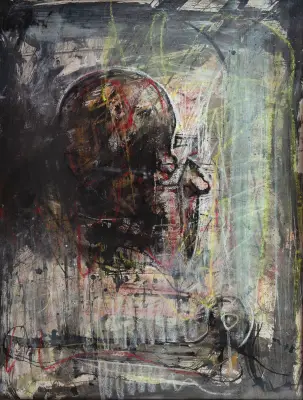
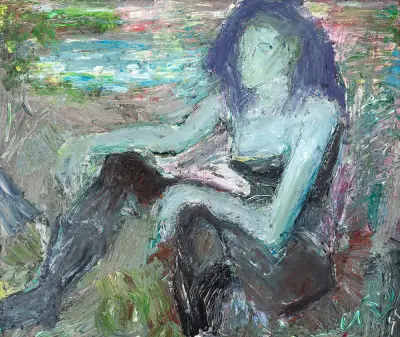
Carlito Carvalhosa was a painter and printmaker. He studied at the Faculdade de Arquitetura e Urbanismo da Universidade de São Paulo (FAU/USP) from 1980 to 1984. From 1980 to 1982, he took the metal printmaking course at the studio of Sérgio Fingermann (1953). In the 1980s, he was a member of the Casa 7 group, alongside Rodrigo Andrade (1962), Fábio Miguez (1962), Nuno Ramos (1960) and Paulo Monteiro (1961), producing large-scale paintings with an emphasis on the pictorial gesture. At the end of that decade, he began making works with wax, pure or mixed with pigments. He later devoted himself to sculpture, using a variety of materials, mostly with an organic, malleable appearance.
In 1989, he received a grant from the Deutscher Akademischer Austausch Dienst (DAAD – German Academic Exchange Service) and stayed in Cologne, Germany, until 1992. From the mid-1990s, he produced the "ceras perdidas" [lost waxes] and porcelain sculptures, exploring the aesthetic properties of the materials. In 2000, his career was documented in the book Carlito Carvalhosa, published by Cosac & Naify, with texts by Rodrigo Naves, Alberto Tassinari and Lorenzo Mammì.
Critical Commentary
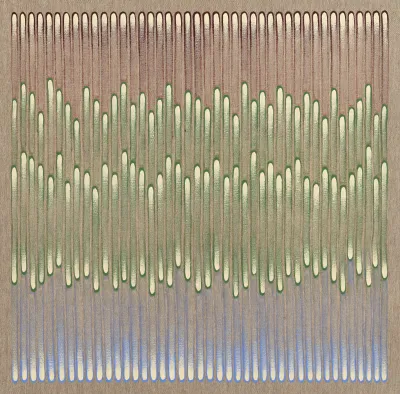
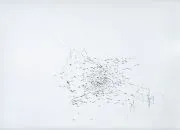
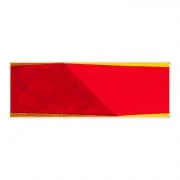
Carlito Carvalhosa's early work already reveals a constructive concern, seeking links between the expressive dimension of matter and form. In paintings made with wax at the end of the 1980s, the artist explores the malleability and translucency of the material. The viewer's gaze gets lost, finding no definitive point of support. This ambiguity is also found in the sculptures, whose placement in space always suggests a precarious position, causing discomfort to the eye. The artist mainly uses malleable, mimetic materials in white or translucent colors. As critic Lorenzo Mammì notes, the end result reveals the work's construction process, but also falsifies it, altering information about the properties of the materials.
As critic Rodrigo Naves notes, in the "ceras perdidas", made between 1994 and 1995, the plasticity of the wax makes the construction process evident through the memory of the cylinders that shaped them. In the porcelain sculptures, created in 1996 and 1997, he combines an organic quality with the rigidity and aseptic appearance of the material. As Naves also points out, in these sculptures the viewer's perception alternates among the pieces' various properties without arriving at a harmonious unity. In the critic's view, the artist's work involves a kind of divided coexistence between formal aspects that ought to appear unified, and therein lies both the discomfort and the interest of his work.
Critiques
"(...) On the one hand, Carlito accepts, as a starting point, the formal limits of the flat surface of the picture; on the other, he chooses as his material wax, a particularly dense, irregular, organic element. Pure or mixed with pigments, wax alternates between transparency and reflection; when heated, it cools into more or less compact lumps; spread over a plane, it forms cavities, bulges, cracks. Between two divergent elements (the lucid geometry of the surface and the organic anarchy of the wax), the artist's action becomes a mediation of opposites, a careful management of a conflict. It reveals not a predetermined scheme but rules and tactics of play. At certain moments, the artist offsets the geometric obviousness of the format with greater freedom in handling the material. At others, when the proportions of the picture are less defined, he reasserts them by removing fragments of the last layer of wax. But here too, formalization comes about through a trauma, to which the wax responds with a wrinkle, a sudden roughness. Form, in these works, is a point of precarious balance, a space of silence in a game of questions and answers. (...) The end result, however, is not minimalist: the work displays the marks, the deviations, the scars of a process of successive approximations. Nor can it be identified with arte povera, since it accepts, at least as a horizon line, the traditional limits of the picture."
Lorenzo Mammì
CARVALHOSA, Carlito. Carlito Carvalhosa: pintura com cera. São Paulo: Subdistrito Comercial de Arte, 1987.
Solo Exhibitions
1987 - São Paulo SP - Solo, at Subdistrito Comercial de Arte
1989 - Rio de Janeiro RJ - Solo, at Funarte. Galeria Rodrigo Mello Franco de Andrade
1989 - São Paulo SP - Solo, at Paulo Figueiredo Galeria de Arte
1992 - São Paulo SP - Solo, at CCSP
1994 - São Paulo SP - Solo, at Gabinete de Arte Raquel Arnaud
1995 - Rio de Janeiro RJ - Solo, at CCBB
2003 - São Paulo SP - Solo, at Gabinete de Arte Raquel Arnaud
Group Exhibitions
1982 - Curitiba PR - 5th Curitiba National Printmaking Show, at Casa da Gravura Solar do Barão
1984 - Curitiba PR - 6th Curitiba City Printmaking Show
1984 - Fortaleza CE - 7th National Visual Arts Salon
1984 - Rio de Janeiro RJ - 7th National Visual Arts Salon, at MAM/RJ
1984 - São Paulo SP - 2nd São Paulo Contemporary Art Salon, at MIS/SP - acquisition prize
1984 - São Paulo SP - Arte na Rua 2 [Art in the Street 2]
1984 - São Paulo SP - Grupo Casa 7 e Sérgio Fingermann [Casa 7 Group and Sérgio Fingermann], at CCSP
1985 - Rio de Janeiro RJ - Casa 7: pintura [Casa 7: Painting], at MAM/RJ
1985 - Rio de Janeiro RJ - 8th National Visual Arts Salon, at MAM/RJ
1985 - São Paulo SP - 12 Artistas Paulistas [12 São Paulo Artists], at Subdistrito Comercial de Arte
1985 - São Paulo SP - 18th São Paulo International Biennial, at Fundação Bienal
1985 - São Paulo SP - Casa 7: pintura [Casa 7: Painting], at MAC/USP
1985 - São Paulo SP - 3rd São Paulo Contemporary Art Salon, at Fundação Bienal - acquisition prize
1986 - Belo Horizonte MG - 9th National Visual Arts Salon: Southeast, at Fundação Clóvis Salgado. Palácio das Artes
1986 - Buenos Aires (Argentina) - Latin American Biennial of Art on Paper
1986 - Havana (Cuba) - 2nd Havana Biennial
1986 - Rio de Janeiro RJ - 9th National Visual Arts Salon - foreign travel prize
1986 - São Paulo SP - 4th São Paulo Contemporary Art Salon, at Fundação Bienal
1987 - Cuenca (Ecuador) - Ecuador International Biennial
1988 - São Paulo SP - MAC 25 Anos: aquisições e doações recentes [MAC 25 Years: Recent Acquisitions and Donations], at MAC/USP
1989 - São Paulo SP - 20th Panorama of Current Brazilian Art, at MAM/SP
1991 - São Paulo SP - Programa de Exposições de Artes Plásticas [Visual Arts Exhibition Program], at CCSP
1992 - São Paulo SP - João Sattamini/Subdistrito, at Casa das Rosas
1992 - São Paulo SP - Programa Anual de Exposições de Artes Plásticas 91 [Annual Visual Arts Exhibition Program 91], at Fundação Bienal
1993 - Brasília DF - Um Olhar sobre Joseph Beuys [A Look at Joseph Beuys], at Fundação Athos Bulcão
1994 - São Paulo SP - Bienal Brasil Século XX [20th-Century Brazil Biennial], at Fundação Bienal
1995 - São Paulo SP - Programa Anual de Exposições de Artes Plásticas [Annual Visual Arts Exhibition Program], at CCSP
1996 - Niterói RJ - Arte Contemporânea Brasileira na Coleção João Sattamini [Contemporary Brazilian Art in the João Sattamini Collection], at MAC/Niterói
1997 - São Paulo SP - Arte Cidade: a cidade e suas histórias [Arte Cidade: The City and Its Stories]
1998 - Niterói RJ - Espelho da Bienal [Mirror of the Biennial], at MAC/Niterói
1998 - São Paulo SP - Formas Transitivas: arte brasileira, construção e invenção [Transitive Forms: Brazilian Art, Construction and Invention], at Gabinete de Arte Raquel Arnaud
1998 - São Paulo SP - O Colecionador [The Collector], at MAM/SP
2000 - São Paulo SP - Cerâmica Brasileira: construção de uma linguagem [Brazilian Ceramics: The Construction of a Language], at Centro Brasileiro Britânico
2000 - São Paulo SP - Escultura Brasileira: da Pinacoteca ao Jardim da Luz [Brazilian Sculpture: From the Pinacoteca to the Jardim da Luz], at Pinacoteca do Estado
2000 - São Paulo SP - Obra Nova [New Work], at MAC/USP
2001 - Porto Alegre RS - 3rd Mercosul Visual Arts Biennial
2001 - Rio de Janeiro RJ - Espelho Cego: seleções de uma coleção contemporânea [Blind Mirror: Selections from a Contemporary Collection], at Paço Imperial
2001 - São Paulo SP - Espelho Cego: seleções de uma coleção contemporânea [Blind Mirror: Selections from a Contemporary Collection], at MAM/SP
2002 - Niterói RJ - Diálogo, Antagonismo e Replicação na Coleção Sattamini [Dialogue, Antagonism and Replication in the Sattamini Collection], at MAC/Niterói
2002 - Rio de Janeiro RJ - A Imagem do Som do Rock Pop Brasil [The Image of the Sound of Brazilian Pop Rock], at Paço Imperial
2002 - Rio de Janeiro RJ - Caminhos do Contemporâneo 1952-2002 [Paths of the Contemporary 1952-2002], at Paço Imperial
2002 - São Paulo SP - 12 Esculturas [12 Sculptures], at Galpão de Design
2002 - São Paulo SP - Genius Loci: o espírito do lugar [Genius Loci: The Spirit of Place], in the streets of the Vila Buarque neighborhood
2002 - São Paulo SP - Mapa do Agora: arte brasileira recente na Coleção João Sattamini do Museu de Arte Contemporânea de Niterói [Map of the Now: Recent Brazilian Art in the João Sattamini Collection of the Museu de Arte Contemporânea de Niterói], at Instituto Tomie Ohtake
2002 - São Paulo SP - Ópera Aberta: celebração [Open Opera: Celebration], at Casa das Rosas
2003 - Madrid (Spain) - Arco/2003, at Parque Ferial Juan Carlos I
2003 - Rio de Janeiro RJ - Projeto Brazilianart [Brazilianart Project], at Almacén Galeria de Arte
2003 - São Paulo SP - 2080, at MAM/SP
2003 - São Paulo SP - Arco 2003, at Gabinete de Arte Raquel Arnaud
2003 - São Paulo SP - Heterodoxia: edição São Paulo [Heterodoxy: São Paulo Edition], at Memorial da América Latina
2003 - São Paulo SP - MAC USP 40 Anos: interfaces contemporâneas [MAC USP 40 Years: Contemporary Interfaces], at MAC/USP
2004 - Rio de Janeiro RJ - Onde Está Você, Geração 80? [Where Are You, Generation 80?], at CCBB
2004 - São Paulo SP - Arte Contemporânea no Acervo Municipal [Contemporary Art in the Municipal Collection], at CCSP
2004 - São Paulo SP - Arte Contemporânea: uma história em aberto [Contemporary Art: An Open History], at Gabinete de Arte Raquel Arnaud
Source: Itaú Cultural