Anna Bella Geiger (Rio de Janeiro RJ 1933)
Anna Bella Geiger is a sculptor, painter, printmaker, draftswoman, intermedia artist and teacher. With a degree in Anglo-Germanic language and literature, she began her art studies in the 1950s in the studio of Fayga Ostrower (1920 - 2001). In 1954 she lived in New York, where she attended art history classes with Hannah Levy at The Metropolitan Museum of Art (MET) and audited courses at New York University. She returned to Brazil the following year. Between 1960 and 1965 she belonged to the metal engraving studio of the Museu de Arte Moderna do Rio de Janeiro (MAM/RJ), where she began teaching three years later.
In 1969 she returned to New York to teach at Columbia University, coming back to Rio de Janeiro in 1970. In 1982 she received a fellowship from the John Simon Guggenheim Memorial Foundation in New York. In 1987 she published, with Fernando Cocchiarale (1951), the book Abstracionismo Geométrico e Informal: a vanguarda brasileira nos anos cinquenta [Geometric and Informal Abstraction: The Brazilian Avant-Garde in the 1950s].
Her work is marked by the use of diverse languages and the exploration of new materials and supports. In the 1970s her production took on an experimental character, involving photomontage, photogravure, photocopy, video and Super 8. Since the 1980s she has also devoted herself to painting. From the 1990s she began using new materials, creating cartographic shapes cut out of metal, set in iron boxes or drawers and filled with encaustic. Her works lie on the boundary between painting, object and print.
Critical Commentary
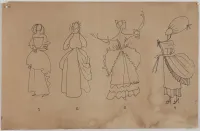
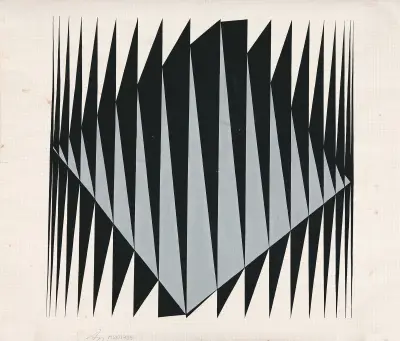
At first, Anna Bella Geiger's work was linked to informal abstraction. A student of drawing, printmaking and painting with Fayga Ostrower (1920 - 2001) from 1950, the artist took part in the 1st Exposição Nacional de Arte Abstrata [National Exhibition of Abstract Art] at the Hotel Quitandinha in Petrópolis, Rio de Janeiro, in 1953. After a pause in her artistic activity, prompted by her entry into the Faculdade Nacional de Filosofia and a study trip to the United States, Geiger attended the metal engraving studio of the Museu de Arte Moderna do Rio de Janeiro - MAM/RJ from 1960 to 1965. In this period, entirely devoted to printmaking, she developed a figuration with an abstract basis.
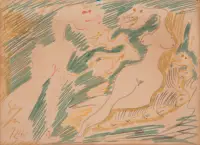
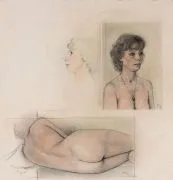
From 1965 to 1968 Geiger produced what critics call her "visceral phase", under the influence of the New Figuration. The images investigate organic reality through the fragmented depiction of the body as a reference to a possible map of the microcosm. This phase anticipates the use of cartography in her production, whose central axis is the questioning of the notion of cultural territories delimited by geographical borders - for example, problematizing the existence of a "Brazilian culture" common to all the nation's inhabitants. At the same time, Geiger composes her images from cut metal plates, making explicit and exploring artistically the very material process of metal engraving.
Despite the importance and constancy of printmaking in her work, Circumambulatio (1972) reveals Geiger's need to find new means of expression. Her production of the 1970s is accordingly marked by an eminently experimental character: photogravure, photographic plates, photomontage, silkscreen, photocopy, postcards, video and Super 8 are some of the media used by the artist. Stimulated by the questions raised by conceptual art and by the political moment, she presents in her works above all issues of national identity and culture, the artist's place in society, the constitution of the art world in Brazil and its position in the world.
The series Brasil Nativo/Brasil Alienígena [Native Brazil/Alien Brazil] (1977), in which Geiger places nine postcards with scenes of indigenous life side by side with portraits of her own daily life, is emblematic of the period. In it, Brazilian culture is conceived as the result of tensions, continuities and discontinuities, denying an organic cultural unity. At this point the ironic and transgressive use of cartography becomes a fundamental element of the work, in series such as O Pão Nosso de Cada Dia [Our Daily Bread] and Local da Ação [Place of Action]. The iconic character of maps is put under tension in order to create a true "topography of art" while problematizing the delimitations (cultural, political, social) indicated by borders and limits.
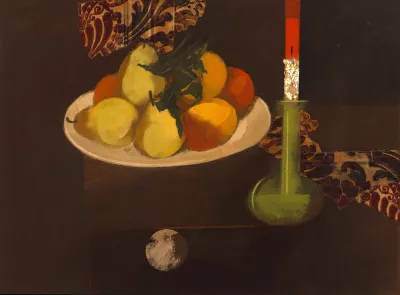
In the 1980s the artist began painting and developed long series, such as Píer & Ocean, critically reassessing both the history of painting and the signs of her earlier works. The 1990s are marked by series such as Fronteiriços [Borderlines], in which new materials are used. Cartographic shapes reappear cut out of metal inside iron boxes or map-cabinet drawers filled with encaustic. On the boundary between printmaking, painting and object, these works are the perfect emblem of her whole production, insofar as they update the earlier series. More recently she has returned to her interest in new technologies, using video together with printmaking (metal plates) and iron filing cabinets in the installation Indiferenciados [Undifferentiated] (2001).
Critiques
"Painting and paintings. O Todo e a(s) Parte(s) [The Whole and the Part(s)] (1974). The work and the methods. The picture and the time proper to each way of painting. The application of matter in the work as the history of the formation of color and the constitution of space. The artist integrates disparate parts into a whole united by her own history as an artist. Quotation. Each work has many painters, and all of them are Anna Bella Geiger. A condensation of subjective times in the single moment of the work.
Accumulated knowledge in new experience. History revisited: these works call upon Anna Bella Geiger, the artist of all languages.
(...) Almost. Stains. Almost nothing or almost everything. Almost-continents or almost-stains. Ambivalence. The question is put to the public, but the nonexistent answer is not demanded of it.
(...) The map insists on marking political space when the place of action, precise for the eye, is the support - space and matter - lived here and now by the viewer. The support insists on marking the space of the work when the place of action, precise for the political being, is the map - space and representation - here and now where the artist dwells".
Paulo Herkenhoff
HERKENHOFF, Paulo. Passagens. In: GEIGER, Anna Bella. Anna Bella Geiger: última Thule, pinturas, objetos e gravuras. Rio de Janeiro: Galeria Saramenha, 1985. p. 11-12.
"Until the early 1970s, the essence of some twenty years of Anna Bella Geiger's work had been an almost absolute dedication to metal engraving. (...) Later on, printmaking was suspended and replaced by a series of multimedia resources, such as photo-language, photocopying, postcards and videotape. (...) More recently, finally, a new and unexpected turn: in 1985, Anna Bella Geiger's work favors painting for the first time. A painting both measured and loose, compact and luminous, concealing and revealing, bound to the traditional formats of the picture or free of them, in the assemblages of the Macios [Soft Ones], ambiguously fluffy and pointed. A painting of postmodern command in which Fernando Cocchiarale sees the artist's various languages since the 1950s remade in the cauldron of revisiting: 'The paintings are the summary of a logbook. In condensed form, step by step, abstract, visceral and conceptual intuitions combine in a succession analogous to that of the artist's experience. There is no mere repetition of earlier phases here. The paintings are the succinct manifestation of a methodical, differentiated repertoire that leads them progressively to a safe harbor - Pier and Ocean'".
Roberto Pontual
PONTUAL, Roberto. Anna Bella Geiger. In: _______. Entre dois séculos: arte brasileira do século XX na coleção Gilberto Chateaubriand. Prefácio Gilberto Chateaubriand; apresentação M. F. do Nascimento Brito. Rio de Janeiro: Jornal do Brasil, 1987. p. 436.
"Take your case. Without wishing to decipher your work (...), I think it is deeply linked to your personal history and the circumstances that shaped it. From a young and sensitive daughter of immigrants, placed between several cultures and several languages (...), you became a woman and a professional artist here in Brazil - a synthesis of all those influences.
Your work, then, could be nothing other than the explanation, in the most varied media, of this original ambiguity of yours. Like almost all of us in Brazil and Latin America, your work and we ourselves are still somewhat local, somewhat foreign; we breathe the United States and Europe while treading American soil, walking the tightrope between native Brazil and alien Brazil. And your work, moving through so many different languages and being (...) at once prints, object and painting, is itself our own congenital indeterminacy.
Immersed in the self-referential meanders of the romantic informalism of the 1950s/70s, little by little you became aware (...) of much broader and more implacable conventions and contradictions. (...)
It is in this sense that I consider that work of yours from 1975 - Passagens [Passages] - a landmark. Or rather, a means of access to a less self-centered formulation of art and life, up to your production from that year to now, in which you discuss your place in the World. Your place and the place, the site of action of your closest fellows, Brazilians and Latin Americans. An undefined place, always between one place and another".
Tadeu Chiarelli
GEIGER, Anna Bella. O Mundo talvez, olam ulay. Ipanema: Joel Edelstein Arte Contemporânea, 1995. p. 6-7.
"The meaning of Anna Bella Geiger's work emerges precisely from the clear dispersion of her individual style, of the media and languages she brings into play and, above all, from the deliberate fragmentation of form and image, almost always thematized in the titles or concepts associated with the works, running through every level of her production. (...)
Transmuted over the last 22 years by repetition, chromatic variation or enlargement and reduction, the image of the clouds has become a camouflage of its own origin; a printed skin that supports and veils differences, imprisoning the iconic fragments. Camouflage, however, is not the only element mobilizing the surface in Geiger's printmaking. Prompted by the presence of maps, the grid, or network of meridians, performs an analogous function. Both camouflage and grid constitute the image of the unity of a field, which brings together on the surface of the work the fragments that compose it. Camouflage hovers over the plane, virtually expanding it beyond its limits; the grid delimits and surveys a territory, containing it. Each of this artist's prints can therefore be taken as a fraction of the continuous and limitless field of the cloud-camouflage.
The field produced by Anna Bella's printmaking arises from the tension between artisanal printing methods (handling of screens, plates and matrix blocks, inking, feeding the paper into the press) and the photographic genesis of the image".
Fernando Cocchiarale
COCCHIARALE, Fernando. O sentido constelar na obra de Anna Bella Geiger. In: GEIGER, Anna Bella. Anna Bella Geiger: constelações. Rio de Janeiro: MAM, 1996. p. 9-10, 14.
"Anna Bella Geiger began printmaking with Fayga Ostrower in the 1950s, moving toward form after having practiced figurative printmaking with her. She arrived at abstraction with rhythmic prints composed of circulating lines, colors and forms, developed either from her reflection on Fayga's visual grammar or in parallel with it. A theorist, like Fayga and De Lamonica, Anna Bella Geiger experimented with various languages at the end of the 1960s, at times incorporating them into printmaking, at times carrying them over to other techniques. Her reflection on becoming, in the 1970s, took place in videotape, photocopy, photography, etc. Conversely, in the same years, her aesthetic thinking about the philosophical notions of part and whole brought photography into printmaking, not without first putting it through experiments with the photographic plate. In the 1960s, the series linked to the visceral led her to leave abstraction, which she had practiced intensely in the decade in question. It was in those years that she began teaching at MAM and researching media such as photography and photocopy, which, as mentioned above, became established in the following decade".
Leon Kossovitch e Mayra Laudanna
KOSSOVITCH, Leon; LAUDANNA, Mayra. Abstratos-concretos: abstratos. In: GRAVURA: arte brasileira do século XX. São Paulo: Itaú Cultural: Cosac & Naify, 2000. p. 18.
Testimonials
"I started drawing early, and I drew a lot. I had known Fayga Ostrower since childhood, through a family relationship. That was not, however, why I drew, nor was I encouraged by my family. (...)
I kept drawing intensely and then sought Fayga's guidance. I was 15. At that time she was not yet an abstract artist - I followed her process closely, and it had a direct influence on my work. [?] She used linoleum for printmaking, but we even used X-ray film for drypoint engraving. Materials were expensive, and I often made a drawing on each side of the Ingres paper, or used brass plates to engrave on both sides. I learned to print metal engravings before using the medium for my own work. At that time Fayga illustrated a poem by Manuel Bandeira, and I did the printing. (...)
I abhorred the idea of going to a Fine Arts school. My choice leaned toward architecture, although I had the clear impression I would fall into stereotypes: architectural syntheses, their perspectives, the use of ruler and set square. So I chose the Faculdade Nacional de Filosofia, and those studies absorbed me a great deal. I interrupted them and went to live in New York. I wanted to see the modern art museums, see what was happening there, and study art history with Hannah Levy at NYU and the Metropolitan Museum. She had taught here at the Fundação Getúlio Vargas in the 1940s, having come from Germany. Those were extremely important years for my training. (...)
What existed was a great and difficult question about whether or not it was necessary to keep figuration, because while on the one hand the path to abstraction was 'inexorable' and logical, on the other there was a commitment - political and ideological, let us say - to maintaining the figurative question. I worked very little on issues related to 'social realism', as it was called at the time. (...)
The greatest influence on this kind of art, and on printmaking especially, came from the German artist Käthe Kollwitz. Leskoschek had been her student, and that whole European Expressionist past, which was in a way recent, influenced artists here such as Fayga and, consequently, acted on me. In my work, however, it gradually became more important to accentuate a line or a geometric form arising from the bend of an arm than to keep the figure or object represented. That was in a first stage. True awareness of what abstraction meant - radical abstraction, no longer working from any reference - came only through a great deal of elaboration. (...)
Around 1970-71 I began to look for other media that would help me assemble the ideas of my work. (...) Photography interested me not as a photographer but in terms of using photographic images appropriated or recorded by me. (...)
In 1972 I began to experiment with the possibility of the photographic plate as such, printing it in the press. (...) Here I had nowhere to work with the technique that in the United States was called photo-etching. (...)
I needed to use color in these prints, in a very specific way, without oxidation (...). Although I had used this result in the abstract prints of the 1960s, it did not work now (...). In a practical but rather rudimentary way I began to print, gradually understanding the technical possibilities, especially in the use of color".
Anna Bella Geiger - Sesc Tijuca, 28 de setembro de 1986 e 8 de agosto de 1997
EXPERIÊNCIA com foto, vídeo e serigrafia: Anna Bella Geiger. In: GRAVURA brasileira hoje: depoimentos. Rio de Janeiro: Oficina de gravura SESC-Tijuca, 1997. v. 3.
Collections
Casa de las Américas (Havana, Cuba)
Centre Georges Pompidou (Paris, France)
Coleção Museu de Arte Contemporânea da Universidade de São Paulo (SP)
Coleção João Sattamini - Museu de Arte Contemporânea de Niterói (MAC-Niterói)
Coleção Museu de Arte Moderna do Rio de Janeiro (RJ)
Fundação de Serralves (Porto, Portugal)
Musée d'Art et d'Histoire de Genève
Museum of Modern Art (New York, United States)
Solo Exhibitions
1954 - Toronto (Canada) - Solo, at Eglington Gallery
1963 - New York (United States) - Solo, at European Gallery
1965 - Rio de Janeiro RJ - Solo, at Galeria Goeldi
1967 - Rio de Janeiro RJ - Solo, at Galeria Relevo
1968 - São Paulo SP - Solo, at Art Gallery
1969 - New York (United States) - Solo, at Columbia University
1972 - Rio de Janeiro RJ - Circumambulatio, Museu de Arte Moderna do Rio de Janeiro - MAM/RJ
1974 - Rio de Janeiro RJ - Solo, at Galeria Bonino
1975 - Rio de Janeiro RJ - Situações-Limite [Limit Situations], at MAM/RJ
1976 - São Paulo SP - Solo, at Galeria Arte Global
1978 - New York (United States) - Anna Bella Geiger, at MoMA
1978 - Rio de Janeiro RJ - Local da Ação [Place of Action], at Centro Candido Mendes
1980 - São Paulo SP - Local de Ação [Place of Action], at Galeria Saramenha
1981 - São Paulo SP - Solo, at Paulo Figueiredo Galeria de Arte
1982 - New York (United States) - Solo, at Guggenheim Fellowship
1984 - London (England) - Solo, at Brazilian Centre
1984 - Munich (Germany) - Solo, at Galerie Irene Maeder
1985 - Rio de Janeiro RJ - Última Thule [Ultima Thule], at Galeria Saramenha
1987 - Brasília DF - Anna Bella Geiger: Paintings, at Espaço Capital Arte Contemporânea
1987 - São Paulo SP - Solo, at Escritório de Arte São Paulo
1988 - Rio de Janeiro RJ - O Sorriso do Gato de Cheshire em Alice nº 1 [The Cheshire Cat's Smile in Alice No. 1], at Galeria Saramenha
1990 - Rio de Janeiro RJ - Anna Bella Geiger: Painting, at Galeria Saramenha
1990 - São Paulo SP - Solo, at Kate Art Gallery
1993 - Rio de Janeiro RJ - Friso e Vídeo Macios [Frieze and Soft Video], at Galeria Ibeu Copacabana
1994 - Rio de Janeiro RJ - Ambiente Parcial com Retorno ao Sorriso do Gato de Cheshire em Alice nº 1 [Partial Environment with a Return to the Cheshire Cat's Smile in Alice No. 1], at Paço Imperial
1994 - Rio de Janeiro RJ - Solo, at Paço Imperial
1995 - Frankfurt (Germany) - Solo, at Galerie Bernd Slutzky
1995 - Rio de Janeiro RJ - O Mundo Talvez, Olam Ulay [The World Perhaps, Olam Ulay], at Joel Edelstein Arte Contemporânea
1996 - Rio de Janeiro RJ - Anna Bella Geiger: Constellations, at MAM/RJ
1997 - São Paulo SP - Anna Bella Geiger: Constellations, at Museu de Arte Moderna de São Paulo - MAM/SP
1997 - Salvador BA - Anna Bella Geiger: Constellations, at Museu de Arte Moderna da Bahia - MAM/BA
1997 - Brasília DF - Anna Bella Geiger: Constellations, at Palácio Itamaraty
1998 - Rio de Janeiro RJ - Bereshith, No Princípio... [Bereshith, In the Beginning...], at Paço Imperial
1999 - Frankfurt (Germany) - Skulpturen, at Galeria Bernd Slutzky
2001 - Rio de Janeiro RJ - Solo, at Laura Marsiaj Arte Contemporânea
2001 - Rio de Janeiro RJ - Indiferenciados [Undifferentiated], at Paço Imperial
2001 - Rio de Janeiro RJ - Local da Ação [Place of Action], at Centro Cultural do Banco do Brasil - CCBB (Rio de Janeiro, RJ)
2002 - Rio de Janeiro RJ - Rrose Sélavy, mesmo [Rrose Sélavy, Even], at Parque das Ruínas
2003 - Rio de Janeiro RJ - Solo, at Paço Imperial
2003 - Rio de Janeiro RJ - Obras em Arquipélago [Works in Archipelago], Paço Imperial
2004 - São Paulo SP - Obras em Arquipélago [Works in Archipelago], at Instituto Tomie Ohtake
2005 - Frankfurt (Germany) - An Einem Bestimmten Ort, at Galerie Bernd Slutzky
2005 - Rio de Janeiro RJ - Ultra Licitum, at Galeria Laura Marsiaj Arte Contemporânea
2006 - Rio de Janeiro RJ - CIRCA, at Fundação Eva Kablin
2006 - Rio de Janeiro RJ - The Paths of Fayga Ostrower, at Caixa Cultural (Rio de Janeiro, RJ)
Group Exhibitions
1952 - Rio de Janeiro RJ - 1st National Salon of Modern Art, at Museu de Arte Moderna do Rio de Janeiro - MAM/RJ
1953 - Petrópolis RJ - 1st National Exhibition of Abstract Art, at Hotel Quitandinha
1956 - Rio de Janeiro RJ - 1st Railway Salon, at Ministério da Educação e Cultura
1961 - São Paulo SP - 6th Bienal Internacional de São Paulo, at Pavilhão Ciccilo Matarazzo Sobrinho
1962 - Curitiba PR - Paraná Salon, at Biblioteca Pública do Paraná
1962 - Havana (Cuba) - 1st Pan-American Salon of Cuba, at Casa de las Américas, 1st prize
1962 - Madrid (Spain) - Arte de América y España
1963 - Curitiba PR - 20th Paraná Fine Arts Salon, at Biblioteca Pública do Paraná - gold medal
1963 - Curitiba PR - Modern Art Salon - 1st prize
1963 - London (England) - Brazilian Art Today, at Royal College of Art
1963 - Santiago (Chile) - 1st American Printmaking Biennial - honorable mention
1963 - São Paulo SP - 7th Bienal Internacional de São Paulo, at Fundação Bienal
1964 - Ribeirão Preto SP - 1st Young National Printmaking Exhibition
1964 - São Paulo SP - 1st Young National Printmaking Exhibition, at Museu de Arte Contemporânea da Universidade de São Paulo - MAC/USP - 1st prize
1965 - Belo Horizonte MG - 1st Young National Printmaking Exhibition, at Museu de Arte da Pampulha - MAP (Belo Horizonte MG)
1965 - Curitiba PR - 1st Young National Printmaking Exhibition, at Secretaria do Estado de Educação
1965 - Florianópolis SC - 1st Young National Printmaking Exhibition, at Museu de Arte de Santa Catarina - Masc (Florianópolis SC)
1965 - London (United Kingdom) - Brazilian Art Today, at Royal Academy of Arts
1965 - Santiago (Chile) - 2nd American Printmaking Biennial, at Museo de Arte Contemporáneo
1965 - São Paulo SP - 2nd Young National Drawing Exhibition, at MAC/USP
1965 - São Paulo SP - 8th Bienal Internacional de São Paulo, at Fundação Bienal
1966 - Rio de Janeiro RJ - 15th National Salon of Modern Art - jury exemption
1966 - Rio de Janeiro RJ - JB Art Summary, at MAM/RJ - 1st prize/printmaking
1966 - Salvador BA - 1st National Visual Arts Biennial - acquisition prize
1966 - São Paulo SP - 2nd Young National Printmaking Exhibition, at MAC/USP
1966 - Tokyo (Japan) - A Week of Brazilian Contemporary Art, at Kaigado Gallery
1967 - Brasília DF - 4th Federal District Salon of Modern Art, at Teatro Nacional Cláudio Santoro - 1st prize/printmaking
1967 - Ljubljana (Slovenia) - 7th International Print Biennial, at Moderna Galerija Ljubljana
1967 - Paris (France) - 5th Biennale des Jeunes
1967 - Rio de Janeiro RJ - 3rd The Face and the Work, at Galeria Ibeu Copacabana
1967 - São Paulo SP - 9th Bienal Internacional de São Paulo, at Fundação Bienal
1968 - Edinburgh (Scotland) - Young Brazilian Art, at Demarco Gallery
1968 - Rio de Janeiro RJ - 17th National Salon of Modern Art, at MAM/RJ
1968 - Rio de Janeiro RJ - 6th JB Art Summary - foreign travel prize
1969 - Rio de Janeiro RJ - 18th National Salon of Modern Art, at MAM/RJ
1969 - Rio de Janeiro RJ - Salão da Bússola [Compass Salon], at MAM/RJ
1969 - São Paulo SP - 1st Panorama of Current Brazilian Art, at MAM/SP
1970 - Rio de Janeiro RJ - 19th National Salon of Modern Art, at MAM/RJ
1970 - São Paulo SP - Brazilian Printmaking, at Paço das Artes
1971 - São Paulo SP - 3rd Panorama of Current Brazilian Art, at MAM/SP
1972 - Rio de Janeiro RJ - Circumambulatio, at MAM/RJ
1972 - Rio de Janeiro RJ - Exhibition, at MAM/RJ
1972 - São Paulo SP - Art/Brazil/Today: 50 Years Later, at Galeria da Collectio
1972 - São Paulo SP - Brazilian Multiples, at Galeria Múltipla de Arte
1973 - Rio de Janeiro RJ - Inquiry into Nature: Meaning and Function of the Work of Art, at Galeria Ibeu Copacabana
1973 - São Paulo SP - Circumambulatio, at MAC/USP
1973 - São Paulo SP - Expo-Projeção 73, at Espaço Grife
1974 - São Paulo SP - 6th Panorama of Current Brazilian Art, at MAM/SP
1974 - São Paulo SP - 8th Young Contemporary Art, at MAC/USP
1974 - São Paulo SP - Prospectiva' 74, at MAC/USP
1975 - Chicago (United States) - Video Art, at Museum of Contemporary Arts
1975 - Philadelphia (United States) - Video Art, at The Institute of Contemporary Art
1975 - Kassel (Germany) - Multimedia II, at Richard Bottinelli Gallery
1975 - Rio de Janeiro RJ - Exhibition of Experimental Art in Super 8 Films, Audiovisual and Videotape, at Galeria Maison de France
1977 - São Paulo SP - Visual Poetics, at MAC/USP
1977 - Washington (United States) - The Original and its Reproduction: a Melhoramentos project, at Brazilian-American Cultural Institute
1978 - Curitiba PR - 1st Curitiba Annual Printmaking Show, at Centro de Criatividade de Curitiba
1978 - Ljubljana (Slovenia) - Juij Group, at Moderna Galerija Ljubljana
1978 - Paris (France) - Artistes Brésiliens, at Musée Galliera
1978 - Paris (France) - Images et Messages d'Amérique Latine, at Centre Culturel Villeparisis
1978 - São Paulo SP - 1st São Paulo International Video Art Meeting, at Museu da Imagem e do Som - MIS (São Paulo, SP)
1978 - São Paulo SP - Anna Bella Geiger and Artur A. Barrio, at Pinacoteca do Estado de São Paulo - Pesp
1978 - Tokyo (Japan) - 11ª International Biennial Exhibition of Prints
1978 - Venice (Italy) - 39th Venice Biennale
1979 - New York (United States) - Contemporary Brazilian Works on Paper: 49 artists, at Nobé Gallery
1980 - Amsterdam (Netherlands) - Kunstenaarsboeken, at Stedelijk Museum Amsterdam
1980 - Curitiba PR - 3rd Curitiba Annual Printmaking Show, at Casa da Gravura Solar do Barão
1980 - Kyoto (Japan) - Impact Art, at Kyoto City Museum
1981 - Kobe (Japan) - International Video Art Festival Portopia 81
1981 - São Paulo SP - 16th Bienal Internacional de São Paulo, at Fundação Bienal
1981 - São Paulo SP - Foto/Idéia [Photo/Idea], at MAC/USP
1982 - Penápolis SP - 5th Noroeste Visual Arts Salon, at Fundação Educacional de Penápolis. Faculdade de Filosofia, Ciências e Letras de Penápolis
1982 - Rio de Janeiro RJ - 5th National Visual Arts Salon, at MAM/RJ - foreign travel prize
1982 - Rio de Janeiro RJ - Contemporaneity: Tribute to Mário Pedrosa, at MAM/RJ
1983 - New York (United States) - Latin-American Artist's Multiples, at Franklin Furnace, Inc.
1983 - New York (United States) - Exhibition, at Fundação Guggenheim
1983 - New York (United States) - Video Art: a history, at MoMA
1983 - Olinda PE - 2nd Exhibition of the Abelardo Rodrigues Visual Arts Collection, at Museu de Arte Contemporânea de Pernambuco (Olinda, PE)
1983 - Rio de Janeiro RJ - 6th National Visual Arts Salon, at MAM/RJ
1984 - Buenos Aires (Argentina) - 1st Paper Biennial - drawing prize
1984 - London (England) - Portraits of a Country: Brazilian Modern art from the Gilberto Chateaubriand Collection, at Barbican Art Gallery
1984 - Ribeirão Preto SP - Brazilian Printmakers of the 1950s/60s, at Galeria Campus
1984 - Rio de Janeiro RJ - 1st National Exhibition of Abstract Art - Hotel Quitandinha 1953, at Galeria de Arte Banerj
1984 - São Paulo SP - Tradition and Rupture: A Synthesis of Brazilian Art and Culture, at Fundação Bienal
1985 - London (England) - Impostors, at Interim Art Gallery
1985 - Rio de Janeiro RJ - 8th National Visual Arts Salon, at MAM/RJ
1985 - Rio de Janeiro RJ - Art Construction: 21 Contemporary Artists, at Galeria do Centro Empresarial Rio
1985 - Rio de Janeiro RJ - Old Habit: Brazilian Drawing, at Escola de Artes Visuais - EAV/Parque Lage
1985 - São Paulo SP - 18th Bienal Internacional de São Paulo, at Fundação Bienal
1985 - São Paulo SP - Art and Technology, at MAC/USP
1985 - São Paulo SP - Art New Media/Multimedia: Brazil 70/80, at Museu de Arte Brasileira - MAB/Faap
1985 - São Paulo SP - Trends in the Artist's Book in Brazil, at Centro Cultural São Paulo - CCSP
1986 - Curitiba PR - 7th Collection of the Museu Nacional da Gravura - Casa da Gravura, at Museu Guido Viaro
1986 - Rio de Janeiro RJ - Occupied Territory, at EAV/Parque Lage
1986 - São Paulo SP - Projeto Vermelho Proggetto Rosso, at MAB/Faap
1987 - Austin (United States) - Latin American Artists in New York Since 1970, at The University of Texas at Austin. Archer M. Huntington Art Gallery
1987 - Rio de Janeiro RJ - To the Collector: Tribute to Gilberto Chateaubriand, at MAM/RJ
1987 - São Paulo SP - Foto/Idéia [Photo/Idea], at MAC/USP
1988 - Campinas SP - 13th Campinas Contemporary Art Salon, at Museu de Arte Contemporânea José Pancetti
1988 - Curitiba PR - 8th Curitiba City Printmaking Show, at Casa da Gravura Solar do Barão
1988 - New York (United States) - Abstract Vision, at Museum of Contemporary Hispanic Art
1988 - New York (United States) - The Latin American Spirit: art and artists in the United States, 1920/1970, at The Bronx Museum of the Arts
1989 - El Paso (United States) - The Latin American Spirit: art and artists in the United States, 1920-1970, at El Paso Museum of Art
1989 - Rio de Janeiro RJ - Banco Bozzano-Simonsen Collection, at MAM/RJ
1989 - Rio de Janeiro RJ - Brazilian Printmaking: 4 Themes, at EAV/Parque Lage
1989 - San Diego (United States) - The Latin American Spirit: art and artists in the United States, 1920/1970, at San Diego Museum of Art
1989 - San Juan (Puerto Rico) - The Latin American Spirit: art and artists in the United States, 1920-1970, at Instituto de Cultura Puertorriqueña
1989 - São Paulo SP - 20th Bienal Internacional de São Paulo, at Fundação Bienal
1990 - Brasília DF - Brasília Visual Arts Prize, at MAB/DF
1990 - Curitiba PR - 9th Curitiba City Printmaking Show, at Museu da Gravura
1990 - Miami (United States) - The Latin American Spirit: art and artists in the United States, 1920/1970, at Center for the Fine Arts Miami Art Museum of Dade
1991 - São Paulo SP - What Are You Doing Now, Generation 60?: Young Contemporary Art of the 1960s Revisited, at MAC/USP
1992 - Curitiba PR - 10th Curitiba City Printmaking Show/America Show, at Museu da Gravura
1992 - Rio de Janeiro RJ - 1st On the Way to Niterói: João Sattamini Collection, at Paço Imperial
1992 - Rio de Janeiro RJ - Brazilian Contemporary Art, at EAV/Parque Lage
1992 - Rio de Janeiro RJ - Eco Art, at MAM/RJ
1992 - Rio de Janeiro RJ - Printmaking in Brazil: A Proposal for a Mapping, at CCBB
1992 - Rio de Janeiro RJ - The Artist's Path: Prints, at EAV/Parque Lage
1993 - Brasília DF - A Look at Joseph Beuys, at Fundação Athos Bulcão
1993 - Florence (Italy) - Brasil: Segni d'Arte, at Biblioteca Nazionale Centrale di Firenze
1993 - Milan (Italy) - Brasil: Segni d'Arte, at Biblioteca Nazionale Braidense
1993 - Rio de Janeiro RJ - The Rarefaction of the Senses: João Sattamini Collection - 1970s, at EAV/Parque Lage
1993 - Rio de Janeiro RJ - The Paper of Rio, at Paço Imperial
1993 - Rio de Janeiro RJ - Passion of the Gaze, at MAM/RJ
1993 - Rome (Italy) - Brasil: Segni d'Arte, at Centro de Estudos Brasileiros
1993 - São Paulo SP - Modern Drawing in Brazil: Gilberto Chateaubriand Collection, at Galeria de Arte do Sesi
1993 - Venice (Italy) - Brasil: Segni d'Arte, at Fondazione Scientifica Querini Stampalia
1993 - Washington (United States) - Ultramodern: the art of contemporary Brazil, at The National Museum of Women in the Arts
1994 - Beijing (China) - Works on Paper, at Yan Huang Art Museum
1994 - Belo Horizonte MG - The Ephemeral in Brazilian Art: 1960s/70s, at Itaú Cultural Belo Horizonte
1994 - New York (United States) - Blast 4: bioinfomática, at The X-Art Foundation
1994 - Penápolis SP - The Ephemeral in Brazilian Art: 1960s/70s, at Galeria Itaú Cultural
1994 - Beijing (China) - Contemporary Art in Brazil: works on paper, at Yan Huang Art Museum
1994 - Rio de Janeiro RJ - Book-Object: The Frontier of Voids, at CCBB
1994 - Rio de Janeiro RJ - Modern Drawing in Brazil: Gilberto Chateaubriand Collection, at MAM/RJ
1994 - Rio de Janeiro RJ - Under the Sign of Gemini, at Galeria Saramenha
1994 - Rio de Janeiro RJ - Trenches: Art and Politics in Brazil, at MAM/RJ
1994 - São Paulo SP - Contaminated Photography, at CCSP
1994 - São Paulo SP - Bienal Brasil Século XX, at Fundação Bienal
1994 - São Paulo SP - Seascapes, at Galeria Nara Roesler
1994 - São Paulo SP - The Ephemeral in Brazilian Art: 1960s/70s, at Itaú Cultural
1994 - São Paulo SP - Poetics of Resistance: Aspects of Brazilian Printmaking, at Galeria de Arte do Sesi
1995 - Arizona (United States) - The World's Women on Line!, at Institute for Studies in the Arts of Arizona State University
1995 - Bremen (Germany) - Copie-Grafien-Bücher und Graphik-Neues, at Museum Weserburg
1995 - Curitiba PR - 11th Printmaking Show, at Fundação Cultural de Curitiba. Solar do Barão
1995 - Lausanne (Switzerland) - Rio: Mysteries and Frontiers, at Musée de Pully
1995 - New York (United States) - Adding it up: Acquisitions 70-95, at MoMA
1995 - São Paulo SP - Book-Object: The Frontier of Voids, at MAM/SP
1995 - Tucson (United States) - The World's Women on Line!, at Arizona State University. Institute for Studies in the Arts
1995 - Washington (United States) - Ultramodern Art of Contemporary Brasil, at National Museum of Women in the Arts
1996 - Belém PA - 15th Arte Pará Salon, at Museu de Arte de Belém
1996 - Belo Horizonte MG - Traveling Impressions, at Palácio das Artes
1996 - Brasília DF - The Ephemeral in Brazilian Art: 1960s/70s, at Itaú Galeria
1996 - Niterói RJ - Brazilian Contemporary Art in the João Sattamini Collection, at Museu de Arte Contemporânea (Niterói, RJ)
1996 - Rio de Janeiro RJ - Rio: Mysteries and Frontiers, at MAM/RJ
1996 - São Paulo SP - Cultural Mercosul, at CCSP
1996 - São Paulo SP - Modernity and Contemporaneity in the Visual Arts, at CCSP
1996 - São Paulo SP - Women Artists in the MAC Collection, at MAC/USP
1997 - Curitiba PR - The Contemporary Art of Printmaking, at Museu Metropolitano de Arte de Curitiba
1997 - Havana (Cuba) - 6th Havana Biennial, at Centro de Arte Contemporáneo Wifredo Lam
1997 - Little Rock (United States) - Re-Aligning Visions: alternative currents in South American drawing, at Arkansas Art Center
1997 - New York (United States) - Re-Aligning Visions: alternative currents in South American drawing, at El Museo del Barrio
1997 - Porto Alegre RS - 1st Bienal de Artes Visuais do Mercosul, at Aplub; Casa de Cultura Mário Quintana; DC Navegantes; Edel; Usina do Gasômetro; Instituto de Artes da UFRGS; Fundação Bienal de Artes Visuais do Mercosul; Margs; Espaço Ulbra; Museu de Comunicação Social; Reitoria da UFRGS; Theatro São Pedro
1997 - Porto Alegre RS - Cartographic Strand, at Usina do Gasômetro
1997 - Rio de Janeiro RJ - Identity/Non-Identity: Current Brazilian Photography, at Centro Cultural Light
1997 - São Paulo SP - Identity/Non-Identity: Current Brazilian Photography, at MAM/SP
1998 - Austin (United States) - Re-Aligning Visions: alternative currents in South American drawing, at Archer M. Huntington Art Gallery
1998 - Belo Horizonte MG - The Support of the Word
1998 - Caracas (Venezuela) - Re-Aligning Visions: alternative currents in South American drawing, at Museo de Bellas Artes
1998 - Cuenca (Ecuador) - 6th Cuenca International Biennial
1998 - Monterrey (Mexico) - Re-Aligning Visions: alternative currents in South American drawing, at Museo de Arte Contemporáneo
1998 - Niterói RJ - Mirror of the Biennial, at MAC-Niterói
1998 - Porto Alegre RS - 1st Mercosul Biennial
1998 - Rio de Janeiro RJ - 16th National Visual Arts Salon, at MAM/RJ
1998 - Rio de Janeiro RJ - The 1960s/70s: Gilberto Chateaubriand Collection, at MAM/RJ
1998 - Rio de Janeiro RJ - Brazilian Art in the Collection of the Museu de Arte Moderna de São Paulo: Recent Donations 1996-1998, at CCBB
1998 - Rio de Janeiro RJ - Terra Incognita, at CCBB
1998 - São Paulo SP - 24th Bienal Internacional de São Paulo, at Fundação Bienal
1998 - São Paulo SP - Frontiers, at Itaú Cultural
1998 - São Paulo SP - The Modern and the Contemporary in Brazilian Art: Gilberto Chateaubriand Collection - MAM/RJ, at Masp
1998 - São Paulo SP - The Support of the Word, at MAM/SP
1998 - São Paulo SP - The Collectors - Guita and José Mindlin: Matrices and Prints, at Galeria de Arte do Sesi
1999 - Miami (United States) - Re-Aligning Visions: alternative currents in South American drawing, at Miami Art Museum
1999 - Cidade do Porto (Portugal) - CIRCA 68, at Fundação Serralves
1999 - Rio de Janeiro RJ - Rio Printmaking Show: Brazilian Modern Printmaking: Museu Nacional de Belas Artes Collection, at MNBA
2000 - Belo Horizonte MG - Investigations. Brazilian Printmaking. Are They or Are They Not Prints, at Itaú Cultural
2000 - Brasília DF - Investigations. Are They or Are They Not Prints?, at Itaú Galeria
2000 - Curitiba PR - 12th Curitiba Printmaking Show. Marks of the Body, Folds of the Soul
2000 - Madrid (Spain) - Cartografias del Deseo, at Museu Nacional Centro de Arte Reina Sofia
2000 - Rio de Janeiro RJ - Brazilianities, at Centro Cultural Light
2000 - Rio de Janeiro RJ - Open Newspaper, at Museu do Telefone
2000 - Rio de Janeiro RJ - Situations: Brazilian Art of the 1970s, at Fundação Casa França-Brasil
2000 - São Paulo SP - Conceptual Art and Conceptualism: The 1970s in the MAC/USP Collection, at Galeria de Arte do Sesi
2000 - São Paulo SP - Brazil + 500 Rediscovery Exhibition. Contemporary Art, at Fundação Bienal
2000 - São Paulo SP - Investigations. Brazilian Printmaking, at Itaú Cultural
2001 - Brasília DF - Investigations. Brazilian Printmaking, at Galeria Itaú Cultural
2001 - Campinas SP - (Almost) Ephemeral Art, at Itaú Cultural
2001 - Campinas SP - Displacements of the Self: The Digital and Pre-Digital Self-Portrait in Brazilian Art 1976-2001, at Itaú Cultural
2001 - Penápolis SP - Investigations. Brazilian Printmaking, at Galeria Itaú Cultural
2001 - Rio de Janeiro RJ - 9th Universidarte, at Universidade Estácio de Sá. Galeria Maria Martins
2001 - Rio de Janeiro RJ - The Trajectory: The Artist's Experiment, the Trajectory and the Process, at Funarte
2001 - Rio de Janeiro RJ - Brazilian Watercolor, at Centro Cultural Light
2001 - Rio de Janeiro RJ - Orlândia, temporary occupation of a house under construction bringing together 44 artists of several generations, at Rua Jornalista Orlando Dantas nº 53, Botafogo
2001 - São Paulo SP - Brazilian Culture 1, at Casa das Rosas
2001 - São Paulo SP - Trajectory of Light in Brazilian Art, at Itaú Cultural
2001 - Washington D. C. (United States) - Virgin Territory: women, gender, and history in contemporary Brazilian art, at National Museum of Women in the Arts
2002 - Brasília DF - Fragments to Their Magnet, at Espaço Cultural Contemporâneo Venâncio
2002 - Niterói RJ - Collection on Paper, at MAC-Niterói
2002 - Rio de Janeiro RJ - The Image of the Sound of Brazilian Pop Rock, at Paço Imperial
2002 - Rio de Janeiro RJ - Artefoto, at CCBB
2002 - Rio de Janeiro RJ - Paths of the Contemporary 1952-2002, at Paço Imperial
2002 - Rio de Janeiro RJ - Between Image and Word: Module 2, at Sala MAM-Cittá América
2002 - São Paulo SP - Form and the Technical Image in the Art of Rio de Janeiro: 1950-1975, at Paço das Artes
2002 - São Paulo SP - Brazilian Multiples 30 Years Later, at Múltipla de Arte
2002 - Washington (USA) - Virgin Territories, at The National Museum for Women in the Arts
2003 - Brasília DF - Artefoto, at CCBB
2003 - Iowa City (United States) - Layers of Brazilian Art, at Faulconer Gallery
2003 - Rio de Janeiro RJ - 1st Projéteis de Arte Contemporânea, at Funarte
2003 - Rio de Janeiro RJ - Flags of Brazil, at Museu da República
2003 - Rio de Janeiro RJ - Each One - Two, at EAV/Parque Lage
2003 - Rio de Janeiro RJ - Order x Freedom, at MAM/RJ
2003 - Rio de Janeiro RJ - Brazilianart Project, at Almacén Galeria de Arte
2003 - Rio de Janeiro RJ - Caixa Treasures: Brazilian Modern Art in the Caixa Collection, at Conjunto Cultural da Caixa
2003 - São Paulo SP - The Subversion of Media, at Itaú Cultural
2003 - São Paulo SP - Art and Society: A Controversial Relationship, at Itaú Cultural
2003 - São Paulo SP - Entre Aberto [Half Open], at Galeria Gravura Brasileira
2003 - São Paulo SP - MAC USP 40 Years: Contemporary Interfaces, at MAC/USP
2003 - São Paulo SP - My Friends, at Espaço MAM - Villa-Lobos
2003 - Vila Velha ES - The Salt of the Earth, at Museu Vale do Rio Doce
2004 - Fortaleza CE - Heterodoxy: Fortaleza Edition, at Centro Dragão do Mar de Arte e Cultura
2004 - Rio de Janeiro RJ - Brazilian Contemporary Art in Rio Collections, at MAM/RJ
2004 - Rio de Janeiro RJ - New Acquisitions 2003: Gilberto Chateaubriand Collection, at MAM/RJ
2004 - São Paulo SP - Contemporary Art in Iberê Camargo's Studio, at Centro Universitário Maria Antonia
2004 - São Paulo SP - Contemporary Nuclei, at Valu Oria Galeria de Arte
2005 - Campos dos Goytacazes RJ - Besieged Image, at Sesc de Campos dos Goytacazes
2005 - London (United Kingdom) - Citizens, at Pitzhanger Manor Museum
2005 - Petrópolis RJ - Abstract Express, at Museu Imperial
2005 - Petrópolis RJ - Besieged Image, at Galeria do Sesc Petrópolis
2005 - Rio de Janeiro RJ - Besieged Image, at Galeria do Sesc Copacabana
2005 - São Paulo SP - The Body in Brazilian Contemporary Art, at Itaú Cultural
2005 - São Paulo SP - Anna Bella Geiger, Carlos Vergara and Claudio Mubarac, at Valu Oria Galeria de Arte
2006 - Rio de Janeiro RJ - Photography Group Show, at Galeria Laura Marsiaj de Arte Contemporânea
2006 - Rio de Janeiro RJ - A Century of Brazilian Art, at MAM/RJ
2006 - Liège (Belgium) - Biennale Internationale de la Photographie et des Arts Visuels de Liège Brasil, at Centre Culturel les Chiroux
2006 - Madrid (Spain) - First Generation: Art and the Moving Image, Museu NCA Reina Sofia
2006 - São Paulo SP - A Century of Brazilian Art, at Museu de Arte de São Paulo - Masp
2006 - São Paulo SP - Radical Maneuvers, at CCBB
2006 - São Paulo SP - Parallels, at Pavilhão dos Estados
2007 - Rio de Janeiro RJ - Banco do Brasil and the Graphic Arts, at CCBB
2007 - Salvador BA - A Century of Brazilian Art - Gilberto Chateaubriand Collection, at Museu de Arte Moderna da Bahia - MAM/BA
2007 - Curitiba PR - A Century of Brazilian Art - Gilberto Chateaubriand Collection, at Museu Oscar Niemeyer
2007 - São Paulo SP - Art as Question, at Instituto Tomie Ohtake
2008 - Madrid (Spain) - ARCO, at Instituto Feira de Madri
Source: Itaú Cultural