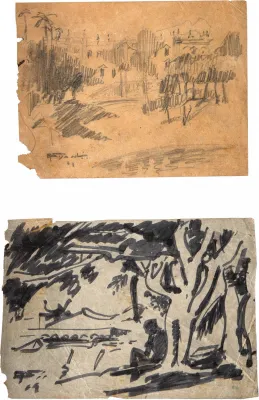
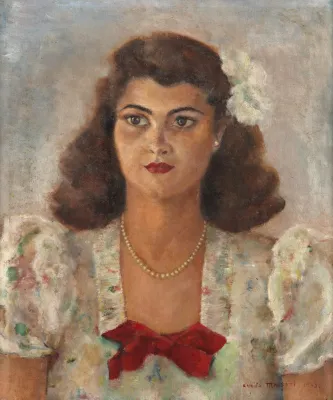
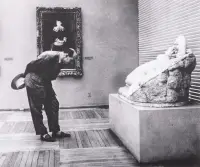
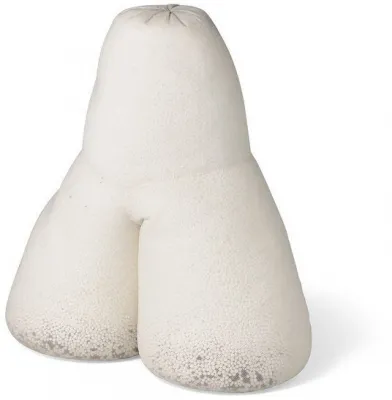
Vasco Prado (Uruguaiana RS 1914 - Porto Alegre RS 1998)
Vasco Prado was a recorder, sculptor, upholsterer, illustrator, designer and teacher. In 1940, he studied for a brief period at the School of Fine Arts in Porto Alegre. He began his research in sculpture as a self-taught and, in 1941, he built his first studio, being assisted by the painter Oscar Boeira (1883 - 1943). Between 1947 and 1948, he studied in Paris as a scholarship holder for the French government, where he was a student of Fernand Léger (1881 - 1955) and attended the engraving studio at École Nationale Supérieure des Beaux-Arts. During his stay in Paris, he came into contact with the Mexican artist Leopoldo Mendez (1902 - 1968), leader of Taller de Gráfica Popular. He returned to Brazil in 1949 and, the following year, founded the Porto Alegre Engraving Club, alongside Carlos Scliar (1920 - 2001). 1966. Between 1968 and 1969, he did an internship as a guest artist, making trips to Europe. Between 1987 and 1991, he was part of the management team of the Museum of Art of Rio Grande do Sul Ado Malagoli – Margs. His sculptures and murals are installed in public spaces both in Brazil and abroad. In 1994, the 80-year-old Vasco Prado retrospective was held at the Gasómetro plant, in Porto Alegre. His residence in Porto Alegre was transformed into a memorial in 2000, with the aim of preserving the artist's documents, personal objects and works. Books about his production were published in 1984 by Margs and in 2001 by the publisher Animae.
Critical Commentary
Vasco Prado performs works in which the influence of the works of Auguste Rodin is noted (1840 - 1917) and in which he already reveals an interest in regional themes, such as the Negrinho do Pastoreio, re-elaborated frequently in his production.
In 1947 and 1948, he studies in France, with Fernand Léger (1881 - 1955) and Étienne Hajdu (1907), attending the engraving studio of the École Nationale Supérieure des Beaux-Arts [Escola Nacional Superior de fine arts]. The contact with the Mexican engraver Leopoldo Mendez leads him to be interested in the engraving. In 1950, Funda, with Carlos Scliar (1920 - 2001) and other artists, the Porto Alegre Engraving Club. In parallel, he continues to develop research with sculptures. In 1960, he made bronze sculpture for the city of Pelotas, in which he resumes the theme of the Negrinho do Pastoreio, presented, however, with a freer conception, in which the formal stripping is evident.
The artist looks for themes linked to regional values, such as the theme of the rider and the horse, in which the human figure is represented with a broad sense of dignity, and the animal, with attributes of strength and haughtiness, but also with softness. The sculptors from Rio Grande do Sul, Vasco Prado, occupies a privileged place, because with it it can be said that the southern sculpture begins with its modernizing path, facing the problem of a national and updated art. Vasco, in fact, belongs to that generation of artists that at the beginning of the years 40 and, later, in the 50's and 60's, he proposed to renew, breaking the old and timid paintings in which art in Rio Grande was developed until then. Since the beginning, however, a striking note of his work was a certain Attachment to the theme of the land and the gaucho man, which makes it possible to find in his work a link of continuity in this process with the best artistic past, not being to despise the sculptor's learning, although of short duration, with the painter Oscar Boeira. And if, in sculpture, it is seen, from the beginning of his career, the artist to get involved with folklore themes, such as the legendary Negrinho do Pastoreio, this trend develops in his activity as a member of the Gravura Club, from 1950, in which Legends and themes from Rio Grande do Sul, but also aspects of the laborious life and even political themes, are presented frequently. (...)
Later, his art would detach itself from the objective and historicist discipline of socialist realism, traveling the paths of expressionist simplification of forms, which brought him closer to abstractionism and the trends then in vogue in the Europe".
Carlos Scarinci
SCARINCI, Carlos. Testimonials. In: PRADO, Vasco. Vasco Prado. Porto Alegre: Margs, 1984. p.66.
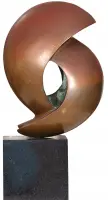
"The sculpture by Vasco Prado is attached to two main sources: Henry Moore and Constantin Brancusi. They seem, in a way, contradictory sources. And actually they are. But cultural syntheses have this character. From Moore, Vasco Prado took advantage of the round shapes, the hollows, the vitalization of the voids, the idea of monumentality. De Brancusi took advantage of the idea of synthesis, the taste for simplicity and the essential. Later, his approach was with the Italian sculptor Marino Marini. but in this case not in a formative character, as with the first two. With Marini, the approximation took place in the taste for the same themes, in the love of Rio Grande do Sul for the figure of the horse and the rider, a constant in the work of Vasco Prado. In examining his work, I think these three sculptors are fundamental."
Jacob Klintowitz
Klintowitz, Jacob. Vasco Prado: Engraver, Designer, Sculptor: Ele He learns the things his heart dictates. SKULTURA, 1984. p.11.
"Vasco Prado sometimes seems to have managed to tie the ends of the long millenary thread of the sculpture to his way, giving his works a form that reminds the archaic Greek but which is both inevitably modern and personal.
For the inveterate fictionist that I am, each of these sculptures suggests or synthesizes a story: the equestrian lovers - so to speak -, the woman on horseback With a child in his arms and another in the womb, the man mounted on the inverted manner of the clowns of the circuses of old, the knight who takes a woman to the back, probably stolen from someone... All these themes are, in my opinion, universal, without failing to have a strong mark of the Rio Grande, its customs and its people. Fortunately, Vasco Prado escaped the narrow formulas of 'official' regionalism of a photographic character and has resisted with brave artistic honesty to the temptation of the easy and the picturesque". Erico. Testimonials. In: PRADO, Vasco. Vasco Prado. Porto Alegre: Margs, 1984. p.72.
Testimonies
"In Paris, both Scliar and I, at the We meet with Mendez, the Mexican engraver, we are very excited about his work. I myself, who until then had always made sculpture and found myself there as a scholarship holder for a sculpture course, when I returned, found myself here with Edgar Koetz, who in turn returned from Argentina, and we started to prepare some works in this technique. I dreamed of a Negrinho do Pastoreio, who would have complemented vignettes, initial letters, openings and closings made by him. That's how, also with Scliar, we started to make engravings, the club, which had a headquarters, rented by me, in a small townhouse on Avenida Farrapos, next to the São Luís hotel. (...)
The Montevideo Engraving Club, founded for example ours, is still alive today, and is celebrating its 25th anniversary. They acquired their own headquarters, and just wrote to me by asking me to send an engraving to edit a commemorative album prepared by them. They also made, last year, an edition dedicated to Pablo Neruda, beautiful, who sent me. Founded our club here (...) we soon exerted influence throughout the country and in Prata, and also in the countryside. At that time, Glênio Bianchetti held an exhibition at the Correio do Povo gallery, when we met him, Scliar and I. He joined us, and then the Bagé club appeared, where there was already an intense artistic movement. (...)
The entire problem of the extinction of the engraving club, in my opinion, was political. When Scliar left, I was more or less alone to keep the thing, as the others in the group also began to follow their own paths. These were difficult times in Brazil, the year 1955, when there was a very large closure, with pressure on political parties with a left-wing trend. The magazine we founded, Horizons, had a clear socialist political nature, although it spoke of art, and although I see, today, it was a little sectarian in its way of seeing things, and it should have been more open in order to survive. Socialist realism, then, was fashion, and some of us, in this yearning for the discovery of things, may have lost ourselves a little, misapplying its principles. In fact, another serious problem that cannot be forgotten, and that persists even today, is that in general the plastic artist in Brazil reads little, he is ignorant of the things that surround him, he has no theory. So, if the club filled the gap in discipline and technical learning, it did not come to fill the gap in theory for all of us, which was very harmful later on. (...)"
Vasco Prado a Antonio Hohlfeldt
Hohlfeldt, Antonio Vasco Prado : Importance of the engraving club is measured in the current repercussion. Correio do Povo, Porto Alegre, 11 Jan.1976. In : Brazilian engraving. São Paulo: Cosac & Naify/Itaú Cultural, 2000. p.88 [ Testimony made on January 11, 1976]
Cerves
Cultura Mário Quintana - Porto Alegre RS
Armando Álvares Penteado Foundation - FAAP - São Paulo SP
National Gallery of Prague - Theca Republic
American Museum of Maldonado - Uruguay
Chilean Fertility Museum
Museum of Contemporary Art of the University of São Paulo - MAC/USP - São Paulo SP
Rio Grande do Sul Art Museum
São Paulo Museum of Modern Art - MAM/SP - São Paulo SP
National Museum of Warsaw - Poland
Regional Museum of Feira de Santana - Bahia
Utsukushigahara Museum - Tokyo (Japan)
Individual exhibitions
1949 - Porto Alegre RS - Individual, at the gallery of the newspaper Correio do Povo
1965 - Porto Alegre RS - Individual, at Espaço Galeria
1965 - São Paulo SP - Individual, at the Goeldi Gallery
1966 - Córdoba (Argentina) - Individual, at the Art Gallery Moderna
1966 - Montevideo (Uruguay) - Individual, in the gallery U
1966 - Porto Alegre RS - Individual, in the space at Galeria Chaves
1966 - Porto Alegre RS - 25 years of sculpture, Margs
1966 - Rio de Janeiro RJ - Individual, at Galeria Goeldi
1966 - Salvador BA - Individual, at Galeria Convivum
1966 - São Paulo SP - Individual, at Galeria Solarium
1970 - Rio de Janeiro RJ - Individual, at the Bonino Gallery
1976 - Rome (Italy) - Individual, at Galeria d'Arte della Casa do Brasil
1978 - São Paulo SP - Individual, Skultura Art Gallery
1980 - Porto Alegre RS - Vasco Prado 40 years of design: 1940-1980, at the Municipal Culture Center
1980 - Porto Alegre RS - Vasco Prado: Terracottas, at Atelier Vasco Prado and Zoravia Bettiol
1982 - Montevideo (Uruguay) - Individual, at Galeria América Latina
1982 - Porto Alegre RS - Individual, at the Masson Gallery
1983 - Porto Alegre RS - Individual Exhibition of Terracottas, at Atelier Vasco Prado and Zoravia Bettiol
1983 - Porto Alegre RS - Individual, at the Tina Presser Gallery
1984 - Porto Alegre RS - Vasco Prado: Retrospective 70 years
1984 - Porto Alegre RS - Individual, at Galeria Singular
1984 - São Paulo SP - Individual, at Skultura Art Gallery
1985 - São Paulo SP - A Obra Vasco Prado's retrospective, at MAB/FAAP
1987 - São Leopoldo RS - Individual, at Gestual Galeria de Artes Ltda
1988 - Porto Alegre RS - Individual, at the Scherer Gallery Artes
1988 - Rio de Janeiro RJ - Individual, at the Toulouse Art Gallery
1990 - Porto Alegre RS - Individual, at Bublitz Decahedro Galeria de Artes  
1990 - São Paulo SP - Vasco Prado: ceramic and bronze sculptures, at Galeria Skultura
1991 - Porto Alegre RS - Individual, at the Marisa Soibelmann
1992 - Porto Alegre RS - Individual, at Galeria Alencastro Guimarães
1994 - Porto Alegre RS - Vasco Prado: Eighty years old, at the Gasómetro plant
1994 - São Paulo SP - Individual, at Skultura Galeria de Art
1995 - Porto Alegre RS - Individual, at Cezar Prestes Arte
1997 - Porto Alegre RS - Individual, at the Marisa Soibelmann 
1998 - Porto Alegre RS - Individual, at Margs
1998 - Porto Alegre RS - Individual, at Galeria Gravura  
1998 - Rio de Janeiro RJ - Individual, at the Correios Cultural Space
Collective exhibitions
1941 - Porto Alegre RS - Collective, at the Gallery of the Institute of Fine Arts
1943 - Porto Alegre RS - Salon of the Institute of Beauty Arts of Rio Grande do Sul
1948 - Paris (France) - Hall of foreign artists
1951 - Porto Alegre RS - 5th Salon of the Francisco Lisboa Association of Plastic Arts - Silver Medal in Sculpture
1953 - Porto Alegre RS - 4th Hall of the Institute of Fine Arts
1954 - Goiânia GO - Exhibition of the National Congress of Intellectuals
1954 - Porto Alegre RS - 6th Hall of the Associação de Artes Plásticas Francisco Lisboa - Sculpture Acquisition Award
1956 - Porto Alegre RS - 8th Hall of the Associação de Artes Plásticas Francisco Lisboa -  Prêmio Acquisition in Sculpture
1957 - Porto Alegre RS - 4th Salon of the Porto Alegre City Council - 2nd Award in Sculpture
1957 - Porto Alegre RS - 9th Salon of the Francisco Lisboa Plastic Arts Association - Engraving Acquisition Award
1958 - Porto Alegre RS - 10th Salon of the Francisco Lisboa Association of Plastic Arts
1960 - Porto Alegre RS - 12th Salon of the Francisco Lisboa Plastic Arts Association - Sculpture Acquisition Award
1961 - Porto Alegre RS - ART Rio Grandense: from the past to the present, at the Gallery of the Institute of Fine Arts of Porto Alegre
1962 - Porto Alegre RS - 3rd Salão de Artes Flásicas do Rio Grande do Sul, at UFRGS
1962 - Porto Alegre RS - 9th Hall of the Institute of Fine Arts
1962 - Washington (United States) - Spotlight in Brazil, at the OAS Exhibition Hall
1966 - Belo Horizonte MG - 20th Municipal Fine Art Hall - 2nd Prize in Sculpture
1966 - Belo Horizonte MG - 21st Salon of Fine Arts of the City of Belo Horizonte, at MAP
1966 - Porto Alegre RS - Art Today in Rio Grande do Sul, at Margs
1966 - Salvador BA - 1st National Biennial of Fine Arts
1966 - São Paulo SP - 13 artists from Rio Grande do Sul, at MAC/USP
1966 - Tokyo (Japan) - tape recorders from Rio Grande do Sul, at the Embassy of Brazil in Japan
1966 - Sakata (Japan) - Rio Grande do Sul tape recorders
1966 - Osaka (Japan) - Rio Grande do Sul tape recorders
1966 - Kanazawa (Japan) - Recorders of Rio Grande do Sul
1966 - Suzu (Japan) - Rio Grande do Sul recorders
1966 - Nikko (Japan) - Rio Grande do Sul recorders
1967 - Campinas SP - 3rd Campinas Contemporary Art Salon
1967 - São Paulo SP - 9th São Paulo International Biennial, at the Bienal Foundation
1968 - Arezzo (Italy) - Medal and Plaque Biennial
1968 - Warsaw (Poland) - 1st Metal Biennial - Silver Medal
1970 - Porto Alegre RS - 1st UFRGS Visual Arts Salon, at UFRGS
1972 - São Paulo SP - 4th Panorama of Current Brazilian Art, at MAM/SP
1973 - Budapest (Hungary) - 2nd Bienal da Pequena Sculpture
1975 - Brasília DF - Arte Gaúcha/74  
1975 - São Paulo SP - 7th Panorama of Current Brazilian Art, at MAM/SP
1975 - São Paulo SP - 13th International Biennial of São Paulo, Bienal Foundation
1977 - São Paulo SP - 9th Panorama of Current Brazilian Art, at MAM/SP
1978 - Penápolis SP - 3rd Northwest Plastic Arts Hall, at the Penápolis Educational Foundation. Faculty of Philosophy, Sciences and Letters of Penápolis
1978 - Rio de Janeiro RJ - Brazilian sculpture in urban space: 50 years, at Praça Nossa Senhora da Paz
1978 - São Paulo SP - 10th Panorama de Arte Brazilian current, at MAM/SP
1979 - Goiânia GO - ten Brazilian sculptors, at the Casa da Cultura da América Latina
1979 - Rio de Janeiro RJ - Brazilian sculptors, at Galeria Aktuel
1980 - Curitiba PR - 2nd Brazilian Drawing Exhibition, at the Guaíra Theater
1980 - Goiânia GO - Nine sculptors, at the Casa Grande Art Gallery
1980 - Washington (United States) - Eight Brazilian sculptors, Brazilian - American Cultural Institute
1981 - Guarujá SP - Outdoor Sculpture, at the Jequitimar Hotel
1981 - São Paulo SP - 3rd Panorama of Current Brazilian Art, at MAM/SP
1982 - Milan (Italy) - 13th Internazionale de Scultura All'Aperto Sissa Pagani Exhibition, at the Museu d'Arte Moderna
1982 - São Paulo SP - A century of sculpture in Brazil, in the MAM/SP
1983 - Porto Alegre RS - 35 years of independence from the State of Israel, at Margs
1983 - Porto Alegre RS - From the past to the present: the plastic arts in Rio Grande do Sul, in Cambona Centro de ARTE 
1983 - Porto Alegre RS - Francisco Stockinger/Vasco Prado, at the Tina Presser Gallery
1983 - Porto Alegre - Art Livro Gaúcho: 1950/1983, in the Margs
1984 - Curitiba PR - 6th Exhibition of the Engraving City of Curitiba. The woodcut in the history of Brazilian art, at Casa Romário Martins
1984 - Hakone (Japan) - 3rd Kotaro Takamura Grand Prize, at the Open Air Museum - Acquisition Award
1984 - Porto Alegre RS - Engravings: A trajectory in time, at Cambona Centro de Artes
1984 - Rio de Janeiro RJ - The woodcut in the history of Brazilian art, at the Sérgio Milliet Gallery. Funarte
1984 - Rio de Janeiro - Recent donations 82-84, at MNBA 
1984 - São Paulo SP - Tradition and rupture: synthesis of Brazilian art and culture, at the Bienal Foundation
1985 - Penápolis SP - 6th Northwest Plastic Arts Hall, at the Educational Foundation of Penápolis. Faculty of Philosophy, Sciences and Letters of Penápolis
1985 - Porto Alegre RS - Iberê Camargo: trajectory and meetings, at Margs
1985 - São Paulo SP - 18th International Biennial of São Paulo, at the Bienal
1986 - Brasília DF - Iberê Camargo: trajectory and meetings, at the Cláudio Santoro National Theater
1986 - Rio de Janeiro RJ - Iberê Camargo: trajectory and meetings, at MAM/RJ
1986 - São Paulo SP - Iberê Camargo: trajectory and meetings, at MASP
1987 - São Paulo SP - 20th Contemporary Art Exhibition, at Chapel Art Show  
1989 - Porto Alegre RS - Arte Sul 89, at Margs
1993 - João Pessoa PB - Woodcut: from cordel to the gallery, at the Espaço Cultural da Paraíba Foundation
1994 - São Paulo SP - The Engraving Clubs of Brazil, at the Pinacoteca do Estado
1994 - São Paulo SP - Woodcut: From Cordel to the Gallery, in the Metro
1996 - Passo Fundo RS - Ruth Museum of Visual Arts Schneider: Inaugural Exhibition, at the Ruth Schneider Museum of Visual Arts
1996 - Porto Alegre RS - SESC Sculpture: International Exhibition of Outdoor Sculptures, at Sesc Campestre
1996 - São Paulo SP - OFF Bienal, at Mube
1997 - São Paulo SP - Three-dimensionality in Brazilian art of the 20th century, at Itaú Cultural
1998 - Belo Horizonte MG - Three-dimensionality in Brazilian art of the 20th century, at Itaú Cultural
1998 - Brasília DF - Three-dimensionality in Brazilian art of the 20th century, at the Itaú Cultural Gallery
1998 - Penápolis SP - Three-dimensionality in Brazilian art of the 20th century, at the Itaú Cultural Gallery
1998 - São Paulo SP - Collection 98 Skultura, at Skultura Art Gallery
Posthumous exhibitions
1999 - Porto Alegre RS - Art Garage: Inaugural Exhibition, in the garage of Art 
1999 - Rio de Janeiro RJ - Rio Engraving: Brazilian modern engraving: National Museum Collection of Fine Arts, in MNBA
2000 - São Paulo SP - Investigations. The Brazilian engraving, at Itaú Cultural
2001 - Brasília DF - Investigations. The Brazilian engraving, at Galeria Itaú Cultural
2001 - Penápolis SP - Investigations. The Brazilian engraving, at Galeria Itaú Cultural
2001 - Porto Alegre RS - Liba and Rubem Knijnik collection: contemporary Brazilian art, at Margs
2001 - Rio de Janeiro RJ - engraving, at the Céu da Céu Museum
2002 - Porto Alegre RS - Drawings, engravings, sculptures and watercolors, in the garage of Art
2003 - Porto Alegre RS - Humanities, at Galeria Tina Zappoli
2003 - São Paulo SP - Art and Society: a controversial relationship, at Itaú Cultural
2004 - São Paulo SP - Individual, at the Multiple Art Gallery
Source: Itaú cultural