Sérgio Camargo (Rio de Janeiro RJ 1930 - idem 1990)
Sérgio Camargo was a Brazilian sculptor and visual artist of international standing, widely recognized as one of the central figures of modern sculpture in Brazil. His work holds a prominent place in constructivist, kinetic and geometric art, with a strong influence on 20th-century Brazilian art.
Sérgio Camargo's training began at the age of 16 at the Academia Altamira in Buenos Aires, where he studied with Emilio Pettoruti (1892 - 1971) and Lucio Fontana (1899 - 1968). This first contact with Latin American modern art was decisive for the development of his sculptural language.
In 1948 Sérgio Camargo moved to Europe, where he broadened his artistic training through contact with major names of modern sculpture such as Constantin Brancusi (1876 - 1957), Hans Arp (1886 - 1966), Henri Laurens (1885 - 1954) and Georges Vantongerloo (1886 - 1965). In Paris he studied philosophy at the Sorbonne with Gaston Bachelard and attended the Académie de la Grande Chaumière. In this period he developed his first sculptural experiments, strongly marked by the search for essential forms - a direct influence of Brancusi - and by the exploration of volumes reduced to their fundamental structure.
Back in Brazil in 1950, Sérgio Camargo took an active part in the expanding constructivist scene. In 1953 he took part in the Salão Nacional de Arte Moderna in Rio de Janeiro, and the following year he returned to Europe and later traveled to China, where he produced figurative bronze sculptures, still in a phase of stylistic transition.
Between 1961 and 1974 Sérgio Camargo lived in Paris, a fundamental period for the consolidation of his sculptural poetics. He studied the sociology of art with Pierre Francastel (1905 - 1970) and joined the Groupe de Recherche d'Art Visuel (GRAV), devoted to research into visual perception and kinetic art. In this context he experimented with materials such as plaster, sand and fabric, developing an increasingly refined and structural language.
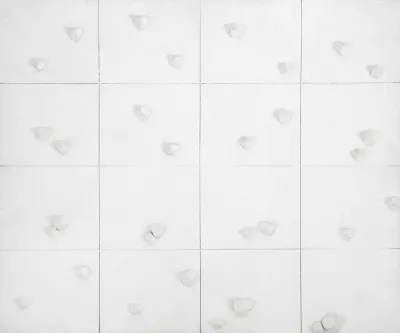
From 1963 Sérgio Camargo began the series of Relevos [Reliefs], the centerpiece of his production. Using wooden cylinders arranged in modular compositions, the artist began to investigate the relationships between light, shadow and visual rhythm. The works in painted wood, generally white, established a dynamic perceptual field based on minimal variations of form and incidence of light.
During the 1960s Sérgio Camargo consolidated his research into white surfaces composed of geometric modules. His sculpture came to explore tensions between order and variation, creating what critics described as "polyhedral volumes of changing readings". Light became a structuring element of his work, in dialogue with phenomenological reflections on space and perception.
Sérgio Camargo's international recognition was consolidated in the same decade. In 1963 he received the International Sculpture Prize at the Paris Biennial. The following year he held his first solo exhibition at Signals London Gallery. He also took part in the Bienal de São Paulo (1965), the Venice Biennale (1966) and Documenta in Kassel (1968), becoming part of the international contemporary art circuit.
In the 1970s Sérgio Camargo began working predominantly with Carrara marble, expanding the scale and monumentality of his sculptures. In the 1980s he also incorporated Belgian black marble, deepening his investigation into the absorption and reflection of light. In this period he returned to cylinders in smaller compositions, showing the maturity of his formal research.
Back in Rio de Janeiro in 1974, Sérgio Camargo set up his studio in Jacarepaguá and produced works of great importance for public space. Among them are the structural wall of the Palácio do Itamaraty in Brasília (1967), in collaboration with Oscar Niemeyer; the triptych for Banco do Brasil in New York; the column Homenagem a Brancusi [Homage to Brancusi] at the Faculty of Medicine in Bordeaux; the marble sculpture in Praça da Sé, São Paulo (1979); and the monument in Parque da Catacumba, Rio de Janeiro.
Sérgio Camargo's work is characterized by formal rigor, modular repetition and the centrality of light as a structuring principle. Although it was in dialogue with Concretism, Neoconcretism and Kinetic Art, his production retains its own poetic autonomy, often described by critics as the "madness of order", in reference to the tension between rationality and sensibility in his sculpture.
Sérgio Camargo died in Rio de Janeiro in 1990, leaving a fundamental legacy for modern Brazilian sculpture. His work is part of major public and private collections, such as the Museum of Modern Art (MoMA), the Hirshhorn Museum and Sculpture Garden, the Dallas Museum of Art, the Museu de Arte Moderna do Rio de Janeiro, the Museu de Arte Moderna de São Paulo, the Stedelijk Museum and the Tate Gallery.
Since 1975 Sérgio Camargo has been represented by Galeria Raquel Arnaud, which has been responsible for preserving and disseminating his estate since 1990. In his honor, the city of Rio de Janeiro named Rua Escultor Sérgio de Camargo, in Barra da Tijuca, alongside other key artists of Brazilian art.
Critiques
Ronaldo Brito
The Order of Madness and the Madness of Order
"To view them (Sérgio de Camargo’s works) as some form of informalism seems to me a simple mistake, undoubtedly resulting from a coarse and purely visual reading. But to consider them as constructive work, based on a concrete system of relationships that is, so to speak, their very essence—it is worth noting that these sculptures do not strictly have forms, but rather combined elements—one must go beyond a certain formalist rationalism traditionally linked to Western European constructivist project. The importance of Camargo’s work for our cultural environment can be identified mainly in two aspects. First, through the rigorous logic of his production process, which ties art to a sequence of intellectual investigation, he transforms the prevailing approach to viewing art. [...] The second point may be harder to demonstrate: it concerns the connection of Camargo’s work to the issue of Latin American art. His constructivism is not only non-rationalist; very possibly it is not European either. The discovery of his work in Europe in the 1960s—simultaneously with the recognition of Soto, Lygia Clark, Hélio Oiticica, among others—was due at least in part to the particular logic he employed, certainly foreign to the rigid European constructivism, and can be considered, so to speak, specifically Latin American. Without, of course, falling into metaphysics or postulating an independent Latin American thought, it is safe to affirm that works like Camargo’s belong to a distinct Latin American constructivism, whose theoretical framework, yet to be fully developed, can provide a productive field for study and debate."
Source: BRITO, Ronaldo. The Order of Madness and the Madness of Order. In: CAMARGO, Sérgio de. Sérgio de Camargo. São Paulo: Galeria Arte Global, 1975. p. 1
Sônia Salzstein
Construction
"Sérgio de Camargo’s work introduced a surprising variable into the modern constructive tradition as it unfolded in Brazil from the 1950s onwards. An unexpected and heterodox strand—lyrical and radiant—emerged from his work, practically at the same time that, internationally, the skeptical informalism of European production and the irreverent, ‘integrated’ anti-metaphysics of Pop Art began challenging the legacy of modern art. That is, when it seemed that the constructive lineage had reached its historical exhaustion—finally reduced to the banal technicalities of Op Art or the many mathematical-geometric trends being popularized worldwide—and when the best of contemporary art revealed the slow onset of cultural saturation, Sérgio’s work repositioned the notion of form at the center of an essentially optimistic and experimental speculation."
Source: SALZSTEIN, Sônia. In: CAMARGO, Sérgio de. Construction. São Paulo: Gabinete de Arte Raquel Arnaud, 1997. p. 17.
Guy Brett
A Radical Leap
"In his extensive series of reliefs and sculptures, the artist repeatedly returns to the same constructive paradigm—a cylinder or a cube and the ways they can be cut and combined—and the more he explores this paradigm, the more he articulates its possibilities, the more he empties its status as a paradigm, as a ‘law,’ the more he prompts us to question what kind of stability and purpose we assign to paradigms. Perhaps the subtlest aspect is that Camargo does not investigate this paradox conceptually or ideally, but in relation to light, its variations in the everyday world, and the incalculable complexity of its nuances."
Source: BRETT, Guy. A Radical Leap. In: ADES, Dawn. Art in Latin America: The Modern Era, 1820-1980. São Paulo: Cosac & Naify, 1997. p. 253-283.
Frederico Morais
Three-Dimensionality in 20th-Century Brazilian Art
"Sérgio de Camargo created reliefs and sculptures to capture the light—the white as a trap. Light was his raw material, he would often say. Yet, after traversing his works, this white desert, the light seems to seek rest. Better yet, it desires shadow without losing sight of the sun. Solombra. And it is in this very shadow that the work comes alive. In silence. The shadow functions as a cut. An interception of light. The cut is precise, swift, rigorous, but never harsh or aggressive. It always falls obliquely. Like the shadow. Against the fullness of form, the cut. Against the fullness of light, the shadow. A discreet sensuality runs through the artist’s entire oeuvre."
Source: MORAIS, Frederico. Three-Dimensionality in 20th-Century Brazilian Art. In: TRIDIMENSIONALIDADE: arte brasileira do século XX. 2nd ed. São Paulo: Itaú Cultural: Cosac & Naify, 1999. p. 233.
Maria Alice Milliet
Constructive Trends and the Limits of Visual Language
"The originality of Sérgio de Camargo’s work alone demonstrates the heterogeneity of the sources that shaped the constructive repertoire in Brazil. Within his references, there are Fontana, Brancusi, and Arp, but not Bill’s mathematical conception. There is also the classical tradition of relief, from the Parthenon to the doors of Florence’s Baptistery. However, when in the 1960s his work appeared at the Signals Gallery in London, before Oiticica and Lygia Clark, a common trait emerges: a strong sense of the body and physical movement, which critic Guy Brett attributes to a shared cultural foundation. In poetic texts, the artist himself lends a carnal connotation to his relationship with the material, described in terms of 'intimate commerce whose breath I confused with my own.' [...] Conclusion: Sérgio de Camargo cannot be easily categorized. To interpret his work as an expression of rationalist formalism would overlook its complexity. The internal logic of his sculptural oeuvre does not adhere to cold rationality. It is a systemic body open to unpredictability: what nourishes and animates it is simultaneously a source of disturbance and disorder. Its organicity corresponds to a combinatory of truncated elements arranged on a wall-mounted panel or resting on the floor; light is the material with which it interacts. For many years, the reliefs and columns were entirely white. The artist arranges the fragments, but it is the light that makes the surface pulse. In the final phase, the revenge of the black blocks comes, absorbing, devouring the light. At every moment, visual perception merges with the tactile: in the reliefs, the oscillation of light and dark evokes crusts, sun-bleached scaly skins, while the black marble solids appear soft and warm to the eye—evocations that call forth the archaic memory of sensation."
Source: MILLIET, Maria Alice. Constructive Trends and the Limits of Visual Language. In: MOSTRA DO REDESCOBRIMENTO, 2000, SÃO PAULO. Arte moderna. São Paulo: Fundação Bienal de São Paulo: Associação Brasil 500 anos Artes Visuais, 2000. p. 44-59.
Solo Exhibitions
1958 - Rio de Janeiro, Brazil - Galeria GEA,
1958 - São Paulo, Brazil - Galeria de Arte das Folhas,
1964 - London, England - Signals Gallery,
1965 - Rio de Janeiro, Brazil - Museu de Arte Moderna do Rio de Janeiro,
1965 - São Paulo, Brazil - Galeria São Luiz,
1967 - Milan, Italy - Galleria del Naviglio,
1967 - Rome, Italy - Galeria L'Obelisco,
1967 - Genoa, Italy - Galleria La Polena,
1968 - Zurich, Switzerland - Gimpel et Hanover Galerie,
1968 - London, England - Gimpel Fils Gallery,
1968 - Turin, Italy - Galleria Notizie,
1968 - Munich, Germany - Galeria Buchholz,
1969 - New York, USA - Gimpel & Weitzenhoffer,
1970 - London, England - Gimpel Fils Gallery,
1970 - Oslo, Norway - Galeria Gromholt,
1971 - Macerata, Italy - Artestudio,
1971 - Brescia, Italy - Artestudio,
1971 - Bochum, Germany - Galeria M. Bochum,
1972 - Caracas, Venezuela - Estúdio Actual,
1972 - São Paulo, Brazil - Galeria Collectio,
1972 - Rio de Janeiro, Brazil - Petite Galerie,
1974 - London, England - Gimpel Fils Gallery,
1974 - Oslo, Norway - Galeria Gromholt,
1974 - Mexico City, Mexico - Museo de Arte Moderno,
1975 - Rio de Janeiro, Brazil - Museu de Arte Moderna do Rio de Janeiro,
1975 - São Paulo, Brazil - Galeria de Arte Global,
1977 - São Paulo, Brazil - Gabinete de Artes Gráficas,
1980 - Rio de Janeiro, Brazil - Espaço Arte Brasileira Contemporânea, Funarte,
1980 - Rio de Janeiro, Brazil - Galeria Paulo Klabin,
1980 - São Paulo, Brazil - Museu de Arte de São Paulo,
1980 - Buenos Aires, Argentina - CAYC,
1981 - Pordenone, Italy - Galeria Sagittaria,
1981 - Rio de Janeiro, Brazil - Museu de Arte Moderna do Rio de Janeiro,
1982 - Paris, France - Galeria Bellechasse,
1982 - London, England - Gimpel Fils Gallery,
1983 - São Paulo, Brazil - Galeria Raquel Arnaud,
1985 - São Paulo, Brazil - Galeria Raquel Arnaud,
1987 - São Paulo, Brazil - Galeria Raquel Arnaud,
1987 - Rio de Janeiro, Brazil - Paço Imperial,
1988 - Lisbon, Portugal - Galeria 111,
1990 - São Paulo, Brazil - Galeria Raquel Arnaud.
Posthumous Solo Exhibitions
1994 - Lisbon, Portugal - Fundação Calouste Gulbenkian,
1994 - Rio de Janeiro, Brazil - Museu de Arte Moderna do Rio de Janeiro,
1994 - Rio de Janeiro, Brazil - Galeria Paulo Fernandes,
1995 - Oslo, Norway - Henie-Onstad Kunstsenter,
1995 - Copenhagen, Denmark - Charlottenborg Museum,
1995 - Schiedam, Netherlands - Stedelijk Museum,
1996 - Oxford, England - Museum of Modern Art of Oxford,
1996 - Paris, France - Galerie Denise René,
1996 - Paris, France - Maison de l’Amérique Latine,
1997 - São Paulo, Brazil - Galeria Raquel Arnaud,
1999 - Brasília, Brazil - Palácio do Itamaraty,
2003 - São Paulo, Brazil - Centro Cultural Maria Antonia – Projetos, protótipos e pequenos formatos,
2010 - São Paulo, Brazil - Instituto de Arte Contemporânea.
Group Exhibitions
1951 - Rio de Janeiro, Brazil - National Salon of Modern Art,
1952 - Rio de Janeiro, Brazil - National Salon of Modern Art,
1953 - Rio de Janeiro, Brazil - National Salon of Modern Art,
1954 - Rio de Janeiro, Brazil - National Salon of Modern Art,
1954 - São Paulo, Brazil - São Paulo Salon of Modern Art,
1955 - Rio de Janeiro, Brazil - National Salon of Modern Art,
1955 - São Paulo, Brazil - São Paulo Salon of Modern Art,
1957 - Buenos Aires, Argentina / Montevideo, Uruguay / Santiago, Chile / Lima, Peru - Arte Moderno Brasileño,
1957 - São Paulo, Brazil - 4th Bienal de São Paulo,
1958 - Rio de Janeiro, Brazil - Galeria GEA,
1961 - Rio de Janeiro, Brazil - Galeria IBEU,
1961 - Porto Alegre, Brazil - Contemporary Art Festival,
1962 - Paris, France - L'Art Latino-Américain,
1962 - Paris, France - Formes et Magie,
1962 - Paris, France - 7 artistes brésiliennes de l'École de Paris, Galerie XXème,
1962 - Paris, France - La boîte et son contenu, Galerie H. Legendre,
1962 - Brussels, Belgium - Transitions, Galerie Ravenstein,
1962 - Paris, France - 3rd Paris Biennial,
1962 - Paris, France - Salon de la Jeune Sculpture,
1964 - Mannheim, Germany - Galerie Margarette Lauter,
1964 - Arras, France - L'aujourd'hui de demain, Palais Saint-Vaast,
1964 - London, England - Festival of South American Art, Signals London,
1964 - London, England - First pilot exhibition, Signals London,
1964 - London, England - Second pilot exhibition, Signals London,
1964 - Paris, France - Salon de la Jeune Sculpture,
1964 - Paris, France - Salon Comparaisons,
1965 - São Paulo, Brazil - 8th Bienal de São Paulo,
1965 - Paris, France - Galerie Denise René,
1965 - Edinburgh, Scotland - Artmouvement, Royal Scottish Academy,
1965 - Midland, England - Spacialkinetic art,
1965 - Nottingham, England - Group Gallery,
1965 - London, England - Cornucópia 65, Molton Gallery,
1965 - Tel Aviv, Israel - Mouvemente in art, Tel Aviv Museum,
1965 - Paris, France - Objectif 65, Galerie de la Librairie Anglaise,
1965 - Cannes, France - Galeria Cavalero,
1965 - London, England - Signals London,
1965 - Lincoln, USA - White on White, The Cordoba Museum,
1965 - Paris, France - Galerie Kerchache,
1965 - Glasgow, Scotland - Artmouvement, Art Museum,
1965 - London, England - Sonomontage, Hampstead Theatre Club,
1965 - Manchester, England - Mouvement, Art Gallery,
1965 - Liverpool, England - ArtScience 65, University of Liverpool,
1965 - Andover, USA - White on White, Addison Gallery of American Art,
1965 - Paris, France - Salon Comparaisons,
1965 - Rio de Janeiro, Brazil - Esso Salon,
1966 - Venice, Italy - 33ª Biennale di Venezia,
1966 - Sheffield, England - Mouvements, University of Sheffield,
1966 - London, England - Indications, Indica Gallery,
1966 - Rome, Italy - Bianco: Bianco, Galeria L’Obelisco,
1966 - London, England - The artist at work, Hampstead Arts Center,
1966 - Leeds, England - Leeds student art week,
1966 - Antwerp, Belgium - International kinetic show, Galerie ad libitum,
1966 - Bern, Switzerland - White structures, Kunsthalle,
1966 - Paris, France - Galerie Kerchache,
1966 - São Paulo, Brazil - Sculptures, Galeria 4 Planetas,
1966 - Coventry, England - Exhibition of kinetic art, Herbert Art Gallery,
1966 - Dublin, Ireland - Kinetic art, Ritchie Hendriks Gallery,
1966 - Montevideo, Uruguay / Buenos Aires, Argentina - Artistas Brasileños Contemporâneos,
1966 - Rio de Janeiro, Brazil - Brazilian Group Show, Galeria IBEU,
1966 - Rio de Janeiro, Brazil - 4th Resumo de Arte do Jornal do Brasil [JB Art Summary], MAM-RJ,
1966 - Paris, France - Salon Comparaisons,
1966 - Paris, France - Salon de Mai,
1967 - Paris, France - Structures et mouvement, Galerie Denise René,
1967 - Paris, France - Lumière et mouvement, Musée d'Art Moderne de la Ville de Paris,
1967 - Paris, France - Ouvertures, Galerie Maywald,
1967 - Paris, France - Galerie Europe,
1967 - Vienna, Austria - Kinetika, Museum des XX Jahrhunderts, Schweizergarten,
1967 - Italy (several cities) - Ipotesi linguistiche intersoggettive,
1967 - Geneva, Switzerland - Galerie Loo,
1967 - Liguria, Italy - Galleria Regis,
1967 - Paris, France - Formes et lieux, Galerie Maywald,
1967 - Brussels, Belgium - Galerie Accent,
1967 - Malakoff, France - Peintures et sculptures, Centre Communal de Malakoff,
1967 - Paris, France - Salon de la Jeune Sculpture,
1967 - Paris, France - Salon Comparaisons,
1967 - Paris, France - Salon de Mai,
1967 - Paris, France - Salon Réalités Nouvelles,
1968 - Kassel, Germany - 4ª Documenta
1968 - Wilmington, USA - Latin American Artists, The Delaware Art Center
1968 - San Antonio, USA - Hemis-fair
1968 - Saint-Paul-de-Vence, France - Art Vivant 1965-1968, Fondation Maeght
1968 - Oslo, Norway - Kunstnernes Hus
1968 - Nottingham, England - Six Latin American Countries, Midland Art Group
1968 - Otterlo, Netherlands - Silence et Mouvement, Rijksmuseum Kröller-Müller
1968 - Oslo, Norway - Galeria Gromholt
1968 - Paris, France - Des Formes Inventées, Galerie Vercamer
1968 - Cologne, Germany - Kunstmarkt
1968 - Oslo, Norway - Kunsten Inag
1968 - Rome, Italy - 2001, Gavina
1968 - Hovikodden, Norway - Nikust i Tussen Ar, Henie-Onstad Kunstsenter
1968 - Paris, France - Salon de la Jeune Sculpture
1968 - Paris, France - Salon Grands et Jeunes d'Aujourd'hui
1969 - Saint-Etienne, France - Art Experimental, Musée d'Art et d'Industrie
1969 - Innsbruck, Austria - Hommage an das Schweigen, Tiroler Kunstpavillon
1969 - Avignon, France - L'Oeil Écoute, Palais des Papes
1969 - London, England - Open Air Sculptures, Syon Park
1969 - Roussillon, France - Fondation Port Bacarès
1969 - Paris, France - Position, Galerie Denise René
1969 - Cologne, Germany - Kunstmarkt 69
1969 - Oslo, Norway - Galeria Gromholt
1969 - New Paltz, USA - New York State University
1969 - Munich, Germany - Galeria Buchholz
1969 - New York, USA - Collector's Choice, Gimpel & Weitzenhoffer
1969 - Saint-Germain-en-Laye, France - Depuis Rodin, Musée Municipal
1969 - Toulouse, France - Bijoux d'Art Contemporain
1969 - Paris, France - Salon de la Jeune Sculpture
1969 - Paris, France - Salon Réalités Nouvelles
1970 - Menton, France - Menton Biennial
1970 - Medellín, Colombia - Medellín Biennial
1970 - Munich, Germany - Der Wanderbare Raum, Galeria Buchholz
1970 - Saint-Etienne, France - Itinéraires Blancs, Musée d'Art et d'Industrie
1970 - Paris, France - Selection d'Oeuvres, Centre National d'Art Contemporain
1970 - Rome, Italy - Vision 24, Instituto Italo-Latinoamericano
1970 - Montargis, France - Festival d'Art Plastique
1970 - Basel, Switzerland - Kunstmarkt
1970 - Cologne, Germany - Kunstmarkt
1970 - Paris, France - Salon de Mai
1970 - Paris, France - Salon Réalités Nouvelles
1970 - Paris, France - Salon Grands et Jeunes d'Aujourd'hui
1971 - Oslo, Norway - Latin America i Skandinavia, Kunstnernes Hus
1971 - Charlottelund, Denmark - Gentolfre Kunstvernner
1971 - Lund, Sweden - Lunds Konsthall
1971 - Göteborg, Sweden - Konsthalle
1971 - Berlin, Germany - Dritte Internationale Frühjahrsmesse
1971 - Paris, France - Salon de Mai
1971 - Paris, France - Salon Réalités Nouvelles
1973 - Italy - Carrara
1973 - Paris, France - Latin American Week of Paris-Cefral
1973 - Odensse, Norway - 50 Young Sculptors of the School of Paris, Sophienholm
1973 - Nanterre, France - 5 Artistes d'Amérique Latine
1973 - Hovikodden, Norway - Gromholts-Samling, Henie Onstad Kunstsenter
1973 - São Paulo, Brazil - Brasil/50 Anos Depois [Brazil/50 Years Later], Galeria Collectio
1973 - Paris, France - Salon de Mai
1974 - London, England - Basically White, Lucy Milton Gallery
1974 - Bern, Switzerland - Internationale Kleinformat, Ausstellung, Galeria Lydia Megert
1974 - Bergen, Norway - Gromholts-Samling
1975 - Campinas, Brazil - Art in Brazil Document/Debate, org. Prefeitura de Campinas
1975 - Austin, USA - Artistas Latino-Americanos de Hoy, The University of Texas of Austin, University Art Museum
1975 - Birmingham, USA - Birmingham Museum of Arts, Alabama
1975 - Portland, USA - Oeuvres en Bois du XXème Siècle, Portland Art Museum
1975 - Campinas, Brazil - 10th Campinas Contemporary Art Salon
1976 - São Paulo, Brazil - Brasília Room (13th Bienal de São Paulo)
1976 - Mexico City, Mexico - Creadores Latino-Americanos Contemporâneos
1976 - São Paulo, Brazil - Brazil Document/Debate, Pinacoteca do Estado
1976 - Rio de Janeiro, Brazil - Museu de Arte Moderna do Rio de Janeiro
1977 - São Paulo, Brazil - Gabinete de Artes Gráficas
1977 - Rio de Janeiro, Brazil - Brazilian Constructive Art Project, Museu de Arte Moderna do Rio de Janeiro
1977 - São Paulo, Brazil - Pinacoteca do Estado
1977 - Rio de Janeiro, Brazil - Open-Air Sculpture, Sesc Tijuca
1978 - São Paulo, Brazil - Panorama of Current Brazilian Art, Museu de Arte Moderna de São Paulo
1978 - Caracas, Venezuela - Cuatro Artistas Brasileños, Fundación Eugenio Mendoza
1978 - Rio de Janeiro, Brazil - 50 Years of Brazilian Sculpture in Urban Space, Praça Nossa Senhora da Paz
1979 - São Paulo, Brazil - 15th Bienal de São Paulo
1979 - Mexico City, Mexico - Festival Cervantino
1979 - Rio de Janeiro, Brazil - Brazilian Sculpture, Escola de Artes Visuais do Parque Lage
1979 - Rio de Janeiro, Brazil - Brazilian Sculptors, Galeria Aktuel
1980 - Rio de Janeiro, Brazil - Tribute to Mário Pedrosa, Galeria Jean Boghici
1980 - São Paulo, Brazil - Amílcar de Castro, Lygia Clark, Sérgio Camargo, Franz Weissmann (Inaugural Exhibition), Galeria Raquel Arnaud
1981 - Osaka, Japan - Arte Latinoamericana Contemporáneo y Japón, Museu Nacional de Arte
1982 - Venice, Italy - 41st Biennale di Venezia
1983 - São Paulo, Brazil - 17th Bienal de São Paulo
1983 - Havana, Cuba - Galeria Haydée Santamaría, Casa de las Américas
1984 - Bogotá, Colombia - 5 Artistas Brasileños, Casa Negret
1984 - Rio de Janeiro, Brazil - An Anniversary and 5 Great Artists, Galeria Aktuel
1984 - Rio de Janeiro, Brazil - Wood, Matter of Art, Museu de Arte Moderna do Rio de Janeiro
1985 - São Paulo, Brazil - Highlights of Contemporary Brazilian Art, Museu de Arte Moderna de São Paulo
1985 - New York, USA - Geometric Abstraction in Latin American Art, CDS Gallery
1985 - São Paulo, Brazil - Galeria Paulo Klabin
1985 - São Paulo, Brazil - Pinacoteca do Estado
1985 - Buenos Aires, Argentina - Abstracción en el Siglo XX, Museo de Arte Moderno
1985 - São Paulo, Brazil - Denison Collection of Contemporary Brazilian Art, Museu de Arte de São Paulo
1985 - Rio de Janeiro, Brazil - Tribute to Maria Leontina, Petite Galerie
1985 - São Paulo, Brazil - Panorama of Current Brazilian Art/Three-Dimensional Forms, Museu de Arte Moderna de São Paulo
1985 - Rio de Janeiro, Brazil - 8th National Salon of Visual Arts (Special Room "Black and White Salon at the 3rd National Salon, in 1954"), Museu de Arte Moderna do Rio de Janeiro
1986 - Fortaleza, Brazil - 1st International Exhibition of Ephemeral Sculptures, Fundação Demócrito Rocha
1987/88 - Paris, France - Modernidade: Brazilian Art of the 20th Century, Musée d'Art Moderne de la Ville de Paris
1987/88 - São Paulo, Brazil - Museu de Arte Moderna de São Paulo
1990 - São Paulo, Brazil - Coherence & Transformation, Galeria Raquel Arnaud
Posthumous Group Exhibitions
1993 - São Paulo, Brazil - Poetics, Galeria Raquel Arnaud
1993 - São Paulo, Brazil - Brazilian Art in the World: A Trajectory, Dan Galeria
1994 - São Paulo, Brazil - Bienal Brasil Século XX [Brazil 20th Century Biennial], Fundação Bienal de São Paulo
1994 - Poços de Caldas, Brazil - Unibanco Collection, Casa de Cultura de Poços de Caldas
1997 - Porto Alegre, Brazil - Mercosul Biennial
1997 - São Paulo, Brazil - Galeria Brito Cimino (inaugural exhibition)
1997 - Washington, USA - Brazilian Sculpture from 1920 to 1990: Profile of an Identity, Centro Cultural do BID
1997 - São Paulo, Brazil - Brazilian Sculpture from 1920 to 1990: Profile of an Identity, Espaço Cultural do Banco Safra
1998 - Rio de Janeiro, Brazil - Theory of Values, Casa França-Brasil
1998 - São Paulo, Brazil - Theory of Values, Museu de Arte Moderna de São Paulo
1998 - São Paulo, Brazil - Constructive Art in Brazil: Adolpho Leirner Collection, Museu de Arte Moderna de São Paulo
2000 - Rio de Janeiro, Brazil - Mira Schendel, Sérgio Camargo, Willys de Castro, Centro Cultural Banco do Brasil
2000 - São Paulo, Brazil - Brazil +500 - Rediscovery Exhibition, Fundação Bienal de São Paulo
2000 - Madrid, Spain - Heterotopias: Medio Siglo Sin Lugar, Museo Nacional Centro de Arte Reina Sofia
2001 - London, England - Century City: ArtCulture in the Twentieth Century Metropolis, Tate Modern
Awards
Jury Exemption, 3rd National Salon of Modern Art, Rio de Janeiro, Brazil, 1954
Acquisition Award, 3rd São Paulo Salon of Modern Art, São Paulo, Brazil, 1954
Jury Exemption, 5th National Salon of Modern Art, Rio de Janeiro, Brazil, 1956
Jury Exemption, 6th National Salon of Modern Art, Rio de Janeiro, Brazil, 1957
Jury Exemption, 7th National Salon of Modern Art, Rio de Janeiro, Brazil, 1958
Jury Exemption, 9th National Salon of Modern Art, Rio de Janeiro, Brazil, 1960
International Sculpture Prize, 3rd Paris Biennale, Paris, France, 1963
National Sculpture Prize, 8th São Paulo Biennial, São Paulo, Brazil, 1965
H. Stern Award for Best Sculpture Exhibition of the Year, 4th JB Art Summary, Rio de Janeiro, Brazil, 1966
Best Sculpture Exhibition of the Year (solo at Gabinete de Artes Gráficas), São Paulo Association of Art Critics, São Paulo, Brazil, 1977
Best Retrospective of the Year (solo at São Paulo Museum of Art), São Paulo Association of Art Critics, São Paulo, Brazil, 1980
Museums and Public Collections
Acervo Banco Itaú S.A., São Paulo, Brazil
Albright-Knox Art Gallery, Buffalo, United States
Austin Museum of Art, Austin, United States
Birmingham Museum of Art, Birmingham, United States
Casa de las Américas, Havana, Cuba
Centre National d'Art Contemporain, Paris, France
Contemporary Art Society, London, England
Dallas Museum of Fine Arts, Dallas, United States
Didrichsen Art Museum, Gunnar and Marie-Louise Didrichsen Foundation, Helsinki, Finland
Fondazione Antonio e Carmela Calderara, Vacciago, Italy
Fundação José e Paulina Nemirovsky, São Paulo, Brazil
Fundación Cisneros, Colección Patricia Phelps de Cisneros, New York, United States / Caracas, Venezuela
Fundación Museo de Arte Moderno Jesús Soto, Ciudad Bolívar, Venezuela
Galleria Nazionale d'Arte Moderna, Rome, Italy
Hirshhorn Museum and Sculpture Garden, Washington, United States
Instituto de Arte Contemporânea, São Paulo, Brazil
Jack S. Blanton Museum of Art, University of Texas at Austin, Austin, United States
Kunstmuseum Bern, Collection Victor Loeb, Bern, Switzerland
Lehmbruck Museum, Duisburg, Germany
Los Angeles County Museum of Art, Los Angeles, United States
Musée d'Art moderne de la Ville de Paris, Paris, France
Musée des Sables, Port-Barcarès, France
Musée national d'art moderne - Centre Pompidou, Paris, France
Museo de Arte Latinoamericano de Buenos Aires, Fundación Costantini, Buenos Aires, Argentina
Museo de Arte Moderno de Medellín, Parque de las Esculturas del Cerro Nutibara, Medellín, Colombia
Museo de Arte Moderno, Mexico City, Mexico
Museo de Bellas Artes, Caracas, Venezuela
Museo de la Solidaridad Salvador Allende, Santiago, Chile
Museo Tamayo, Mexico City, Mexico
Museu de Arte Brasileira, Fundação Armando Álvares Penteado, São Paulo, Brazil
Museu de Arte Contemporânea de Niterói/Coleção João Sattamini, Niterói, Brazil
Museu de Arte Moderna de São Paulo, São Paulo, Brazil
Museu de Arte Moderna do Rio de Janeiro, Rio de Janeiro, Brazil
Museu Nacional de Belas-Artes, Rio de Janeiro, Brazil
Museum of Fine Arts, Houston/Adolpho Leirner Collection, Houston, United States
Museum of Modern Art, New York, United States
Nasjonalmuseet, Oslo, Norway
Oklahoma Museum, Oklahoma, United States
Paço Imperial, Rio de Janeiro, Brazil
Pinacoteca do Estado, São Paulo, Brazil
Rijksmuseum Kröller-Müller, Otterlo, Netherlands
Tate Gallery, London, England
Ulster Museum, Belfast, Ireland
Works in Public Spaces
Oslo Cemetery, Norway
Centro Empresarial Itaú, São Paulo, Brazil
Collège d'Enseignement Technique, Equeurdreville, France
Faculté de Médecine, Bordeaux, France
Fylkeshuset, Trondheim, Norway
Ministério das Relações Exteriores [Ministry of Foreign Affairs], Brasília, Brazil
Musée des Sables, Port-Barcarès, France
Museo de Bellas Artes, Caracas, Venezuela
Parque da Catacumba, Rio de Janeiro, Brazil
Parque de las Esculturas del Cerro Nutibara, Medellín, Colombia
Praça da Sé, São Paulo, Brazil