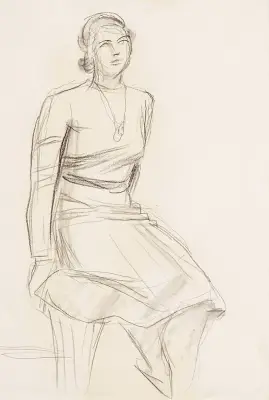
Santa Rosa (João Pessoa PB 1909 - New Delhi India 1956)
Illustrator, graphic artist, set designer, painter, decorator, costume designer, engraver, teacher and critic.
After completing his studies at Liceu Paraíba, Tomás Santa Rosa Junior moved to Salvador in 1931 and works as an accountant at Banco do Brasil. In 1932, he transferred to Rio de Janeiro and assists Candido Portinari (1903 - 1962) in the execution of several murals. In 1933, he began his activities as an illustrator by collaborating in his journals and Rio Magazine. The following year, he began collaboration as an illustrator for the publications of the publishing house José Olympio. Exercising this activity until 1954, he makes covers and illustrations for several books. Turning to the Performing Arts, he performs some scenographic works for the shows staged by Cia. de Comédias Jaime Costa and, in 1938, founded Grupo os Comediantes. In 1945, he founded the newspaper A Manhã with Jorge Lacerda. In this journal it illustrates and writes articles for the supplement letters and arts. The following year, he coordinates the Drawing and Graphic Arts course at Fundação Getúlio Vargas. In 1949, he was responsible for the theater area of the Museum of Modern Art of Rio de Janeiro - MAM/RJ, where he later teaches structural design classes. In 1950, he works in the coordination of the theatrical decoration studio of the National Theater School. In 1952, he joined the National Commission for Visual Arts and, two years later, directs the National Theater Conservatory. In 1956, he participated in the International Theater Conference, held in Bombay and as an observer, was part of the Brazilian Commission sent to the UNESCO General Conference for Education, Science and Culture, which took place in New Delhi. He died suddenly in this city. In 1957, the Institute of Social Security and Assistance of State Servants - Ipase acquired its private collection to found the Santa Rosa Museum, closed in 1977.
Critical Comment
Tomás Santa Rosa, Born in João Pessoa, he settled in Rio de Janeiro in 1932, when he assists Candido Portinari (1903 - 1962) in the finishing of several mural paintings. He works as a book illustrator, an activity to which he dedicates himself throughout his life. In 1945, he helps to found the newspaper A Manhã, for which he writes articles and creates illustrations for the supplement letters and arts. At that time, he collaborates in the Diário de Notícias, as an art critic.
Santa Rosa becomes known mainly for his scenographer activity. In 1938, he founded the theater group Os Comediantes, in which he works as an artistic director. As of 1941, the group has Polish theater director Ziembinski, responsible for staging that are part of the history of national dramaturgy. The scenography until then is done with painted screens and furniture provided by the local commerce. Santa Rosa innovates in the conception of the scenic space in three dimensions in the use of light as a complement to theatrical action. Among the group's pieces, with scenarios from Santa Rosa, the assembly of a wedding dress, by Nelson Rodrigues, stands out in 1943. For this show, Santa Rosa creates a scenic space on two levels, according to the action plans of the play: reality and memory or hallucination. According to researcher Cássio Emmanuel Barsante, the fragmentation of the scenes and the non-chronological sequence of the facts are linked by this conception, which orders the interpretive action.
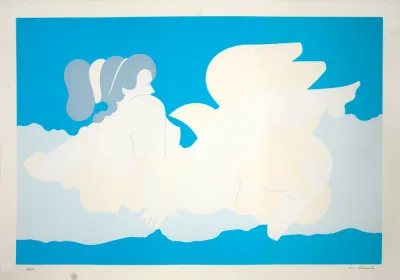
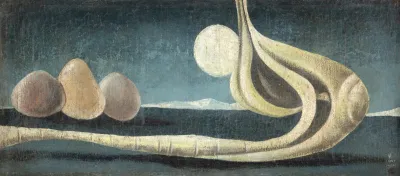
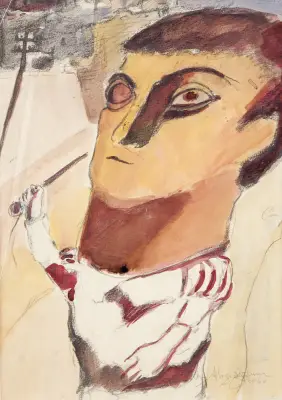
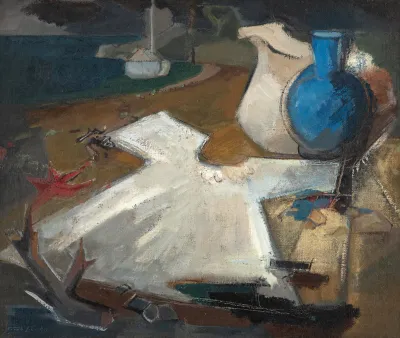
The scenographer collaborates, in 1944, with the group Teatro Experimental do Negro, which presents a pioneering activity when forming and launching black interpreters, and, in 1952, with the Companhia Dramatica Nacional - CDN, linked to the National Theater Service - SNT. In the scenarios of the deceased play, by Nelson Rodrigues, staged in 1953, Santa Rosa employs an abstract scenographic conception, just indicating the places of the action. It uses few scenic elements, which facilitates the quick change of paintings, without breaking the narrative continuity, as the author of the play demands. In his paintings, references to the work of Pablo Picasso and Portinari are perceived, with the affinity with the second being expressed in the social concern revealed in the themes dealt with and in the formal conception of paintings such as Baianas or Pescadores, both from 1943 and the three girls, S.D. Some canvases reveal the admiration for metaphysical painting, such as in Metaphysical Landscape, 1937.
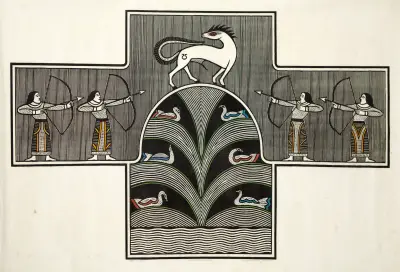
As an illustrator, works for more than 200 publications by the publisher José Olímpio, including the cover of Menino de Engenho, by José Lins do Rego. Santa Rosa reveals an interest in the art of the book itself, worrying about its formal finish and thus taking care of the pagination and layout of many publications. Intellectual involved in multiple cultural and artistic activities, Santa Rosa plays an important role in the field of graphic arts, as a precursor in the teaching of layout in the country. Its activity is considered decisive for the graphic renewal of national newspapers and magazines.
Criticism
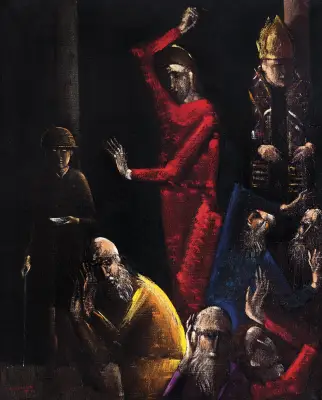
"(...) to be noticed in his first creations, which in a certain way brings his aptitude for scenography. In his first phase, he was also greatly influenced by Beardsley, due to his taste to the melodious lines. Then he entered an allegorical phase, with a dense climate and treatment in Smooth brushstrokes (in fact, allegorism almost never left him). Even when he reached the realistic phase of childhood family evocations in Paraíba - fishermen, women with head seats - the allegory, the absent eyes (often the smoky physiognomies) and pure reason invaded their screens. Some are clearly metaphysical. Surrealism never passed the field of pictorial research in Santa Rosa - a way to dominate feelings for technique.) Strictly speaking, like Portinari, figurativeism has always been his greatest concern and the very reason of his existence as a painter. When he died, Santa Rosa was equipped like very few Brazilian painters to launch himself into a synthesis of all these styles carefully worked for years and years. Perhaps his layers the thinker and the crucified were the beginning of this new onslaught. Death reaped it in full creative flight."
Cássio Emmanuel Barsante
Barsante, Cássio Emmanuel. 1982. (Memory, 2).
Collectives
Collection of Visual Arts from the Institute of Brazilian Studies of the University of São Paulo - IEB/USP
National Museum of Fine Arts - MNBA - Rio de Janeiro RJ
Individual exhibitions
1943 - Rio de Janeiro RJ - Individual
1955 - Rio de Janeiro RJ - Individual, at Galeria Dezon
Collective exhibitions
1933 - Rio de Janeiro RJ - 3rd Pro-Arte Salon
1934 - Rio de Janeiro RJ - 4th Pro-Arte Salon
1935 - Rio de Janeiro RJ - Exhibition of Social Art, at Clube de Cultura Moderna
1936 - São Paulo SP - Exhibition of small paintings, at Palácio das Arcadas
1937 - São Paulo SP - 1st Salon of May, at Esplanada Hotel de São Paulo
1938 - São Paulo SP - 2nd Salon de Maio, at Esplanada Hotel de São Paulo
1941 - Rio de Janeiro RJ - National Salon of Fine Arts - Silver Medal
1941 - São Paulo SP - 1st Art Salon of the National Industry Fair, in the Água Branca Park
1944 - Belo Horizonte MG - Exhibition of Modern Art, at the Mariana Building
1944 - London (England) - Exhibition of Modern Brazilian Paintings, at the Royal Academy of Arts
1944 - Norwich (England) - Exhibition of Modern Brazilian Paintings, at Norwich Castle and Museum
1944 - Rio de Janeiro RJ - 50th National Salon of Fine Arts, at MNBA
1945 - Bath (England) - Exhibition of Modern Brazilian Paintings, at the Victory Art Gallery
1945 - Bristol (England) - Exhibition of Modern Brazilian Paintings, at the Bristol City Museum & Art Gallery
1945 - Buenos Aires (Argentina) - 20 Brazilian artists, in the National Exhibition Rooms
1945 - Edinburgh (Scotland) - Exhibition of Modern Brazilian Paintings at the National Gallery
1945 - Glasgow (Scotland) - Exhibition of Modern Brazilian Paintings, at Kelingrove Art Gallery
1945 - LA Plata (Argentina) - 20 Brazilian artists, at the Provincial Museo de Bellas Artes
1945 - Manchester (England) - Exhibition of Modern Brazilian Paintings, Manchester Art Gallery
1945 - Montevideo (Uruguay) - 20 Brazilian artists, at the Municipal Culture Committee
1945 - Rio de Janeiro RJ - Plastic artists of the Communist Party, at the Student House
1946 - Rio de Janeiro RJ - The painters go to the Escola do Povo, at Enba
1950 - Rio de Janeiro RJ - A century of Brazilian painting: 1850-1950, at MNBA
1952 - Rio de Janeiro RJ - 1st National Salon of Modern Art, at MAM/RJ
1952 - Rio de Janeiro RJ - Exhibition of Brazilian artists, at MAM/RJ
1953 - Petrópolis RJ - 1st National Exhibition of Abstract Art, at the Hotel Quitandinha
1954 - Rio de Janeiro RJ - Black and White Salon at the 3rd National Salon of Modern Art
1955 - Lugano (Switzerland) - Incisioni and Disegni Brasiliani, at the Villa Museum Cianni
1955 - Neuchâtel (Switzerland) - Arts Primitifs et Modernes Brésiliennes, at the Neuchâtel Ethnography Museum
1955 - Paris (France) - Exhibition, at Galeria Mirador
1956 - Rio de Janeiro RJ - 5th National Salon of Modern Art
Postombent exhibitions
1957 - Buenos Aires (Argentina) - Modern Art in Brazil
1957 - Lima (Peru) - Modern Art in Brazil
1957 - Rio de Janeiro RJ - Individual, at MNBA
1957 - Rosario (Argentina) - Modern art in Brazil
1957 - Santiago (Chile) - Modern Art in Brazil
1958 - Rio de Janeiro RJ - Exhibition of Graphic Arts by Tomás Santa Rosa, at the National Library
1958 - Rio de Janeiro RJ - Work in Art, at MNBA
1959 - Rio de Janeiro RJ - 30 years of Brazilian art, at the Macunaíma Gallery
1962 - Casablanca (Morocco) - Exhibition of Brazilian artists
1962 - Rabat (Morocco) Brazilians
1962 - Tanger (Morocco) - Exhibition of Brazilian artists
1967 - Rio de Janeiro RJ - Individual, at MNBA
1974 - São Paulo SP - Time of the Modernists, at Masp
1975 - Rio de Janeiro RJ - Retrospective, at the Municipal Theater
1976 - São Paulo SP - Os Salões: From the São Paulo Artistic Family, in May and from the São Paulo Plastic Artists Union, at the Lasar Segall Museum
1981 - Rio de Janeiro RJ - Retrospective, at the João Caetano Theater
1981 - Rio de Janeiro RJ - Universe of Carnival: Images and Reflections, at the Art Gallery Collection
1982 - Lisbon (Portugal) - Brazil 60 years of modern art: Gilberto Chateaubriand Collection, at the José de Azeredo Perdigão Modern Art Center
1982 - London (England) - Brazil 60 years of modern art: Gilberto Chateaubriand collection, at the Barbican Art Gallery
1982 - São Paulo SP - From Modernism to Bienal, at MAM/SP
1983 - Recife PE - 50 years of Casa-Grande & Senzala, at the Joaquim Nabuco Foundation. Central Administration
1984 - Aracaju SE - 50 years of big house & Senzala
1984 - Brasília DF - 50 years of big house & Senzala
1984 - Lisbon (Portugal) - 50 years of Casa-Grande & Senzala, at the Gulbenkian Museum of the Calouste Gulbenkian Foundation
1984 - Salvador BA - 50 years of Casa-Grande & Senzala
1984 - Vitória ES - 50 years of big house & Senzala
1985 - Porto Alegre RS - Iberê Camargo: trajectory and meetings, at Margs
1985 - Rio de Janeiro RJ - 8th National Salon of Plastic Arts, at MAM/RJ
1985 - Rio de Janeiro RJ - Six decades of modern art: Roberto Marinho Collection, at Paço Imperial
1985 - São Paulo SP - Santa Rosa, Carnival and costumes, at Funarte
1986 - Brasília DF - Iberê Camargo: trajectory and meetings, at the Cláudio Santoro National Theater
1986 - Rio de Janeiro RJ - Iberê Camargo: trajectory and meetings, at MAM/RJ
1986 - São Paulo SP - Iberê Camargo: trajectory and Encontros, at Masp
1989 - Lisbon (Portugal) - Six decades of Brazilian modern art: Roberto Marinho Collection, at the José de Azeredo Perdigão Modern Art Center
1989 - São Paulo SP - 20th International Biennial of São Paulo, at Fundação Bienal
1992 - Rio de Janeiro RJ - Nature: Four centuries of art in Brazil, at the CCBB
1993 - Rio de Janeiro RJ - Brazil: 100 years of modern art, in the MNBA
1993 - São Paulo SP - 100 masterpieces from the Mário de Andrade collection: painting and sculpture, at IEB/USP
1993 - São Paulo SP - The modern design in Brazil: Gilberto Chateaubriand collection, at the Art Gallery of the SESI
1994 - Rio de Janeiro RJ - The modern design in Brazil: Gilberto Chateubriand Collection, at MAM/RJ
1994 - São Paulo SP - Bienal Brasil Century 20th, at the Bienal Foundation
1996 - Barra Mansa RJ - 12 names in Brazilian painting, at the Centro Universitário de Barra Mansa
1997 - Barra Mansa RJ - The museum visits the gallery, at the Centro Universitário de Barra Mansa
1998 - São Paulo SP - Brazilian Fantasy: the ballet of the Brazilian Centenary, at Sesc Belenzinho
1999 - Rio de Janeiro RJ - Show Rio Engravura. Brazilian modern engraving: Collection National Museum of Fine Arts, in the MNBA
1999 - São Paulo SP - on paper, graffiti and ink, at Banco Cidade
2000 - Lisbon (Portugal) - Brasil-Brasis: Coasas notable and amazing. Modernist looks, at the Chiado Museum
2000 - Rio de Janeiro RJ - When Brazil was modern: plastic arts in Rio de Janeiro from 1905 to 1960, at Paço Imperial
2000 - Valencia (Spain) - From La Anthropophagia to Brasilía: Brazil 1920-1950, at IVAM. Center Julio Gonzáles
2001 - Rio de Janeiro RJ - Brazilian Watercolor, at the Light Cultural Center
2002 - Niterói RJ - Brazilian art on paper: 19th and 20th centuries, at Solar do Jambeiro
2002 - São Paulo SP - From Anthropophagia to Brasília: Brazil 1920-1950, at MAB/FAAP
2003 - Rio de Janeiro RJ - Order X Liberdade, at MAM/RJ
2005 - Petrópolis RJ - Abstract Express, at the Imperial Museum
Source: Itaú Cultural