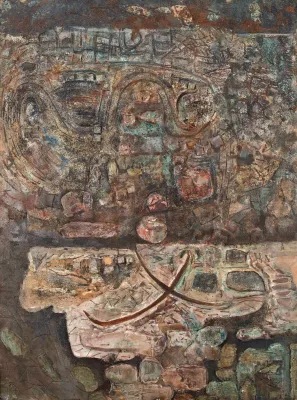
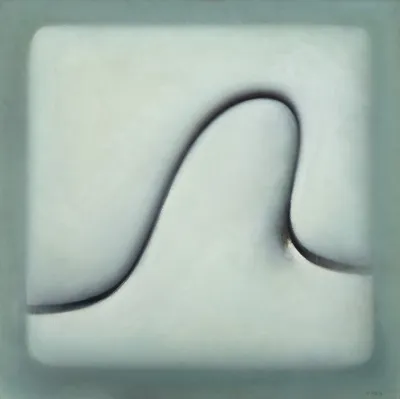
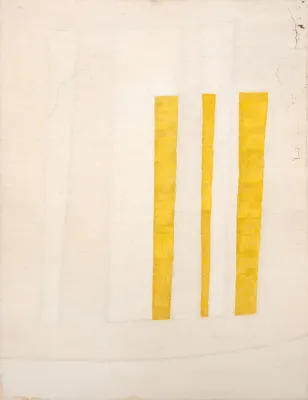
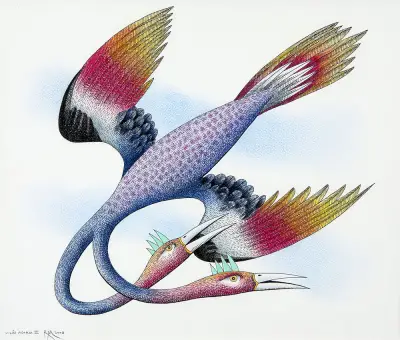
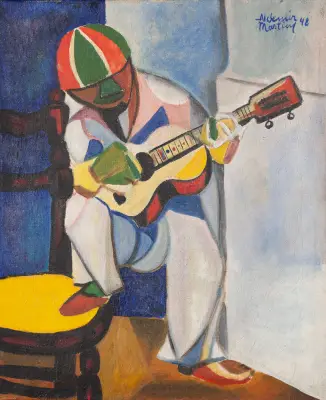
Samuel Szpigel (Rio de Janeiro RJ 1936 - São Paulo SP 2017)
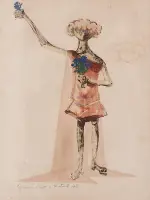
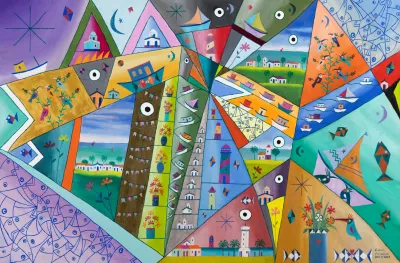
Samuel Szpigel was a painter, draftsman, architect and teacher. Born in Rio de Janeiro in 1936, he lived in São Paulo from the early 1940s and became a passionate paulistano. The city, then growing at a rapid pace, held a great fascination for the artist and inspired many of his works.
An aesthete by nature, he showed a clear vocation for the visual arts from a very young age. When he was 13, David Perlow — Lasar Segall's assistant — saw his drawings and told him: “You are going to be a painter.”
He discovered architecture at 19, a path common to many aesthetes of his generation. He graduated in architecture from Universidade Mackenzie in 1960, beginning his careers as an architect and visual artist while still a student. He pursued both with equal intensity for more than 60 years, from his entry into university in 1956.
Humor and urban, political and social folklore... have been hallmarks of Szpigel's work since he emerged in the Pop Art of the 1960s
Regarded by critics as one of the Brazilian artists closest to American Pop Art, for his ability to use everyday life and the most ordinary images to “create significant works of art”, Szpigel developed an art rooted in the present while (always) looking to the future.
In 1965, commenting on his work, Mário Schenberg said: “... Szpigel's temporality is turned toward the future: his present is the starting point for the future.” Hence the vitality of his work, his ability to anticipate trends, the premonitory character of many of his works, and the question many people asked him in front of his paintings: “Man, don't you ever get old?!!”
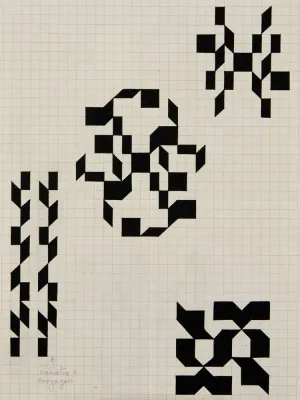
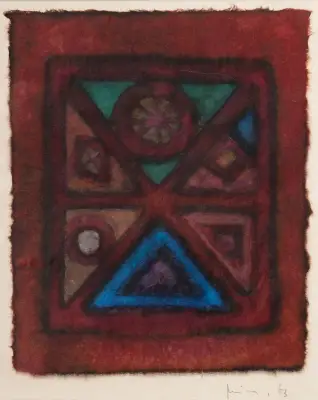
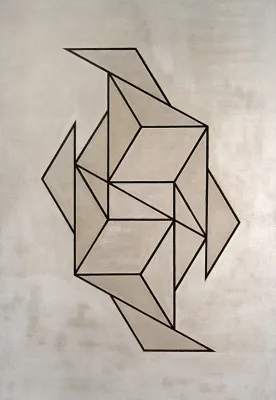
With a clear preference for figurative subjects, even in his most abstract phase in the 1980s/1990s he gave up figurative references, always making use of different media, as well as objects (sometimes collected at random) to give his works three-dimensionality.
Career
Over more than 60 years of artistic activity, Szpigel took part in more than 50 group exhibitions at public and private institutions: biennials in São Paulo and Barcelona, Spain; the Musée d'Art Moderne de la Ville de Paris, France; several São Paulo Salons of Modern Art; shows at MAM/Rio de Janeiro, the Museu de Arte Contemporânea da USP, the Museu de Arte de Porto Alegre, MAM São Paulo, the Instituto de Arquitetos do Brasil IAB/SP, the Academia Chilena de Bellas Artes, the Museu da Casa Brasileira, Buenos Aires - Argentina, MIS São Paulo, Sesc Pompeia, Itaú Cultural São Paulo and several galleries - Mobilínea, São Paulo, Ricardo Camargo, AC Galeria de Arte, among others.
In the 1960s, he took part in the “PROPOSTA” movement in São Paulo and “NOVA OBJETIVIDADE” [NEW OBJECTIVITY] in Rio de Janeiro (1965), and received several awards, including the 1st State Government Prize at the 11th São Paulo Salon of Modern Art, 1962; the Young National Drawing Prize at MAM/RJ, 1965; the Gold Medal at the 15th São Paulo Salon of Modern Art, 1965; the Silver Medal at the Campinas Youth Salon, 1967; and the Itamaraty Acquisition Prize at the 9th São Paulo Biennial, 1967.
In 1972, he took part in the BARCELONA BIENNIAL with a group of aluminum and iron sculptures on the theme of football.
He held several solo exhibitions, including one at MASP - Museu de Arte de São Paulo, in 1980.
That same year, he took part in an exhibition organized by Pietro Maria Bardi - “20 Pintores Brasileños” [20 Brazilian Painters], Academia Chilena de Bellas Artes, Santiago, Chile - with artists of different generations - Portinari, Tarsila do Amaral, Di Cavalcanti, Lasar Segall, Volpi, Wesley Duke Lee, Siron Franco and others.
He took part in the exhibitions “Comemoração dos 200 anos da Declaração dos Direitos Humanos” [Celebration of 200 Years of the Declaration of Human Rights] at Sesc Pompeia São Paulo in 1992, and “Passaporte para o Ano 2000 - A Grande Viagem” [Passport to the Year 2000 - The Great Journey] in 1994, a traveling exhibition through the three Americas, both curated by Radha Abramo, Acervo Artístico dos Palácios do Governo do Estado de São Paulo.
In 2003, he took part in the exhibition “ARTE E SOCIEDADE – uma relação polêmica” [ART AND SOCIETY – A Controversial Relationship], organized by Aracy Amaral at Itaú Cultural São Paulo.
In 2008, he took part in the 13th Edition of the MERCADO DE ARTE [ART MARKET], at Ricardo Camargo Galeria.
In May 2009, together with Cláudio Tozzi, Gilberto Salvador, Luiz Paulo Baravelli and Marcelo Nitsche, he took part in the exhibition “DOIS TEMPOS” [TWO TIMES], at AC Galeria de Arte.
In May 2011 and November 2016, he took part in the group shows “RECORTES DE COLEÇÕES” [COLLECTION EXCERPTS] and “POP, NOVA FIGURAÇÃO E APÓS” [POP, NEW FIGURATION AND AFTER], both at Ricardo Camargo Galeria.
Pop.Now – Pop art for a world ‘on the run’
From the early 2000s until mid-2016, while he remained active, Szpigel developed his art in several directions, embarking on a phase of producing unique works and works for digital reproduction alike, with no order of priority, mixing techniques, materials and (almost) finished results between one mode and the other, in search of an agile, interpenetrating, mutually referential art that was, as one would expect from him, up to date.
He named this phase Pop.Now – “Pop art for a world ‘on the run’, highly plastic, technological, dangerous, challenging.”
With the Pop.Now series, while reinvigorating his affinity with 1960s Pop Art, Szpigel plunged into the globalized world of the 21st century, addressing themes ranging from urban violence to environmental issues, from collective passions such as football to purely aesthetic abstractions.
Technically, Szpigel intensively explored the different possibilities this mode of artistic production offers: the broad combination of techniques in building images - drawing, painting, collage, graphic work; the possibility of creating common bases for several unique works, for diptychs, triptychs, polyptychs, panels or large-scale works; and the possibility of drawing special effects from different forms of framing – glass box, mounted on particleboard or traditional framing.
CHRONOLOGY
ACTIVITIES IN THE VISUAL ARTS
1971/ 1974 São Paulo SP - Editor of the magazines “AC Arquitetura e Construção” and “Projeto e Construção”
1987/ 1989 and 1993/ 1995 - Professor of Building at the Faculdade de Arquitetura of the Escola de Belas Artes, São Paulo
1975 /2003 - Full professor at the Faculdade de Arquitetura e Urbanismo de Santos – FAUS/UNISANTOS, advisor for the TFG – Trabalho Final de Graduação I [Final Graduation Project I] at FAUS
MAIN SOLO EXHIBITIONS
1966 São Paulo SP - Instituto de Arquitetos do Brasil IAB SP
1969 São Paulo SP - EADE São Paulo SP
1980 São Paulo SP - Museu de Arte de São Paulo MASP
1984 São Paulo SP - Galeria São Paulo
MAIN GROUP EXHIBITIONS
1962 - São Paulo SP - 11th São Paulo Salon of Modern Art - First State Government Prize
1964 São Paulo SP - Galeria Mobilínea, with Sérgio Ferro, Maurício Nogueira Lima, Ubirajara Ribeiro and Sílvio Oppenheim
1965 - Porto Alegre RS - “5 Pintores de Vanguarda” [5 Avant-Garde Painters], Museu de Arte de Porto Alegre, with Sérgio Ferro, Maurício Nogueira Lima, Ubirajara Ribeiro and Sílvio Oppenheim
1965 Rio de Janeiro RJ 1st Esso Salon of Young Artists, MAM/RJ
1965 1st Esso Salon of Young Artists, MAC/USP São Paulo SP
1965 Propostas 65 [Proposals 65], MAB/FAAP
1965 15th São Paulo Salon of Modern Art, Galeria Prestes Maia São Paulo SP - Gold Medal
1966 1st April Salon, MAM/RJ - Young Drawing Prize
1966 Campinas SP - 2nd Campinas Contemporary Art Salon
1967 Campinas SP Campinas Youth Salon - Silver Medal
1967 São Paulo SP - 9th São Paulo Biennial - Itamaraty Acquisition Prize
1967 São Paulo SP 6 Pintores da Nova Objetividade [6 Painters of the New Objectivity], IAB
1967 Paris France Salon Comparaisons, Musée d'Art Moderne de la Ville de Paris
1968 Rio de Janeiro RJ - “O Artista Brasileiro e a Iconografia de Massa” [The Brazilian Artist and Mass Iconography], Escola Superior de Desenho Industrial
1969 São Paulo SP 17th São Paulo Salon of Modern Art, Galeria Prestes Maia
1972 Barcelona Biennial, Spain
1973 São Paulo SP - 5th Panorama of Current Brazilian Art, MAM/SP
1980 Santiago Chile - “20 Pintores Brasileños” [20 Brazilian Painters], Academia Chilena de Bellas Artes
1980 São Paulo SP 12th Panorama of Current Brazilian Art, MAM/SP
1981 Campinas SP Arquiteto/Arquiteto Plástico [Architect/Visual Artist Architect], Museu de Arte Contemporânea de Campinas
1984 São Paulo SP - 2nd São Paulo Contemporary Art Salon, Museu da Imagem e do Som MIS
1986 São Paulo SP Arquitetos Artistas [Architect Artists], Sala Fernandez Mera São Paulo SP
1992 São Paulo SP Comemoração dos 200 anos da Declaração dos Direitos Humanos [Celebration of 200 Years of the Declaration of Human Rights], Sesc Pompeia São Paulo
1994 “Passaporte para o Ano 2000 - A Grande Viagem” [Passport to the Year 2000 - The Great Journey], traveling exhibition. Opening: Espaço Cultural Cristiano Stockler das Neves, Sala São Paulo SP. Itinerary: international airports of São Paulo, Rio de Janeiro and Brasília; cultural venues in the USA – Brazilian American Cultural Institute/Washington DC, University of Pennsylvania/Philadelphia, Museum of Art/Miami, Museum of Art/San Francisco, University of California/Los Angeles, New York University/New York, Public Library/Ottawa/Canada
2003 São Paulo SP Arte e Sociedade [Art and Society], Itaú Cultural São Paulo
2008 Inaugural show of the virtual gallery of AM4 O Olho da Imagem, Escritório de Arte
2008 São Paulo SP - 13th Edition of the Mercado de Arte [Art Market], Ricardo Camargo Galeria
2008 Exhibition of MULTIPLES - Pop.Now Series, virtual gallery of AM4 O Olho da Imagem, Escritório de Arte
2009 - Exhibition “DOIS TEMPOS” [TWO TIMES] - AC Galeria de Arte, São Paulo SP
2011 – Exhibition RECORTES DE COLEÇÕES [COLLECTION EXCERPTS] – Ricardo Camargo Galeria
2016 - Exhibition “POP, NOVA FIGURAÇÃO E APÓS” [POP, NEW FIGURATION AND AFTER] – Ricardo Camargo Galeria
CRITIQUES
“SAMUEL SZPIGEL is possibly the Brazilian artist whose characteristics are closest to American Pop Art, although the subject matter of his works is authentically paulistano and his treatment very personal and satisfying. His affinity with Pop Art derives from his extraordinary ability to use everyday life and the most commonplace images to create significant and highly interesting works of art. Szpigel criticizes Brazilian society and current political events in a suggestive and effective way, placing himself decisively within the present world, without romanticism or nostalgia for the past. Szpigel's temporality is turned toward the future: his present is the starting point for the future. This makes him one of the most representatively paulistano artists. Szpigel's artistic development has been among the fastest. In a few years he has become one of the most prominent figures of young Brazilian art, through his originality and the so surprisingly modern and progressive spirit of his work. He promises to become one of the creators of a popular urban and metropolitan language in current Brazilian art."
SCHENBERG, Mário. "Cinco arquitetos pintores", 1965
In: “Pensando a arte”, São Paulo: Nova Stella 1988.
“An architect, SAMUEL SZPIGEL is also a painter. A colorist, a restless capturer of contrasts, he loves figurative subjects in which the talent of a keen observer shines.”,
P. M. BARDI, Diretor do Museu de Arte de São Paulo, in “20 Pintores Brasileños”, 1980
“SAMUEL SZPIGEL abstracts figuration, stays close to the reference and sets out, with a broad and bold gesture, to create forms and colors, recovering a pleasure that the severe gravity of his drawings did not suggest. The line remains precise and separates form from space. Samuel always defines exactly the object of his study and interest.’ ........... ‘Added to this definition, which remains precise, is the artist's approach to a looser sensoriality. The colors are equally defined, but one can see that they arise from one another, dance their own rhythm and establish themselves as a personal dynamic and as the movement of the hand. Color is born from the structure of the picture and, at the same time, is a factor that modifies the picture. There is a self-justifying movement that generates the artist's visual thinking. (...)
....................................................
Samuel Szpigel dismantles the visible universe and his own iconographic system and puts his new invention in place of this accepted and known scale of values. One understands why his work is made of one-meter modules that are joined and multiplied. The artist modifies his iconography, dismantles the known universe and, with what remains of references, builds a new universe and begins, step by step, to give form to these fragments.”
KLINTOWITZ, Jacob - in “BRASIL: Arte de Hoje”, 1984
MP
“ .... The entry into the 1960s is abrupt, hard and forceful, like the military coup that crushed the hopes of the youth of the period. The pivotal work is ‘PREÇO A PAGAR’ [PRICE TO PAY], by Samuel Szpigel, a painting of a taxi meter that, instead of the fare, shows the symbolic date: 1964. As a kind of premonitory sign, this work indicates that we are entering the era of the domination of dictatorship, political and economic. After all, the military government is gone, but that of capital only seems to have intensified.”
HIRSZMAN, Maria - in O Estado de São Paulo, 28 de junho de 2003, caderno 2, pág. D7, comentário sobre a exposição “Arte e Sociedade - uma relação polêmica”, organizada por Aracy Amaral, sobre a produção artística dos últimos 70 anos no Itaú cultural.
REFERENCES
1) “PROPOSTAS 65: exposição e debates sobre aspectos do realismo atual do Brasil. São Paulo” Fundação Armando Álvares Penteado 1965
2) “5 PINTORES de vanguarda” Introduction Carlos Scarinci, Museu de Arte do Rio Grande do Sul, Porto Alegre RS 1965
3) PONTUAL, Roberto. Dicionário das artes plásticas no Brasil. Introduction Antônio Houaiss. Texts Mário Barata. Rio de Janeiro RJ: Civilização Brasileira, 1969
4) LOUZADA, Júlio. Artes plásticas: seu mercado, seus leilões. São Paulo, 1969
5) GRANDE ENCICLOPÉDIA DELTA LAROUSSE - entry highlighting his work in architecture and the visual arts, 1970
6) BARDI, P. M. Profile of the New Brazilian Art, 1970
7) CAVALCANTI, Carlos; AYALA, Walmir (eds.). Dicionário brasileiro de artistas plásticos. Introduction Maria Alice Barroso. MEC/INL Brasília DF 1973-1980
8) AMARAL, Aracy. Arte para Quê?, 1977
9) ZANINI, Walter (ed.). História geral da arte no Brasil. Introduction Walther Moreira Salles. São Paulo SP: Instituto Walther Moreira Salles, Fundação Djalma Guimarães, 1983
10) KLINTOWITZ, Jacob - in “BRASIL: Arte de Hoje”, 1984
11) LOUZADA, Júlio. Artes plásticas: seu mercado, seus leilões. São Paulo SP, 1984
12) SCHENBERG, Mário. Pensando a arte. São Paulo: Nova Stella, 1988
13) LEITE, José Roberto Teixeira. Dicionário crítico da pintura no Brasil. Rio de Janeiro RJ: Artlivre, 1988
14) FIGURAÇÕES BRASIL ANOS 60: Novo realismo e nova objetividade brasileira. Daisy Peccinini. EDUSP/Itaú Cultural, 1999
15) INSTITUTO ITAÚ CULTURAL - Arte e Sociedade - uma relação polêmica, 2003