Maria Leontina (São Paulo SP 1917 - Rio de Janeiro RJ 1984)
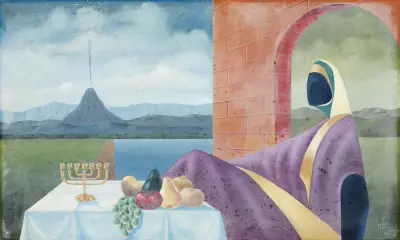
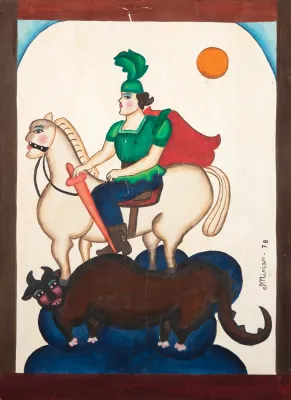
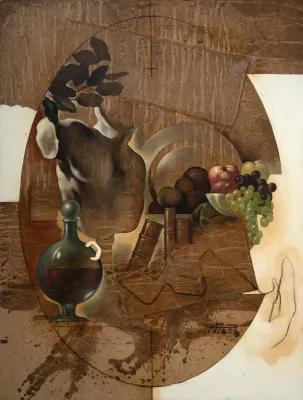
Maria Leontina was a prominent Brazilian plastic artist, working as a painter, record company and draftsman. His artistic training began in 1938, with drawing classes taught by Antônio Covello, in São Paulo. In the 1940s, he deepened his knowledge in painting by studying with Waldemar da Costa. In 1946, already in Rio de Janeiro, he attended the studio of the sculptor Bruno Giorgi and took a course in museology at the National Historical Museum, completed in 1948.
In 1947, he participated in the historic exhibition "19 Painters", at the Prestes Maia gallery, in São Paulo, alongside artists such as Lothar Charoux, Marcelo Grassmann, Aldemir Martins, Luiz Sacilotto and Flavio-Shiró. In 1951, he received the invitation from the psychiatrist and art critic Osório César to coordinate the visual arts sector at the Juqueri Psychiatric Hospital, where he organized an exhibition with works by the inmates at the Museum of Modern Art in São Paulo.
With a Scholarship granted by the French government, traveled to Europe in 1952, accompanied by her husband, also painter Milton Dacosta. Between 1952 and 1954, he attended the engraving studio of Johnny Friedlaender, in Paris, improving his technique. In the 1960s, he left his mark on public works, such as the tile panel for the Copan building and the stained glass windows of the Brazilian Episcopal Church of the Santíssima Trindade, both in the city of São Paulo. With a strong expressionist influence, but gradually evolved into abstraction, without clinging to a rigid geometry. In 1960, it was internationally recognized when it received the National Prize from the Guggenheim Foundation in New York. In 1975, he also won the Painting Award of the São Paulo Association of Art Critics.
Critical Comment
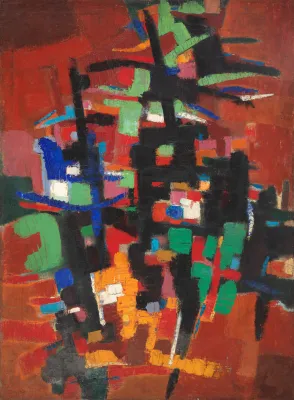
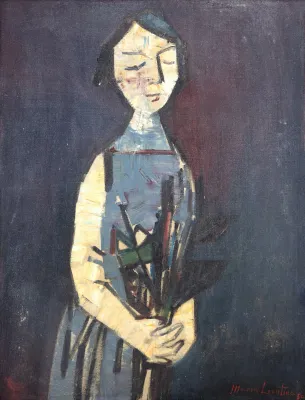
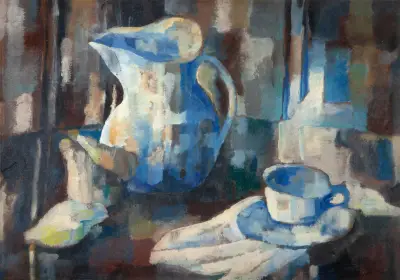
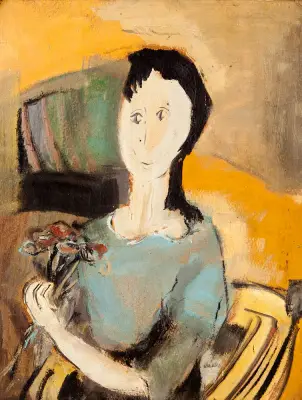
Born in a traditional São Paulo family, Maria Leontina is interested in painting after a visit to the exhibition by Flávio de Carvalho. He begins his artistic training by studying drawing with the academic painter Antônio Covello. The approach to the modern environment and the dedication to painting took place in 1940, when he started to frequent the studio of Waldemar da Costa, co-founder of the São Paulo artistic family - FAP. During the years of study with the artist (until 1946), Leontina presents an expressionist tendency production close to that of Flávio de Carvalho and Iberê Camargo. In 1947, he participated in the exhibition 19 painters, conceived by his sister and art critic Maria Eugênia Franco, and received the second award from the jury, formed by Anita Malfatti, Di Cavalcanti and Lasar Segall. Among the young exhibiting artists are important names in Brazilian art such as Lothar Charoux, Marcelo Grassmann, Aldemir Martins, Luiz Sacilotto and Flavio-Shiró, all linked, at that moment, to the expressionist iconography. As the artist says, at the end of her life, in a statement to the critic Frederico Morais: "I was an expressionist, like almost all artists at that time". 1949, in which a reflection on Cubism is perceived. In them the autonomous pictorial space, not concerned with the representation of reality, begins to impose itself and the figures become increasingly synthetic. In 1949, he married the painter Milton Dacosta. With a scholarship granted by the French government, he travels with her husband to Europe, in 1952. Attending the engraving course by Johnny Friedlaender, in Paris, where he lives until 1954. During this period, he travels to different countries.
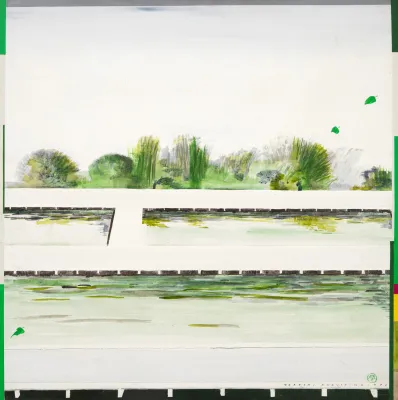
Due to the development Without ruptures of his painting, he arrives at the geometric abstraction in the mid-1950s, based on the purification of figurative elements. Naturally, the artist is affected by the climate of discussion around the abstraction, prevailing in Brazil, and by her experience abroad, where she probably comes into contact with the constructive movement and the European abstract painting. Related to abstract-geometric poetics are series such as games and riddles, landscape and time, narratives and episodes. Many of his paintings evoke the urban space and its constructions. In works such as Os Enigmas (1955) the city appears as a construction of geometric shapes reminiscent of the series Castles and Cities performed by Milton Dacosta from 1955. 1950 works with stricter geometric shapes. However, it does not follow the artisanal accuracy of the Dacosta lines, preferring a lighter trend, slowing down the limits of shapes and allowing the overlapping of colors, in a painting full of transparencies.
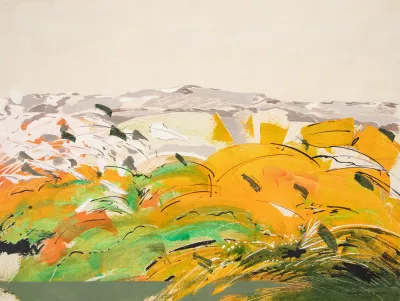
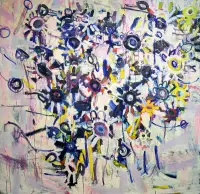
The "constructive" phase of Maria Leontina, which lasts until 1961, is considered by several critics as the moment of greatest singularity in its artistic path. Remaining on the sidelines of Brazilian constructive aspects, the artist develops a peculiar "sensitive geometry", in which the rigidity of the line and the mathematical rigor of the composition are replaced by an intuitive ordering and imprecise geometric shapes. As the critic Frederico Morais states, in these works there is "the fair balance between expression and construction, calculation and emotion". For the critic Paulo Venâncio Filho, a certain magical and spiritual aspect - which many called a metaphysical content in the sense of the conception of painting as the presentation of the invisible by the visible - permeates its structures, softening the most radical ordinating sense. It is not by chance that the critic Ferreira Gullar refers the abstract production of Leontina to the works of Paul Klee and Joán Miró. Also in relation to colors, the artist, one of the greatest colorists in Brazilian art, is not restricted to the constructive dogmas of primary colors, working With equal dexterity, both warmer tones and more sober tones.
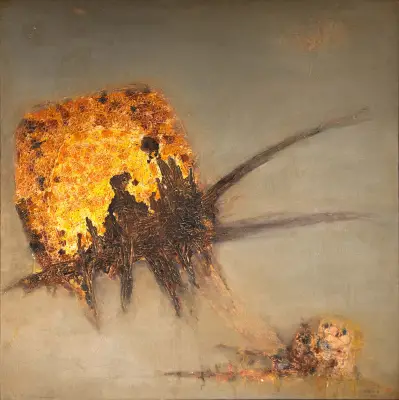
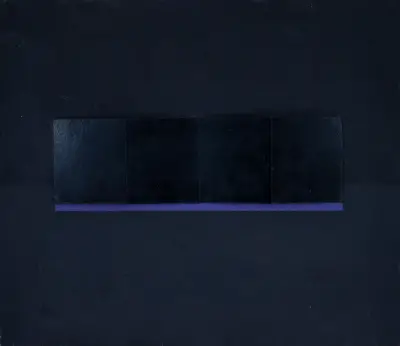
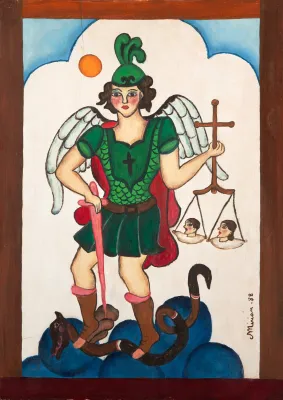
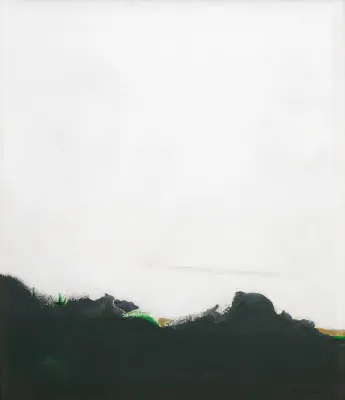
In 1961, with the Formas series, a new phase was inaugurated, in which the shapes go through a rounding process, later transformed into stains. From then on, and until the end of his life, Maria Leontina performs several series in which abstraction sometimes predominates, geometric or not, sometimes the synthetic figuration of a symbolic nature. The long series of banners, started in 1963, is considered "an infinite plastic theme in its possibilities of variations in shape, line and color", according to the artist's testimony. The elements are increasingly reduced to the essentials and the metaphysical and lyrical atmosphere present since their first works, as well as the silent quality of her paintings, persist.
It is noted that the artist has a production in little known drawing and to be better investigated. On the role of drawing in his method of creation, he declares: "When I see the mountain, the contour seems to me initially defined. Then there are two, three lines. inside me, so that it arises spontaneously. The drawing is always very useful. Especially to capture the nuances and sensations".
Criticism
"(...) Half the 1940s, she adhering to figuration, already based on lyricism, focused more on the soul than on the bodies of people, objects and landscapes. of geometric shapes, that the series The Games and the Enigmas was an excellent example, when the 1950s ended. allusion to housework or signs schemes in large cities. It was even such an allusive inclination that, at the opening of the 1960s, made her rethink her path to once again stick to the still-life from which she had also departed. But it was not quite a return to the limits of representation what the attitude meant, but a need to bring to the ultimate consequences the expressive possibilities of that starting point, transcending its figurative character through the systematic exercise of analogies. With a smooth and precise logic, then came the series of the banners, the pages and of the kingdoms and the clothes. In all of them, an atmosphere that uses the poetic subtlety, already announced in the titles, of discreet chromatism, as in a musical walk, and of the tensions of forms that seem to levitate, diluted and interpenetrated in space, pulses an atmosphere time, which is diluted, interpenetrates and accumulates in the flow of life. In much, the painting of Maria Leontina exchanges familiarity with that of Maria Helena Vieira da Silva".
Roberto Pontual
PONTUAL, ROBERTO. Maria Leontina. In: _______. Between two centuries: Brazilian art of the 20th century in the Gilberto Chateaubriand Collection. Rio de Janeiro: Jornal do Brasil, 1987, p. 252.
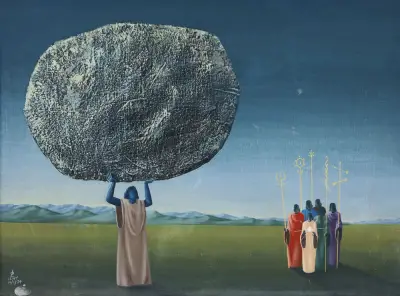
"(...) I can only qualify Maria Leontina's art if in the term lyricism is included, not Without legitimacy, also the tragic feeling of forms, tragic, and not just dramatic. Tragic in the archaic and pure sense, of that certainty of an unfathomable destiny that, however, always ends up revealing itself exactly when and where it seems to break the illusion of apparent reality. tragic that in the case of these expositions it enters into a declared conflict with the rational security of the internationally rationalized composition. This is how the current problem of Maria Leontina's painting arises. Of course, the sincerity of his character repels any insinuation of the formula adopted out of simple curiosity or any other less respectable reason. (...) Immediately, we will seek in Maria Leontina a rationalist capable of challenging, with the rigors of intelligence, our emotions by proposing well-calculated indecipherables for us, for their undisguisedly emotional, passionate temperament even cultivates and proposes the mystery even when it is Delivers to the lucid gratuities that they are also tragically unsettling".
Lourival Gomes Machado
MACHADO, Lourival Gomes. Maria Leontina. In: Modernity: 20th century Brazilian art. Paulo: MAM; Paris: Musée d'art Moderne de la Ville de Paris, 1988. [Text originally published in the newspaper O Estado de São Paulo, 1958.]
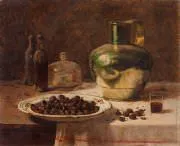
"Leontina's passage to abstraction distinguishes from that of Dacosta for not having traveled exactly and strictly the path of geometrization. When figurative, his ancestry was expressionist, not Cubist. Thus, it did not go through 'cones, spheres and cylinders', as in the famous phrase of Cézanne, which is a kind of avant la lettre theory of Cubism. He started from exceptional still lifes (one of his favorite themes, with which he created the best of his figurative production), and was simplifying, stripping, emptying, taking away weight, consistency, until reaching essential and, finally, abstract forms. However, not only, perhaps, because of the proximity of Dacosta mainly due to his own essentially apollonian, harmonious, clear, calm temperament, he did not reach informal or gestural abstractionism. As a rule, historically, and for the sake of affinity, the expressionists who become abstract tended more towards this pole; That's what happened, for example, with Iberê Camargo. Leontina created a very personal and lyrical type of constructivism, sometimes a little more, sometimes a little less structured and rigorous, but always fluid and fluent". Olívio Tavares de. Maria Leontina (1917-1984): The Soul of the Artist In: ______. Brazilian painting of the 20th century: relevant trajectories. Rio de Janeiro: 4 Estaçãos, 1998. 120 p. Il. Color., P. 96.
"During four decades Maria Leontina developed a trajectory very similar to those artists who lived the impact of abstractions between us and, at the same time, engendered traces of singularity in this territory. In the works of the 1940s, still figurative, Leontina seemed to attest with perplexity that the reality perceived by the senses seemed too vast, too mysterious to be easily synthesized in the reality of each painting. In these works, the artist is evident by groping the codes, trying to recreate them to better understand the possible parallels between the world and the world of painting. Perplexity in the face of the world and the art world, now in a more mature attitude (...) in the following decades, however, in search of perhaps a more absolute formal purification, Leontina seems to replace that deep perplexity of the first years with a pictorial scheme with which it rarely reaches the levels of quality of the previous periods. Only at the end of life that anguish seems to spring up again, only in another sense: the art for her suddenly seems to become too vast, too mysterious to be engendered in the reality of the world (...)".
Tadeu Chiarelli
CHIARELLI, Tadeu. Maria Leontina. In: ______. Brazilian international art. São Paulo: Lemos, 1999. p. 214 [Text originally published in the newspaper O Estado de São Paulo, 15/5/1994, P. M-10, with the title "Show redos itinerary of an anguish". ]
"Gothic, Leontina seeks its opposite in matter - the spirit, eliminating its weight, freeing it from the ground. He performed an aerial, ethereal, transparent, imprecise painting. a painting - or a drawing almost coming off the canvas and paper. Everything about it is light, otherwise, how to float its pages, robes, banners? His gesture is loaded with a certain mystical tremor, suggests a vaguely myopic look. A vague gesture and yet capable of saying anything, as in a haikai in which the world is spoken of in 17 syllables.
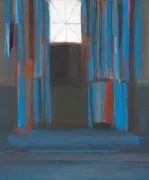
One of the artist's last canvases, dated 1983, (...) form of a balance or synthesis of his admirable work. In a single and very subtle graphic plot, located between two black columns, on the sides of the screen, we find allusions to almost all of its thematic series - banners, pages, clothes, thresholds. On the threshold of time, Maria Leontina waits for the moment to start her last journey. silence. "
Frederico Morais
morals, Frederico. Painting as silence. In: Milton Dacosta and Maria Leontina: a dialogue. Rio de Janeiro: CCBB, 1999. p. 23.
Individual exhibitions
1950 - Rio de Janeiro RJ - Individual, at the IAB/RJ Gallery
1950 - São Paulo SP - Individual, at the Domus Gallery
1951 - Rio de Janeiro RJ - Individual, at IBEU
1951 - São Paulo SP - Individual, at the Domus Gallery
1955 - Rio de Janeiro RJ - Individual, at Petite Galerie
1955 - São Paulo SP - Individual, at MAM/SP
1957 - Rio de Janeiro RJ - Individual, at Petite Galerie
1957 - São Paulo SP - Individual, at Galeria Ambiente
1958 - Rio de Janeiro RJ - Individual, at Galeria GEA
1958 - Rio de Janeiro RJ - Individual, at Galeria Tenreiro
1958 - São Paulo SP - Individual, at the Folha Art Gallery
1959 - São Paulo SP - Individual, at the Association of Friends of the MAM/SP
1959 - São Paulo SP - Milton Dacosta and Maria Leontina, at the Association of Friends of MAM/SP
1960 - Rio de Janeiro RJ - Individual, at Galeria Estúdio
1960 - São Paulo SP - Individual, at Galeria São Luís
1962 - Rio de Janeiro RJ - Individual, at Petite Galerie
1962 - São Paulo SP - Individual, at Petite Galerie
1963 - Rio de Janeiro RJ - Individual, at Galeria Relief
1963 - São Paulo SP - Individual, at the Arrow Art Gallery
1964 - São Paulo SP - Individual, at the Association of Friends of MAM/SP
1966 - Belo Horizonte MG - Individual, at MAP
1966 - São Paulo SP - Individual, at the Associação dos Amigos do MAM/SP
1972 - Rio de Janeiro RJ - Individual, at the Ipanema Art Gallery
1972 - São Paulo SP - Individual, at Arrow Galeria de Art
1973 - São Paulo SP - Individual, at the Uirapuru Gallery
1975 - Rio de Janeiro RJ - Individual, at the Ipanema Art Gallery
1975 - Rio de Janeiro RJ - Individual, at Petite Galerie
1975 - São Paulo SP - Individual, at Galeria Art Global
1977 - São Paulo SP - Individual, at the Art Gallery Grifo
1982 - Rio de Janeiro RJ - Maria Leontina: Retrospective Synthesis, at the Galeria do IAB/RJ
1983 - Rio de Janeiro RJ - Individual, at Galeria GB Art
1983 - São Paulo SP - Individual, at Galeria Arco
Collective exhibitions
1942 - Rio de Janeiro RJ - 48th National Salon of Fine Arts, at the MNBA
1944 - Rio de Janeiro RJ - National Salon of Fine Arts, at the MNBA - Bronze Medal
1944 - São Paulo SP - 9th Hall of the Artists' Union Plastics, at the Prestes Maia Gallery - Mário de Andrade Award
1944 - São Paulo SP - Brazilian-North-American Modern Painting Exhibition, at the Prestes Maia Gallery
1945 - Rio de Janeiro RJ - 51st National Salon of Belas Arts, at MNBA
1947 - Rio de Janeiro RJ - 53rd National Salon of Fine Arts, at MNBA - Modern Division
1947 - Rio de Janeiro RJ - 6 new ones from São Paulo, at the IAB/RJ Gallery
1947 - São Paulo SP - 11th Salon of the Plastic Artists Union, at the Prestes Maia Gallery
1947 - São Paulo SP - 19 painters, at the Prestes Maia Gallery - Jeremias Lunardelli Award (2nd Award)
1948 - Rio de Janeiro RJ - 54th National Salon of Fine Arts, at the MNBA - Modern Division - Jury Exemption
1948 - São Paulo SP - 12th Salon of the Plastic Artists Union, at the Domus Gallery
1949 - São Paulo SP - 13th Salon of the Plastic Artists Union
1950 - Rio de Janeiro RJ - 56th National Salon of Fine Arts, at the MNBA - Modern Division - Silver Medal
1950 - Venice (Italy) - 25th Venice Biennale
1951 - Rio de Janeiro RJ - Exhibition of still natures, in the Food and Social Security Service
1951 - São Paulo SP - 1st International Biennial of São Paulo, in the Trianon Pavilion - Moinho Santista Award
1951 - São Paulo SP - 1st São Paulo Salon of Modern Art, at the Prestes Maia Gallery - Trip to the Country Award
1951 - São Paulo SP - still-life exhibition, at the service's headquarters of Food and Social Security - 1st Premium
1952 - Feira de Santana BA - 1st Exhibition of Modern Art of Feira de Santana, at Banco Econômico
1952 - Paris (France) - 38th Salon of May
1952 - Rio de Janeiro RJ - 1st National Salon of Modern Art, at MAM/RJ
1952 - Rio de Janeiro RJ - Exhibition of Brazilian artists, at MAM/RJ
1952 - Venice (Italy) - 26th Bienal de Venice
1954 - São Paulo SP - 3rd Salão Paulista de Arte Moderna, at the Prestes Maia Gallery - Great Gold Medal
1954 - São Paulo SP - Contemporary Art: Exhibition of the collection of the Museum of Modern Art of São Paulo, at MAM/SP
1955 - Rio de Janeiro RJ - 4th National Salon of Modern Art - Travel to the Country Award
1955 - Salvador BA - 5th Baiano Salão de Belas Artes, at the Belvedere da Sé Gallery
1955 - São Paulo SP - 3rd São Paulo International Biennial, at MAM/SP - MAM/RJ Award
1955 - São Paulo SP - 4th Salão Paulista de Arte Moderna, at the Prestes Maia Gallery
1956 - Montevideo (Uruguay) - Painting Brasileña Contemporánea, at the Instituto de Cultura Uruguayo-Brasileño
1956 - Venice (Italy) - 28th Venice Biennale
1957 - Rio de Janeiro RJ - 6th National Salon of Modern Art - Acquisition Award
1957 - São Paulo SP - 4th International Biennial of São Paulo, at the Ciccilo Matarazzo Sobrinho Pavilion - Acquisition Award
1957 - São Paulo SP - 6th São Paulo Hall of Modern Art, at the Prestes Gallery Maia
1958 - São Paulo SP - Leirner Award for Contemporary Art, at the Folhas Art Gallery
1959 - São Paulo SP - 5th São Paulo International Biennial, at the Ciccilo Matarazzo Sobrinho Pavilion - Prize Acquisition
1959 - São Paulo SP - Milton Dacosta and Maria Leontina, at the Association of Friends of the Museum of Modern Art of São Paulo
1959 - São Paulo SP - Leirner Contemporary Art Award, at the Folhas Art Gallery
1960 - New York (United States) - Guggenheim International Award, at the Guggenheim Foundation
1960 - São Paulo SP - 9th Salão Paulista de Arte Moderna, at the Prestes Maia Gallery - Acquisition Award
1960 - São Paulo SP - Leirner Collection, at the Folhas Art Gallery
1960 - São Paulo SP - Contribution of women to the visual arts in the country, at MAM/SP
1961 - Rio de Janeiro RJ - The face and the work, at the IBEU gallery Copacabana
1961 - São Paulo SP - 6th São Paulo International Biennial, at the Ciccilo Matarazzo Sobrinho Pavilion
1962 - São Paulo SP - Selection of Brazilian works of art from the Ernesto Wolf collection, in the MAM/SP
1963 - Campinas SP - Contemporary painting and sculpture, at the Carlos Gomes Museum
1963 - São Paulo SP - 7th São Paulo International Biennial, at the Bienal Foundation
1964 - Rio de Janeiro RJ - O Nude in Contemporary Art, at the Ibeu Copacabana Gallery
1965 - São Paulo SP - 8th International Biennial of São Paulo, at the Bienal Foundation - Acquisition Award
1966 - Rio de Janeiro RJ - Self-portraits, at the IBEU Gallery Copacabana
1966 - São Paulo SP - Half a century of Art Nouveau, at MAC/USP
1967 - São Paulo SP - 9th São Paulo International Biennial, at the Biennial Foundation
1968 - São Paulo SP - 19 painters, at the theme Art Gallery
1969 - São Paulo SP - 1st Panorama of Current Brazilian Art, at MAM/SP - Acquisition Award
1970 - São Paulo SP - 2nd Panorama of Current Brazilian Art, MAM/SP - Acquisition Award
1972 - São Paulo SP - Arte/Brazil/Today: 50 years later, at Collectio Gallery
1972 - São Paulo SP - Retrospective Waldemar da Costa: Tribute to the Master MAM/SP
1973 - São Paulo SP - 5th Panorama of Current Brazilian Art, at MAM/SP
1975 - São Paulo SP - Exhibition of Fine Arts Brazil-Japan
1976 - Campinas SP - 10th Salão de Arte Contemporânea de Campinas - Art in Brazil: Document/Debate, at MAC/Campinas - Guest Artist
1976 - São Paulo SP - Brazilian Art in the 20th Century - Paths and Trends, at the Global Art Gallery
1976 - São Paulo SP - The Youth Drawing of the 40s, at Pinacoteca do Estado
1977 - Rio de Janeiro RJ - Brazilian constructive project in art: 1950-1962, at MAM/RJ
1977 - São Paulo SP - Project Brazilian constructive in art: 1950-1962, at the Pinacoteca do Estado
1978 - Caracas (Venezuela) - Ibero-American Meeting of Artists and Critics, at the Fundación Museo de Bellas Artes
1978 - São Paulo SP - 19 painters, at MAM/SP
1978 - São Paulo SP - The Biennials and Abstraction: the 50s, at the Lasar Segall Museum
1979 - Rio de Janeiro RJ - Brazilian sculptors, at Galeria Aktuel
1979 - São Paulo SP - 15th São Paulo International Biennial, at the Bienal Foundation
1980 - Belo Horizonte MG - Hilton Highlight of Painting, at Fundação Clóvis Salgado. Palácio das Artes - Acquisition Award
1980 - Brasília DF - Hilton Highlight of Painting, at the Cultural Foundation of the Federal District - Acquisition Award
1980 - Curitiba PR - Hilton Highlight of Painting, , at the Guaíra Theater - Acquisition Award
1980 - Porto Alegre RS - Hilton Highlight of Painting, at Margs - Acquisition Award
1980 - Rio de Janeiro RJ - Concretistas de São Paulo, at the Place des Arts Gallery
1980 - Rio de Janeiro RJ - Highlight Hilton of Painting, at MAM/RJ - Acquisition Award
1980 - Rio de Janeiro RJ - Homage to Mário Pedrosa, at Galeria Jean Boghici
1980 - Santos SP - 5 Trends, at CCBEU
1980 - São Paulo SP - Hilton Highlight of Painting, at MAM/SP - Acquisition Award
1982 - Lisbon (Portugal) - Brazil 60 Years of Modern Art: Gilberto Chateaubriand Collection, at the José de Azeredo Modern Art Center Perdigão
1982 - London (United Kingdom) - Brazil 60 Years of Modern Art: Gilberto Chateaubriand Collection, at the Barbican Art Gallery
1982 - Salvador BA - The Brazilian Art of the Odorico Tavares Collection, at the Carlos Costa Pinto
1982 - São Paulo SP - From Modernism to Bienal, at MAM/SP
1983 - Rio de Janeiro RJ - 6th National Salon of Plastic Arts, at MAM/RJ
1983 - Rio de Janeiro RJ - A Flor da Pele: Painting and Pleasure, at Centro Empresarial Rio
1983 - Rio de Janeiro RJ - Brazilian self-portraits, at the Banerj Art Gallery
1984 - Fortaleza CE - 7th National Plastic Arts Salon
1984 - Rio de Janeiro RJ - Recent donations 82-84, at MNBA
1984 - São Paulo SP - The color and design of Brazil, at MAM/SP
1984 - São Paulo SP - Gilberto Collection Chateaubriand: portrait and self-portrait of Brazilian art, at MAM/SP
1984 - São Paulo SP - The color and drawing of Brazil, at MAM/SP
1984 - Rio de Janeiro RJ - Recent donations 82-84, at the MNBA
Posthumous exhibitions
1984 - Rio de Janeiro RJ - 7th National Salon of Visual Arts, at MAM/RJ
1984 - São Paulo SP - Tradition and Rupture: Synthesis of Brazilian art and culture, at the Bienal Foundation
1985 - Porto Alegre RS - Iberê Camargo: trajectory and meetings, at Margs
1985 - Rio de Janeiro RJ - 8th National Salon of Plastic Arts, in the MAM/RJ
1985 - Rio de Janeiro RJ - Meetings, at Petite Galerie
1986 - Brasília DF - Iberê Camargo: trajectory and meetings, at the Cláudio Santoro National Theater
1986 - Rio de Janeiro RJ - Iberê Camargo: trajectory and meetings, at MAM/RJ
1986 - São Paulo SP - Iberê Camargo: trajectory and meetings, , and at Masp
1986 - Rio de Janeiro RJ - JK and the 1950s: a vision of culture and everyday life, in the Galeria Investiarte
1987 - Paris (France) - Modernity: Brazilian art of the 20th century, at the Musée d'art Moderne de la Ville de Paris
1987 - Rio de Janeiro RJ - To the Collector: Homage to Gilberto Chateaubriand, at MAM/RJ
1987 - São Paulo SP - The biennials in the MAC collection: 1951 to 1985, at MAC/USP
1987 - São Paulo SP - The Craft of Art: Painting, at SESC
1988 - Rio de Janeiro RJ - Geometric abstraction, at the National Art Foundation. Arts Center
1988 - São Paulo SP - MAC 25 years: Highlights of the initial collection, at MAC/USP
1988 - São Paulo SP - Modernity: 20th century Brazilian art, at MAM/SP
1989 - São Paulo SP - 20th São Paulo International Biennial - Abstract Painting: Biennial Effect, 1954-1963, at Fundação Bienal
1992 - Poços de Caldas MG - Brazilian Modern Art: Collection of the Museum of Contemporary Art of the University of São Paulo. Paulo, at the Casa de Cultura de Poços de Caldas
1992 - Rio de Janeiro RJ - On the way to Niterói: João Sattamini Collection, at the Paço Imperial
1992 - São Paulo SP - Sérgio's view on Brazilian art: drawings and Paintings, at the Mário de Andrade Municipal Library
1993 - Rio de Janeiro RJ - Brazil, 100 years of modern art, at MNBA
1994 - Poços de Caldas MG - Unibanco Collection: exhibition commemorating the 70th anniversary of the Unibanco, at the Casa de Cultura de Poços de Caldas
1994 - Rio de Janeiro RJ - The modern design in Brazil: Gilberto Chateaubriand Collection, at MAM/RJ
1994 - São Paulo SP - Bienal Brasil Século 20th, at the Fundação Bienal
1994 - São Paulo SP - Maria Leontina: Retrospective, at MAM/SP
1994 - São Paulo SP - Retrospective in honor of the 10th anniversary of his death, at MAM/SP
1995 - Brasília DF - Collections of Brasília, at the Ministry of Foreign Affairs. Palácio do Itamaraty
1995 - Rio de Janeiro RJ - Unibanco Collection: exhibition commemorating the 70th anniversary of Unibanco, at MAM/RJ
1996 - São Paulo SP - Brazilian art: 50 years of history in the collection MAC/USP: 1920-1970, at MAC/USP
1996 - São Paulo SP - Women artists at the MAC collection, at MAC/USP
1997 - Porto Alegre RS - 1st Biennial of Visual Arts of Mercosul, at the Mercosul Visual Arts Biennial Foundation
1997 - Porto Alegre RS - Caixa Collection Exhibition, at the Caixa Cultural Complex
1997 - Porto Alegre RS - Constructive Strand and Design, at Espaço Cultural Ulbra
1997 - São Paulo SP - Exhibition of the Caixa Collection, at the Caixa Cultural Complex
1998 - Curitiba PR - Caixa Collection Exhibition, in the Caixa Cultural Complex
1998 - Niterói RJ - Mirror of the Bienal MAC/Niterói
1998 - Rio de Janeiro RJ - Exhibition of the Caixa Collection, at the Caixa Cultural Complex
1998 - São Paulo SP - Constructive Art in Brazil: Adolpho Leirner Collection, at MAM/SP
1998 - São Paulo SP - The modern and the contemporary in Brazilian art. Gilberto Chateaubriand Collection - MAM/RJ, at MASP
1998 - São Paulo SP - The Modern and the Contemporary in Brazilian Art: Gilberto Chateaubriand Collection - MAM/RJ, at MASP
1998 - São Paulo SP - OS Collectors - Guita and José Mindlin: matrices and engravings, at the SESI Art Gallery
1998 - São Paulo SP - Os Collectors - Guita and José Mindlin: matrices and prints, at the SESI Art Gallery
1999 - Niterói RJ - Rio Engraving Show. Banerj Collection, at the Ingá Museum
1999 - Porto Alegre RS - 2nd Mercosul Visual Arts Biennial, at the Mercosul Visual Arts Biennial Foundation
1999 - Porto Alegre RS - Picasso, Cubismo and Latin America, at Margs
1999 - Rio de Janeiro RJ - Constructive Art in Brazil: Adolpho Leirner Collection, at MAM/RJ
1999 - Rio de Janeiro RJ - Milton Dacosta and Maria Leontina: a dialogue, at CCBB
1999 - Rio de Janeiro RJ - Milton Dacosta and Maria Leontina: a dialogue, at the CCBB
1999 - Rio de Janeiro RJ - Exhibition Rio Engraving. Banerj Collection, at the Ingá Historical Museum
1999 - Rio de Janeiro RJ - Rio Engraving Show. Brazilian modern engraving: Collection National Museum of Fine Arts, in the MNBA
1999 - Rio de Janeiro RJ - Exhibition Rio Engraving. Brazilian modern engraving: Collection National Museum of Fine Arts, in the MNBA
1999 - Salvador BA - 60 years of Brazilian art, at the Cultural Space of Caixa Econômica Federal
1999 - São Paulo SP - daily life/art. the consumption. Metamorphosis of Consumption, at Itaú Cultural
1999 - São Paulo SP and Rio de Janeiro RJ - Constructive Art in Brazil: Adolpho Leirner Collection, at MAM/SP and at MAM/RJ
2000 - Brasília DF - Exhibition Brazil Europe: Encounters in the 20th Century, in the Cultural Complex of Caixa
2000 - Rio de Janeiro RJ - When Brazil was modern: Fine Arts in Rio de Janeiro from 1905 to 1960, at the Paço Imperial
2000 - São Paulo SP - Brazil + 500 rediscovery show. Modern Art, at Fundação Bienal
2001 - Brasília DF - Collections of Brazil, at CCBB
2001 - São Paulo SP - The color in Brazilian art, at Espaço MAM/Villa-Lobos
2001 - São Paulo SP - Bienal 50 years: a tribute to Ciccillo Matarazzo, at the Fundação Bienal
2002 - Niterói RJ - Paper Collection, at MAC/Niterói
2002 - Niterói RJ - Arte Brazilian on paper: 19th and 20th centuries, at Solar do Jambeiro
2002 - Rio de Janeiro RJ - Brazilian art in the Fadel collection: from the restlessness of the modern to the autonomy of language, in the CCBB
2002 - Rio de Janeiro RJ - Paths of the Contemporary 1952-2002, at Paço Imperial
2002 - Rio de Janeiro RJ - Caminhos do Contemporânea 1952-2002, at Paço Imperial
2002 - São Paulo SP - Brazilian art in the collection Fadel: From the restlessness of the modern to the autonomy of language, at the CCBB
2002 - São Paulo SP - Map of the Now: Recent Brazilian Art in the João Sattamini Collection of the Museum of Contemporary Art of Niterói, at the Instituto Tomie Ohtake
2002 - São Paulo SP - Modernism: from the week of 22 to the Art Section of Sérgio Milliet, at the CCSP
2003 - Brasília DF - Brazilian art in the Fadel collection: from the restlessness of the modern to the autonomy of language, in the CCBB
2003 - Rio de Janeiro RJ - Brazilian Art: From the Revolution from 30 to Post-War, at MAM/RJ
2003 - Rio de Janeiro RJ - Autonomy of Drawing, at MAM/RJ
2003 - Rio de Janeiro RJ - Order X Liberdade, at MAM/RJ
2003 - Rio de Janeiro RJ - Caixa Treasures: Brazilian Modern Art in the Caixa Collection, in the Caixa Cultural Complex
2003 - São Paulo SP - MAC USP 40 years: Interfaces Contemporaries, at MAC/USP
2004 - Niterói RJ - Transitive Modernity, at MAC/Niterói
2004 - São Paulo SP - Paper Office, at CCSP
2004 - São Paulo SP - Gesture and expression: informal abstractionism in the JP Morgan Chase and MAM collections, at MAM/SP
2004 - São Paulo SP - Women painters, at the Pinacoteca do Estado
2004 - São Paulo SP - Sala do Collection, at Ricardo Camargo Galeria
2004 - São Paulo SP - Tudo é Desenho, at CCSP
Source: Itaú Cultural